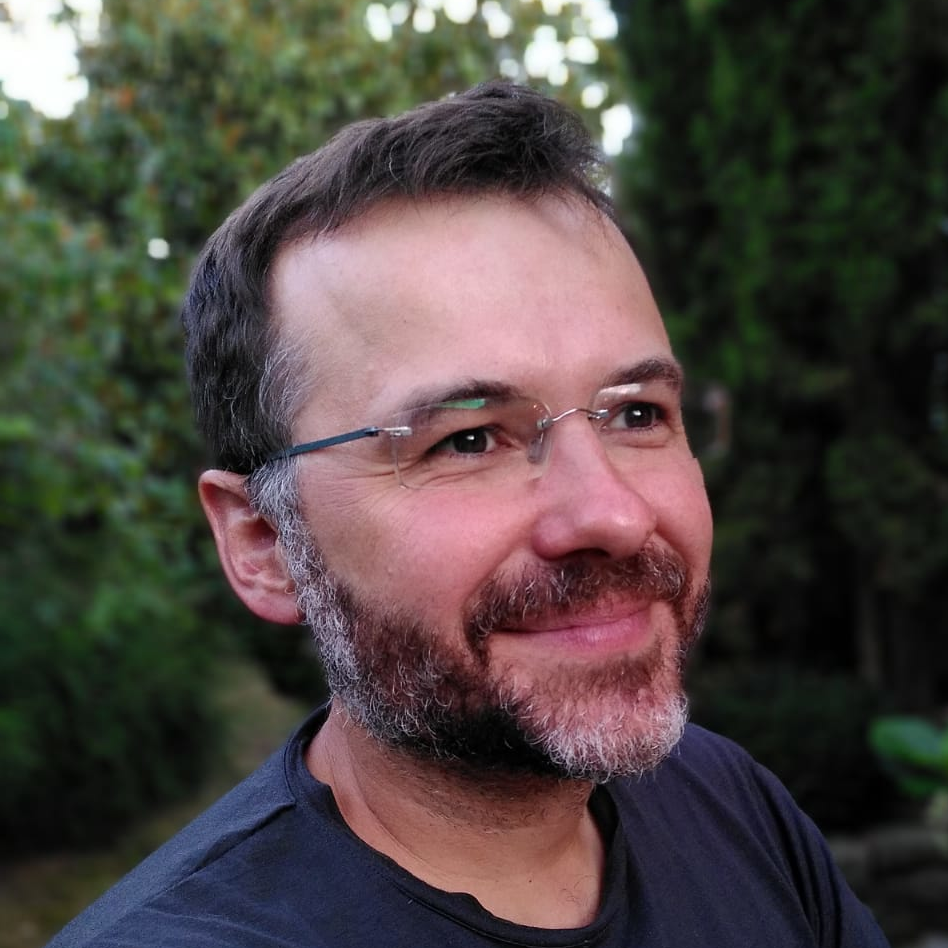
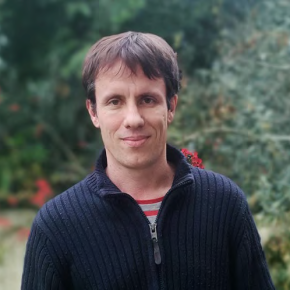
Jean-Christophe Olivo-Marin is the Head of the Biological Image Analysis Unit and Director of the Carnot Pasteur Institute for Microbes and Health at the Institut Pasteur in Paris, France. He previously served as Director of the Department of Cell Biology and Infection (2010–2014) and continues to lead impactful research at the intersection of biology, computation, and imaging. His research focuses on bioimage informatics , developing computational methods in Machine learning and deep learning for image analysis Bayesian tracking and optical flow algorithms Statistical modeling of spatial patterns in biological systems Mathematical imaging and computational cell biophysics Digital pathology and cancer microenvironment analysis His work enables rigorous quantitative analysis of complex biological phenomena such as cell motility, host-pathogen interactions, and neural dynamics. His recent publications (2024–2025) reflect a strong trend toward AI integration in bioimaging , with advances in deep learning-based segmentation (e.g., Deep ContourFlow), large-scale image annotation (SAMJ), and frameworks for evaluating neuron tracking. There is also a focus on spatial analysis in disease contexts , particularly in cancer and neurodevelopment, combining deep learning with spatial statistics. He has been awarded research funding for projects including Next-generation Structured Illumination Microscopy (SIM) Machine learning for cancer detection using FFOCT Compressive sensing in biological imaging Statistical analysis of spatial coupling in bioimaging (SODA) Olivo-Marin actively mentors students and postdoctoral researchers and contributes to open science through the development and maintenance of Icy , a widely used open-source bioimage analysis platform. He regularly participates in international conferences such as QBI, ICPR, and NEUBIAS, and leads advanced training courses, including the upcoming Advanced Bioimage Analysis with Artificial Intelligence (AI) course at Institut Pasteur in 2026. He leads a dynamic research unit with PhD students, postdocs, and engineers working on cutting-edge image analysis challenges. The team fosters collaboration across disciplines and institutions, promoting open science and community-driven software development.