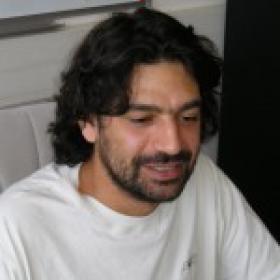
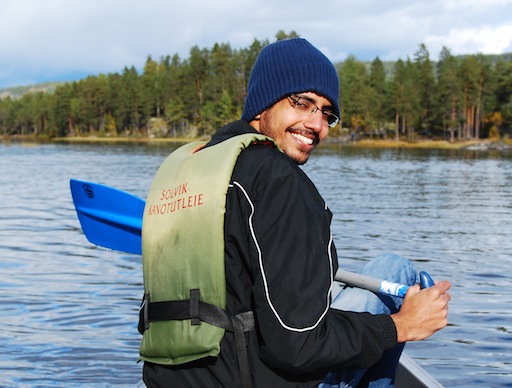
Sixin Zhang is an Associate Professor at INP-Toulouse, specifically affiliated with the ENSEEIHT school. He holds a Ph.D. from the Courant Institute of Mathematical Sciences, New York University (2012), following undergraduate studies. His postdoctoral research spanned institutions including ENS Paris, Peking University, and IRIT in France. His research focuses on machine learning, optimization, signal/image processing, statistics, dynamical systems, and high-dimensional data analysis. Key research areas include representation learning for recognition and inverse problems, optimization algorithms, and applications in industrial systems and astrophysics. He contributed to the development of the Kymatio library for scattering transforms and co-authored foundational work on transform learning in non-negative matrix factorization. His work bridges theoretical mathematics with applied machine learning, including contributions to generative models, data assimilation networks, and optimization techniques for neural networks. Notable projects include the MeteoNet AI challenge and the RWST statistical framework for interstellar medium analysis.
Benoît Perez-Lamarque is an Assistant Professor of Biology at Université Paul Sabatier in Toulouse, France. He holds a PhD from the École Normale Supérieure (ENS) in Paris, focusing on the evolution of host-microbiota interactions, particularly mycorrhizal symbioses. His research bridges ecology, evolution, and mathematical modeling, addressing topics such as biodiversity dynamics, symbiotic relationships, and community assembly processes. He has conducted postdoctoral research at institutions including the Institut de Biologie de l'ENS (IBENS) and Harvard University. He teaches courses in botany, ecology, and mathematical modeling at undergraduate and graduate levels, including advanced modules in community ecology and environmental genomics. His work integrates computational methods with ecological theory, as evidenced by contributions to tools like the ABDOMEN model for microbiota evolution and tutorials on phylogenetic signal analysis. Perez-Lamarque has published extensively in journals such as Systematic Biology , Molecular Ecology , and New Phytologist , with a focus on symbiosis evolution, biodiversity change, and network ecology. His research includes fieldwork, genomic analyses, and mathematical modeling to understand the interplay between ecological interactions and evolutionary processes. Education: PhD in Evolutionary Biology, ENS Paris (2018–2021) Master’s in Evolutionary Modeling, ENS Paris & Sorbonne Universités (2015–2017) Bachelor’s in Biology, ENS Paris (2014–2015) Research Interests: Ecology and evolution of symbiotic interactions Phylogenetic and network approaches to community analysis Long-term biodiversity dynamics Mathematical modeling in ecological systems
Chiara Galdi is an Assistant Professor in the Digital Security Department at EURECOM, France. Her work focuses on analyzing the robustness and vulnerability of biometric systems, particularly in the context of AI fairness and transparency. She established her own research group to tackle these challenges and has contributed to national and European projects as a coordinator and writer. Education: She earned a PhD in Signal and Image Processing in 2016. Her academic background includes advanced studies in engineering and computer science disciplines relevant to digital security and biometric systems. Research interests span biometric recognition, fairness in AI-driven algorithms, and trustworthy machine learning. She explores how social media trends like facial beautification filters impact biometric systems, evaluates bias in speaker verification, and develops frameworks for explainable AI (e.g., XAIface). Her work emphasizes real-world applications in mobile devices and cybersecurity. Her research outputs reflect a focus on interdisciplinary challenges, combining technical innovations with ethical considerations. She has pioneered databases such as SOCRatES and PROTECT to advance source camera and multimodal biometrics research. Advising and grants: While no advisees are listed, her involvement in coordinating projects highlights her role in mentoring collaborative research efforts. Grants and funding details are not explicitly provided. Labs/Teams: She leads her own research group dedicated to advancing trustworthy AI and biometric systems, with contributions to PROTECT and SOCRatES initiatives.
Photios A. Stavrou is an Assistant Professor in the Communication Systems Department at EURECOM (SophiaTech Campus), France. He holds a Diploma in Electrical and Computer Engineering from Aristotle University of Thessaloniki (2008) and a Ph.D. in Electrical Engineering from the University of Cyprus (2016). His academic journey includes postdoctoral positions at Aalborg University (Denmark) and KTH Royal Institute of Technology (Sweden). His research focuses on goal-oriented communication paradigms, semantics of information, and networked control systems, integrating tools from control theory, communication, optimization, and numerical analysis. Key research interests include rate-distortion-perception functions, semantic-aware resource allocation, and AI-driven optical network automation. He leads projects like the EU-funded 6G-GOALS initiative and collaborates with institutions like Huawei Technologies. Notable recent work involves experimental demonstrations of AI agents for optical network lifecycle management and digital twin-enabled power optimization strategies. Stavrou has advised multiple Ph.D., M.S., and postdoctoral researchers, including current students like Symeon Vaidanis and Minjie Tang. He actively participates in conferences and workshops, delivering keynotes on topics such as rate-distortion-perception computation and semantic communication frameworks. His lab focuses on foundational and applied research in communication systems, with a strong emphasis on interdisciplinary approaches to solving challenges in 6G networks, network automation, and control systems.
Rabih Amhaz is a Researcher Lecturer at Icam (Strasbourg-Europe), focusing on AI applications in cybersecurity and computer vision. His work bridges theoretical machine learning with practical engineering challenges, particularly in anomaly detection, pavement crack analysis, and cyber threat mitigation. He collaborates closely with industry through Icam's strong corporate partnerships. Research Interests: AI-driven cybersecurity solutions Deep learning for computer vision tasks Algorithmic development for infrastructure monitoring His recent publications explore cutting-edge techniques like YOLO architectures for pavement crack detection (2023), graph neural networks for anomaly detection (2022-2021), and genetic algorithms in signal processing (2020). Amhaz holds a unique position within Icam's applied research ecosystem, contributing to both academic publications and industrial applications through projects like the FP7 TRIMM initiative.
Thomas Bonald is a Professor at Telecom Paris, part of the Institut Polytechnique de Paris, and heads the DIG (Data, Intelligence and Graphs) team within the LTCI laboratory. His research focuses on data analysis, machine learning, graph theory, knowledge bases, and natural language processing. He leads projects like the YAGO knowledge base and develops open-source tools such as scikit-network and torch-kge for graph analysis and knowledge graph embedding. Key achievements include advancing link prediction, knowledge base refinement using LLMs, and contributions to fair resource allocation in networks. His work integrates theoretical insights with practical applications, including enhancing adaptive streaming performance in mobile networks. Scientific awards include recognition of his former students Céline Comte (Telecom Paris award) and Mathieu Feuillet (Gilles Kahn award). Bonald advises numerous PhD students and has supervised over 20 doctoral candidates. His research spans algorithmic fairness, network science, and large-scale data integration. Labs/Teams: DIG team at LTCI, contributing to projects like YAGO and NetSet datasets. His teaching includes probability, statistics, graph learning, and reinforcement learning, with lecture notes on topics like PageRank and spectral embedding.
Jean-Louis Dessalles is a Professor at the Institut Polytechnique de Paris, affiliated with the School of Computer Science and the Department of Cognitive Sciences. His research focuses on the intersection of cognitive science, evolutionary biology, and artificial intelligence, particularly the evolutionary origins of language, computational models of human cognition, and algorithmic information theory. He is a co-founder of the Simplicity Theory framework, which explains cognitive processes through principles of complexity minimization. Key contributions include books such as Why We Talk: The Evolutionary Origins of Language and Des Intelligences Très Artificielles , which explore language evolution and AI limitations. His work spans interdisciplinary areas like social signaling, causal reasoning in cyber-physical systems, and the philosophical implications of consciousness and responsibility. Recent research emphasizes applications of simplicity theory to AI, causal learning in smart environments, and the biological foundations of communication. Dessalles has pioneered methods for explainable AI in complex systems, focusing on decentralized architectures for smart homes and urban traffic management.
Michalis Vazirgiannis is a Professor at the Department of Computer Science, École Polytechnique, France, leading the Data Science and Mining (DaSciM) group. He holds degrees in Physics (Athens University), Informatics (PhD, Athens University), and AI (Heriot-Watt University). His research focuses on machine learning for graphs, NLP, combinatorial optimization, and applications in fraud detection, biomedical tasks, and social networks. He has supervised 29 PhD theses and published over 250 papers. Awards include the ERCIM Fellowship, Marie Curie EU Fellowship, and Tencent's Rhino-Bird Award. Educations Bachelor's in Physics, Athens University Master's in AI, Heriot-Watt University PhD in Informatics, Athens University Research Interests His work spans graph neural networks (GNNs), community detection, text mining, and biomedical applications. He emphasizes explainability in GNNs and has developed models like RW-GNN. Current projects include the ANR-HELAS Chair on heterogeneous data and the X/AXA Data Science Chair. Industrial collaborations include Airbus, Google, and Tencent. Grants & Chairs ANR-HELAS Chair (2020–25): Deep learning for graphs and NLP AXA Data Science Chair (2015–18) ANR-XCOVIF (2020–21): Social impact analysis of COVID-19 via social media Labs & Teams The DaSciM group has 15 completed PhD theses and collaborates with industry on projects like predictive maintenance and recommendation systems. Key projects include graph generative models for biomedical data and privacy-preserving synthetic medical records.
Dray Stéphane is a Senior Research Scientist (CNRS DR2) at Université Claude Bernard Lyon 1, affiliated with the Laboratoire de Biométrie et Biologie Evolutive (LBBE, UMR 5558). His research focuses on statistical ecology, combining multivariate analysis, spatial statistics, and computational tools to address ecological questions. Key areas include community ecology, population dynamics, and the impact of biotic/abiotic factors on species distributions. Dr. Dray holds a PhD in Biometry (2003) and a Habilitation (2016) from Université Lyon 1. He has extensive postdoctoral experience, including a stint at Université de Montréal. His work bridges statistics and ecology, with notable contributions to software development (e.g., ade4 , adespatial ), which are widely used for ecological data analysis. His research emphasizes innovative statistical methods for analyzing ecological networks, spatial patterns, and species interactions. Recent work explores applications in camera trap data analysis, phylogenetic comparative methods, and the calibration of deep learning models for wildlife monitoring. Education: Habilitation, Université Lyon 1 (2016) PhD in Biometry, Université Lyon 1 (2003) MSc/BSc in Biometry, Université Lyon 1 (1997–1999) Labs/Teams: Laboratoire de Biométrie et Biologie Evolutive (LBBE), part of the Institut des Sciences de l'Évolution de Lyon (ISE-Lyon).
Argheesh Bhanot is a Researcher at Savoie Mont-Blanc University, affiliated with Polytech Annecy-Chambéry and the LISTIC laboratory. His email is bhanota@univ-smb.fr , and he is located in office A127 at LISTIC’s campus in Annecy-le-Vieux, France. Research Interests : Bhanot’s work focuses on advanced signal and image processing techniques, including inverse problems, optimization, Markov Chain Monte Carlo (MCMC) methods, artificial intelligence (AI), and graph analysis. His research applications span environmental monitoring (e.g., avalanche dynamics) and medical imaging (e.g., fMRI connectivity analysis). Key Research Contributions : His recent work explores functional connectivity in neuroimaging through graph theory and independent component analysis (ICA), as well as dictionary learning algorithms for signal separation in fMRI and other domains. He also develops energy-efficient remote sensing systems for environmental studies. Labs & Teams : Bhanot is a core member of the LISTIC laboratory, which specializes in interdisciplinary research combining signal processing, AI, and applied mathematics.
Didier COQUIN is a University Professor at the Networks and Telecoms Department of IUT Annecy-Chambéry, University of Savoie Mont-Blanc. He has served as Head of the Networks and Telecoms (R&T) Department since July 2022 and previously held the role from 2014 to 2020. His research focuses on information fusion for decision-making under uncertainty, with applications in image processing, robotics, and environmental studies. He leads the AFuTé group and has organized conferences on machine learning and information fusion. Research Themes: Interval approaches and fuzzy thick sets Credibility-building methodologies Multisensor data fusion (e.g., for robotics, multispectral imaging) Adaptive fusion architectures for tree species recognition Teaching: Responsible for 1st-year computer science courses (Python programming) Machine Learning module for 5th-year engineering students Courses in telecommunications, signal processing, and probability-statistics Grants/Projects: ANR ReVeRIES (2016-2020): Smartphone-based plant recognition using fused data ANR ReVeS (2010-2014): Smartphone applications for tree species identification INTERREG France-Suisse CIME (2018-2022) Labs/Teams: AFuTé Group (Learning, Fusion, Remote Sensing) Former CoDe and FIAD groups Collaborations with EDYTEM lab on sediment core analysis
Vineet Gandhi is a Researcher at INRIA Rhone Alpes, France. He completed his PhD in the Imagine team under Dr. Remi Ronfard, funded by the CIBLE scholarship under the Scenoptique project. His research focuses on computer vision applications for video production, including actor detection, multi-clip editing, and sensor fusion for depth estimation. He holds a Masters from the CIMET consortium with an Erasmus Mundus scholarship and a B.Tech from Indian Institute of Information Technology, Jabalpur. Education: PhD: INRIA Rhone Alpes (2014), supervised by Dr. Remi Ronfard Masters: CIMET consortium (2011), thesis supervised by Dr. Radu Horaud and Dr. Jan Cech Bachelor: Indian Institute of Information Technology, Jabalpur (thesis with Prof. Challa S Sastry and Prof. Amit Ray) Research Interests: Visual detection/tracking, computational videography, sensor fusion, and cinematography automation. His work emphasizes practical applications like theatre performance analysis and automated video editing. Publications: Focus on optimizing video editing workflows, generative models for actor detection, and high-resolution depth mapping via sensor fusion. His methods combine computer vision techniques with cinematic best practices. Labs/Teams: Active in the Imagine and Perception teams at INRIA. Collaborated with University of Wisconsin-Madison (Michael Gleicher) on cinematography automation projects.
Nicolas Papadakis is a Director of Research in Applied Mathematics at the Bordeaux Institute of Mathematics (IMB), University of Bordeaux, where he also serves as deputy director since January 2023. His work bridges advanced mathematical theory and practical AI applications, particularly in image analysis and processing. His research focuses on developing mathematically robust neural networks to enhance the reliability of image recognition systems, especially under signal perturbations such as noise, blur, or brightness changes. He specializes in denoising neural networks and their deployment in critical domains like medical imaging, remote sensing, and biological data analysis. The most recent publications reflect a strong trend in integrating optimization theory with deep learning, particularly in plug-and-play architectures and minimal-supervision learning for medical diagnostics. His work combines theoretical rigor with real-world impact, especially in oncology, where accurate 3D tumor reconstruction from MRI scans enables improved monitoring and treatment evaluation. Expert in mathematical foundations of AI and neural networks Focus on robustness and reliability in image recognition Applications in medical imaging, particularly brain tumor analysis Nicolas Papadakis actively contributes to public understanding of AI through media engagements and science communication. He has participated in the 'Expert’s Word' series and co-authored educational articles on image colorization. While current grants and advising roles are not listed, his leadership position at IMB suggests involvement in major research initiatives and collaborative projects. He has published in high-impact venues including ICLR, Medical Image Computing and Computer Assisted Intervention (MICCAI), and SIAM Journal on Imaging Sciences. His work is characterized by a deep integration of applied mathematics, optimization, and machine learning.
Virginie Woisard is an Associate Professor and Hospital Practitioner affiliated with Toulouse - Jean Jaurès University and Toulouse University Hospital. She is a key member of the NeuroPsychoLinguistics Laboratory (LNPL) and holds clinical and research roles in the ENT Department at Larrey Hospital and the Oncorehabilitation Unit at the Toulouse University Cancer Institute. She also directs the University Training Center for Speech Therapy in Toulouse. Her research interests lie at the intersection of speech science, otorhinolaryngology, and oncology rehabilitation. She focuses on speech intelligibility (acoustic, prosodic, and phonetic dimensions), aerodigestive functions (physiology, pathophysiology, and assessment), and cancer care (patient pathways, sequelae, disability, and quality of life), particularly for upper aerodigestive tract cancers. Her methodological approaches include experimental psycholinguistics, automatic speech processing, functional assessments, and clinical trials. Her recent publications (2022–2024) demonstrate a strong trend in developing and validating objective, automated tools for assessing speech and swallowing disorders in cancer patients. These include the Carcinologic Speech Severity Index, pseudo-word intelligibility tests, holistic communication scores, and psychometric guidelines. Her work bridges clinical practice with advanced linguistic and acoustic analysis, particularly in French-speaking populations. Scientific Awards and Recognition: President of the French Society for Swallowing and Dysphagia (2021–2024) Member of the European Society of Swallowing Disorders Research Group (since 2021) Member of the European Union of Phoniatrists’ Dysphagia Committee Editorial board member for multiple journals: Revue de laryngologie Otologie Rhinologie , Folia Phoniatrica et Logopedia , Annals of Otolaryngology , Case Reports in Otolaryngology , and European Archives of Otorhinolaryngology Virginie Woisard actively leads and coordinates major research projects such as PhLES-NID (ANR-funded) and VULCANO (Institut National du Cancer) , and participates in multi-center trials like Voice4PD-MSA and PETAL . She has supervised numerous university diplomas (DU/DIU) in phonology, voice, speech, swallowing, and neurolaryngology since 1998, indicating a long-standing commitment to training and academic mentorship. Her work emphasizes therapeutic education, rehabilitation, and improving patient quality of life. She leads the Parolothèque scientific interest group and is deeply involved in interdisciplinary research connecting linguistics, medicine, and technology. Her lab, the NeuroPsychoLinguistics Laboratory (LNPL), serves as a hub for clinical and experimental research in speech and language disorders.
Quentin Giai Gianetto is a Researcher at the Institut Pasteur in Paris, France, where he has been working since September 2016. He is affiliated with the Bioinformatics and Biostatistics HUB and is detached to the Proteomics facility. He holds a PhD in Signal Processing from Telecom Bretagne (now IMT Atlantique) and a Master in Mathematics with a specialty in Statistical Engineering from Rennes 1 University. His research interests span Proteomics, Mass Spectrometry, Bioinformatics, Biostatistics, and Data Analysis. He focuses on developing new methodologies to optimize proteomics data analysis pipelines, from the identification of peptides/proteins to their quantification and the interpretation of results. He has developed several R packages including cp4p, imp4p, DAPAR (with its GUI ProStar), and MSclassifR. His publication record demonstrates expertise across multiple domains. In virology, he has contributed to influenza A virus research, investigating viral ribonucleoprotein egress and host-virus interactions. In microbiology, his work spans Vibrio cholerae antibiotic tolerance mechanisms, Bordetella pertussis fimbriae characterization, and Mycobacterium abscessus subspecies identification. His cell biology research includes mitochondrial function studies related to hepatic steatosis and heart failure, as well as tunnelling nanotube formation. He has also contributed to parasitology research on Leishmania and Trypanosoma brucei. At the Institut Pasteur, Giai Gianetto has been actively involved in education, contributing to the Bioinformatics program for PhD students and multiple Introduction to Data Analysis courses, as well as a specialized course on Quantitative Proteomic Analysis.