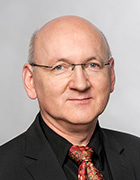
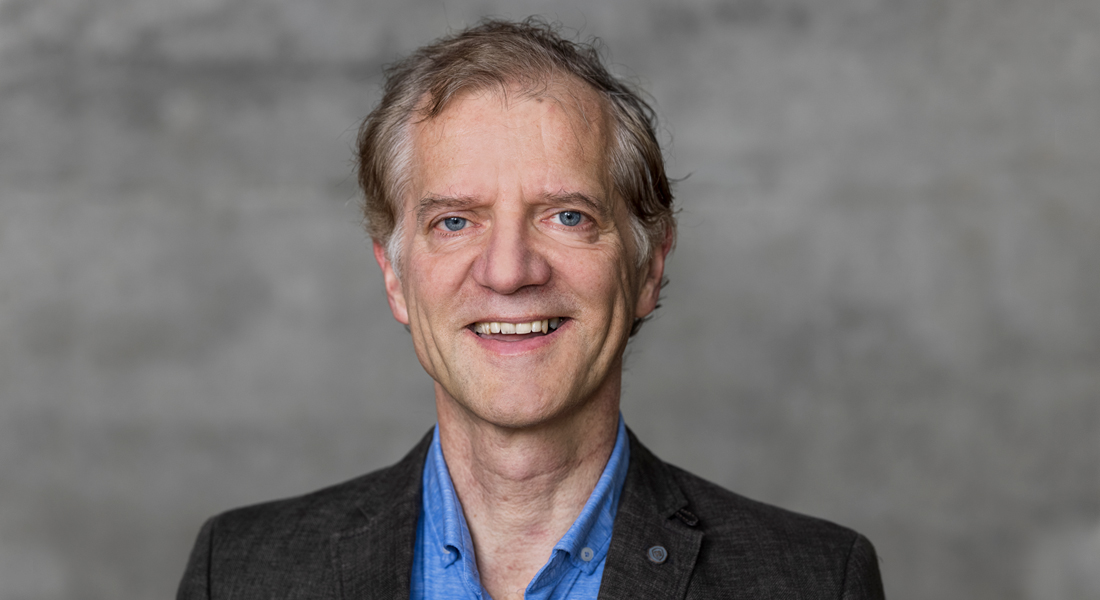
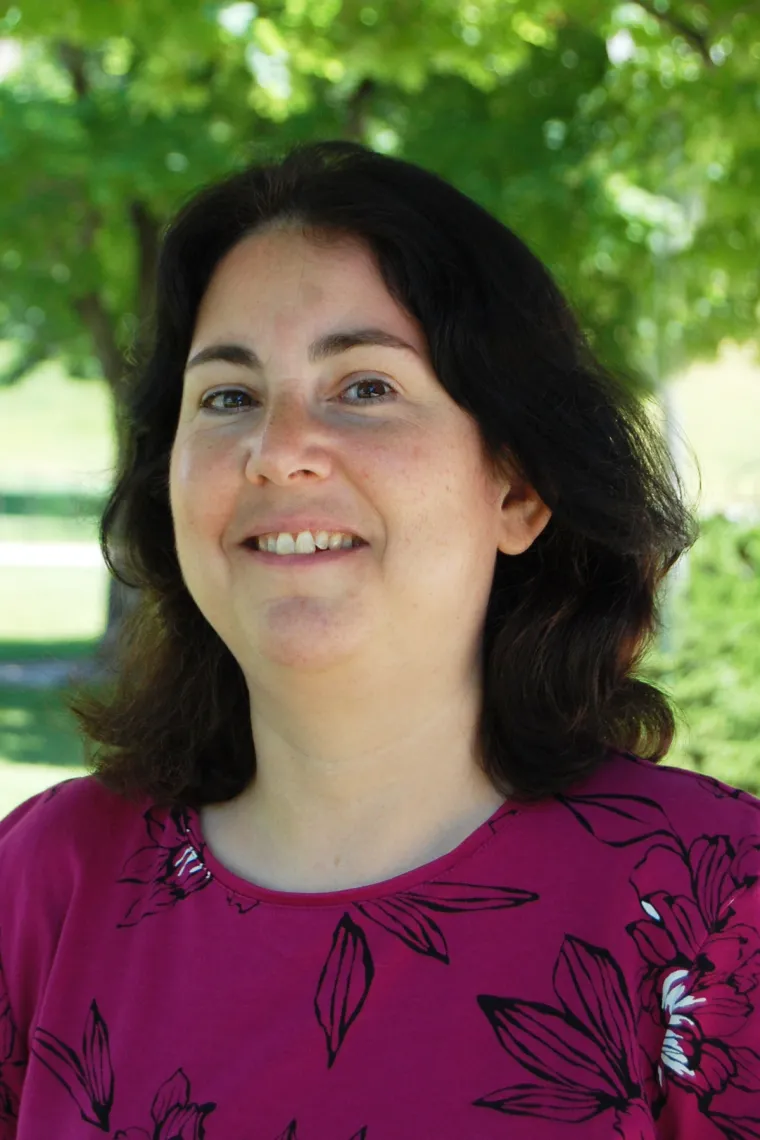
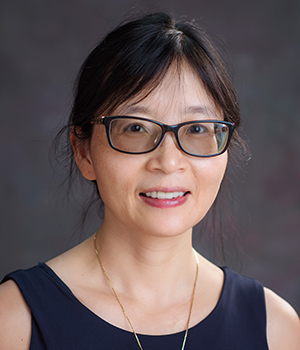
Professor Hong Hao is a John Curtin Distinguished Professor at Curtin University, affiliated with the School of Civil and Mechanical Engineering and the Curtin Research Centre for Infrastructural Monitoring & Protection. His expertise spans Structural Dynamics, Earthquake Engineering, Blast and Impact Engineering, and Structural Health Monitoring. He holds prestigious roles like Fellow of ATSE, ISEAM, and ASCE, and has led organizations such as the International Association of Protective Structures and the Australian Earthquake Engineering Society. Education: BE (Tianjin University, 1982), MSc (UC Berkeley, 1985), PhD (UC Berkeley, 1989). Awards include the Tan Chin Tuan Fellowship and multiple Ko Medals. He has authored over 200 journal articles, with recent work focusing on blast-resistant materials, seismic fragility, and AI-driven structural health monitoring. His research emphasizes resilient infrastructure, including metaconcrete structures, corrosion-resistant materials, and sensor-based damage detection. Ongoing projects involve smart tunnel safety under BLEVE explosions and modular building systems.
Steve Chase is a Professor at Carnegie Mellon University , affiliated with the Biomedical Engineering , Electrical and Computer Engineering , Neuroscience Institute , and Robotics Institute departments. His research spans Computational Neuroscience , Neural Engineering , and Systems Neuroscience , with a focus on neural circuits, motor control, and brain-computer interfaces (BCI). Research Areas: Sensation & Perception, Methods Development, Diseases & Disorders, Physiological & Anatomical Methods. Lab Highlights: Development of the RotaWheel, memory trace studies in the motor cortex, and investigations into BCI stabilization and learning dynamics. Scientific Contributions: His lab has published extensively in journals like Neuron , Nature Computational Science , eLife , and PNAS , with notable works on neural activity patterns, dimensionality reduction in calcium imaging, and sensory constraints on motor cortex modulation. Students and postdocs in his lab have received awards, including the CNBC best paper award.
Prof. Dr. Steffen Marburg is a Full Professor at the Chair of Acoustics of Mobile Systems within the TUM School of Engineering and Design at the Technical University of Munich. His research focuses on numerical methods in vibroacoustics, structural optimization, and acoustic modeling for applications in automotive, maritime, and musical instrument domains. Education: PhD from Technical University of Dresden (1998). Academic Career: Junior Professor at TU Dresden (2004), Chair of Technical Dynamics at University of the Federal Armed Forces Munich (2010), Full Professor at TUM (2015–present). Editorial Roles: Co-Editor-in-Chief of Journal of Theoretical and Computational Acoustics, Associate Editor of Journal of the Acoustical Society of America, Editor of Acoustics Australia and Mechanical Systems and Signal Processing. His research integrates computational acoustics, boundary element methods, and machine learning to address noise control and structural optimization challenges. Recent work explores acoustic metamaterials, viscothermal losses, and data-driven modeling. He has co-authored over 150 publications and led advancements in multifrequency solution methods and noise-insulating structures. Scientific awards include the Innovation Award of the Industrieclub Sachsen e.V. (1999). His editorial contributions and leadership in journals highlight his influence in computational acoustics and structural dynamics.
Cong Shi, also known as Alex Shi, is a Professor of Management at the Miami Herbert Business School, University of Miami, since 2025. Previously, he served as Associate Professor at the University of Michigan (2019-2023) and Assistant Professor there (2012-2019). His academic journey began with a B.Sc. in Mathematics (First Class Honors) from the National University of Singapore (2007) and a Ph.D. in Operations Research from MIT (2012) under Professor Retsef Levi. Education : MIT (Ph.D.), NUS (B.Sc.) Current Role : Professor, Management, Miami Herbert Business School Prior Roles : Associate Professor (Tenured), University of Michigan; Assistant Professor, University of Michigan His research spans Revenue Management, Supply Chain Management, Healthcare Operations, Human-Robot Interaction, and Data-Driven Optimization. Recent publications focus on fairness-constrained inventory, sequential pricing, and trust-aware robotics. He has received prestigious awards including the Senior Research Award (2025) and Amazon Research Award (2021), alongside multiple INFORMS recognitions. The 15 most recent articles highlight advancements in inventory control with fairness constraints, sequential pricing algorithms, and trust propagation models in robotics. His work bridges theoretical rigor with practical applications in supply chains and human-robot collaboration. Scientific Awards : Senior Research Award, Miami Herbert Business School, 2025 Amazon Research Award, 2021 INFORMS Meritorious Service Awards (2018, 2019, 2021, 2023) IOE Graduate Course Professor of the Year, University of Michigan, 2019 He has advised 10 PhD students, many now in academia (e.g., UC Berkeley, Penn State) or tech roles (Meta, Amazon). Grants include NSF funding as PI and Co-PI.
Professor Matthias Mann is a world-leading scientist serving as Director of the Proteomics and Signal Transduction department at the Max Planck Institute of Biochemistry in Martinsried, Germany, and Director of the Proteomics department at the Novo Nordisk Foundation Center for Protein Research, Faculty of Health Sciences, University of Copenhagen, Denmark. With an h-index exceeding 277 and over 350,000 citations, he is recognized as the highest cited German researcher and one of the most influential scientists globally in proteomics. His educational background includes: Ph.D. in Chemical Engineering from Yale University (1988) Master's Degree in Physics from Georg August University Göttingen (1984) Bachelor's of Arts in Mathematics from Georg August University Göttingen (1982) Professor Mann's research focuses on advancing mass spectrometry-based proteomics to understand biological systems at the protein level. His work spans technological developments in mass spectrometry, bioinformatics and computational analysis, signal transduction and posttranslational modifications, and clinical proteomics applications for disease diagnosis and treatment. The Mann lab has pioneered groundbreaking methods like SILAC for quantitative proteomics and MaxQuant for proteome data analysis. Their vision is to translate proteomics knowledge into clinical practice for predictive, diagnostic, and preventive medicine, with recent work focusing on AI-guided platforms for analyzing proteomes from minimal tissue samples. Analysis of Professor Mann's recent publications reveals a strong trend toward clinical applications of proteomics, particularly in cancer research, metabolic diseases, and neurodegenerative disorders. His work increasingly integrates spatial proteomics, single-cell resolution techniques, and artificial intelligence approaches to uncover disease mechanisms and identify potential biomarkers, with a clear shift from basic technology development toward direct clinical applications and personalized medicine. Professor Mann has received numerous prestigious awards throughout his career: 2025: Elected member of the American National Academy of Sciences 2024: Dr. H.P. Heineken Award for Biochemistry and Biophysics 2023: Otto Warburg Medal 2019: Nominated member of the Bavarian Academy of Sciences 2013: Elected member of Leopoldina German National Academy of Sciences 2012: Körber European Science Award, Louis-Jeantet Foundation Prize for Medicine, Ernst Schering Prize, and Leibniz Prize Professor Mann leads a highly collaborative research team involved in multiple international networks including the Bill & Melinda Gates Foundation, Michael J. Fox Foundation for Parkinson's Research, CLINSPECT-M, and Munich Heart Alliance. His lab has mentored numerous successful researchers, with several former postdocs receiving prestigious ERC Starting Grants. The Mann group has developed innovative clinical proteomics pipelines for analyzing archived tissue specimens and body fluids, aiming to identify protein markers for early detection of diseases such as diabetes and cancer. The Mann lab operates across two major research centers with state-of-the-art mass spectrometry facilities. Their Clinical Knowledge Graph platform integrates multi-omics data with extensive metadata, creating an ecosystem for machine learning applications in proteomics. Current research focuses on developing highly sensitive methods that can profile thousands of proteins from minimal cell samples, enabling the identification of critical disease-related proteins and supporting the development of individualized therapies.
Ellen Riloff serves as Department Head and Professor in the Department of Computer Science at the University of Arizona, where she leads research at the intersection of natural language processing (NLP) and artificial intelligence. Her work bridges theoretical advancements with real-world applications in social computing, planetary science, and crisis response systems. Education: Ph.D. in Computer Science, University of Massachusetts at Amherst (1994) Research Focus: Dr. Riloff specializes in affective computing and information extraction , developing techniques to recognize emotion, social cues, and embodied expressions in text. Her methodologies frequently employ bootstrapping, stacked learning, and semantic lexicon induction. Recent projects address crisis informatics (e.g., social cue recognition in emergencies) and interdisciplinary applications like the Mars Target Encyclopedia for planetary science data extraction. Publication Trends: Analysis of her 15 most recent publications (2021–2025) reveals three dominant trajectories: (1) affective event modeling in social contexts with applications to crisis response; (2) domain-specific NLP for planetary science and food systems; and (3) advanced language model techniques including retrieval-augmented generation and multi-view prompting. Her work increasingly integrates deep learning with traditional linguistic features. Grants and Leadership: Dr. Riloff has directed multiple NSF-funded projects, including RI: Small: Recognizing Implicit Personal States in Natural Language (2016) and RI: Small: Acquiring Domain Knowledge from Text through Cooperative Bootstrapping (2010). These initiatives pioneered bootstrapping frameworks for affective event recognition and information extraction. She also co-organized the Workshop on Pattern-based Approaches to NLP (2023), highlighting her leadership in advancing hybrid NLP methodologies. Collaborative Infrastructure: She co-developed the Mars Target Encyclopedia—a large-scale information extraction system that processes planetary science literature to create structured databases of Mars surface targets. This project demonstrates her commitment to building reusable scientific infrastructure through NLP.
Kathryn Roeder is the UPMC University Professor of Statistics and Life Sciences at Carnegie Mellon University (CMU), affiliated with the Dietrich College of Humanities and Social Sciences and the Departments of Statistics & Data Science and Computational Biology. Her research focuses on developing statistical methods for genetic and genomic data, particularly in identifying autism risk genes and analyzing single-cell multi-omic data. She earned her Ph.D. in Statistics from Penn State University and has been at CMU since 1994, previously serving as Vice Provost for Faculty (2015–2019). Education: Ph.D. in Statistics, Penn State University (1988) B.S. in Wildlife Resources, University of Idaho (1982) Research Interests: Her work integrates modern statistical techniques (high-dimensional statistics, machine learning, networks) to study complex diseases like autism and schizophrenia. Recent efforts include tools for analyzing single-cell RNA-seq and proteomic data, such as UNICORN, DAWN, and SCEPTRE. Key Awards: COPSS Distinguished Achievement Award (2020) National Academy of Sciences Member (2019) COPSS Presidents’ Award (1997) AAAS Fellow (2020) Advising & Grants: She has advised over 20 Ph.D. students, many contributing to landmark studies in autism genetics. Her grants include NIH funding for projects like the Autism Sequencing Consortium. Current research teams focus on computational biology and statistical genetics. Labs & Collaborations: Her lab develops software tools (e.g., TADA, MIND) and collaborates with the Autism Sequencing Consortium and iPSYCH-BROAD Consortium on large-scale genomic studies.
Prof. dr. Nico Van de Weghe is a full Professor of GIScience at the University of Ghent (UGent), affiliated with the CartoGIS research unit. His work bridges computer science, social science, and natural science through geospatial information studies, focusing on enabling machines to reason spatially (GeoAI). Since 2004, he has specialized in knowledge-based AI, particularly spatiotemporal reasoning and moving object analysis, with applications in animal behavior, criminology, healthcare, mobility, and sports. Van de Weghe's research emphasizes hybrid GeoAI systems combining knowledge-driven and data-driven approaches. Keywords include GeoAI, GIScience, Spatiotemporal Analysis, Moving Objects, and Data Mining. Recent publications highlight urban road network analysis, hybrid trajectory modeling, BIM semantic enrichment, and cycling safety studies using virtual reality.
Susanne Weis is a Research Professor and Group Leader of the 'Variability of the Brain' group at the Department of Brain and Behavior (INM-7), part of the Institute of Neuroscience and Medicine (INM) at Research Center Jülich GmbH. Her work focuses on understanding brain variability through advanced neuroimaging techniques and machine learning, with particular emphasis on sex differences, hormonal influences, and clinical applications in mental health. Her research interests include neuroimaging methodologies, machine learning applications in cognitive neuroscience, and the structural-functional relationships underlying brain variability. She investigates how factors like sex hormones and naturalistic stimuli (e.g., movies) affect brain connectivity and cognitive performance, aiming to improve diagnostic and predictive tools for disorders such as schizophrenia and Alzheimer’s disease. Publications highlight her contributions to developing datasets (e.g., SpEx), analyzing confound leakage in ML models, and exploring meta-analytic networks during naturalistic viewing. Her work bridges basic science and clinical impact, addressing challenges in interpreting neuroimaging data and advancing personalized medicine approaches. In her role as a group leader, Weis oversees research projects and collaborates with interdisciplinary teams. She is affiliated with the Helmholtz Association and contributes to the broader scientific community through her research in neuroimaging and computational neuroscience.
Ronald Parr is a Professor of Computer Science in the Department of Computer Science at Duke University's Pratt School of Engineering. He has been at Duke since 2000, progressing from Assistant Professor to Associate Professor with tenure, and ultimately to Full Professor. From 2014 to 2017, he served as Department Chair and delivered graduation speeches in 2015, 2016, and 2017. Dr. Parr received his Ph.D. in Computer Science from the University of California, Berkeley in 1998, with a dissertation titled "Hierarchical Control and Learning in Markov Decision Processes" under advisor Stuart Russell. He earned his A.B. in Philosophy, cum laude, from Princeton University in 1990. His primary research focuses on methods for solving large stochastic planning problems using Markov Decision Processes and approximate dynamic programming techniques. His work spans reinforcement learning, value function approximation, game theory, sensing, and robotics. Dr. Parr's research has been consistently funded by major agencies including NSF, DARPA, and ARO, with recent projects focusing on feature encoding for reinforcement learning, neurosymbolic hierarchical reinforcement learning, and reasoning in large, structured, uncertain domains. His publication record demonstrates consistent contributions to top venues including NeurIPS, ICML, and AAAI, with work that bridges theoretical foundations and practical applications. Dr. Parr has received numerous honors including being elected as an AAAI Fellow in 2023, receiving an AAAI Outstanding Paper Honorable Mention in 2013, winning the IJCAI-JAIR Best Paper Award in 2007, receiving an NSF CAREER award in 2006, and being named an Alfred P. Sloan Fellow in 2003. He has advised ten graduate students to completion across various research areas within AI and robotics. His research has been supported by over $1.5 million in direct funding to his lab, with additional collaborative funding from multiple NSF, DARPA, and ARO grants. Dr. Parr has served extensively on program committees for major AI conferences including ICML, NeurIPS, AAAI, and UAI, and has held leadership roles such as Program Co-Chair and General Chair for UAI. Dr. Parr maintains an active research group focused on reinforcement learning and sequential decision making, with ongoing projects in neurosymbolic AI, hierarchical reinforcement learning, and interpretable machine learning models, continuing to bridge theoretical foundations with practical applications in robotics and AI systems.
Ignacio Ojea Quintana serves as Assistant Professor at Ludwig Maximilian University of Munich's Faculty of Philosophy, Philosophy of Science and Religious Studies within the Chair of Philosophy of Science. He joined LMU in 2022 after a three-year research fellowship at the Australian National University's School of Philosophy. His academic foundation includes a PhD in Philosophy from Columbia University (2019), supervised by Philip Kitcher with focus on formal social epistemology, and prior Masters/BA degrees in Philosophical Logic from the University of Buenos Aires where he collaborated with the Buenos Aires Logic Group. Ojea Quintana's research employs formal methodologies to examine digital technologies' impact on knowledge organization across scientific and public spheres. His work intersects Social Epistemology , Philosophy of Data Science , and Autonomous Systems Ethics , with significant contributions to social media network analysis of controversial movements. Current projects analyze Twitter dynamics in racial justice movements, ethical constraints in AI decision systems, and consensus formation in scientific modeling. His 2021-2022 publications reveal an interdisciplinary trajectory bridging philosophy, computer science, and social sciences. Key trends include computational analysis of online discourse, formal modeling of group rationality under uncertainty, and ethical frameworks for AI systems. Works appear in high-impact venues including Nature Humanities and Social Sciences Communications and the AAAI/ACM Conference on AI, Ethics, and Society. Ojea Quintana maintains active collaborations with the "Humanising Machine Intelligence" initiative (formerly at ANU) and the Buenos Aires Logic Group. His research program demonstrates sustained engagement with technology's societal implications through formal modeling approaches and empirical digital trace analysis.
Elahe Soltanaghai is an Assistant Professor in the Department of Computer Science and a Faculty Affiliate in Electrical and Computer Engineering at the University of Illinois Urbana-Champaign. She is also a 2022 NCSA Fellow and received her PhD in Computer Science from the University of Virginia (2019), MS in Computer Engineering from Sharif University of Technology (2014), and dual BS degrees in Computer and Information Technology Engineering from Amirkabir University of Technology (2011, 2013). PhD: University of Virginia, Computer Science, 2019 MS: Sharif University of Technology, Computer Engineering, 2014 BS (Computer Engineering): Amirkabir University of Technology, 2011 BS (Information Technology Engineering): Amirkabir University of Technology, 2013 Her research spans wireless sensing and communication, focusing on Millimeter-wave Radar Sensing (for automotive, mixed reality, structural monitoring), Machine Learning for Wireless Systems (adaptive sensing/communication), Forest IoT (through-canopy biomass and soil sensing), Metaverse Technologies (gaze-based VR/AR), and Low-Power Backscatter Communication (WiFi/power-line tags). She directs the Wireless, Sensing & Embedded Networked Systems (iSENS) Lab and co-directs the Illinois Center for IoT. Her work bridges wireless networking with cyber-physical sensing , emphasizing environmental monitoring (e.g., wildfire fuel detection via radar tags) and human-computer interaction (e.g., gaze-tracking in VR). Recent articles include innovations in passive radar profiling , through-canopy biomass characterization , and integrated communication-sensing protocols . Scientific Awards: Google Research Scholar Award (2022) N2Women Rising Star (2021) ACM SIGMOBILE Dissertation Award (2020) EECS Rising Stars (2019) NCSA Faculty Fellowship (2023) Best Demo Runner-up, IPSN (2023) Teaching Excellence Award (2023) Grants: NASA FireTech Program Grant (2025) NSF Grant for Radar-based Perception (2024) Insper-Illinois Grant for VR Research (2024) Keysight Research Gifts (2022, 2023) T-Mobile Research Gift (2022)
Kaiyu Hang is an Assistant Professor in the Department of Computer Science at Rice University, where he directs the Robotics and Physical Interactions Lab (RobotΠ Lab). His research spans multiple domains of robotics with a focus on physical interaction systems. Before joining Rice, he completed his postdoc at Yale University, earned his Ph.D./M.Sc. at KTH Royal Institute of Technology, and received his B.Eng. from Xi'an Jiaotong University. His research interests include robotic manipulation, grasping, in-hand manipulation, optimization, planning, learning, estimation, and control systems. He develops algorithms that enable robots to physically interact with other robots, people, and the world across scales from small grasping tasks to large-scale dual-arm and multi-robot manipulation systems. His work has practical applications in factories, kitchens, hospitals, warehouses, and construction sites. His recent publications demonstrate strong trends in in-hand manipulation techniques, energy-efficient drone operations, and benchmarking frameworks for robotic grasping. The 2025 IROS papers accepted highlight his leadership in developing standardized competition frameworks for evaluating robotic manipulation capabilities across diverse hardware platforms. ASME Rising Star of Mechanical Engineering (2024) NSF CAREER Award (2023) Multiple finalist awards at IEEE-RAS Humanoids and ICRA conferences Junior Fellowship Award from Institute for Advanced Study, HKUST (2017-2018) As an educator, he has taught multiple robotics courses including COMP 462/562: Introduction to Modern Robotics and COMP 461: Senior Design in A Robotized World. He serves as Faculty Advisor for the Rice Robotics Club and participates in graduate admissions. His lab actively recruits Ph.D. students and offers research opportunities for undergraduate and master's students who have completed core robotics courses.
Noorbakhsh Amiri Golilarz is an Assistant Professor in the Department of Computer Science at The University of Alabama, College of Engineering. He has established himself as a prominent researcher in artificial intelligence, particularly in computer vision, deep learning, and image processing. His educational background includes: Postdoctoral Research Fellow, Computer Science, Boston College (2023) Ph.D., Electrical and Computer Engineering, Southern Illinois University Carbondale (2023) D. Eng., Computer Science and Technology, University of Electronic Science and Technology of China (2021) M.S., Electrical and Electronic Engineering, Eastern Mediterranean University (2017) B.S., Electrical Engineering, University of Guilan (2012) Dr. Golilarz's research spans multiple domains of artificial intelligence with a particular focus on computer vision, deep learning, and image processing applications. His work addresses challenges in medical imaging, satellite imagery, and cognitive neuroscience. He has made significant contributions to image denoising techniques, control chart pattern recognition, and AI applications in healthcare. His recent work has expanded into generative AI, large language models, and secure machine learning operations. His publication portfolio demonstrates consistent productivity with over 2500 citations and an h-index of 25. His most impactful work includes applications of blockchain and federated learning for COVID-19 detection, optimized support vector machines for medical diagnosis, and innovative image denoising techniques using metaheuristic optimization algorithms. Among his professional achievements: Co-founded AI Letters journal in 2024, serving as Associate Editor-in-Chief Served as Lead Guest Editor and Topic Editor for several SCI-indexed journals Held the role of Conference Program Chair Dr. Golilarz has supervised numerous graduate students and research projects, with his work spanning theoretical advancements in AI algorithms to practical applications in healthcare, energy systems, and cybersecurity. His research group has established collaborations with institutions including Boston College and Mississippi State University.
Tianxi Cai, ScD, holds the John Rock Professorship in Population and Translational Data Sciences at the Harvard T.H. Chan School of Public Health and is a Professor of Biomedical Informatics at Harvard Medical School. She directs the Translational Data Science Center for a Learning Health System (CELEHS). Her work bridges clinical and basic science data to advance personalized medicine and disease understanding. Institution: Harvard University Departments: Biostatistics (T.H. Chan School) and Biomedical Informatics (HMS) Key Roles: Faculty member since 2002, NIH-funded researcher, and leader in EHR data analytics Research focuses on biomarker evaluation, predictive modeling, high-dimensional data analysis, and survival analysis. Collaborates with the I2B2 Center to integrate clinical and genomic data. Active in developing semi-supervised learning methods for noisy EHR data and real-world evidence generation. Funding : Recent grants include NIH projects on rheumatoid arthritis treatment response (R01AR080193, R21AR078339) and semi-supervised EHR denoising (R01LM013614). Co-leads initiatives on chronic disease endpoints using multi-source data (U01FD007929). Labs/Teams : Directs CELEHS and leads the Cai Lab, focusing on translational data science and machine learning applications in healthcare.