Prof. Dr. Kai Hoberg is a Professor of Supply Chain and Operations Strategy at Kühne Logistics University (KLU) since 2017, where he also served as Department Head of the Operations and Technology Department from 2017 to 2023. Prior to joining KLU as an Associate Professor in 2012, he was an Assistant Professor at the University of Cologne (2010–2012) and a strategy consultant at Booz & Company (2006–2010). His research interests span supply chain analytics and technology integration inventory modeling for intermittent demand digital transformation in operations management additive manufacturing in after-sales services human-machine interaction in forecasting pharmaceutical supply chain challenges IoT-enabled vendor-managed inventory behavioral aspects of operations . Recent publications highlight empirical studies leveraging machine learning for semiconductor order fulfillment, typologies for additive manufacturing adoption, and process mining applications in SCM. His work frequently combines theoretical modeling with real-world validation, including partnerships with firms in food manufacturing, postal services, and medical devices. He earned a PhD in Supply Chain Management from Münster University (2006) and a Diplom in Industrial Engineering from Paderborn University and Monash University. He has held visiting scholar roles at institutions like Cornell, NUS, Oxford, and Stellenbosch.
Professor Massimiliano Tani Bertuol is a distinguished academic specializing in economics at UNSW Canberra's School of Business, where he has served as Professor since 2015. His professional affiliations extend beyond UNSW as he is an Associate Investigator/Member at CEPAR; Ageing Futures; uDASH; AI Institute; and Cyber security (IFCYBER). Additionally, he maintains international connections as a Research Fellow at the Institute for the Future of Labor (IZA) in Germany since 2005, an Associate Member at Macquarie University's Centre for Workforce Futures since 2018, and a Research Fellow at the Global Labor Organization (GLO) in Maastricht since 2016. His educational background reflects a strong foundation in economics and business, having earned a PhD in Economics from the Australian National University (2003), a Master of Science in Economics from the London School of Economics (1992), and a Bachelor's degree in Business/Economics from Bocconi University in Milan, Italy (1989). His academic journey has positioned him as a leading researcher in human capital economics with international recognition. Professor Tani Bertuol's research centers on human capital development and its economic implications. His work examines how human capital can be fostered, efficiently transferred internationally through migration, and how it affects productivity, innovation, and economic growth at both firm and national levels. His research spans multiple regions including Australia, Europe, the US, Africa, and China, with particular focus on migration economics, labor market outcomes, and the economic impacts of education and skills. His current research agenda includes non-pecuniary incentives, behavioral/financial decisions in China, occupational licensing, language skills and economic assimilation, AI-human interactions in health contexts, and labor mobility and productivity. Analysis of his recent publications reveals significant interdisciplinary trends bridging economics with public health, environmental science, and technology. His work connects migration dynamics with economic outcomes, examines household financial behaviors through gender lenses, and investigates the complex relationships between environmental factors like air pollution and economic activities including education investment and entrepreneurship. More recent work explores AI applications in health and the economic implications of pandemic responses, demonstrating his ability to address contemporary challenges through rigorous economic analysis. 2023: UNSW ARC Postgraduate Council (Arc PGC) award for excellence in research supervision 2011: Vice-Chancellor Award for Teaching Excellence 2011: Faculty Award for Teaching Excellence for teaching economics Professor Tani Bertuol has successfully supervised 4 PhD students to completion, with 1 submitted dissertation and 5 currently under supervision. His active research program is supported by significant grant funding including an ARC Linkage Project (2023-27) on regional Australia's skills shortages and high-skill refugees' employment ($354,811), an ARC Discovery Project (2019-23) on migrant aging and wellbeing ($478,000), and a NUW Alliance grant (2021-23) on hearing screening and academic outcomes ($73,367). He serves as Associate Editor for Social Indicators Research and Higher Education Research & Development, contributing to scholarly discourse in his fields of expertise. His teaching portfolio includes courses in data analytics, finance, and professional executive education focused on cost-benefit analysis and data communication. He teaches ZBUS2333 Data Analytics and Visualisation, ZBUS8105 Finance and Investment Appraisal, and ZBUS8149 Introduction to Finance, demonstrating his commitment to developing the next generation of economics professionals with both theoretical knowledge and practical skills.
Tom Wenseleers is a Professor at KU Leuven's Department of Biology within the Faculty of Science, where he leads the Laboratory of Socioecology and Social Evolution. His research spans theoretical and experimental approaches to evolutionary biology, with particular focus on social insect systems. Research spans social insects (ants, bees, wasps), microbes, viruses, and human systems Primary model organisms: social insects studying major evolutionary transitions Current projects examine caste determination, chemical communication, and evolutionary conflicts His research integrates theoretical modeling with experimental, behavioral, and comparative studies. Recent work combines genomic techniques and high-throughput GC/MS analysis to decipher chemical communication systems. Current trends show increasing interdisciplinary work spanning virology (SARS-CoV-2 variants), microbial ecology (antibiotic resistance), and robotics (pollinator behavior monitoring). The research demonstrates consistent application of evolutionary theory to diverse biological systems while maintaining social insects as the core model. Wenseleers actively mentors PhD students and postdocs, with recent graduates including Kamiel Debeuckelaere and Viviana Di Pietro. His lab receives substantial funding through multiple concurrent research projects, including Promotor roles on grants examining caste development in bee societies and microbial metabolite screening. The laboratory maintains strong international collaborations across Europe and South America. The lab operates within the Ecology, Evolution and Biodiversity Conservation unit at KU Leuven, with physical location at Naamsestraat 59, box 2466, 3000 Leuven. The research group maintains active outreach programs including science workshops for schools and public engagement events focused on insect conservation.
Kathryn Stolee is an Associate Professor in the Department of Computer Science at North Carolina State University. She received her Ph.D. in Computer Science from the University of Nebraska-Lincoln under Sebastian Elbaum after graduating from the Jeffrey S. Raikes School of Computer Science and Management. Her research spans multiple perspectives in software engineering: technical (program analysis), human (human aspects of software engineering, software product management), and educational (comparative comprehension of algorithms). Notable contributions include work on regular expression refactoring for improved comprehension, constraint solvers for code reuse identification, and cross-language code-to-code search to aid developers learning new languages. Dr. Stolee has secured over $2,000,000 in federal grants, including an NSF CAREER award. Her research combines analysis techniques (refactoring, semantic code search, code-to-code search) with human factors (comprehension, reuse, learning). Her scholarly contributions have been recognized with a National Science Foundation Faculty Early CAREER Award (2018) and a Best Paper Award at the International Symposium on Empirical Software Engineering and Measurement (ESEM, 2011). Actively engaged in the software engineering research community, Dr. Stolee serves as an author, reviewer, and organizer at top conferences. She is committed to mentoring the next generation of computer scientists and has developed educational interventions focused on software testing and code comprehension.
Franziska Klügl is a Professor in Computer Science at Örebro University's Faculty of Business, Science and Engineering, affiliated with the Center for Applied Autonomous Sensor Systems (AASS). She currently leads the KKS-funded TeamRob project on Human-Robot Teamwork and serves as Deputy Dean of the faculty since January 2023, chairing the academic appointment committee. Previously, she headed the Computer Science department (2020-2022) and served on the faculty board (2019-2022). Her research focuses on: Multi-agent systems : Development of languages, processes, and tools for agent-based simulation Interdisciplinary applications : Transportation, economics, epidemics, production, and mining simulations Simulation engineering : Integrating AI, machine learning, and formal methods to create accessible modeling tools for domain experts She created SeSAm , a visual programming tool for agent-based simulation that enables rapid prototyping of complex models. Analysis of her recent publications reveals three dominant themes: Human-robot collaboration frameworks and intention recognition systems Economic impacts of automation on labor markets and engineering services Advanced simulation methodologies using affordance theory and reinforcement learning She teaches software engineering, multi-agent systems, and agent-based modeling across multiple programs, including the WASP AI&ML PhD course. She leads research groups at the Machine Perception and Interaction Lab and oversees the TeamRob human-robot teamwork project.
David F. Anderson is the Vilas Distinguished Achievement Professor of Mathematics at the Department of Mathematics, University of Wisconsin-Madison. He has maintained an active research and teaching career spanning over two decades with significant contributions to mathematical biology and stochastic modeling. Dr. Anderson's research focuses on the interface of mathematics and biology, specifically in mathematical systems biology and algorithm design for stochastic models in biological systems. His work has fundamentally advanced chemical reaction network theory, stochastic processes in biochemical systems, and computational methods for analyzing complex biological phenomena. He has developed numerous numerical techniques for simulating and analyzing reaction networks with applications across systems biology. An analysis of his recent publications reveals a sustained focus on mathematical properties of stochastic reaction networks, with increasing emphasis on connections between chemical systems and computational frameworks. His later work explores reaction networks as computing devices, implementing arithmetic operations and neural network functionalities through biochemical processes, while maintaining rigorous mathematical analysis of network properties like ergodicity, mixing times, and solution structures. Simons Fellow (2022) Vilas Associates Award (2016) IMA Prize in Mathematics (2014) Dr. Anderson has successfully guided nine PhD students to completion, with recent graduates including Aidan Howells (2024), Tung Nguyen (2021), Chaojie Yuan (2020), Kurt Ehlert (2019), and Jinsu Kim (2018). His current graduate student is Jingyi Ma. His research has been supported by prestigious fellowships including the Simons Fellowship, indicating substantial research funding, though specific grant details aren't provided in the source material. While specific laboratory facilities aren't described in the text, Dr. Anderson maintains an active research group evidenced by continuous publications, regular PhD student completions, and collaborations with numerous researchers including Daniele Cappelletti, Jinsu Kim, and Tung Nguyen. His research program demonstrates sustained productivity with publications spanning from 2005 to the present.
Dr. Yoon Seok Kim is a Postdoctoral Fellow at Stanford University’s Department of Bioengineering, focusing on structural and mechanistic studies of light-gated ion channels. He earned his Ph.D. in Bioengineering at Stanford, mentored by Drs. Karl Deisseroth and Brian Kobilka, with research centered on ion channel selectivity and optogenetic applications. Education: Ph.D. in Bioengineering, Stanford University Dr. Kim’s research spans Optogenetics , Structural Biology , and Neuroscience , particularly the molecular mechanisms of ion channels in neural and glioma contexts. His work includes structural analysis of potassium-selective channelrhodopsins and synaptic mechanisms in neurodegenerative diseases. Recent publications highlight interdisciplinary trends, merging Neuroscience , Molecular Biology , and Bioengineering , with subfields like diffuse midline gliomas , dopamine neuron resilience , and machine learning in protein engineering . His studies often integrate advanced imaging and optogenetic tools.
Ranjana Mehta serves as Professor in the Department of Industrial and Systems Engineering at the University of Wisconsin-Madison and Affiliate Faculty in the BerbeeWalsh Department of Emergency Medicine, directing the NeuroErgonomics Laboratory while co-directing the Texas A&M Ergonomics Center and holding faculty fellowships at the Center for Population Health and Aging and Center for Remote Health Technologies and Systems. Her academic background includes: PhD in Industrial & Systems Engineering from Virginia Tech MS in Industrial Engineering from University at Buffalo BE in Production Engineering from University of Mumbai, India Mehta pioneers neuroergonomic approaches to study human performance under fatigue and stress in safety-critical environments, developing closed-loop human augmentation technologies for emergency response, space exploration, and oil/gas operations. Her work integrates adaptive AR/VR interfaces, wearable systems, human-robotic interactions, and brain-computer interfaces to enhance human-technology partnerships through user-centered design. Analysis of her recent publications reveals strong emphasis on fatigue detection in offshore workers, trust dynamics in human-robot collaboration, and sex-specific neural adaptations to exoskeletons. Her research spans human factors engineering, neuroscience, and industrial engineering, employing multimodal physiological metrics to address real-world safety challenges across high-risk industries. Her scientific recognition includes: 2024 Virginia Tech, ISE Distinguished Alumni 2023 Human Factors and Ergonomics Society, Fellow 2022 IISE Award for Technical Innovation in Industrial Engineering 2022 NASA ideas* Fellow 2022 NASEM Gulf Research Early Career Research Fellow 2022 The Human Factors Prize 2021 Virginia Tech, ISE Emerging Leaders Award 2021 Texas A&M Presidential Impact Fellow 2020 TEES Engineering Genesis Award 2020 Virginia Tech Engineering Outstanding Recent Alumni Award 2019 HFE Woman of the Year 2017 William C. Howell Young Investigator Award Her research receives funding from multiple federal agencies and industry partners supporting neuroergonomic solutions for worker safety. She mentors graduate students through ISyE 699/790/890/990 research courses and PSYCH 859 special topics, focusing on human factors engineering applications in emergency response and healthcare systems. Mehta leads interdisciplinary teams across the NeuroErgonomics Laboratory and Texas A&M Ergonomics Center, integrating engineering, neuroscience, and emergency medicine expertise to develop real-time fatigue monitoring systems and adaptive interfaces for high-stakes occupational environments.
Aurora del Carmen Munguía-López is a Visiting Assistant Professor in the Department of Chemical and Biological Engineering at the University at Buffalo, School of Engineering and Applied Sciences. She leads the Sustainable Systems Engineering Laboratory, focusing on computational tools for sustainable product and technology design. Education: PhD, Chemical Engineering (Process Systems Engineering), University of Michoacan, Mexico (2021) MSc, Chemical Engineering, Technological Institute of Celaya, Mexico (2017) BSc, Chemical Engineering, Technological Institute of Celaya, Mexico (2014) Research interests span four methodological areas: (1) multi-scale process design, (2) technology pathway analysis, (3) sustainable supply chains, and (4) environmental/social justice. Applications include plastics recycling, waste management, clean energy technologies, and sustainable manufacturing in food, pharmaceuticals, and textiles. Recent publications emphasize plastics sustainability, solvent-based recycling, techno-economic analysis, and circular economy frameworks. Notable works include Process Systems Engineering Approaches for Sustainable Plastics Management and A Fast Computational Framework for Solvent-Based Plastic Recycling . News highlights include her 2025 lab welcoming undergraduate researchers and speaking engagements at SPE Flexible Packaging Division conferences.
Andrew J Margenot is an Associate Professor in the Department of Crop Sciences at the University of Illinois Urbana-Champaign, with affiliations at the Institute for Sustainability, Energy, and Environment, Center for Digital Agriculture, and National Center for Supercomputing Applications (NCSA). His research focuses on soil biogeochemistry, particularly phosphorus and carbon cycling, soil health, and agroecosystem management. He explores topics such as soil enzyme activity, nutrient loss mitigation, and the impacts of agricultural practices on environmental systems. Margenot leads exploration into organic matter recycling, legacy phosphorus dynamics, and the application of advanced analytical techniques like radioisotopic labeling and spatial modeling. His work bridges field experimentation with computational methods to address global challenges in sustainable agriculture and environmental stewardship. Research Interests: Soil phosphorus and carbon biogeochemistry Soil health indicators and enzyme activity Agricultural nutrient management and loss mitigation Long-term agricultural experiment analysis (e.g., Morrow Plots) Impacts of land-use change on soil properties Integration of digital technologies in agricultural research Recent Articles Trends: Margenot’s recent work emphasizes methodological advancements in soil analysis (e.g., enzyme assays), phosphorus cycling dynamics in diverse ecosystems, and agricultural sustainability. Key themes include evaluating fertilizer forms, optimizing nutrient use efficiency, and quantifying environmental impacts of farming practices. Labs & Collaborations: He collaborates across institutions on projects involving soil biogeochemistry, computational modeling (via NCSA), and interdisciplinary sustainability initiatives. His research often involves field experiments, isotopic tracing, and multi-institutional datasets.
Dr. Armin Mustafa is an Associate Professor in Computer Vision and AI at the University of Surrey, where he holds a prestigious Royal Academy of Engineering Research Fellow position. He is affiliated with the Centre for Vision, Speech and Signal Processing (CVSSP), the School of Computer Science and Electronic Engineering, and the Surrey Institute for People-Centred Artificial Intelligence (PAI). His research focuses on developing AI systems for visual understanding of complex dynamic scenes, with applications in entertainment, autonomous systems, and augmented/virtual reality. Dr. Mustafa completed his PhD in general dynamic scene reconstruction from multi-view videos in 2016 from the University of Surrey under the supervision of Prof. Adrian Hilton. Prior to his doctoral studies, he worked for three years (2010-2013) at Samsung Research Institute in Bangalore, India, in the field of Computer Vision. His research expertise spans Computer Vision, Scene Understanding, 3D/4D Vision, Virtual Reality, Light Fields, Machine Learning, Video Captioning, Augmented Reality, Artificial Intelligence, and Audio-visual Video Understanding. Dr. Mustafa has pioneered advances in 4D vision, NLP, and Scene Understanding over the past decade, with a particular focus on enabling machines to model and interpret real-world environments for socially beneficial applications. His work bridges theoretical advances in computer vision with practical applications in media production, virtual reality, and autonomous systems. Analysis of Dr. Mustafa's recent publications reveals a strong focus on multimodal learning, particularly the integration of audio and visual information for scene understanding. His work spans diverse areas including shadow detection and removal, audio event classification, video captioning, person image generation, and dynamic scene reconstruction. A notable trend is his exploration of transformer architectures for both vision and audio tasks, as well as the application of self-supervised learning techniques to reduce dependency on labeled data. Dr. Mustafa has received numerous prestigious awards: 2018 - Research Fellowship, The Royal Academy of Engineering, UK 2017 - Young Researcher award, CVPR 2016 - Doctoral Consortium grant, CVPR 2015 - BMVA travel grant for ICCV 2014 - Set-Squared Research to Innovator grant 2013 - Overseas Research Scholarship, FEPS, The University of Surrey 2010 - Cadence Silver Medal, Indian Institute of Technology, Kanpur As a dedicated mentor, Dr. Mustafa supervises several PhD students working on cutting-edge topics including multi-person reconstruction, audio-visual scene understanding, and automatic storyboard generation. His research is supported by significant grants including a £15 million UKRI Prosperity Partnership with the BBC (AI4ME), a 5-year Royal Academy of Engineering fellowship (4D Vision for Perceptive Machines), and multiple projects with industry partners such as Figment Productions and Foundry. Dr. Mustafa is an active member of the Centre for Vision, Speech and Signal Processing (CVSSP), one of the world's leading research centers in vision, speech, and signal processing. He also contributes to the Surrey Institute for People-Centred Artificial Intelligence (PAI), where he serves as a Surrey AI Fellow. His work often involves collaboration with industry partners and other academic institutions across Europe.
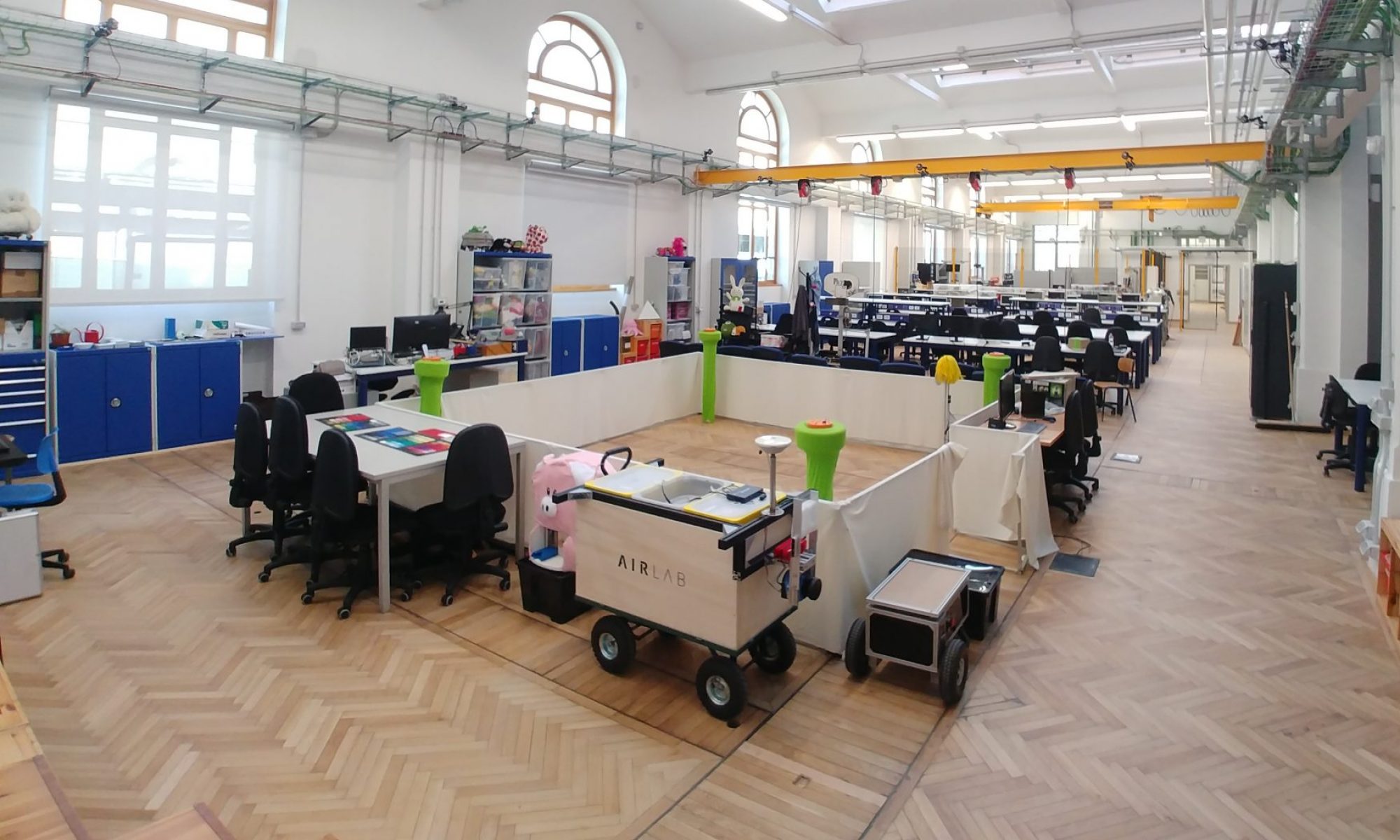
Andrea Bonarini is a Professor at the Department of Electronics, Information, and Bioengineering (DEIB) within the School of Industrial and Information Engineering at Politecnico di Milano. His research focuses on Artificial Intelligence , Robotics , and Human-Robot Interaction , particularly in assistive technologies for children with disabilities and autism therapy. Key Research Areas: Reinforcement Learning, Social Robotics, Affective Computing, Accessibility in Robot Design Notable Projects: Development of frameworks like Mushroomrl and datasets like POLIMI-ITW-S for robotics research His recent publications highlight advancements in playful robotics for neurodevelopmental disorders, emotion projection in non-bio-inspired robots, and safety experiments for small social robots interacting with children. He also contributes to ethical, social, and psychological challenges in robotics applications.
Miroslava Kavgic is an Associate Professor in the Department of Civil Engineering at the University of Ottawa. She holds a Ph.D. (United Kingdom), M.Sc. (United Kingdom), and B.Sc. (Serbia), and is a Professional Engineer (P.Eng.). Her research focuses on sustainable building engineering, carbon-negative materials, and energy-efficient design for remote communities. She leads the Centre for Indigenous Community Infrastructure at uOttawa, emphasizing culturally appropriate solutions. Education: Ph.D. in Environmental Design and Engineering (University College London, 2013) M.Sc. in Environmental Design and Engineering (University College London, 2006) B.Sc. in Mechanical Engineering (Serbia) Research Interests: Carbon capture building materials (e.g., hempcrete composites) Bioclimatic design strategies for net-zero buildings Urban energy modeling to decarbonize cities Renewable energy systems integration Advanced HVAC controls and energy efficiency Her recent publications (2021–2025) emphasize: Phase change material applications in building envelopes Machine learning for energy demand prediction Optimization algorithms like MEVO for building performance Hybrid renewable energy systems Labs/Teams: Active in the Centre for Indigenous Community Infrastructure, focusing on Northern communities' sustainable infrastructure. Collaborates with industry on building design innovations.
Serena Booth is an incoming Assistant Professor in Computer Science at Brown University. Previously, she served as an AAAS AI Policy Fellow in the U.S. Senate, advising the Senate Banking Committee on AI policy. She holds a PhD from MIT CSAIL (2023) and a BA from Harvard College (2016). Her research focuses on human-AI interaction, specification design for AI systems, and ethical AI practices. She also worked as an Associate Product Manager at Google, scaling ARCore to 100 million devices. Her research explores how humans specify AI behaviors, assess system success, and mitigate misalignment risks. Key contributions include Bayes-TrEx (model transparency via Bayesian sampling) and RoCUS (robot controller understanding). Her work has been supported by NSF GRFP and MIT Presidential Fellowships. She advocates for science policy equity through MIT's Science Policy Initiative and co-founded initiatives to support women in computing (e.g., GW6 at MIT). Education: PhD MIT CSAIL (2023), BA Harvard College (2016) Awards: Rising Star in EECS, HRI Pioneer, NSF GRFP Key Areas: Reward design pitfalls, human-robot trust, ethical AI curriculum development Her recent publications analyze reward function misdesign (AAAI 2023), human-AI teaching frameworks (HRI 2022), and feature attribution reliability (AAAI 2022). She currently seeks PhD students/postdocs focusing on human-AI alignment, reinforcement learning, and policy implications.
Jeffrey W. Lockhart is a James S. McDonnell Postdoctoral Fellow at the University of Chicago and will join the University of California, Berkeley as an Assistant Professor of Sociology in Fall 2025. He holds a PhD in Sociology from the University of Michigan, alongside Master's degrees in Gender Studies and Computer Science. His research focuses on the construction and contestation of identities—particularly sex, gender, sexuality, and race—in scientific, technological, and political contexts. Lockhart employs computational social science methodologies alongside qualitative archival analysis to explore how algorithmic systems perpetuate biases and how demographic factors influence knowledge production in social sciences. Recent work critiques the scientific quest to establish biological binaries, examines demographic disparities in algorithmic misrecognition, and analyzes right-wing LGBTQ+ movements. His scholarship bridges sociology, computer science, and science studies, emphasizing ethical implications of technological systems. Lockhart has received the James S. McDonnell Postdoctoral Fellowship and has published in venues such as Proceedings of the National Academy of Sciences and Social Currents . His research has garnered public attention through media outlets like Nature Careers and Psyche Magazine .