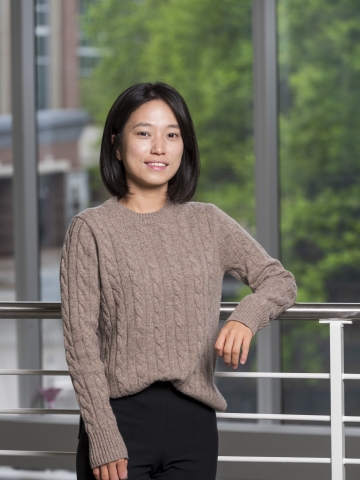
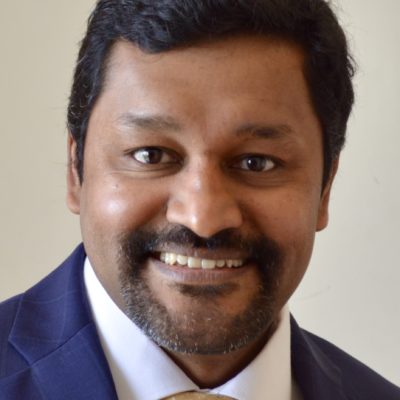
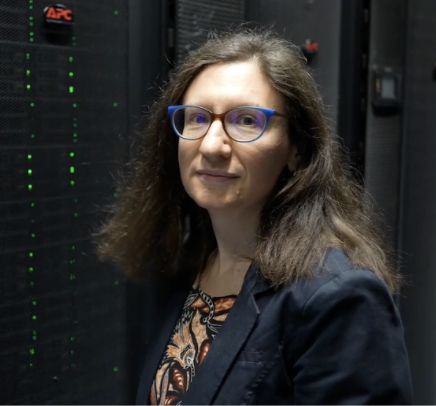
Mijin Kim is an Assistant Professor in the School of Chemistry and Biochemistry at Georgia Institute of Technology. Her research focuses on advancing nanosensor technology for cancer diagnostics and biomedical applications through interdisciplinary approaches combining nanoscale engineering, fluorescence spectroscopy, and machine learning. Research interests include: Exciton photophysics in low-dimensional nanomaterials Diagnostic/nano-omics sensor technology for early disease detection Lysosome biology and autophagy investigation Integration of machine learning with nanosensors Carbon nanotube-based optical sensors Scientific innovations include: Recipient of 2023 STAT Wunderkinds award Named in MIT Technology Review Innovators Under 35 (2022) Development of autophagy-monitoring nanosensors Quantum defect engineering for biomedical applications Advances in SWIR/NIR fluorescence imaging The Kim Lab actively develops nanosensor platforms that combine chemical engineering, data analytics, and biological interrogation to address critical challenges in cancer research and cellular biology.
Marcus Agåker is a Researcher at Uppsala University's Department of Physics and Astronomy, specializing in X-ray Physics and Chemical and Biomolecular Physics. He works at The Ångström Laboratory in Uppsala and serves as project leader for the VERITAS beamline at MAX IV Laboratory in Lund, Sweden's state-of-the-art synchrotron radiation facility. His educational background includes: PhD in Physics from Uppsala University (2006) with thesis "Double Excitations in Helium Atoms and Lithium Compounds" Dr. Agåker's research focuses on instrument and method development in soft x-ray emission spectroscopy. With expertise spanning over 25 years since joining Uppsala University in 1999, his work bridges theoretical physics and practical instrumentation. His specialty in vacuum-ultraviolet spectroscopy and soft x-ray emission techniques has positioned him as a key contributor to advancing x-ray analysis capabilities for materials science, molecular physics, and quantum mechanics research. His publication record demonstrates a clear progression from fundamental studies of atomic and molecular systems to increasingly sophisticated instrumentation for next-generation light sources. Recent work emphasizes instrument automation, high-resolution imaging, and novel approaches to studying quantum systems, with significant contributions to journals like Nature, Science Advances, and Journal of Synchrotron Radiation. As project leader for the VERITAS beamline, Dr. Agåker oversees the development of novel mirror systems, experimental chambers, and a 10m high-resolution x-ray spectrometer. This project represents a major contribution to Sweden's research infrastructure in x-ray science and supports interdisciplinary research across physics, chemistry, and materials science.
Weinan Feng is an Assistant Professor at the Faculty of Science and Engineering, specializing in photonics and nanotechnology. His research focuses on advanced photodetector design, nanoparticle manipulation, and optical field confinement. Photonic nanojet elongation via multilayer dielectric microcylinders All-dielectric bowtie core capillaries for bidirectional transport Inverse design of optical absorbers using machine learning High-birefringence nanosized optical fibers His recent work includes developing non-metallic nanoprobes for wavelength-insensitive light field generation and ultra-thin silicon photodetectors with enhanced near-infrared absorption. Applications span biochemical sensing, photonic integrated circuits, and metasurface design.
Lan Fu is a Professor and Head of the Department of Electronic Materials Engineering at the Research School of Physics and Engineering, Australian National University (ANU). She leads the Semiconductor Optoelectronics and Nanotechnology Group, focusing on advanced III-V semiconductor nanostructures for next-generation optoelectronic devices. Her research interests span the design, fabrication, and integration of optoelectronic devices such as LEDs, lasers, photodetectors, and high-efficiency solar cells based on low-dimensional III-V compound semiconductors, including quantum wells, self-assembled quantum dots, and nanowires grown by metalorganic chemical vapor deposition (MOCVD). Her work integrates materials science, nanotechnology, and device physics to enable breakthroughs in integrated photonics, neuromorphic computing, and sensing. Recent publications (2021–2025) highlight her leadership in nanowire-based technologies, with emphasis on single-photon avalanche detectors, polarization-sensitive photodetection, neuromorphic optoelectronics, and deep learning for device modeling. Her research demonstrates a strong trend toward multifunctional, miniaturized, and intelligent optoelectronic systems with applications in communications, healthcare, and energy. IEEE Photonics Society Graduate Student Fellowship (2000) Australian Research Council (ARC) Postdoctoral Fellowship (2002) ARF/QEII Fellowship (2005) ARC Future Fellowship (2012) Lan Fu has secured competitive research funding through ARC fellowships and leads a vibrant research group at ANU. She advises postgraduate students and researchers in the development of novel semiconductor devices. Her group collaborates widely and contributes to advancing the frontiers of nanoscale optoelectronics. She is actively involved in mentoring and research leadership within the School. The Semiconductor Optoelectronics and Nanotechnology Group, led by Prof. Lan Fu, focuses on the synthesis, characterization, and integration of III-V semiconductor nanowires and quantum structures. The team leverages advanced epitaxial growth techniques, particularly selective-area MOCVD, to fabricate high-quality nanostructures for photonic and electronic applications. The lab is equipped for nanofabrication, optoelectronic characterization, and device integration, supporting a full-cycle research approach from materials to systems.
Sarah Burke is an Associate Professor at the University of British Columbia with joint appointments in the Department of Physics & Astronomy and the Department of Chemistry under the Faculty of Science. Her research focuses on nanoscale electronic and optoelectronic materials, utilizing advanced scanning probe microscopy (SPM) techniques such as atomic force microscopy (AFM) and scanning tunneling microscopy (STM) in ultrahigh vacuum and low-temperature environments. Education: PhD, Physics (McGill University, 2009) MSc, Physics (McGill University, 2005) BSc(Hons), Physics with minor in Chemistry (Dalhousie University, 2002) Research Interests: Sarah’s work bridges nanoscale materials characterization and electronic/optoelectronic device development. Key themes include: Understanding organic semiconductor interfaces through molecular-scale imaging and spectroscopy Investigating graphene and other 2D materials for strain-induced electronic phenomena Developing novel SPM-optical hybrid techniques for clean energy applications Exploring surface science challenges in nanoscale photovoltaics and molecular electronics Scientific Awards: Canada Research Chair (Tier 2) in Nanoscience (2010, renewed 2015) Peter Wall Institute for Advanced Studies Early Career Scholar Award (2011) Associate Member of CIFAR Nanoelectronics Program (2010-2012) NSERC Postdoctoral Fellowship (2009-2010) Advising & Grants: Burke’s group supports interdisciplinary graduate training, with experience in collaborative research programs. Her grants include Canada Research Chair funding and NSERC fellowships. Labs & Teams: She leads the UBC Laboratory for Atomic Imaging Research (LAIR), pioneering SPM techniques for atomic-scale characterization of nanomaterials.
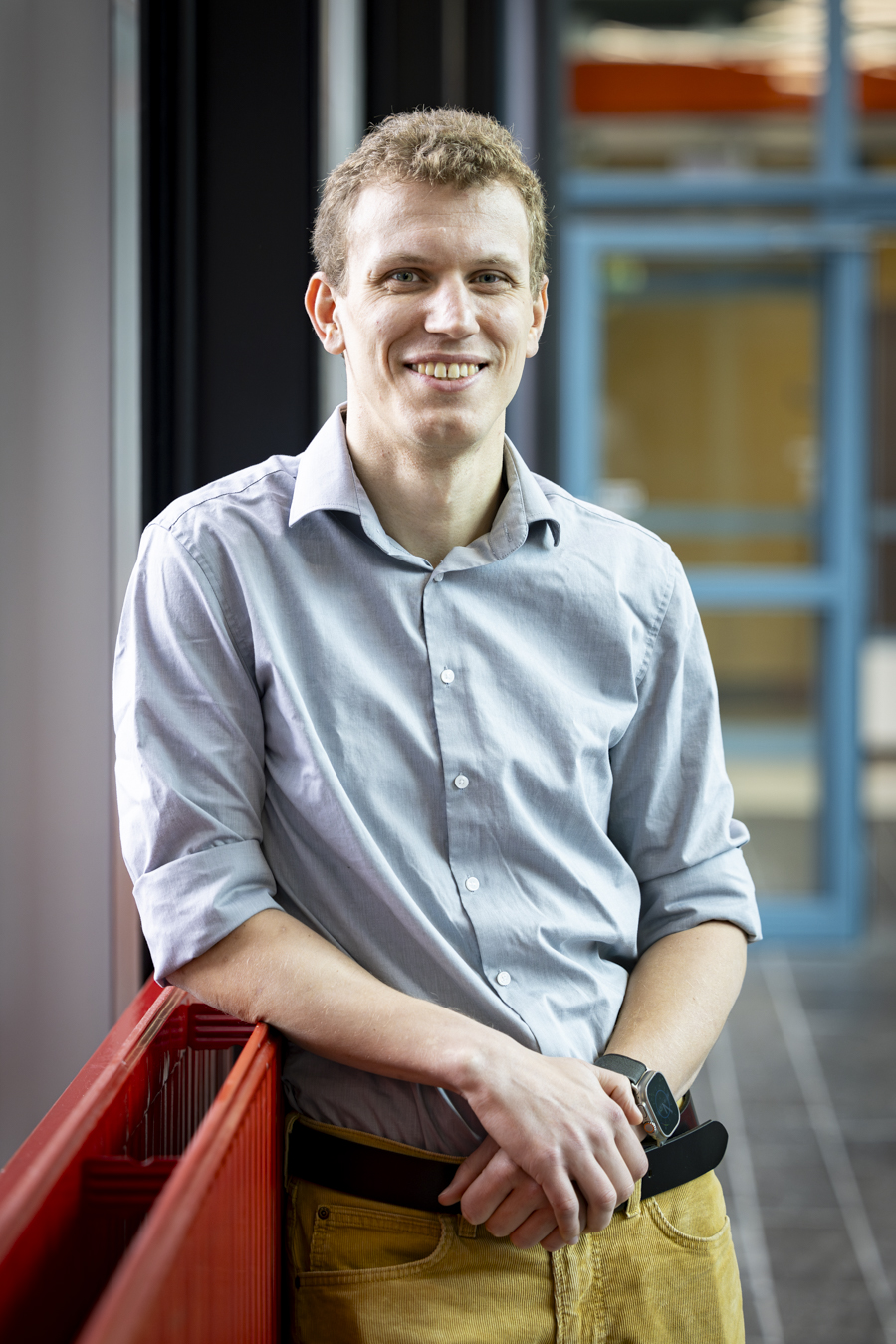
David Katzin is a researcher at GTB Tuinbouw Technologie , part of Wageningen University & Research . His work focuses on greenhouse climate modeling , energy efficiency , and sustainable horticulture . He has developed open-source tools like the Virtual Greenhouse Simulator and GreenLight for analyzing greenhouse systems and lighting technologies. His research spans topics such as radiometric properties of shading screens , LED lighting optimization , and vertical farming sustainability . Recent publications highlight his contributions to energy-saving measures, heat requirements under different lighting systems, and the environmental impact of controlled-environment agriculture. Collaborations include work with experts like Christian Stanghellini and Leo Marcelis. Current projects involve probabilistic modeling for LED efficiency in greenhouses (2016–2021), with ongoing activities in technical lectures, data sharing, and conference presentations. He contributes to datasets and software tools that advance greenhouse technology research and promote open science.
Angelo Dragone serves as a Distinguished Staff Engineer at SLAC National Accelerator Laboratory, operated by Stanford University. He currently holds the dual leadership roles of Deputy Associate Lab Director for the Technology Innovation Directorate and Program Director for Detector R&D and Applied Microelectronics. Dr. Dragone also contributes to academic instruction as an instructor for Advanced Integrated Circuit Design (EE 214B) at Stanford University during the Winter quarter. Dr. Dragone earned his Ph.D. in Microelectronics from the Polytechnic University of Bari, Italy, with research conducted at Brookhaven National Laboratory on mixed-signal readout architecture for radiation detectors. His professional journey includes working at Brookhaven National Laboratory from 2004 before transitioning to SLAC in 2008, where he has since established himself as a leader in detector technology. With over two decades of experience in scientific instrumentation, Dr. Dragone's research focuses on innovative radiation detector systems with applications spanning multiple scientific domains. His work encompasses: Design of ultra-fast X-ray detector architectures for X-ray Free-Electron Lasers Development of high frame rate, large dynamic range detector systems Creation of efficient, scalable systems with real-time processing capabilities Exploration of fundamental performance limits in radiation detection systems Applications in photon science, particle physics, medical imaging, and national security Dr. Dragone's publication record reveals a strategic evolution toward increasingly sophisticated detector technologies. His recent work demonstrates strong integration of advanced electronics with machine learning techniques for particle detection, while maintaining focus on practical implementation challenges in high-energy physics environments. The publications span fundamental physics measurements to cutting-edge circuit design, reflecting his dual expertise in both theoretical understanding and practical engineering solutions. As head of the Integrated Circuits Department within SLAC's Instrumentation Division, Dr. Dragone leads strategic R&D planning for the SLAC X-ray detectors Initiative. His leadership extends to the Applied Microelectronics program, where he guides research directions that bridge academic inquiry with real-world scientific applications. Under his direction, these programs have made significant contributions to advancing detector technology for major scientific facilities.
Jing Kong is the Jerry McAfee (1940) Professor in Engineering at MIT's Department of Electrical Engineering and Computer Science. Her research focuses on nanoscale materials and devices, including two-dimensional electronics and quantum systems. She directs advancements in nanofabrication and materials characterization, contributing to semiconductor technology and environmental applications. Research Interests: Her work spans nanoscale materials synthesis, electronic devices, and optical characterization. Key areas include 2D materials (e.g., MoS₂, graphene), quantum devices, and scalable fabrication techniques for industrial applications. Awards: Recipient of the 2024 Postdoctoral Mentoring Award for exceptional guidance in research development. Innovations: Pioneered methods for wafer-scale 2D material integration and sensor design, with recent breakthroughs in catalysis and memory devices.
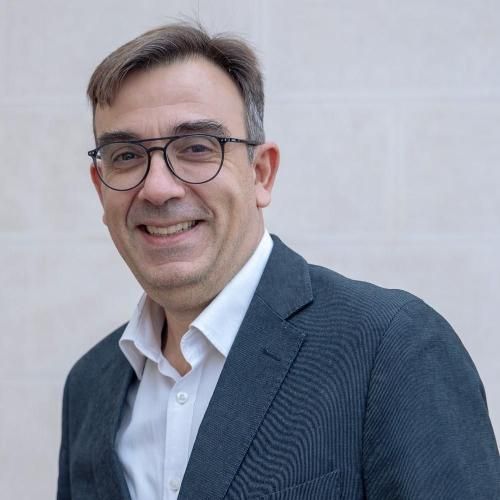
Ignacio Bravo Muñoz is a Professor at the Department of Electronics, Universidad de Alcalá (Spain), affiliated with the GEINTRA research group focusing on Electronic Engineering applications in Intelligent Spaces and Transport. He holds a PhD from Universidad de Alcalá (2007) with a thesis on FPGA-based object detection using computational vision and PCA techniques. His research spans indoor positioning systems (using LED/PSD sensors), sustainable energy frameworks for smart communities, FPGA-based hardware design , and remote laboratory platforms . Key contributions include real-time metrology for ESA's PLATO mission, cooperative demand response algorithms, and innovative pedagogical approaches integrating sustainability into digital electronics education. Recent work emphasizes edge computing for video surveillance , machine learning in human action recognition , and non-cooperative target identification using radar signatures. His interdisciplinary projects bridge electronics engineering with energy systems, biomedical applications, and educational technology. He actively collaborates with industry and academic institutions on EU-funded projects, contributing to advancements in aerospace instrumentation (PLATO FPA qualification), smart grid technologies, and STEM education innovation.
Yuemin Zhu is a Permanent Professor at INSA-Lyon and CNRS Permanent Researcher Director at CREATIS (Centre de Recherche en Acquisition et Traitement de l'Image pour la Santé), where he directs the MYRIAD work group focused on Modeling & analysis for medical imaging and diagnosis. He also serves as China Affairs Coordinator at INSA-Lyon, facilitating international academic collaboration between France and China. His research spans multiple areas of medical imaging with particular expertise in diffusion tensor imaging (DTI), cardiac MRI, and advanced image reconstruction techniques. His work integrates sophisticated mathematical approaches with clinical applications, focusing on improving imaging quality, developing novel reconstruction algorithms, and applying machine learning to medical image analysis. His research has significant implications for cardiac diagnostics, tumor characterization, and materials identification in medical imaging contexts. The publication trends show a clear evolution from fundamental image reconstruction techniques to increasingly sophisticated deep learning approaches. His recent work heavily features self-supervised learning methods, transformer architectures, and multi-modal fusion techniques applied to challenging medical imaging problems. The research spans cardiac imaging, oncology applications, and materials science, demonstrating remarkable versatility while maintaining focus on core imaging methodology. Professor Zhu has mentored numerous researchers through collaborative projects, as evidenced by his extensive publication record with varied co-authors. His work has been supported by various research grants enabling the development of advanced imaging techniques and their clinical translation. He leads the MYRIAD research group at CREATIS, which focuses on developing innovative mathematical and computational approaches for medical imaging analysis and diagnosis, with particular emphasis on cardiac applications and diffusion imaging techniques.
Dr. Alexander Heinlein is an Assistant Professor in the Numerical Analysis group at the Delft Institute of Applied Mathematics (DIAM), Faculty of Electrical Engineering, Mathematics & Computer Science (EEMCS), Delft University of Technology (TU Delft). His work bridges scientific computing and machine learning through scientific machine learning (SciML) , focusing on domain decomposition methods and multiscale approaches for solving complex partial differential equations on modern hardware like GPUs. Research interests include: Developing high-performance computing algorithms for nonlinear PDEs with applications in fluid-structure interaction and photonic crystals Advancing physics-aware machine learning techniques for groundwater heat transport and post-burn contraction prediction Creating parallel preconditioners like FROSch for challenging problems in computational mechanics Building hybrid numerical-ML frameworks with domain decomposition for multi-physics applications His recent publications highlight a 128-235x speedup in biomedical simulations through deep operator networks , and keynote presentations on geometric challenges in machine learning-based surrogate models at international conferences like CASML 2024. Scientific awards include: 2025 NWO Open Technology Programme grant for the RAPID-Wind project on offshore wind turbine foundations Students and collaborations involve: Yuhuang Meng (PhD candidate, 2024) Jing Zhao (co-supervisor) Prof. Jun Zou (Chinese University of Hong Kong collaboration, 2024) He leads software development for COMSOL and Trilinos extensions while maintaining open-source reproducibility standards.
Ajey Jacob is the Director of the Application Specific Intelligent Computing (ASIC) Lab at the University of Southern California's Information Sciences Institute (ISI). With 16 years of industry experience from Intel Corporation and GlobalFoundries, Dr. Jacob brings deep expertise in semiconductor research, development, and manufacturing to his academic role. His professional journey includes founding and leading GlobalFoundries' Differentiating Technology Research Group and managing strategic research consortia at Intel. Dr. Jacob's research focuses on advanced semiconductor technologies with particular emphasis on silicon photonics , non-volatile memory (MRAM, FeRAM, RRAM), photonic SRAM , in-memory computing , and processing-in-pixel architectures . His work bridges materials, devices, integration, and fabrication aspects of next-generation computing systems. Recent publications demonstrate a strong trajectory toward photonic computing for AI acceleration and energy-efficient edge intelligence systems. Dr. Jacob's publication record is exceptional with over 300 worldwide patents (including more than 220 USPTO issued patents), four book chapters, and more than 100 journal and conference papers. His most recent work (2023-2025) shows continued innovation in photonic memory systems, neuromorphic computing architectures, and optical interconnects for high-performance computing. Master Inventor at GlobalFoundries (2017-2020) Semiconductor Research Corporation (SRC) Mahboob Khan Outstanding Industry Liaison Award (2013, 2016) Dr. Jacob actively contributes to the research community as a committee member for IEEE Electronics Components and Technology Conference (ECTC) Silicon Photonics Session, has served as chair and co-chair for the International Conference on Frontiers of Characterization and Metrology for Nanoelectronics (FCMN), and is co-chair for the MIT/AIM Photonics monolithic integration session of the Integrated Photonics Systems Roadmap (IPSR). His industry-academia bridge provides unique opportunities for students interested in both fundamental research and practical semiconductor technology development. The ASIC Lab under Dr. Jacob's direction represents a convergence point for photonics, memory systems, and AI acceleration research, with strong connections to semiconductor industry challenges and opportunities. His work on photonic SRAM and in-memory computing addresses critical bottlenecks in modern computing architectures while maintaining practical considerations from his extensive industry experience.
Dr. Jinna Chen is a Research Associate Professor in the Department of Electronic and Electrical Engineering at Southern University of Science and Technology (SUSTech), where she conducts cutting-edge interdisciplinary research at the intersection of biomedical engineering, photonics, and precision medicine. She holds positions as a Shenzhen high-level overseas talent and a senior member of IEEE, with additional affiliations including the Biomedical Photonics Professional Committee of the Chinese Optical Society and the Tumor Rhythm Professional Committee of the Chinese Anti-Cancer Society. Education: Ph.D. from The University of Hong Kong (2011-2015) M.S. from Sun Yat-sen University (2008-2011) B.S. from South China University of Technology (2004-2008) Dr. Chen's research focuses on precision, intelligent, and individualized diagnosis and treatment technologies for critical illnesses. Her work spans early screening of critical illnesses through Raman spectroscopy, submucosal tumor detection using high-resolution optical coherence tomography, surgical tissue identification with Raman hyperspectral imaging, and precision medicine through blood drug concentration quantification. Her publications in high-impact journals demonstrate strong integration of optical engineering, machine learning, and clinical applications. Scientific Recognition: 2023 Photonics Global Conference (PGC) Young Scientist Award recipient Champion of Sun Yat-sen University's Entrepreneurship Planning Competition (2018) Author of 52 SCI papers with an H-Index of 16 and over 1,000 citations Chair of IEEE Optoelectronics Global Conference on Biomedical Photonics (four times) Dr. Chen has secured significant research impact through six authorized Chinese invention patents and one translated scientific achievement. Her collaborative work bridges engineering innovation with clinical applications, particularly evident in her publications in The BMJ , Nature Structural & Molecular Biology , and Light: Science & Applications (including an ESI Highly Cited Paper). She maintains active roles in editorial boards and professional societies that advance biomedical photonics research. Her laboratory focuses on developing integrated optical systems for medical diagnostics, with particular emphasis on creating practical clinical tools that can transition from research to real-world healthcare settings.
Dr. Cédric Alexandre is a senior researcher at the CNAM (Conservatoire National des Arts et Métiers) affiliated with the CEDRIC Laboratory , specializing in Electronics and Signal Processing . His work bridges precision optical measurement systems and wireless communication technologies. Key research areas: Optical telemetry and distance measurement systems Phase noise characterization and microwave photonics 5G waveform optimization and RF power amplifier analysis Laser-based quantum metrology and stabilization His 2024 publications on spectral hole burning and luminescence in Eu:YSO crystals demonstrate cutting-edge contributions to quantum optics. Earlier work (2016-2022) includes Nature Photonics and Optics Express articles on photonic microwave generation with zeptosecond-level timing noise. He has developed high-accuracy laser rangefinders like the Arpent prototype and contributed to 5G network testbed frameworks. Technical collaborations span institutions in France, Germany, Switzerland, and the US with co-authors from IEEE Photonics Technology Letters and SPIE conferences. His 2010 patent and 2002-2006 work on chip design flow show sustained expertise across decades.
Prof. Dimitris Syvridis serves as a Full Professor at the Department of Informatics and Telecommunications, National and Kapodistrian University of Athens (NKUA), where he leads the Photonics Technology Laboratory. With over three decades of academic service at NKUA since 1993, he has participated in numerous European research projects focusing on photonic technologies and optical communications infrastructure. His educational foundation includes: BSc in Physics (1982) MSc in Telecommunications (1984) PhD in Physics (1988) Prof. Syvridis's research centers on optical communications , photonic integration , and quantum security systems . His work pioneers practical implementations of quantum key distribution (QKD) networks and optical physical unclonable functions (PUFs), addressing critical vulnerabilities in hardware security. Recent publications demonstrate expertise in machine learning-resistant security mechanisms and field-deployable quantum communication systems, with over 130 scientific contributions to the field. Analysis of his 2024-2025 publications reveals dominant themes in quantum-safe cryptography (75% of output), particularly QKD system optimization and optical PUFs. His research consistently bridges theoretical quantum concepts with real-world deployment challenges, including aerial fiber transmission, free-space optics, and hybrid network architectures. The interdisciplinary nature of his work spans photonics, cybersecurity, and machine learning countermeasures. Prof. Syvridis actively contributes to the scientific community as a reviewer for IEEE journals and leads the Photonics Technology Laboratory's research in secure optical networks. The laboratory maintains strong European collaborations and focuses on translating photonic innovations into field-deployable security solutions, particularly for next-generation communication infrastructures requiring quantum-resistant protection.