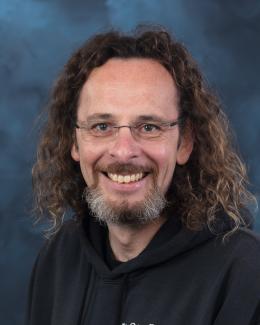
Michal RiganView profile
Research Fellow
Dr. Michal Rigan is a Research Fellow in the Department of Physics and Astronomy at the University of Sussex, within the School of Mathematical and Physical Sciences. His research focuses on experimental particle physics, particularly with the DUNE (Deep Underground Neutrino Experiment) and previously with the SNO+ experiment. Dr. Rigan completed his PhD in Physics at the University of Sussex, where he worked on the SNO+ experiment, focusing on calibration systems and developing a burst trigger system for supernova detection. Before his PhD, he earned an MSci in Particle Physics and Physical Chemistry from University College London, where his master's thesis involved work on the SHiP experiment in collaboration with CERN. His research interests span neutrino physics , supernova detection , liquid argon detector technology , and trigger systems development . Dr. Rigan has made significant contributions to the field through his work on calibration systems, supernova sensitivity analysis, and physics trigger implementation for large-scale particle physics experiments. His recent publications (2023-2025) demonstrate a strong focus on the DUNE experiment, with particular emphasis on neutrino interaction vertex reconstruction using deep learning, supernova pointing capabilities, detector technology development, and data analysis techniques for liquid argon time projection chambers. His work shows a progression from detector calibration and supernova detection in SNO+ to more advanced physics trigger systems and analysis techniques in DUNE. Dr. Rigan has received recognition through citations for his work, with several publications accumulating significant citation counts (up to 25 citations for the DUNE far detector vertical drift technology paper). His research has been highlighted by various platforms including news outlets, social media, and academic readership services. As an educator, Dr. Rigan teaches C++ programming to students in the School of Mathematical and Physical Sciences. His background as a full-stack developer during a gap year before his PhD provides him with practical industry experience that informs his teaching approach. He is actively involved in mentoring and would be an excellent supervisor for students interested in experimental particle physics and computational methods. Dr. Rigan's laboratory work is primarily associated with the DUNE experiment ( https://www.dunescience.org/ ), where he contributes to the development of physics trigger systems and supernova detection capabilities. His work involves close collaboration with international research teams working on this major particle physics project.