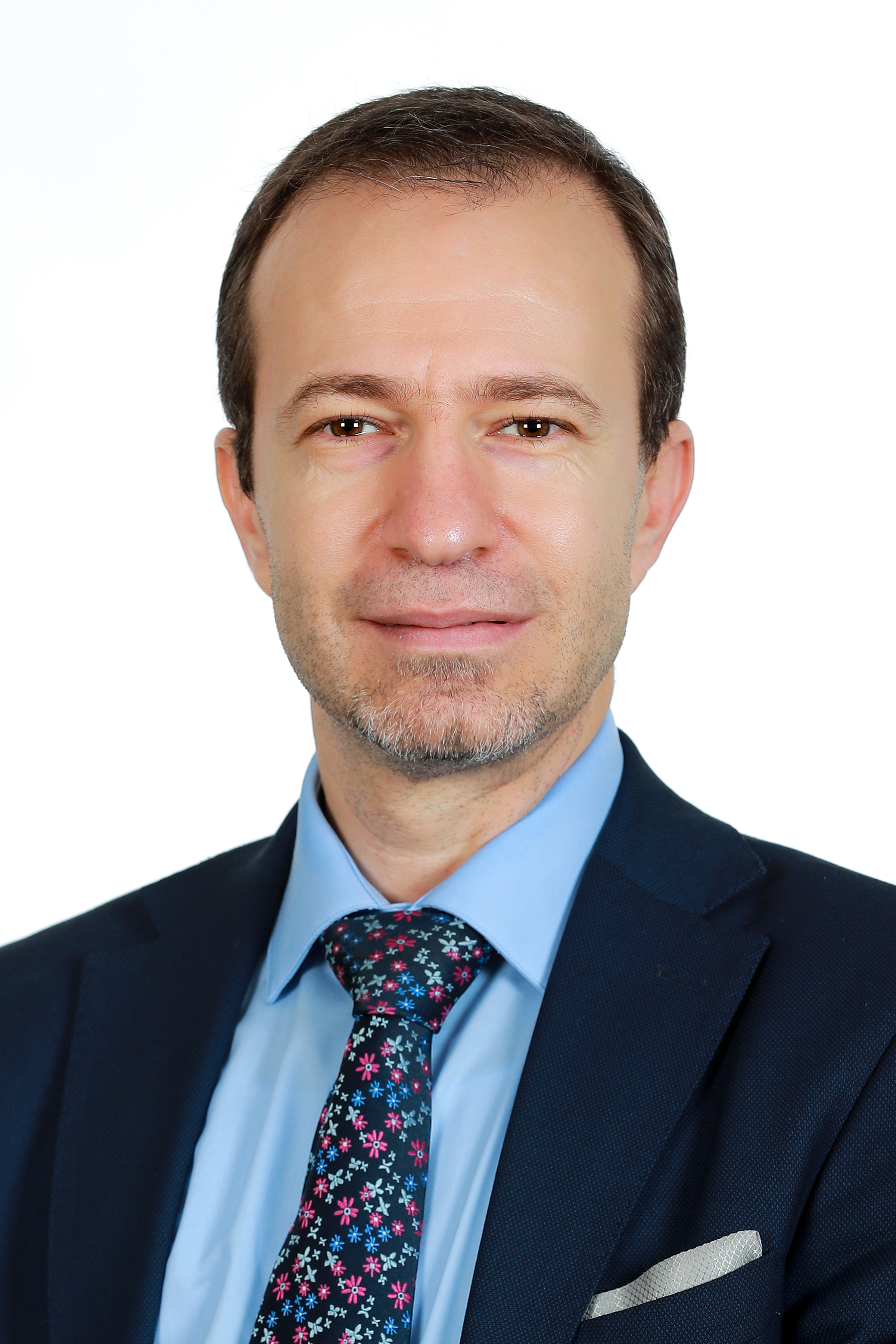
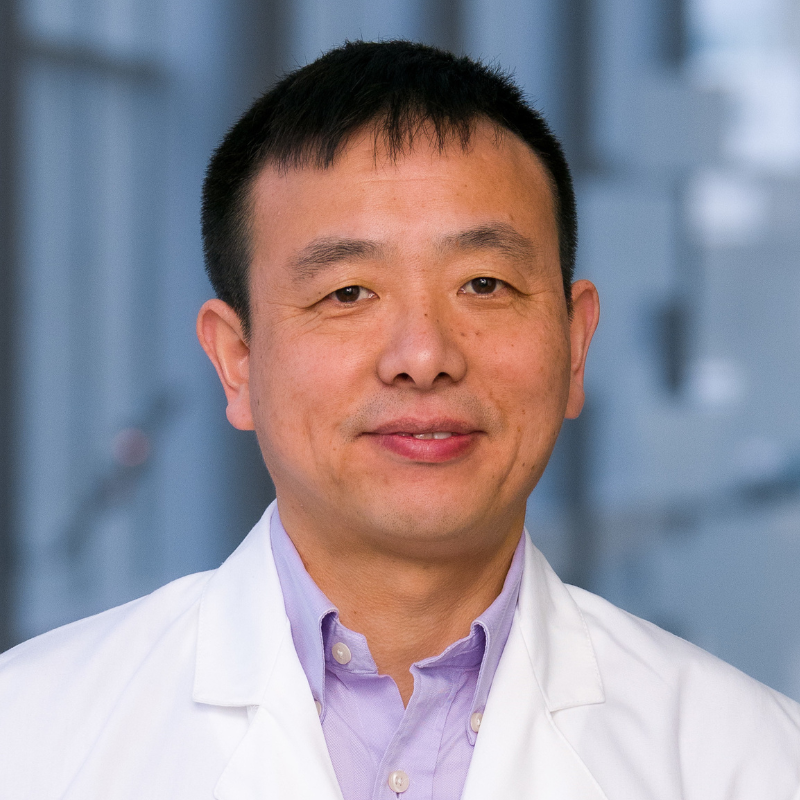
Professor Abdallah Berrouk is a faculty member in the Department of Mechanical & Nuclear Engineering at Khalifa University. With 16 years of university lecturing experience, he has developed PhD courses in Machine Learning for Fluid & Heat Flow and Turbulence Theory & Modelling, while supervising 7 PhD students and 13 Masters students. He has secured over $6M in research funding and leads the Gas Processing Technology theme at the KU Research Centre on Catalysis and Separation. PhD, Mechanical Engineering, University of Manchester MSc, Oil & Gas Enterprise Management, University of Aberdeen His research focuses on Computational Mechanics , Machine Learning , and Thermal Analysis , with particular emphasis on Nanofluid Mechanics , CO2 Capture , and Power Cycles Modelling . Recent publications analyze supercritical CO2 cycles, chemically reactive nanofluids, and rotating packed bed technologies for CO2 capture. Scientific awards include the ASTFE Nuclear Thermal Hydraulics CFD Award (2024) and multiple ADNOC R&D honors (2013-2014). He chairs the university's Undergraduate Studies committee and serves on editorial boards of the American Journal of Fluid Dynamics and Pollutants Journal.
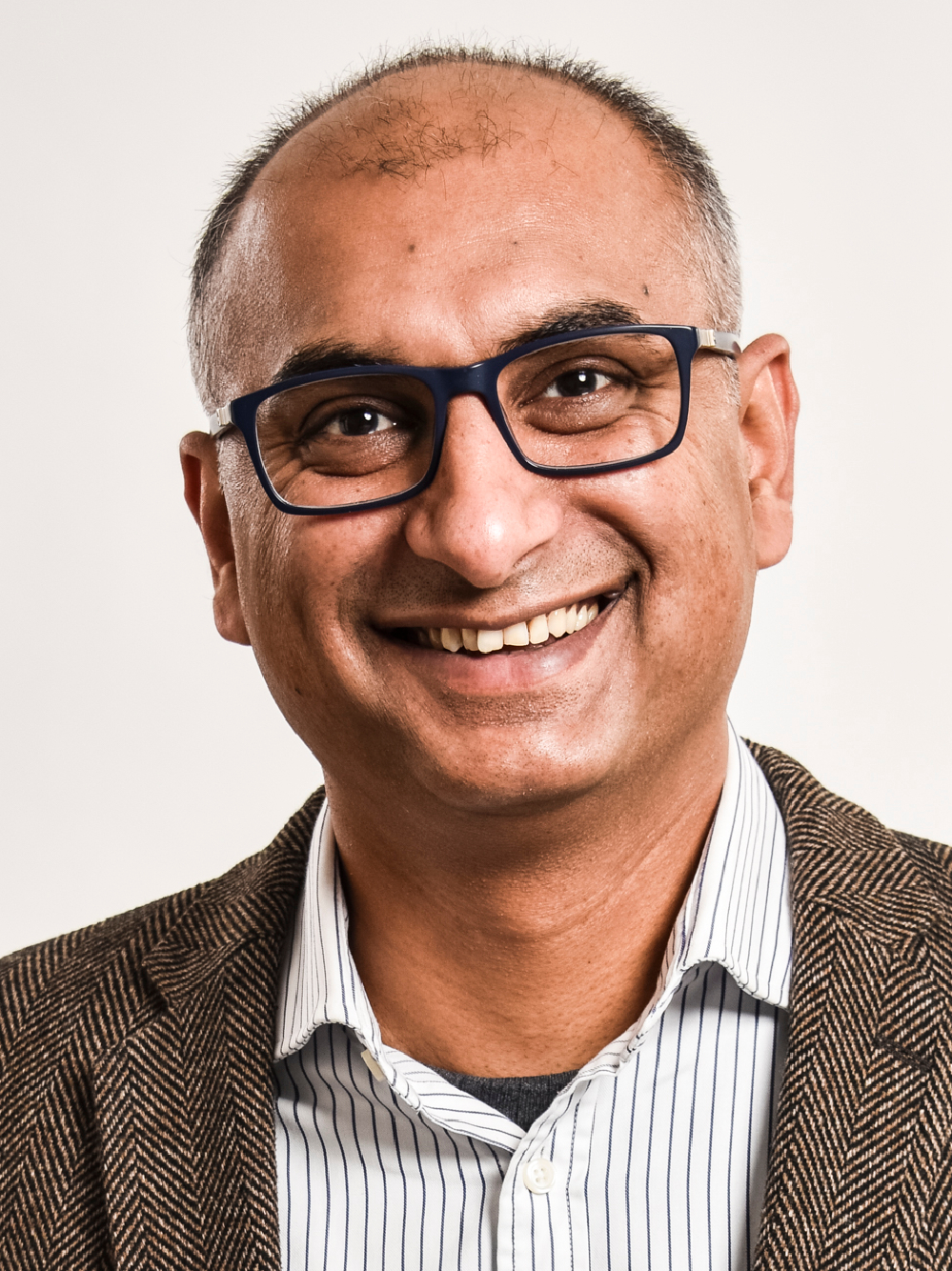
Dr. Imran Afgan is an Associate Professor at Khalifa University in the Department of Mechanical & Nuclear Engineering. He has held academic and research positions at institutions including the University of Manchester, Université Pierre et Marie Curie, and Air University, and is a chartered engineer (CEng) and registered Professional Engineer (PEC). His work focuses on high-fidelity simulations and computational fluid dynamics (CFD) applied to nuclear thermal hydraulics and renewable energy systems. Education: PhD in Mechanical Engineering, University of Manchester, United Kingdom BS in Mechanical Engineering, Ghulam Ishaq Khan Institute of Engineering Sciences & Technology, Pakistan Dr. Afgan’s research spans turbulence modeling, fluid-structure interaction, conjugate heat transfer, and uncertainty quantification. He has secured over USD 12 million in funding for projects such as PerAWAT , ReDAPT , CARE , and ANTIFOD , with applications in nuclear reactors, tidal energy, and solar thermal systems. His projects integrate machine learning and advanced CFD techniques to address multi-physics challenges. His scientific accolades include the IAHR Harold Jan Schoemaker Award and Fellowships from the Institution of Mechanical Engineers UK and the Higher Education Academy. Dr. Afgan has taught courses such as Advanced Fluid Mechanics and Turbulence Theory and Modelling.
Dr. Johan Messchendorp serves as an Associate Professor at the Faculty of Science and Engineering at the University of Groningen, specializing in Nuclear Energy research within the Energy and Sustainability Research Institute Groningen. His primary research focus lies in high-energy particle physics, with extensive involvement in the international BESIII Collaboration. His work primarily centers on precision measurements of particle decays, cross-sections, and branching fractions using data from the BEPCII collider. Dr. Messchendorp's research interests span multiple areas of particle physics including charmonium physics, baryon spectroscopy, meson physics, and precision measurements of fundamental particle properties. His work frequently involves analyzing data from electron-positron collisions to study charmed particles, hyperons, and other hadronic systems. He has made significant contributions to understanding Cabibbo-favored and suppressed decays, rare processes, and the properties of exotic hadronic states. Analysis of his recent publications reveals a strong focus on precision measurements in heavy quark physics, particularly involving charmed particles and baryons. His work often employs advanced statistical techniques and increasingly incorporates machine learning approaches for signal extraction. The majority of his research utilizes data from the BESIII detector at the BEPCII collider, with emphasis on measuring branching fractions, cross-sections, and studying the properties of various hadronic resonances. Dr. Messchendorp has supervised 11 research projects according to institutional records, though specific student names are not listed in the available documentation. His research has been supported by numerous grants enabling participation in the international BESIII Collaboration, which involves institutions from multiple countries conducting experiments at the Beijing Electron Positron Collider. His primary research environment is the BESIII experiment, a state-of-the-art particle physics detector at the Beijing Electron Positron Collider II (BEPCII) in China. This international collaboration involves hundreds of scientists from institutions worldwide, focusing on studies of charmonium physics, charm physics, light hadron spectroscopy, and searches for physics beyond the Standard Model.
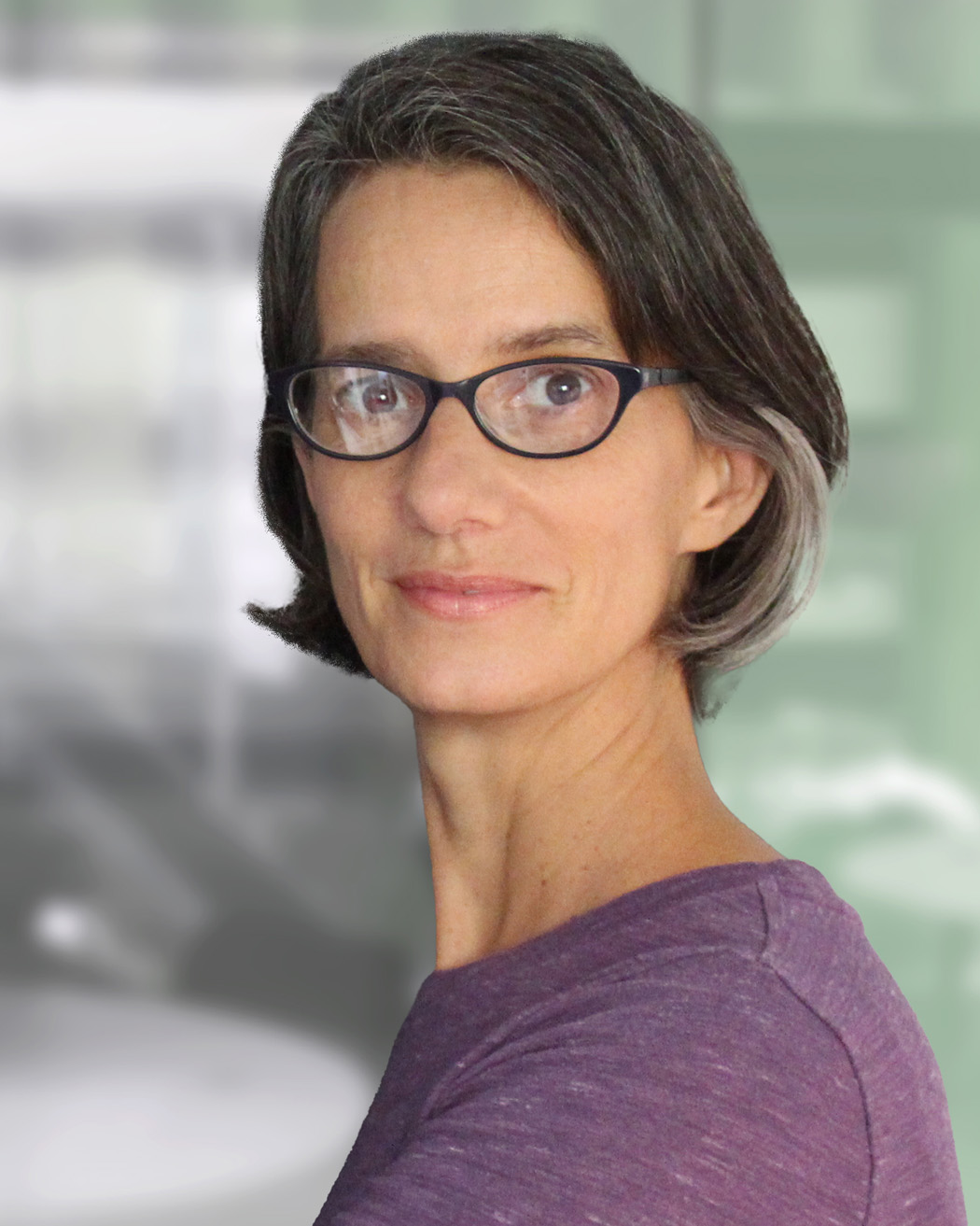
Miguel Carvajal Zaera is a Professor at the Department of Integrated Sciences within the Faculty of Experimental Sciences , Universidad de Huelva. He is affiliated with the Advanced Studies in Physics, Mathematics, and Computing research center, and previously contributed to the Structure of Matter research group. Education : PhD in Physics from the University of Seville , with a thesis on Analytical methods for anharmonic potentials in molecular physics (2000), supervised by Dr. Renato Lemus and Dr. José Miguel Arias Carrasco. Research Interests focus on molecular physics, spectroscopy, and astrophysical applications. His work bridges theoretical models (e.g., anharmonic oscillators, quantum phase transitions) with experimental studies on molecular dynamics, isotopologues, and interstellar chemistry. Key areas include: Quantum mechanical analysis of molecular vibrations and phase transitions Development of algebraic models for spectroscopic simulations Chemical reaction networks in astrophysical environments Interstellar molecule detection and characterization Publication Trends (15 most recent) highlight collaborations in CO2 isotopologue studies, methyl formate analysis, and machine learning applications to astrophysical spectral data. His theoretical work on quantum phase transitions and anharmonic effects spans both molecular and nuclear physics. Research Groups include: FQM370 Subatomic and Molecular Physics FQM318 Structure of Matter (past involvement)
Dr. Gert Folkers is an Assistant Professor in the Department of Chemistry at Utrecht University's Faculty of Science, specializing in NMR Spectroscopy within the Biomolecular Sciences division. His research focuses on applying advanced NMR techniques to study biological macromolecules in their native environments. He is based in the Nicolaas Bloembergen building and has been actively involved in both research and teaching at the university for many years. Dr. Folkers' research primarily centers on Nuclear Magnetic Resonance spectroscopy with emphasis on solid-state NMR and Dynamic Nuclear Polarization techniques. His work bridges structural biology and biophysics, with significant contributions to understanding protein structures in cellular environments, DNA-protein interactions, and developing novel NMR methodologies for in-cell applications. His research group has pioneered approaches to study proteins inside mammalian cells at atomic resolution, significantly advancing the field of structural biology. Analysis of Dr. Folkers' publication record reveals a strong trajectory in advancing NMR methodology for biological applications, with increasing focus on cellular environments over time. His work spans from fundamental protein-DNA interactions to cutting-edge in-cell structural biology, demonstrating both breadth and depth in structural biology research. Recent publications highlight his leadership in applying DNP-enhanced solid-state NMR to study proteins and nucleic acids in increasingly complex biological contexts. Dr. Folkers has served in various administrative capacities at Utrecht University, including participation in faculty decision-making since 2009 and membership on the University Council since 2012. He has been actively involved in teaching, particularly in life sciences master's and bachelor's information sessions since 2011-2012. His laboratory work extends beyond research to include significant safety responsibilities, having served as a radiation safety officer since 2002 and as an Emergency Response Officer since 2004. Dr. Folkers leads research activities within the NMR Spectroscopy group, working closely with Professor Marc Baldus and other colleagues. His laboratory maintains the radionuclide facility in the Bloembergen building and focuses on developing and applying cutting-edge NMR methodologies to solve challenging problems in structural biology, particularly related to protein structure and function in cellular environments.
Dean Lee is a Professor in the Department of Physics & Astronomy at Michigan State University. His research focuses on nuclear physics, quantum computing, and computational methods for many-body problems. Recent work includes advances in ab initio calculations , quantum state preparation , and parametric matrix models for nuclear structure simulations. He explores phenomena such as alpha clustering , superfluid pairing , and quark-gluon plasma dynamics . His publications emphasize lattice effective field theory , eigenvalue computation , and applications of machine learning to nuclear physics. Key projects involve FRIB experiments and high-precision isotope studies .
Andrew Fagan is a Lecturer in the Department of Computer and Information Sciences at the University of Strathclyde, working within the Faculty of Science. He is also affiliated with the Advanced Nuclear Research Centre in the department of Electronic and Electrical Engineering. Education: MEng in Computer and Electronic Systems (University of Strathclyde, 2019 with distinction) Research Interests: Design of safe, explainable artificial intelligence systems Human-in-the-loop AI for industrial applications Digitisation of engineering drawings for legacy equipment access Quantum computing optimisation techniques Computer science education innovations Recent Publications Trends: His 2025 papers focus on generative AI applications for programming education, while earlier works address engineering digitization and quantum circuit optimization. Key themes include AI explainability, human-machine collaboration, and educational technology solutions. Professional Activities: Speaker at the Double Acts for Demystifying Subroutine Calling Conventions event (2025) Contributor to the Accelerate Schools Programme Computer Science Challenge (2025) Organiser of the 8th Conference on Computing Education Practice (2024) Labs & Teams: Works closely with the Advanced Nuclear Research Centre and has cross-departmental collaboration with Electronic and Electrical Engineering. Participates in the RoVER VIP (Vertically Integrated Projects) team during his MEng studies.
Shengfeng Yang is an Assistant Professor of Mechanical Engineering at Purdue University, leading the Advanced Computation and Artificial Intelligence (ACAI) Lab . His research focuses on integrating computational methods and AI to solve complex problems in materials science, particularly in energy storage, nanomaterials, and interfacial mechanics. Research Interests : Scientific Machine Learning for material property prediction Reliability analysis for semiconductors Physical Intelligence and Robotics (e.g., Vision-Language-Action models) Advanced Energy Materials (e.g., Li-ion battery anodes) Interfaces in Materials (e.g., grain boundary dynamics) Publication Trends : His recent work emphasizes generative machine learning for nanomaterials, atomistic simulations for semiconductor reliability, and first-principles calculations for nuclear material defects. Earlier studies include phase-field modeling, phonon transport, and interfacial phase transitions. Labs and Teams : He directs the ACAI Lab, which develops AI-driven tools for materials innovation, including applications in dendritic growth simulation, grain boundary evolution, and battery technology.
Filomena Nunes is a Professor of Physics at Michigan State University 's Facility for Rare Isotope Beams (FRIB), where she has been a member since 2003. Her career bridges theoretical nuclear physics and STEM education initiatives , particularly through her course "Tools for Women in STEM" designed to empower underrepresented groups. Education: B.S. in Engineering Physics from Instituto Superior Técnico (Lisbon, 1992), Ph.D. in Theoretical Physics from University of Surrey (England, 1995) Her research focuses on nuclear reactions of unstable nuclei , connecting these to astrophysics and developing Bayesian statistical frameworks for uncertainty quantification in nuclear modeling. She emphasizes interdisciplinary collaboration between theory, experiment, and data science. Notable trends in her publications include: Advancements in computational nuclear physics Integration of machine learning and emulators for reaction modeling Methodological developments for experimental design Theoretical foundations for rare isotope studies Applications to stellar nucleosynthesis Analysis of spectroscopic quenching effects Award highlights: APS Fellow (American Physical Society) AAAS Fellow (American Association for the Advancement of Science) As a mentor, Dr. Nunes actively supervises graduate researchers while advocating for inclusive scientific environments through her public writing and outreach. Her work receives funding from the National Science Foundation (NSF) and U.S. Department of Energy (DOE) , with a focus on nuclear theory and its astrophysical applications.
Calvin M. Stewart is an Associate Professor in the Department of Mechanical and Aerospace Engineering and the Department of Materials Science and Engineering at the Ohio State University's College of Engineering. He holds the title of College of Engineering Innovation Scholar and directs the Materials at Extremes research group. Dr. Stewart earned his educational degrees from the University of Central Florida: BS in Mechanical Engineering (2008) MS in Mechanical Engineering (2009) PhD in Mechanical Engineering (2013) His research focuses on advanced manufacturing, mechanical testing, and theoretical mechanics of materials under thermal, mechanical, and chemical extremes. Key areas include creep, fatigue, thermomechanical fatigue, and fracture mechanics. Current projects involve low-cost additive manufacturing of superalloys/refractory alloys, accelerated testing protocols, and probabilistic/machine learning models for material behavior prediction. Dr. Stewart's scientific awards and honors include: Finalist Presidential Awards for Excellence in Science, Mathematics and Engineering Mentoring (2024) Service Award for contributions to the MMM Committee of ASME IGTI and TurboExpo (2024) College of Engineering Innovation Scholar Summer Faculty Fellow - Air Force Research Laboratory (2023, 2021, 2019) Visiting Scientist - Kansas City National Security Campus (2022) Faculty Fellowship Program in Israel (Winter 2019) Provost Faculty Fellow in Diversity, Equity, and Inclusion (2021-2022) UTEP Millionaire Club award for securing extramural funding exceeding $1,000,000 in one year (2020-2021) College of Engineering & BUILDing SCHOLARS Mentoring Award (2019) Order of Pegasus (Class of 2013) G.E.O. Widera Literature Award (2012) McKnight Doctoral Fellow (2007-2013) Dr. Stewart has generated over $11 million in research funding through grants from: U.S. Department of Energy National Nuclear Security Administration National Energy Technology Laboratory Office of Nuclear Energy Nuclear Regulatory Commission Honeywell FM&T Air Force Research Lab He is an award-winning mentor recognized for advancing underrepresented groups in STEM through programs like BUILDing SCHOLARS. He directs the Materials at Extremes research group specializing in extreme-condition material testing and manufacturing.
Daniel L. Silver is a Professor in the Jodrey School of Computer Science at Acadia University and former Director of the Acadia Institute for Data Analytics. He is also Professor of Business Informatics in the Faculty of Management at Dalhousie University. His research centers on machine learning, data mining, user modeling, robotics, and intelligent systems, with applications in medicine and business analytics. Education: Ph.D. in Computer Science, University of Western Ontario (in progress) M.Sc. in Computer Science, University of Western Ontario B.Sc. (Honours), Acadia University Research Interests: Dr. Silver’s primary focus is Machine Learning and Transfer Learning, particularly how knowledge can be consolidated and transferred between tasks in neural networks. He has contributed to user modeling, adaptive interfaces, handheld technology, robotics, and web-centric applications. His work bridges theoretical advances in AI with practical impacts in medical diagnostics and business intelligence. Leadership & Service: He served as President of the Canadian Artificial Intelligence Association (2009–2011), sits on the ChaLearn Board of Directors, and founded the Acadia Robot Programming Competitions. Since 2006 he has been the FIRST LEGO League Partner for Nova Scotia and was named an Honorary Colonel in the RCAF in 2014. Awards & Honors: Science Champion Award (2011) – Nova Scotia Discovery Centre Honorary Colonel, RCAF 14 Wing Software Engineering Squadron (2014) Labs & Initiatives: He directs the Intelligent Information Technology Research Laboratory (IITRL) and leads the ML3 (Machine Life-Long Learning) initiative at Acadia, fostering interdisciplinary collaboration in data analytics and AI.
Weiguo Lu, Ph.D., is a Professor in the Department of Radiation Oncology at UT Southwestern Medical Center, where he leads research in the Division of Medical Physics and Engineering. He is also the co-founder of Neural Rad LLC and a board-certified medical physicist by the American Board of Radiology with a license from the Texas Medical Board. Education: Bachelor’s and Master’s in Nuclear Physics – Peking University, China Master’s in Medical Physics – University of Wisconsin–Madison Master’s in Computer Science – University of Wisconsin–Madison Ph.D. in Medical Physics – University of Wisconsin–Madison Dr. Lu’s research focuses on the integration of artificial intelligence and machine learning into radiation oncology, particularly in medical image segmentation, adaptive radiotherapy, dose prediction, and motion management. His work leverages deep learning to improve treatment planning accuracy and efficiency, especially in complex cases involving brain metastases, breast cancer, and head and neck tumors. The recent articles highlight a strong trend toward AI-driven automation in radiotherapy, including unsupervised domain adaptation, semi-supervised segmentation, patient-specific MRI super-resolution, and end-to-end survival prediction models. These works reflect a cohesive research agenda centered on enhancing precision, personalization, and real-time adaptation in cancer treatment using cutting-edge computational methods. Scientific Awards and Certifications: American Board of Radiology Certification Texas Medical Board Medical Physics License Dr. Lu actively mentors a large team of students and researchers, as evidenced by his extensive co-authorship on publications. His lab, the MAIA Lab (Medical Artificial Intelligence and Automation), develops platforms for automated delineation, dose verification (e.g., ART2Dose), and online adaptive radiotherapy. He has contributed to clinical workflow development, such as GammaPod treatments, and has been involved in quality assurance frameworks for FLASH trials. His collaborations span across institutions and involve significant translational research from algorithm development to clinical implementation. Dr. Lu’s research is supported by institutional and clinical grants related to AI in oncology, proton therapy, and adaptive radiotherapy, though specific grant names are not detailed in the provided text. He leads a multidisciplinary team focused on pushing the boundaries of medical physics through innovation in imaging, modeling, and therapeutic delivery.
Angelo Dragone serves as a Distinguished Staff Engineer at SLAC National Accelerator Laboratory, operated by Stanford University. He currently holds the dual leadership roles of Deputy Associate Lab Director for the Technology Innovation Directorate and Program Director for Detector R&D and Applied Microelectronics. Dr. Dragone also contributes to academic instruction as an instructor for Advanced Integrated Circuit Design (EE 214B) at Stanford University during the Winter quarter. Dr. Dragone earned his Ph.D. in Microelectronics from the Polytechnic University of Bari, Italy, with research conducted at Brookhaven National Laboratory on mixed-signal readout architecture for radiation detectors. His professional journey includes working at Brookhaven National Laboratory from 2004 before transitioning to SLAC in 2008, where he has since established himself as a leader in detector technology. With over two decades of experience in scientific instrumentation, Dr. Dragone's research focuses on innovative radiation detector systems with applications spanning multiple scientific domains. His work encompasses: Design of ultra-fast X-ray detector architectures for X-ray Free-Electron Lasers Development of high frame rate, large dynamic range detector systems Creation of efficient, scalable systems with real-time processing capabilities Exploration of fundamental performance limits in radiation detection systems Applications in photon science, particle physics, medical imaging, and national security Dr. Dragone's publication record reveals a strategic evolution toward increasingly sophisticated detector technologies. His recent work demonstrates strong integration of advanced electronics with machine learning techniques for particle detection, while maintaining focus on practical implementation challenges in high-energy physics environments. The publications span fundamental physics measurements to cutting-edge circuit design, reflecting his dual expertise in both theoretical understanding and practical engineering solutions. As head of the Integrated Circuits Department within SLAC's Instrumentation Division, Dr. Dragone leads strategic R&D planning for the SLAC X-ray detectors Initiative. His leadership extends to the Applied Microelectronics program, where he guides research directions that bridge academic inquiry with real-world scientific applications. Under his direction, these programs have made significant contributions to advancing detector technology for major scientific facilities.
Cengiz Okay is a researcher at Marmara University, specializing in materials science and magnetic resonance techniques. His work spans solid-state physics, chemical analysis, and environmental studies. Research Focus: Nuclear Magnetic Resonance (TD-NMR), microwave dielectric spectroscopy, ion implantation, and magnetic anisotropy studies. Key Applications: Edible oil classification, detection of material defects, environmental pollution analysis. Recent publications (2023–2025) highlight advancements in portable NMR/MW spectroscopy for liquid classification, with machine learning integration in signal processing. Conference participation includes SPINUS, PIERS, and ISMSIT events across Turkey, Russia, and China. Collaborations include institutions like Saint-Petersburg University, Süleyman Demirel University, and Kazan Federal University.
Prof. Dr. Nicolas R. Gauger is Full Professor and Chairholder for Scientific Computing at the University of Kaiserslautern-Landau (RPTU), holding dual appointments in the Department of Mathematics and Department of Computer Science. He directs the university's Computing Center (RHRZ) and leads the SciComp research team, with prior roles at DLR Braunschweig, Humboldt University Berlin, RWTH Aachen University, and MIT. His academic background includes a Master in Mathematics (Dipl.-Math.) from Leibniz University Hannover (1998) and a Ph.D. in Applied Mathematics (Dr.rer.nat.) from Braunschweig University of Technology (2003). 1998-2010: Research Scientist, Numerical Methods for Aerodynamics at DLR Braunschweig 2005-2010: Assistant Professor (W1), Department of Mathematics, Humboldt University Berlin 2010-2014: Associate Professor (W2), RWTH Aachen University 2014: Visiting Professor, Massachusetts Institute of Technology Prof. Gauger's research centers on optimization under uncertainty for complex physical systems. His work integrates Algorithmic Differentiation with Machine Learning to advance Computational Fluid Dynamics, Aeroacoustics, and Structural Mechanics. Recent projects focus on medical applications like proton computed tomography (pCT) for cancer treatment through SIVERT and AI Care initiatives, alongside aerodynamic design for noise reduction and flow control. His 2025 publications reveal a dominant trend in end-to-end differentiable programming for physics-based optimization, particularly in fundamental particle physics experiments and medical imaging. Key subfields include diffusion models for detector design, reinforcement learning for particle tracking, and robust optimization frameworks applied to turbulence modeling and proton therapy. Scientific recognition includes: Associate Fellow of the American Institute of Aeronautics and Astronautics (AIAA), 2018 Teaching Award from RPTU, June 2025 He has advised doctoral students including award-winning researcher Max Aehle (2025 Freundeskreis RPTU Outstanding Dissertation Award). Major grants include leadership of the Excellence Initiative-funded AICES Graduate School (2010-2019), the Center for Mathematical and Computational Modelling (CM) 2 (2014-2019), and the MathApp (2019-2024) and MSO (2024-present) research initiatives. Current projects like SIVERT and AI Care apply AI to cancer therapy. Prof. Gauger co-leads the Fraunhofer Performance Center's R&D Lab for Data Analysis and AI, serves on the Managing Board of ERCOFTAC (European Research Community on Flow, Turbulence and Combustion), and chairs the Steering Committee of ERCOFTAC's Special Interest Group on Design Optimization. His team develops critical AD tools including CoDiPack and OpDiLib within the NHR South-West high-performance computing consortium.