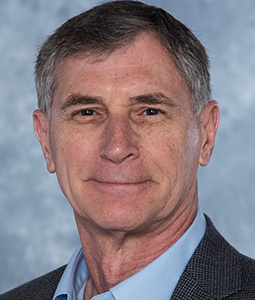
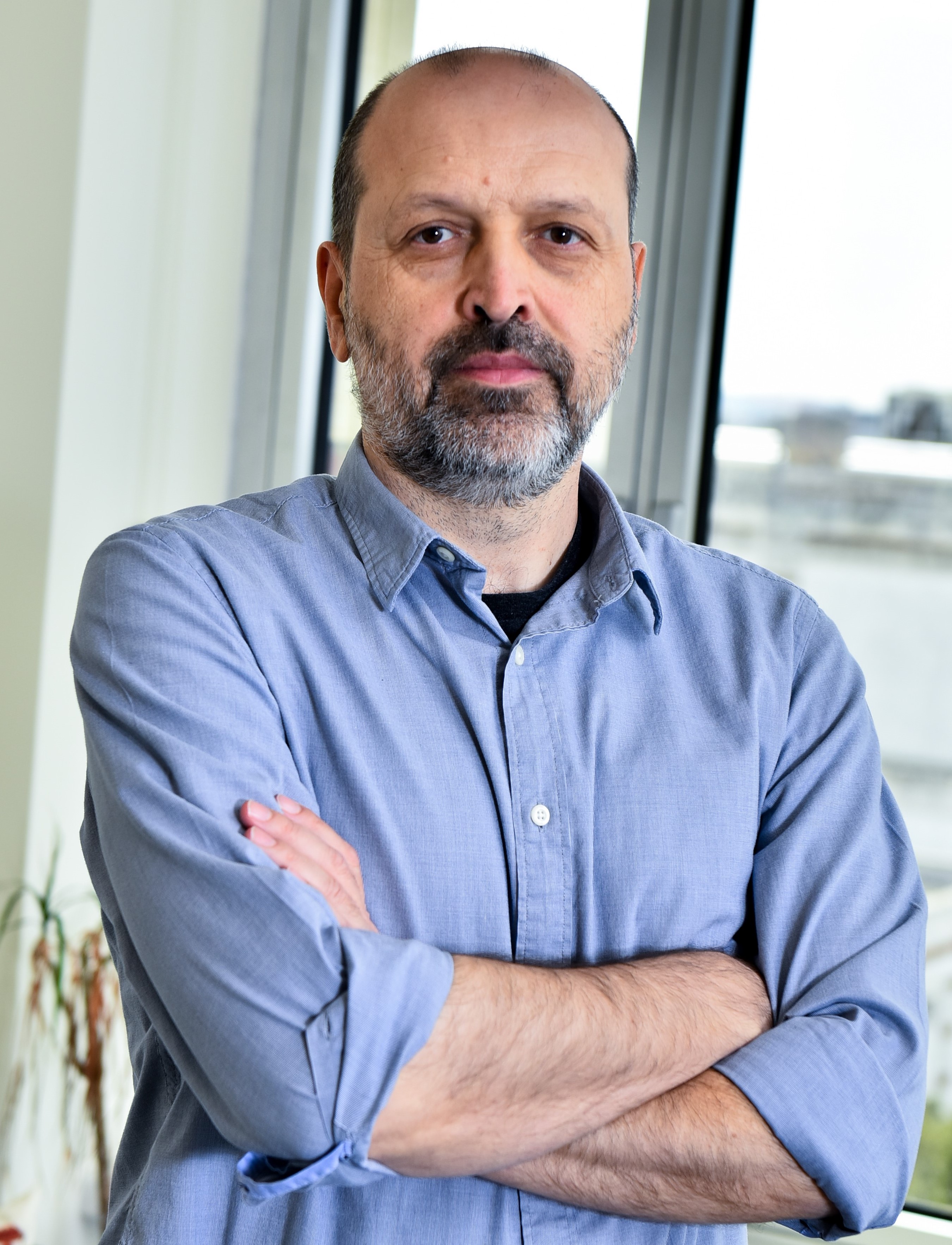
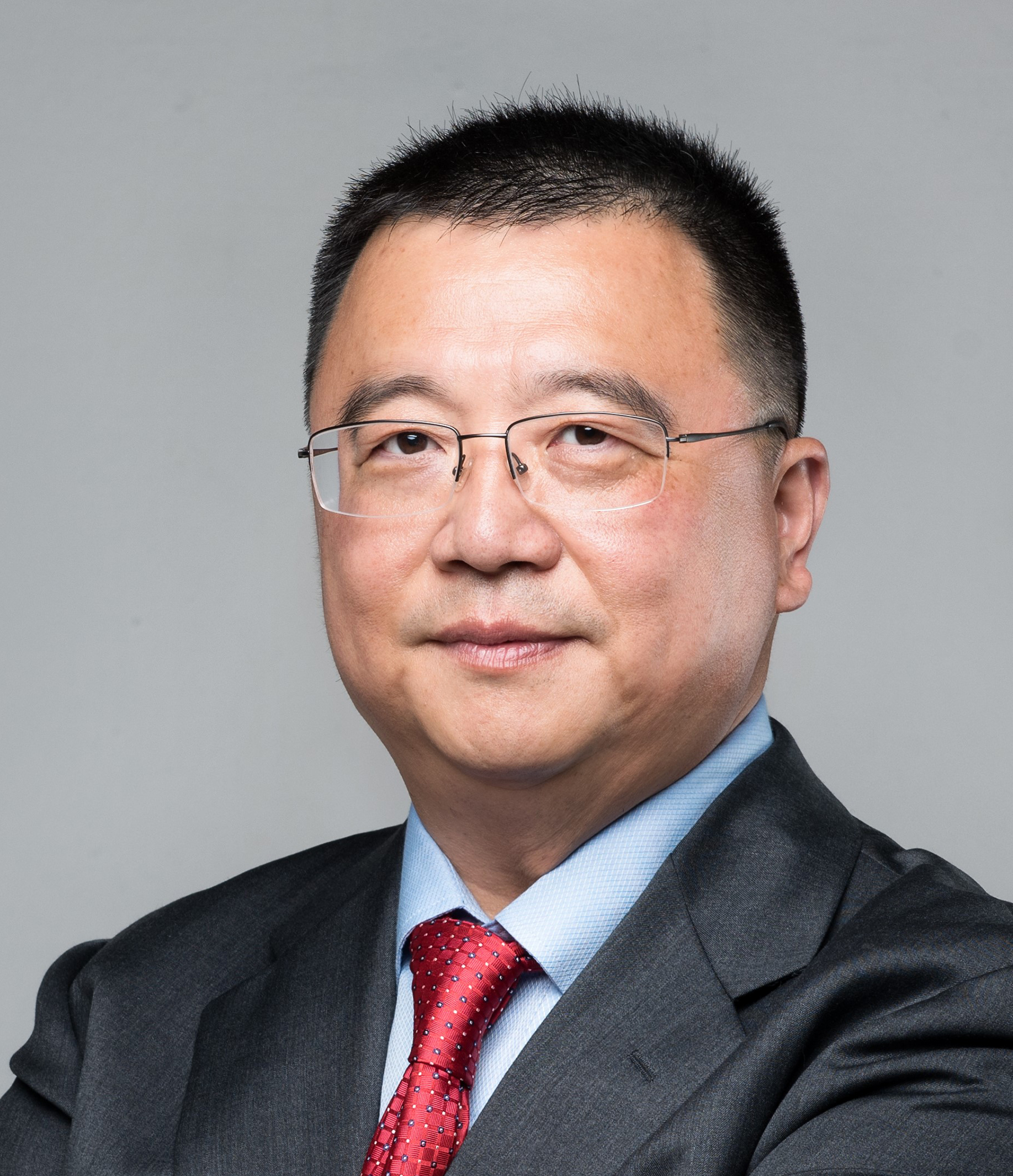
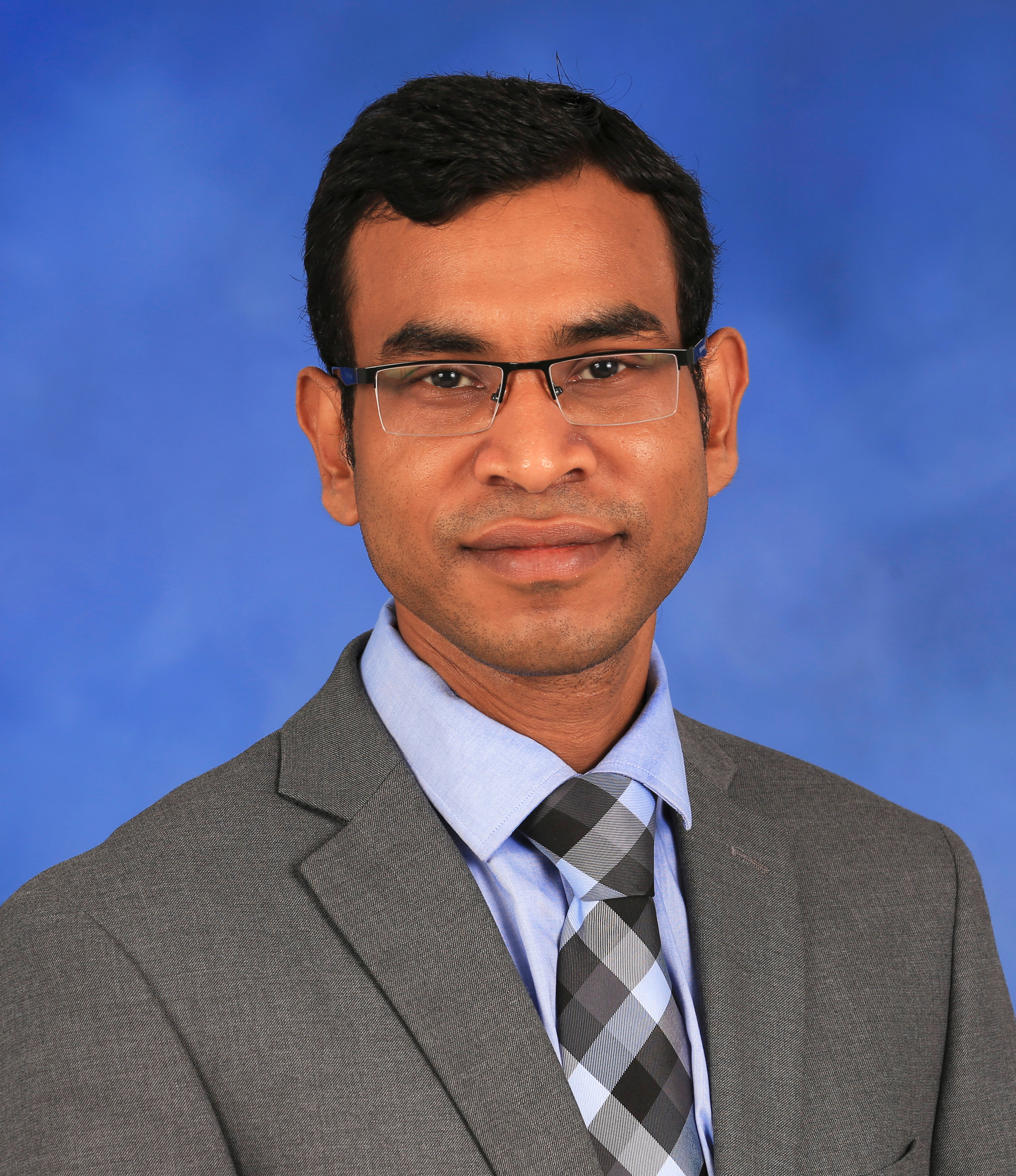
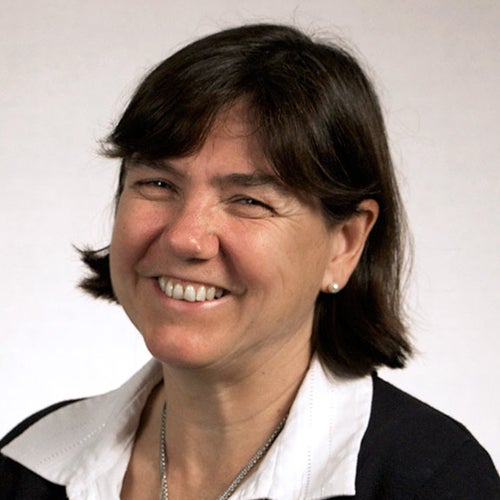
Hany Abdel-Khalik is an Associate Professor of Nuclear Engineering in the College of Engineering at Purdue University. His research focuses on nuclear engineering with specialization in uncertainty quantification for nuclear systems, anomaly detection methodologies, and nuclear criticality safety. He is affiliated with the Global Engineering Program at Purdue. Abdel-Khalik's work bridges nuclear engineering with advanced computational methods, including data-driven approaches for monitoring additive manufacturing processes and securing industrial control systems. His recent research examines in-situ monitoring of material properties, void fraction estimation in nuclear fuels, and advanced methodologies for nuclear criticality safety assessment. His technical contributions include developing deceptive infusion techniques for data security, feature extraction methods for anomaly detection, and uncertainty reduction frameworks for model validation. These innovations support safer and more reliable nuclear energy systems.
Yexiang Xue is an Assistant Professor in the Department of Computer Science at Purdue University, part of the College of Science. He joined Purdue in Fall 2018. His research focuses on integrating machine learning and probabilistic reasoning to enable optimal decision-making in high-dimensional, uncertain environments. Key areas include computational sustainability, materials science, robotics, and medical AI. Education: PhD in Computer Science, Cornell University (2018), advised by Carla Gomes and Bart Selman. B.Sc. in Computer Science, Peking University, China (2011). Research Interests: Xue develops cross-cutting computational methods for scientific discovery, constraint-embedded machine learning, and AI-driven sustainability. His work spans symbolic regression, probabilistic models, and applications in robotics, healthcare, and materials science. Recent efforts include end-to-end physics model discovery and integrating decision diagrams into neural networks. Awards: NSF CAREER Award (2024). IAAI Innovative Application Award (2017) for Phase-Mapper AI platform in materials discovery. Advising & Grants: Mentored multiple undergraduates (e.g., Luming Tang, Runzhe Yang) pursuing graduate studies. His NSF CAREER grant supports AI-driven scientific discovery. Teaching & Service: Taught courses like Statistical Machine Learning (CS 578). Serves on AAAI, UAI, and IJCAI program committees. Media coverage includes NSF News, Science, and MIT Technology Review.
Clair Julia Sullivan is an Adjunct Assistant Professor in the Department of Nuclear, Plasma & Radiological Engineering at the University of Illinois Urbana-Champaign, affiliated with the Grainger College of Engineering. She holds additional affiliations with the National Center for Supercomputing Applications (NCSA), the Department of Informatics, and the Department of Computer Science and Engineering. Sullivan earned her PhD in Nuclear Engineering from the University of Michigan in 2002, preceded by dual BS degrees in Physics and Astronomy (1997) and an MS in Nuclear Engineering (1998). Her research focuses on radiation detection technologies, data science applications in nuclear security, isotope identification algorithms, and big data analytics for sensor networks. She has contributed to critical areas like nuclear nonproliferation, sensor network optimization, and novel neutron detector materials. Notable awards include the DARPA Young Faculty Award (2014) and the Mary Jane Oestmann Professional Women’s Achievement Award (2015). Sullivan serves as an Associate Editor for the IEEE Transactions on Nuclear Sciences and holds teaching honors including Excellence in Undergraduate Teaching (2015, 2013). Her interdisciplinary work bridges nuclear engineering with computer science, contributing to advancements in automated radiation analysis systems.
Dr. Daniel L.J. Thorek is an Associate Professor of Radiology and Biomedical Engineering at Washington University School of Medicine, where he co-leads the Oncologic Imaging Program at the Siteman Cancer Center. He directs the Molecular Radiotherapy + Imaging Laboratory within the Precision Radiotheranostics Translation Center, focusing on developing diagnostic and targeted therapies for oncology, inflammation, and infectious diseases using computational, in vitro, and preclinical approaches. His research integrates engineering principles in biotechnology and radiology to advance quantitative imaging and targeted therapeutics. Key areas include radiopharmaceutical therapy optimization, molecular imaging probe development, and nanoparticle-based diagnostics. His lab employs machine learning and computational modeling to understand disease mechanisms and improve treatment outcomes. Dr. Thorek's publications emphasize innovative approaches in radioimmunotherapy, theranostics, and molecular imaging. Recent work demonstrates strong focus on prostate cancer treatment optimization, alpha-particle therapies, and infectious disease imaging. Major scientific recognition includes: 2024 Distinguished Investigator Award 2021 Ocean Imagination Award Steven Wynn Young Investigator Award (2013-2017) Society of Nuclear Medicine Postdoctoral Scholar Award He currently leads multiple federally funded projects, including a $1.25M DOE grant for hydrogen production research and an NSF grant for nanocrystal synthesis. His laboratory collaborates with national laboratories and international institutions to translate discoveries into clinical applications.
Jamie Ellen Padgett is the Stanley C. Moore Professor and Chair of the Department of Civil and Environmental Engineering at Rice University. Her research focuses on multi-hazard risk and resilience of infrastructure systems, emphasizing probabilistic methods for assessing structural portfolios exposed to earthquakes, hurricanes, and aging. She leads the Padgett Research Group, investigating resilience of energy infrastructure, transportation systems, and community-scale hazard mitigation. Education : B.S. Civil Engineering (University of Florida, 2003); Ph.D. Structural Engineering (Georgia Tech, 2007). Key Roles : Faculty Director of the Gulf Scholars Program, Leadership in NIST’s Community Disaster Resilience Center, and NSF-funded DesignSafe-CI Cyberinfrastructure. She serves on editorial boards of journals such as ASCE Journal of Structural Engineering and chairs ASCE committees. Research Interests : Fragility models for storage tanks and nuclear casks, climate-driven coastal risks, and machine learning applications in structural reliability. Her work bridges engineering and social systems to enhance community resilience. Awards : 2017 ASCE Walter L. Huber Prize, 2023 TAMEST Award, NSF CAREER Award (2011), and Fellow of ASCE’s Structural Engineering Institute. Grants & Collaborations : NSF NHERI, SSPEED Center, and Gulf Research Program-funded initiatives. Her projects include modeling hurricane impacts on petrochemical facilities and nuclear waste storage resilience. Labs & Teams : Padgett Research Group (focused on energy infrastructure resilience) and SSPEED Center (severe storm prediction and disaster response).
Dr. Andrew R. Metcalf is an Associate Professor in the Department of Environmental Engineering and Earth Sciences at Clemson University, part of the College of Engineering, Computing and Applied Sciences. His research focuses on air pollution and atmospheric aerosol particles, with expertise in multiscale measurements from microscopic laboratory analysis to large-scale field campaigns. He holds a Ph.D. from the California Institute of Technology (2012) and M.S./B.S. degrees from The Pennsylvania State University (2005). Education: Ph.D., Environmental Science and Engineering, California Institute of Technology, 2012 M.S., Environmental Science and Engineering, California Institute of Technology, 2007 M.S. & B.S., Meteorology, The Pennsylvania State University, 2005 Research Interests: Dr. Metcalf's work bridges microscale aerosol analysis with large-scale environmental monitoring, emphasizing wildfire impacts, indoor/outdoor air quality, and aerosol-cloud interactions. His lab, the Clemson Air Quality Lab , develops advanced instrumentation for measuring black carbon and particulate matter, with applications in climate science and public health. Key Article Trends: Recent studies address Canadian wildfire effects on air quality networks, urban PM2.5 disparities using machine learning, and low-cost sensor validation for regulatory monitoring. His work spans environmental justice, HVAC system optimization, and pandemic-era exposure mitigation. Awards: National Science Foundation Postdoctoral Fellowship (2014-2016) American Meteorological Society Graduate Fellowship (2004) EPA REU Grant (2002) Grants & Advising: He leads NSF-funded projects on spent nuclear fuel storage aerosol deposition and community air quality networks. Advises graduate students on topics like prescribed fire impacts and indoor air sensor networks. Current grants include $2M for climate hazard research and $800K for nuclear energy storage studies. Labs & Teams: His lab collaborates with the Clemson Air Quality Laboratory and institutions like the Naval Postgraduate School for airborne aerosol measurements. Engages in DOE-funded studies on aerosol-cloud interactions and microfluidic ice nucleation particle counters.
Anna Iskhakova is a Research Assistant Professor in the Alan Levin Department of Mechanical and Nuclear Engineering at Kansas State University. She holds a Ph.D. (2023) from North Carolina State University, with a focus on Nuclear Engineering and a Mechanical Engineering minor. She also earned a Master's (2017) and Bachelor's (2015) in Thermal Power and Heat Engineering from Moscow Power Engineering Institute, Russia, where she later taught nuclear power courses. Her research emphasizes computational thermal hydraulics and machine learning-driven modeling to improve two-phase flow simulations. Education: Ph.D., Nuclear Engineering, North Carolina State University (2023) M.Eng., Thermal Power and Heat Engineering, Moscow Power Engineering Institute (2017) B.Eng., Thermal Power and Heat Engineering, Moscow Power Engineering Institute (2015) Research interests include developing high-fidelity models for bubble dynamics and heat exchanger simulations using machine learning techniques such as super-resolution and Fourier neural operators (FNO). She has authored over 30 peer-reviewed publications and holds key awards for her work. Iskhakova previously worked in industry designing HVAC systems for data centers and served as a visiting student in Germany, gaining experience in energy consumption calculations for heat pumps. She is an active member of the American Nuclear Society, American Physical Society, and Women in Nuclear, and chaired technical sessions at ANS NURETH-20.
Mingwu Jin is a Professor in the Department of Physics at the University of Texas at Arlington (UTA), where he has held faculty positions since 2011, progressing from Research Assistant Professor to his current rank. He holds a B.S. in Space Physics (1997) and M.E. in Communication and Information System (2001) from Peking University, and a Ph.D. in Electrical Engineering (2007) from Illinois Institute of Technology. His postdoctoral training (2007-2009) was at the University of Colorado Denver. His research focuses on image science, machine learning applications in medical and space physics, and mathematical modeling of physical systems. Key areas include medical imaging (SPECT/MRI/CT), spatiotemporal data reconstruction, and deep learning for low-dose imaging. He leads federally funded projects totaling over $10M, including NIH grants for PET/CBCT advancements and NSF awards for ionospheric modeling. Dr. Jin has authored 5 books/chapters and over 100 peer-reviewed publications. Awards include the NIH Best Student Paper (2006), ISSI Science Team membership (2020), and TACC Computational Fellowship (2022). He advises 30+ graduate students and postdocs, teaching courses in computational physics and medical imaging. Professional roles include service on NIH review panels and editorial boards for Medical Physics and PLOS ONE .
Theodore M. Besmann is a Professor and Smart State Chair in Energy and Nuclear Security at the University of South Carolina's Molinaroli College of Engineering and Computing, affiliated with the Department of Mechanical Engineering. His research focuses on thermochemical modeling for nuclear fuel development, in-reactor behavior, and advanced waste forms. Education: Ph.D., Nuclear Engineering, Pennsylvania State University (1976) M.S., Nuclear Engineering, Iowa State University (1971) B.E., Chemical Engineering, New York University (1970) Research Interests: Dr. Besmann specializes in thermochemical experimentation and computational modeling of nuclear materials. Key areas include: Nuclear fuel performance under reactor conditions Development of durable actinide waste forms Thermal property measurements for fuel performance codes Molten salt chemistry for reactor systems Phase equilibria in advanced fuel compositions Scientific Awards: Smart State Chair in Energy and Nuclear Security
Prof. Serhat Yesilyurt is a Professor of Mechatronics Engineering at Sabanci University in Istanbul, Turkey. He holds a PhD from MIT (1995) and has held visiting professorships at the University of Michigan. His research focuses on bio-inspired micro-swimming robots, PEM fuel cells, vertical axis wind turbines, and computational fluid dynamics. He leads projects on energy optimization, micro/nano swimmer dynamics, and PEMFC durability funded by TUBITAK and international collaborations. Education: BS in Nuclear Energy Engineering (Hacettepe University, 1986), MS/PhD in Nuclear Engineering (MIT, 1991/1995) Research: Specializes in microscale propulsion, renewable energy systems, and advanced fuel cell modeling. Collaborates internationally on medical micro-robotics and sustainable energy solutions. His recent work explores catalyst layer optimization for low-platinum fuel cells, acoustic manipulation of microswimmers, and VAWT control algorithms. Over 100 peer-reviewed publications and 3 patents demonstrate his interdisciplinary impact spanning robotics, energy systems, and fluid mechanics.
Sophya Garashchuk is a Professor in the Department of Chemistry and Biochemistry at the University of South Carolina, affiliated with the McCausland College of Arts and Sciences. Her research focuses on theoretical and computational chemistry, with an emphasis on quantum dynamics, nuclear quantum effects, and their applications to materials and biomolecular systems. She holds a M.S. from the Moscow Institute of Physics and Technology and a Ph.D. from the University of Notre Dame. Research Interests: Garashchuk's work explores quantum effects in molecular dynamics, including zero-point energy, tunneling, and proton transfer processes. Her group develops approximate quantum trajectory methods scalable to large systems, with applications in energy materials, enzyme catalysis, and nanomaterials. Key projects include studying nuclear quantum effects in polymers, graphene interactions, and inorganic frameworks like MOFs. Selected Achievements: Fellowship at Max Planck Institute for Physics of Complex Systems (2023) USC Rising Star Award (2012) NSF Career Award (2011) IBM-Lowdin Fellowship (2004) Advising & Collaborations: Garashchuk mentors graduate students and postdoctoral researchers, with recent advisees including James Mazzuca and Bing Gu. Her collaborations span institutions like Oak Ridge National Laboratory and the University of Chicago. She contributes to software development (e.g., Libra for quantum dynamics) and teaches courses in quantum chemistry and computational methods. Labs/Teams: Her research group develops novel theoretical tools and applies them to problems in energy, catalysis, and materials science. The group's work often bridges computational chemistry with experimental validation, yielding insights into quantum phenomena at the molecular scale.
T. Bond Calloway is a Senior Fellow at the University of South Carolina's Molinaroli College of Engineering and Computing , affiliated with the Office of the Dean . His research focuses on radioactive waste management, thermodynamic modeling, and industrial process optimization. His work spans environmental remediation technologies, slurry rheology, and neural network applications in nuclear waste treatment systems. Current methodologies in waste evaporation, melter off-gas analysis, and glass melt diagnostics are central to his publications. Over 15+ years, his articles highlight advancements in radioactive waste evaporation , off-gas characterization , and viscosity control for nuclear waste slurries. Key collaborations involve Hanford, Savannah River, and Duratek pilot projects.
Dr. Ou Bai is a Professor and Director of the Human Cyber-Physical Systems (HCPS) Laboratory at Florida International University's College of Engineering. He holds a Ph.D. in Electrical & Systems Control Engineering from Saga University (Japan) and a B.S. in Electronic Engineering from Tsinghua University (China). His research focuses on advancing Cyber-Physical Systems (CPS), Smart Health Technologies, and Robotic Prosthetics/Exoskeletons to enhance human capabilities through sensor integration, embedded systems, and AI-driven control. Dr. Bai has authored over 100 peer-reviewed publications and leads projects in wearable devices, neural interfaces, and industrial exoskeletons. He teaches graduate courses such as Advanced Embedded Systems Design for IoT and Autonomous Systems and Control . The HCPS Lab develops technologies like brain-computer interfaces (BCIs), neuroprosthetics, and assistive robotics to improve human-physical world interactions. His work addresses challenges in smart healthcare, industrial safety, and human-robot collaboration. Key projects include exoskeleton systems for nuclear facility workers, gait intention prediction via EEG signals, and child-parent interaction analysis using wearable sensors. Dr. Bai has secured 11 sponsored projects and graduated 6 Ph.D. students. His lab emphasizes interdisciplinary innovation at the intersection of engineering, medicine, and AI.
Dr. Md Tauhidur Rahman is an Assistant Professor in the Department of Electrical and Computer Engineering at Florida International University (FIU), part of the College of Engineering and Computing. He earned a Ph.D. in Computer Engineering from the University of Florida (2017), an M.Sc. from the University of Connecticut (2015), and a B.Sc. in Electrical and Electronic Engineering from Bangladesh University of Engineering and Technology (2009). His research focuses on hardware security, embedded security, side-channel analysis, memory systems, and reliability, with funding from NSF, NSA, and CyberFlorida. Research Interests: Hardware Security and Trust Embedded Security Side-channel Analysis Memory System Reliability Machine Learning Applications in Security Grants and Awards: $750K NSA Grant (2022) for UAS Security $1.4M CyberFlorida Grant (2022) for Hardware-Security Training NSF SaTC Grant (2021) NSF CRII Grant (2019) UAH New Faculty Research Award (2019) Labs and Leadership: Director of the SeRLoP Lab (Security, Reliability, Low-power, and Privacy), leading collaborative projects on hardware security and critical infrastructure protection.
Dr. Catherine Royer is a Professor and Constellation Endowed Chair in Biological Sciences at Rensselaer Polytechnic Institute (RPI). Her research focuses on understanding protein folding mechanisms, cellular responses to environmental pressures, and the molecular basis of cell cycle regulation in budding yeast. She holds a B.S. in Biochemistry and Chemistry from Université Pierre et Marie Curie (1979) and a Ph.D. in Biochemistry from the University of Illinois at Urbana-Champaign (1985). Dr. Royer’s work integrates biophysical techniques like high-pressure NMR and fluorescence microscopy to study protein dynamics, stress responses, and transcriptional networks. Her lab investigates how cells adapt to extreme conditions, particularly through pressure-induced changes in protein structure and function. She has held academic positions at the University of Wisconsin-Madison and INSERM in France before joining RPI in 2013. Her recent publications emphasize AI-driven cellular imaging, allosteric regulation in GTPases, and the interplay between cell size and transcriptional timing during the cell cycle. She leads interdisciplinary projects on extremophile biology and protein engineering for biomedical applications. Dr. Royer’s research is supported by grants exploring pressure adaptation, transcriptional networks, and super-resolution imaging. Her lab collaborates widely, advancing quantitative biology and biophysics at the cellular and molecular scales.