Dr. Andrew Buchan is an Honorary Lecturer in the Department of Earth Science and Engineering at Imperial College London , affiliated with the Faculty of Engineering . His research focuses on advanced computational methods for nuclear systems, including neutron transport modeling and multi-phase fluid flow simulations. He leads the development of codes like FETCH and RADIANT , emphasizing adaptive finite elements, reduced order models, and uncertainty quantification. Education: PhD in Nuclear Engineering, Imperial College London (2002–2006) Research Interests: Simulation of coupled neutron transport and fluid dynamics in nuclear reactors Development of novel numerical methods (e.g., spherical wavelets, Krylov solvers) Historical criticality accident analysis and reactor safety modeling Integration of AI/ML techniques for improved computational efficiency Grant Coordination: Scientific coordinator of a major grant to design the RADIANT radiation transport model. Labs/Teams: Active in the Applied Modelling and Computation Group at Imperial College.
Ayhan Irfanoglu is a Professor in the Department of Civil and Construction Engineering at Purdue University. He is affiliated with the Global Engineering Program GEP Team, Engineering Curriculum Committee, and Undergraduate Advisory Council (UGAC). His research focuses on earthquake engineering, structural dynamics, computational methods, and seismic vulnerability assessment. He has contributed to advancing nonlinear structural analysis, finite element modeling, and damage detection techniques in civil infrastructure systems. His work frequently addresses topics such as soil-structure interaction, reinforced concrete buildings, and the application of machine learning and big data in solving complex engineering problems. Key research themes include improving seismic design practices, enhancing structural resilience through data-driven approaches, and validating computational models with experimental data. Professor Irfanoglu has published extensively on topics like seismic response analysis, structural health monitoring, and the integration of advanced computing tools in civil engineering education. His articles highlight interdisciplinary efforts, such as synergizing machine learning with traditional engineering methods. He has also been involved in post-earthquake reconnaissance studies, including analyses of events in Mexico City, Taiwan, and Turkey. His professional service includes leadership roles in curriculum development and institutional committees at Purdue. Though no formal awards are listed, his contributions to computational earthquake engineering and structural safety are widely recognized in academic and research communities.
Dr. Chris Cantwell is a Professor in Computational Engineering at the Department of Aeronautics, Imperial College London . He specializes in developing high-performance numerical methods and software tools for fluid dynamics and biomedical applications. His work focuses on spectral/hp element methods, machine learning integration, and open-source frameworks like Nektar++. Education : MMath in Mathematics (2005), University of Warwick MSc in Scientific Computing (2006), University of Warwick PhD in Scientific Computing (2009), University of Warwick Research Interests : High-fidelity simulation of complex flows (aerodynamics, turbomachinery, nuclear fusion) Cardiac electrophysiology modeling and biomedical engineering Machine learning for fluid dynamics and system dynamics Open-source software development (Nektar++ framework) Affiliations : Imperial College Centre for Cardiac Engineering ElectroCardioMaths Programme Quantum Engineering, Science and Technology Nektar++ Project Leadership Labs & Teams : Leading research in fluid dynamics and cardiac engineering at Imperial College Cross-disciplinary collaborations in biomedical and computational sciences
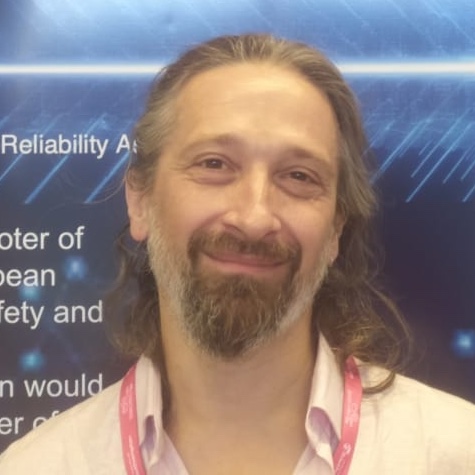
Professor Edoardo Patelli is a distinguished academic specializing in Risk and Uncertainty Quantification at the University of Strathclyde's Department of Civil and Environmental Engineering, Faculty of Engineering. He serves as the Head of the Centre for Intelligent Infrastructure and maintains strong collaborations across all university faculties with world-leading scholars globally. His research interests span multiple critical areas including Nuclear Safety, Resilience Engineering for critical infrastructure, Digital Twin technology, and development of Trustful AI algorithms for imprecise data. He has pioneered efficient simulation methods capable of managing and quantifying uncertainty across various systems including nuclear facilities, civil infrastructure, and aerospace applications. His work also encompasses human reliability analysis in interaction with autonomous systems and effective risk communication strategies. Prof. Patelli's publication portfolio demonstrates a strong focus on applying uncertainty quantification methods to real-world problems, with recent work addressing storm surge forecasting, drone logistics for healthcare, fuel supply chain resilience during floods, procedure quality enhancement, and structural damage identification. His research consistently bridges theoretical advances in computational methods with practical applications in safety-critical systems. The NASA and DNV Challenge on Optimization under Uncertainty Recipient (17/6/2025) Best Paper Award in "Innovation in Smart Cities and Systems" Recipient (1/9/2022) As an academic leader, Prof. Patelli chairs multiple significant committees including the Technical Committee on Simulation for Safety and Reliability Analysis of the European Safety and Reliability Association (ESRA), and has served as Chair of the Technical Committee for the 2019 and 2022 European Safety and Reliability Conference (ESREL). He is also a Member of the Committee on Probability and Statistics in the Physical Sciences (part of the Bernoulli Society), Academic Adviser to the Commonwealth Scholarship Commission and member of the UK Nuclear Innovation and Research Advisory Board (NIRAB). His professional activities include serving as Associate Editor for Frontiers Nuclear Engineering journal and participating in EPSRC workshops. He leads and contributes to numerous research projects including the Intelligent Digital Twin management platform for natural-technological disasters, improved models for flood impact on transport infrastructure, Care & Equity - Logistics UAS Scotland Phase 3, and Enhanced Methodologies for Advanced Nuclear System Safety, demonstrating his commitment to addressing complex infrastructure challenges through innovative computational approaches.
Khuloud Jaqaman is an Associate Professor at the University of Texas Southwestern Medical Center with dual appointments in the Department of Biophysics and Lyda Hill Department of Bioinformatics. She also participates in the Biomedical Engineering - Computational Biology graduate program and Molecular Biophysics graduate program, reflecting her interdisciplinary approach bridging physics, biology, and computational sciences. Dr. Jaqaman's educational background includes a B.Sc. in Physics (summa cum laude) from Birzeit University (1994-1998), a Ph.D. in Biophysics from Indiana University Bloomington (1998-2003), followed by a postdoctoral fellowship in Cell Biology at The Scripps Research Institute (2003-2009). She served as an Instructor in Systems Biology at Harvard Medical School from 2009-2012 before joining UTSW. Her research focuses on the spatiotemporal organization of cell surface receptors, the mechanisms underlying this organization, and its consequences for cell signaling. The Jaqaman Lab combines physics, biophysics, cell biology, and computational approaches to study these phenomena. They utilize light microscopy, particularly single-molecule and super-resolution imaging, to monitor molecular behavior in native cellular environments, while developing innovative computer vision and machine learning approaches to quantitate observed behaviors beyond visual perception. Analysis of Dr. Jaqaman's publication record from 2015-2021 reveals a consistent focus on receptor organization, single-molecule imaging techniques, and computational analysis methods. Her work spans multiple biological systems including endothelial cells, T cells, and nuclear structures, with applications in immunology, cell signaling, and cellular architecture. The interdisciplinary nature of her research is evident in publications spanning top journals in cell biology, biophysics, and bioinformatics.
Dr. Zhisong Qu serves as an Assistant Professor in the School of Physical and Mathematical Sciences at Nanyang Technological University (NTU), Singapore. Previously, he held research fellow and postdoctoral positions at the Mathematical Sciences Institute, Australian National University (ANU), following his doctoral training at ANU's Research School of Physics. His educational background includes: PhD in Plasma Physics, Research School of Physics, Australian National University Bachelor of Science in Physics, School of Physics, Peking University, China Dr. Qu's research integrates machine learning with plasma physics, focusing on experimental data processing and theoretical modeling of magnetic confinement fusion systems. Key investigations address three-dimensional magnetic field configurations, magnetohydrodynamic waves driven by fast ions, and the development of computational frameworks for fusion plasma behavior. His 2021-2023 publications reveal consistent exploration of magnetohydrodynamics and plasma stability in fusion devices, with recurring themes in Alfvén wave analysis, magnetic island dynamics, and particle transport phenomena. These works demonstrate international collaboration and advanced computational methodologies across multiple fusion research platforms. He has received recognition through: Under 30 Scientists and Students Award, Division of Plasma Physics, Association of Asia Pacific Physical Societies (2019) Dr. Qu teaches the undergraduate course PH3407 - Introduction to Plasma Physics during semester 2 each year, contributing to academic instruction while maintaining active research engagement. He leads projects on reduced transport models and AI-powered surrogate models for turbulence transport, advancing computational approaches to fusion energy challenges.
Dr. Thomas Humphries is an Associate Professor in the Division of Engineering and Mathematics at the University of Washington Bothell since 2022. He earned his Ph.D. in Applied and Computational Mathematics from Simon Fraser University and holds a B.Math from the University of Waterloo. His research focuses on tomographic image reconstruction and mathematical optimization techniques. Ph.D., Applied and Computational Mathematics, Simon Fraser University (2011) M.Sc., Applied and Computational Mathematics, Simon Fraser University (2007) B.Math, Joint Honours Applied Math and Computer Science, University of Waterloo (2005) His work in Medical Imaging addresses challenges in CT and SPECT reconstruction, particularly for polyenergetic/sparse data. He also explores derivative-free optimization in oil field operations and has developed open-source MATLAB code for polyenergetic CT reconstruction available on GitHub. Recent publications focus on superiorization methodology and machine learning integration. Key research trends include iterative reconstruction algorithms, metal artifact reduction, dynamic SPECT imaging, and regularization techniques. No formal scientific awards are listed in the provided text. Dr. Humphries teaches mathematics courses including calculus, linear algebra, and numerical analysis. His professional journey includes postdoctoral work at Memorial University (2011-2013) and Oregon State University (2013-2015) before joining UW Bothell in 2015.
Donald W. Brenner is a Kobe Steel Distinguished Professor and Department Head in the Department of Materials Science and Engineering at North Carolina State University . He earned his B.S. and Ph.D. in Chemistry from the State University of New York (1982) and Penn State University (1987), respectively, followed by a research staff role at the U.S. Naval Research Laboratory. His career at NC State spans three decades, focusing on computational materials science and atomic-scale modeling. B.S. in Chemistry, State University of New York (1982) Ph.D. in Chemistry, Pennsylvania State University (1987) Brenner's research centers on computational materials modeling for extreme environments, particularly high entropy ceramics , tribology , and shock dynamics . His work employs density functional theory, molecular dynamics, and multi-scale simulations to study materials like diamond clusters, nanotubes, and self-assembled monolayers. Recent publications emphasize defect properties, hardness optimization, and machine-learned interatomic potentials for ternary and high-entropy systems. Scientific honors include the 2002 Feynman Prize (nanotechnology), 2013 Alcoa Foundation Award , and 2016 Alexander Quarles Holladay Medal . He is also an editor of the Handbook of Nanoscience, Engineering and Technology (CRC Press, 2002-2012). His research group develops reactive empirical bond order (REBO) potentials and explores tribochemical processes, shock-induced chemistry, and nanoscale device engineering.
Prof. Dr. Annika Bande serves as Professor and Executive Director at the Institute of Inorganic Chemistry within Leibniz University Hannover's Faculty of Natural Sciences. She holds multiple leadership roles including membership on the Institute's Executive Board and representation of professors on the Faculty Council. Her research spans computational and theoretical chemistry with emphasis on charge transfer phenomena , quantum dynamics , and machine learning applications . Key focus areas include X-ray absorption spectroscopy, interparticle Coulombic electron capture, and electronic structure prediction in nanomaterials and biomolecular systems. Recent publications (2023-2025) demonstrate integration of graph neural networks and transfer learning with quantum chemical methods to study photoexcited charge transfer, wavepacket propagation, and spectroscopic properties. Her work bridges computational chemistry, materials science, and artificial intelligence to address challenges in nanoscale electronic processes. She leads the Optical Materials: Computational Methods research group developing advanced simulation techniques for predicting optical properties and electronic behavior in complex materials systems.
Dr. Abigail A. Bickley is an Assistant Professor of Nuclear Engineering at the Air Force Institute of Technology (AFIT), Wright-Patterson Air Force Base. She specializes in nuclear forensics, focusing on nuclear proliferation signature identification through materials analysis, computational reactor modeling, and AI-aided facility activity detection. With over 60 peer-reviewed publications, Dr. Bickley also serves as AFIT's Radiation Safety Officer and manages the high-performance computing cluster for the nuclear engineering graduate program. University of Maryland, Chemistry, Ph.D. (2004) Dartmouth College, Chemistry, B.A. (2000) Her research integrates machine learning with nuclear detection technologies, including magnetic field sensor analysis and neutron spectrometry. Key projects involve convolutional neural networks for fuel cycle characterization, particle morphology classification, and spatially-variant burnup modeling for treaty monitoring. Dr. Bickley received multiple awards including the AFTAC Endowed Term Chair (2021), AFIT GSEM Distinguished Teaching Award (2021), and Battelle Memorial Institute's RHIC & AGS Thesis Award (2005). She teaches courses on nuclear weapons residual effects and nonproliferation technologies.
Maj Michael A. Ford holds a PhD in Nuclear Engineering from the Air Force Institute of Technology (AFIT), where he is affiliated with the Department of Engineering Physics within the Graduate School of Engineering and Management. His research spans nuclear instrumentation development, AI/ML applications for sensor systems, and biomedical sensor design. PhD: Nuclear Engineering, AFIT (2018) M.S.: Nuclear Engineering, AFIT (2015) B.S.: Physics, Michigan State University (2011) His work focuses on radiation detection using novel materials like Eu:LiCAF wafers, portable electronics integration, and infrasound-based autonomous tracking . Earlier research involved active target time projection chambers for radioactive beam experiments. Scientific Awards: Edison Grant ($72k) for AI/ML-infrasound research (2022-2023) Field Grade Officer of the Year, Sensors Directorate (2021) NIH Contract ($0.5M) for wearable blood alcohol monitor (2019-2020) He has contributed to advancements in neutron spectrometry, silicon photomultipliers, and biomedical sensor design.
Dr. Darren E. Holland is a Research Associate Professor of Nuclear Engineering in the Department of Engineering Physics at the Air Force Institute of Technology (AFIT). His work focuses on optimizing radiation transport in complex geometries, developing models for radiative and thermal effects in space and underground environments, and applying computational intelligence to radiation detection systems. PhD, Mechanical Engineering, University of Michigan (2012) MS, Mechanical Engineering, University of Michigan (2008) BS, Mechanical Engineering, Cedarville University (2006) Dr. Holland's research interests span nuclear engineering, radiation detection, and computational modeling. His work includes designing rotating scatter masks for directional radiation detection, analyzing neutron energy impacts on asteroid deflection, and integrating machine learning with radiation imaging. He has received multiple U.S. Air Force Research Lab Summer Faculty Fellowships (2016-2018) to support this research. His publications since 2010 highlight trends in radiation detection system optimization, neutron transport analysis, and machine learning applications. Key subfields include directional imaging algorithms, planetary defense strategies, and sensor development for mixed-radiation environments. Dr. Holland has been recognized with the Outstanding Thesis Advisor Award (2021) and the 2021 Virtual Student Conference Best Paper Award in the Isotopes & Radiation category. Outstanding Thesis Advisor Award (2021) 2021 Virtual Student Conference Best Paper Award (Isotopes & Radiation) 1st Quarter Civ Cat III (EN, AFIT, AETC level) (2020) AETC Nuclear Deterrence Operations Professional Team of the Year Award (2019) ASME Dayton Section Chairman’s Recognition Award (2015) Best Engineering Design (2003) Effective Leader Award (2002) Dr. Holland has mentored senior design students at Trine and Cedarville Universities, guiding projects on appropriate technology, personal defense weapon design, and aerodynamics. His current work at AFIT involves radiation modeling in space and underground environments, supported by collaborations with the National Ignition Facility and radiation measurement conferences.
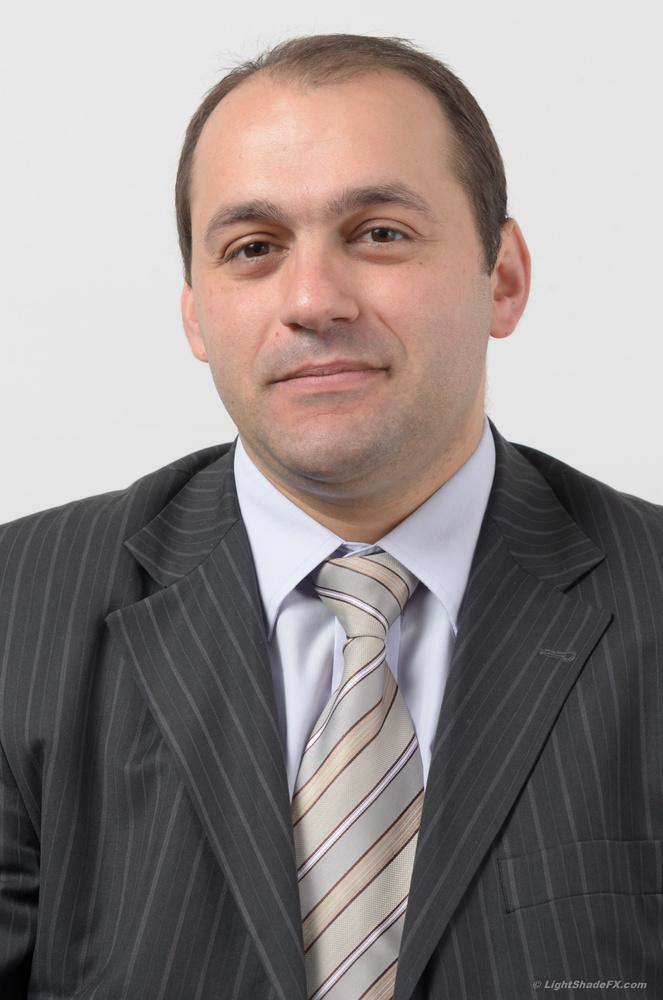
Associate Professor Olimpiu Stoicuta is affiliated with the Polytechnic University of Timișoara's Faculty of Mechanical and Electrical Engineering, Department of Automation, Computers, Electrical and Power Engineering. His research focuses on advanced control systems for electrical motors, renewable energy integration, and econometric analysis of energy policies. He has extensive expertise in sensorless vector control, induction motor modeling, and optical communication technologies. Education details are not explicitly stated in the provided text, but his work indicates a strong background in electrical engineering and control systems. He has published widely on topics including adaptive observers, energy transformation systems, and underground communication solutions. His research interests span multiple domains: (1) Electrical Engineering with emphasis on motor control and power electronics; (2) Renewable Energy focusing on system integration and efficiency improvements; (3) Data Communication involving LiFi and optical networks for industrial applications; and (4) Econometric Modeling related to energy policy analysis in Romania and the EU. Recent publications (2020-2025) highlight trends in AI-driven network optimization, sensorless motor control advancements, and energy policy studies. Articles frequently address practical engineering challenges like underground communication reliability and EV autonomy enhancement. No specific awards or grants are mentioned, though his prolific publication record suggests sustained research activity. Laboratory and team involvement can be inferred through his work on robotics (exoskeleton control) and collaborative projects in industrial automation systems.
Maria Trivieri is an Assistant Professor at the Icahn School of Medicine at Mount Sinai , affiliated with the Department of Medicine, Cardiology and the Heart Failure and Cardiac Transplant Division . She serves as the Medical Director of the Pulmonary Hypertension Program , combining clinical leadership with translational research. Her research focuses on molecular mechanisms of heart failure and pulmonary hypertension , utilizing advanced techniques in genetic engineering , stem cell biology , and viral gene therapy . Recent work includes applications of PET-MRI and deep learning in cardiac sarcoidosis and mitral valve dynamics , with emphasis on inflammatory markers and fluid modeling . Notable research trends include: Development of non-invasive imaging biomarkers via FDG PET and Late Gadolinium Enhancement Integration of machine learning for clinical outcome prediction Collaborative studies on mitral valve repair and surgical fluid dynamics Scientific accolades include fellowships and awards from the Italian Ministry of Education , Heart and Stroke Foundation of Canada , and NIH . She currently holds a KL2 award (KL2 TR001435) for translational research.
Xabier Cid Vidal is a Professor in the Department of Particle Physics at the University of Santiago de Compostela, affiliated with the Faculty of Physics and the Galician Institute of High Energy Physics (IGFAE). His research focuses on high energy physics, particularly using Large Hadron Collider (LHC) data to study particle decays, CP violation phenomena, and exotic hadron states. He completed his PhD in 2012 under Dr. José Angel Hernando Morata and Dr. Bernardo Adeva Andany, investigating rare B meson decays at LHCb. Key research areas include B physics, heavy flavor spectroscopy, and precision measurements of particle lifetimes/branching fractions. His work contributes to LHCb experiments analyzing quark-gluon plasma effects, resonance spectroscopy, and searches for physics beyond the Standard Model. Recent studies involve angular distribution analyses, Bose-Einstein correlations, and coherence effects in ultraperipheral collisions. Publications emphasize rare decay channels (e.g., B→Kμμ, pentaquark searches), CP asymmetry measurements, and jet substructure characterization. He collaborates in the Smart@HEP group exploring machine learning applications for new physics discovery. No major awards are explicitly listed, though his contributions to LHCb analyses are significant. Active in detector optimization projects like Parallel-Plate Avalanche Counters and long-lived particle reconstruction techniques downstream of the LHCb magnet.