Aaron Shugar is a Professor and current Bader Chair in Art Conservation at Queen’s University. With a background in archaeometallurgy and conservation science, he specializes in non-destructive analysis techniques for cultural heritage, including X-ray fluorescence (XRF), Raman spectroscopy, and hyperspectral imaging. His work bridges art history, material degradation, and technological innovation. Honours H.B.A. in Anthropology and Law & Society from York University M.S. in Archaeological Materials from the University of Sheffield Ph.D. in Archaeometallurgy from University College London His research focuses on historic artist’s pigments , ancient metallurgy , and technical history of artifacts , with particular interest in degradation pathways and manufacturing processes. Recent publications highlight trends in AI integration with XRF analysis and preservation of modern materials in art conservation. Bader Chair in Art Conservation Mellon Foundation Professor in Conservation Science Aaron co-directed the Archaeometallurgy Laboratory at Lehigh University, served as a guest scientist at NIST, and remains a research associate at the Smithsonian Institution. He actively contributes to TEFAF’s Scientific Vetting Committee and acts as a forensic materials expert for the Court of Arbitration for Art.
Prof. Carolin Müller is an Assistant Professor of the Theory of Electronically Excited States at Friedrich-Alexander-University Erlangen-Nürnberg (FAU), leading the Computational PhotoChemistry (CPC) group since November 2023. Her research focuses on quantum chemistry, chemoinformatics, and spectroscopy, aiming to develop efficient computational methods for predicting light-driven chemical processes. She holds a PhD from Friedrich Schiller University Jena (2021) and postdoctoral experience at the University of Luxembourg (2022–2023) and Friedrich Schiller University Jena (2021–2022). Her work emphasizes machine learning integration for optimizing photochemical reactions and designing photocatalysts. Key achievements include contributions to the TEA Challenge 2023 on machine learning force fields and developing the SpaiNN model for excited-state simulations. Awards include the Thuringian Research Award (2023) and the Albert-Weller Award (2022). Research Interests: Light-driven processes, molecular design, excited-state dynamics, computational chemistry. Publications: Over 50 peer-reviewed articles, including high-impact contributions on machine learning in chemistry and photocatalytic systems. Grants/Awards: Multiple accolades for her innovative work in chemical compound space exploration and photocatalysis. Labs/Teams: CPC group at FAU, collaborating with institutions like the University of Luxembourg and Jena. Müller actively promotes interdisciplinary collaboration through conferences (e.g., Chemical Compound Space Conference 2026) and mentoring initiatives like the ARIADNE program.
Dr. Ian Abel is an Associate Research Scientist at the Institute for Research in Electronics & Applied Physics (IREAP) at the University of Maryland, where he has been since 2018. His expertise spans fusion energy, plasma physics, and computational modeling. Abel holds a B.A. in Mathematics (2006) and M.S. in Applied Mathematics (2007) from the University of Cambridge, followed by a Ph.D. in Theoretical Physics from the University of Oxford (2012). His research focuses on magnetically confined fusion systems, particularly edge dynamics in tokamaks and innovative centrifugal mirror concepts. He has contributed to the development of gyrokinetic simulation tools like the GX code and the MaNTA transport model. Abel’s work also explores machine learning applications in plasma turbulence analysis and centrifugal mirror fusion reactor design for space propulsion. His research leverages advanced numerical methods, including GPU-native algorithms and adjoint-based optimization techniques for plasma equilibria. Key projects include the Centrifugal Mirror Fusion Experiment (CMFX), where he investigates plasma confinement and transport phenomena. His publications emphasize interdisciplinary approaches, integrating computational fluid dynamics, statistical physics, and high-performance computing to address challenges in fusion energy and plasma dynamics. While no specific awards are listed, his contributions to gyrokinetic turbulence modeling and centrifugal confinement systems are central to current fusion research.
Henrik Myhre Jensen is a Professor at the College of Engineering , Aarhus University, specializing in Mechanics of Materials , Solid Mechanics , and Mechanical Engineering . His research focuses on fracture mechanics, composite materials, and computational modeling of structural behaviors. Research Focus Fracture mechanics in composites and layered materials Computational modeling of kink band propagation Surface wear and coating technologies Ultrasound imaging applications in mechanical systems Notable Contributions Henrik has contributed to understanding crack propagation in cantilever beams, developed numerical methods for simulating delamination in composites, and explored buckling instabilities in solids. His recent work connects machine learning (holomorphic neural networks) to traditional fracture mechanics problems. Key Projects MAGFLY (2017-2021): Magnets for Flywheel Energy Storage InnoVacc (2009): Pressure Testing of Vacuum Chambers Simulation of composite structures (2011-2020): Micro-mechanical modeling
Kathryn Hess Bellwald is a Full Professor at École Polytechnique Fédérale de Lausanne (EPFL) in both the School of Life Sciences and School of Basic Sciences . She leads the Laboratory for Topology and Neuroscience and serves as Academic Director for the Euler Programme . Her work bridges pure mathematics and interdisciplinary applications in neuroscience, materials science, and data analysis. Education : PhD in Mathematics (MIT, 1989), preceded by positions at Stockholm, Nice, and Toronto universities. Her research spans algebraic topology , homotopy theory , operad theory , and algebraic K-theory , with applications in neuroscience and materials science . She has pioneered topological data analysis methods for classifying neuronal morphologies , microglia phenotypes , and nanoporous materials , creating a parameter-free framework linking neural network structure to activity. The 15 most recent publications highlight her work on topological inverse problems , neuroinflammation , and equivariant homotopy . These studies often involve collaborations with the Blue Brain Project and EPFL teams in neuroscience , machine learning , and materials science . Scientific Awards : Fellow, American Mathematical Society (2017); Distinguished Speaker, European Mathematical Society (2017); Crédit Suisse Teaching Prize (2012); Polysphère d'Or (2013); Full Member, Swiss Academy of Engineering Sciences (2016); Chaire de la Vallée Poussin (2023); Fellow, Association for Women in Mathematics (2024). She has mentored numerous PhD students in mathematics and neuroscience, including Adélie Eliane Garin , Varvara Karpova , and Dimitri Zaganidis . Her EPFL Mathematics affiliations include the DIVISION MATH , while her Neuroscience lab operates under the Brain Mind Institute (BMI) in the School of Life Sciences (SV). Grants and collaborations are evident in her work on neurodegenerative diseases , synthetic materials , and machine learning frameworks .
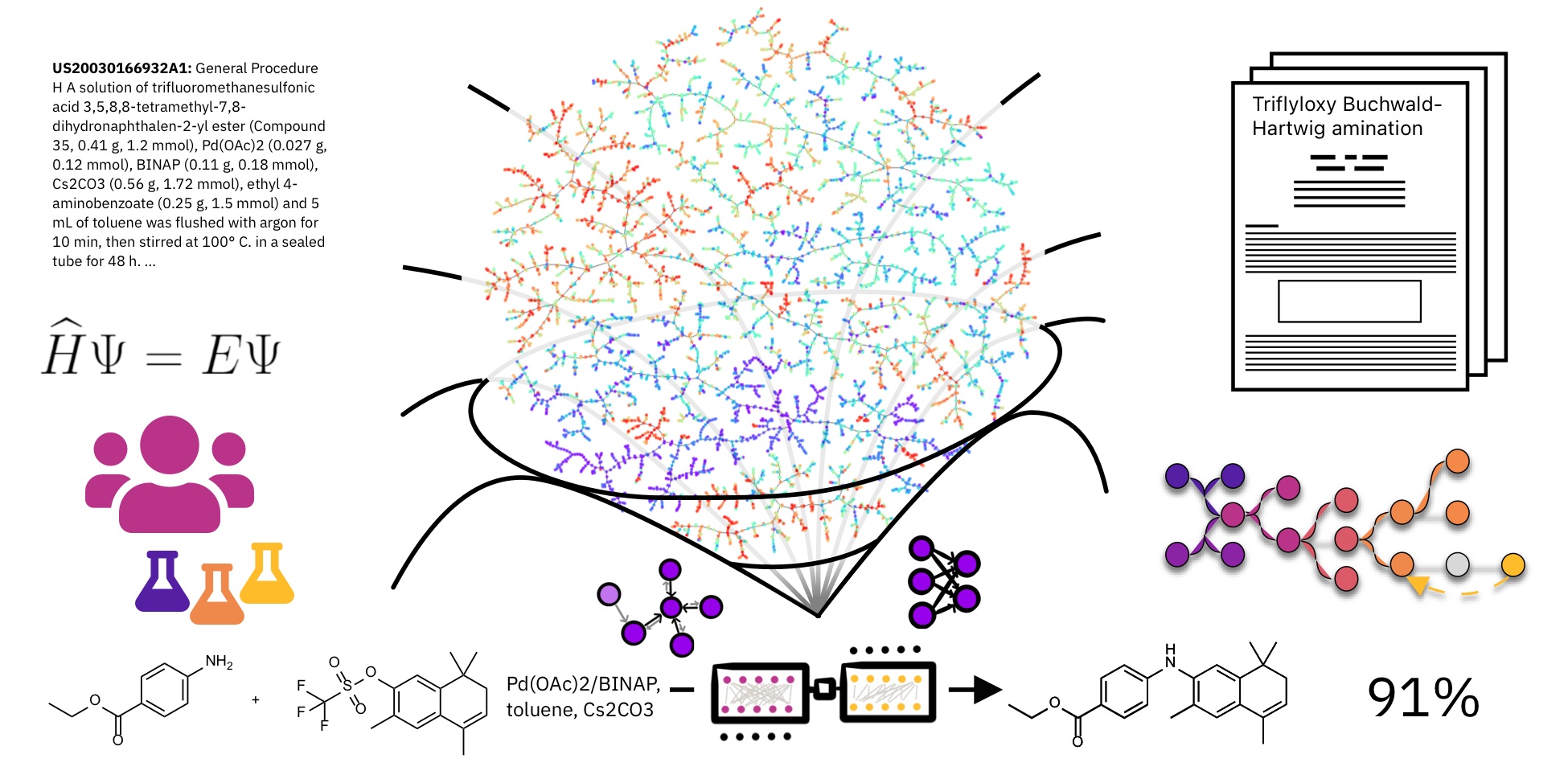
Philippe Schwaller is a Tenure Track Assistant Professor at École Polytechnique Fédérale de Lausanne (EPFL), School of Basic Sciences, within the Institute of Chemical Sciences and Engineering. He leads the Laboratory of Artificial Chemical Intelligence (LIAC), a research group focused on leveraging artificial intelligence to accelerate molecular discovery and sustainable chemistry. He is also a core Principal Investigator of the NCCR Catalysis, a national Swiss research center. His research lies at the intersection of chemistry, materials science, and computer science, with a strong emphasis on developing machine learning models for molecular design and synthesis. LIAC's work is driven by real-world sustainability challenges, aiming to reduce the time and cost of discovering new functional molecules and materials. The recent publications and projects from his lab highlight a strong trend in generative AI for chemistry, including memory-augmented models, hypergraph neural networks, and large language models tailored for scientific discovery. These efforts are complemented by educational initiatives such as the 'AI for Chemistry' course and practical programming resources for chemists. He actively supervises a diverse group of PhD students and contributes to multiple doctoral programs at EPFL, including EDCH and EDPY. His teaching portfolio includes courses on computational chemistry, AI applications in chemistry, and scientific machine learning. Philippe Schwaller is deeply involved in advancing AI-driven scientific discovery through both research and education, positioning his lab at the forefront of artificial chemical intelligence. The lab maintains active open-source contributions on GitHub, fostering collaboration and transparency in scientific AI development.
Dr. Sumanta Das is an Associate Professor and Graduate Director in the Department of Civil and Environmental Engineering at the University of Rhode Island. His research focuses on sustainable infrastructure materials, with particular expertise in cementitious materials, composite structures, and advanced computational modeling techniques. He directs a vibrant research group that bridges experimental mechanics with computational modeling and machine learning approaches to address challenges in infrastructure durability and performance. Dr. Das received his educational training from prestigious institutions: Ph.D. in Materials and Structures from Arizona State University (2015) M.Tech. in Structural Engineering from Indian Institute of Technology, Kanpur (2012) B.E. in Civil Engineering from Jadavpur University (2010) His research interests center around developing sustainable and durable infrastructure materials through innovative design approaches. Dr. Das investigates microstructure-property relationships in cementitious systems, with special focus on materials containing microencapsulated phase change materials for freeze-thaw durability, fiber-reinforced composites, and smart cementitious materials with self-sensing capabilities. His work integrates advanced experimental techniques like nanoindentation with computational modeling approaches including finite element analysis, molecular dynamics simulations, and machine learning algorithms to predict material behavior and optimize performance. Dr. Das's recent publications demonstrate a clear trajectory toward integrating machine learning with traditional materials science approaches. His research group has made significant contributions to understanding the behavior of cementitious composites under extreme conditions, developing multifunctional composites with embedded sensing capabilities, and creating computational frameworks that bridge multiple scales from molecular to structural levels. The work shows increasing sophistication in combining experimental validation with predictive modeling. Dr. Das has successfully secured numerous research grants as PI or Co-PI from diverse funding sources including the Office of Naval Research, Department of Defense, US Department of Transportation, and industry partners like Goetz Composites. His research portfolio spans infrastructure durability, composite materials for marine applications, and smart sensing technologies for structural health monitoring. As an educator and mentor, Dr. Das has supervised multiple doctoral and master's students who have completed theses on topics including: Multiscale simulation and machine learning-assisted performance prediction for cementitious composites Performance-based multiscale tuning of inclusion-modified and 3D printed composites Enhancing freeze-thaw durability of cementitious composites through innovative materials design Underwater explosion response of composite structures Implosion pulse mitigation using additively manufactured filler profiles
Dr. Srishti Banerji is an Assistant Professor in the Department of Civil and Environmental Engineering at Utah State University and Director of the Systems, Materials, and Structural Health (SMASH) Lab. She leads research on advanced construction materials, structural resilience under extreme loads (particularly fire), sustainable infrastructure, and structural health monitoring. Her group focuses on experimental testing, numerical simulations, and developing design solutions for civil infrastructure. Education: PhD in Civil (Structural) Engineering, Michigan State University (2021) MS in Civil (Structural) Engineering, Concordia University (2016) BS in Civil Engineering, National Institute of Technology Silchar (2013) Research Focus: Her work spans: 1) Characterization of high-performance/sustainable materials (e.g., UHPC, recycled glass pozzolan), 2) Structural behavior under fire exposure, 3) Integration of electric charging systems in concrete pavements, 4) Non-destructive testing and structural health monitoring, and 5) Retrofitting techniques for infrastructure strengthening. She employs machine learning, thermo-mechanical modeling, and full-scale experimentation. Publication Trends: Her 13+ journal articles primarily analyze fire resistance of concrete/timber structures, UHPC material properties at high temperatures, sensor-based infrastructure monitoring, and sustainable material development. Recent works increasingly incorporate machine learning and electrification concepts. Awards & Honors: Teacher of the Year (USU, 2025) ASCE ExCEEd Faculty Teaching Fellowship (2023) Top Cited Article Award, Fire and Materials Journal (2023) SHMII-11 Early Career Grant (2022) NSERC Scholarship (2015) Best Conference Paper (SEC 2016) Current Projects & Teams: She leads 5+ funded projects including fire performance of polymer concrete, self-healing concrete for bridges, and Utah-sourced UHPC development. Mentees include 3 PhD students (Abdullah Al Sarfin, Mehrnoosh Nazari, Mahmoud Ali) and alumni working on sustainable materials and additive manufacturing.
S. Scott Graham is an Associate Professor of Rhetoric & Writing and Associate Director for A.I. Science & Culture at the Humanities Institute of the University of Texas at Austin . He is affiliated with the Center for Health Communication , the Addiction Research Institute , the University of Texas Opioid Response Consortium , and the Health Informatics Research Interest Group . PhD, Iowa State University Research focuses on AI and machine learning in bioscience/health policy communication, bioethics, and health AI Author of three books: The Doctor & The Algorithm , The Politics of Pain Medicine , and Where's the Rhetoric? Projects include Transparency to Visibility (T2V) and Spectacular Specimens: A Global Study of Cadaverous Rhetorics at Anatomical Museums His work combines science and technology studies , critical algorithm studies , and public interest informatics to analyze health AI's societal implications. He has developed tools for parsing conflicts of interest in biomedical publishing and studies the ethics of anatomical museum displays. Scientific Awards & Grants: NEH Digital Humanities Advancement Grant (T2V project) NSF's XSEDE computational resources NIH funding for health communication research National Endowment for the Humanities support for Spectacular Specimens He teaches courses like Arguing With Scientists , Rhetoric And Algorithms , and Research Methods In Rhet/Wrt . Current research explores ethical frameworks for health AI and global anatomical museum rhetorics.
Steven Y. Liang , Regents' Professor at the Georgia Institute of Technology 's Woodruff School of Mechanical Engineering, focuses on precision manufacturing , additive manufacturing , and materials-driven process optimization . His research program bridges materials science and computational mechanics to develop predictive models for advanced manufacturing systems. Ph.D., University of California, Berkeley (1987) M.S., Michigan State University (1984) B.S., National Cheng-Kung University, Taiwan (1980) Dr. Liang's work emphasizes physics-based modeling of thermal-mechanical interactions in machining and additive manufacturing, particularly for Ti6Al4V and Inconel 718 alloys. Recent publications highlight tool wear prediction , laser-assisted micro-milling , and residual stress modeling using machine learning and analytical mechanics. His research has been recognized with the ASME Milton C. Shaw Manufacturing Research Medal (2016) , SME Gold Medal (2021) , and Outstanding Lifetime Service Award of NAMRI/SME (2021) , among others. Funded by federal agencies and aerospace/automotive industries, his work provides scientific foundations for process planning and optimization.
Dr. Andy Nguyen is a Senior Lecturer in Structural Engineering at the University of Southern Queensland, within the School of Engineering. He is an active researcher and educator, specializing in the Structural Health Monitoring (SHM) of critical civil infrastructure such as bridges, buildings, and transport tunnels. Bachelor of Engineering (BEng), NUCE, 1999 Master of Engineering (MEng), NUCE, 2003 Doctor of Philosophy (PhD), Queensland University of Technology (QUT), 2014 Dr. Nguyen's research is at the forefront of integrating advanced technologies into civil engineering. His primary focus is on developing and deploying sophisticated SHM systems that utilize sensors, data analytics, and machine learning to provide real-time insights into the structural integrity of ageing infrastructure. His work aims to enable proactive maintenance, extend the lifespan of structures, and enhance public safety. He has successfully implemented monitoring systems on major bridges and high-rise buildings in Queensland and New South Wales, with systems capable of even detecting distant earthquake events. His research interests span Structural Health Monitoring, Machine Learning for Engineering, Damage Detection, Finite Element Model Updating, Sustainable Building Materials like bamboo, and the application of AI for automated condition assessment of transport infrastructure. The analysis of his recent publications reveals a strong and consistent research trajectory centered on the application of data-driven and AI methods to solve practical problems in civil infrastructure. His work frequently combines signal processing techniques (like Stockwell Transform) with deep learning models for tasks such as crack detection in concrete and pavement. He also conducts significant research on model updating for complex structures like cable-stayed and arch bridges, using vibration data and optimization algorithms. The integration of machine learning for overload classification and the development of cost-effective, automated monitoring systems are key trends in his recent output. Advanced Queensland Fellow (2024-2027) Dr. Nguyen is actively involved in research supervision and collaboration. He is currently supervising several postgraduate students on projects related to AI-powered condition assessment, bamboo as a sustainable building material, and railway track design. He receives research funding from the Queensland Government through his Advanced Queensland Fellowship. His research has direct practical applications, as evidenced by his public engagement, such as writing for The Conversation on safeguarding ageing bridges, and his work with the Australian Network of Structural Health Monitoring. Dr. Nguyen's work embodies the development of a next-generation 'Living' Laboratory for engineering education, where research, teaching, and real-world infrastructure monitoring are integrated. His current projects involve creating smart, automated fault detection systems and advancing 'digital twin'-based monitoring platforms for infrastructure.
Neil Lawrence is the inaugural DeepMind Professor of Machine Learning at the University of Cambridge's Department of Computer Science and Technology. He also holds positions as a Senior AI Fellow at The Alan Turing Institute and a Visiting Professor of Machine Learning at the University of Sheffield. After three years as Director of Machine Learning at Amazon, Lawrence recently returned to academia, bringing extensive industry experience to his academic work. Lawrence's research focuses on the intersection of machine learning with the physical world, particularly in uncertainty quantification and end-to-end solutions for real-world applications. His work was initially inspired by deploying machine learning systems in African contexts, where comprehensive solutions are often required. His technical expertise spans over two decades in machine learning methods, with a growing interest in public understanding of machine learning, policy decisions, and data governance implications. His recent publications reveal a diverse research portfolio spanning climate science, healthcare applications, systems engineering for AI deployment, data governance, and theoretical machine learning. Lawrence's work demonstrates a consistent theme of bridging theoretical machine learning with practical applications across multiple domains, with particular attention to uncertainty quantification and the societal implications of AI systems. Lawrence serves on the board of the AISTATS conference and the ELLIS Foundation, and acts as the founding and series editor for the Proceedings of Machine Learning Research. He is also the co-host of the Talking Machines podcast, demonstrating his commitment to public engagement with machine learning concepts. At Cambridge, Lawrence teaches Advanced Data Science (Part II) and Machine Learning and the Physical World (MPhil ACS, Part III), contributing to both undergraduate and postgraduate education in computer science. His work with the Accelerate Programme for Scientific Discovery and the Data Trusts Initiative positions him at the forefront of developing frameworks for responsible and effective AI deployment in scientific and societal contexts.
Mingda Li is an Associate Professor in the Department of Nuclear Science and Engineering at the Massachusetts Institute of Technology (MIT), holding the Class of 1947 Career Development Professorship. His research spans quantum materials, nanoscale energy transport, and AI-driven materials discovery, utilizing neutron/X-ray scattering techniques and machine learning to address challenges in quantum computing, thermal management, and energy conversion. He leads the Quantum Measurement Group and teaches graduate courses including Quantum Theory of Materials Characterization. Education: Bachelor of Science in Engineering Physics, Tsinghua University, 2009 Doctor of Philosophy in Nuclear Science and Engineering, MIT, 2015 Postdoctoral Research, MIT Mechanical Engineering Department Research Interests: Dr. Li's quantum research develops theoretical frameworks for topological order and defect-engineered quantum materials, with applications in microelectronics and quantum computing. His energy transport studies investigate phonon/electron dynamics at interfaces under non-equilibrium conditions to design materials for thermal management in electronics. The AI program creates symmetry-aware generative models that integrate ab initio calculations with experimental data, enabling closed-loop materials discovery for quantum and energy technologies. Publication Trends: Analysis of 15 recent 2025 publications reveals dominant themes in quantum materials (topological semimetals, 2D magnets), AI-driven design (generative models, symmetry-equivariant networks), and advanced characterization (neutron/X-ray spectroscopy). Key innovations include defect engineering for thermal transport, machine learning for spectroscopic data interpretation, and quantum phenomenon discovery in complex materials, reflecting strong interdisciplinary integration. Scientific Awards: No scientific awards were mentioned in the provided text. Advising and Grants: Dr. Li mentors graduate students in the Quantum Measurement Group, guiding research in quantum materials characterization and AI applications. He has taught core courses including Applied Nuclear Physics and Machine Learning in Nuclear Science and Engineering. His research is supported by grants focused on quantum engineering and nuclear materials, with collaborations spanning national laboratories and industry partners for quantum computing and energy applications. Labs and Teams: The Quantum Measurement Group operates at the intersection of experimental physics and computational science, utilizing neutron scattering facilities (including Spallation Neutron Source) and ultrafast X-ray techniques. The team develops custom software for data analysis and collaborates with institutions like MIT.nano for materials synthesis, maintaining a pipeline from theoretical prediction to device-level validation for quantum and thermoelectric materials.
Dr. Sueda Saylan is an Assistant Professor at the Faculty of Engineering, Özyeğin University, since 2024. Her academic journey includes a Ph.D. in Interdisciplinary Engineering (2016) from Masdar Institute (now Khalifa University), postdoctoral research at Khalifa University (2016-2022), and an MSCA Postdoctoral Fellowship at Bilkent University (2022-2024). She has also held visiting researcher positions at MIT (2014) and the University of Tokyo (2016). Education Doctorate: Interdisciplinary Engineering, Masdar Institute of Science and Technology (2016) Master's: Microelectronic Manufacturing Engineering, Rochester Institute of Technology (2004) Bachelor's: Mechanical Engineering, Middle East Technical University (2002) Dr. Saylan's research focuses on memristive devices , photovoltaics , and light-matter interactions at micro/nanoscale . Her work bridges materials science and electronic engineering, with recent publications on memristor-based sensors, spectral filtering in silicon, and machine learning integration for biomedical diagnostics. Key trends from her 15 most recent articles (2013-2025) include: Advancing memristor technology for radiation sensing and vacuum monitoring Optimizing photovoltaic efficiency through light management and antireflection coatings Developing compact, low-power diagnostic devices for pathogen detection Exploring nanoscale electrode materials and switching mechanisms Applying Fourier transforms and interferometry in optical systems Scientific Awards Marie Skłodowska-Curie Actions (MSCA) Postdoctoral Fellowship (2022-2024) Dr. Saylan has received research support from prestigious programs and has contributed to interdisciplinary projects involving semiconductor physics, optical engineering, and biomedical diagnostics. Her collaborations span institutions like Khalifa University, MIT, and the University of Tokyo.
Andy Shih is a Professor in the Department of Electrical Engineering at École de technologie supérieure (ÉTS) in Montreal, Canada. He holds a B.Eng. and M.Eng. in Electrical Engineering from McGill University and a Ph.D. in Electrical Engineering from Massachusetts Institute of Technology. His research is conducted at the LaCIME (Communications and Microelectronic Integration Laboratory), where he focuses on innovative materials and advanced manufacturing. Dr. Shih's research interests span organic semiconductor devices, microfabrication & nanofabrication, printed and flexible electronics, sustainable electronic materials, organic transistors and sensors, soft MEMS, AI-enhanced sensing, and biomedical monitoring technologies. His work bridges materials science, electrical engineering, and biomedical applications, with particular emphasis on developing smart bandages, printed sensors, and flexible electronics for healthcare monitoring. His publications reveal a strong focus on organic electronics, sensor development, and biomedical applications, with increasing integration of AI techniques for sensor enhancement and data analysis. Dr. Shih teaches courses including Electromagnetism (ELE312), Microsystem Fabrication Processes (ELE676), and Photovoltaic Solar Energy Systems (ENR889). His supervision portfolio includes numerous doctoral and master's students working on diverse projects spanning printed electronics, MEMS, sensor development, AI applications in sensing, and photovoltaic systems. His research has resulted in multiple patents related to thin-film transistors, acoustic resonators, and sensor technologies.