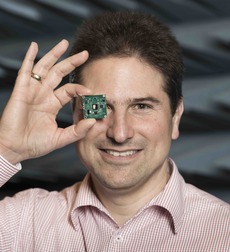
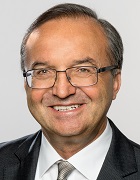
Prof. Dr.-Ing. Thomas Zwick is a full professor and director of the Institute of High Frequency Engineering and Electronics (IHE) at the Karlsruhe Institute of Technology (KIT). He holds a Dipl.-Ing. (M.S.E.E.) and Dr.-Ing. (Ph.D.E.E.) from the University of Karlsruhe. His career includes roles at IBM Research (2001–2004), Siemens AG (2004–2007 managing automotive radar teams), and KIT since 2007. He leads research in high-frequency technologies, antennas, radar systems, and wireless communications. Research interests include radio wave propagation, antenna design, automotive radar architectures, and millimeter-wave systems. He has authored/co-authored over 400 papers, 20 patents, and received IEEE Fellow status (2018), honorary doctorate from Budapest University (2022), and membership in the Heidelberg Academy and acatech. His work emphasizes integrating sensing and communication systems, 3D-printed RF components, and high-frequency measurement techniques. Teaching focuses on high-frequency engineering, electronic circuits, and radar systems. He oversees the IHE’s laboratories, including the Microwave Engineering Lab and Student Innovation Lab. Recent work explores sub-THz communication, RIS-aided ISAC systems, and beamforming for reduced EMF exposure in urban scenarios.
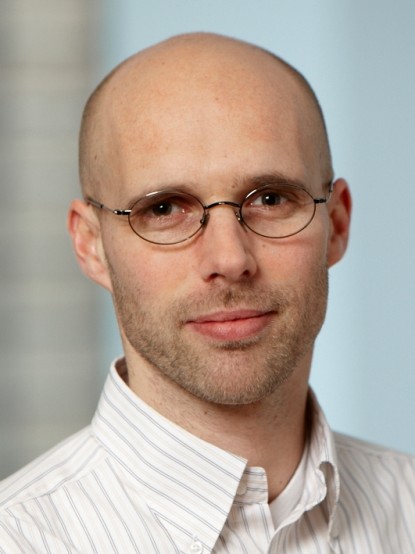
Prof. Dr.-Ing. Ahmad Osman is a Professor at the Saarland University of Applied Sciences (htw saar), specializing in Test Technologies and Test Methods within the Faculty of Engineering. He also holds an Adjunct Professor position at Laval University in Quebec, Canada, in the Department of Electrical Engineering and Computer Science. His research focuses on Artificial Intelligence applications in Signal and Image Processing for Non-destructive Testing (NDT) , with extensive work on Deep Learning , 3D Ultrasound Tomography , and Sensor Data Fusion in industrial contexts. Engineering Artificial Intelligence Signal Processing Image Processing Non-destructive Testing Quality Control Augmented Reality Osman leads the AutomaTiQ research group and serves as Head of the Algorithms/Signal and Data Processing Department at Fraunhofer IZFP . His recent publications (2017–2022) emphasize Deep Learning for defect detection in CFRP , Terahertz Imaging for artwork diagnostics, and Acoustic Sensors for agricultural quality control. He has organized international conferences on Structural Health Monitoring and contributed to Springer books on NDT technologies. His projects include ComforTex-AI (2024) and development of 3D positioners for ultrasound measurements. Collaborations span institutions in Germany, Canada, Italy, and Brazil, with advisory roles in the German Society for NDT and technical committees for conferences in Montreal and Egypt.
Jihyun Lee is an Assistant Professor in the Department of Mechanical and Manufacturing Engineering at the Schulich School of Engineering, University of Calgary. She was awarded the Anna Boyksen Fellowship by the Technical University of Munich Institute for Advanced Study (TUM-IAS) in 2021, hosted by Prof. Michael Zäh. Doctorate in Mechanical Engineering from University of Michigan-Ann Arbor (2016) Prior post at Korea Institute of Machinery and Materials (2016-2019) Her research focuses on mechatronics, robotics, manufacturing automation, and control systems , with applications in machine tools, additive manufacturing, and precision measurement. She integrates artificial intelligence and optimization to enhance industrial automation. Recent publications highlight work on vibration control , sensor fusion , and flexible manufacturing systems . Her team explores dynamic modeling , nanocomposite sensors , and human-in-the-loop robotics for industrial and marine applications. 2020 Remote Teaching Award, Schulich Engineering 2020 Early Achievement Award, Association of Korean-Canadian Scientists and Engineers 2018 Best Achievement Award, KIMM She supervises doctoral and master’s students at the University of Calgary, emphasizing hands-on experience and MATLAB/Python simulation skills in her lab. Her work bridges quantum logic and industrial robotics through interdisciplinary collaborations.
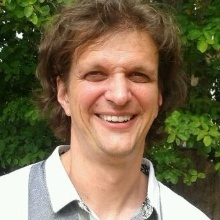
Michael Knap is an Associate Professor of Collective Quantum Dynamics at the Technical University of Munich (TUM), within the Department of Physics at the TUM School of Natural Sciences. His research group focuses on condensed matter theory, quantum many-body systems, and quantum simulation. Knap holds office in room 5101.01.037 at James-Franck-Str. 1, 85748 Garching b. München, and can be reached at michael.knap@ph.tum.de or +49 (89) 289 - 53777. Prof. Knap's research delves into the rich physics of quantum many-body systems, particularly exploring non-equilibrium dynamics and transport phenomena in ultracold quantum gases, interacting light-matter systems, and correlated quantum materials. His work spans multiple subfields including topological phases of matter, quantum simulation with trapped ions, fracton physics, and quantum computation. He develops novel numerical approaches based on quantum information theory and utilizes artificial intelligence and machine learning to tackle challenging problems in condensed matter physics. His group's research connects fundamental theoretical questions with experimental implementations in quantum simulators. The analysis of Prof. Knap's recent publications (2023-2025) reveals a strong focus on topological quantum matter, quantum simulation, and emergent phenomena in constrained quantum systems. His work frequently bridges condensed matter theory with quantum information science, as evidenced by publications on fracton hydrodynamics, higher-form symmetries, and quantum error correction. There's a clear progression toward increasingly complex quantum systems and connections to experimental implementations on quantum processors. His research shows significant interdisciplinary reach, connecting condensed matter physics with quantum computing and quantum information theory. ERC Consolidator Grant (2025) ERC Starting Grant (2019) Supervisory Award, TUM Department of Physics (2018) Promotio sub auspiciis Praesidentis rei publicae, Austria (2013) Prof. Knap has established a robust research program supported by prestigious European Research Council grants. His group actively collaborates with both theoretical and experimental groups worldwide, particularly in the quantum simulation community. He has supervised numerous students through Master's Seminars on Collective Quantum Dynamics covering topics like quantum simulation with trapped ions and theoretical quantum computation. His research has received significant attention, with several publications featured as Editors' suggestions and Research Highlights in leading journals. The Collective Quantum Dynamics group maintains strong connections with experimental quantum simulation efforts, particularly in the areas of ultracold atoms and trapped ion systems. Knap's theoretical work often provides frameworks for interpreting experimental results in quantum simulators, creating a productive feedback loop between theory and experiment. His group participates in collaborative research networks focused on advancing quantum simulation capabilities and understanding fundamental aspects of quantum many-body physics.
Mathias Niepert is a Professor at the Institute for Artificial Intelligence within the Faculty of Computer Science, Electrical Engineering and Information Technology at the University of Stuttgart. His research focuses on advancing machine learning techniques with applications in scientific computing, graph neural networks, and medical imaging. He is particularly known for contributions to physics-informed neural networks, equivariant models, and graph learning frameworks. Key research areas include: Scientific Machine Learning for PDEs and molecular modeling Graph neural networks and their theoretical limitations Medical vision-language models and multimodal learning Efficient neural network architectures (transformers, FNOs) Domain knowledge integration in deep learning His work often bridges theoretical foundations with practical applications, as evidenced by extensive publications (2018–2025) on topics like adaptive message passing, equivariant networks, and medical imaging systems. He has contributed to benchmark development through initiatives like PDEBench and pioneered methods for equivariant diffusion models and molecular representation learning. His current projects emphasize: Improving generalization in Fourier Neural Operators Addressing oversmoothing in graph networks Combining physics principles with neural architectures Medical AI applications through multimodal fusion
Dorina Siebert is a Researcher at the Chair of Metal Construction within the School of Engineering at the Technical University of Munich. She has been working as a research assistant at the Chair since 2019, contributing to various research projects related to steel and aluminum construction, fracture mechanics, and additive manufacturing in construction. Education: M.Sc. in Civil Engineering from Technical University of Munich (2012-2019) Affiliation: Chair of Metal Construction, School of Engineering, Technical University of Munich Contact: dorina.siebert@tum.de, Room 0101.Z1.038, +49 (89) 289-22527 Dorina's research primarily focuses on the fatigue strength of aluminum structures, fracture mechanics in railway bridges, and the application of additive manufacturing techniques in construction. Her work on powder bed-based laser beam melting of metal has significant implications for modern construction methods. She also investigates safe operating time intervals for historic steel bridges and has contributed to the development of a mobile vehicle barrier, demonstrating the practical applications of her theoretical work. Her publication record shows a strong trend toward computational and experimental analysis of material behavior under stress, particularly in aluminum alloys and steel structures. She has published extensively on fatigue properties, fracture mechanics calculations, and additive manufacturing applications, with a clear progression toward more complex modeling techniques and practical engineering solutions. Her work bridges theoretical computational models with real-world infrastructure challenges. Dorina teaches courses including 'Constructing with aluminum' for the Summer semester 2025 and 'Fracture mechanics and fatigue' for the Winter semester 2024/25. She also leads a seminar on plate buckling and steel bridge construction, sharing her specialized knowledge with engineering students. Her teaching directly reflects her research expertise, creating a strong connection between theoretical knowledge and practical application for her students.
Prof. Peter Müller-Buschbaum is a Full Professor and Head of the Chair of Functional Materials at the Physics Department of the Technical University of Munich (TUM). He has held this position since April 2018 and also served as Scientific Director of the Research Neutron Source Heinz Maier-Leibnitz (FRM-II) and the Heinz Maier-Leibnitz Center (MLZ) from 2018 to 2023. His leadership extends to multiple roles including Core Member of the Integrated Research Institute Munich Institute of Integrated Materials, Energy and Process Engineering (MEP) since 2021, and Head of the Renewable Energies Network (NRG) at MEP. Full Professor (W3), Head of the Chair of Functional Materials at TUM School of Natural Sciences (since 04/2018) Deputy Editor of "ACS Applied Materials & Interfaces" (since 01/2024) Supervising Professor "Electronics Laboratory" at TUM School of Natural Sciences (since 11/2023) Member of TUM Sustainability Board (since 05/2023) Core Member of MEP Institute (since 10/2021) Head of Renewable Energies Network at MEP (since 10/2021) Prof. Müller-Buschbaum's research spans energy materials for photovoltaics and battery technologies, smart responsive materials that adapt to environmental stimuli, and nanocomposite materials with tailored properties. His group employs advanced scattering techniques to characterize materials at the nanoscale, providing insights into structure-property relationships critical for developing next-generation energy technologies. His extensive publication record demonstrates particular expertise in perovskite solar cells, lithium-ion battery technologies, and polymer-based functional materials, with recent work focusing on improving device stability and efficiency while understanding fundamental degradation mechanisms. His publications reveal a strong emphasis on energy conversion and storage technologies, with particular attention to interfacial engineering in both photovoltaic and battery systems. The research shows sophisticated integration of materials synthesis, advanced characterization, and device engineering to address critical challenges in renewable energy technologies. His work bridges fundamental science with practical applications through collaborations with major international research facilities. Scientific Service and Recognition Member of the Council of the Cluster of Excellence "ORIGINS" (since 01/2019) Spokesperson of the Chemical Physics and Polymer Physics Association of DPG (03/2021-10/2022) Member of the European Spallation Source Scientific Advisory Panel (since 03/2011) German representative at the European Polymer Federation for polymer physics (since 03/2011) Chairman of the Keylab "TUM.solar" in the Bavarian research project "Solar Technologies Go Hybrid" (since 03/2012) Prof. Müller-Buschbaum actively contributes to academic community through editorial work, having served as Associate Editor (2012-2022), Executive Editor (2023), and currently Deputy Editor (2024-present) of "ACS Applied Materials & Interfaces". He maintains strong international collaborations with synchrotron and neutron facilities worldwide, reflecting his expertise in advanced materials characterization techniques essential for cutting-edge materials research.
Prof. Dr.-Ing. Elisabeth Clausen is a Professor and Director of the Chair and Institute for Advanced Mining Technologies at RWTH Aachen University. She holds key roles in the Specialist Group for Raw Materials and Disposal Technology, serves as a rectorate representative, and leads the Commission for EU Research Funding. Her research spans Underground mining automation Acoustic emission diagnostics Sustainable mining systems Space resource extraction Advanced sensor technologies Her recent publications focus on autonomous mining machinery, underground communication systems, and acoustic emission analysis across 15+ studies from 2013–2025, with particular emphasis on Ultra-wideband positioning Thermographic detection Crack monitoring in planetary gearboxes Explosive atmosphere safety Mineral processing diagnostics Digitalization trends Prof. Clausen contributes to mining education reform through initiatives like CDIO™ and has developed innovative learning spaces in underground mines. She coordinates international educational labs and integrates sustainability into mining engineering curricula, with publications on Adaptive ventilation systems Mining education frameworks Future-proof mineral extraction Entrepreneurial mindset in engineering
Prof. Dr.-Ing. Gerhard Müller is a Full Professor at the Chair of Structural Mechanics within the TUM School of Engineering and Design at Technical University of Munich (TUM). Since 2004, he has held this distinguished position, and since 2014, he has served as Executive Vice President for Academic and Student Affairs at TUM. His research focuses on structural dynamics and vibroacoustics, with specific expertise in dynamic soil-structure interaction, sound radiation analysis, and seismic risk assessment. Professorship: Structural Mechanics University: Technical University of Munich School: TUM School of Engineering and Design Department: Chair of Structural Mechanics in Civil Engineering Prof. Müller's research spans multiple domains, including: Structural Dynamics : Examining building and vehicle vibrations, seismic soil-structure interaction, and advanced model order reduction techniques Vibroacoustics : Investigating sound radiation from vibrating structures and developing acoustic metamaterials for noise control Computational Methods : Pioneering hybrid deterministic-statistical approaches, Wave Based Methods (WBM) for saturated elastodynamic structures, and parametric model order reduction His recent publications demonstrate expertise in: Wave propagation analysis in poroelastic media Bayesian parameter updating for structural models Acoustic metamaterials for vibration control Advanced numerical methods for seismic risk assessment Hybrid ITM-FEM approaches for soil-structure interaction Energy flow analysis in timber structures Awarded the Spindler Prize in 1984 , Prof. Müller also holds significant academic leadership roles: President of European Association for Structural Dynamics (EASD) Chairman of Bavarian-French University Center (BayFrance) Active member of ASIIN accreditation agency and Bavarian Chamber of Engineers Previously served as Dean of Civil Engineering and Surveying at TUM (2010-2014) He leads the Structural Dynamic Lab (formerly Vibroacoustics Lab) and has developed interactive web apps for engineering education. His work bridges theoretical advancements with practical applications in construction acoustics, transportation noise control, and geothermal energy infrastructure analysis.
Prof. Dr. Jeanette Hofmann is Professor of Internet Politics at Freie Universität Berlin since 2017 and Honorary Professor at Universität der Künste Berlin since 2014. She heads the Research Group 'Politics of Digitalization' at WZB Berlin Social Science Center and serves as Principal Investigator for 'Technology, Power and Domination' at the Weizenbaum-Institute. Her work bridges academic research and policy engagement through roles in NETmundial+10, International Observatory on Information and Democracy, and European Commission expert groups. Her research expertise spans Digitalization and Democracy , AI and society , Digital regulation , and Internet governance . Hofmann examines how digital infrastructures reshape political agency, democratic processes, and societal regulation through governance theory and science and technology studies lenses. Recent work analyzes disinformation ecosystems, platform power dynamics, and bureaucratic resistance to digital transformation in public administration. Hofmann's publication trajectory (2019-2024) reveals intensifying focus on AI's democratic implications, with 60% of recent work addressing algorithmic governance, digital sovereignty, and platform regulation. Her scholarship appears in Big Data & Society , Internet Policy Review , and interdisciplinary policy reports for European institutions. Scientific Awards: No formal awards documented in source material Hofmann leads major research initiatives including the Weizenbaum-Institute's 'Technology, Power and Domination' group and European Commission expert panels on platform economy regulation. Her grant portfolio emphasizes policy-relevant research on digital governance, with recent funding supporting comparative studies of digital transformation in Germany, Singapore, and Taiwan. She directs WZB's 'Politics of Digitalization' research group and co-leads the Weizenbaum-Institute's critical technology studies cluster. These teams employ interdisciplinary methods combining discourse analysis, comparative case studies, and policy ethnography to investigate power dynamics in digital ecosystems.
John Nassour is a Researcher at the Technical University of Munich's School of Computation, Information and Technology, affiliated with the Chair of Cognitive Systems. He holds engineering degrees from Tishreen University (electronics), a Master's in intelligent systems from University of Cergy-Pontoise/École Nationale Supérieure de l'Électronique, and a joint PhD from University of Versailles/TUM. His interdisciplinary research focuses on computational cognitive systems applied to robotics, including wearable devices, humanoid robots, soft robotics, and robot learning for locomotion/manipulation. Before joining TUM in 2020, he was a lecturer/researcher at Chemnitz University of Technology. He teaches courses in cognitive systems, neuro-inspired engineering, and soft robotics.
Prof. Heinz Koeppl is a Professor in the Department of Electrical Engineering and Information Technology at TU Darmstadt. His research focuses on self-organizing systems, systems biology, and control theory, with applications in synthetic biology, robotics, and stochastic processes. He explores interdisciplinary topics such as genetic circuit design, UAV swarm dynamics, and machine learning-driven modeling of biochemical systems. Key research areas include the development of deep learning frameworks for kinetic modeling, Bayesian optimization for riboswitch design, and mean field control theory for sparse networks. His work bridges theoretical foundations with practical engineering solutions, addressing challenges in molecular communication, gene regulation, and robotic swarm coordination. Publications from 2023–2025 highlight advancements in bio-inspired algorithms, swarm intelligence, and computational biology. Notable contributions include studies on RNA-based circuits, active matter dynamics, and optimization strategies for large-scale systems. His research emphasizes interdisciplinary collaboration, leveraging tools from electrical engineering, mathematics, and life sciences. No scientific awards are explicitly listed in the provided text. Advising and grants details are not available. Prof. Koeppl’s lab focuses on integrating systems biology approaches with engineering principles to solve complex problems in healthcare, environmental sustainability, and technological innovation.
Simon Razniewski is a Professor of Knowledge-based Artificial Intelligence at TU Dresden and ScaDS.AI, focusing on integrating language models and knowledge bases. He previously held roles at Bosch Center for AI (2023–2024), Max Planck Institute for Informatics (2017–2021), and Free University of Bozen-Bolzano (2014–2017). His research spans knowledge extraction, computational logic, and data science applications. He holds a PhD (2014) and Diplom (MSc, 2010) from Free University of Bozen-Bolzano and TU Dresden, respectively. Research interests include large language models (LLMs), knowledge graph construction, and uncertainty quantification in natural language processing. His work bridges AI theory and practice, with publications at top venues like ACL and EMNLP. He teaches courses on LLMs and knowledge-aware AI, and has advised numerous collaborative projects across academia and industry. Prominent contributions include frameworks like GPTKB for LLM knowledge materialization and QUITE for Bayesian reasoning in NLP. His prior roles at Siemens IT and Globalfoundries inform his applied research focus. The International Center for Computational Logic (ICCL) at TU Dresden is his primary research hub, emphasizing interdisciplinary computational logic and AI advancements.
Dr. rer. nat. Thomas Hermann is a faculty member at Bielefeld University's Faculty of Engineering, leading the Ambient Intelligence Group and coordinating the Computer Science program. He specializes in sonification, auditory data science, and smart environments. Head of Ambient Intelligence Working Group Computer Science Program Coordinator Member of multiple academic advisory boards His research focuses on interactive sonification for biomedical applications, quantum systems, and smart environments. Key projects include ECG sonification for cardiac diagnosis, real-time auditory feedback in swimming, and sonic interfaces for AR cooperation. Recent publications span 2025 with Python-based sonification tools ( pya AGen ), quantum system sonification, and ST-elevation myocardial infarction monitoring. He contributes to open-access supplementary materials and interdisciplinary workshops. As a researcher , Hermann develops practical sonification frameworks like Panson for facial behavior analysis, CardioScope for portable ECG monitoring, and Base Cube One for smart environments. His work bridges academic research with industry applications.
Jonas Kuhn is a professor at the Institute for Natural Language Processing (IMS) at University of Stuttgart. He is working at the interface between language and computers, combining linguistics and computer science. Kuhn's research interests span a wide range of computational linguistics topics including: Language models and spatial reasoning Analysis of large language models (LLMs) through linguistic theories Political text analysis and discourse networks Computational approaches to literature and cultural studies Retrieval-augmented language modeling Semantic change detection Dependency parsing and syntactic analysis His recent publications (2023-2025) focus on the intersection of neural language processing with fields as diverse as spatial reasoning, literary analysis, and political discourse. This reflects his interdisciplinary approach that bridges fundamental language research with practical technology development. As a faculty member at one of Germany's largest computational linguistics centers, Kuhn contributes to both fundamental research and technological development in language processing systems.