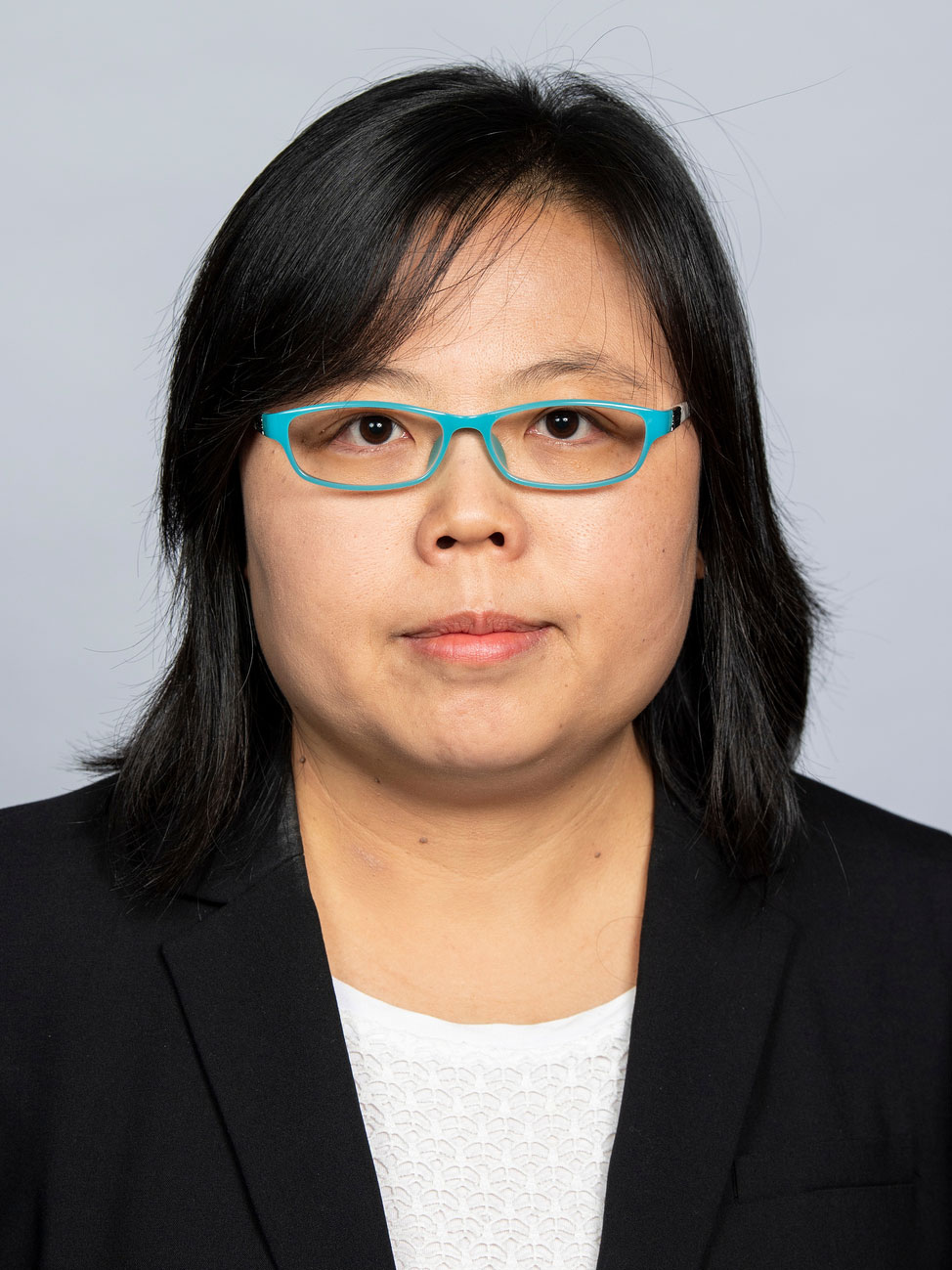
Yaning Li is an Associate Professor at Northeastern University's Department of Mechanical and Industrial Engineering, part of the College of Engineering. Her research focuses on mechanics of materials, bio-inspired engineering, additive manufacturing, and mechanical metamaterials. She holds a PhD from the University of Michigan and dual MS degrees from the same institution. Education: PhD (2007), University of Michigan; Dual MS (2006), University of Michigan Affiliations: Mechanics, Biomimetics, and 3D Printing Research Lab; American Physical Society (APS), Society of Naval Architects and Marine Engineers (SNAME) Her research explores bio-inspired materials, energy absorption mechanisms, and advanced manufacturing techniques. Key projects include developing auxetic metamaterials and bio-inspired sutural designs. Grants & Awards: NSF CAREER Award (2016), AFOSR SFFP Fellowship (2013), IUTAM Travel Award Recent Recognition: 2023/2024 Stanford Top 2% Cited Scientists Advises a diverse group of students and postdocs, including current PhD candidates Lin Gu and Yunzheng Yang. Her lab focuses on experimental and computational studies of novel materials, with applications in engineering and biomedicine. Labs/Teams: Mechanics, Biomimetics, and 3D Printing Research Lab Patents: 3D auxetic composite structures, bio-inspired metamaterials
Dr. Shaoyu Zhao is a Research Fellow (Level A) at RMIT University's School of Engineering. His research focuses on advanced composite structures, mechanical metamaterials, graphene nanocomposites, and molecular dynamics simulations. He holds an ARC DECRA Fellowship and has over 40 journal publications with 2000+ citations (h-index 26). Awards include the ICES2024 Best Paper Award and 2025 DECRA. He supervises Masters/PhD students in areas like metaconcrete and functionally graded structures. Editorial roles include Early Career Board Member for Engineering Structures (Q1), International Journal of Structural Integrity (Q1), and others. Teaching includes the course MIET1076 - Mechanical Vibrations. His work bridges nanoscale simulations (e.g., graphene interfaces) with macro-scale engineering applications (e.g., 3D-printed composites and metamaterial energy absorption). Research spans multi-physics phenomena in perovskite materials and machine learning-driven material analysis. Key Projects: Metaconcrete composites, origami metamaterials, graphene-reinforced nanocomposites Lab Focus: Multiscale modeling for aerospace composites and smart materials
Dr. Abdur Forkan is a Senior Research Fellow in AI and Machine Learning at Swinburne University of Technology's School of Science, Computing and Emerging Technologies. He also holds honorary research positions at Peter MacCallum Cancer Centre and Northern Health. His work focuses on applied AI and machine learning across digital health, Industry 4.0, FinTech, AgriTech, and supply chain optimization. He has led over a dozen industry projects, delivering impactful solutions such as AI-driven healthcare systems, manufacturing efficiency tools, and agricultural disease prevention models. Education: PhD in Computer Science, RMIT University (2016) B.Sc. in Computer Science and Engineering, Bangladesh University of Engineering and Technology (2007) Research Interests: Data Science and Health Informatics Pervasive Computing and IoT Applications AI in Healthcare and Industry Awards: 2023 iAwards National Winner (Government/Public Sector Solution) 2023 iAwards VIC Winner (Technology Platform Solution) RMIT CSIT Publication Award (2015) Grants & Collaborations: Lead on projects with industry partners like VidVersity, Sphere Holdings, and Northern Health Focus on digital twin technologies, AI in clinical decision support, and healthcare platform development Teaching & Supervision: Sessional academic at RMIT and Swinburne Supervising HDR students on topics like AI in healthcare, greenspace health impacts, and chronic disease management
Dr. Lucas Francisco dos Santos is a postdoctoral researcher at ETH Zurich's Institute for Chemical and Bioengineering (ICB), working under Professor Gonzalo Guillén Gosálbez. He holds a double PhD in Chemical Engineering from the University of Alicante and the State University of Maringa. His research focuses on advancing sustainable chemical processes through surrogate models, defossilization strategies, and life cycle impact assessments. He contributes to projects funded by the SNSF and the NCCR Catalysis, emphasizing circular chemical sector pathways and algorithm development. Education: PhD in Chemical Engineering (Double Degree): University of Alicante and State University of Maringa Research Interests: Defossilized chemical sector pathways Hybrid modeling and life cycle assessment Algorithm development for sustainable processes Collaborations with institutions like aCe (ETH), EPFL, and IBM Research Teaching and Mentoring: Teaches Case Studies in Process Design Mentors PhD and MSc students Grants and Projects: Funded by SNSF and NCCR Catalysis Labs/Teams: Part of the Chemical Systems Engineering Professorship at ETH Zurich.
Chi Zhou is an Associate Professor and Director of Graduate Studies in the Department of Industrial and Systems Engineering at the University at Buffalo. He also holds an adjunct appointment as Adjunct Associate Professor in the Department of Computer Science and Engineering. His research focuses on additive manufacturing, rapid prototyping, and advanced material systems. Zhou has a PhD in Industrial and Systems Engineering (2011) from the University of Southern California, with additional degrees in Computer Science and Industrial Engineering. His work bridges manufacturing processes, material science, and computational methods. Key research areas include inkjet printing process optimization, hydrogel-based 3D printing, thermal insulation materials from agricultural byproducts, and smart material systems like magnetorheological metamaterials. He has pioneered methods for real-time process monitoring and defect detection in additive manufacturing. Zhou’s recent publications emphasize sustainable manufacturing solutions, such as bio-based insulation materials and cost-effective silica aerogel production. His contributions also span energy harvesting (e.g., conductive hydrogel generators) and advanced structural designs using triply periodic minimal structures. He has led interdisciplinary projects integrating digital twins for cyber manufacturing systems and geometric deep learning for mass customization applications.
Prof. Keng Hock, Mark Goh is a Professor at the National University of Singapore (NUS) Business School, holding a joint appointment as Director (Industry Research) at The Logistics Institute-Asia Pacific (TLI-AP). He specializes in logistics, supply chain strategy, and operations research. He earned his PhD from the University of Adelaide on a fully funded scholarship and has held adjunct and visiting roles globally. His research focuses on supply chain risk management, healthcare logistics, and strategic decision-making, with over 400 publications in top journals. Notable contributions include work on multi-criteria supplier selection, supply chain resilience, and AI ethics in e-commerce. He has received the Supply Chain Educator Award and is recognized in global directories like *Who’s Who in Asia and the Pacific Nations*. Prof. Goh advises public and private sector organizations on logistics strategy and sits on industry committees such as the World Economic Forum’s Global Advisory Council on Logistics. His current projects emphasize syncretic value-driven logistics models and sustainable recycling frameworks. He leads collaborative research teams addressing global supply chain challenges through interdisciplinary approaches. His articles reflect cutting-edge advancements in AI-driven decision models, risk networks in construction, and data ownership strategies in digital platforms. These contributions underscore his role as a thought leader in logistics and operations research, blending academic rigor with real-world industry applications.
Dr. Yu (Chelsea) Jin is an Assistant Professor in the Department of Industrial Engineering at the University at Buffalo, specializing in quality inspection, predictive modeling, and data analytics for advanced manufacturing systems. She holds a PhD in Industrial Engineering from the University of Arkansas, an ME from the University of Michigan, and dual BS degrees in Network Engineering and Finance from Jinan University. Her research focuses on integrating machine learning and physics-based models to optimize manufacturing processes, such as additive manufacturing, PCB assembly, and pharmaceutical distribution systems. She has developed frameworks like ReflowNet for reflow oven optimization and physics-informed neural networks for thermal profile prediction. Her work emphasizes both theoretical advancements and practical applications in smart manufacturing and healthcare logistics. Dr. Jin's recent publications highlight contributions to generative AI for knowledge retrieval, AGV system optimization, and multi-source transfer learning for pandemic modeling. She actively collaborates with industry partners to bridge academic research and real-world manufacturing challenges.
Niko Siltala is a University Instructor at Tampere University's Department of Automation Technology and Mechanical Engineering. He holds a Doctor of Science (Technology) in Mechanical Engineering (2016) and a Master of Science (Technology) in Automation Engineering (2001). His research focuses on production system design, reconfiguration, robotics, and virtual reality applications in safety training. He has contributed to the development of semantic rules for capability matchmaking, which supports rapid system design and reconfiguration. Key research areas include: Manufacturing automation and system adaptability Human-robot collaboration and safety protocols Virtual reality-based training solutions Formal resource descriptions for modular systems His work aligns with UN Sustainable Development Goals, particularly in advancing quality education (SDG 4) through innovative robotics education tools. He has received the Distinguished Committee Service Award (2004) and contributed to grants such as the K.F. ja Maria Dunderbergin testamenttisäätiö (2014). He has collaborated on projects like the D-BEST methodology for pilot lines and the ODIN project for scalable production systems. His activities include organizing conferences, presenting at international forums, and developing web-based tools for manufacturing system planning.
Dr. Ding Ze Yang is a Lecturer in the Department of Electrical and Robotics Engineering at Monash University Malaysia. He holds a PhD (2023) and Bachelor's degree (2019) in Engineering from the same institution. His research focuses on Industrial AI, emphasizing data-driven soft sensors for industrial process monitoring, with applications in manufacturing, energy, and logistics. He has published in journals like IEEE Transactions on Industrial Informatics and Soft Robotics. Education: PhD in Engineering, Monash University Malaysia (2019–2023) Bachelor of Engineering (Honours) in Electrical and Computer Systems Engineering, Monash University Malaysia (2015–2019) Research Interests: Industrial AI, deep learning, data-driven modeling, process monitoring, autonomous systems, and soft sensor development. His work addresses challenges in predictive maintenance, process optimization, and sustainable manufacturing through AI-driven solutions. Publications: Recent work includes contributions to soft sensor modeling, transfer learning for multi-agent systems, and Kalman filter optimization. These publications highlight advancements in industrial AI applications. Collaborations: Active collaborations include projects on soft robotics, energy storage systems, and autonomous transportation. He is open to supervising PhD students in these areas.
Rhea Darbari Kaul serves as an Ears, Nose and Throat Registrar at Macquarie University Clinical Associates (MUCA) while pursuing her Doctor of Philosophy through the Faculty of Medicine, Health and Human Sciences at Macquarie University. With an h-index of 19, she demonstrates significant research impact in her field. Dr. Darbari Kaul's research focuses at the intersection of artificial intelligence and otolaryngology, with particular emphasis on rhinology and ear surgery applications. Her work bridges clinical practice with technological innovation, developing practical AI solutions for medical imaging analysis, surgical procedures, and prosthetic development. She has established herself as a specialist in applying computational methods to paranasal sinus radiology and endoscopic ear surgery video analysis. Her publication record reveals a clear trajectory toward integrating artificial intelligence with traditional ENT practices. The pattern shows increasing sophistication in AI applications, moving from systematic reviews of existing literature to developing novel algorithms and practical clinical tools. Her research demonstrates strong collaboration with multidisciplinary teams including clinicians, computer scientists, and engineers. As an active researcher with multiple publications in 2023 and 2025, Dr. Darbari Kaul contributes significantly to advancing the application of artificial intelligence in otolaryngology. Her work on open-source algorithms and cost-effective digital solutions suggests a commitment to making advanced medical technologies more accessible across different healthcare settings.
Dr. Liang (Leon) Dong is an Associate Professor in the Department of Electrical and Computer Engineering at Baylor University, where he conducts research and teaches in the areas of signal processing, wireless communications, and artificial intelligence. He leads the Laboratory of Signal Processing, Communications, and Artificial Intelligence, fostering innovation in next-generation communication systems, IoT, and AI-driven applications. PhD, Electrical & Computer Engineering, The University of Texas at Austin (2002) MS, Electrical & Computer Engineering, The University of Texas at Austin (1998) BS, Applied Physics with Minor in Computer Engineering, Shanghai Jiao Tong University (1996) Dr. Dong's research focuses on advancing digital signal processing and wireless communications, with strong emphasis on artificial intelligence applications. His work spans NextG wireless systems , IoT and smart cities , cyber-physical system security , and AI in healthcare and industrial automation . He applies deep learning to domains such as autonomous driving and drug discovery, and investigates energy-efficient, secure, and reliable communication protocols. The recent publications highlight a strong trend toward integrating AI into traditional signal processing and communications. Topics include mRNA vaccine stability prediction , smart city infrastructures , secure cyber-physical systems , and deep learning for biomedical and industrial applications . His work bridges theoretical innovation with real-world impact in defense, transportation, and public health. Dr. Dong has earned recognition as a Senior Member of IEEE and a Member of the American Physical Society. He has also served as Faculty Advisor for Baylor University's InterVarsity chapter. Senior Member, Institute of Electrical and Electronics Engineers (IEEE) Member, American Physical Society (APS) He has successfully advised numerous graduate and undergraduate students, many of whom now hold academic and industry positions at institutions like Stanford, Intel, NASA, L3Harris, and Cummins. His research is generously supported by Baylor's VP for Research, the National Science Foundation, NASA, the Department of Defense (TARDEC), the Michigan Department of Transportation, and industry leaders including Intel, L3Harris, ExxonMobil, and Denso. He actively mentors students through research assistantships and senior design projects. Dr. Dong leads the Laboratory of Signal Processing, Communications, and Artificial Intelligence, which provides a collaborative environment for advancing research in signal processing, communications, and AI. The lab supports graduate and post-doctoral researchers and offers opportunities for undergraduate involvement in AI programming, circuit design, and embedded systems.
James Gibert is an Associate Professor of Mechanical Engineering at Purdue University's West Lafayette School of Mechanical Engineering. His research focuses on vibrations and nonlinear dynamics, smart material systems, non-pneumatic tires, optimization of mechanical systems, and additive manufacturing. He holds a B.S., M.S., and Ph.D. from Clemson University (2002-2009). His work spans fundamental dynamics, material behavior, and applications in transportation and energy harvesting. Key research contributions include studies on ultrasonic additive manufacturing dynamics, viscoelastic materials for cushioning, and nonlinear energy harvesting systems. His awards include the Emerald Engineering Outstanding Doctoral Award (2012) and NSF fellowships. Recent publications explore bistable systems, metamaterials, and advanced robotics. Awards highlight his academic and research excellence, including recognition for doctoral work and impactful papers on ultrasonic consolidation dynamics. His advising and grants focus on mechanical systems optimization and advanced manufacturing technologies. Ongoing efforts involve collaborative projects on energy-efficient materials and smart systems integration.
Iraklis Lazakis is a Reader in Maritime Operations and Maintenance at the Department of Naval Architecture, Ocean and Marine Engineering (NAOME), within the Faculty of Engineering at the University of Strathclyde. He joined the university as a PhD researcher in 2007 and began his academic career in 2011, establishing himself as a key figure in maritime systems research and education. His research interests span a broad range of topics including ship operations, systems maintenance and reliability, condition monitoring, risk and asset management, shipyard productivity, and offshore renewable energy systems (wind, wave, and tidal). His work bridges academic theory with industrial application, drawing from his 8 years of prior industry experience in maritime surveys, accident investigations, and ship repairs. The trends in his recent publications reflect a strong focus on data-driven and digital solutions for sustainable maritime operations. Key themes include the development of simulation and optimization tools, application of virtual reality for safety, cost reduction in offshore wind O&M, and decarbonization strategies such as onboard CO2 capture. His work increasingly integrates AI, digital twins, and human factors to enhance system performance and crew wellbeing. He has received numerous accolades, including: SNAME Faculty Advisor of the Year (2024) SNAME WES Best Paper Award (2023) Multiple Knowledge Transfer Partnerships Certificates of Excellence (2020, 2022) Laureate of the Franz Edelman Award (2012) ISSC Committee IV.2 Membership (2012–2015) Lazakis actively supervises undergraduate, postgraduate, and PhD students, and leads or contributes to a wide portfolio of research and knowledge exchange projects. His recent projects include decarbonizing UK shipping, structural surveys of vessels like Calmac and the Royal Yacht Britannia, and development of low-cost underwater gliders. He plays a strategic role in supporting colleagues with funding applications, publications, and industry collaboration. His work contributes to UN Sustainable Development Goals related to sustainable energy and industry innovation.
Dr. Maher Amer is an Assistant Professor in the Department of Mechanical Engineering at the University of West Florida, part of the Hal Marcus College of Science and Engineering. His work integrates engineering with biomedical applications, particularly in advanced drug delivery systems and additive manufacturing. Dr. Amer earned his Ph.D. in Mechanical Engineering from Washington State University, an M.S. in Mechanical Engineering from the University of Alabama at Birmingham, an M.T.M. in Technology Management from Southeast Missouri State University, and a B.S. in Mechanical Engineering from The American University in Cairo. Ph.D., Mechanical Engineering – Washington State University M.S., Mechanical Engineering – University of Alabama at Birmingham M.T.M., Technology Management – Southeast Missouri State University B.S., Mechanical Engineering – The American University in Cairo His research focuses on the design and fabrication of medical devices, especially microneedle arrays and microparticles for cutaneous and ocular drug delivery. He leverages 3D printing and additive manufacturing techniques, and explores the integration of machine learning in optimizing medical device performance. His work targets wearable medical devices and hydrogel-based systems for sustained therapeutic release. The recent publications highlight a consistent focus on ocular drug delivery using hydrogel-forming and photo-responsive microneedles, with innovations in interlocking and self-adhesive features to enhance device efficacy and patient compliance. These studies reflect interdisciplinary research bridging mechanical engineering, biomaterials, and clinical ophthalmology. Dr. Amer teaches key courses including Machine Design, Engineering Statistics, and Junior Engineering Design. He actively mentors student teams working on the NASA Rover and Microneedles Arrays for Drug Delivery projects, fostering hands-on learning and innovation. He has no listed scientific awards at this time. Dr. Amer advises student design teams and contributes to experiential learning through projects like the NASA Rover and microneedle development initiatives. While no formal graduate students or research grants are mentioned, his involvement in applied research and student innovation suggests an active role in research mentoring and project supervision. He is affiliated with the Mechanical Engineering Department at UWF, where he conducts research in medical device fabrication and participates in student-centered engineering projects. His lab work appears to focus on additive manufacturing of biomedical devices, particularly in the context of drug delivery applications.
Gaurav Nanda serves as an Assistant Professor in the School of Engineering Technology at Purdue University, where he leads research at the intersection of artificial intelligence and human-centered systems. His work develops intelligent decision support frameworks applicable across critical domains including occupational safety, smart manufacturing infrastructure, healthcare analytics, and educational technology. Education Background Ph.D. in Industrial Engineering, Purdue University Dual Degree: B.Tech. and M.Tech. in Agricultural and Food Engineering (Major) with Electrical Engineering Minor, Indian Institute of Technology Kharagpur His research program integrates applied machine learning and natural language processing to solve complex problems in safety analytics (injury surveillance systems), Industry 4.0 (IoT-enabled manufacturing), healthcare (breast cancer prediction models), and STEM education (MOOC feedback analysis). Current projects emphasize human-AI collaboration, with growing focus on ethical AI implementation and social justice integration in engineering contexts. The INDESS Research Group he directs develops systems that balance algorithmic precision with human factors considerations. Recent publications (2023-2025) demonstrate accelerating adoption of large language models and vision-language systems across application domains, particularly in safety analytics and educational technology. Key trends include human-in-the-loop validation frameworks, explainable AI interfaces, and multimodal data integration (eye-tracking, text, sensor data). His work increasingly addresses fairness considerations in AI deployment, especially regarding diversity in engineering education and workplace safety systems. Dr. Nanda actively mentors the next generation of engineers through the INDESS Research Group , advising Ph.D. candidates Madhumathi Ponnusamy and Shuning Yin, while previously supervising Master's graduates including Srushti Vichare and Meet Suthar. His research receives support through Purdue-affiliated institutes including ICON (Control/Optimization Networks), RDE (Digital Enterprise), and FWL (Future Work/Learning). He maintains active service roles as Editorial Board Member for the International Journal of Industrial Ergonomics and as reviewer for leading publications including IEEE Transactions on Learning Technologies and Safety Science. The research group maintains strong industry connections through the Purdue School of Engineering Technology, with projects spanning manufacturing automation, healthcare informatics, and educational technology platforms. Current initiatives focus on real-time anomaly detection systems, ethical AI frameworks for safety-critical applications, and inclusive curriculum development for engineering education.