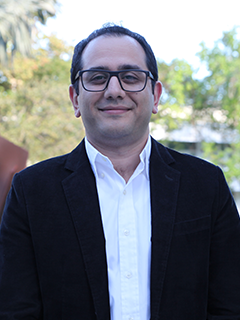
Ben van Lier is a Guest professor at Rotterdam University of Applied Sciences, specializing in Strategy & Innovation. His work bridges cutting-edge technologies like blockchain and cyber-physical systems with philosophical and ethical frameworks. Research Interests: Ben focuses on blockchain technology, self-organizing systems, and the ethical implications of autonomous cyber-physical systems. His scholarship integrates complexity science and digital ecology to explore decentralized governance, moral machine design, and systemic security in industrial IoT environments. Publication Trends: His recent work (2015-2022) examines blockchain’s role in enabling autonomous collaboration, ethical AI, and the philosophical dimensions of digital ecosystems. Key themes include consensus mechanisms, emergent behavior in CPS, and trust protocols in decentralized systems. Labs and Collaborations: He contributes to research initiatives at Rotterdam UAS, exploring the intersection of technology, ethics, and systemic resilience in digital industrial ecosystems.
Professor Jörg Hähner holds the Chair of Organic Computing at the University of Augsburg's Faculty of Applied Computer Science within the Institute of Computer Science. He leads a research team focused on evolutionary computation, self-organizing systems, and intelligent computing approaches. His educational background includes computer science studies at TU Darmstadt. His academic career progression shows steady advancement in the field of organic and self-organizing computing systems. Prof. Hähner's research spans multiple interconnected domains in computational intelligence. His primary focus is on Organic Computing, which involves developing systems that can adapt and self-organize in complex environments. Within this framework, he has made significant contributions to Evolutionary Algorithms, particularly Cartesian Genetic Programming and Learning Classifier Systems. His work explores how these techniques can be applied to real-world problems such as predictive maintenance, energy systems optimization, and industrial automation. The research demonstrates a strong emphasis on both theoretical foundations and practical applications of self-adaptive systems. An analysis of his recent publications reveals a strong concentration on evolutionary computation techniques, particularly Cartesian Genetic Programming variants and Learning Classifier Systems. His research group has been actively developing frameworks like CRust_GP and GRAHF to advance modular construction of evolutionary algorithms. There's a clear trend toward applying these techniques to industrial problems including predictive maintenance, resource allocation in networks, and energy management systems. The publications show consistent exploration of fundamental questions about algorithm behavior while maintaining strong connections to practical applications. Prof. Hähner leads an active research group with numerous PhD students and collaborators, including Karen Poloczek, Henning Cui, Victor Gerling, Dr. Michael Heider, Marco Hüller, Neele Kemper, Helena Stegherr, Jonathan Wurth, and Roman Sraj. His team regularly publishes in top-tier conferences and journals in evolutionary computation, intelligent systems, and industrial applications. The Organic Computing research group maintains a strong presence in both theoretical and applied research, with projects spanning from foundational algorithm development to industrial applications in manufacturing, energy systems, and network optimization. The group's work demonstrates a cohesive research vision centered on creating adaptive, self-organizing computational systems that can operate effectively in complex real-world environments.
Prof. Dr.-Ing. Achim Kampker is a faculty member at RWTH Aachen University , serving as the Chair of Production Engineering of E-Mobility Components and Head of Battery Technology & Life Cycle . He is affiliated with the Production Engineering Laboratory (PEM) at Bohr 12, Aachen (52072). Kampker specializes in production engineering, battery technology, and electric mobility, with a focus on sustainable manufacturing systems, fuel cell applications, and life cycle assessment of energy storage solutions. His work integrates Industry 4.0 principles into factory planning and production data science. His research themes include: Battery manufacturing optimization, recycling, and supply chain resilience Electric motor design and thermal management systems Simulation-based process control and defect detection in production Data-driven approaches to second-life battery applications Recent publications analyze fuel cell truck economics, solid-state battery modeling, sodium-ion recycling challenges, and AI applications in battery production. He has contributed to standardization efforts in battery manufacturing and explores dynamic capability frameworks for electric mobility solutions. Contact: a.kampker@pem.rwth-aachen.de
Dr. Anas Abdelrazeq serves as Chief Engineer at the Chair of Intelligence in Quality Sensing , RWTH Aachen University. His work focuses on AI integration in manufacturing, machine vision technologies, and quality management innovation. Current research spans generative AI , reinforcement learning , and data quality optimization Key projects include AI-driven product development and MetaVision industrial metaverse studies Recent publications address: Smart measurement strategies through machine learning Generative AI for non-destructive testing Curiosity-driven AI for job shop scheduling Machine vision applications in SMEs He contributes to the Cluster of Excellence Internet of Production and leads initiatives in 3D metrology and AI in Manufacturing as part of RWTH AI Week. The chair actively engages in developing digital process platforms for future construction sites and industrial applications.
Ramin Moghaddass is an Associate Professor in the Department of Industrial Engineering at the University of Miami's College of Engineering. He serves as Director of both the Industrial Research and Assessment Center and the Building Training, Research, and Assessment Center. His work bridges machine learning with industrial engineering to solve complex system monitoring and maintenance challenges. University of Miami, College of Engineering Director, Industrial Research and Assessment Center Director, Building Training, Research, and Assessment Center His research focuses on: Deep state-space modeling for dynamic systems Graph neural networks for smart grid and network anomaly detection Thermal-RGB sensor fusion for manufacturing plant efficiency Image processing for vegetation risk analysis in power networks Bayesian filtering techniques with stochastic neural networks Recent publications highlight trends in sensor-driven system modeling (2025), thermal-RGB fusion for HVAC optimization (2025), anomaly detection in smart grids (2025), and adaptive inspection protocols for large-scale networks (2024). His work combines recurrent neural networks with dynamic Bayesian layers for predictive analytics while exploring graph topology integration. Contact: rxm991@miami.edu | (305) 284-9505
Stefan Haeussler is an Associate Professor at the Department of Information Systems, Production and Logistics Management within the University of Innsbruck , Austria. His academic career spans since 2009, starting as a University assistant while completing his PhD in Management. He holds dual diplomas in Business Administration (2009) and Political Science (2010) from the same university. Specializing in production and logistics management, Häussler combines optimization techniques with machine learning approaches to address complex manufacturing challenges. His research focuses on Workload control systems Order release mechanisms Lead time management Reinforcement learning applications Semiconductor manufacturing optimization Behavioral operations in supply chains Recent publications highlight his work on integrated production planning , explainable AI for powertrain control , and dynamic workload allocation . He actively presents at major conferences like Winter Simulation Conference, EURO, and International Working Seminar on Production Economics. Häussler also teaches master's level courses and supervises thesis work in production economics, while serving as a guest lecturer on topics at the intersection of AI and manufacturing.
Thomas G. Thomas is an Associate Professor in the Department of Electrical and Computer Engineering at the University of South Alabama , where he contributes to both undergraduate and graduate education in electrical and computer engineering disciplines. Education: Ph.D. Electrical Engineering, University of Alabama Huntsville (1997) M.S. Electrical Engineering, University of Alabama Birmingham (1987) B.S. Electrical Engineering, University of South Alabama (1984) B.S. Chemistry, University of South Alabama (1977) Research Interests: Dr. Thomas's work spans robotics , smart grid systems , hyperspectral imaging , neural networks , and cybersecurity for industrial control systems . His research often integrates advanced machine learning techniques with practical engineering applications, particularly in autonomous systems and educational technology. Publication Trends: His recent publications (2004–2024) demonstrate a strong focus on robotics , machine learning , and engineering education . Notable contributions include autonomous navigation systems, cybersecurity in SCADA/PLC networks, and innovative educational programs to enhance student retention in engineering. Teaching: He instructs courses such as Virtual Instrumentation , Programmable Logic Controllers , and Introduction to Robotics , fostering hands-on learning in electrical and computer engineering.
Professor Panagiotis Demestichas serves as a faculty member in the Department of Digital Systems at the University of Piraeus, where he has been a Professor since April 2012. He heads the Laboratory of "Telecommunication Networks and Integrated Services" and has held significant leadership positions including Chair of the Department of Digital Systems from 2011 to 2015. His academic journey began with Bachelor's and Doctoral degrees in Electrical Engineering from the National Technical University of Athens. Professor Demestichas' educational background includes: Bachelor's Degree in Electrical Engineering, National Technical University of Athens Doctoral Degree in Electrical Engineering, National Technical University of Athens His research spans the forefront of telecommunications and network technologies, with particular expertise in 5G and emerging 6G systems. Professor Demestichas focuses on smart/cognitive/autonomic management and convergence of ICT infrastructures, SDN/NFV technologies, cognitive radio networks, and cloud and Internet of Things solutions. His work addresses critical challenges in spectrum management, network architecture design for beyond 5G systems, and the integration of artificial intelligence into network management frameworks. His research has significant implications for vertical industries including transportation, manufacturing, and smart cities, where reliable high-speed connectivity is essential. Professor Demestichas' publication record demonstrates a consistent focus on next-generation network technologies, with recent work emphasizing 6G architecture, sustainable network design, and industry-specific applications of advanced telecommunications. His research trajectory shows a clear evolution from 5G foundational work toward pioneering 6G concepts, with increasing emphasis on AI integration, sustainability, and cross-industry applications. The collaborative nature of his research is evident through participation in major European projects. Throughout his career, Professor Demestichas has held leadership positions in numerous significant research initiatives including: Project Coordinator of the OneFIT project (2010-2012) Technical Manager of the E3 project (2008-2009) Chairman of WWRF working groups, most notably the WGC "Communication Architectures and Technologies" (2004-2015) Technical Programme Committee Chair for the European Conference on Networks and Communications (EUCNC 2016) Active participation in European research programs including RACE II, ACTS, BRITE/EURAM, EURET, IST/FP5, IST/FP6, and ICT/FP7 As an educator, Professor Demestichas has made substantial contributions to academic development. He has supervised ten completed PhD theses and currently guides three additional doctoral candidates. He teaches Computer Networks I & II at the undergraduate level and has contributed to the development of research capacity through his leadership roles. His laboratory's research activities are partly funded by the European Union under Horizon 2020, reflecting the significance and impact of his work in the international research community. Professor Demestichas leads the Laboratory "Telecommunication Networks and Integrated Services" (http://tns.ds.unipi.gr), which serves as a hub for advanced research in telecommunications. The laboratory focuses on cutting-edge projects related to 5G/6G technologies, network virtualization, and intelligent network management. Through this laboratory, Professor Demestichas fosters collaboration between academia and industry, particularly in the areas of vertical industry applications of advanced networking technologies.
Professor Wassim Jabi is a Chair in Computational Methods in Architecture at the Welsh School of Architecture, Cardiff University . His work bridges computational design, digital fabrication, and sustainable building technologies, focusing on graph machine learning, non-manifold topology, and blockchain integration in architectural workflows. As a course leader for the MSc in Computational Methods in Architecture, he supervises postgraduate research and contributes to International Journal of Architectural Computing as an editorial board member. Research themes: Graph-based architectural modeling 3D printing with earthen materials Autism-informed design taxonomies Blockchain for decentralized design Machine learning in building performance Robotic fabrication workflows Recent publications analyze energy efficiency through graph ML , explore biomimetic façades for arid climates, and develop topological BIM frameworks . His team's VIRIS simulator combines architectural design with pandemic risk analysis. He serves as an external examiner at the University of Liverpool and University of East London.
Lee Su-hyeon is an Assistant Professor at the Department of Clothing and Textiles in Seoul National University's College of Human Ecology . Previously, she served at Jeonbuk National University (2021-2023) and conducted postdoctoral research at the Korea Institute of Industrial Technology (2018-2021). Her work focuses on smart textiles , superhydrophobic materials , and conductive fabrics for wearable technology. Ph.D. (2018), Seoul National University M.Sc. (2012), Seoul National University B.Sc. (2009), Ewha Womans University Research interests include: Surface chemistry of textiles Water-repellent fabric structures Conductive yarn blending Metal-organic framework coatings E-textile manufacturing automation Thermo-electric clothing systems Her 15 most recent publications (2018-2023) demonstrate expertise in superhydrophobic polyester films , smart sports bras , MIL-100(Fe) cotton coatings , and carbon nanotube composites . Key trends show integration of conductive materials with environmental sustainability approaches. Scientific recognition includes: 2022 FTEX Best Reviewer Award 2021 Korea Fashion Business Association New Researcher Award Multiple Korean Society of Clothing and Textiles presentation awards (2013-2018) Lectures on undergraduate courses: Basic chemistry of clothing materials , Clothing material composition , Cleaning principles . Graduate courses: New clothing materials , Textile physics , Smart fabric evaluation .
W. Pratt Rogers is an Associate Professor in the Department of Mining Engineering at the University of Utah's College of Engineering since 2016, concurrently serving as Mining Safety Assistant Program Director at the Rocky Mountain Center for Occupational and Environmental Health (RMCOEH). He is co-developing a new Mining Safety master's program launching in fall 2024 to address critical miner safety challenges in Region 8 and the Western U.S. His research integrates data science and mining engineering to solve safety issues, with core expertise in operator fatigue management through IoT wearables and machine learning models blending subjective/objective data. Recent work focuses on stope stability analysis using probabilistic approaches for imbalanced datasets, rare earth elements extraction from coal resources, and ethical supply chains for conflict minerals using blockchain-inspired frameworks. Publication trends reveal strong computational intelligence adoption across mining safety, with 12 of 15 recent articles applying AI/ML techniques to fatigue tracking, haul truck operations, and safety training. Key thematic clusters include real-time health monitoring systems, optimization of surface mining processes through lean methodologies, and ethical resource management frameworks. Dr. Rogers has chaired 16 graduate committees and secured NIOSH funding for operator fatigue research. His industry background includes VP of Product Development at MISOM Technologies and site engineering for Luminant Mining, complementing his academic role as chair of SME's Safety and Health division. At RMCOEH, he contributes to the Center's mission through the Mining Safety program, leveraging partnerships with industry stakeholders to translate research into practical safety solutions for Western U.S. mining operations.
Dr. Jaime Francisco Cruz Fonseca is an Associate Professor with Habilitation at the Department of Industrial Electronics , School of Engineering, University of Minho. As a Senior Researcher at the Algoritmi research center, he leads the Industrial Electronics R&D Group and CAR Lab . He also serves as CEO of the spin-off company iSurgical3D . PhD-level research in Biomedical Engineering, Robotics, and Medical Imaging Coordinator of Industrial Electronics research line at Algoritmi Scientific committee member for Industrial Engineering PhD program His research focuses on: Automation and Robotics in Medical Applications Biomedical Imaging and Analysis AI-driven Medical Device Development Digital Twin Systems for Industrial Testing Recent publications demonstrate expertise in 3D Medical Image Segmentation , Surgical Action Recognition , and Autonomous Pose Estimation . He has co-authored 140+ ISI/Scopus-indexed publications with over 3800 Google Scholar citations (h-index: 32). Scientific awards include: 2009 – SpinUM award for '3DPectus System' innovation 2009 – START National Entrepreneurship Award for iSurgical3D Active in both medical device patents (5 total) and industrial automation research , he bridges academia and commercial innovation.
Thomas Lennerfors is a Professor at Uppsala University, affiliated with the Institute for Research on Conflicts of Interest in Sustainable Social Transformation and the Department of Civil Engineering and Industrial Engineering; Industrial Engineering. His work spans industrial strategy, ethics, sustainability, and innovation, integrating organizational theory with historical and philosophical perspectives. Research Focus: Industrial strategy and innovation, ethics and sustainability, corruption studies, and socio-technical systems. Publications: Recent works examine digital ethics, sustainable food systems, AI accountability, and maritime history. Academic qualifications include an Associate Professorship in Engineering Physics with a focus on Industrial Engineering. His articles address topics in technology ethics, lean manufacturing, and sustainability transitions, often through cross-cultural lenses (Sweden-Japan).
Prof. Dr. Martin Matzner is a Professor at Friedrich-Alexander University Erlangen-Nürnberg, holding the Chair of Digital Industrial Service Systems. He studied Business Informatics at the University of Münster and Turku School of Economics, earned his doctorate in 2012 for work on service networks, and received a teaching license in Business Informatics in 2016. His research focuses on IT-supported services, business process management, and design-oriented business informatics research, with significant contributions to digital transformation and smart service systems. Current affiliation: Friedrich-Alexander University Erlangen-Nürnberg Previous roles: University of Münster (2007-2017) Key research areas: Business Process Management, Process Mining, Smart Service Systems, Predictive Analytics His recent publications emphasize predictive process monitoring using machine learning, transfer learning for cross-domain applications, explainable AI in business processes, and platform ecosystem governance . He has pioneered methods for adaptive AI control in manufacturing and context-aware process analytics , with applications spanning logistics, healthcare (ICU admission prediction), and human resources. His work bridges technical process mining with sociotechnical perspectives , particularly in algorithm adoption and ethical implications. Prof. Matzner's research has produced 15+ recent publications (2025-2024) in journals like International Journal of Production Research , Computers in Industry , and conferences including ECIS and ICIS. Topics demonstrate a progression from process efficiency optimization to human-AI collaboration and regulated AI risk assessment . His methodological toolkit spans LSTM networks , graph-based neural models , and LRP explanation techniques .
Prof. Dr. Michael Martin is a Professor at the Professorship of Data Management , Faculty of Computer Science , Chemnitz University of Technology . His work focuses on Knowledge Graphs , Large Language Models (LLMs) , and Semantic Web Technologies , with specific emphasis on RDF/SPARQL optimization , geospatial data integration , and dataset versioning . Keywords: Knowledge Graphs, Semantic Web, LLMs, GeoSPARQL, Dataset Versioning Collaboration: Co-authors include Lars-Peter Meyer, Claus Stadler, Sara Todorovikj, and Claus Stadler Research Trends Recent publications demonstrate his leadership in LLM-KG-Bench benchmarking frameworks and CoyPu knowledge graph projects for resilience research. His work bridges Apache Spark with semantic technologies for scalable knowledge graph construction and develops domain-specific ontologies for industries like steel and copper manufacturing. Projects & Tools Martin's team created open-source platforms such as: Quit Store for distributed RDF dataset management CubeViz.js for statistical data visualization Structured Feedback protocol for decentralized data governance