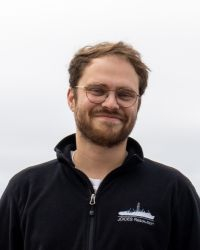
Henrik Nygaard Hansen is a Postdoctoral Fellow at the Department of Geosciences, University of Oslo , affiliated with the Section for Study of Sedimentary Basins. His research focuses on sedimentology, diagenesis, and reservoir characterization in sedimentary basins. Education: M.Sc. in Geosciences (Petroleum Geology and Petroleum Geophysics), University of Oslo Research Interests: Hansen specializes in understanding diagenetic processes affecting reservoir quality in deeply buried sandstones. His work explores clay/illitic coatings, porosity preservation mechanisms, and deep marine depositional systems, particularly in Norwegian basins like the Barents Sea and North Sea. Recent projects integrate machine learning for regional reservoir quality prediction. Publications: His studies on chlorite coatings, illitic coatings, and machine learning applications in reservoir analysis highlight his technical expertise in diagenetic alteration and sedimentary basin modeling. Contact: Email: h.n.hansen@geo.uio.no , Room 147C, Visiting address: Sem Sælands vei 1, Geologibygningen 0371 Oslo.
Ross T. Whitaker is a Professor and Director of the School of Computing at the University of Utah, where he is also a faculty member of the Scientific Computing and Imaging (SCI) Institute. He has been a key figure in advancing computational methods in medical imaging, geometry processing, and scientific visualization. University: University of Utah School: School of Computing Institute: Scientific Computing and Imaging (SCI) Institute Education: B.S. in Electrical Engineering and Computer Science, Princeton University (Summa Cum Laude, 1986) Ph.D. in Computer Science, University of North Carolina at Chapel Hill (1994) Research Interests: Ross Whitaker's research spans image analysis, statistical shape modeling, GPU-based PDEs, level-set methods, and uncertainty visualization. His work emphasizes adaptive, data-driven models for image denoising, segmentation, and reconstruction, often using nonparametric statistics and information-theoretic principles. He has pioneered methods in tetrahedral meshing, particle systems for surface sampling, and manifold learning. Recent Publication Trends: His recent publications (2020–2025) highlight a strong focus on statistical shape analysis in medical applications, particularly in metopic craniosynostosis , using tools like DeepSSM and CranioRate . There is a growing emphasis on deep learning, explainable AI, and multimodal sensing (e.g., audio-visual detection of idling vehicles). His interdisciplinary work bridges computer science, biomedical engineering, and environmental health. Scientific Awards: IEEE Fellow NSF Career Award Alumni Scholarship Award (UNC Chapel Hill) Advising and Grants: He leads a graduate research group in image analysis and scientific computing, mentoring students like Miriah Meyer (Ph.D. 2010). His projects are supported by federal agencies and industrial contracts, focusing on shape modeling, medical imaging, and environmental monitoring. He has developed influential software such as ShapeWorks, Seg3D, Cleaver, and contributed to ITK. Labs and Teams: He is a core member of the SCI Institute, a leading interdisciplinary research center in scientific computing and visualization. His team develops computational tools for biomedical image analysis and uncertainty quantification, with applications in surgery, diagnostics, and public health.
Vaughan Pratt is a Professor in the Department of Computer Science at Stanford University, with affiliations in Electrical Engineering (by courtesy), the AI Lab, Theory group, and the Center for the Study of Language and Information (CSLI). His research spans computer science, mathematics, and climate science. Education: M.Sc. in Computer Science from Sydney University (1969), Ph.D. in Computer Science from Stanford University (1971) Research Interests include global environmental change, foundations of geometry, autonomous vehicles, concurrency theory, and speech recognition. His work on climate change integrates data analysis and modeling, while his mathematical research explores category theory and geometric frameworks. Recent Publications highlight his interdisciplinary contributions, from concurrency models using Chu spaces to climate sensitivity analysis and geometric algebra. Key trends involve linear logic, coalgebraic structures, and climate feedback mechanisms. Scientific Awards include ACM Fellow IEEE Life Senior Member American Geophysical Union (AGU) Life Member University of Sydney 2017 Alumni Award for Innovation and Entrepreneurship Advising : Directed Ph.D. theses of notable students like David Harel, Bob Streett, and Keyvan Mohajer. His work bridges formal methods, programming language design, and applications in robotics and climate science.
Chenguang Liu is a researcher at Institut Polytechnique de Paris , France, with a focus on computational methods, machine learning, and control systems. His work bridges theoretical and applied research across multiple domains including computer vision, signal processing, and operations research. Key research areas: Machine Learning, Computer Vision, Computational Physics, Control Theory Notable publication trends: Develops novel algorithms for parallel computing, peridynamic modeling, and real-time systems Recent contributions include Bayesian neural networks for gas-bearing prediction, multi-agent reinforcement learning for UAV swarms, and domain adaptation techniques in object detection. He collaborates extensively with researchers in electrical engineering and applied mathematics disciplines.
Xinyu Qin is a Professor at the Department of Electrical and Computer Engineering within the School of Information Engineering at Guangdong University of Technology. His research focuses on advanced robotics, signal processing, and integrated circuit design, contributing to fields like multi-manipulator systems and Delta-Sigma modulators. Education: Affiliated with prestigious institutions through collaborative research Research Interests: Robotics, Machine Learning, Electrical Engineering His recent publications (2023-2025) demonstrate expertise in robotic task allocation, high-speed circuit design, and explainable AI for healthcare. Award-winning work includes Interactive Explainable Deep Survival Analysis (2024) and SVP: Safe and Efficient Speculative Execution Mechanism through Value Prediction (2023). Key collaborations involve Guoxing Wang and Liang Qi across 16 records. Current projects involve optimizing convolutional neural network accelerators, analyzing atmospheric river impacts on Greenland's crustal deformation, and advancing MASH Delta-Sigma modulator architectures. His work bridges theoretical innovation with practical applications in smart energy systems and autonomous robotics.
Zhengguang Liu is a Researcher in the Department of Chemical Engineering, focusing on sustainable energy technologies. His work aligns with UN Sustainable Development Goals, particularly addressing carbon neutrality and renewable energy integration. Research interests include hydrogen production via solar and geothermal energy, carbon capture and storage (CCUS), and energy storage systems. He explores innovative solutions for underground hydrogen storage, gas field utilization, and policy frameworks for clean energy deployment. Recent research highlights include advancing capacitance-resistance models for hydrogen production and evaluating regional dynamics in CCUS-hydrogen policies. His work intersects environmental science, engineering, and policy, emphasizing practical applications for decarbonization. No scientific awards or grants are explicitly mentioned in the provided text. Advising records and lab affiliations are not detailed here, though his collaborative networks suggest involvement in interdisciplinary teams.
Peter Stafford is a Professor of Engineering Seismology in the Department of Civil and Environmental Engineering at Imperial College London, Faculty of Engineering. He is affiliated with the Imperial Centre for Geohazards and the Structures research section. Since joining the faculty in 2007 as a Lecturer, he has advanced to full professor and currently serves as the Department Careers Adviser, supporting student professional development. His research focuses on advanced methodologies in Engineering Seismology and Earthquake Engineering , including probabilistic seismic hazard analysis (PSHA), development of ground-motion models, seismic demand analysis, and structural reliability. He also investigates the dynamic response of bridges, pedestrian- and vehicle-induced vibrations, and the stability of tensegrity structures. His work integrates probabilistic and stochastic methods to improve the accuracy and realism of seismic risk assessments. Recent publications highlight his leadership in national and regional seismic hazard modeling, particularly in New Zealand and the Groningen region of the Netherlands. His research employs Bayesian inference, machine learning, and simulation-based validation to address epistemic uncertainty and improve model robustness. He has contributed significantly to the 2022 New Zealand National Seismic Hazard Model and studies on induced seismicity. His scholarly output is extensive and current, with research spanning from empirical ground-motion modeling to risk-based structural assessment of offshore wind turbines. This indicates a strong, ongoing research program with high relevance to both academic and industrial applications in seismic safety and infrastructure resilience. San Andreas fault hazard validation using precariously balanced rocks Development of GMPEs for induced seismicity in Groningen and Delaware Basin Stochastic and hybrid broadband simulation of ground motions Seismic performance of offshore and bridge structures Application of machine learning to extract physical mechanisms from seismic data Prof. Stafford has no listed scientific awards in the provided text. He advises PhD students and welcomes new research candidates. His industry background in structural and geotechnical consulting enriches his teaching and applied research. He has not received any honorific or emeritus designation, and there is no indication of part-time or retired status, confirming his active role in academia. He is involved in major research initiatives related to seismic risk, ground-motion characterization, and structural dynamics, often collaborating on large-scale hazard modeling projects. His work supports critical infrastructure resilience and informs engineering standards and policy.
Etienne Memin is a Research Director (equivalent to Full Professor) at Inria and a Visiting Professor at Imperial College London. He leads the Odyssey research group, affiliated with Inria, University of Rennes, and other institutions. His work focuses on stochastic modeling of geophysical flows, fluid dynamics, and data assimilation. Memin is the Principal Investigator (PI) of the ERC-funded STUOD project, which explores stochastic transport in upper ocean dynamics. His research bridges disciplines such as applied mathematics, computer vision, and geophysics. Education: HDR (Habilitation à Diriger des Recherches) from University Rennes I in 2003. Previous roles include Research Director at Inria since 2008 and collaborations with institutions like IFREMER, Imperial College, and Zhejiang University. Research Interests: Stochastic modeling of fluid dynamics, data assimilation frameworks, and uncertainty quantification. His work includes developing ensemble techniques for data assimilation and stochastic representations of turbulence. Recent projects involve stochastic shell models and wave solutions in shallow water dynamics. Collaborations: Active partnerships with Imperial College, IFREMER, MétéoFrance, and others on topics like stochastic parameterization and error modeling in weather prediction. Key collaborations include the STUOD project and Royal Society-funded studies on stochastic large-eddy simulations. Students and Grants: Supervised over 20 PhD students, including current advisees Francesco Tucciarone and Antoine Moneyron. His grants include the ERC STUOD and multiple ANR projects. He leads the Odyssey group, fostering interdisciplinary research in fluid dynamics and geophysics. Labs/Teams: Odyssey group at Inria, collaborating with IMT Atlantique, IRMAR, and international partners. His work emphasizes computational fluid dynamics and real-world applications like flood modeling and wind engineering.
Jan S. Hesthaven is a Professor and Provost at EPFL, leading academic affairs. He holds a Master's from the Technical University of Denmark (DTU) and a PhD in Numerical Analysis, followed by an honorary dr.techn degree from DTU. His research focuses on high-order computational methods for wave problems, reduced order models, and machine learning integration. He has co-authored over 175 papers and 4 monographs. Previously, he served as Dean of the School of Basic Sciences at EPFL and held roles at Brown University, including Director of the Center for Computation and Visualization. Awards include the Alfred P. Sloan Fellowship and the Philip J. Bray Award. Education: Master of Science in Computational Physics, DTU (1991) PhD in Numerical Analysis, DTU (1995) dr.techn in Computational Mathematics, DTU (2009) Research Interests: Development of high-order numerical methods, computational wave propagation, geophysical flows, and machine learning applications in scientific computing. His work bridges traditional methods with AI-driven approaches for real-time modeling and structural health monitoring. Recent Work: His 2023–2025 publications emphasize machine learning-enhanced models, reduced order methods, and seismic data analysis for environmental applications. Key techniques include physics-informed neural networks and graph-based operator learning. Awards: Alfred P. Sloan Fellowship (2000) NSF Career Award (2002) Philip J. Bray Award (2004) Dr.techn from DTU (2009) Grants & Leadership: Led the Center for Computation and Visualization (CCV) at Brown (2006–2013) and co-directed the NSF Institute ICERM (2010–2013). Current roles include Provost at EPFL and leadership in MATHICSE. Collaborates with industry and applied scientists on computational challenges. Labs & Teams: Active in the MATHICSE lab, focusing on numerical methods and high-performance computing. Involved in interdisciplinary projects combining AI with traditional computational science.
Phil Wernette is a Fixed Term Assistant Professor and Director of Remote Sensing & GIS (RS&GIS) at the Department of Geography, Environment, and Spatial Sciences, Michigan State University. His work bridges physical geography, geophysics, ecology, and computer science through multidisciplinary collaboration. Research Focus: Coastal landscape dynamics, error quantification in geospatial analyses, and integration of machine learning with geoscience. Technologies: Utilizes AUVs, ROVs, UAVs/UASs, LiDAR, hyperspectral imagery, GPR, ERT, and seismic tools. Geoeducation: Advocates for experiential learning via undergraduate research, study abroad programs, and classroom integration of active research.
Dr. Jungang 'Gordon' Chen is a Postdoctoral Fellow at the Bureau of Economic Geology within The University of Texas at Austin. His primary research interests span energy systems, geological carbon sequestration, reservoir characterization, and environmental geology. Email: jungang.chen@beg.utexas.edu Research focuses: CO2 storage optimization, unconventional resource recovery, induced seismicity, and coastal environmental dynamics Technical expertise: Deep learning applications for subsurface modeling, enhanced oil recovery, and seismic hazard assessment Recent publications demonstrate strong contributions to: Carbon capture utilization and storage (CCUS) through innovative injection techniques Understanding fluid-rock interactions in mobile shale systems Coastal geomorphology and groundwater resource management Geophysical modeling of sediment transport and reservoir quality
Gabriel Pasquet is a Postdoctoral Fellow at the Bureau of Economic Geology, University of Texas at Austin. His work focuses on carbon sequestration, enhanced oil recovery, and seismicity, with a strong emphasis on Permian Basin studies and the energy-water nexus. Current affiliation: Bureau of Economic Geology, University of Texas at Austin Position: Research Fellow Pasquet's research spans multiple disciplines, including: Carbon storage security and CO2 injection methodologies Seismic risk assessment from fluid injection activities Hydrological modeling integrating satellite data and machine learning Basin tectonics and stress field characterization Permafrost dynamics in Arctic environments Coastal system modifications and sediment transport Recent publications highlight his expertise in: Geological CO2 sequestration optimization Seismotectonic analysis of Midland Basin Formate-based oil recovery techniques Environmental impacts of energy development His work frequently intersects with: Energy economics Geophysical monitoring Reservoir characterization Machine learning applications in hydrology
Professor Gilberto Brambilla serves as Associate Dean International at the University of Southampton's Faculty of Engineering and Physical Sciences, where he leads research within the Optoelectronics Research Centre (ORC). With extensive expertise in optical fibre technologies, his work bridges fundamental photonics research with practical applications in sensing, manufacturing, and infrastructure monitoring. His research interests span multiple cutting-edge areas of photonics and optical engineering, with particular focus on: Optical Fibre Sensors and Distributed Sensing Systems Nanostructured and Specialty Optical Fibres Femtosecond Laser Processing of Optical Materials Terahertz Waveguide Technologies Photonic Device Fabrication and Characterization Professor Brambilla's recent publications reveal a strong emphasis on practical applications of optical fibre sensing technologies, particularly for infrastructure monitoring, geophysical applications, and precision manufacturing. His work consistently demonstrates the translation of fundamental optical phenomena into real-world sensing solutions with applications ranging from transportation systems to submarine seismic monitoring. As an academic supervisor, Professor Brambilla currently mentors PhD students Kalen Daniel Barnfather and George Thomas Ong within the ORC. His research has been supported by prestigious funding bodies including EPSRC, Royal Society, Royal Academy of Engineering, and industry partners such as Huawei Technologies. Professor Brambilla's research group focuses on: Smart Lasers and Special Fibres Optical Fibre Sensors and Devices Distributed Optical Fibre Sensing
Richard K. Martin is a Professor in the Department of Electrical and Computer Engineering at the Air Force Institute of Technology (AFIT), Wright-Patterson Air Force Base, OH. He has been a faculty member since 2004 and holds a Ph.D. in Electrical and Computer Engineering from Cornell University. Education: Ph.D., Electrical and Computer Engineering, Cornell University, 2004 M.S., Electrical and Computer Engineering, Cornell University, 2001 B.S., Electrical Engineering, University of Maryland, 1999 (Summa Cum Laude) B.S., Physics, University of Maryland, 1999 (Summa Cum Laude) His research focuses on radio tomographic imaging, laser radar (LADAR), signal processing, and engineering education . He has made significant contributions to channel equalization, wireless localization, and polarimetric LiDAR systems. His work bridges theoretical signal processing with practical defense and sensing applications. The recent articles highlight a strong trend in optical remote sensing, spectropolarimetry, and advanced signal processing for defense and surveillance. His work increasingly integrates machine learning, sensor fusion, and real-time imaging under atmospheric distortions. Scientific Awards: 2013 Air Force Outstanding Science and Engineering Educator Award Eta Kappa Nu Instructor of the Year (twice) Instructor of the Quarter (three times) Dr. Martin has led numerous student research initiatives, including the COEUR program to enrich undergraduate research. He has secured research funding in areas such as RF sensing, LADAR, and wireless security. He holds eight patents and has published extensively in IEEE journals and conferences. He leads research in the development of rapid Mueller matrix polarimeters, spectropolarimetric LADAR, and radio tomographic imaging systems , often in collaboration with students and defense labs.
A. Paulo Coimbra is an Assistant Professor at the Department of Electrical and Computer Engineering, University of Coimbra, where he has worked since 1996. He also holds a researcher position at the Institute of Systems and Robotics (ISR-Coimbra). His career spans electromagnetic and thermal analysis, robotics, and renewable energy systems. BSc and PhD in Electrical Engineering from University of Coimbra (1985, 1996) IEEE Member since 1995 Consultant at CWJ-Projeto SA since 2008 Co-author of 1 book, 3 book chapters, and 4 patents Research interests focus on electromagnetic compatibility , biped and hyper-redundant robotics , and vision-based navigation systems . Recent publications highlight applications in microgrid optimization , autonomous wildfire mitigation , and deep learning for environmental monitoring . Grant collaborations include projects like: SwitHome (post-stroke rehabilitation, 2018) FIREPROTECT (wildfire risk mitigation, 2017-2020) NEXTSTEP (smart substations, 2016-2020) Humanoid robot gait adaptation (2016-2019) He has contributed to over 120 conference papers and 35 journal publications, with work spanning robotics , energy systems , and environmental applications .