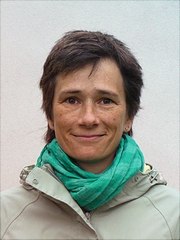
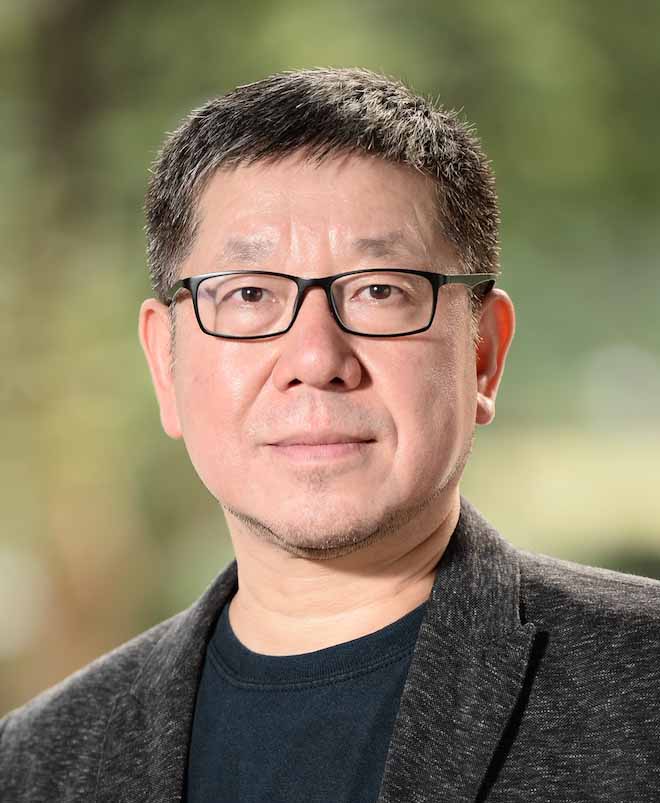
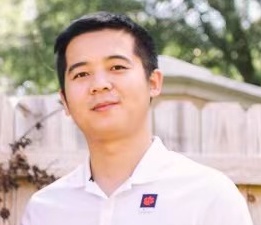
Prof. Conny Hammer is a Junior Professor in the Department of Earth System Sciences at the University of Hamburg. Her research focuses on advanced geophysical methods including machine learning applications in geophysics, marine geophysics, seismology, volcanic physics, and applied seismics. She is affiliated with the Institute of Geophysics, which houses specialized equipment for geophysical studies. Her academic position involves both teaching and research within the Earth System Sciences domain. Contact details include her office at Geomatikum Room 1436 and telephone +49 40 42838 5050. Research interests emphasize interdisciplinary approaches to understanding Earth's dynamic processes, leveraging cutting-edge computational tools and field-based seismological techniques. While no specific grants or awards are listed, her work contributes to broader geophysical research initiatives at the University of Hamburg.
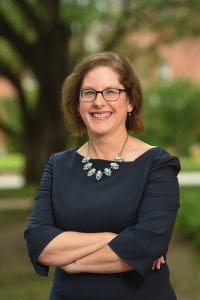
Ian Pattison is an Associate Professor in Physical Geography and Leader of Geography Education at Heriot-Watt University, affiliated with the School of Energy, Geoscience, Infrastructure and Society and the Institute for Infrastructure & Environment. His research focuses on holistic flood management, including Natural Flood Management (NFM), Sustainable Urban Drainage Systems (SUDS), and flood forecasting technologies. He actively collaborates on projects in Mexico, such as IoT-based flood monitoring systems in Colima, and contributes to UN Sustainable Development Goals related to clean water, climate action, and resilient infrastructure. Research interests span fluvial geomorphology, hydrology, and the integration of environmental science with civil engineering. Key areas include sediment dynamics, rainfall simulator standardization, and the socio-technical challenges of water infrastructure in developing communities. Pattison leads interdisciplinary efforts, combining field observations, experimental methodologies, and advanced technologies like IoT sensors and machine learning for predictive modeling. He has published widely on topics such as climate change impacts on river flows, urban flood resilience, and soil compaction effects on catchment hydrology. Pattison accepts PhD students and engages in knowledge co-production with stakeholders to enhance emergency response resilience during flood disasters.
Heather DeShon is a Professor of Geophysics and Department Chair in the Roy M. Huffington Department of Earth Sciences at Southern Methodist University (SMU). Her research focuses on earthquake physics, induced seismicity, and seismogenic zone processes, particularly in subduction zones and intraplate faults. She holds a B.S. in Geophysics and Mathematics from SMU (1999) and a Ph.D. in Earth Sciences from the University of California Santa Cruz (2004). Her work integrates advanced seismic techniques such as local earthquake tomography, waveform cross-correlation, and InSAR data to study fault dynamics and earthquake mechanisms. Key projects include analyzing induced seismicity in Texas basins (e.g., Fort Worth, Delaware), subduction zone processes in Costa Rica and Ecuador, and volcano seismology. She leads collaborative efforts to improve seismic monitoring and hazard assessment in industrial and natural settings. Recent studies emphasize the spatiotemporal evolution of human-induced earthquakes, stress drop variations near disposal wells, and fault slip potential linked to fluid injection. She has developed high-resolution seismic catalogs and 3D velocity models to better understand seismicity patterns in oil and gas regions. DeShon’s research also explores seismogenic zone characteristics through teleseismic relocations and fault imaging. She advises on scientific communication strategies for public safety during seismic events, particularly in urban areas like Dallas-Fort Worth.
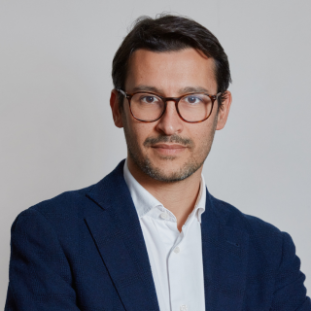
Riccardo Olivito is an Associate Professor of Classical Archaeology at the IMT School for Advanced Studies Lucca and a member of the LYNX Center. He holds a Master's in Classical Archaeology (University of Pisa, 2008) and a PhD in Art History and Archaeology (Scuola Normale Superiore, 2012). He has been a visiting scholar at New York University (2017) and has held roles including Junior Research Fellow at the Scuola Normale Superiore (since 2013) and Professor of Archaeology of Magna Graecia at the University of Pisa (2015). His research focuses on public spaces in antiquity , archaeological visualization , and the perception of monuments . Key projects include the PRAEDIA Project (studying Pompeii’s Regio II), virtual archaeology initiatives, and excavations at Segesta and Kaulonia. He combines traditional methods with digital tools like 3D modeling and gesture-based VR. Recent publications include analyses of Pompeian frescoes, Segesta’s agora, and Roman architectural depictions. His work bridges archaeology, art history, and perceptual psychology, emphasizing interdisciplinary approaches. He coordinates international collaborations and has supervised numerous field projects in Southern Italy and Sicily. Awards: Fulbright Visiting Scholar (2017) Grants & Projects: PRAEDIA (since 2016), Segesta excavations (since 2008), Cyber-archaeology initiatives. He advises on digital methodologies and has mentored students in fieldwork and research. Labs/Teams: PRAEDIA Project team, LYNX Center collaborations, and international excavation crews at sites like Villa San Marco and the Agora of Segesta.
Assoc. Prof. Dr. Beyza Taskin is a faculty member at Istanbul Technical University (ITU), serving in the Faculty of Civil Engineering's Civil Engineering Department. She holds the rank of Associate Professor and has extensive experience in academia, including roles as Deputy Director of Research and Application Center (2024–present), Vice President of Department (2023–present), and Head of Department (2019–2020). Her primary research interests are Reinforced Concrete Structures, Structural Dynamics, and Earthquake Engineering. Her educational background includes a PhD in Structural Engineering from ITU (1994–2001) and a bachelor's degree in Civil Engineering (1988–1992). She has conducted visiting research at the University of California, Berkeley (2003–2004) and Aalborg University (1997). Taskin’s research focuses on seismic performance evaluation of buildings, structural rehabilitation, and advanced analysis methods. She has supervised numerous PhD and master’s theses on topics like base isolation, nonlinear dynamics, and earthquake-resistant design. Her work often addresses Turkish seismic codes and real-world earthquake case studies, such as the 1999 İzmit and 2011 Van earthquakes. She is a member of prominent organizations including EERI, ASCE, and the Turkish National Committee for Earthquake Engineering. Her recent projects include developing vulnerability functions for RC buildings and applying machine learning to seismic displacement analysis (2022). Taskin has contributed over 30 peer-reviewed articles, with recent work focusing on Hazus capacity curves, earthquake epicenter forecasting, and NDT techniques for rapid building assessment. Her research bridges theoretical analysis and practical applications in disaster-resilient infrastructure.
Shin-Chan Han is a Professor at the School of Engineering, University of Newcastle, Australia. He specializes in space geodesy, geophysics, and planetary sciences. His research focuses on analyzing satellite geodetic measurements and modeling geophysical processes related to mass distribution in Earth and terrestrial planets. He has contributed to missions like GRACE, GRAIL, and Mars Reconnaissance Orbiter. Education: B.S. and M.S. from Seoul National University (South Korea), Ph.D. in Geodetic Science from Ohio State University (USA). Career highlights include postdoctoral work at Ohio State University and NASA Goddard Space Flight Center. His research has led to advancements in gravity field analysis, ocean tides, and earthquake-induced mass changes. Awards: NASA Early Career Fellow, Geodesy Section Award (AGU), Robert H. Goddard Honor Award, William T. Pecora Award, and South Korean government recognition. He has supervised numerous students and postdocs, many now in academic and research roles globally. Scientific contributions include pioneering GRACE data processing techniques, analyzing lunar and Martian gravity fields via GRAIL, and developing methods to track climate changes via satellite gravity. Collaborations span geodesy, hydrology, and planetary science. He currently edits the Journal of Geophysical Research - Solid Earth.
Associate Professor In-Young Yeo is a distinguished academic at the University of Newcastle's School of Engineering, where she serves as an Associate Professor in Civil, Surveying, and Environmental Engineering. With over 15 years of academic experience, she previously held positions at Ohio State University, Cornell University, and University of Maryland. Her work focuses on the critical intersection between landscapes and water resources, using sophisticated remote sensing and modeling tools to improve natural resource management and sustainability. Her research spans the nexus of land and water systems where human and physical systems interact. She pioneers integrative approaches using remote sensing, in-situ data, and process-based models to understand emergent land surface properties and hydrologic processes. Her work addresses water cycle changes across scales, soil moisture-stream flow connectivity, soil and water quality implications of conservation practices, and optimal land use management strategies for environmental sustainability under climate change pressures. Professor Yeo's publication record demonstrates a clear trajectory toward more sophisticated multi-sensor integration approaches and practical applications for agricultural water management. Her recent work increasingly combines machine learning with traditional remote sensing methods, focusing on soil moisture profiling, wetland dynamics monitoring, and developing integrated systems for resource management decision support. Her scientific contributions have been recognized with numerous prestigious awards: 2024 Best Research Paper of 2024, The Soil and Water Conservation Society 2021 Science Note - USDA NRCS Conservation Effects Assessment Project 2018 International Research Visiting Fellowship, University of Newcastle 2017 Women in Research Fellowship, University of Newcastle 2009 Editor's Highlights - AGU Geophysical Research Letters Professor Yeo actively mentors graduate students and offers PhD scholarship opportunities focused on land surface variables and ecosystem health monitoring. She has secured significant research funding from diverse sources including ARC, NASA, NOAA, USDA, Soil CRC, and Sydney Water. Her collaborative approach has led to leadership roles in international research initiatives including NASA-LCLUC and NASA-GRACE programs, the G20 initiative for agricultural monitoring, and the CRC for High Performance Soils. She leads a dynamic research team collaborating with Soil CRC, CSIRO, Australian Universities, and international space agencies. Her work with the US Conservation Effects Assessment Project (CEAP) and US Environmental Protection Agency has been particularly influential in demonstrating the effectiveness of conservation practices for improving soil productivity and water quality. She serves on the educational committee with the Surveying & Spatial Sciences Institute (SSSI) NSW and has contributed significantly to program development at the University of Newcastle.
Dr. Anne Obermann is a Lecturer at the Department of Earth and Planetary Sciences at ETH Zürich, Switzerland. She is affiliated with the Schweiz. Erdbebendienst (SED) and conducts research at the Bedretto Underground Laboratory for Geosciences and Geoenergies (BULGG). Her work focuses on seismic monitoring, geothermal energy systems, and hydraulic stimulation experiments. Key projects include CO2 mineral storage characterization at Iceland's geothermal sites and real-time seismic data processing using tools like DUGseis. Research interests revolve around the integration of geophysical imaging techniques (seismic tomography, noise interferometry) with hydro-mechanical processes in subsurface environments. She has led studies on induced seismicity, reservoir engineering, and fault structure analysis in fractured rock systems. Notable contributions include developing monitoring frameworks for geothermal reservoirs and evaluating stress heterogeneity impacts during stimulation. Publications highlight advancements in microseismic event detection using deep learning, multi-scale monitoring systems, and CO2 storage integrity. Collaborations involve international projects like CarbFix2 (Iceland) and BedrettoLab (Switzerland). Her work bridges theoretical geophysics with applied engineering solutions for sustainable energy and subsurface resource management.
Dr. Ryan Schultz is a Lecturer at the Department of Earth and Planetary Sciences, ETH Zürich, Switzerland. He specializes in seismology with a focus on induced seismicity risks in energy production and subsurface engineering projects. His work addresses hydraulic fracturing, geothermal systems, and CO2 injection-induced earthquakes. Schultz holds a Ph.D. in Seismology from Stanford University (2019–2022), an M.Sc. in Geophysics from the University of Alberta (2010–2012), and dual B.Sc. degrees in Physics and Chemistry from the University of Alberta (2003–2009). Research interests include seismic hazard mitigation, fault reactivation mechanisms, and real-time monitoring technologies. Key projects involve developing protocols for induced seismicity management in geothermal and carbon capture initiatives, such as the Trüllikon CO2 test injection and Alberta No. 1 geothermal site. His work also explores machine learning applications for microseismic data analysis and reinforced learning for seismic risk control. Publications highlight trends in bounding induced earthquake magnitudes, optimizing traffic light protocols, and assessing subsurface fluid dynamics. Schultz is affiliated with the Schweiz. Erdbebendienst (SED) and contributes to international collaborations, including the DEEP project and FORGE geothermal experiments. His expertise spans fieldwork, computational modeling, and policy-driven risk frameworks for sustainable energy development. Prior roles include Scientific Assistant at ETH Zürich (2023–present), and extended experience with the Alberta Geological Survey (2012–2021), where he investigated induced seismicity in shale basins. His research integrates geological, geophysical, and engineering perspectives to address global challenges in subsurface energy development.
Huiyun Guo is a Research Fellow in Geophysics at the California Institute of Technology (Caltech). She holds an affiliation with the Department of Geophysics, focusing on fault zone dynamics, earthquake triggering mechanisms, and hydrogeological interactions in seismically active regions. Her research integrates seismological field data, geologic observations, and hydrologic modeling to understand fault behavior and stress variability. Key research interests include fault maturity's influence on earthquake patterns, hydraulic properties of fault zones measured via tidal responses, and high-resolution analyses of earthquake triggering using dense seismic networks. She has contributed to studies in southern California, Japan, and other tectonically active regions. Publications span 2018–2024, emphasizing fault zone hydraulics, dynamic triggering processes, and novel methods for seismic signal analysis. No awards or grants are explicitly listed in the provided texts. She currently advises no students but collaborates with senior faculty like Emily Brodsky and Masatoshi Miyazawa.
Zhenyu Yang is an Associate Professor at Aalborg University's Department of Energy within The Faculty of Engineering and Science. He specializes in control theory, AI-driven automation, and industrial process control, with a focus on offshore energy and water treatment systems. He leads the Offshore Process Control and Cybernetics Research Group and chairs the Mission for Sustainable Fuels, Chemicals, and PtX. His work aligns with UN Sustainable Development Goals related to clean energy and environmental protection. Education: B.Sc., M.Sc., and Ph.D. in Control Theory from Shandong University and Beijing University of Aeronautics and Astronautics. Postdoctoral training at Delft University of Technology and Aalborg University. Completed pedagogic education for assistant professors and interdisciplinary leadership training. Research interests include fault-tolerant control systems, hybrid dynamical systems, AI for process automation, and water treatment technologies. He has supervised 6 PhD students, including M. Kashani. Notable awards include Teacher of the Year 2012 and ABB Best Application Award Finalist 2009. Key projects involve high-temperature heat pumps, offshore produced water treatment automation, and microplastics capture using hydrocyclones. He has authored 198 publications and actively participates in academic committees and international conferences. Collaborations span institutions globally, emphasizing sustainable energy solutions and advanced control systems.
Sergio Rojas is a Senior Lecturer in the Applied and Computational Mathematics section at Monash University's School of Mathematics. His expertise spans numerical analysis, scientific computing, and mathematical modeling, focusing on residual minimization-based methods for solving complex partial differential equations. He holds a PhD and MSc in Engineering Sciences from Pontificia Universidad Católica de Chile, a Master's in Mathematics from the University of Pavia, and a Bachelor's in Mathematics from Pontificia Universidad Católica de Valparaíso (PUCV). Education: PhD and MSc in Engineering Sciences, Pontificia Universidad Católica de Chile Master's in Mathematics, University of Pavia, Italy Bachelor's in Mathematics, PUCV, Chile Research Interests: Dr. Rojas develops advanced numerical methods including Finite Element, Discontinuous Galerkin, and Physics-Informed Neural Networks. His work emphasizes robust algorithms for complex PDEs, with applications in computational fluid dynamics, geophysics, and solid mechanics. Recent studies explore adaptive stabilization techniques and solver optimization for parallel architectures. Article Trends (2023-2025): Recent publications highlight robust neural network approaches for PDEs, adaptive finite element methods, and computational efficiency in parallel solvers. Key themes include residual minimization, stability analysis, and integration of machine learning in numerical simulations. Supervision: Accepts undergraduate, master’s, and PhD students in numerical analysis and scientific computing. Current PhD projects include variational physics-informed schemes and residual minimization methods. Labs/Teams: Collaborates on interdisciplinary projects involving computational mathematics and engineering applications, though specific lab affiliations are not detailed in the provided text.
Dr. Yanzhi Zhang is a Professor of Mathematics at the Department of Mathematics and Statistics, Missouri University of Science and Technology (Missouri S&T), where she has held academic positions since 2010. She earned a Ph.D. in Mathematics from the National University of Singapore and a B.Sc. in Applied Mathematics (with a Computer Science minor) from Chongqing University. Her research spans computational and applied mathematics, focusing on fractional PDEs, nonlocal models, machine learning applications in materials science and business, Bose-Einstein superfluids, and seismic wave inversion. Dr. Zhang has been awarded the Faculty Excellence Award from Missouri S&T and other accolades. Her work is supported by grants from the National Science Foundation, including projects on fractional viscoacoustic wave equations, Bose-Einstein superfluids, and dispersive wave equations. She advises Ph.D. students in interdisciplinary research, such as Yumeng Wang (machine learning for eye-tracking data) and Yixuan Wu (seismic inversion). Her research integrates mathematical rigor with computational innovation, addressing real-world challenges in geophysics, materials science, and business analytics. Collaborations with industry and academia enhance her contributions to data-driven modeling and open-source strategies for digital transformation.
Zhang Jun is a Full Professor of Physics and Mathematics and Co-director of the Applied Math Lab at the Courant Institute, New York University (NYU), USA. He also serves as Co-director of the NYU-ECNU Joint Physics Research Institute in Shanghai, China, and holds an Affiliated Professorship at NYU Shanghai. His research focuses on experimental fluid physics, particularly fluid-structure interactions in biological and geophysical contexts, including bio-locomotion, flapping wings, and continental dynamics. Zhang has authored over 290 invited talks and peer-reviewed papers in journals like Nature and Physical Review Letters. He received the 2017 APS Fellow award for pioneering work in fluid-structure interactions. Beyond academia, he is a freelance illustrator with plans to publish a book of sketches. Education: PhD in Physics (1994), Niels Bohr Institute, University of Copenhagen PhD Candidate (1990-1991), Hebrew University of Jerusalem BSc in Physics (1985), Wuhan University Research Interests: Zhang’s work bridges physics, biology, and geophysics, exploring phenomena like flapping wing aerodynamics, animal locomotion, and Earth’s core-mantle interactions. His experiments often use novel fluid dynamics setups to model natural systems. Awards: APS Fellow (2017) Milton Van Dyke Award (2014) Antarctica Service Medal (2015) Labs & Teams: Co-directs the Courant Institute’s Applied Math Lab, specializing in fluid dynamics experiments. Collaborates with institutions globally, including NYU Shanghai and Aix-Marseille University.
Weiwei Zhan is an Assistant Professor in the Department of Civil, Environmental, and Construction Engineering at the University of Central Florida (UCF), College of Engineering. He holds a Ph.D. in Civil Engineering from Clemson University (2020) and a B.S. in Geological Engineering from Chengdu University of Technology, China (2014). He is the director of the Geosystems Engineering and Intelligence Laboratory (GEI), which focuses on intelligent and systematic solutions for geohazard mitigation and infrastructure resilience. Ph.D. in Civil Engineering, Clemson University, USA, 2020 M.Sc. in Civil Engineering (non-thesis), Clemson University, USA, 2019 B.Sc. in Geological Engineering, Chengdu University of Technology, China, 2014 Dr. Zhan's research lies at the intersection of geotechnical earthquake engineering, geohazards, and data science. His primary interests include landslide hazard assessment and mitigation , soil liquefaction triggering and consequence assessment , earthquake site response and ground motion modeling , explainable machine learning and deep learning , geospatial modeling and uncertainty quantification , and multi-hazard infrastructure resilient design . His lab leverages interdisciplinary techniques from geotechnics, geology, geophysics, geodesy, and data science to advance smart cities and resilient infrastructure initiatives. His recent publications reflect a strong trend in applying machine learning and signal processing to geohazard detection. Key themes include accelerogram-based liquefaction detection , remote-sensing-based landslide early warning using satellite and UAV imagery , probabilistic seismic analysis of earthen levees , and geospatial modeling of seismic hazards . His work emphasizes uncertainty quantification, real-time hazard assessment, and the development of open-source tools like the OpenLIQ geospatial liquefaction database. Scientific awards and honors include: National Scholarship, Ministry of Education of China (2016) Travel Grants from NHERI SimCenter and EERI (2022) Top 10 Bachelor’s Thesis at Chengdu University of Technology (2014) Honorable Mentions in International and National Mathematical Modeling Competitions Dr. Zhan has served as a reviewer for numerous journals and as a convener for major conferences such as SSA and IAEG. His lab, GEI, conducts research on full-cycle landslide hazard management, near-real-time liquefaction detection, earthquake ground-motion modeling, and geospatial analytics. He has secured research support through travel grants and symposium funding, and his ongoing work includes developing globally applicable models for lateral spreading and improving ground-motion models using geospatial proxies.