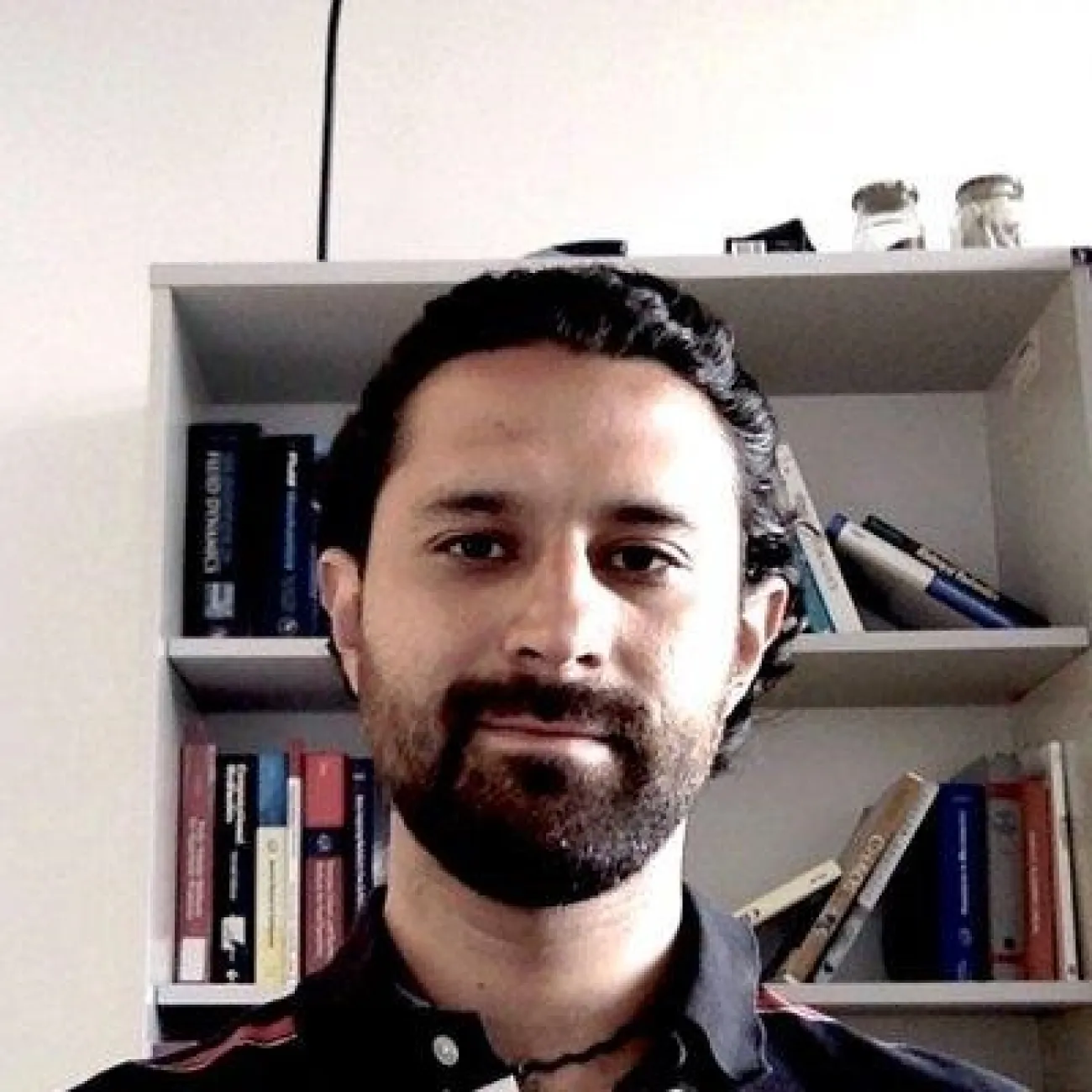
Dr Sergio Maldonado is a researcher at the University of Southampton 's Faculty of Engineering and Physical Sciences , specializing in Environmental Fluid Mechanics and Hydraulics . He leads modules including Environmental Hydraulics and Flood Modelling and Mitigation while supervising PhD students in topics spanning sediment transport, coastal morphodynamics, and fluid-algae interactions. Education: PhD (Environmental Fluid Mechanics, University of Edinburgh), MSc (Hydraulic Engineering, UNAM), BSc (Mechanical Engineering, Tecnológico de Monterrey) Research Focus: His work addresses fundamental aspects of environmental hydraulics, with applications in: Sediment transport mechanics in open channels Coastal and river morphodynamics Fluid dynamics of algae systems Machine Learning for computational hydraulics Experimental fluid mechanics innovations Recent Publications demonstrate expertise in morphodynamic simulations, temperature measurement techniques, and physics-informed neural networks for shallow water equations. He actively supervises PhD students and contributes to interdisciplinary coastal risk reduction research.
Dr. Ali Nabavi is a Reader in Energy Systems and Head of the Centre for Energy Decarbonisation and Recovery at Cranfield University . He serves as Director of the Advanced Chemical Engineering Course and has made significant contributions to low-carbon energy systems through experimental and computational research. PhD in Energy (Cranfield, 2016) MSc in Thermal Power and Fluid Engineering (Manchester, 2012) Research Areas: Carbon capture, utilization, and storage (CCUS) Reversible solid oxide fuel cells Hydrogen purification technologies Process intensification for energy efficiency Microfluidic particle formulation Hydrogen social acceptance modeling Recent Publications: Focus on sorption-enhanced reforming, hydrogen social dynamics, and catalyst development for gas processing. His work spans experimental validation and computational modeling across multiple energy systems. Scientific Contributions: Development of novel adsorbents for CO2 capture and optimization of solid oxide fuel cell integration in transportation applications. Facilities: Utilizes Cranfield's High-Performance Computing (HPC) systems and advanced material synthesis labs with pilot-scale reactor infrastructure.
Giuseppe Pascazio serves as a Full Professor in the Department of Mechanics, Mathematics & Management at the Polytechnic University of Bari, Italy. His research spans computational fluid dynamics with dual focus on aerospace applications and biomedical engineering, particularly in hypersonic flow phenomena and microwave ablation technologies for cancer therapy. His primary research interests include fluid dynamics, computational methods for high-enthalpy flows, thermochemical non-equilibrium modeling, turbulent boundary layer analysis, and biomedical device optimization. Pascazio develops advanced numerical techniques including high-order schemes, state-to-state kinetics implementations, and GPU-accelerated solvers to address complex flow physics in atmospheric entry and medical applications. His work bridges fundamental gas dynamics with practical engineering solutions for spacecraft thermal protection and minimally invasive cancer treatments. Analysis of his recent publications (2021-2025) reveals three dominant research thrusts: (1) High-fidelity simulation of hypersonic flows with detailed chemistry using state-to-state kinetics, (2) Development of robust numerical methods for shock-capturing in thermochemically non-equilibrium flows, and (3) Biomedical applications focusing on microwave ablation probe design and microcapsule transport in vascular systems. His aerospace work emphasizes atmospheric reentry physics while biomedical research targets cancer therapy optimization. Pascazio has participated in significant research projects including "PrInCE" (Innovative Processes for Energy Conversion) and "INNOVHEAD" (Advanced technologies for reduction of polluting emissions in Heavy Duty engines). His collaborative work involves industrial partnerships in aerospace and medical device sectors, though specific grant details beyond project names aren't provided. He maintains active research output with over 50 publications demonstrating consistent contributions to high-speed aerodynamics and biomedical fluid dynamics.
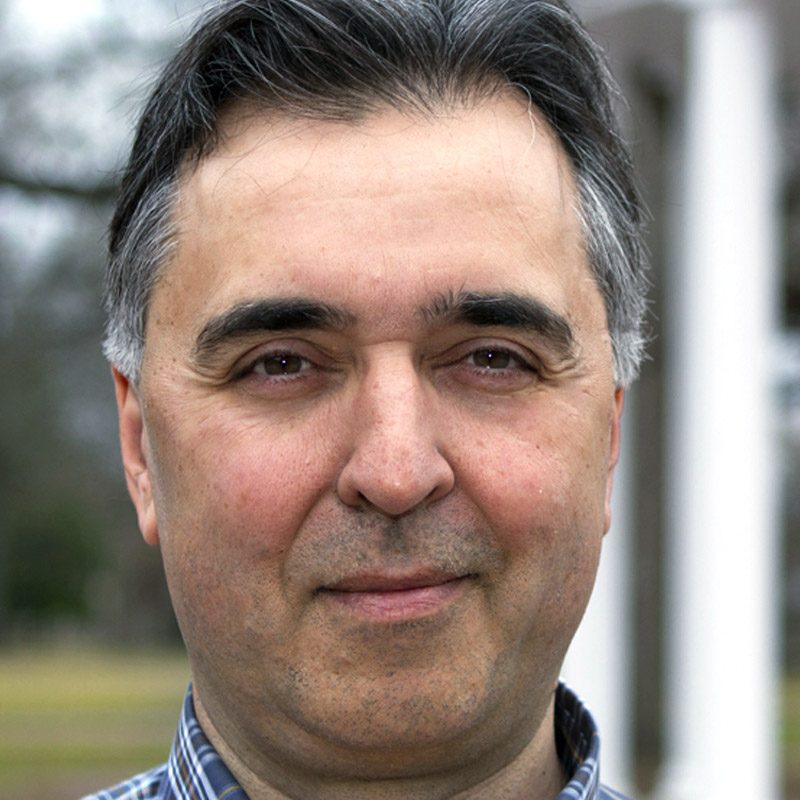
Sorin Mitran is a Professor in the Department of Mathematics at the University of North Carolina at Chapel Hill. His research focuses on computational simulation of multiscale and multiphysics systems, data-driven constitutive relations for hyperelastic materials, and information geometry for reduced stochastic models. PhD in Aerospace Engineering from Politehnica University Bucharest (1995) Professional background includes fellowships at University of Tokyo (1993), Karlsruhe Institute of Technology (1998-1999), and University of Washington (1999-2002) His research develops numerical tools to predict macro-scale behavior from micro-scale interactions, such as plastic deformation of metals from lattice defect dynamics, microtubule mechanics from molecular dynamics, and protein folding from atomic-level simulations. Mathematical approaches include adaptive computation, machine learning for constitutive law prediction, and information geometry for stochastic process analysis. Recent publications (2023-2018) span computational biology, multiscale fluid dynamics, and medical applications of continuum mechanics. Articles frequently explore data-driven modeling, wave propagation in biological systems, and GPU-accelerated numerical methods like Lattice Boltzmann and Lattice Fokker-Planck formulations.
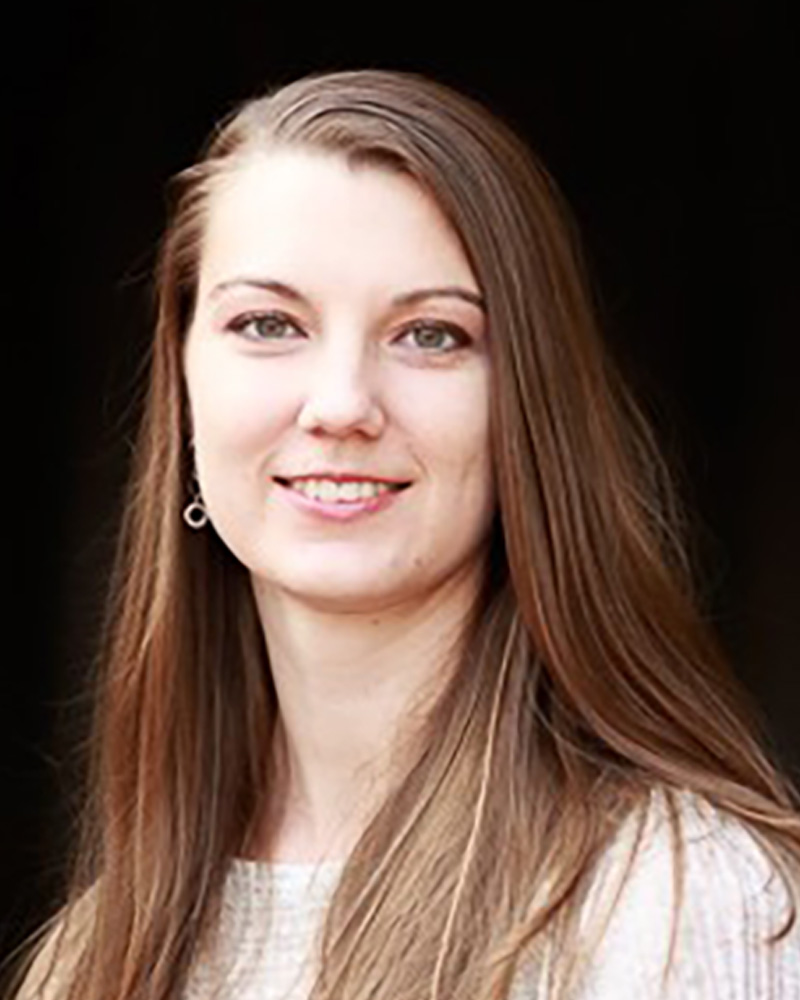
Katherine Newhall is a Professor in the Department of Mathematics at the University of North Carolina at Chapel Hill, where she maintains an active research program in stochastic modeling and dynamical systems. Her office is located in Phillips Hall 308, and she can be reached at knewhall@unc.edu. She serves as a member at large of the GSNP (Group on Statistical and Nonlinear Physics) board, a position she assumed in April 2024. Dr. Newhall earned her educational credentials from Rensselaer Polytechnic Institute, including a B.S. in Applied Physics and Applied Mathematics (2004), an M.S. in Mechanical Engineering (2006) with thesis entitled 'Turbulent Boundary Layers: A look at Skin Friction, Pressure Gradient and Surface Roughness,' and a Ph.D. in Mathematics (2011) with dissertation 'Synchrony in Stochastically-Driven Neuronal Network Models.' Following her doctoral work, she completed postdoctoral research at New York University's Courant Institute of Mathematical Sciences from 2011 to 2014. Her research focuses on developing new tools for analyzing large and infinite dimensional stochastic systems to understand large-scale and long-time dynamics of physical and biological systems. Rather than relying on traditional Fokker-Planck formulations that become intractable with increasing complexity, her work builds on concepts of statistical mechanics to create macroscopic descriptions from individual unit statistics. This approach extends the usefulness of energy landscapes even in non-gradient systems, enabling explanations of experimentally observable phenomena while exposing fundamental mechanisms responsible for system behavior. Her work spans applications from granular materials and chromosome dynamics to biological systems and metamaterials. Dr. Newhall's publications demonstrate consistent advancement in stochastic modeling techniques, with recent work (2023-2025) focusing on hyperuniformity in biological structures, energy landscape sampling methods, and the role of weak transient interactions in biological systems. Her research shows a clear trajectory from fundamental mathematical developments toward increasingly sophisticated biological applications. Outstanding Referee of the Physical Review journals (2019) NSF grant DMS-1816394 DMREF grant ($2M NSF Grant to Revolutionize Materials, 2023) Member at large of the GSNP board (2024) Dr. Newhall has successfully mentored numerous PhD students to completion, including Anna Coletti (2024), Daftari (2023), Moakler (2021), Ben Walker (2021), and Yuan Gao (2019). Her research is consistently supported by competitive grants, most notably the $2M NSF DMREF grant awarded in 2023. She maintains active collaborations across disciplines, particularly in applying mathematical techniques to biological problems such as chromatin organization and organ transplantation risk assessment. Her laboratory work focuses on developing computational methods for analyzing complex stochastic systems, with particular emphasis on the hydra string method for exploring high-dimensional potential energy surfaces. The research group maintains strong connections with both theoretical and experimental collaborators working on granular materials, chromosome dynamics, and biological systems.
Filippo Masseni is a Fixed-term Tenure-Track Assistant Professor at the Department of Mechanical and Aerospace Engineering (DIMEAS) , Politecnico di Torino. His academic and research activities focus on aerospace propulsion systems, particularly hybrid rocket engines and solid propellant development. Scientific disciplinary sector: IIND-01/G - Aerospace Propulsion ERC sector: PE8_1 - Aerospace Engineering Research Interests include combustion instability modeling, coupled propulsion/trajectory optimization, multidisciplinary design optimization, and robust optimization techniques. His work bridges theoretical modeling with practical applications in hybrid rocket engines and advanced propulsion systems. In teaching , he serves as Course Lecturer for Combustion in Aerospace Engines and supervises courses like Aeronautical Propulsion and Aircraft Engines, spanning academic years 2019-2025. Supervised PhD Students : Vincenzo Madonia, Daniele Tozzi, Leonardo Stumpo, Alessandra Zumbo, Lorenzo Folcarelli, Giovanni Polizzi Research group: Aerospace Propulsion (DIMEAS)
Muhammet Kayfeci is a Professor at Karabük University , Faculty of Technology, Department of Energy Systems Engineering, Turkey. He holds a PhD in Mechanical Engineering from Süleyman Demirel University (2011) and a Master's in Mechanical Education from Zonguldak Karaelmas University (2005). His academic career spans roles from Instructor (2008-2011) to Associate Professor (2016-2021) and Professor (since 2021), with administrative roles including Dean (2021-2024) . Education : PhD (Mechanical Engineering) - Süleyman Demirel University (2006-2011) Master's (Mechanical Education) - Zonguldak Karaelmas University (2004-2005) BSc (Mechanical Engineering) - Bartın University (2014-2016) Kayfeci’s research focuses on thermodynamics , renewable energy systems , and hydrogen storage , particularly through metal hydride reactors and nanofluid applications . His work integrates computational modeling and experimental validation for energy efficiency improvements in photovoltaic/thermal (PV/T) systems and hydrogen storage technologies. Recent publications indicate a strong trend in nanofluid-enhanced cooling systems for solar panels, metal hydride reactor optimization , and machine learning applications for energy systems. He has supervised 13 theses (PhD and Master’s) and secured funding for projects like "Biomimetic Flow Channels in PEM Electrolysis Development" (2025-2026). Scientific Awards : TÜBİTAK-ULAKBİM International Scientific Publications Encouragement (UBYT) Award (2009-2014) He teaches courses including Fuel Cells and Electricity Production (Doctoral), Heat Exchangers , and Thermodynamics at undergraduate and graduate levels.
Dr. Edmund Spencer is an Associate Professor in the Department of Electrical and Computer Engineering at the University of South Alabama , with research focused on space plasma physics and space weather . He designs advanced instruments for space science, develops theoretical frameworks for plasma characterization, and applies stochastic optimization algorithms to complex systems. Ph.D. Electrical and Computer Engineering, University of Texas at Austin M.S. Electrical and Computer Engineering, University of Texas at Austin B.S. Electrical and Electronics Engineering, University of Leicester, UK His work bridges space instrumentation with nonlinear magnetospheric dynamics , particularly in geomagnetic substorms and solar wind-earth magnetosphere interactions . Current projects include onboard space weather modules for satellites and advanced antenna systems for CubeSats . Recent research trends from his 15 most recent publications (2019-2025) include: Development of time-domain impedance probes for ionospheric electron density measurements Applications of machine learning in substorm prediction Hybrid physics-black-box modeling for Dst index forecasting Advanced antenna designs for small satellites 3D Particle-in-Cell simulations for RF instruments Collisional effects in plasma probe measurements Scientific contributions include: NSF CAREER Award (2013) for RF impedance probe development Key role in NASA's USIP CubeSat missions (e.g., JAGSAT I) Leveraging WINDMI model for substorm dynamics analysis He teaches graduate and undergraduate courses in electromagnetics and stochastic processes , contributing to the department's space science integration in engineering education.
Prof. Dr. Robert Eberlein is a Senior Lecturer in Mechanics at the ZHAW School of Engineering , specifically working at the Institute of Mechanical Systems (IMES) . He has served as Director of IMES since 08/2017, following previous roles as Senior Lecturer at IMES (11/2013-07/2017) and industry leadership positions including CTO of Angst+Pfister Group (06/2006-10/2013). Dr. Eberlein holds a Dr.-Ing. (PhD) in Numerical Mechanics from Darmstadt University of Technology (1992-1997) and completed an exchange program at UC Berkeley (1991-1992). Education: Dr.-Ing. (PhD) in Numerical Mechanics, Darmstadt University of Technology (07/1992-07/1997); Exchange Student at University of California, Berkeley (07/1991-06/1992) Professional: Director of Institute IMES (08/2017-today); Senior Lecturer at IMES (11/2013-07/2017); CTO & Group Executive Committee, Angst+Pfister Group (06/2006-10/2013); Group Leader in Biomechanics, Sulzer Innotec (07/1998-04/2006) Dr. Eberlein focuses on experimental and numerical modeling of solid polymers and lightweight structures. His research spans material modeling, finite element analysis, and fatigue life prediction for materials like POM gears, TPU and vulcanizates. Recent work explores digital twin development for rubber spring elements and machine learning enhanced process simulation in additive manufacturing. His projects include Lifetime prediction of POM gears , Measurement of human soft tissue properties , and Optimization of plastic gear geometry . Scientific achievements include: Professor ZFH (Fachhochschulrat) - 12/2019 Dr.-Ing. (PhD) summa cum laude - Darmstadt University of Technology - 07/1997 Graduate Assistantship - Darmstadt University of Technology - 01/1993 His work appears in journals like International Journal of Non-Linear Mechanics , Rubber Chemistry and Technology , and Journal of Loss Prevention in the Process Industries . Publications since 2015 show a consistent focus on material characterization , finite element modeling , and fatigue analysis with applications in industrial components and biomedical systems.
Renu John is a Professor in the Department of Biomedical Engineering at Indian Institute of Technology Hyderabad . He earned his Ph.D. in Physics (Optics) from IIT Delhi in 2006 and has held postdoctoral positions at Duke University and University of Illinois . He leads the Medical Optics and Sensors Laboratory (MOS) and co-founded the Center for Healthcare Entrepreneurship (CfHE) , focusing on affordable healthcare solutions for India. Research Interests : Biomedical Imaging, Optical Coherence Tomography (OCT), Digital Holography, AI/ML in Diagnostics, Microfluidic Biosensors, 3D Bioprinting, Nanoparticle-based Imaging, Optical Elastography. Awards : Best Paper & Poster Awards at international conferences (2018-2019), Samsung Innovation Award (2018) for smartphone-based oral cancer detection. Grants : Lead investigator for an ICMR Center of Excellence (15.2 Cr funding) in Medical Devices and Diagnostics. Students : Mentored over 20 researchers, including current and alumni Ph.D. candidates working on OCT, microfluidics, AI-driven imaging, and biosensor development. Labs & Innovations : The MOS Lab develops cutting-edge technologies like lensless microscopes, FF-OCT systems, and dual-modality biosensors. His team has filed 18 patents and published 117 international journal articles, with projects spanning from in vivo magnetomotive imaging to organ-on-chip platforms for disease modeling.
Professor Marko Bacic is a Professor of Engineering Science at the University of Oxford and Engineering Fellow in Control Systems and Gas Turbine Functionality at Rolls-Royce, PLC. He leads research at the Oxford Thermofluids Institute with dual focus on academic innovation and industrial gas turbine applications, holding continuous university affiliation since 2003. His educational credentials include: MEng in Engineering and Computing Science (2001), University of Oxford DPhil in Model Predictive Control (2004), University of Oxford Research spans Control Engineering , Gas Turbine Systems , and Active Flow Control , emphasizing hardware-in-the-loop simulation, thermo-mechanical systems, and fluid-structure interactions. Current projects address aerospace control, active tip clearance, and hybrid-electric propulsion through the Active Flow Control for Gas Turbines research group. Recent publications (2023-2025) reveal three dominant trends: hybrid-electric propulsion optimization for urban air mobility, acoustic excitation techniques for flow control in compressors, and thermal management innovations in turbine cooling systems, demonstrating strong industry-academia translation. Major awards include: Sir Henry Royce Award for Technical Innovation (2012) Sir Henry Royce Patent Award (2017) RAEng Silver Medal (2020) Research funding exceeds £3M through collaborations with Rolls-Royce and EPSRC: 'Active Control of Fluid Flows in Gas Turbines' (£1.1M, EPSRC/Rolls-Royce, 2014–2017) 'Advanced Transient Heat Transfer Facility' (£1.3M, Rolls-Royce/ATI, 2011-2015) 'Real-time transient disc modelling' (£72k, Rolls-Royce, 2011-2014) 'Hardware-in-the-loop simulation for UAVs' (£114k, EPSRC) 'Non-return valve failure investigation' (£126k, Rolls-Royce/EPSRC) 'Engineering applications of bird flight' ($300k, AFOSR) He directs experimental facilities including a subscale test rig for compact heat exchangers and hardware-in-the-loop simulators for gas turbine systems, with active Rolls-Royce partnerships driving patent development and market deployment.
Seda Keskin Avcı serves as Professor in the Chemical and Biological Engineering Department at Koç University, Istanbul, directing the Nanomaterials, Energy, and Molecular Modeling Research Group (NEMO). Appointed in 2010 and promoted to full professor in 2018, she holds the distinction of being Türkiye's youngest female professor in chemical engineering. Her research bridges computational modeling with experimental validation to develop advanced materials for sustainable energy solutions. Education: PhD, Georgia Institute of Technology (2009) MSc, Boğaziçi University (2006) BS, Boğaziçi University (2004) Professor Keskin's research focuses on AI-accelerated design of metal-organic frameworks (MOFs) and covalent organic frameworks (COFs) for gas separation and carbon capture. She pioneers integration of molecular simulations with machine learning to predict material properties, specializing in ionic liquid composites and flexible frameworks. Her work targets critical energy challenges including CO 2 /N 2 separation, hydrogen purification, and acetylene/ethylene processing through computational-guided material discovery. Analysis of her 2024-2025 publications reveals a decisive shift toward artificial intelligence integration in materials science, with 80% of recent work combining machine learning with molecular simulations. Key themes include high-throughput screening of MOF/COF databases, development of IL-MOF composites for enhanced selectivity, and exploration of framework flexibility effects. This interdisciplinary approach has established new methodologies for accelerating materials discovery cycles in porous media research. Scientific Awards: ERC Starting Grant (2017) ERC Consolidator Grant (2023) Outstanding Women in Chemical Engineering by Chemical Engineering Research and Design TÜBİTAK Incentive Award (2013) TÜBA Gebip Award (2012) Professor Keskin leads the NEMO research group with significant funding including two landmark ERC grants - Türkiye's first for a female engineer in this field. Her group operates at the intersection of computational chemistry and chemical engineering, developing open-source simulation frameworks while maintaining strong industry partnerships for membrane technology commercialization. Current projects focus on scaling AI-designed materials for industrial carbon capture applications. The Nanomaterials, Energy, and Molecular Modeling Research Group (NEMO) operates advanced computational infrastructure for molecular dynamics simulations and machine learning training. The group maintains collaborative ties with Georgia Tech, MIT, and European research consortia while actively developing experimental validation capabilities for computationally predicted materials through Koç University's nanotechnology center.
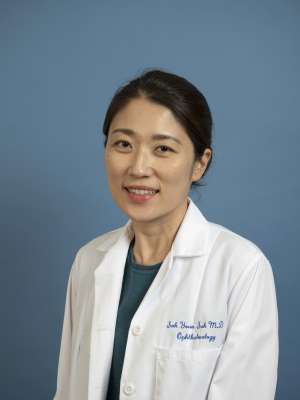
Dr. Soh Youn Suh serves as an Assistant Professor of Ophthalmology at UCLA's Stein Eye Institute within the David Geffen School of Medicine, specializing in pediatric ophthalmology and adult strabismus care at the Los Angeles clinical site. Her clinical expertise addresses complex eye alignment disorders and childhood vision conditions. Education: MD, Ewha Womans University School of Medicine, 2006 MS, Ewha Woman's University, 2010 Ophthalmology Residency, Ewha Womans University Medical Center, 2011 Pediatric Ophthalmology & Neuro-Ophthalmology Fellowship, Seoul National University Hospital, 2013 Pediatric Ophthalmology & Adult Strabismus Fellowship, Stein Eye Institute, UCLA, 2014 Research Fellowship, Ocular Motility Laboratory, Stein Eye Institute, UCLA, 2018 Her research program investigates biomechanical interactions between extraocular muscles, optic nerves, and orbital structures using advanced MRI and OCT imaging. Key discoveries include documenting abnormal optic nerve traction during eye movements in glaucoma patients with normal intraocular pressure and characterizing muscle pulley displacements in strabismus conditions. This work bridges neuro-ophthalmology and surgical planning through quantitative orbital analysis. Analysis of her 15 most recent publications (2020-2025) reveals three dominant research trajectories: (1) AI-driven segmentation of orbital structures using deep learning, (2) cerebrospinal fluid dynamics in optic neuropathies, and (3) biomechanical modeling of optic nerve strain during horizontal eye movements. These studies increasingly integrate computational methods with high-resolution imaging to decode pathophysiological mechanisms in strabismus and glaucoma. Scientific Recognition: Excellence in Research Award, Stein Eye Institute (2015) Excellence in Research Award, Stein Eye Institute (2016) Excellence in Research Award, Stein Eye Institute (2018) Dr. Suh has developed collaborative research partnerships through UCLA's institutional resources, particularly within Dr. Joseph L. Demer's ocular motility laboratory where she conducted postdoctoral research. Her work receives consistent institutional support through Stein Eye Institute infrastructure, though specific external grant funding isn't documented in source materials. She actively contributes to training through co-authorship with junior researchers on technical imaging studies. Her current research team at the Stein Eye Institute operates an orbital biomechanics laboratory focused on translating MRI/OCT findings into clinical applications. The group specializes in computational modeling of eye movement dynamics and developing AI tools for surgical planning in complex strabismus cases, with ongoing projects examining cerebrospinal fluid interactions in optic nerve disorders.
Malay K. Das is a Professor in the Department of Mechanical Engineering at the Indian Institute of Technology Kanpur . With a PhD from PennState, his career spans advanced research in thermofluid science, focusing on energy systems, carbon capture, and battery thermal management. B. E. (University of Calcutta), M. Tech. (IIT Kanpur), PhD (PennState) Teaches graduate-level courses like Machine Learning for Engineers and Mathematics for Engineers Leads two research laboratories: Energy Conservation and Storage Laboratory and Gas Hydrate Research Laboratory Research Interests: Computational Fluid Dynamics (CFD) applications in energy systems Physics-informed machine learning for thermofluid applications CO2 Sequestration and Methane Hydrate Reservoirs Thermal Management of Batteries and Fuel Cells Modeling Transport Phenomena in Porous Media Recent Publication Trends: His work focuses on energy conversion , gas hydrate dynamics , and advanced materials for electrochemical systems . Key areas include Lattice Boltzmann Methods , viscoelastic flow analysis , and nanofluid applications in carbon capture. Advising: Currently supervising PhD students Sourav Dhawan (CO2 Hydrates), Randeep Ravesh (Methane Recovery), Ayaj A. Ansari (Coalbed Methane), and Pawan K. Pandey (Cerebral Aneurysm Flow). Labs and Teams: Leads the Energy Conservation and Storage Laboratory (8 PhD graduates, 3 in progress) and Gas Hydrate Research Laboratory (2 PhD graduates, 1 in progress). Research teams work on fuel cells , CO2 sequestration , and graphene-based nanomaterials for energy applications.
Juha Vierinen is a Professor in Space Physics at the Department of Physics and Technology, UiT The Arctic University of Norway. His research focuses on experimental space physics, specializing in radar and radio remote sensing techniques applied to space plasma dynamics, atmospheric physics, space debris characterization, and planetary science. Develops advanced radar systems for ionospheric and mesospheric studies Works with EISCAT, EISCAT_3D, and GNSS networks Investigates Kelvin-Helmholtz Instabilities, GNSS scintillation, and space debris mapping Recent research includes interferometric imaging of ionospheric structures and machine learning applications in ionogram analysis. He collaborates with international institutions on projects like UNICube, QBDebris, and CASCADE. Based in Tromsø, Norway, he operates from Forskningsparken 1 A220. His publications span topics like solar eclipse effects on ionospheric density, smartphone-based space weather mapping, and multi-static meteor radar turbulence studies. Current work emphasizes volumetric radar analysis and fine-scale plasma irregularity characterization using novel imaging techniques.