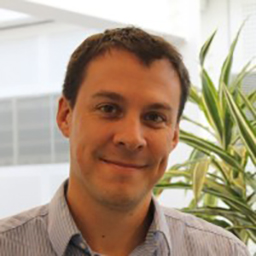
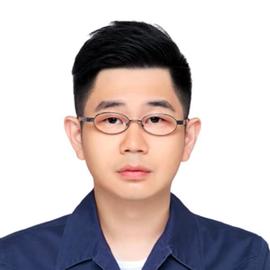
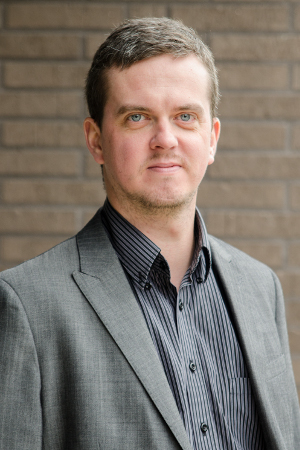
Lars O. Nord is a Professor in the Department of Energy and Process Engineering at NTNU, specializing in thermal energy systems, CO2 capture technologies, and dynamic process modeling. He holds a PhD from NTNU (2010) and a Master's from Virginia Tech (2001). His research focuses on power cycles, turbomachinery optimization, and decarbonization strategies for energy systems. Nord has led projects such as DEXPAND and InnCapPlant, addressing CO2 capture under variable loads and expander efficiency in renewable systems. Current roles: Head of the Thermal Energy research group and teaches courses like Engineering Thermodynamics. Research highlights include thermal energy storage integration, moving bed adsorption processes, and offshore hybrid energy systems. His work spans over 80 publications, emphasizing CO2 capture dynamics, turbine design, and control strategies for flexible power plants. Notable collaborations include SINTEF and Aker Solutions. Nord advises multiple PhD candidates and has mentored alumni now leading roles in industry and academia.
Erik G. Larsson is a Professor and Head of the Division for Communication Systems within the Department of Electrical Engineering (ISY) at Linköping University (LiU), Sweden. He joined LiU in September 2007 and has previously held academic and research positions at the Royal Institute of Technology (KTH), University of Florida, George Washington University, and Ericsson Research. Research Interests: Enabling technologies for 6G wireless communication Statistical inference and signal processing Network science and complex networks Decentralized and federated machine learning over networks Physical layer security and privacy Energy-efficient digital signal processing His research group, active in areas like RadioWeaves and massive MIMO, focuses on robust, efficient, and secure wireless connectivity. Recent publications highlight trends in decentralized learning, resource allocation in wireless networks, and the integration of AI into mobile networks, particularly through projects like 'Turning the Air into an AI Computer' funded by the Knut and Alice Wallenberg Foundation. Scientific Awards and Honors: IEEE Signal Processing Magazine Best Column Award (2012, 2014) IEEE ComSoc Stephen O. Rice Prize (2015) IEEE ComSoc Leonard G. Abraham Prize (2017) IEEE ComSoc Best Tutorial Paper Award (2018) IEEE ComSoc Fred W. Ellersick Prize (2019) IEEE SPS Donald G. Fink Overview Paper Award (2023) IEEE Fellow Member, Royal Swedish Academy of Sciences (KVA) Gyllene Moroten Best Teacher Award (2021) Advising and Grants: He has supervised numerous Ph.D. and Licentiate students, many of whom now hold positions at leading industry and academic institutions. His research is currently funded by major organizations including the Knut and Alice Wallenberg Foundation, Swedish Foundation for Strategic Research (SSF), ELLIIT, Security-Link, Swedish Research Council (VR), and EU Horizon 2020 (H2020-SNS-6GTandem). Previous sponsors include VR, KVA, NSF, ORAU, and multiple EU FP7 and H2020 projects (e.g., MAMMOET, REINDEER, 5G-Wireless). Leadership and Service: He has served as Associate Editor for IEEE Transactions on Communications and IEEE Transactions on Signal Processing, chaired technical committees and steering committees in IEEE Signal Processing Society, and held leadership roles in major conferences such as the Asilomar Conference on Signals, Systems and Computers. He was a Visiting Fellow at Princeton University in 2015.
Satadru Dey serves as an Assistant Professor in the Department of Mechanical Engineering at Penn State University, where he leads research at the intersection of energy infrastructure and smart city systems. His work spans battery technology, transportation networks, and cyber-physical security, with institutional affiliations including the Integrated Energy Systems and Equitable Communities research initiatives. His primary research focuses include battery safety and security (covering fault diagnosis, thermal management, and fast charging protocols), second-life applications for batteries/supercapacitors, secure autonomous transportation systems, and socio-technical traffic modeling. He employs advanced control theory, machine learning, and physics-based modeling to address critical challenges in energy storage and urban mobility infrastructure. Analysis of his 15 most recent publications (2022-2024) reveals a consistent trajectory toward cyber-physical security in battery and transportation systems, with 60% of works addressing battery fault detection and 40% focused on transportation security. His methodologies increasingly integrate partial differential equations, reinforcement learning, and socio-technical data fusion across electrical engineering, mechanical engineering, and computer science domains. Scientific Awards: No awards or fellowships were documented in the source material. Advising and grant activities are not explicitly detailed in the provided information, though his editorial leadership for the 2024 Special Issue on Energy in Smart Infrastructures indicates academic service responsibilities. The absence of student listings suggests either early-career status or non-publication of advising relationships. Dr. Dey directs a specialized research laboratory focused on integrated energy systems within smart city frameworks, with documented projects spanning battery management, transportation security, and equitable infrastructure development. His lab maintains active collaborations across mechanical engineering, electrical systems, and urban planning disciplines as evidenced by multi-departmental publication venues.
Dr Paul Henshall is a Senior Lecturer in Mechanical Engineering at Oxford Brookes University, affiliated with the School of Engineering, Computing and Mathematics. His work bridges advanced thermal systems, renewable energy, and mathematical modelling, with a strong focus on sustainable technologies. His research interests include: Mathematical modelling of renewable energy systems Second-life battery energy storage Thermal management of battery packs Lithium-ion cell characterization Advanced solar thermal systems Thermochemical energy storage The analysis of his recent publications (2018–2025) reveals a consistent focus on energy storage and solar thermal technologies. His work emphasizes computational modelling, experimental validation, and sustainability assessment, particularly in second-life batteries and high-efficiency solar collectors. Key themes include battery degradation prediction, thermal stress analysis, and the integration of renewable systems in buildings and industry. Professional recognitions include: Chartered Physicist (CPhys) Member of the Institute of Physics (MInstP) Fellow of the Higher Education Academy (FHEA) Member of the Institute of Physics Energy Group Committee Paul supervises MEng and PhD students, including Dr. Farhad Salek, whose thesis focused on second-life battery systems. He teaches core modules in engineering mathematics, numerical methods, and computational modelling. He is involved with the Centre for Batteries, Electric Vehicles and Electronics and the Architectural Engineering Research Group, contributing to interdisciplinary research in sustainable energy systems.
Sara Vinco is an Associate Professor at the Department of Control and Computer Engineering (DAUIN), Politecnico di Torino, Italy. She specializes in battery simulation, digital twins, and energy-efficient design automation for heterogeneous embedded systems, aligning with Industrial and Information Engineering (Area 0009) and ERC sectors including Computer Architecture and Machine Learning . Her research focuses on advancing cyber-physical systems through simulation frameworks like SystemC-AMS, enabling holistic modeling of analog, digital, and thermal domains. Key projects include data-driven digital twins for EV batteries and low-area digital circuits in industrial/medical applications, supported by commercial contracts such as C-based virtual prototyping. Her recent publications (2022-2023) emphasize machine learning for battery SOH/SOC estimation , energy monitoring in production lines , and multi-domain fault modeling . These works span journals like IEEE Transactions and conferences including DATE and ISLPED. Awarded the FFABR 2017 grant and IEEE FDL Best Paper Award 2011 , she also chairs editorial boards for IEEE Transactions on CAD and DATE Conference. She supervises PhD students Giovanni Pollo (Digital Circuits) and Khaled Alamin (EV Battery Twins), reflecting her leadership in smart systems design.
Jiawei Zhang is an Assistant Professor in the Department of Computer Sciences at the University of Wisconsin–Madison since May 2025. His research focuses on optimization algorithms for machine learning, adversarial training, reinforcement learning, and distributed systems. Ph.D. in Computer and Information Engineering, Chinese University of Hong Kong, Shenzhen (2021) B.Sc. in Mathematics (Hua Loo-Keng Talent Program), University of Science and Technology of China His work spans nonconvex optimization , robust machine learning , and data-driven decision-making , with applications to AI and sustainable energy systems. Recent publications at ICML 2025 address stochastic primal-dual methods and contextual optimization robustness, while earlier works explore bilevel optimization, reward learning, and distributed consensus algorithms. Scientific awards include: MIT Postdoctoral Fellowship For Engineering Excellence (2023) CUHK-Shenzhen Presidential Award for Outstanding Doctoral Students (2021) SRIBD PhD Fellowship (2020-2021) CUHK-Shenzhen Outstanding Teaching Assistant (2023) He supervises undergraduate researchers and seeks graduate students with strong mathematical or algorithmic backgrounds for 2025 admission, emphasizing optimization and AI-driven applications.
Kunihiko Kaneko is a Professor at the Niels Bohr Institute, University of Copenhagen, with a distinguished career in theoretical biophysics and complex systems. He received his PhD and MSc in Physics from the University of Tokyo, and has held leadership roles at the Universal Biology Institute and Center for Complex Systems Biology. PhD Physics, 1984 - University of Tokyo MSc Physics, 1981 - University of Tokyo His research spans five primary areas: Universal Biology, Evolutionary Constraints, Ecosystem Dynamics, Neural Cognition, and Universal Anthropology. He has published extensively on multi-level consistency principles, dimensional reduction in biological systems, and reciprocity between robustness and plasticity across scales. Recent publications show strong focus on microbial ecosystems (2025), evolutionary game theory (2025), neural modular architectures (2024), and dimensional reduction in cellular systems (2024). His work bridges physics and biology through dynamical systems theory applied to diverse phenomena from protocells to human societies.
Vinod M. Vokkarane is a Professor in the Department of Electrical and Computer Engineering at the University of Massachusetts Lowell, where he serves as Director of the Center for Smart Cyber-Physical Systems (SCyPS) and Director of Advanced Computer Network Labs. Previously, he was an Associate Professor at University of Massachusetts Dartmouth from 2004 to 2013 and a Visiting Scientist at MIT's Research Laboratory of Electronics from 2011 to 2014. His extensive research portfolio spans multiple domains of advanced networking and cyber-physical systems. Dr. Vokkarane earned his educational foundation with a B.S. from University of Mysore, India (1999), followed by an M.S. (2001) and Ph.D. (2004) in Computer Science from the University of Texas at Dallas. His dissertation focused on optical burst-switched networks, establishing the foundation for his future research trajectory. His research interests center on Cyber-Physical Systems, Network Optimization, Reliability, Smart Grids, and Cyber-Security, with particular expertise in the design, analysis, and modeling of architectures, protocols, and algorithms for ultra-high speed networks including Optical networks, Grid/Cloud networks, and Big-data networks. His work bridges theoretical foundations with practical implementations, often addressing critical challenges in network reliability, security, and efficiency. His research has received significant recognition through numerous best paper awards and substantial external funding. Analysis of his recent publications reveals a clear evolution toward increasingly sophisticated integration of cyber-physical systems with power infrastructure, particularly in the areas of grid resilience and observability. His work has expanded from fundamental optical networking research to address critical infrastructure challenges, with a growing emphasis on machine learning applications for network optimization and power system monitoring. The recent focus on PMU networks, disaster resilience, and cyber restoration demonstrates his strategic pivot toward addressing national security and critical infrastructure protection challenges. UMass Dartmouth Scholar of the Year Award (2011) UMass Dartmouth Chancellor's Innovation in Teaching Award (2010-11) University of Texas at Dallas Computer Science Dissertation of the Year Award (2003-04) Multiple Best Paper Awards including IEEE GLOBECOM 2005, IEEE ANTS 2010, ONDM 2015, ONDM 2016, and IEEE ANTS 2016 Texas Telecommunications Engineering Consortium Fellowship (2002-03) Dr. Vokkarane has successfully mentored numerous graduate students who have contributed significantly to his research projects, with several going on to successful careers in academia and industry. His research has been consistently supported by major funding agencies including NSF, DOE, and USMC, with recent projects totaling over $5 million in funding. Current projects include Unified Post-Disaster Restoration Planning for Cyber-Physical Power Distribution Systems (ONR, $550K), CyberCARE: Northeast University Cybersecurity Center (DOE, $3.5M), and Flexible Spectrum Allocation in Next-Generation Optical Networks (NSF, $350K). He leads the Center for Smart Cyber-Physical Systems (SCyPS) and Advanced Computer Network Labs at UMass Lowell, where his research teams work on cutting-edge problems in network architecture, cyber-physical security, and infrastructure resilience. His labs collaborate extensively with national laboratories and industry partners to translate theoretical advances into practical solutions for real-world infrastructure challenges.
Esa Ollila serves as Associate Professor in the Department of Signal Processing and Acoustics at Aalto University, Finland, and holds an adjunct professorship in Statistics at the University of Oulu. His academic appointments include Academy of Finland Research Fellow (2010-2015) and prior senior research/lecturing roles at both institutions. His educational background features: M.Sc. in Mathematics, University of Oulu (1998) Ph.D. in Statistics (with honors), University of Jyväskylä (2002) D.Sc.(Tech) in Signal Processing (with honors), Aalto University (2010) Professor Ollila's research centers on statistical signal processing and robust statistical methodologies , with significant contributions to array processing, high-dimensional data analysis, and covariance matrix estimation. His work bridges theoretical statistics with practical applications in radar systems, wireless communications, and big data analytics, emphasizing robustness against outliers and computational efficiency in modern data-intensive environments. Current focus areas include compressed sensing, sparse approximation, and blind source separation techniques. Analysis of his 15 most recent publications (2024-2025) reveals three dominant trends: (1) robust covariance learning for massive random access systems, (2) integrated sensing and communications (ISAC) for 6G networks using advanced beamforming, and (3) geometric approaches to elliptical distributions in statistical inference. His work increasingly incorporates deep learning (GANs, graph neural networks) while maintaining strong foundations in classical signal processing theory. Key recognitions include: Academy of Finland Postdoctoral Fellowship (2004-2007) Academy of Finland Research Fellowship (2010-2015) His research has been supported through prestigious Academy of Finland grants totaling over a decade of continuous funding. Professor Ollila currently leads an active research group at Aalto University, supervising doctoral candidates and collaborating internationally with institutions including Princeton University (where he served as Visiting Post-doctoral Research Associate during 2010-2011). He maintains strong ties with the University of Oulu through his adjunct professorship and has contributed to EURASIP's Special Area Team on Theoretical and Methodological Trends in Signal Processing. The Esa Ollila Research Group focuses on cutting-edge challenges in statistical signal processing, with current projects spanning robust DOA estimation under non-Gaussian noise, covariance matrix learning for massive MIMO systems, and machine learning-enhanced radar-communication integration. The group actively develops open-source tools like the fitHeavyTail R package for heavy-tailed distribution modeling and maintains collaborations with industry partners in wireless communications.
Kwantae Kim is an Assistant Professor at the Department of Electronics and Nanoengineering within Aalto University's School of Electrical Engineering . He leads the Tiny Systems and Circuits (TSirc) Group , focusing on power-efficient analog/mixed-signal ICs for biomedical and neuromorphic sensor systems. IEEE Senior Member (2025) Collaborates with institutions across Europe, Asia, and America Specializes in ultra-low-power AI-embedded IoT platforms His research emphasizes Tiny, Sensory, Intelligent, and Wireless IoT systems through: Development of energy-efficient IC architectures Democratizing access to advanced chip design Hardware-software co-design for edge computing Recent publications highlight innovations in: Spoken-language-understanding SoCs Temporal-sparsity-aware keyword spotting Open-source silicon frameworks Awards include: 2025 IEEE Senior Member 2023 Best Poster Award (AICAS) 2019 Samsung HumanTech Silver Award Research partnerships span: Prof. Tobi Delbruck (UZH/ETH Zurich) Prof. Hoi-Jun Yoo (KAIST) Prof. Shih-Chii Liu (UZH) Prof. Sohmyung Ha (NYU Abu Dhabi)
William A. Goddard, III is the Charles and Mary Ferkel Professor of Chemistry, Materials Science, and Applied Physics at the California Institute of Technology. With a career spanning over five decades, he has held positions from Noyes Research Fellow (1964–66) to his current professorship since 2001. His educational background includes a B.S. from UCLA (1960) and a Ph.D. from Caltech (1965). Quantum chemistry and first-principles simulations Multiscale modeling (QM→MD→mesoscale) Catalysis and protein structure prediction Nanotechnology and bionanotechnology Energy storage (batteries, supercapacitors) Recent publications emphasize applications in metal-organic frameworks , electrocatalysis , and space manufacturing , reflecting his interdisciplinary approach. His work on G-protein coupled receptors and Li-S batteries demonstrates methodological innovation through quantum mechanics and machine learning . Horizon Prize , Royal Society of Chemistry Over 1548 total publications (1967–2022) As Director of Caltech's Material and Process Simulation Center , he leads development of software like ReaxFF for reactive dynamics. He teaches Ch 120 ab (Nature of the Chemical Bond) and Ch 121 ab (Atomic-Level Simulations), emphasizing hands-on computational applications for experimentalists and theorists.
Joshua J. Coon is a Professor at the University of Wisconsin-Madison with appointments in the Department of Biomolecular Chemistry and the Department of Chemistry. He leads the Coon Group, focusing on advancing mass spectrometry technologies for proteomics, metabolomics, and lipidomics. His research addresses fundamental questions in cell biology, including stem cell differentiation, epigenetic regulation, and cancer biomarker discovery. Affiliations : Director of the NIGMS National Center for Quantitative Biology of Complex Systems. Research Emphasis : Instrumentation development, data analysis software, ion chemistry, and biological applications of proteomics. Laboratory : Located in the Genome Center of Wisconsin with a dozen hybrid mass spectrometers, including Orbitrap systems. Collaborations : Long-term partnership with Thermo Fisher Scientific and the Wisconsin Alumni Research Foundation (WARF) for technology commercialization. Training : Mentored 27 Ph.D. students since 2009, emphasizing interdisciplinary research and professional development.
Alexander Russell is a Professor of Computer Science and Mathematics at the University of Connecticut, serving as Director of Graduate Affairs in the School of Computing and Director of the UConn Voting Technology Research Lab. He holds a Ph.D. in Mathematics and an S.M. in Computer Science from MIT, alongside dual B.A. degrees in Mathematics and Computer Science from Cornell University. His research focuses on cryptographic protocols, blockchain security, quantum computing, algorithms, and election auditing. Key areas include consensus algorithms, complexity-theoretic cryptography, and applied cryptography in voting systems. Recent work emphasizes low-variance risk-limiting audits and adaptive security mechanisms for blockchains. Notable contributions span provably secure blockchain protocols (e.g., Ouroboros), election integrity methods, and smartphone-based depression prediction models. His articles address topics like settlement bounds in longest-chain consensus, Byzantine-resilient gossip protocols, and energy-efficient neighbor discovery in mobile networks. Russell advises on interdisciplinary projects at the Voting Technology Research Center and collaborates on grants involving quantum-resistant cryptography and healthcare analytics. His work bridges theoretical computer science with practical applications in secure systems and public infrastructure.
Jennifer Dy is a Distinguished Professor at Northeastern University with joint appointments in Electrical and Computer Engineering and Khoury College of Computer Sciences. As Director of AI Faculty at the Institute for Experiential AI, she leads research in machine learning, computer vision, and explainable AI. Her work spans biomedical applications (COPD phenotyping, neuroimaging) and fundamental algorithms (active learning, continual learning). She holds a PhD from Purdue University and is an AAAI Fellow. Research Focus: Dy develops methodologies for robust and interpretable machine learning, including techniques for model stability in continual learning, dependency-aware active learning, and axiomatic explanation frameworks. Her applied research advances diagnostic tools using Raman spectroscopy, CT imaging, and multi-omics biomarker discovery. Awards: Recognized with the NSF CAREER Award, Faculty Research Team Award, and AAAI Fellowship for contributions to unsupervised learning and medical AI. Publication Trends: Recent articles demonstrate strong cross-disciplinary integration, combining theoretical advances in explainability/robustness with applications in healthcare, wireless systems, and particle physics. Methodological themes include optimal transport theory, probabilistic modeling, and transformer architectures.
Bruno Volckaert is a Professor in the Department of Information Technology at Ghent University and Senior Researcher at imec. He obtained his Master of Computer Science (2001) and PhD in Grid Computing Resource Management (2006) from Ghent University. His research focuses on distributed cloud systems for Smart Cities and Industry 4.0 applications. Volckaert's expertise spans: Reliable distributed cloud backend systems Autonomous optimization of cloud applications Cybersecurity through machine learning IoT data processing architectures Kubernetes-based container orchestration Edge-to-cloud continuum computing His publications demonstrate strong focus on: cloud-native technologies, Kubernetes optimization, cybersecurity frameworks, and distributed AI systems. Recent work emphasizes reinforcement learning for auto-scaling, secure edge computing, and intrusion detection systems. He has contributed to over 40 national/international research projects and authored 100+ publications. Current affiliations include leadership roles in: IDLab Research Unit (Ghent University) imec Research Center