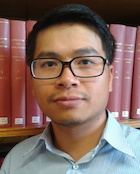
Minh Hoai Nguyen is an Assistant Professor in the Department of Computer Science at Stony Brook University. He received his PhD in Robotics from Carnegie Mellon University and a Bachelor of Engineering from the University of New South Wales. Prior to Stony Brook, he was a post-doctoral research fellow at Oxford University and a Kurti Junior Research Fellow at Brasenose College. Education: PhD in Robotics, Carnegie Mellon University Bachelor of Engineering, University of New South Wales His research focuses on computer vision , machine learning , and time series analysis , particularly in developing algorithms for human action recognition , gesture detection , and expression analysis in video data. Applications include video surveillance , human-computer interaction , and medical diagnosis of behavioral disorders . His work integrates computer vision for video processing, time series analysis for modeling human behavior, and machine learning for training complex algorithms. Notable awards include: CVPR 2012 best student paper award Winner of PASCAL VOC 2012 Challenge for Human Action Recognition He teaches courses such as Video Analysis (CSE 594) and Introduction to Robotics (CSE 525) .
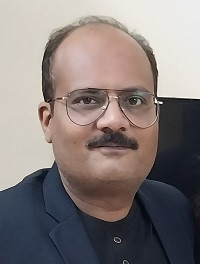
Dr. Manav R. Bhatnagar serves as a Professor and Brigadier Bhopinder Singh Chair Professor in the Department of Electrical Engineering at Indian Institute of Technology Delhi. He ranks #517 globally in Networking & Telecommunications among the top 2% scientists worldwide according to Stanford University and is a Fellow of INAE, NASI, IET(UK), IETE, and OSI. His academic credentials include a Ph.D. in Signal Processing for Communications from University of Oslo (2008), M.Tech. in Communications Engineering from IIT Delhi (2005), and B.E. in Electronics from North Maharashtra University (1997). He has held visiting appointments at prestigious institutions including Aalto University (Finland), University of Rennes (France), University of Oslo, Indian Institute of Science Bangalore, and University of Minnesota. Dr. Bhatnagar's research spans cutting-edge domains including 5G/6G communication, optical wireless communication, quantum communication, molecular communication, power line communication, and machine learning applications. His work demonstrates significant interdisciplinary connections between communication theory, signal processing, and emerging technologies. His publication record shows a strong focus on wireless and optical communication systems, with recent work addressing challenges in jamming detection, quantum relay systems, IRS-assisted communication, and game-theoretic approaches to resource allocation. His research consistently bridges theoretical foundations with practical applications in next-generation communication systems. NASI-Scopus Young Scientist Award Shri Om Prakash Bhasin Award (2016) Dr. Vikram Sarabhai Research Award (2017) BASIC RESEARCH AWARD of IIT Delhi (2023) Sir Visvesvaraya Young Faculty Research Fellowship (2016) Senior Member of IEEE As an academic advisor, Dr. Bhatnagar has mentored numerous PhD students who have gone on to successful careers at institutions including IIT Jodhpur, IIT Roorkee, Aalto University, and IIT Kanpur. His editorial roles include current Editor of IEEE Transactions on Communications and former Editor of IEEE Transactions on Wireless Communications (2011-2014). His textbook "Telecommunication Switching Systems and Networks" has become a standard reference in the field.
Maria Leonilde Rocha Varela is an Associate Professor with Habilitation at the School of Engineering, University of Minho, Portugal, where she also serves as a Senior Researcher at the Algoritmi Research Centre. She has been an integrated member of the Algoritmi Research Centre since 2012 and works in the Department of Production and Systems. Dr. Varela earned her degree in Production Engineering from the University of Minho in 1994, completed a Master's in Computer Integrated Production at DPS-UMinho in 1999, and received her Ph.D. in Production and Systems from the University of Minho in 2007. Her primary research focuses on Manufacturing Management, particularly Production Planning, Control and Optimization, and Collaborative Paradigms, Networks and Decision Making Models. She maintains extensive international collaborations with institutions worldwide including the National Institute of Industrial Engineering, VSB-Technick Univerzita Ostrava, University of Belgrade, and others. Her research spans Web Applications and Services for supporting Engineering and Production Management, with increasing emphasis on Artificial Intelligence, Robotic Process Automation, and Industry 4.0/5.0 applications. She has made significant contributions to scheduling algorithms, optimization techniques, and decision support systems for manufacturing environments. Analysis of her recent publications reveals a strong trend toward integrating Artificial Intelligence with traditional manufacturing processes, particularly in Robotic Process Automation applications. Her research increasingly focuses on sustainable manufacturing practices, with numerous publications addressing energy efficiency, environmental sustainability, and resource optimization. There is a clear emphasis on multi-objective optimization approaches to solve complex manufacturing problems, particularly in distributed job shop scheduling. Her work demonstrates an evolution from traditional production planning methods to more advanced AI-driven approaches for Industry 4.0 and 5.0 environments. Dr. Varela has held significant academic leadership roles, currently serving as the director of the master's course in Engineering and Quality Management at DPS-UMinho. She previously coordinated the industrial management and systems subgroup from 2012 to 2021 and was part of the steering committee for the master's course in systems engineering between 2016 and 2019. She has successfully supervised more than 70 MSc projects, with over 15 currently ongoing, focusing on Production and Systems Engineering. Her supervision encompasses collaborative management models, traditional decision approaches, and web-based platforms incorporating AI techniques. She coordinates research projects including 2 concluded Ph.D. projects and 6 ongoing ones. She collaborates as a research member in several R&D projects with national and international industrial enterprises and institutions, and in international Erasmus projects. Dr. Varela is an active participant in the academic community, serving on editorial boards of several international journals and as a member of organizing and scientific committees for numerous international conferences. She is a member of several prestigious research networks including the Euro Working Group of Decision Support Systems (EWG-DSS), Institute of Electrical and Electronics Engineers (IEEE), Industrial Engineering Network, and the Institute of Industrial and Systems Engineers (IISE).
Dr. Madhushi Bandara is a Lecturer at the School of Computer Science, University of Technology Sydney (UTS), specializing in knowledge representation, complex system modeling, and data analytics. She leads the data management research stream at the UTS DigiSAS lab and is a core member of the Biomedical Data Science Laboratory within the UTS Australian Artificial Intelligence Institute. Her industry collaborations include Telstra, Cancer Australia, and Capsifi, focusing on AI integration in healthcare and finance. She coordinates the Business Information Systems major in UTS's Master of Information Technology program and convenes the Future Generation Enterprise Architecture Community of Practice. Education PhD in AI Systems Engineering, University of New South Wales (2020) BSc (Hons) in Engineering, University of Moratuwa, Sri Lanka (2015) Research Interests Madhushi's work bridges machine learning, knowledge graphs, and enterprise architecture to address challenges in data governance for SMEs, ESG metric management, and healthcare pathway analysis. Her research emphasizes translating cutting-edge AI into industry solutions through contextual domain knowledge integration. Scientific Awards UNSW-UTS Trustworthy Digital Society Scholarship Teaching & Leadership She teaches enterprise information systems, digital strategy, and AI for enterprises in UTS's online postgraduate programs. Her service roles include co-chairing tracks at the Australasian Conference on Information Systems and reviewing for Expert Systems with Applications.
Saleh Javadi is a Senior Lecturer at the Department of Mathematics and Natural Sciences at Blekinge Institute of Technology (BTH) in Karlskrona, Sweden. He is actively engaged in research and teaching within the field of systems engineering. His educational background includes: B.Sc. in Electrical-Control Engineering from Amirkabir University of Technology (2009) M.Sc. in Electrical, Electronic and Systems Engineering from The National University of Malaysia (2013) Ph.D. in Systems Engineering from Blekinge Institute of Technology (BTH) (2021) Saleh Javadi's research focuses on signal processing, machine learning, and computer vision , with applications spanning remote sensing, intelligent transportation systems, and AI-driven industrial optimization. His work bridges theoretical advancements with practical implementations, particularly in SAR imagery analysis, drone-based agricultural monitoring, and traffic surveillance systems. His recent publications demonstrate a strong focus on remote sensing technologies, particularly Synthetic Aperture Radar (SAR) image processing and analysis. There's a clear trend toward applying machine learning techniques to solve complex problems in aerial and satellite imagery, traffic monitoring, and agricultural applications. His research shows interdisciplinary connections between computer vision, signal processing, and practical engineering applications. Saleh Javadi has received significant recognition for his innovative work: Innovator of the Year award (SKAPA – Innovation Prize in Memory of Alfred Nobel) in Blekinge for innovative efforts in optimizing and reducing energy consumption in industries by using artificial intelligence ÅForsk Entrepreneur's prize at the Swedish Innovation Council Day – Swedish Incubators & Science Park's annual conference in May 2019 Dr. Javadi is involved in practical applications of his research through projects such as "Artificiell intelligens AI kan reducera ogräsfrön i utsäde" (ongoing) and "Bekämpa Renkavle med hjälp av drönare och Artificiell Intelligens (AI)" (completed). His work demonstrates a strong commitment to translating academic research into real-world solutions that address industrial and environmental challenges. His research appears to be conducted within a collaborative framework, working with colleagues on drone technology, SAR image analysis, and AI applications across multiple domains including agriculture, maritime monitoring, and transportation systems.
Dustin D. French, PhD, serves as Professor in Ophthalmology and Medical Social Sciences (Determinants of Health) at Northwestern University's Feinberg School of Medicine. His dual appointments bridge clinical ophthalmology with population health research, focusing on healthcare system optimization through economic and policy analyses. Dr. French's educational foundation includes: PhD from The Ohio State University (2001) His research program centers on health economics and outcomes research , with signature expertise in: Comparative and cost-effectiveness methodologies Health informatics and big data applications Health services research and policy evaluation Addressing health disparities in diabetic eye care and rural communities Recent publications reveal a strategic focus on AI-driven clinical decision support and resource optimization, with 2025 studies examining glaucoma identification algorithms, nursing home quality metrics, microhematuria diagnostic pathways, and pediatric obesity interventions. Dr. French's scholarly impact is recognized through prestigious awards: International Society for Pharmacoepidemiology Outstanding Reviewer Award (2016, 2010) Department of Veterans Affairs Distinguished Service Award (2016) International Society for Pharmacoepidemiology Distinguished Article Award (2006) His leadership in health services research extends to mentorship and grant-funded initiatives targeting healthcare quality improvement, particularly in diabetic eye care access for minority populations. Institutional affiliations include the Center for Diabetes and Metabolism, IPHAM's Center for Health Services & Outcomes Research, and NUCATS, where he contributes to translational research infrastructure.
Carl-Mikael Zetterling is a Professor and Head of Department at Kungliga Tekniska Högskolan (KTH) in Stockholm, Sweden, affiliated with the School of Electrical Engineering and Computer Science (ICT) and the Electronics and Embedded Systems department. His research focuses on process technology and device design for high-temperature, high-power silicon carbide (SiC) electronics, expanding into SiC-based analog and integrated circuits. He has authored over 300 publications, including books on SiC process technology and plagiarism prevention. Dr. Zetterling has held leadership roles such as Vice Dean of the School of ICT (2013–2017) and teacher representative on KTH's faculty board. He has collaborated internationally at Stanford University, Kyoto University, and Kyoto Institute of Technology. His work addresses applications in extreme environments, including Venus exploration and fusion reactor monitoring, with a focus on radiation tolerance and thermal resilience. The 15 most recent publications highlight trends in wide bandgap semiconductors, gamma irradiation effects on SiC devices, and high-temperature integrated circuits. His articles span structural health monitoring with machine learning, novel SiC diode designs, and radiation-hardened electronics. Key contributions include advancements in self-aligned contacts, trench MOSFETs, and compact modeling for extreme conditions. While no formal awards are listed, his roles in technical program committees (TMS Electronic Materials Conference, IEEE SISC Conference) and editorial work demonstrate significant academic service. He teaches courses ranging from digital design to high-temperature electronics, overseeing degree projects in embedded systems, communication, and nanotechnology.
Brian D. Gerardot is a Professor at the School of Engineering & Physical Sciences , Heriot-Watt University , where he leads the Quantum Photonics Laboratory within the Institute of Photonics and Quantum Sciences. His research focuses on creating ultra-coherent quantum photonic devices that bridge quantum optics, condensed-matter physics, materials science, and nano-optics. BSc in Materials Science from Purdue University (1998) PhD from UC Santa Barbara (2004) His work explores semiconductor quantum dots and defect centers in diamond, utilizing advanced nano-fabrication techniques to design and characterize photonic structures. Research outputs highlight quantum technologies, entangled imaging, exciton dynamics in 2D materials, and coherence in photon emission systems. Scientific Awards include: Chair in Emerging Technologies (Royal Academy of Engineering, 2018) Wolfson Merit Award (Royal Society, 2018) ERC Consolidator Grant (2018) ERC Starting Grant (2013) Personal Research Fellowship (Royal Society of Edinburgh, 2006-2009) University Research Fellowship (Royal Society, 2009-2017) Challenging Engineering award (2011) He manages the NanoFab Disco Saw facility and has secured significant grants for quantum technologies and nanophotonic research, with collaborations spanning international institutions and datasets supporting breakthroughs in exciton-polarons, quantum imaging, and photonic coherence.
Elizabeth "Beth" Mayer-Davis is the Dean of The Graduate School and the Cary C. Boshamer Distinguished Professor of Nutrition and Medicine at the University of North Carolina at Chapel Hill. She holds joint appointments in the Gillings School of Global Public Health and the School of Medicine, where she previously served as Chair of the Department of Nutrition for eight years. As Dean of The Graduate School, she oversees more than 160 degree-offering programs and over 10,000 graduate students at UNC Chapel Hill. Dr. Mayer-Davis earned her educational credentials from prestigious institutions: Ph.D. in Epidemiology from the University of California, Berkeley (1992) Master of Public Health with honors from the University of Colorado School of Medicine (1986) B.S. in Dietetics from the University of Tennessee (1980) Dr. Mayer-Davis is an internationally recognized expert in diabetes research with a career focused on the epidemiology and natural history of type 1 and type 2 diabetes in children and adults. Her research addresses how nutrition impacts diabetes risk and complications, with particular emphasis on culturally and regionally diverse populations. Her primary current focus is on type 1 diabetes in youth and young adults, examining diabetes self-management and energy balance/weight management for individuals with type 1 diabetes. She employs innovative methodologies including large epidemiological studies, clinical trials, and adaptive intervention designs, often incorporating communication technologies to enhance patient-centered care. Analysis of Dr. Mayer-Davis's recent publications reveals consistent focus on diabetes epidemiology across diverse populations, with particular attention to youth-onset diabetes, health disparities by race and ethnicity, and innovative interventions for diabetes management. Her work frequently addresses the intersection of obesity and diabetes, particularly in type 1 diabetes where this comorbidity has been historically understudied. The research demonstrates methodological sophistication through the use of advanced statistical techniques, continuous glucose monitoring data, and adaptive trial designs to address complex questions in diabetes care. Dr. Mayer-Davis has received numerous professional honors and appointments: Cary C. Boshamer Distinguished Professorship at UNC President for Health Care and Education for the American Diabetes Association (2011) Member of the 2020 Dietary Guidelines Advisory Committee Appointee to President Obama's Advisory Group on Prevention, Health Promotion and Integrative and Public Health Co-director of the Nutrition Obesity Research Center funded by NIH Throughout her career, Dr. Mayer-Davis has been deeply committed to mentoring the next generation of researchers, having supervised dozens of graduate students. She has secured over $45 million in research funding, including as Principal Investigator for the Carolina site of the landmark SEARCH for Diabetes in Youth study and the Nutrition for Precision Health Consortium initiative. Her leadership extends to national scientific committees and professional organizations, where she has shaped diabetes research and care standards. She is particularly dedicated to promoting diversity, equity, and inclusion in graduate education and research. Dr. Mayer-Davis co-directs the UNC Nutrition Obesity Research Center, a NIH-funded center that has received continued support through multiple funding cycles. She also leads the Carolina site of the SEARCH for Diabetes in Youth study, a large multi-center national study that has been tracking diabetes incidence and trends in youth for over two decades. Her research team includes epidemiologists, nutritionists, statisticians, and clinicians working collaboratively to address critical questions in diabetes prevention and management.
Dr. Barry Cardiff is an Assistant Professor in the School of Electrical and Electronic Engineering at University College Dublin (UCD), where he has been a member of academic staff since September 2013. His career spans both industry and academia, with significant experience at Nokia Mobile Phone (UK) Ltd and Silicon & Software Systems (S3 group) before returning to complete his PhD at UCD. Education: B.Eng (1992), M.Eng.Sc. (1995), PhD (2011) from University College Dublin Professional Experience: Design Engineer at Nokia (1993-2001), Systems Architect at S3 group (2001-2007, 2011-2013) Current Position: Assistant Professor at UCD School of Electrical and Electronic Engineering Dr. Cardiff's research focuses on Digital Signal Processing applications in communication systems, with particular emphasis on theoretical analysis and practical implementation. His work bridges traditional communication theory with emerging biomedical applications, especially in wearable IoT sensors. He has made significant contributions to power/complexity reduction techniques in circuit design, specifically DSP algorithms for digitally assisted analog circuits. His research program addresses critical challenges in biomedical signal processing, sensor fusion, and efficient data transmission for healthcare applications. His recent publications demonstrate a strong trend toward biomedical applications of signal processing techniques, with a focus on ECG analysis, atrial fibrillation detection, and respiratory rate estimation using multimodal sensor fusion. The research shows a clear progression from traditional communication systems toward healthcare applications, with an emphasis on edge computing solutions that reduce power consumption in wearable devices. IEEE BioCas best paper award (2024) IEEE senior member since 2019 Active reviewer for multiple IEEE journals including Transactions on Biomedical Circuits and Systems, Circuits and Systems, and VLSI Systems Dr. Cardiff has supervised numerous research projects and has been instrumental in developing curriculum for digital communications, signal processing, and wireless systems. His teaching philosophy emphasizes open, friendly, and hands-on approaches that encourage independent thinking. He coordinates multiple modules including Communication Theory, Digital Electronics, DSP Technology, and Wireless Systems, demonstrating his commitment to both theoretical foundations and practical applications of electrical engineering principles. His research group works at the intersection of signal processing, machine learning, and biomedical engineering, developing innovative solutions for wearable healthcare monitoring. Current projects focus on event-driven processing architectures, decentralized classification systems, and signal quality-aware fusion techniques that enable robust performance in noisy real-world environments.
Enrico Magli is a Full Professor at the Department of Electronics and Telecommunications (DET) at Polytechnic University of Turin, Italy. He serves as Director of the Image Processing and Learning group and Coordinator of the 'ICT for Smart Societies' M.Sc. degree program. Additionally, he is a committee member of the PhD program in Electrical, Electronic and Communications Engineering and a member of the Interdepartmental Center SmartData@PoliTO - Big Data and Data Science Laboratory. Professor Magli's research focuses on applying machine learning and deep learning methods to satellite imaging, with applications to onboard processing and image analysis on the ground. His work spans deep learning for image and video analysis, image and video compression, compressive sensing, satellite imaging, and graph signal processing. He has published over 90 journal papers with 5900+ citations and an h-index of 40 on Google Scholar. His recent publications demonstrate a strong focus on developing deep learning architectures for satellite image processing, particularly for onboard applications. His research addresses challenges in hyperspectral image compression, super-resolution, change detection, and efficient neural network architectures suitable for resource-constrained satellite environments. There's also significant work on secure authentication systems using deep learning techniques and neural network optimization for edge devices. Elevated to IEEE Fellow (2017) 'for contributions to compression and communication of remotely sensed imagery' IEEE Geoscience and Remote Sensing Society 2011 Transactions Prize Paper Award IEEE Multimedia 2019 Best Paper Award Best Paper Awards at IEEE ICIP (2015, 2019) ERC Starting grant (consolidator type) and ERC Proof-of-Concept Grant recipient Multiple Best Paper Awards Francesco Carassa (2011, 2013, 2014) Professor Magli actively supervises numerous PhD students working on cutting-edge topics in deep learning for satellite imaging, image processing, and secure authentication systems. His research is supported by significant grants including ERC projects and multiple commercial contracts with space agencies and technology companies. He leads the Image Processing and Learning (IPL) Group at Politecnico di Torino, which focuses on developing innovative solutions for satellite image analysis and compression.
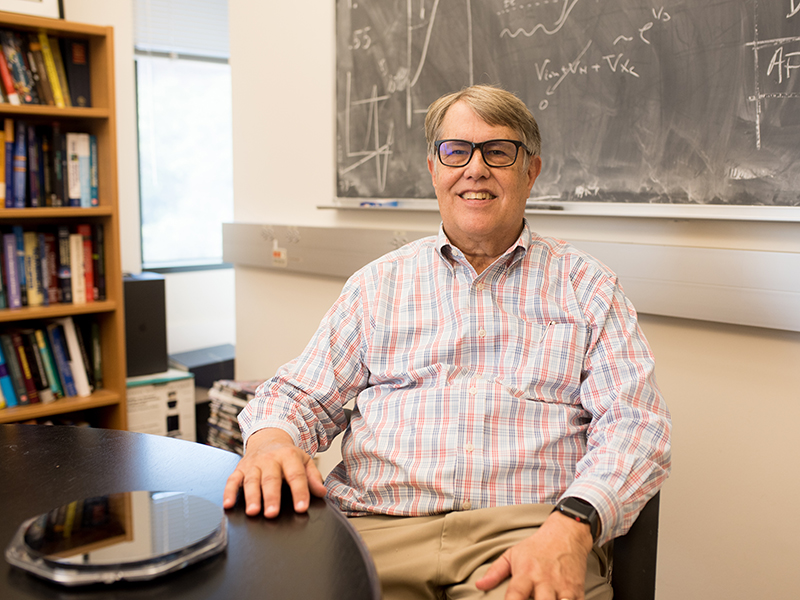
James Chelikowsky is Professor and W. A. "Tex" Moncrief, Jr. Chair in Computational Materials at The University of Texas at Austin's Oden Institute for Computational Engineering and Sciences (ICES). His research pioneers quantum mechanical simulations for materials design and discovery across multiple domains. His educational background includes: B.S. in Physics from Kansas State University (1970) Ph.D. in Physics from University of California at Berkeley (1975) Chelikowsky's research spans computational materials science with focus on quantum models for functionalized nanostructures, simulations of liquids and crystal growth, "green magnetism" in dilute magnetic semiconductors, oxide defects, materials informatics, and high-performance electronic structure algorithms. His work bridges theoretical physics with practical materials engineering to solve complex problems in energy and electronics. Analysis of his 2012-2022 publications reveals evolving focus from fundamental quantum simulations toward machine learning integration for magnetic materials discovery, while maintaining strong contributions to two-dimensional materials and interfacial phenomena. Key trends include increased computational complexity and interdisciplinary collaboration with experimental groups. His distinguished honors include: Feynman Prize for Theory (2022) FMD John Bardeen Award (2021) Aneesur Rahman Prize (2013) Multiple society fellowships (MRS, AAAS, APS) Guggenheim Fellowship (1996) As leader of an active research group, Chelikowsky mentors graduate students in computational methods development. While specific grant details aren't provided, his sustained publication record and named chair position indicate substantial ongoing research funding. His group maintains strong industry and national laboratory collaborations evident in co-authorship patterns. The Computational Materials Group operates through ICES with research facilities supporting high-performance computing for materials simulations. Current projects focus on machine learning-guided materials discovery and quantum mechanical modeling of novel electronic materials.
Ole Winther is a Professor at the Department of Biology, University of Copenhagen, specializing in Computational and RNA Biology. He also holds a joint appointment as Professor at DTU Compute, Technical University of Denmark. His research bridges machine learning, bioinformatics, and natural language processing with applications in biological sequence analysis, transcriptomics, and health informatics. Education: 1998: PhD in Physics, University of Copenhagen 1994: Master of Science in Physics, University of Copenhagen Winther's research focuses on developing advanced machine learning methodologies for biological applications. He has pioneered protein language models for sequence analysis (DeepLoc, SignalP, DeepTMHMM), interpretable deep learning for RNA subcellular localization, and benchmarking frameworks for DNA language models. His work spans latent variable models, variational inference, diffusion models, and novel architectures for deep generative modeling, with increasing emphasis on practical healthcare applications including rare disease diagnosis through findzebra.com and medical question answering with large language models. Scientific Recognition: ELLIS Fellow (2021) Head of ELLIS Copenhagen Unit H-index of 61 (Google Scholar, May 2023) 19,700+ citations (Google Scholar, May 2023) Winther has supervised 25+ PhD students to completion with 7 currently in progress, along with over 100 master's projects. He frequently serves as PhD opponent and committee chairman across European institutions. His research is supported by substantial funding including multiple Novo Nordisk Foundation grants totaling over 60 million DKK for the Center for Basic Machine Learning Research in Life Science and CAZAI projects, plus significant funding from the Danish Independent Research Fund. He leads an active research group developing cutting-edge machine learning approaches for bioinformatics and NLP challenges. Winther co-founded two spin-out companies: findzebra.com (2014, 2018), a search engine for rare diseases, and raffle.ai, an NLP startup for enterprise search. He initiated DTU's popular BSc in AI and Data program and teaches the highly enrolled MSc course in Deep Learning (450+ students) and PhD course in Bayesian Data Analysis.
Prof. Dr. Andrzej M Oleś serves as a Professor at the Institute of Theoretical Physics within the Faculty of Physics, Astronomy and Applied Computer Science at Jagiellonian University in Kraków, Poland. His research centers on condensed matter theory with emphasis on quantum materials and electronic structure phenomena. His primary research interests include spin-orbital coupling in transition metal compounds, electron correlation effects, doping mechanisms in metal oxides, and magnetic phenomena in antiferromagnetic/ferromagnetic systems. He employs advanced theoretical frameworks including model Hamiltonians and density functional theory to investigate quantum phases, lattice dynamics, and topological states in complex materials. Recent publications reveal a strong focus on kagome lattice systems (FeGe, RhPb), infinite-layer nickelates, and quantum computation optimization. His work demonstrates consistent exploration of charge density waves, topological surface states, and nonadiabatic quantum control across high-impact journals including Physical Review series and Condensed Matter. Oleś maintains an extensive international collaboration network with researchers from Italy, the United States, and other European institutions, as evidenced by co-authorship patterns across his publication record. His theoretical contributions address fundamental challenges in strongly correlated electron systems and quantum material design.
Professor Tony Jan leads the Centre for Artificial Intelligence Research and Optimisation (AIRO) at Torrens University Australia's Design and Creative Technology school. He holds a PhD in Computing Science from the University of Technology Sydney (2004) and a Bachelor of Engineering from the University of Western Australia (1999). His research focuses on federated machine learning for IoT security, ensembled machine learning for real-time applications, cognitive machines for human-centric computing, and smart sensor networks for healthcare and security. He has secured ARC grants and industry partnerships with NVIDIA, IBM, and Microsoft. Awards include the 2024 SEI Global Academic Excellence Award and the 2023 Torrens University Excellence Award. Research collaborations span global partners, with contributions to UN Sustainable Development Goals in education and industry. His work bridges academia and industry, expanding AI program enrollments by 2,000+ students and enhancing student satisfaction by 15%. He advises PhD students on topics like IIoT cybersecurity and smart cities, and has produced over 97 publications since 1999. Education: PhD (UTS, 2004), BEng (UWA, 1999) Research Themes: AI for Industry 5.0, Cybersecurity, Smart Cities, Healthcare Technology Key Partnerships: NVIDIA, CIMIC, Palo Alto Networks Recent Projects: Federated learning for health IoT, drone vision intelligence, ransomware detection His work emphasizes ethical AI adoption in design and healthcare, with publications exploring AI ethics, generative AI applications, and sustainable technology integration.