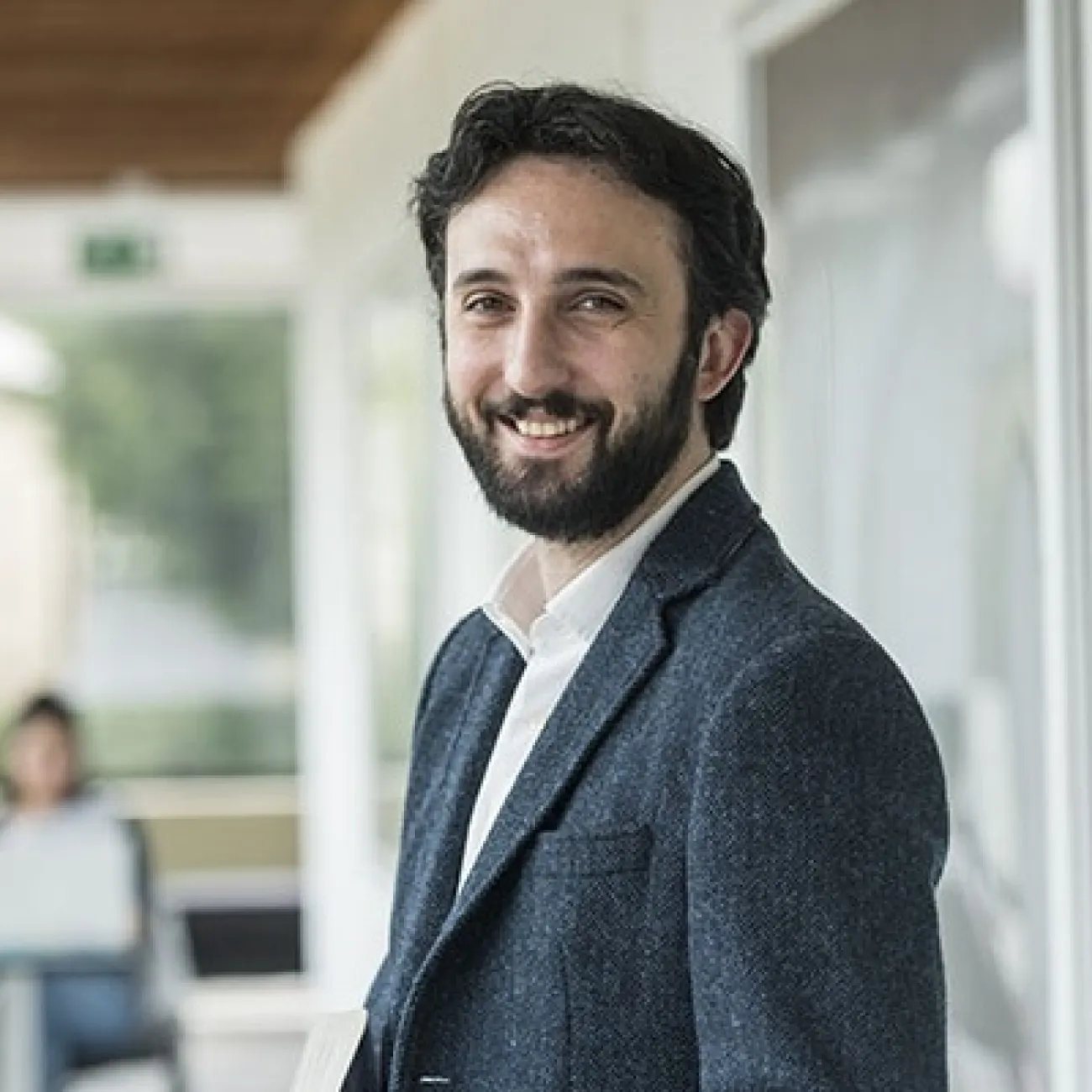
Alessandro Lucantonio is an Associate Professor at the Department of Mechanical and Production Engineering in Aarhus University , specializing in computational mechanics and machine learning applications in soft matter systems. His work focuses on predictive modeling of active materials, transient morphing structures, and biomedical device optimization. Research Areas: Soft robotics, machine learning for mechanics, poroelastic materials, and bioinspired design. Contact: a.lucantonio@mpe.au.dk , +45 93 51 77 76 His recent publications highlight interdisciplinary approaches combining symbolic regression, computational modeling, and experimental validation in soft robotics and responsive materials. Key trends include adaptive shape morphing, fluid-structure interactions, and predictive simulations for biomedical applications.
Professor Kenneth Dawson is a Full Professor of Physical Chemistry and Director of the Centre for BioNano Interactions (CBNI) at University College Dublin's School of Chemistry. A pioneering figure in bionanoscience, he founded the concept of the 'protein corona,' which defines engineered nanoparticles' biological identity. His career spans leadership roles at UCD since 2007 and academic positions at institutions like the University of California, Berkeley, and the University of Oxford. Prof. Dawson's research focuses on: Nanoscale interactions between synthetic materials and biological systems Protein corona dynamics and its impact on nanoparticle targeting Quantitative modeling of nanoparticle uptake and trafficking Design of smart delivery systems via surface engineering Shape-dependent immunomodulation and epigenetic effects His recent publications analyze: 2025: Nanoparticle shape-driven T cell receptor modifications 2023: Ultrasmall nanoparticle behavior in biological systems 2022: Epigenetic regulation via nanoscale spatial stress 2021: Magnetic nanoparticle recovery for intracellular trafficking studies Scientific honors include Fellow of the Royal Society of Chemistry (2017), Cozzarelli Prize (2008), and IBM Supercomputing Awards (1991). He serves on editorial boards for Nature Research and ACS Applied Bio Materials . As an educator, he has supervised multiple PhD students and coordinated modules in chemical thermodynamics. His grant portfolio includes EU-funded projects like HYBRID (2018-2022) and Bio-PADT (2023-2027), supporting interdisciplinary research in nanosafety and therapeutic applications.
Alberto Politi serves as an Associate Professor in the Department of Physics within the Faculty of Engineering and Physical Sciences at the University of Southampton. His research focuses on quantum photonics and integrated optical systems, with expertise in silicon nitride photonics, quantum emitters, and nanophotonic devices. Politi leads multiple research projects funded by EPSRC and the European Union, developing cutting-edge quantum technologies. His research interests span Quantum Photonics , Integrated Optics , and Nanophotonics , with specific focus on silicon-based quantum light sources, photonic crystal cavities, and phonon-polaritonic systems. Politi's work bridges fundamental quantum optics with practical implementations for quantum computing and communication. Analysis of his recent publications reveals a strong emphasis on silicon photonics platforms (2025-2019), quantum light generation (2020), and nanoscale spectroscopy techniques (2020-2018). His research consistently integrates materials science, quantum optics, and nanofabrication to advance quantum information processing capabilities. Politi actively supervises five PhD students pursuing research in quantum photonics and related fields. His current research projects include Monolithic generation detection of squeezed light in Silicon Nitride Photonics (EPSRC), Engineering single emitters in silicon based devices (EPSRC), Quantum Emitters for Telecommunication in the O-Band (European Union), and EU H2020 QUCHIP. As a member of the Quantum, Light and Matter Research Group, Politi collaborates extensively with researchers across Europe and contributes to advancing the quantum technology landscape through experimental and theoretical work on integrated photonic systems.
Prof. Dr. Stefan Sandfeld is the Director of the Institute for Advanced Simulation (IAS) at Forschungszentrum Jülich , leading the Materials Data Science and Informatics (IAS-9) group. His research focuses on integrating machine learning, data mining, and computational methods to address challenges in materials science, particularly in analyzing dislocation dynamics, microstructure evolution, and high-throughput microscopy data. Key areas include developing AI-driven tools for electron microscopy analysis, creating FAIR-compliant data ecosystems (e.g., Helmholtz Knowledge Graph), and advancing materials informatics for semiconductor and alloy systems. He spearheads projects like the NFDI-MatWerk consortium, aiming to standardize materials data management. His work bridges experimental and computational approaches, with applications in SiC crystal growth, dislocation modeling, and defect characterization. Recent contributions include self-supervised learning frameworks for microscopy images and ontology-based systems for dislocation data (DISO). His research also explores generative models for accelerated materials design and data-driven approaches for microstructure-property relationships. Scientific highlights include: High-throughput analysis of in-situ TEM experiments for dislocation dynamics. FAIR data ecosystems via semantic web technologies (e.g., Helmholtz Knowledge Graph). Machine learning for nanoindentation analysis and 4H-SiC wafer defect detection. He collaborates with Helmholtz institutes and industry partners, driving digitalization in materials science through interdisciplinary initiatives. His lab focuses on advancing AI tools for material discovery, process optimization, and understanding multiscale material behavior.
Stefano Frabboni is a Full Professor at the University of Modena and Reggio Emilia (UNIMORE) within the Department of Physical, Computer and Mathematical Sciences. His academic career focuses on experimental physics, particularly in electron microscopy and material science. He teaches courses such as General Physics III , The Profession of Physicist , and Physics Laboratory I , emphasizing mechanical and electromagnetic wave phenomena, data analysis, and laboratory techniques. His research interests span Electron Microscopy , Materials Science , and Quantum Physics , with a strong emphasis on Orbital Angular Momentum (OAM) applications in electron beam shaping and magnetic field analysis. He has contributed extensively to High Entropy Alloys , Computational Ghost Imaging , and Nanoscale Magnetic Spectroscopy . The articles reflect a focus on electron beam manipulation , phase shifts in materials , and high-resolution imaging techniques . Recent article trends include optimizing substrate bias voltage in HEA films , Mo content effects on coatings , enhancing TEM resolution via computational methods , and fabricating 3D nanoarchitectures with direct-write approaches. Sub-fields covered in his work are electron vortex generation , quantum state discrimination , OAM sorting , plasmonic excitation analysis , and defect characterization in semiconductors .
Amin Arbabian is an Associate Professor in the Department of Electrical Engineering at Stanford University. His research spans biomedical devices, sensing systems, and Internet of Things (IoT) technologies, with a focus on wireless power transfer and miniaturized sensor design. Education: BSc in Electrical Engineering, Sharif University of Technology (2005) MSc in Electrical Engineering and Computer Sciences, UC Berkeley (2007) PhD in Electrical Engineering and Computer Sciences, UC Berkeley (2011) Arbabian's lab specializes in end-to-end design of RF/microwave systems for medical implants, sensing interfaces, and terascale IoT networks. Key projects include ultrasonically powered implants for neural stimulation and drug delivery, mm-wave radar systems for gesture recognition, and ultrasound wake-up radios for ultra-low-power IoT devices. His recent publications highlight advancements in wireless neural implants, adaptive radar sensing, and photoelastic modulation for time-of-flight imaging. These works span disciplines including Electrical Engineering, Biomedical Engineering, and Applied Physics. Scientific Awards: Best Student Paper Award, ISSCC 2018 Best Student Paper Award, PIERS 2015 1st Place Best Paper Award, 2016 IEEE Biomedical Circuits and Systems Conference Best Student Paper Award, SPIE Security and Defense 2016 Arbabian collaborates with Stanford faculty in Chemistry, Comparative Medicine, and Radiology. His lab's funding sources include NSF, DARPA, NIH, ARPA-E, and ONR. The group also explores industrial applications like semiconductor manufacturing optimization with AI-driven digital twins.
Prof. Yang Li serves as Director of the Centre for Individualised Infection Medicine (CiiM) and heads the Department of Computational Biology for Individualised Medicine at CiiM and the Helmholtz Centre for Infection Research (HZI), affiliated with Hannover Medical School in Germany. Education: PhD in Bioinformatics, University of Groningen, 2010 Research Focus: Her work centers on deciphering molecular mechanisms of immune-related/infectious diseases through multi-omics integration, leveraging single-cell genomics , spatial transcriptomics , and machine learning to advance individualized infection medicine. Key methodologies include computational analysis of epigenetic regulation, immune cell phenotyping, and genetic epidemiology in disease contexts. Publication Trends: Recent 2025 work demonstrates strong emphasis on trained immunity (BCG vaccination studies), immune aging clocks , and spatial mapping of inflammatory niches in sarcoidosis/gout, with consistent multi-omics approaches across HIV comorbidities, transplant rejection, and metabolic surgery outcomes. Scientific Recognition: National Bioinformatics Young Investigator Award (2011) NWO-VENI grant (2013) ZonMW-Offroad grant Hypatia grant She has co-authored ~70 publications in journals including Cell , Nature Medicine , and Nature Immunology , and serves as reviewer for Nature Ecology & Evolution and Genetics . Laboratory Leadership: Directs the Computational Biology for Individualised Medicine group developing AI-driven tools for multi-omics data analysis, with recent focus on gene regulatory network benchmarks (geneRNIB) and spatial immune profiling.
Dr. Yong Ba is a Professor at California State University, Los Angeles, specializing in physical and biophysical chemistry with a focus on magnetic resonance spectroscopy, biomedical materials, and cryopreservation. His research bridges supramolecular chemistry, biomedical applications, and soft matter physics. Ph.D. from University of Duisburg-Essen Develops PEGylated cyclodextrins for drug delivery using NMR Investigates antifreeze proteins via site-directed spin labeling and EPR/NMR Designs hydrogels for mucosal adhesion and controlled release His work emphasizes advanced spectroscopy techniques (solid-state NMR, ¹²⁹Xe NMR, multiple quantum NMR) for structural and dynamic analysis in solids, gels, and liquids. Recent projects incorporate machine learning for optimizing drug encapsulation. His 15 most recent publications span 2025 to 2008, concentrating on cyclodextrin-based drug delivery systems, antifreeze protein mechanisms, hydrogel rheology, and fluorinated material design. Articles frequently employ NMR and EPR methods to study molecular interactions across biomedical and environmental applications. Dr. Ba's lab has secured grants from NIH, NSF, and DoD. He mentors undergraduate and graduate students in spectroscopy, synthesis, and data science. Current group members include Allanah Mouton, Andre K. Siu, and others. He operates advanced NMR facilities (Bruker 600WB, 400 MHz spectrometers) and an X-band EPR spectrometer, enabling multidisciplinary research across chemical, biomedical, and materials sciences.
Raffaella Buonsanti serves as an Associate Professor at École Polytechnique Fédérale de Lausanne (EPFL) within the School of Basic Sciences, holding multiple leadership roles including Director of SCGC Administration and Member of SB School Direction. She leads the Laboratory of Nanochemistry for Energy (LNCE) at EPFL Valais Wallis, focusing on cutting-edge nanomaterials research for energy applications. Her institutional affiliations span the Institute of Chemical Sciences and Engineering (ISIC), Swiss Center for Electronics and Microtechnology (SCGC), and Center for Digital Scholarship (CDS). Her research centers on nanomaterials synthesis for energy conversion , with particular expertise in colloidal nanocrystals, CO 2 electroreduction, and quantum dot applications. Key focus areas include: Designing tunable catalysts for CO 2 -to-fuel conversion Atomic-scale control of metal-oxide interfaces Stability mechanisms in electrocatalytic systems Data-driven nanocrystal shape prediction Hybrid quantum dot-molecular systems for energy transfer Current work emphasizes overcoming copper catalyst stability challenges through oxide coatings and liquid metal nanoparticle engineering. Analysis of her 15 most recent publications (2024-2025) reveals dominant research themes in electrocatalysis (73% of articles), nanomaterials synthesis (60%), and energy conversion (53%). Key technical advances include c-ALD-grown oxide shells for quantum dots, liquid gallium-based catalysts, and data-driven nanocrystal shape control. Her work consistently bridges fundamental surface science with industrial CO 2 electrolysis applications. She actively mentors 9 current PhD students and has supervised 11 graduates, with advisees researching copper nanocatalysts, CO 2 reduction mechanisms, and colloidal nanomaterials. Her teaching portfolio includes Introduction to Chemical Engineering Laboratory Works , Introduction to Transport Phenomena , and Nanomaterials for Chemical Engineering Applications . The LNCE laboratory under her direction develops colloidal synthesis methods for energy applications, with recent work focusing on solid-liquid electrocatalysts and quantum dot hybrid materials. Current projects emphasize scalable nanofoundry approaches and industrial implementation of CO 2 conversion technologies.
Koray Aydin is an Associate Professor of Electrical and Computer Engineering at Northwestern University's McCormick School of Engineering. He leads the Metamaterials and Nanophotonic Devices Lab (MNDL) and holds a joint appointment in the PhD Program in Applied Physics, with research spanning multiple departments and interdisciplinary collaborations. Dr. Aydin earned his Ph.D. in Physics from Bilkent University in 2008 and his B.S. in Physics from the same institution in 2002. His academic trajectory demonstrates a clear progression from foundational physics training to leadership in applied photonics research, culminating in his promotion to tenured Associate Professor. His research program centers on nanophotonics , strategically positioned at the intersection of electrical engineering, applied physics, materials science, and nanoscience. The MNDL investigates optical metamaterials, plasmonics, and solid-state nanophotonics to understand and manipulate light-matter interactions at the nanoscale. Current research thrusts include metamaterials for subwavelength light control, plasmonic absorption engineering, 2D materials for optoelectronics, inverse-designed millimeter-wave and optical metadevices, and tunable nanophotonic systems using phase transition materials like vanadium dioxide. His group employs advanced electromagnetic simulation, nanofabrication techniques, and nanoscale optical characterization to develop devices with novel functionalities. Analysis of his publication record reveals a strategic evolution toward machine learning-enabled inverse design methodologies and DNA-assembled dynamic metamaterials. Recent work demonstrates increasing focus on practical applications in telecommunications (including 5G networks), defense technologies, and healthcare diagnostics, with particular emphasis on creating tunable, reconfigurable optical systems that overcome traditional limitations of bulkiness and narrow bandwidth. Dr. Aydin's research has been recognized through invitations to present at prestigious conferences including SPIE Optics and Photonics and the Gordon Research Conference on Plasmonics and Nanophotonics. His work has received significant media attention, highlighted by Northwestern News, Newsweek, photonics.com, phys.org, and Science Daily, particularly for breakthroughs in DNA-assembled metamaterials and 3D-printed optical devices. As an educator and mentor, Dr. Aydin has successfully guided multiple graduate students through thesis completion, with alumni like Dr. Liu and Francois Callewaert transitioning to impactful careers in industry (Microsoft) and academia. His research program is supported by substantial external funding that sustains a vibrant team of postdocs, graduate students, and visiting researchers from institutions worldwide, including collaborations with Chad Mirkin's group on DNA-mediated nanoparticle assembly. The Metamaterials and Nanophotonic Devices Lab maintains state-of-the-art facilities for nanofabrication and optical characterization, while fostering international collaborations with researchers from Tel Aviv University and other institutions. Current projects focus on developing next-generation photonic devices with applications ranging from ultra-compact eyeglasses to invisible smartphone cameras and adaptive sensor systems for aerospace applications.
Xiulin Ruan is a Professor in the Department of Mechanical Engineering at Purdue University's College of Engineering, with joint appointments at the Birck Nanotechnology Center and Energy Center. He holds a B.S./M.S. in Engineering Thermophysics from Tsinghua University (2000, 2002) and an M.S. in Electrical Engineering/Ph.D. in Mechanical Engineering from the University of Michigan (2006, 2007). His research focuses on nanoscale energy transport , radiative cooling , and phonon physics , with emphasis on sustainable materials. Key innovations include ultrawhite radiative cooling paints (Guinness World Record, Time Magazine's 'Best Inventions of 2023'), four-phonon scattering theory (Brillouin Medal 2023), and machine learning applications in thermal science. His work bridges computational modeling (e.g., ab initio molecular dynamics) and experimental synthesis. Recent publications emphasize radiative cooling materials, phonon hydrodynamics, and anisotropic thermal transport, with trends toward machine learning-accelerated design and scalable manufacturing. Awards include: ASME McDonald Mentoring Award (2024) Brillouin Medal (2023) NSF CAREER Award (2012) SXSW Sustainability Innovation Award (2023) He directs the Nanoscale Energy Transport and Conversion Laboratory , advising 40+ graduate students. Alumni include 15 faculty members (e.g., Tianli Feng, University of Utah). Major grants include DARPA and NSF funding for phononics and sustainable cooling technologies.
Aaron Scurto is a Professor in the Department of Chemical and Petroleum Engineering at the University of Kansas. His research focuses on enzyme catalysis in non-aqueous solvents, extractive fermentation, and pharmaceutical/biomaterials processing using compressed carbon dioxide. Research Trends : His recent work emphasizes thermodynamic modeling of ionic liquids, refrigerant separation via extractive distillation, CO2-induced polymer processing, and sustainable chemical synthesis. Applications : Explores ionic liquids for refrigerant recycling, CO2-based polyester upcycling, and enzyme-catalyzed biotransformations.
Dr. Hongyang Cheng is an Assistant Professor at the University of Twente's Civil Engineering & Management Department, specializing in multi-scale modeling of granular materials and Bayesian uncertainty quantification for geotechnical applications. His work bridges physics-based and data-driven approaches, focusing on soil mechanics from quasi-static to dynamic behaviors, with applications in geohazard mitigation, laser sintering, and pharmaceutical powder processing. Education: PhD in Multiscale characterization of geosynthetic-reinforced soil, Hiroshima University (2013–2016) Master's in Civil Engineering, Hiroshima University (2011–2013) Dr. Cheng's research spans multi-scale modeling of granular materials, including Discrete Element Method (DEM) and Finite Element Method (FEM) integrations, and Bayesian uncertainty quantification frameworks like GrainLearning. His work addresses geotechnical challenges such as dike safety, offshore infrastructure resilience, and soil-structure interactions under extreme loading, utilizing machine learning surrogates to enhance computational efficiency. Scientific awards include the Japanese Government Scholarship (2011), Best Student Paper at DEM2016, and IACMAG Excellence in 2022. He leads EU-funded projects like POSEIDON (offshore geohazards) and TUSAIL (upscaling particle systems), supervises postdocs/PhD students, and co-leads Working Group 1 for COST Action ON-DEM to promote open-source DEM tools. Recent publications emphasize DEM's role in bio-cemented soils, vegetation effects on soil mechanics, and sintering kinetics. His teaching includes undergraduate courses on Soil Mechanics and graduate-level GeoRisk Management, integrating probability theory, stochastic modeling, and Python-based risk assessment tools.
Vincent McFarlane is an Assistant Professor in Water Resources Engineering at the Department of Civil and Environmental Engineering, Faculty of Engineering, University of Alberta. He is part of the River Ice Research Group at the University of Alberta, with his research primarily focused on ice formation and the river freeze-up process. Dr. McFarlane teaches courses including CIV E 330 - Introduction to Fluid Mechanics and CIV E 739 - Advanced Topics in Fluid Mechanics and Hydraulics. Dr. McFarlane received his educational background entirely from the University of Alberta: Ph.D. in Water Resources Engineering (2014-2018) - Thesis: "Laboratory and Field Measurements of Frazil Ice Characteristics" M.Sc. in Water Resources Engineering (2011-2013) - Thesis: "Laboratory Studies of Suspended Frazil Ice Particles" B.Sc. in Civil Engineering (2007-2011) Dr. McFarlane's research interests center around river ice processes, with a particular focus on frazil and anchor ice formation, river supercooling and energy budget, and ice jam flooding. His work combines experimental field and laboratory studies to investigate ice formation mechanisms in rivers, with emphasis on how these processes affect river hydraulics and morphology. His research spans from fundamental ice physics to practical applications for flood management and infrastructure design in cold regions. Dr. McFarlane has received numerous scientific awards and recognitions for his work, including: NSERC Postdoctoral Fellowship NSERC Postgraduate Scholarship - Doctoral Graduate Student Teaching Award President's Doctoral Prize of Distinction R. Larry Gerard Medal Queen Elizabeth II Graduate Scholarship Best Student Paper Award from IAHR Best Student Paper Prize from CGU-HS Committee on River Ice Processes As a passionate teacher, Dr. McFarlane enjoys sharing the wonders of water resources engineering with students of all ages. He has professional experience in both academia and industry, having worked as a Hydrotechnical Specialist at Stantec Consulting Ltd. before joining the University of Alberta as an Assistant Professor. He is also a Professional Engineer (P.Eng.) registered with the Association of Professional Engineers and Geoscientists of Alberta (APEGA).
Alison Altman is an Assistant Professor of Chemistry at Texas A&M University, leading the Altman Chem Lab. She holds a Ph.D. in Chemistry from the University of California, Berkeley (2017), and B.S. from Yale University (2012). Her postdoctoral research included stints at MIT and Northwestern University. Her research focuses on discovering novel inorganic materials through high-pressure chemistry, particularly exploring f-element and heavy main-group elements. Key interests include quantum materials, superconductivity, magnetic ordering, and topological phenomena. Techniques employed include high-pressure synthesis, synchrotron X-ray spectroscopy, and computational modeling. Recent work emphasizes lanthanide intermetallic materials, 2D heavy-element materials, and low-valent f-element complexes. Her lab seeks students interested in solid-state chemistry, quantum materials, and advanced characterization methods. Awards: Nuclear Energy University Program Fellow (2013–2016), International Institute of Nanotechnology Fellow (2017–2018) Publications: Over 20 peer-reviewed articles in high-impact journals like J. Am. Chem. Soc. , Chem. Sci. , and Phys. Rev. Lett. Research highlights include computationally directed discovery of MoBi₂ and pressure-induced magnetic behavior in perovskites. Current projects target quantum simulators, 2D material exfoliation metrics, and reductive lanthanide chemistry.