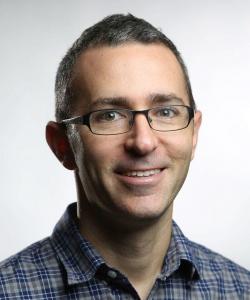
Lucas Janson is an Associate Professor of Statistics and Affiliate in Computer Science at Harvard University. He leads the Harvard Statistical Consulting Service, supervising PhD students advising hundreds of researchers annually. His research focuses on high-dimensional inference, statistical machine learning, and applications in genetics, political science, and climatology. He teaches courses such as Statistical Inference I, Reinforcement Learning, and Statistical Machine Learning. His work bridges theoretical advancements with practical applications, including contributions to robotics motion planning and microbiome data analysis. Key research areas include variable importance inference, safe reinforcement learning, compositional data analysis, and robust paleoclimate reconstructions. His methodologies are implemented in software packages like Floodgate, EigenPrism, and Fast Marching Tree (FMT*). He advises a dynamic group of PhD students and has mentored alumni now in academia and industry roles. Notable contributions include the development of model-X knockoffs for controlled variable selection, conditional randomization tests, and optimization algorithms for adaptive control systems. His work emphasizes statistical rigor while addressing real-world challenges in healthcare, environmental science, and robotics.
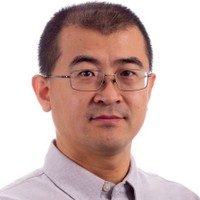
Zhibo Pang is an Adjunct Professor at KTH Royal Institute of Technology's Department of Intelligent Systems (EECS) and Senior Principal Scientist at ABB Corporate Research Sweden. His work focuses on digital transformation in industry and healthcare, spanning robotics, AI, control systems, and wireless communication. He leads projects in embodied intelligence, Industry 4.0, and Healthcare 4.0, with 23 granted patents and over 120 journal papers. Education: PhD in Electronic and Computer Systems (KTH, 2013), MBA in Innovation & Growth (University of Turku, 2012). Key Roles: IEEE Technical Committee Chair, Editor of 6 IEEE journals, ABB Inventor of the Year (2016, 2018, 2021). Research Interests: Robotics safety, wireless automation, federated learning, digital twins, and IoT security. Recent Projects: Cloud-fog automation frameworks, robot skin systems for healthcare, and latency-aware industrial control. His work bridges academia and industry through cross-functional collaborations.
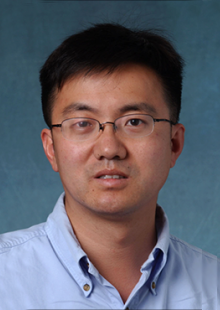
H. Jerry Qi is a Professor in the Department of Mechanical Engineering at the Georgia Institute of Technology. He specializes in finite deformation multiphysics modeling of soft active materials, with a focus on shape memory polymers, 4D printing, and material recycling. His research integrates experimental and computational approaches to advance additive manufacturing technologies. Education: Sc.D., Massachusetts Institute of Technology, 2003 Ph.D., Tsinghua University, China, 1999 B.S., Tsinghua University, China, 1994 Research Interests: Dr. Qi's work spans 4D printing of active materials, mechanics in 3D printing, and sustainable polymer processing. His group develops hybrid printing methods and recyclable thermosetting polymers, collaborating with institutions like SUTD and AFRL. Key areas include smart material design, photomechanical experiments, and finite element modeling. Scientific Awards: ASME Fellow (2015) Woodruff Faculty Fellow (2015) J. T. Oden Faculty Fellowship (2012) NSF Career Award (2007) Advising & Grants: Dr. Qi actively seeks undergraduate, PhD, and postdoc researchers. His projects are funded by NSF, AFOSR, and industry partnerships. He leads a research group focused on advancing active materials and sustainable manufacturing. Labs & Teams: His lab integrates computational modeling, experimental mechanics, and additive manufacturing to create innovative materials and structures for applications in aerospace, biomedical, and environmental engineering.
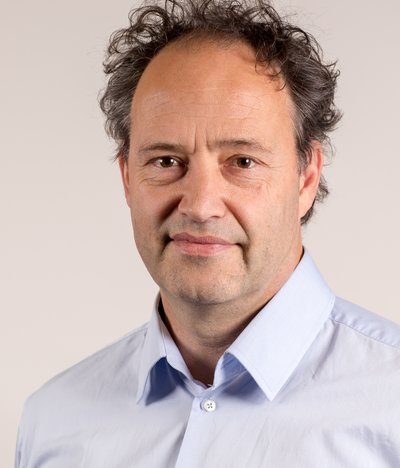
Bart Somers is an Associate Professor at Eindhoven University of Technology , affiliated with the Department of Mechanical Engineering . His primary affiliations include the Power & Flow Group and his own research group, Group Somers , alongside cross-cutting roles in EAISI (Eindhoven Artificial Intelligence Systems Institute) and EIRES (Eindhoven Research on Innovation and Sustainability in Energy Systems). He focuses on advancing combustion science , sustainable fuels , and engine efficiency , leveraging computational fluid dynamics (CFD) and experimental methods. His research interests span alternative fuels (hydrogen, bio-oils, biofuels), high-pressure spray combustion , and low-emission engine design . He investigates combustion optimization through CFD tools like large-eddy simulation (LES) and flamelet-generated manifolds (FGM), emphasizing fuel stratification , ignition dynamics , and emission control . His work bridges experimental diagnostics (e.g., spray visualization, OH* chemiluminescence) and numerical modeling. Academically, he teaches courses such as Thermodynamics , Clean Engines and Future Fuels , and Sustainable Vehicles , integrating practical projects into curricula. His educational activities emphasize interdisciplinary sustainability and innovation, including honors programs focused on professional development. Recent publications highlight his contributions to hydrogen injection strategies, biofuel applications in genset engines, and optimization of diesel-biofuel blends. His work aligns with global sustainability goals, addressing energy transition challenges through advanced combustion technologies.
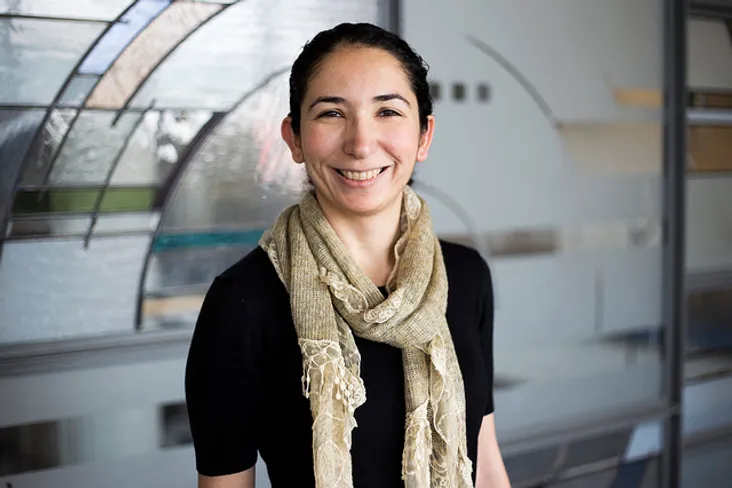
Necmiye Ozay is an Associate Professor in Robotics and Electrical and Computer Engineering at the University of Michigan. Her research focuses on control systems, formal methods, and cyber-physical systems, with applications in autonomy, system identification, and verification. She leads a diverse research group encompassing PhD, MS, and undergraduate students, as well as postdoctoral researchers. Her work bridges theory and practice, addressing challenges in safety-critical systems design and data-driven control. Her educational background includes a PhD in Electrical and Computer Engineering from Northeastern University and a Master’s from Penn State. She has received significant funding from NSF, ONR, and industry partners, supporting projects like the CLEVR-AI initiative and Scenic ecosystem development. Her research has been recognized through awards and collaborations at institutions like MIT, Berkeley, and Johns Hopkins. Key research areas include model-based control synthesis, robust system identification, and anomaly detection in cyber-physical systems. Notable contributions include methods for correct-by-construction control, hybrid system analysis, and learning-based approaches for autonomous systems. She actively contributes to conferences such as HSCC and CDC, and her lab’s work impacts automotive safety, energy systems, and robotics. Ozay’s advising spans over 50 students and postdocs, many of whom hold academic or industry roles. Her lab maintains active collaborations across disciplines, emphasizing interdisciplinary solutions to real-world control challenges.
Yuxin Chen is a Professor at the University of Pennsylvania , holding joint appointments in the Department of Statistics and Data Science and the Department of Electrical and Systems Engineering . Prior to UPenn, he was an Assistant Professor at Princeton University (2017-2021) and a Postdoctoral Researcher at Stanford University (2015-2017). His research spans statistics, optimization, reinforcement learning theory, diffusion models, and information theory , with a focus on theoretical foundations and practical algorithms for machine learning. Education : Ph.D. in Electrical Engineering (Stanford, 2015), M.S. in Statistics (Stanford, 2013), M.S. in Electrical and Computer Engineering (UT Austin, 2010), B.E. in Electrical/Microelectronics (Tsinghua, 2008). Research Interests encompass theoretical and applied aspects of machine learning, including nonconvex optimization , sample complexity analysis , low-dimensional adaptation , and generative modeling . His work bridges mathematical rigor with real-world applications, particularly in scientific imaging and high-dimensional data analysis. Scientific Awards include the SIAM Activity Group on Imaging Science Best Paper Prize (2024) Alfred P. Sloan Fellowship (2022) NSF Career Award (2022) Google Research Scholar Award (2022) IEEE Transactions on Power Electronics Prize Paper Award (2024) Advising and Grants : He has mentored numerous students who have transitioned to academic roles at institutions like UIUC and UW-Madison. His research is supported by grants from the NSF , Amazon , and Google , with recent projects focusing on controllable diffusion models and efficient reinforcement learning algorithms .
Saurabh Amin is a Professor in the Department of Civil and Environmental Engineering at the Massachusetts Institute of Technology (MIT), where he also serves as the Edmund K. Turner Professor and Undergraduate Officer. He is a Principal Investigator at the Laboratory of Information and Decision Systems and holds affiliations with the Operations Research Center and the Center for Computational Science and Engineering. His educational background includes: B.Tech. 2002, Indian Institute of Technology (IIT) Roorkee M.S. 2004, University of Texas (UT) Austin Ph.D. 2011, University of California (UC) Berkeley Saurabh Amin's research focuses on the design and control of infrastructure systems using game theory and optimization in networks. His work spans three main areas: resilient network control, information systems and incentive design, and optimal resource allocation in large-scale infrastructure systems. By concentrating on critical infrastructure domains including highway transportation, electric power distribution, and urban water networks, his research develops innovative theory and tools to enhance system performance against both stochastic and adversarial disruptions. His approach involves modeling cyber-physical interactions in infrastructures to assess vulnerabilities, developing detection and response tools for failures at various scales, and designing economic incentive schemes that improve aggregate public good while accounting for dependencies and private information among strategic entities. Amin's work bridges mathematical systems theory with practical civil engineering applications, creating a rigorous theoretical foundation for infrastructure resilience that addresses diverse failure mechanisms from natural disasters to deliberate malicious actions. His recent publications demonstrate a strong focus on decarbonization of energy systems, resilient infrastructure planning under climate uncertainty, optimization methods for complex networked systems, and game-theoretic approaches to sustainable infrastructure management. His work increasingly integrates artificial intelligence and machine learning techniques with traditional control theory to address contemporary challenges in infrastructure resilience and sustainability. The research shows a clear trajectory toward addressing climate change impacts on infrastructure systems while maintaining economic efficiency and operational reliability. Professor Amin has received numerous prestigious awards and honors: Common Ground Excellence in Teaching Award, 2025 HSCC Test-of-Time Award, 2024 MIT CEE, Distinguished Service and Leadership Award, 2023 Samuel M. Seegal Prize (SoE) – inspiring students in pursuing and achieving excellence, 2022 Earll M. Murman for Excellence in Undergraduate Advising, 2022 C3.ai Digital Transformation Institute Research Award, 2020 MIT, Ole Madsen Mentoring Award, 2020 MIT, Energy Initiative Research Award, 2020 National Academy of Engineering, China-America Frontiers of Engineering Symposium speaker, 2019 MIT, Robert N. Noyce Career Development Professor, 2015-2018 Google Faculty Research Award, 2015 National Science Foundation CAREER Award, 2015 Siebel Energy Institute Research Award, 2015 MIT, Solomon Buchsbaum AT&T Research Fund Award, 2012 Professor Amin has been actively involved in significant research projects including the C3.ai DTI project on Causal Reasoning for Real-Time Attack Identification in Cyber-Physical Systems and another on Learning in Routing Games for Sustainable Electromobility. He serves as the chief scientist on multi-institutional NSF grants, including the $9 million Foundations of Resilient Cyber-Physical Systems (CPS) project. His teaching portfolio includes courses such as 1.008 Engineering for a Sustainable World, 1.104 Sensing and Intelligent Systems, 1.020 Engineering Sustainability: Analysis and Design, and 1.208 Resilient Networks. As Undergraduate Officer, he plays a key role in shaping the educational experience for civil and environmental engineering students at MIT. Professor Amin leads the Resilient Infrastructure Networks Lab at MIT, where his team develops theoretical foundations and practical tools for infrastructure resilience. The lab focuses on the intersection of control theory, game theory, and optimization applied to cyber-physical infrastructure systems. Current research directions include pandemic-resilient urban mobility and hurricane-resilient smart grid operations, reflecting the lab's commitment to addressing pressing societal challenges through rigorous systems engineering approaches.
Brice Kuhl is a Professor in the Department of Psychology at the University of Oregon , where he leads the Kuhl Lab. His research focuses on the cognitive neuroscience of memory formation, retrieval, and forgetting , utilizing advanced neuroimaging techniques like fMRI and EEG combined with machine learning algorithms to analyze distributed neural activity patterns. His work explores mechanisms of memory interference resolution , forgetting , and neural representation transformation . Recent publications emphasize spaced learning , temporal memory dynamics , and memory-cognitive control interactions . The lab has received attention for decoding perceptual content from neural activity and reconstructing face images based on brain states. Current lab members include graduate students Anisha Babu , Tongle Cai , and America Romero , alongside postdocs like Soroush Mirjalili and Yoonjung Lee . The lab frequently presents at conferences like CNS and SFN , and maintains active collaborations in memory research and neuroimaging methodology . Notable projects include investigations into hippocampal pattern differentiation and parietal cortex roles in memory . The lab also contributes to open science initiatives with publicly available experimental codes and data .
Camillo J. Taylor is the Raymond S. Markowitz President’s Distinguished Professor in the Department of Computer and Information Science at the University of Pennsylvania , where he has been a faculty member since 1997. He also serves as Associate Dean for Diversity, Equity, and Inclusion at the School of Engineering and Applied Science. His research focuses on Computer Vision and Robotics , particularly in 3D reconstruction, semantic mapping, and autonomous navigation. Education: A.B. in Electrical Computer and Systems Engineering, Harvard College (1988) M.S. and Ph.D. in Computer Science, Yale University (1990, 1994) Research Interests: Dr. Taylor’s work bridges Computer Vision and Robotics to enable autonomous systems to perceive and navigate complex environments. Key themes include semantic SLAM, event camera applications, and meta-learning for adaptive controllers. His projects often integrate vision, physics, and multi-agent collaboration, as seen in systems like EvMAPPER and OCCAM . Recent Article Trends: His 2024–2025 publications focus on semantic mapping , event-based vision , and multi-agent LLM systems , reflecting his lab’s emphasis on real-time perception, physics-informed reconstruction, and rational decision-making in robotics. These works span applications from solar eclipse imaging to wildfire analysis and natural hazard resilience. Awards: NSF CAREER Award (1998) Lindback Minority Junior Faculty Award (2001) IEEE WACV Best Paper Award (2012) Lindback Distinguished Teaching Award (2012) Advising and Service: Dr. Taylor has advised numerous PhD students, including Jason Hughes and Bowen Jiang. He has served as a Program Chair for CVPR (2006, 2017) and General Chair for ICCV (2021). His contributions to the GRASP Laboratory have advanced autonomous micro-UAVs and semantic SLAM.
Karl Henrik Johansson is a Professor at the School of Electrical Engineering and Computer Science, KTH Royal Institute of Technology in Stockholm, Sweden, where he also serves as the Founding Director of Digital Futures. He is a Fellow of both IEEE and the Royal Swedish Academy of Engineering Sciences, and has held leadership positions including Immediate Past President of the European Control Association and IEEE Control Systems Society Vice President Diversity, Outreach & Development. Dr. Johansson earned his MSc in Electrical Engineering and PhD in Automatic Control from Lund University. His academic journey includes visiting positions at prestigious institutions such as UC Berkeley, Caltech, and NTU. His research focuses on networked control systems and cyber-physical systems with applications in transportation, energy, and automation networks. His work investigates fundamental challenges in connecting physical world systems through communication networks, exploring how wireless communication and sensor technology can enhance system robustness, reliability, energy efficiency, and safety. Current research directions include security of cyber-physical systems, distributed optimization, multi-agent systems, and applications to intelligent transportation and energy networks. Analysis of his recent publications reveals a strong focus on distributed optimization algorithms, secure networked control, multi-agent systems, and applications to transportation and energy networks. His work increasingly integrates machine learning techniques with traditional control theory, addressing challenges in privacy-preserving distributed computation, resilient state estimation, and resource allocation in complex networked systems. IEEE Control Systems Society Hendrik W. Bode Lecture Prize (2024) Swedish Research Council Distinguished Professor (2018-2027) Wallenberg Scholar (2009-2026) IFAC Young Author Prize IEEE CSS Distinguished Lecturer (2017-2019) IFAC Outstanding Service Award IEEE Fellow Dr. Johansson has supervised over 100 postdocs and PhD students, with many now holding prominent positions at institutions worldwide. His research has been supported by significant grants including the Swedish Research Council Distinguished Professor Grant (2018-2027), multiple Wallenberg Foundation grants, and numerous EU and national research projects. He has directed major research centers including ACCESS Linnaeus Centre (2009-2016) and Strategic Research Area ICT TNG (2013-2020). His research group operates within the Digital Futures initiative and maintains strong connections with industry partners through projects like the Integrated Transport Research Lab (supported by Scania and Ericsson) and Smart Mobility Lab. The group actively collaborates with international institutions and participates in major EU-funded projects addressing challenges in cyber-physical systems, transportation, and energy networks.
Jiaxin Lin is an Assistant Professor in the Department of Electrical and Computer Engineering at Cornell University , affiliated with the Computer Systems Laboratory . She earned her Ph.D. in Computer Science from UT Austin (2025) , preceded by an M.S. from University of Wisconsin-Madison and a B.S. from ShenYuan Honors College at Beihang University. Her research focuses on co-designing software and hardware systems to enable high-performance data center communication, particularly through: Programmable network interface controllers (SmartNICs) Terabit network system stacks Cache/memory interconnects Compilers for in-network computing Chip-to-chip interconnects Her work addresses challenges in portability across heterogeneous SmartNICs, demonstrated through the development of the Alkali compiler framework (NSDI '25). Key themes include hardware abstraction, data center scalability, and network-compute co-design. Scientific Awards: Google Junior Faculty Award (2025) MIT EECS Rising Star (2024) Google Ph.D. Fellowship (2021) Meta Ph.D. Fellowship (2021)
Dhruv Shah is an Incoming Assistant Professor of Electrical and Computer Engineering at Princeton University starting January 2026 and currently serves as a Senior Research Scientist at Google DeepMind. He is also an Associated Faculty member in Princeton's Center for Statistics and Machine Learning, focusing on the convergence of machine learning and robotics for real-world deployment. His academic credentials include a Ph.D. and M.S. in Electrical Engineering and Computer Sciences from the University of California, Berkeley (2024) and a B.Tech. (Honors) in Computer Science and Engineering from the Indian Institute of Technology, Bombay (2019). Shah's research pioneers foundation models for robotics, emphasizing large-scale robot learning, out-of-distribution generalization, and long-horizon reasoning. His group adopts a full-stack methodology spanning algorithmic innovation to system design, drawing from cognitive science to develop physical AI systems at the perception-learning-control interface. Key focus areas include reinforcement learning, human-robot interaction, and continual learning for challenging environments. Analysis of his 15 most recent publications reveals dominant trends in foundation models for visual navigation, language-conditioned policies, and multi-agent systems. His work increasingly integrates multimodal inputs (vision, language) while addressing generalization gaps in real-world settings, with strong emphasis on efficient data curation and scalable robot learning frameworks. His accolades feature the Microsoft Future Leaders in Robotics & AI Fellowship (2024), two IEEE ICRA Best Conference Paper Awards (2024), multiple ICRA finalist awards across cognitive robotics and manipulation categories, and the Berkeley Fellowship (2019-2024). Shah will recruit PhD students for Princeton's upcoming admissions cycle, establishing a research group dedicated to full-stack robotics development. While specific grant details aren't provided, his trajectory indicates significant funding for AI-robotics convergence projects, particularly in foundation model development and real-world deployment challenges. His laboratory at Princeton will integrate algorithmic innovation with system design, focusing on physical AI systems that bridge perception, learning, and control while maintaining strong ties to cognitive science principles for human-aligned robotic intelligence.
Zsolt Kira serves as an Assistant Professor in the School of Interactive Computing at Georgia Institute of Technology's College of Computing, with additional affiliations at the Georgia Tech Research Institute and as Associate Director of ML@GT. He leads the Robotics Perception and Learning (RIPL) Lab, driving research at the intersection of machine learning and robotics. Dr. Kira earned his Ph.D. in 2010 under Professor Ron Arkin, establishing foundational expertise in robotics and AI before transitioning to his current academic role after industry experience at SRI International Sarnoff. His research pioneers beyond supervised learning through unsupervised, semi-supervised, self-supervised, and continual/lifelong learning frameworks, while advancing distributed perception via multi-modal fusion and cross-robot information integration. This dual focus addresses core challenges in robotic autonomy and sensor processing. Analysis of his 15 most recent publications reveals dominant trends in embodied AI systems, robust foundation model adaptation, and multimodal learning architectures. Key themes include neural radiance field applications, reinforcement learning for locomotion, and novel benchmarks for memory evaluation in agents. While specific advisees and grants aren't documented in the source material, his RIPL Lab leadership implies active graduate mentorship and research funding acquisition. The lab's work directly enables next-generation robotic systems through algorithmic innovation in perception and learning. The RIPL Lab operates as a hub for developing machine learning techniques that solve difficult perception problems in robotics, with particular emphasis on unsupervised learning paradigms and distributed multi-robot systems that push the boundaries of autonomous operation.
Amir-massoud Farahmand is an Associate Professor at the Polytechnique Montréal (Department of Computer and Software Engineering) and a Status-Only Associate Professor at the University of Toronto (Department of Computer Science). He is also a Core Academic Member at Mila (Quebec AI Institute). His research focuses on computational and statistical mechanisms for designing efficient reinforcement learning (RL) agents and adaptive algorithms. Dr. Farahmand's research spans reinforcement learning, optimal transport, adversarial robustness, and model-based methods. He has extensively studied regularization in RL, distributional approaches, and algorithm design for stability and convergence. His textbook Lecture Notes on Reinforcement Learning (2021) emphasizes mathematical intuition over algorithmic collections. Recent publications highlight trends in high-update-ratio RL, distributional equivalence, and self-prediction for task understanding. He is actively involved in teaching, having previously instructed courses on machine learning, neural networks, and RL at the University of Toronto. Scientific Awards : Ontario Early Researcher Award (2024) for Accelerated Reinforcement Learning Algorithms Dr. Farahmand has mentored numerous students, including his first PhD graduate Yangchen Pan (now at Oxford) and MSc students like Allen Bao (AMD) and Farnam Mansouri (University of Waterloo). He is currently recruiting graduate students at Polytechnique Montréal and Mila for 2025 admissions.
Dr. Kaibo Liu is the Grainger STAR Professor in the Department of Industrial and Systems Engineering at the University of Wisconsin-Madison and serves as Associate Director of the UW-Madison IoT Systems Research Center. He earned his B.S. from the Hong Kong University of Science and Technology (2009), and M.S. and Ph.D. from Georgia Tech (2011/2013). His research focuses on system informatics, big data analytics, and data fusion for process modeling, monitoring, and decision-making. He has been funded by NSF, ONR, DOE, and industry partners. Notable awards include the 2024 Hromi Medal (ASQ), 2021 IISE Technical Innovation Award, and multiple early-career recognitions. Recent work emphasizes real-time cyber-physical security, reinforcement learning for data streams, and Bayesian methods for prognosis. He edits IEEE Transactions on Automation Science and Engineering and IISE Transactions on Data Science.