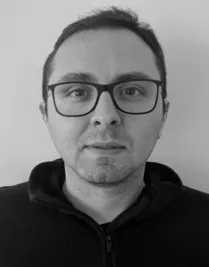
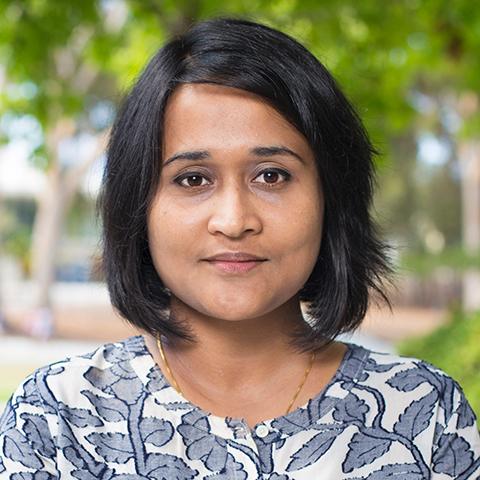
Leonardo Tonetto is a researcher at Technical University of Munich (TUM) within the Chair of Connected Mobility, working under Prof. Jörg Ott. His office is located in FMI 01.05.038 and he maintains an active presence in both academic research and open-source development with significant GitHub contributions (19 repositories, 73 stars). His work bridges theoretical research and practical implementation in mobility systems. Dr. Tonetto's research spans Mobile User Modeling , Deep Learning & Data Analysis , Signal Processing , and Complex Networks . His work demonstrates particular expertise in extracting meaningful patterns from human mobility data while addressing critical privacy concerns. Recent publications show increasing focus on ethical implications of location-based data and energy-efficient computing for augmented reality applications. Analysis of his publication record from 2014-2025 reveals a consistent research trajectory evolving from fundamental mobility pattern analysis toward more complex systems integrating privacy considerations and energy efficiency. His work increasingly intersects computer science with social implications, particularly in location-based services and epidemic modeling. The research shows strong methodological diversity, employing machine learning, network analysis, and signal processing techniques across various application domains. Through his GitHub profile and open-source contributions, Tonetto demonstrates commitment to reproducible research and community engagement. His technical skills span multiple programming languages and systems, supporting both theoretical research and practical implementation of mobility-aware systems. While specific grant information isn't publicly available, his consistent publication output suggests successful research funding.
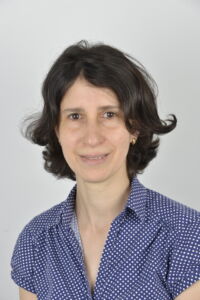
Michael M. Zavlanos is the Yoh Family Professor in the Thomas Lord Department of Mechanical Engineering and Materials Science at Duke University's Pratt School of Engineering. He also holds secondary appointments in the Department of Computer Science and the Department of Electrical and Computer Engineering. Currently serving as the Director of the Healthcare Systems Optimization program with Duke AI Health and as an Amazon Scholar with Amazon Robotics, his academic career spans control theory, optimization, and artificial intelligence with applications across multiple domains. Dr. Zavlanos received his educational foundation from prestigious institutions: Diploma in Mechanical Engineering from the National Technical University of Athens (NTUA), Greece (2002) M.S.E. in Electrical and Systems Engineering from the University of Pennsylvania (2005) Ph.D. in Electrical and Systems Engineering from the University of Pennsylvania (2008) His research program spans multiple interconnected domains, with a strong foundation in control theory, optimization, and learning methodologies . This theoretical work directly enables applications in robotics and autonomous systems , where his team develops algorithms for multi-robot coordination, motion planning under complex constraints, and network connectivity maintenance. A significant portion of his work addresses networked and distributed control systems , focusing on how multiple agents can coordinate effectively with limited communication. More recently, he has expanded his research into cyber-physical systems with healthcare applications, leveraging his expertise to optimize healthcare delivery systems through the Duke AI Health initiative. Dr. Zavlanos' work demonstrates a consistent trajectory from theoretical foundations to real-world applications. His early work established fundamental principles for maintaining connectivity in mobile robot networks, which evolved into more sophisticated approaches for temporal task planning and risk-averse decision making in uncertain environments. The most recent phase of his research integrates machine learning with traditional control theory to address complex healthcare system optimization problems. His significant contributions to the field have been recognized through prestigious awards: Office of Naval Research Young Investigator Program (YIP) Award (2014) National Science Foundation Faculty Early Career Development (CAREER) Award (2012) National Science Foundation Faculty Early Career Development (CAREER) Award (2011) Duke University Distinguished Faculty Rank (2019) Duke University Distinguished Professor designation (2018) As an educator, Dr. Zavlanos has taught courses including ME 627: Linear System Theory, ME 592: Research Independent Study, ECE 391/291: Projects in Electrical and Computer Engineering, and CEE 627: Linear System Theory. His research program has been supported by multiple grants from the National Science Foundation and the Office of Naval Research, enabling him to mentor numerous graduate students and postdoctoral researchers in the development of cutting-edge control and optimization algorithms. Dr. Zavlanos leads research efforts at the intersection of control theory, optimization, and artificial intelligence, with particular focus on translating theoretical advances into practical applications. His recent work with Duke AI Health represents a strategic expansion of his research portfolio into healthcare systems optimization, where he applies his expertise in algorithmic decision making to improve patient scheduling, resource allocation, and operational efficiency in medical settings. Through his Amazon Scholar role, he also contributes to advancing robotics technologies for real-world applications.
Asier Perallos Ruiz is a Professor in the Faculty of Engineering at the University of Deusto, specializing in the Department of Computing, Electronics and Communication Technologies. His research focuses on RFID technology, wireless sensor networks, and computational intelligence applications with significant contributions to intelligent transport systems and antenna design. Dr. Perallos Ruiz's research interests span multiple domains with a focus on RFID technology , Wireless sensor networks , Internet of Things (IoT) , Computational intelligence , Evolutionary algorithms , and Intelligent transport systems . His work bridges theoretical advancements with practical applications, particularly in transportation systems, healthcare, and industrial automation. His research often involves interdisciplinary collaboration across engineering disciplines. His publication portfolio shows a consistent trend toward improving RFID systems, developing efficient anti-collision protocols, and applying computational intelligence to real-world problems. Recent work has focused on polarization-diversity rotation sensing, customizable RFID platforms, and the integration of RFID with IoT applications. His research demonstrates a progression from foundational RFID technology to more complex system integration and application-specific solutions. Dr. Perallos Ruiz has supervised several graduate students including Muralter Florian (2021), Arjona Aguilera Laura (2018), Cmiljanic Nikola (2018), Lopez Garcia Pedro (2016), and Moreno Emborujo Asier (2016). His research has been supported by various projects focusing on RFID technology, intelligent transportation systems, and wireless communication applications. He leads research teams focused on RFID systems development, wireless sensor networks, and computational intelligence applications. Current work appears to be advancing RFID sensing capabilities, energy-efficient protocols, and system integration for practical applications in transportation and industry.
Oum El Kheir Aktouf is a Professor in Computer Science at Grenoble Institute of Technology (Esisar Engineering School) and a member of the LCIS laboratory, France. She previously served as a Visiting Professor at San José State University, USA, during a sabbatical leave. Education : Master and PhD in Computer Science from Grenoble Institute of Technology Her research focuses on dependability, safety, and security of embedded and interconnected systems, including sensor-based applications and multi-agent architectures. She employs runtime testing, diagnosis, and monitoring approaches. Her work spans mobile application testing, fault diagnosis in RFID and wireless sensor networks, and security frameworks for autonomous systems. Recent publications highlight trends in Android security benchmarking , decentralized cryptography , and multi-agent resilience . She has participated in 12 funded national and international research projects and supervised courses in operating systems, real-time systems, distributed computing, and system dependability.
Christian Rohner is a Professor at the Department of Information Technology at Uppsala University, specializing in the Division of Computer Systems. His research spans over two decades with a clear evolution from early work in opportunistic networking to current cutting-edge research in backscatter communication and physical-layer security. Professor Rohner's research interests focus on wireless communication systems , particularly backscatter communication , sensor networks , and network security . His work on analog backscatter tags has pioneered techniques for channel estimation, reliable flooding protocols, and identification systems for battery-free devices. In wireless security , he has made significant contributions to radiometric fingerprinting, physical-layer authentication, and intrusion detection for IoT systems. His research in information theory applies theoretical frameworks to practical network analysis problems, including modularity computation in probabilistic networks and information decomposition. His recent publications (2020-2025) demonstrate a strong focus on enabling low-power wireless systems, with applications ranging from medical contexts (fat intra-body communication) to temperature sensing with RFID tags. The research shows a clear trajectory toward practical implementations of battery-free sensor networks that can operate without traditional power sources while maintaining security and reliability. Professor Rohner has maintained long-term collaborations, particularly with Thiemo Voigt at Uppsala University, resulting in numerous joint publications across multiple research domains. His work bridges theoretical foundations with practical implementations, making significant contributions to both academic research and potential real-world applications in wireless networking.
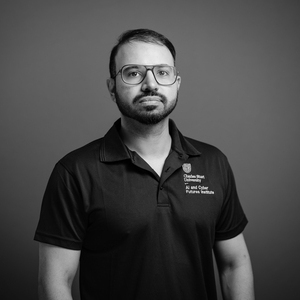
Dr. Ibrar Yaqoob serves as a Senior Research Fellow and Program Lead for the Smart and Resilient Supply Chain strand at the Artificial Intelligence and Cyber Futures Institute (AICF) at Charles Sturt University. He leads a research team comprising PhD students and postdoctoral fellows, and previously held research positions at Khalifa University in the UAE and Kyung Hee University in South Korea. Dr. Yaqoob holds a PhD in Computer Science from Universiti Malaya (2017) and has been a Visiting Academic at the University of Cambridge. His research focuses on blockchain, NFTs, and metaverse applications for healthcare, supply chain and logistics, wireless networks, IoT, and smart cities, with additional expertise in mobile edge-cloud computing and big data. Dr. Yaqoob has published over 100 research articles with more than 24,000 citations and an h-index of 58, with 98.9% of his publications appearing in Q1 journals. His recent publications demonstrate a strong trend toward practical blockchain implementations across diverse sectors including healthcare data management, sustainable supply chains, and smart city infrastructure. His work frequently combines blockchain with emerging technologies like NFTs, metaverse applications, and large language models to solve complex real-world problems in supply chain transparency, medical data security, and sustainable development. Ranked in the world's top 0.1% of researchers for three consecutive years (2023-2021) as a Highly Cited Researcher Listed among the World's top 2% scientists for five consecutive years (2020-2024) 2024 IEEE Consumer Electronics Magazine Best Paper Award (1st Place) 2024 Vice Chancellor's Researcher of the Year Commendation 2024 AICF Research Excellence Award 13 highly cited papers (top 1%) and 21 most downloaded articles Dr. Yaqoob serves as Chief Investigator on multiple significant research projects including the AgriTwins project (AUD $2.38 million), Trustworthy Operations and Supply Chain Management project (AUD $10,000), and Decentralized AI Juries project (AUD $13,875). He actively mentors PhD students and postdoctoral researchers while serving on editorial boards for prestigious journals including IEEE Network Magazine, Future Generation Computer Systems, and IEEE Access. His research team at the AICF Institute focuses on bridging emerging technologies with practical applications to address real-world challenges in supply chain resilience and sustainability.
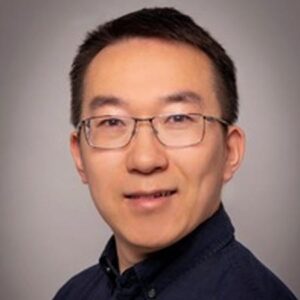
Dr. Xiaoguang Dong is an Assistant Professor in the Department of Mechanical Engineering at Vanderbilt University , School of Engineering. He received his Ph.D. (2019) and M.S. (2016) from Carnegie Mellon University, and B.S. (2013) from Harbin Institute of Technology. His research focuses on miniature soft robotics , swarm robotics , and intelligent soft materials for biomedical, microfluidic, and biomechanical applications. Design of shape-morphing soft robots for minimally invasive medicine Development of magnetic microrobot swarms for cooperative tasks Integration of machine learning with mechanics for smart material design Recent publications highlight advancements in wireless medical robots for drug delivery, biofluid pumping, and tissue sensing, with works in Science Advances , Nature Communications , and PNAS . He has received significant recognition including the 2025 NSF CAREER Award and 2024 Med-X Young Investigator Award . 2022 Spring: Dynamics (ME 2190) 2023 Fall: Miniature Robotics 2014-2015: Teaching assistant at Carnegie Mellon University
Frank Reichert is a Professor of Mobile Systems at the University of Agder (UiA), affiliated with the Department of Information and Communication Technology under the Faculty of Engineering & Science. He served as UiA's Rector (2016-2019) and Dean of Engineering & Science (2007-2015). With over 30 years in fixed/wireless communication systems, he has led national initiatives like the SFI Offshore Mechatronics Center (200 MNOK budget) and established UiA's Mechatronics Innovation Lab. His industry experience includes roles at Ericsson (1995-2005) and founding Ericsson Cyberlab Singapore (1999). Education : PhD in Electrical Engineering from RWTH Aachen University (Germany). Early career included research at the Royal Institute of Technology (Sweden) and Televerket Radio (Sweden). Research Interests : Focus on mobile communication, e-learning innovation, IoT-driven telehealth, and lifelong learning. His work bridges academia and industry, emphasizing user-centric design, rapid prototyping, and future education technologies. Projects include multi-touch collaborative learning systems, AI-assisted educational tools, and digital health twin architectures. Grants & Leadership : Managed EU projects (e.g., FP4-ACTS OnTheMove, PRO-COM) and served on steering boards for Norwegian and EU research bodies. Current roles include advisor to UiA's strategic initiatives and contributor to national bullying/harassment prevention (UHRMOT). Labs & Teams : Co-founded the Mechatronics Innovation Lab, leading projects in VR rehabilitation solutions and smart healthcare systems. Active in research groups like Multimedia and e-Learning, and ReSex (Research in Sexology).
B. F. Spencer Jr. is the Nathan M. and Anne M. Newmark Endowed Chair in Civil Engineering at the University of Illinois at Urbana-Champaign, where he directs the Multi-Axial Full-Scale Sub-Structured Testing & Simulation Facility and the Smart Structures Technology Laboratory. He joined the university in 2002 after serving as Leo E. and Patti Ruth Linbeck Professor of Engineering at the University of Notre Dame (1985-2002). Education includes: Ph.D. in Theoretical and Applied Mechanics, University of Illinois at Urbana-Champaign (1985) M.S. in Theoretical and Applied Mechanics, University of Illinois at Urbana-Champaign (1983) B.S. in Mechanical Engineering, University of Missouri-Rolla (1981) His research focuses on pioneering innovations in structural health monitoring, stochastic mechanics, and smart sensor technologies. Key areas include development of wireless sensor networks for real-time infrastructure assessment, seismic hazard mitigation strategies, and AI-driven damage detection systems. His work bridges theoretical computational mechanics with practical civil engineering applications to enhance resilience against natural disasters. Recent publications emphasize digital twins, UAV-based structural inspection, machine learning for damage identification, and advanced sensor networks. Trends show strong integration of AI, 3D visualization, and edge computing for rapid post-disaster evaluation and predictive maintenance of critical infrastructure. Major scientific honors: ASCE Housner Medal (2015) J.M. Ko Medal (2014) Foreign Member of Polish Academy of Sciences (2005) Structural Health Monitoring Person of the Year (2011) JSPS Fellowships (1999, 2000) He leads significant infrastructure projects including NSF-funded facilities and industry collaborations. Laboratory initiatives involve full-scale testing of bridges, gates, and seismic mitigation systems. Educational outreach includes K-12 STEM programs like 'Shakes and Quakes' to inspire future engineers.
Christian Wietfeld is a Professor at TU Dortmund, Germany, specializing in telecommunications, 5G/6G networks, and robotics. His research focuses on network slicing, machine learning for communications, vehicular networks, and intelligent reflecting surfaces. Affiliations: TU Dortmund Key Collaborations: Stefan Böcker, Benjamin Sliwa, Manuel Patchou His work spans 6G multi-X communications, private industrial networks, and disaster response robotics. Recent projects include mmWave reflector systems, predictive uplink slicing, and AI-driven network planning. 2024-2025 publications highlight advancements in 6G IRS, energy-efficient 5G, and vehicular connectivity. Sub-fields include beam management, digital twins, and non-terrestrial networks. He contributes to experimental frameworks like Open RAN and ns-3 simulations, emphasizing scalable solutions for industrial and emergency applications.
Dr. Juan Carlos De Luna Ducoing is a Research Fellow at the University of Surrey, specializing in advanced wireless communication systems with a focus on MIMO (Multiple-Input Multiple-Output) technologies. His work integrates neuromorphic computing, quantum annealing, and non-linear processing to enhance the efficiency and scalability of next-generation wireless networks. Research Interests: MU-MIMO detection and precoding Neuromorphic computing applications Quantum computing in wireless systems 6G network architectures Non-linear signal processing Hardware-software co-design (e.g., SWORD platform) Key Publications: His recent work includes NeuroMIMO (2024), which explores neuromorphic principles for power-efficient MU-MIMO detection, and Scalable MU-MIMO User Scheduling (2023), addressing resource allocation in dense networks. He also contributed to quantum annealing-based detection (2022) and Gyre Precoding (2021), achieving significant SNR gains. Collaborations: Works closely with Konstantinos Nikitopoulos and the SWORD research team to develop open-source platforms for rapid prototyping of advanced communication systems.
Alex Alvarado is a Full Professor in the Signal Processing Systems department at Eindhoven University of Technology (TU/e), leading the Information and Communication Theory Lab (ICT Lab). He is also affiliated with TU/e's Center for Wireless Technology in Eindhoven. His academic career includes roles as a Senior Research Associate at University College London (2014–2016), Marie Curie Intra-European Fellow (2012–2014), and Newton International Fellow (2011–2012) at the University of Cambridge. Alvarado is a Senior Member of the IEEE and has held editorial and committee positions in major conferences like OFC and ECOC. Alvarado holds an Electronics Engineer degree (2003) and MSc (2005) from Universidad Técnica Federico Santa María, Chile, followed by a Licentiate of Engineering (2008) and PhD (2011) from Chalmers University of Technology, Sweden. His research focuses on high-speed secure data transmission in optical and wireless systems, emphasizing energy-efficient algorithms and theoretical limits of telecommunication systems. Key areas include communication theory, information theory, optical fiber systems, and nonlinear interference mitigation. His recent articles explore advanced modulation formats, machine learning applications for channel estimation and decoding, and innovations in free-space optics and MIMO systems. This work contributes to UN Sustainable Development Goals related to affordable and clean energy, industry innovation, and responsible consumption through energy-efficient communication solutions. Scientific Awards: ERC Starting Grant (2018) NWO VIDI Grant (2016) 2015 Journal of Lightwave Technology Best Paper Award 2015 IEEE Exemplary Reviewer Award 2018 and 2023 Asia Communications and Photonics Conference Best Paper Awards 2019 Optoelectronics and Communications Conference Best Paper Award Alvarado's advising contributions include supervising 12 research works. His grants include NWO VIDI and ERC Starting funding. He leads projects like NESTOR (Next-gen optical networks) and LaiQa (Quantum Key Distribution). His lab, the ICT Lab, drives theoretical and applied research in communication systems.
Christian Fager is a Full Professor at the Department of Microwave Electronics, Chalmers University of Technology, Sweden. He has been affiliated with Chalmers since completing his Ph.D. there in 2003. As Head of the Microwave Electronics Laboratory, his research focuses on nonlinear transistor modeling, energy-efficient power amplifier architectures, and distributed MIMO systems. He has co-invented 8 patents and published over 250 papers, including a seminal book on Nonlinear Transistor Model Parameter Extraction Techniques (Cambridge University Press, 2011). Dr. Fager holds editorial roles as Associate Editor of IEEE Microwave Magazine and member of the MTT-S Technical Coordination Committee on Wireless Communications. He is a Board Member of the European Microwave Association (EuMA) and has chaired multiple IEEE topical conferences. His awards include the Chalmers Supervisor of the Year (2018), inaugural Area of Advance Award (2010), and IEEE IMS Best Student Paper (2002). He leads research initiatives in distributed antenna systems, digital pre-distortion, and GaN/SiGe-based high-efficiency amplifiers, with projects involving testbed development for 5G/6G applications. His work bridges theoretical modeling and practical implementation in RF/microwave systems, emphasizing thermal and multi-physical simulation integration.
Prof. Piya Pal is a Professor in the Department of Electrical and Computer Engineering at the University of California, San Diego. Her research focuses on high-dimensional statistical signal processing, energy-efficient sampling techniques, and covariance-driven inference. She previously held an Assistant Professor position at the University of Maryland, College Park, and was affiliated with the Institute for Systems Research. Education: Ph.D. in Electrical Engineering from California Institute of Technology (2013). Notable achievements include the NSF CAREER Award (2016) and the 2014 Charles and Ellen Wilts Prize for her thesis on sparse sampling and estimation. Her work emphasizes structured sampling and robust algorithms for undersampled data analysis, with applications in sensor arrays, compressive sensing, and optical imaging. Research Interests: Energy-efficient sparse array design Correlation-aware sparse estimation Covariance compression and statistical inference Tensor methods in machine learning High-resolution imaging systems Publications highlight advancements in sparse array geometries (nested/coprime samplers), Cramér-Rao bound analysis, and hybrid beamforming. Recent work explores super-resolution imaging and millimeter-wave channel sensing with learned empirical priors. Her contributions address fundamental trade-offs between sample size, resolution, and domain knowledge integration. Scientific Awards: NSF CAREER Award (2016) 2014 Charles and Ellen Wilts Prize (Caltech) Advising & Grants: Current research is supported by NSF CAREER funding. Her lab focuses on interdisciplinary projects combining signal processing with medical imaging and wireless communication challenges.
Dr. Yaguang Zhang is a Clinical Assistant Professor at Purdue University, jointly appointed in the Department of Agricultural & Biological Engineering (ABE) and the Department of Agricultural Sciences Education & Communication (ASEC) . Holding a Ph.D. in Electrical and Computer Engineering from Purdue (2021), he specializes in data science , digital agriculture , and UAV-aided wireless communication systems , with applications in intelligent transportation, proactive road maintenance, and engineering education. Education: Ph.D. and M.Sc. in Electrical and Computer Engineering (Purdue), B.Eng. in Communication Engineering (Tianjin University) Research Interests span cutting-edge domains including: Digital Agriculture: GPS-based field shape generation, product traceability trees, and automated metadata collection for agricultural operations Wireless Communication: Millimeter-wave channel modeling, UAV relay systems, and rural network coverage optimization Smart Infrastructure: Pavement condition assessment tools, sun-shadow simulation for road treatment, and vehicle automation platforms Recent Publications emphasize scalable solutions for agricultural IoT, machine learning in crop monitoring, and interoperable data frameworks. His scientific awards include: 2024 Outstanding Engineering Teacher (Purdue) 2024 ASABE Superior Paper Award 2020 FFAR Student Poster First Prize Multiple NSF/IEEE travel supports Grants from USDA, NSF, INDOT, and industry partners (CableLabs, Nokia) fund projects like tractor autopilot development, rural 6G networks, and pavement monitoring systems. He mentors graduate students in agricultural robotics , data science , and connected vehicle research .