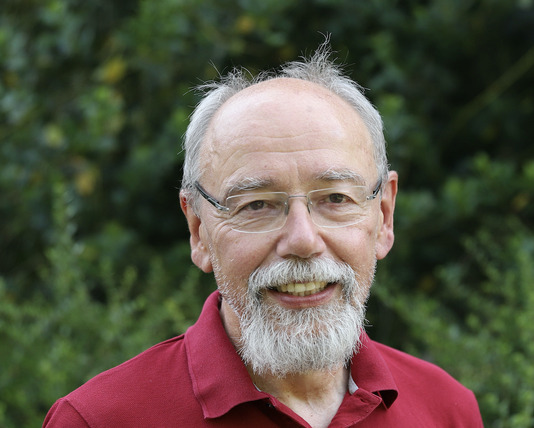
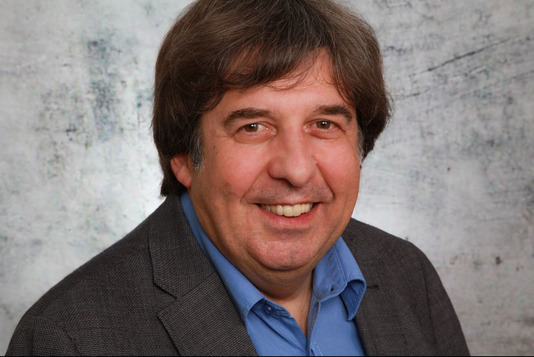
Prof. Dr. Dieter Trautz is a retired professor at the Faculty of Agricultural Sciences and Landscape Architecture at Osnabrück University of Applied Sciences. His career includes academic roles at Christian-Albrechts University Kiel (1982-1988), TU Berlin (1988-1989), and the Kirgizian Agrarian Academy (1998-2000). He focuses on sustainable agriculture, organic farming systems, and precision farming technologies. Education: Studied Agricultural Sciences at Christian-Albrechts University Kiel (1976-1982), PhD in 1987. Research spans crop quality, organic-mineral fertilizers, intercropping, and climate change impacts. He has collaborated internationally in over 20 countries, including projects in Russia, China, and Uganda. Key research areas include: Sustainable intensification of farming systems Organic cultivation of cereals, soybeans, and potatoes Precision farming technologies for organic agriculture Climate-resilient urban agriculture Technology transfer between conventional and organic practices Projects include the MuP project (reducing fertilization in water protection areas) and HerbfreiErbAB (sensor-based mechanical weed control). Active in international research networks and capacity building in developing regions.
Karl Schmid is a W3 Professor of Crop Plant Biodiversity and Breeding Informatics at the University of Hohenheim's Institute of Plant Breeding, Seed Science and Population Genetics within the College of Agricultural Sciences. His research integrates evolutionary genetics, population genomics, and machine learning to address agricultural challenges. Ph.D. in Biology, University of Munich (1996) Postdoctoral Research, Cornell University (1997-1999) Emmy-Noether Research Group, Max Planck Institute of Chemical Ecology (2000-2006) Group Leader, Leibniz Institute of Plant Genetics (2006-2008) Professor of Genetics, Swedish Agricultural University (2008) His research focuses on crop biodiversity conservation, evolutionary genetics of plant pathogens, and breeding informatics applications. Current work leverages deep learning for phenotyping (quinoa panicles, barley genomics) and analyzes pathogen evolution (Exserohilum turcicum in maize). His team actively develops computational tools like GGoutlieR for geo-genetic pattern detection. Recent publications demonstrate strong trends in applying AI to agricultural genomics, particularly in quinoa improvement and pathogen surveillance. His group leads the EU H2020 INVITE project on molecular markers in plant variety protection and organizes international symposia like the 2024 Quinoa Symposium at Hohenheim. Head of Crop Biodiversity and Breeding Informatics Group Principal Investigator, EU H2020 INVITE project Organizer, International Quinoa Symposium 2024
Patrick Noack is a Professor at HSWT, leading the Competence Centre for Digital Agribusiness (KoDA) and serving as Programme Director for Agricultural Engineering and Green Digital Engineering. His research focuses on IoT applications in agriculture, precision farming, and sensor systems. He has pioneered projects like DenimeF (foreign body detection in forage harvesters) and AutoDGB (automated field trial analysis). Key areas include GPS-guided machinery, soil sensors, and UAV-based monitoring. He chairs digitalization committees and collaborates with organizations like ASABE and VDI Round Table GIS. His work emphasizes interdisciplinary education, integrating horticulture and bioinformatics through agile methods. Research interests span environmental technology, geospatial data analysis, and sustainable resource management. Recent publications address spectral imaging for crop yield prediction and non-lethal insect monitoring systems. He advises students like Jan Oehlschläger and leads grants totaling millions in precision agriculture innovation.
Prof. Yu Kang is a Professor of Precision Agriculture at the TUM School of Life Sciences, Technische Universität München (TUM). His research focuses on integrating imaging, sensing, and computational methods to study plant-environment interactions. He aims to enhance resource efficiency and reduce environmental impact through precision crop management. Prior to TUM, he held positions at China Agricultural University (CAU) and conducted postdoctoral research at ETH Zurich and KU Leuven. Prof. Yu's career includes roles such as Associate Professor of Crop Science at CAU and postdoctoral fellowships in physical geography. His educational background includes a doctoral degree from the University of Cologne (2014) and undergraduate studies at China Agricultural University. Key research areas include remote sensing for crop health monitoring, hyperspectral imaging for disease detection, and machine learning applications in agriculture. His work has led to innovations in crop nitrogen management and precision phenotyping. Awards include the Innovation Team Award (2019) from the Crop Science Society of China and the GSGS Fellowship (2014) from the University of Cologne.
Shuo Huang is an academic researcher with a focus on interdisciplinary fields spanning Machine Learning, Control Systems, and Signal Processing. Their work integrates theoretical advancements with practical applications in areas like neural networks, robotics, and sensor technology. They have contributed significantly to methodologies in predictive modeling, privacy-preserving machine learning, and optimization algorithms. Key research areas include the development of distributed Kalman filters for robotics, semi-supervised learning frameworks, and deep learning applications in computer vision and autonomous systems. They also engage in statistical process control and quality assurance, reflecting a blend of theoretical and applied engineering expertise. Notable contributions include advancements in privacy-preserving neural networks, adaptive control systems for electromechanical devices, and sensor design innovations. Their interdisciplinary approach bridges computer science, electrical engineering, and industrial applications.
Prof. Dr. Arno Ruckelshausen is a retired professor at Osnabrück University of Applied Sciences, affiliated with the Faculty of Engineering and Computer Science. His work focuses on agricultural technology, robotics, and sensor systems. He introduced innovative technologies like the BoniRob autonomous field robot and contributed to projects such as the Competence Center of Applied Agricultural Engineering (COALA). Education: 1977–1983: Diploma in Physics, University of Giessen 1983–1987: Research Assistant at University of Giessen and collaborations with Max Planck Institute and Argonne National Lab 1987: PhD in Experimental Physics (Nuclear Physics and Multidetector Systems) Research Interests: Prof. Ruckelshausen’s research addresses precision agriculture, field robotics (e.g., BoniRob), phenotyping (e.g., BreedVision), and sensor systems for soil analysis (ISFET-based systems). His work emphasizes automation, real-time data processing, and interdisciplinary applications in crop science and environmental monitoring. Awards: Deutscher Innovationspreis Gartenbau 2015 euRobotics Technology Transfer Award 2015 (2nd Prize) Wissenschaftspreis Niedersachsen 2019 Grants and Projects: AgriCareerNet: Certificate Program in Agricultural Imaging Systems (BMBF) Crop Virus Scan: Spectral Imaging for Virus Detection (FNR/BMEL/GFPi) Experimentierfeld Agro-Nordwest (BLE/BMEL) Teaching: Courses include Optoelectronics, Sensors, Image-Based Phenotyping, and international programs on agricultural innovation. He mentors student teams like the Field Robot Team (International Field Robot Event). Key Contributions: Developed BoniRob as a field robot platform, pioneered ISFET-based soil nutrient analysis, and co-founded the Competence Center ISOBUS e.V. and AgroTech Valley Forum.
Jorge Marx Gómez is affiliated with the Carl von Ossietzky University of Oldenburg , Germany. As a researcher, he contributes to interdisciplinary domains spanning blockchain technology , sustainable systems , artificial intelligence , and smart agriculture . His research explores blockchain applications for regulatory compliance (e.g., electronic bills of lading, GDPR-enforcing systems), machine learning for internal auditing and environmental data analysis, and computer vision in precision livestock farming. Recent work includes 5G-enabled smart farming dashboards and environmental information portals with citizen participation. Analysis of his 15 most recent publications reveals a focus on technology-driven sustainability , combining NLP , data lakes , and multimodal models to optimize resource efficiency, transportation safety, and agricultural practices. Trends emphasize cross-sectoral integration of emerging technologies. His collaborations span institutions in Germany and Latin America, with co-authors like Hauke Precht , Felix Kruse , and Manuel Mora Tavarez . Publications appear in venues such as EnviroInfo , HICSS , and CENTERIS .
Prof. Dr. Frieder Stolzenburg is a Professor for Knowledge-Based Systems at the Harz University of Applied Sciences since 2002. Current roles include Vice Rector for Research and Equal Opportunities (2022-2027) and Deputy Head of the Doctoral Center for Engineering and Information Technology . Major research areas span Artificial Intelligence, Machine Learning, Multi-Robot Systems, Cognitive Reasoning , and Music Cognition . PhD in Disjunctive Logic Programming (1998) Habilitation on Multiagent Systems and RoboCup (2006) Academic Leadership: Vice Dean (2018-2022), Program Coordinator Research focuses on hybrid AI systems combining formal logic with cognitive models, including periodicity detection in music perception and UAV-based agricultural monitoring . Recent work explores large language models for explainable AI and deep learning applications in plant disease classification . Selected scientific awards: Best Poster/Demo at KI-2012 3rd Place RoboCup German Open 2008 Koblenz University Prize 1993 Prolog Programming Competition 3rd Place 1994 Key memberships include CLAIRE , German Informatics Society (GI) , and German University Association (DHV) . Teaching emphasizes Agent Systems , Theoretical Computer Science , and Intelligent Knowledge Engineering .
Anthony Stein is a Tenure Track Professor (equivalent to Assistant Professor) and Head of the Department of Artificial Intelligence in Agricultural Engineering at the University of Hohenheim's Faculty of Agricultural Sciences. He holds a Dr. rer. nat. from the University of Augsburg. Research develops intelligent agricultural systems through reinforcement learning, evolutionary computation, and distributed AI. Core applications include real-time weed detection, robotic crop monitoring, emission prediction, and resource-efficient AI for sustainable farming. Recent publications focus on optimizing vision systems for precision agriculture using generative AI and federated learning. Work emphasizes embedded system deployment and multi-objective neural architecture design. No awards documented. Leads research on AI-driven agricultural robotics without specific student advising details. Committee roles include GI Organic Computing group leadership and KTBL outdoor robotics standards.
Karl-Heinz Dammer is a senior researcher at the Leibniz Institute for Agricultural Engineering and Bioeconomy (ATB) in Potsdam, Germany, specializing in the Agromechatronics department. With over 25 years of experience, his work focuses on sensor-based crop protection , precision agriculture , and machine learning applications for weed and disease detection. He has contributed to projects like Precision PS for targeted pesticide use and FungiDetect for early disease identification. Habilitation : Martin Luther University Halle-Wittenberg (2000) Education : Agricultural Sciences (1980-1985), Doctorate in Phytopathology (1988) Key Research Areas : Image segmentation for weed detection, sensor-guided crop protection, and agricultural robotics His recent publications emphasize deep learning models like U-Net for identifying weeds (e.g., Bur Chervil) and diseases (e.g., stripe rust in wheat) using RGB imagery and UAV-based systems. Collaborations span institutions in Germany, Iran, and international teams. Awards include the LEOPOLDINA Prize (1992) for early career achievements.
Prof. Dr. Dominik Grimm is a Professor in the Department of Forestry and Forestry Management at the University of Applied Sciences Straubing (HSWT). He leads the Straubing site for sustainable resource use and is affiliated with the Faculty of Forestry and Forest Management. His research focuses on interdisciplinary applications of machine learning, computational biology, and optimization in agriculture, biotechnology, and environmental science. Key areas include precision agriculture (e.g., UAV-based weed detection in sorghum fields), protein engineering (thermostability prediction), and reinforcement learning for process synthesis. He has pioneered tools like permGWAS2 for genome-wide association studies and EVARS-GPR for seasonal time series forecasting. His work integrates AI with real-world challenges, such as optimizing hospital bed management and improving crop yields through data-driven strategies. Education : Advanced degrees in computer science and bioinformatics (details not explicitly stated). Research interests span computational methods in agriculture, genomics, and combinatorial optimization. He supervises doctoral candidates like Josef Eiglsperger and Jonathan Pirnay. His lab (Grimmlab) develops open-source frameworks for time series analysis and phenotypic data processing. Key projects include automated process design using reinforcement learning and machine learning for perishable product forecasting in horticulture. Publications highlight contributions to protein stability modeling, agricultural robotics, and data stream algorithms. Collaborations involve institutions like the University of Bayreuth and the Helmholtz Center Munich. His work emphasizes practical applications, such as reducing herbicide use through precision agriculture and enhancing biomanufacturing via AI-driven enzyme discovery. Grants and research projects funded include methods for flowsheet synthesis, generative AI in enzyme discovery, and sustainable resource management. He leads initiatives integrating machine learning with horticultural sales prediction and patient bed assignment optimization in hospitals.
Prof. Dr. Paulo Drews-Jr is a Visiting Professor at the Department of Computer Science, Faculty of Engineering, University of Freiburg, Germany. His research focuses on Robotics, Computer Vision, and Deep Learning, particularly for autonomous systems operating in underwater and aerial environments. He holds a D.Sc. and M.Sc. in Computer Science with minors in Robotics and Computer Vision from the Federal University of Minas Gerais, Brazil, and a B.Sc. in Computer Engineering from the Federal University of Rio Grande, Brazil. Education: D.Sc. in Computer Science (Minor: Robotics and Computer Vision), Federal University of Minas Gerais, Brazil M.Sc. in Computer Science (Minor: Robotics and Computer Vision), Federal University of Minas Gerais, Brazil B.Sc. in Computer Engineering, Federal University of Rio Grande, Brazil Research Interests: Paulo Drews-Jr specializes in Robot Perception, Robotics, and Computer Vision. His work addresses challenges in Underwater Robotics, Aerial Robotics, and Industrial Automation, including Active Perception to Account for Uncertainty in Deep Learning Applied to Robotics. His recent publications emphasize Deep Reinforcement Learning, Image Processing, and Trans-Media Navigation for Hybrid Unmanned Vehicles.
Slawomir Sander (formerly known as Slawomir Grzonka) is a researcher at the Department of Computer Science at Albert-Ludwigs-University of Freiburg, working in the Autonomous Intelligent Systems Group led by Professor Wolfram Burgard. His research focuses on robotics, particularly in the areas of aerial robotics, navigation systems, and agricultural applications. Dr. Sander's primary research interests include Quadrotors, SLAM (Simultaneous Localization and Mapping), Navigation, Machine Learning, Human Motion Tracking, and Agricultural Robotics. His work bridges theoretical robotics with practical applications, especially in precision farming where robotic systems can reduce herbicide usage through targeted weed detection and removal. His research demonstrates a strong progression from fundamental navigation algorithms to applied agricultural robotics. An analysis of his publication history shows a clear evolution from indoor navigation and SLAM techniques (2007-2012) toward agricultural robotics applications (2013-2016). His earlier work focused on quadrotor navigation, place recognition, and state estimation, while his more recent publications center on precision farming applications, particularly weed detection in sugar beet fields and integration of UAV-UGV systems for crop management. His notable scientific achievements include: Wolfgang-Gentner-Award (Wolfgang-Gentner-Nachwuchsförderpreis) for his PhD thesis Best Conference Paper Award for "Towards Palm-Size Autonomous Helicopters" Finalist for Best Student Paper Award and Best Paper Award in Cognitive Robotics for "Mapping Indoor Environments Based on Human Activity" Best Conference Paper Award for "Towards a Fully Autonomous Indoor Helicopter" Dr. Sander has been actively involved in several major robotics projects including the BoniRob platform development, RemoteFarming.1, and the Flourish project. His work often involves interdisciplinary collaborations with agricultural scientists and engineers. While specific grant information isn't detailed in the provided materials, his involvement in multiple substantial projects suggests successful grant acquisition for robotics research. He has been a key contributor to the Autonomous Intelligent Systems group's work on agricultural robotics, particularly in developing the BoniRob platform and its various applications (BoniRob-Apps) for field robotics. His work connects fundamental robotics research with practical agricultural applications, demonstrating the real-world impact of robotics technology in addressing challenges in modern farming.
Nadja Klein is a Professor at the Scientific Computing Center (SCC) at Karlsruhe Institute of Technology (KIT), where she leads the Methods for Big Data research group. She holds the position of Emmy Noether Research Group Leader and is a member of prestigious organizations including AcademiaNet and Die Junge Akademie. Her academic journey includes doctoral studies in Mathematics, a postdoctoral position at the University of Melbourne as a Feodor-Lynen fellow by the Alexander von Humboldt Foundation, and a professorship in Statistics and Data Science at Humboldt-Universität zu Berlin before joining KIT. Her research focuses on Bayesian learning methods, which allow for the incorporation of prior knowledge, quantification of uncertainties, and bringing clarity to the "black boxes" of machine learning. The Methods for Big Data lab under her leadership develops innovative, reliable, and generalizable methods to handle massive datasets across diverse fields including biomedical data analysis, weather prediction, and autonomous driving technologies. Her work spans theoretical analysis, method development, and practical applications of statistical and machine learning techniques. Dr. Klein's recent publications demonstrate a strong trend toward integrating Bayesian principles with deep learning approaches to address challenges in uncertainty quantification, data efficiency, and model interpretability. Her research shows particular strength in distributional regression frameworks, copula modeling, and developing robust methods for real-world applications where uncertainty matters. She has been recognized with the prestigious Committee of Presidents of Statistical Societies (COPSS) Emerging Leader Award for her outstanding contributions to statistical methodology. Her work bridges theoretical statistics with practical machine learning applications, making significant contributions to both academic research and industry collaborations. Dr. Klein actively collaborates with industry partners such as Continental Automotive GmbH on cutting-edge research in autonomous driving technologies. Her lab maintains a strong focus on both theoretical foundations and practical implementations of statistical learning methods, with particular emphasis on making machine learning more reliable, interpretable, and data-efficient through Bayesian approaches.
Professor Stephan Hußmann is a faculty member at the West Coast University of Applied Sciences (FHW) in the Department of Microprocessor Technology and Electronics within the Faculty of Engineering. He has been a full-time Professor at FHW since December 2004, after working as a Lecturer at the University of Auckland from 2001-2003 and as a project leader for PMDTec GmbH in 2004. His research interests focus on Machine Vision applications, 3D-camera design, real-time image processing, embedded systems design, and automation in agriculture and forestry applications. Hußmann has developed innovative optical multi-sensor systems for quality control and inspection, with particular emphasis on drone-based AI sensor systems for agricultural applications in times of climate change. His work bridges theoretical research with practical industrial applications, particularly in the organic farming sector. Analysis of his recent publications reveals a strong trend toward drone-based agricultural applications, with significant focus on weed detection and control using deep learning approaches. His research spans multiple disciplines including computer vision, robotics, agricultural engineering, and real-time processing systems. The majority of his recent work focuses on practical implementations for organic farming challenges, demonstrating a consistent commitment to solving real-world agricultural problems through technological innovation. Top Twenty Faculty Teachers award (2002) Best Lecturer-Computer Systems Engineering Department award (2003) Senior member of IEEE (since 2011) Professor Hußmann has supervised numerous PhD, Master's, and Bachelor's students, with a particular focus on practical applications in machine vision and agricultural technology. His research has been supported by significant funding, including multiple projects from the Federal Ministry of Education and Research (BMBF) totaling over 8.2 million euros. Current major projects include drone-based AI sensor systems for agriculture in times of climate change, water rescue drones, and aerial photogrammetric surveys. He co-founded the Machine Vision Technology Institute (Ma.Vi.Tec) in 2009, which later became eyespec GmbH, and is the acting chairman of the registered association Initiative Bildverarbeitung e.V. Since 2018, he has led the FHW research group 'Digitalization in Agriculture and Forestry,' which resulted in the founding of naiture® GmbH & Co. KG in 2018. His teams regularly collaborate with industry partners through the Initiative Bildverarbeitung e.V., which organizes lectures where industry and university members discuss potential joint projects.