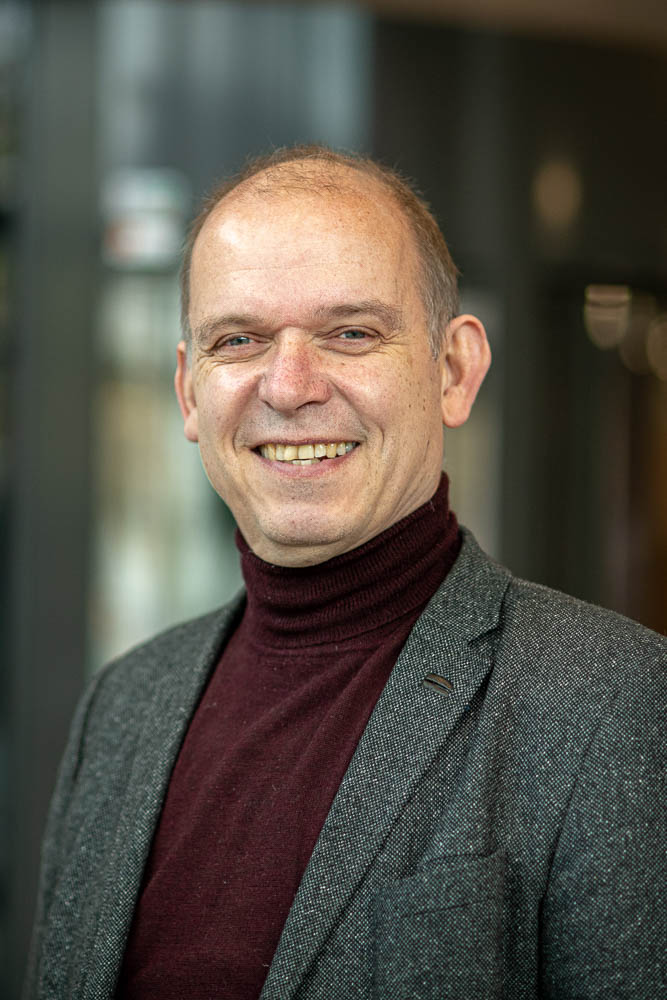
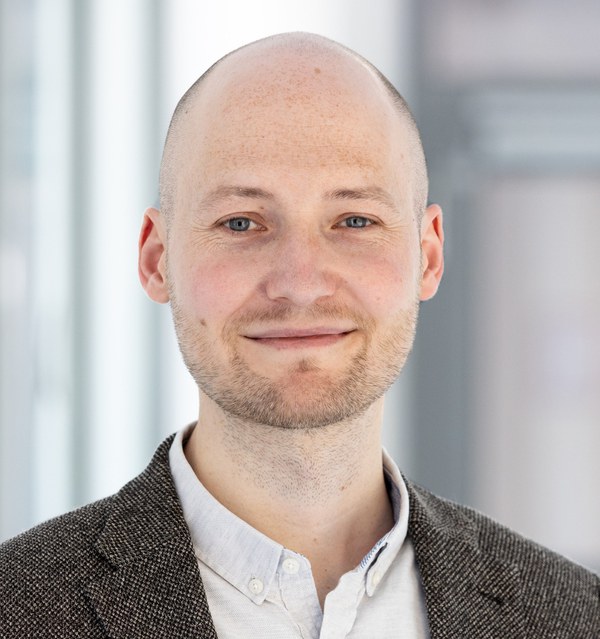
Dr. Raimon Tolosana Delgado is a Research Fellow at the Helmholtz-Zentrum Dresden-Rossendorf (HZDR), affiliated with the Helmholtz Institute Freiberg for Resource Technology. He leads research in predictive geometallurgy and statistical analysis of mineral resources, focusing on translating geological data into processing insights. His research integrates geostatistics , compositional data analysis (CoDa) , and machine learning to model ore behavior and resource potential. Key areas include: Predictive geometallurgy for forecasting ore/waste behavior Bayesian statistics for parameter estimation and uncertainty analysis Development of R-based tools (e.g., compositions and gmGeostats packages) for mineral data analysis Particle-based process modelling for mineral separation optimization Recent publications emphasize machine learning integration (e.g., neural networks for geophysical tensor fields), tailings reprocessing (3D geostatistical assessment of resource potential), and advanced statistical methods for compositional data. A consistent trend involves enhancing predictive accuracy in mineral processing through multi-source data fusion. Dr. Tolosana Delgado coordinates the development of technology platforms for geometallurgical data analysis, including databases and interfaces for industrial applications. His work bridges ore geology, mineral processing, and metallurgy to optimize resource efficiency.
Yuyu Zhou is a Professor in the Department of Geography at The University of Hong Kong. With an extensive publication record of 301 papers and over 18,000 citations, Dr. Zhou is a leading researcher in urban environmental studies, climate change, and sustainability science. Dr. Zhou received their PhD in Environmental Science from the University of Rhode Island (2004-2008) and previously worked as a Research Scientist at Pacific Northwest National Laboratory's Joint Global Change Research Institute (2010-2015). They currently serve as Chief Editor for Earth System Science Data (Copernicus Publications), Associate Editor for Ecological Processes, and Section Editor for All Earth. Dr. Zhou's research focuses on the intersection of urbanization, climate change, and environmental sustainability. Their work spans several key areas including urban heat island effects, vegetation phenology in urban environments, energy modeling, and sustainable urban development. Through innovative remote sensing approaches and spatial analysis, Dr. Zhou investigates how urban environments respond to and influence global environmental change. Analysis of Dr. Zhou's recent publications reveals a strong emphasis on urban environmental challenges, with particular attention to urban heat islands, vegetation dynamics, and climate change impacts in cities. Their work combines remote sensing data with ground observations to develop high-resolution models of urban environmental processes. Recent research has focused on urban greening effects, building energy use under climate change, and environmental justice issues related to urban heat exposure. Dr. Zhou has received significant recognition for their work, as evidenced by the high citation count of their publications. Their research has important implications for urban planning, climate adaptation strategies, and sustainable development policies worldwide. As an educator and mentor, Dr. Zhou advises numerous graduate students and collaborates with researchers globally. Their work with international teams has resulted in significant contributions to understanding urban environmental systems across different geographical contexts.
Prof. Liqiu Meng serves as Chair of Cartography and Visual Analytics at the Technical University of Munich (TUM). He specializes in advanced geospatial research, digital cartography, and human-technology collaboration frameworks. Current Faculty at TUM Chair of Cartography and Visual Analytics Research Focus: His work bridges cartographic theory with cutting-edge technology, covering topics like 3D urban modeling, AI ethics visualization, geovisual analytics, and spatiotemporal data interpretation. Urban Morphology Analysis AI Ethics Cartography Geovisual Analytics 3D City Data Integration Location-Based Service Design Publications: Recent works (2025-2024) demonstrate expertise in explainable AI for urban analysis, multi-agent systems for geospatial interaction, and advanced spatial modeling techniques. Contact: liqiu.meng@tum.de | contact.lfk@ed.tum.de
Krisztina Kis-Katos serves as Professor for International Economic Policy at the University of Göttingen's Department of Economics, a position she assumed in 2016. She holds prominent leadership roles including Chairwoman of the Standing Field Committee of Development Economics of the German Economic Association (Verein für Socialpolitik) and Chairwoman of the Scientific Advisory Board of the RWI Leibniz Institute for Economic Research. Her institutional affiliations extend to research fellowships at IZA and RWI, along with editorial positions at the Journal of Labour Market Research, European Journal of Political Economy, Bulletin of Indonesian Economic Studies, and Journal of Development Studies. Professor Kis-Katos earned her Economics education in Szeged and Konstanz, attended the Swiss Doctoral Program at the Study Center Gerzensee, and received her doctoral degree from the University of Freiburg in 2010. Her scholarly work spans applied development economics and political economy with particular focus on how (de-)globalization and macroeconomic processes affect social and economic outcomes including labor markets, firm performance, land use change, deforestation, and conflict. Her research portfolio reveals consistent thematic threads across recent publications: the intersection of environmental concerns with economic development (particularly deforestation and palm oil in Indonesia), the gendered impacts of trade liberalization, the socioeconomic effects of pandemics like COVID-19, and the complex relationship between governance, corruption, and economic outcomes. Methodologically, her work combines rigorous econometric approaches with innovative data sources including satellite imagery and high-frequency power usage data. Teaching prize for the best doctoral course in RTG 1723, University of Göttingen (2019) Teaching prize of the Student Union of Economics of the University of Freiburg (2014) BMZ/GIZ Public Policy Award (2013) Friedrich-August-von-Hayek-award (2011) Excellence award of the KfW Development Bank (2011) Professor Kis-Katos leads multiple significant research initiatives including the BMZ-DEval funded evaluation of Madagascar's forest restoration program, the DFG-funded Thailand-Vietnam Socioeconomic Panel, and the DFG Research Training Group on Sustainable Food Systems. Her advisory role extends to supervising doctoral candidates through these projects and previously serving as spokesperson for the Research Training Group 1723 on Globalization and Development. Her substantial grant portfolio demonstrates strong research leadership across international collaborations involving institutions in Germany, Indonesia, Thailand, Vietnam, and the United States. Her work connects closely with the Collaborative Research Centre 990 on Ecological and Socioeconomic Functions of Tropical Lowland Rainforest Transformation Systems in Sumatra, Indonesia, reflecting her deep engagement with environmental-economic research questions in Southeast Asia. She also contributes to interdisciplinary teams through projects like PlanetHealth examining global land-use impacts of the COVID-19 pandemic.
Dr. Martin Lange is part of the Project Group Ecological Epidemiology within the Department of Ecological Modelling at the Helmholtz Centre for Environmental Research (UFZ). His research focuses on computational epidemiology, particularly in wildlife and livestock systems. Key areas include disease transmission dynamics, surveillance strategies, and the development of predictive models for infectious diseases like African Swine Fever (ASF) and Bovine Viral Diarrhea Virus (BVDV). Affiliations: UFZ, Department of Ecological Modelling; EcoEpi research group. Education: PhD in Veterinary Epidemiology (2013, TU Bergakademie Freiberg). Research interests span ecological epidemiology, wildlife disease control, and the application of agent-based and individual-based models to understand pathogen spread. Notable contributions include modeling ASF in wild boar populations and BVDV eradication strategies in Ireland. Awards: Received the 2018 UFZ-Wissenstransferpreis (shared with H.H. Thulke) and the Konrad-Bögel-Nachwuchsförderpreis for his doctoral work on eco-epidemiology of wild boar diseases. Also recognized at the DACh Epidemiologietagung 2011. Publications: Over 50 peer-reviewed articles since 2006, emphasizing interdisciplinary approaches to disease modeling and environmental systems. Recent work includes digital twin frameworks for biodiversity monitoring and Python-based model coupling tools like FINAM. Labs/Teams: Active in the EcoEpi group and contributes to projects like BioDT (Biodiversity Digital Twin) and CauSES (Causation in Social-Ecological Systems).
Prof. Dr. Bernd Klauer serves as Deputy Head of the Department of Economics at the Helmholtz Centre for Environmental Research (UFZ) since 2017 and holds an Honorary Professorship for Sustainability and Water Resources Management at the University of Leipzig since 2015. He leads the Working Group on Social Science Water Research and contributes to interdisciplinary projects spanning Germany, EU, Jordan, and India. Doctorate in Economics (1997), University of Heidelberg Diplom-Mathematiker (1992), University of Heidelberg His research integrates water economics with ecological economics and governance frameworks, focusing on hydro-economic modeling, water resource governance, decision support systems, and multi-criteria evaluation. Key application areas include Food-Water-Energy Nexus, Integrated Water Resource Management, and EU Water Framework Directive implementation. The 15 most recent publications reveal a strong emphasis on coupled human-natural systems modeling, climate change adaptation in agriculture, water scarcity governance, and socioeconomic analysis of informal water markets. His work consistently bridges technical hydrological models with economic decision-making frameworks across diverse geographic contexts. Current projects include FUSE (Food-Water-Energy Nexus) and NexusFootprints, while completed initiatives like the Jordan Water Project demonstrate his commitment to transboundary water challenges. He collaborates extensively with hydrologists, ecologists, and policy experts.
Ehsan Modiri is a researcher at the Department of Hydrosystem Modelling , Helmholtz Centre for Environmental Research (UFZ), Germany. His work focuses on climate change impacts on hydrological systems, drought monitoring, and environmental modeling using advanced computational frameworks. Affiliation: UFZ - Helmholtz Centre for Environmental Research Department: Hydrosystem Modelling Research Themes: Climate Change, Droughts, Hydrological Forecasting, Water Resource Management Research Interests: Modiri specializes in understanding hydrological responses to climate change, particularly in drought dynamics and soil moisture variability. His work bridges observational data with sophisticated modeling frameworks to improve predictability of water balance components under warming scenarios. Scientific Contributions: Recent publications highlight his role in developing high-resolution drought simulations, evaluating hydrological model performance, and analyzing groundwater responses to global warming. He participates in large-scale European hydrological projects and collaborates on climate-hydrology integration initiatives.
Dr. Jann Michael Weinand is the head of the Integrated Scenarios department at the Institute of Climate and Energy Systems (ICE-2) within Forschungszentrum Jülich GmbH. He leads a team of 30 scientists, PhD students, and master students focusing on energy system analysis, complexity management, and AI integration. His work addresses regional and international energy systems, emphasizing renewable energy resource assessment and techno-economic feasibility. Dr. Weinand holds a Dr.-Ing. from the Karlsruhe Institute of Technology (2020) and a Mechanical Engineering and Business Administration degree from RWTH Aachen University (2016). His research spans energy autonomy, renewable resource optimization, and the socio-technical challenges of energy transitions. Key research areas include energy system modeling, geothermal and wind energy potential, and data-driven methodologies. He coordinates interdisciplinary projects with academic and industrial partners, contributing to high-impact journals like Nature Energy and Joule. His team develops open-source tools (e.g., ETHOS workflows) for reproducible energy assessments and advocates for spatially disaggregated energy planning. Publications highlight trade-offs in energy system design, AI risks, and land-use conflicts for renewables. He emphasizes integrating social, technical, and environmental factors into energy policy frameworks.
Andreas Holzinger is a Professor at Graz University of Technology, with additional affiliations at Medical University Graz and University of Natural Resources and Life Sciences Vienna in Austria. He is recognized as an IFIP Fellow (2021) for his significant contributions to information processing and computer science. His work spans multiple institutions across Europe, with notable collaborations extending to the University of Alberta in Canada. Professor Holzinger's research focuses on Human-Centered AI, Explainable AI (XAI), and their practical applications across diverse domains. His work bridges theoretical AI advancements with real-world implementations in healthcare, forestry, and human-robot interaction. He has pioneered approaches in counterfactual explanations, graph neural networks, and human-in-the-loop systems that emphasize transparency and trustworthiness in AI decision-making processes. His recent publications demonstrate a strong trend toward integrating large language models with traditional AI systems while maintaining explainability. Holzinger's work consistently emphasizes the human element in AI systems, ensuring that technological advancements serve human needs rather than obscuring decision processes. His research in medical AI, smart forestry, and agricultural applications shows a commitment to solving practical problems with human-centered technological solutions. Scientific Awards: IFIP Fellow (2021) Professor Holzinger has been instrumental in establishing design guidelines for explainable AI systems, particularly through his work on post-hoc versus ante-hoc explanations. His research on Kandinsky Patterns has provided valuable experimental frameworks for pattern analysis and machine intelligence. He has secured significant research funding for projects bridging AI with practical applications in healthcare and environmental monitoring. His leadership extends to the organization of major conferences and workshops, including the CD-MAKE conference series, where he has fostered interdisciplinary collaboration between AI researchers and domain experts. His work on the CLARUS platform demonstrates practical implementations of interactive explainable AI for medical applications.
Miguel Mahecha is Professor of Environmental Data Science and Remote Sensing at the University of Leipzig, where he serves as Institute Head of the Institute for Earth System Science and Remote Sensing. He is also affiliated with the Remote Sensing Centre for Earth System Research, a collaboration between Leipzig University and the Helmholtz Centre for Environmental Research (UFZ). Mahecha is a member of the German Centre for Integrative Biodiversity Research (iDiv) and serves as Principal Investigator in the Centre for Scalable Data Analytics and Artificial Intelligence. Additionally, he is a Fellow of the European Laboratory for Learning and Intelligent Systems and co-spokesperson for the National Research Data Infrastructure for Earth System Sciences (NFDI4Earth). Full Professor for Modelling Approaches in Remote Sensing, University of Leipzig (since 03/2020) Research Group Leader: Empirical Inference in the Earth System, Max Planck Institute for Biogeochemistry, Jena (12/2012 - 03/2020) PostDoc, Max Planck Institute for Biogeochemistry, Jena (10/2009 - 11/2012) PhD in Environmental Sciences, ETH Zürich (06/2006 - 09/2009) Diploma in Geoecology, Bayreuth University (10/2000 - 04/2006) Mahecha's research focuses on understanding ecosystem responses to climate extremes and human-environment relationships during these events. He investigates macro-ecological dynamics and ecosystem functioning using data-driven methods and high-dimensional Earth observations. A key contribution is his co-development of the Earth System Data Cube concept, which integrates empirical methods with theoretical understanding to analyze complex Earth system interactions. His work spans biogeography, ecosystem functioning, and advanced data science methodologies for environmental monitoring. His recent publications demonstrate a strong emphasis on analyzing compound climate extremes, particularly heatwaves and droughts, and their impacts on ecosystems. Mahecha has pioneered methods using Earth System Data Cubes to integrate diverse environmental datasets, enabling novel insights into biosphere-atmosphere interactions. His research increasingly incorporates artificial intelligence and machine learning approaches to understand spatiotemporal patterns in ecological systems, with applications in real-time forest monitoring and biodiversity assessment. Fellow of the European Laboratory for Learning and Intelligent Systems Co-spokesperson for NFDI4Earth (National Research Data Infrastructure for Earth System Sciences) Mahecha leads multiple significant research projects including Digital Forest (real-time forest monitoring), NFDI4BioDiversity, and XAIDA (extreme events: AI for Detection and Attribution). His work receives funding from diverse sources including EU, DFG, and Stiftungen Inland. He collaborates extensively with the German Centre for Integrative Biodiversity Research (iDiv) and the Centre for Scalable Data Analytics and Artificial Intelligence. His research group, Earth System Data Science (ESDS), focuses on developing methods to extract valuable information from long-term environmental observations to understand coupled Earth system dynamics. At the Remote Sensing Centre for Earth System Research, Mahecha's ESDS group investigates how ecosystem functions respond to climate extremes, societal vulnerability to environmental hazards, and nonlinear interactions in coupled Earth systems. The group leverages citizen science data, remote sensing observations, and advanced computational methods to address pressing environmental questions.
Dr. Marcell K. Peters is a Senior Academic Councillor at the Chair of Animal Ecology and Tropical Biology (Zoology III) at the University of Bremen. His research focuses on biodiversity patterns, ecosystem functioning, and climate-land use interactions in tropical and montane environments, with extensive fieldwork in East Africa and the Amazon. He leads projects under DFG and EU funding, including the UPSCALE initiative. Habilitation in Zoology (University of Würzburg, 2018) PhD in Biology (University of Bonn, 2008) Diploma in Biology (RWTH Aachen & University of Bonn, 2003) Research spans multi-taxa community ecology, army ants and ant-following birds, DNA barcoding applications, and climate change impacts on pollination networks. Google Scholar highlights recent work on climate-agriculture interactions in sub-Saharan Africa, trait-based community assembly, and network resilience in biodiversity hotspots. His publications emphasize elevational gradients, disturbance ecology, and functional diversity across Mount Kilimanjaro studies. Current affiliations include the DFG Research Unit Kilimanjaro and EU-funded UPSCALE project. He employs advanced methods like airborne LiDAR for biodiversity prediction and investigates nutrient use by ant communities across continents.
Katharina Eggensperger is an Early Career Research Group Leader at the University of Tübingen , leading the AutoML for Science group within the Cluster of Excellence Machine Learning for Science . She previously completed her Ph.D. at the University of Freiburg under Frank Hutter and Marius Lindauer (2022), and actively contributes to the AutoML community through open-source tool development and competition leadership. Co-developer of AutoML.org tools Faculty member of IMPRS-IS Chair for multiple AutoML workshops/conferences (2019-2025) Her research focuses on automated machine learning (AutoML) with specific attention to: AutoML Systems Hyperparameter Optimization Tabular Machine Learning Scientific Applications of ML She has organized multiple AutoML schools and conferences, including serving as Program Chair for AutoML 2024 and Non-archival Track Chair for AutoML 2025. Her work emphasizes making machine learning accessible through automation while maintaining scientific rigor and interpretability, particularly for tabular data applications. Katharina actively recruits PhD students through IMPRS-IS and collaborates with institutions like the University of Freiburg and Cyber Valley .
Prof. Hansjörg Kutterer is a Professor and Dean at the KIT-Department of Civil Engineering, Geo and Environmental Sciences at Karlsruhe Institute of Technology (KIT). His primary affiliation is with KIT's Department of Civil Engineering, Geo and Environmental Sciences. He leads geodetic research initiatives focusing on Earth observation systems, atmospheric modeling, and geophysical data analysis. His research emphasizes advanced applications of GNSS, InSAR, and satellite gravimetry for monitoring climate-related phenomena such as water vapor dynamics, terrestrial water storage changes, and ground motion patterns. Key projects include developing machine learning-enhanced models for tropospheric delay corrections and integrated water vapor estimation in the Upper Rhine Graben region. Prof. Kutterer actively contributes to international geodetic frameworks like the Global Geodetic Observing System (GGOS), particularly through DA-CH regional collaborations. His work bridges geodetic methodologies with interdisciplinary challenges in climate science and environmental engineering. He oversees departmental operations as Dean, fostering innovation in geospatial education and infrastructure. His technical expertise spans geodetic deformation analysis, statistical robust estimation, and the integration of geophysical models with observational data.
Pascal Hitzler is a University Distinguished Professor and holds the endowed Lloyd T. Smith Creativity in Engineering Chair at Kansas State University's Department of Computer Science, Carl R. Ice College of Engineering. He directs the Center for Artificial Intelligence and Data Science (CAIDS) and the Institute for Digital Agriculture and Advanced Analytics (ID3A). Previously, he held roles at Wright State University, Karlsruhe Institute of Technology, and TU Dresden. His research focuses on neuro-symbolic AI, semantic web technologies, knowledge graphs, and ontology engineering. Education: PhD in Mathematics (2001, University College Cork), Diplom in Mathematics (1998, University of Tübingen). Academic achievements include over 400 publications, founding editor roles for journals like Neurosymbolic Artificial Intelligence , and leadership in organizations like the Neural-Symbolic Learning and Reasoning Association. Research interests include AI explainability, knowledge representation, and interdisciplinary applications of semantic technologies. He leads the DaSe Lab for Data Semantics, advancing projects like the KnowWhereGraph and Enslaved.org Hub Knowledge Graph. His work bridges symbolic AI with neural networks, emphasizing practical applications in agriculture, environmental science, and historical data preservation. Grants and collaborations span academic, industrial, and international partners. He has advised numerous students and researchers, contributing to both theoretical advancements and real-world semantic systems deployments.
Prof. Dr.-Ing. Jörg Rainer Noennig is Professor of Digital City Science at HafenCity University Hamburg (HCU) and Head of the WISSENSARCHITEKTUR Laboratory of Knowledge Architecture at TU Dresden. With a background in architecture (Bauhaus Universität Weimar, Waseda University Tokyo), he practiced in Tokyo before transitioning to academia. He has held visiting professorships in Italy, France, Russia, and Japan. His research focuses on digital urban systems , including smart cities, participatory planning, and knowledge architecture. He explores AI applications in urban design, agent-based simulations for mobility, and transdisciplinary frameworks for sustainability. Recent projects include TOSCA (open-source urban tools), SmartFly (eVTOL integration), and MICADO (migrant integration platforms). Publications emphasize data-driven urban methodologies , spanning synthetic data generation, pedestrian modeling, and sustainable infrastructure design. His work integrates materials science (e.g., auxetic structures) with digital twins for resilient cities. Awards include the Grand Prix of the European Association for Architectural Education (EAAE). He leads Hamburg’s Digital City Science team and coordinates international collaborations, including Indo-German urban development projects. He directs the WISSENSARCHITEKTUR Laboratory , focusing on knowledge synthesis for urban innovation. Courses taught at HCU include 'Knowledge Architecture', 'Digital City Science', and 'Smart City Technologies'.