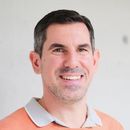
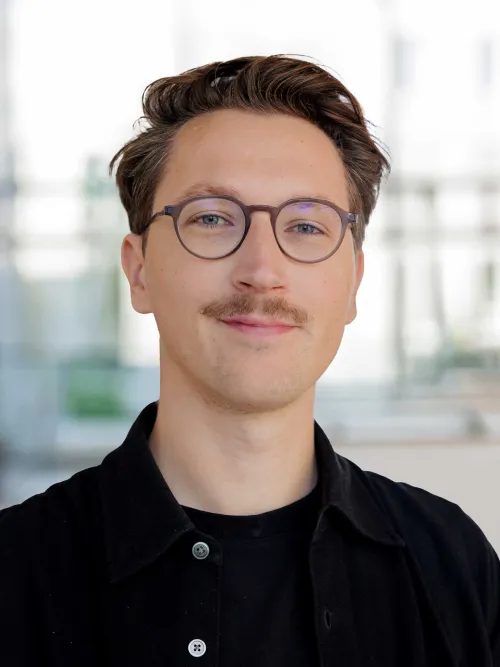
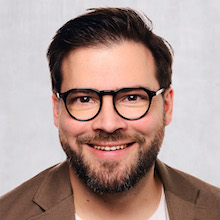
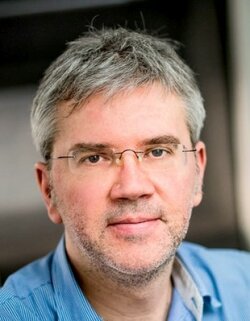
Dr. Artur Yakimovich leads the Machine Learning for Infection and Disease group at the Helmholtz Center Dresden-Rossendorf (HZDR) and is affiliated with the CASUS Center for Advanced Systems Understanding. His research focuses on applying artificial intelligence to infection biology and biomedical imaging, with a particular emphasis on virus-host interactions and microscopy image analysis. Research areas include deep learning , computational virology , biomedical image processing , and AI-driven diagnostics . Developed open-source tools like PyPlaque for viral plaque analysis. Active in high-content screening and physics-informed neural networks for imaging applications. Current work spans urinary tract infection diagnostics , super-resolution microscopy , and computational modeling of virus transmission .
Prof. Dr. Holger Brandt serves as Professor of Psychometrics at the Methods Center within the Department of Social Sciences, Faculty of Economics and Social Sciences, Eberhard Karls University of Tübingen since August 2021. Previously, he held Assistant Professor positions at the University of Zurich (2019-2021) and University of Kansas (2016-2019), following a postdoctoral fellowship at Tübingen's Hector Institute for Empirical Educational Research (2013-2016). His educational background includes a PhD (Promotion) from Goethe University Frankfurt's Institute of Psychology in 2013. Brandt's research pioneers advanced methodological frameworks at the intersection of psychometrics, statistics, and machine learning. He specializes in developing dynamic models for intensive longitudinal data, Bayesian estimation techniques, causal mediator analysis, and identification of inattentive response behaviors in surveys. His work rigorously addresses challenges in measurement invariance, structural equation modeling, and handling complex dependencies in social science data. Analysis of his recent publications reveals a dominant focus on Bayesian approaches for latent variable modeling, particularly spike-and-slab priors and latent class methods. His research consistently targets data quality issues in survey methodology while advancing causal inference techniques that relax traditional no-unmeasured-confounder assumptions. Applications span educational research, psychological assessment, and therapeutic alliance dynamics. As a core member of Tübingen's Methods Center, Brandt provides critical methodological infrastructure for social science research across the university, supporting researchers through statistical consulting and advanced methodology development.
Oliver Czulo is a Professor of Translation Studies at the Institute for Applied Linguistics and Translatology (IALT) within the Humanities Centre at the University of Leipzig since April 2017. Previously, he served as a Junior Professor for Translation-Relevant Linguistics at the University of Mainz's Germersheim campus from 2013-2017, following a research assistant role there from 2007-2013. Education : Diploma in Computational Linguistics (Saarland University), PhD in Machine Translation (Saarland University, 2011) Research Focus : Syntax-semantics interface in translation, frame semantics, multilingual corpora applications, and digitalization impacts on multilingual communication Technological Expertise : Translation technologies, machine translation post-editing, corpus-based translation methodologies Awards : DAAD postdoctoral fellowship at ICSI Berkeley (2011-2012), member of Global FrameNet network and European Society for Translation Studies Industry Engagement : Active contributor to debates on translation industry talent gaps and digital teaching practices His recent publications analyze machine translation's societal impacts, metaphorical framing in political discourse, and digital communication transformations. He leads the IALT since 2017, continues ORCID-based research (ID: 0000-0003-4408-5811), and maintains office hours by email appointment.
Paul Heinicker is a Researcher at the Department of Design, University of Applied Sciences Potsdam, and co-Principal Investigator for the Volkswagen-funded project Border Values: Operational Relations of Climate and Migration . His work bridges media theory, generative design, and data critique, focusing on the cultural and political dimensions of data visualization and algorithmic systems. PhD: Media Studies, University of Potsdam (2023) Research Projects: Medienpraxiswissen (Ruhr University Bochum), The New Normal (Strelka Institute), Networked Climate Images (University of Applied Sciences Potsdam) His research explores generative design , media theory , and data medialisations , often through experimental diagrammatics and critical analysis of climate data visualizations. Publications span topics like algorithmic bias, digital labor, and planetary-scale media infrastructures. Recent articles include critiques of data visualization ethics, explorations of machine learning in media analysis, and studies of materiality in digital design. Collaborations with Birgit Schneider and others highlight interdisciplinary approaches to climate communication. Contact: paul.heinicker@fh-potsdam.de
Jun Zhu is a professor at the Faculty of Geosciences and Environmental Engineering, Southwest Jiaotong University, Chengdu, China. His research is centered on geospatial digital twins, virtual geographic environments, and intelligent visualization for disaster risk management, with strong interdisciplinary work in AI, remote sensing, and VR-based simulation. His research interests include: Geospatial Digital Twins Virtual Geographic Environments AI for Remote Sensing 3D and VR-based Disaster Visualization Knowledge Graphs in GIS Public Risk Communication The recent articles (2023–2025) demonstrate a strong trend in integrating large language models, knowledge graphs, and deep learning with geospatial data to build intelligent, interactive, and immersive systems for infrastructure monitoring, disaster simulation, and public engagement. His work emphasizes data-knowledge fusion, human-centered visualization, and real-world applicability in urban and environmental contexts. Scientific Awards: No awards listed in the provided text. Advising and Grants: While Jun Zhu has extensive collaboration with researchers such as Weilian Li, Qing Zhu, Yakun Xie, and Jianbo Lai, and appears to lead research projects, there is no explicit mention of student advising, grant funding, or project titles in the provided data. Labs and Teams: Jun Zhu is likely part of a research group focused on digital twins and geospatial AI at Southwest Jiaotong University, collaborating closely with colleagues in geoinformatics and remote sensing, though specific lab names are not mentioned.
Prof. Dr. Steffen Rulands is a Professor and group leader at the Ludwig Maximilian University of Munich (LMU) since 2022, where he leads the Rulands Group within the Faculty of Physics. Previously, he served as a Group leader (W2 level) at the Max Planck Institute for the Physics of Complex Systems from 2017 to 2022. His academic journey includes a Doctoral degree in physics from LMU in 2013, followed by research positions at the University of Cambridge as a Research associate in Ben Simons' group (2013-2015) and as a Herchel-Smith fellow (2015-2016). Dr. Rulands' research bridges theoretical physics with biological applications, focusing on two primary areas: using statistical physics to understand collective behavior in artificial intelligence and robotic systems, and developing theoretical tools for analyzing genomic data with applications to development, regeneration, and aging. His work integrates concepts from non-equilibrium statistical physics, field theory, and machine learning to address complex biological questions. His recent publications demonstrate a strong interdisciplinary approach, with research spanning epigenetics, DNA methylation dynamics during aging, gene expression fluctuations, and the physics of collective behavior in both biological and artificial systems. He has developed novel theoretical frameworks for understanding spatial patterns in biological systems, clonal dynamics in tissue development, and the statistical mechanics of aging processes. ERC Starting Grant awardee (2021) Herchel-Smith Fellow, University of Cambridge (2015-2016) Prof. Rulands actively collaborates with experimentalists and clinicians, applying theoretical insights to personalized medicine. His research is supported by multiple funding sources including the European Research Council (ERC), EraPerMed, German Research Foundation (DFG), and LMUinnovative: Functional Nanosystems. He mentors a diverse team of PhD students, postdocs, and master's students working on cutting-edge interdisciplinary projects at the intersection of physics, biology, and computer science.
Kevin Bönisch is a researcher at the Text Technology Lab, Goethe University Frankfurt. With a background in software development (5 years as C# .NET full-stack developer) and concurrent Master's studies in Computer Science, he bridges practical software engineering with academic research through projects like the Unified Corpus Explorer and Viki LibraRy virtual reality systems. His work spans NLP, 3D visualization, and machine learning applications. DFG New Data Spaces program contributor Kaggle competition participant GitHub demonstrator Research focuses include annotation-based corpus exploration , causal inference in LLMs , and collaborative hypertext systems . His 2025 NAACL Best Demo Paper showcased UCE system innovations, while 2024 LIRAI workshop work demonstrated legal document retrieval via SVR ensembles. Notable awards include IAV-Coding competition first place , DESIGNRUSH website design recognition , and Goethe-University Innovation Prize finalist . Key projects: ROBERT dialogue system , BIOfid biodiversity service , and Bundestags-Mine legislative analysis .
Dr.-Ing. Anna Krause is a researcher at the Chair of Data Science (Informatik X) within the Faculty of Mathematics and Computer Science at the University of Würzburg. She leads the Deep Learning for Dynamical Systems Group and has been actively involved in teaching at the university since 2019, including courses on Machine Learning for Time Series Analysis and Data Mining. Doctoral degree in Electrical Engineering (2019), University of Hannover Diploma in Electrical Engineering (2009), Technical University Dresden Her research focuses on Environmental Sensing and Time Series Analysis , particularly on enhancing physics-based models using machine learning techniques for meteorological applications and sparse sensor networks. She has made significant contributions to explainable AI, climate modeling, and fraud detection systems. Anna's recent publications demonstrate expertise in climate modeling (ConvMOS, ICLR 2024-2025), physics-informed neural networks (TaylorPDENet, ECMLPKDD 2023), and fraud detection (MIDAS workshops, ECMLPKDD 2020-2023). She actively contributes to conferences as organizer and PC member, including ECMLPKDD and ICLR workshops. Scientific Awards Best ML Innovation Award (2020) for Deep Learning in Climate Modeling Best Student Paper Award (2020) for Multi-Task Land Use Regression Best Paper Award (2020) for Financial Fraud Detection with INALU The DynaBench dataset introduced in 2023 provides benchmark tools for learning dynamical systems from low-resolution data. Her work combines theoretical advancements with practical implementations, including edge computing applications for beekeeping monitoring systems.
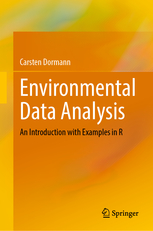
Carsten Dormann is a Full Professor at the University of Freiburg since 2011, working in the Department of Biometry and Environmental System Analysis within the Faculty of Biology. His work bridges statistical methodology with ecological applications, focusing on improving analytical approaches in environmental science. He leads research on statistical ecology, species distribution modeling, and plant-pollinator interactions, with a strong emphasis on methodological rigor and evidence-based environmental science. Professor Dormann completed his Diploma (equivalent to an MSc) in Biology at the University of Kiel (1996), followed by a PhD in Plant Ecology from the University of Aberdeen (2001) under Dr. Sarah Woodin and Prof. Steve Albon. He earned his Habilitation at the University of Göttingen (2008), and worked as a PostDoc and Senior Research Scientist at the Helmholtz Center for Environmental Research-UFZ (2002-2011) before joining Freiburg. Dr. Dormann's research focuses on comparing, challenging and improving the toolbox of statistical ecology . He investigates how ecological datasets, often small but complex, can be properly analyzed when common statistical approaches may fail. His work emphasizes formal statistical integration of ecological models and data , advocating for rigorous representation of ecological understanding through quantitative predictions. He champions an evidence focus in environmental science , drawing parallels with evidence-based medicine to promote transparent evaluation of causal mechanisms. Specific areas include spatial autocorrelation, null models, collinearity, species distribution modeling, and plant-pollinator interactions. His recent publications reveal a strong focus on ecological network analysis, species distribution modeling under climate change, and methodological improvements in ecological statistics. The research spans theoretical developments in network topology and practical applications in conservation, with increasing integration of machine learning approaches while maintaining ecological interpretability. A notable trend is the emphasis on temporal dynamics in ecological systems and developing more robust methods for predicting ecological responses to environmental change. Professor Dormann currently supervises twelve PhD students across various ecological and statistical topics, with an extensive record of past supervision spanning over thirty doctoral candidates. His teaching contributions include authoring the textbook Environmental Data Analysis: An Introduction with Examples in R (2017) and developing statistics courses for environmental sciences. He maintains an active scholarly blog discussing methodological challenges in ecology, with recent posts addressing species richness metrics, bias-variance trade-offs, and the relationship between ecological science and policy. His work bridges theoretical statistical development with practical ecological applications, emphasizing scientific credibility and methodological rigor throughout.
Sujoy Bhore is affiliated with the Indian Institute of Technology Bombay (Department of Computer Science & Engineering), Université libre de Bruxelles, and Technische Universität Wien. His research focuses on algorithms , computational geometry , and graph theory , with a strong emphasis on geometric optimization , dynamic data structures , and parameterized algorithms . Recent publications highlight advancements in Euclidean spanners for sparse network design online algorithms for dynamic geometric problems Steiner trees and tree covers in planar domains k-median/means approximation using coresets His collaborative work spans institutions, with frequent joint research on geometric intersection graphs , map labeling , and planar graph embeddings . Co-authors include prominent researchers like Csaba D. Tóth, Martin Nöllenburg, and Timothy M. Chan. While no formal awards are documented here, his contributions to algorithmic complexity and geometric networks remain significant.
Raul Castro Fernandez is a prominent researcher in data management and database systems, with a focus on data discovery, integration, and marketplaces. He has collaborated extensively with leading institutions and researchers, contributing to projects like Data Station and Nexus for secure data sharing. His work bridges theoretical innovation with practical implementations in cloud optimization, differential privacy, and LLM-driven data tools. Key Contributions : Data market frameworks, LLM applications in databases, differential privacy platforms Collaborators : Yue Gong, Samuel Madden, Michael Stonebraker, Eugene Wu, Kyle Chard Research Themes Fernandez explores automated metadata management for data catalogs, spatiotemporal data sharing with privacy guarantees, and LLM-based data discovery . His work on stateful stream processing (e.g., SABER system) and cost optimization in cloud analytics shows technical depth. Recent Trends 2023-2025 publications highlight his pivot toward LLM applications in data management, including tabular data representation and hypothesis assessment tools. He also investigates sustainability in HPC through carbon credit systems.
Deng Cai is a Professor at Zhejiang University's College of Computer Science, working in the State Key Laboratory of CAD&CG in Hangzhou, China. He also maintains an affiliation with Tencent AI Lab, demonstrating his strong connection between academic research and industry applications in artificial intelligence. His academic background includes a PhD from the University of Illinois at Urbana-Champaign, Department of Computer Science (2009). Professor Cai's research spans multiple domains within artificial intelligence, with particular emphasis on computer vision, deep learning, and their applications. His work shows strong focus on 3D object detection, lane detection for autonomous vehicles, and the application of large language models to various vision tasks. He has made significant contributions to traffic forecasting, trajectory prediction, and CAD generation systems. His recent work increasingly integrates large language models with computer vision tasks, demonstrating the evolving nature of his research interests toward multimodal AI systems. The trajectory of Professor Cai's publications reveals a clear progression from foundational computer vision and machine learning research toward increasingly complex and applied systems. His work shows strong emphasis on practical applications in autonomous driving, with numerous papers on 3D object detection, lane detection, and trajectory prediction. More recently, his research has expanded to include generative models for CAD systems and video customization, often leveraging large language models in innovative ways. The consistent publication output across top-tier venues including CVPR, ICCV, AAAI, and NeurIPS demonstrates sustained research productivity and impact. Professor Cai has established significant research collaborations, particularly with Xiaofei He (161 joint publications), Haifeng Liu (50), Zhou Zhao (42), Wenxiao Wang (41), and Binbin Lin (39). His work appears across diverse publication venues including IEEE Transactions on Pattern Analysis and Machine Intelligence, IEEE Transactions on Image Processing, and proceedings of major AI conferences. The breadth of his publication venues reflects the interdisciplinary nature of his research spanning theoretical machine learning to applied computer vision systems. Professor Cai leads research activities within Zhejiang University's College of Computer Science, particularly focusing on the State Key Laboratory of CAD&CG. His work bridges academic research with practical industry applications through his affiliation with Tencent AI Lab. The laboratory environment supports research in computer vision, machine learning, and their applications to real-world problems in autonomous systems, content generation, and intelligent transportation.
Prof. Dr. Malte Schilling works at the University of Münster within the Department of Mathematics and Computer Science . His research focuses on the intersection of Artificial Intelligence , Robotics , and Neuroinformatics , with particular emphasis on Deep Reinforcement Learning and Modular AI Systems . He leads projects like Tutor.AI , a science-based learning assistant, and develops Predictive AI models for e-mobility in trucking . His recent publications highlight innovative approaches in biomimetic robotics , including decentralized controllers for hexapod locomotion and neuroWalknet architecture for context-dependent behavior. He also contributes to graph-based learning models for traffic prediction and explainable AI through counterfactual generation. Collaborative work spans institutions and disciplines, reflecting his interdisciplinary focus. Malte Schilling's research integrates principles from neuroscience and computational biology to enhance AI adaptivity. He applies these insights to robotic systems and real-world challenges like urban mobility prediction. His work demonstrates strong connections between theoretical computer science and practical AI implementations .
Prof. Dr. Christian Klaes leads the KlaesLab at the Ruhr-University Bochum 's Department of Neurotechnology , focusing on advanced neuroprostheses and assistive devices for paralysis rehabilitation. His work integrates neuroscience , machine learning , and virtual reality to decode brain signals for controlling exoskeletons and BCI systems . Key research areas: Brain-Computer Interfaces , Neural Implants , VR-based Neurorehabilitation , and AI-driven Medical Diagnostics Collaborations with Caltech , German Primate Center , and University of Madeira expand his interdisciplinary impact. Recent publications highlight advancements in EEG decoding accuracy , spike sorting algorithms , and somatosensory feedback systems , demonstrating his lab's contributions to neural signal processing and embedded AI platforms for future implants. Current projects include developing smart upper-limb exoskeletons , exploring terahertz brain imaging , and pioneering phantom touch illusions for sensory augmentation in VR environments.
Volker Dürr is a Professor of Biological Cybernetics at Bielefeld University , Faculty of Biology, and a member of the Center for Cognitive Interaction Technology (CITEC) . His work focuses on sensory control of locomotion , active tactile sensing in insects , and biomimetic modeling of movement systems. Education : Habilitation in Zoology (University of Cologne, 2008; Bielefeld, 2005), PhD in Biology (Bielefeld, 1998), Diploma in Biology (Tübingen, 1994) Academic Career : Professor at Bielefeld (2009-present), Junior Research Group Leader (University of Cologne, 2007-2009), Research Assistant (Bielefeld, 1998-2006) His research investigates how insects use antennal mechanosensory systems and proprioception to control locomotion in complex environments. Key themes include goal-directed movements , sensorimotor integration , and biomimetic robotics . Publications emphasize tactile sensing (15/23 articles), neural control of movement (9/23), biomechanical modeling (7/23), and cross-species locomotion analysis (4/23). Recent work explores virtual reality paradigms for locomotion studies and spiking neural networks for proprioceptive modeling.