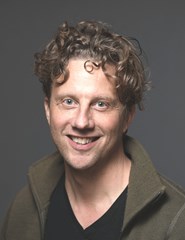
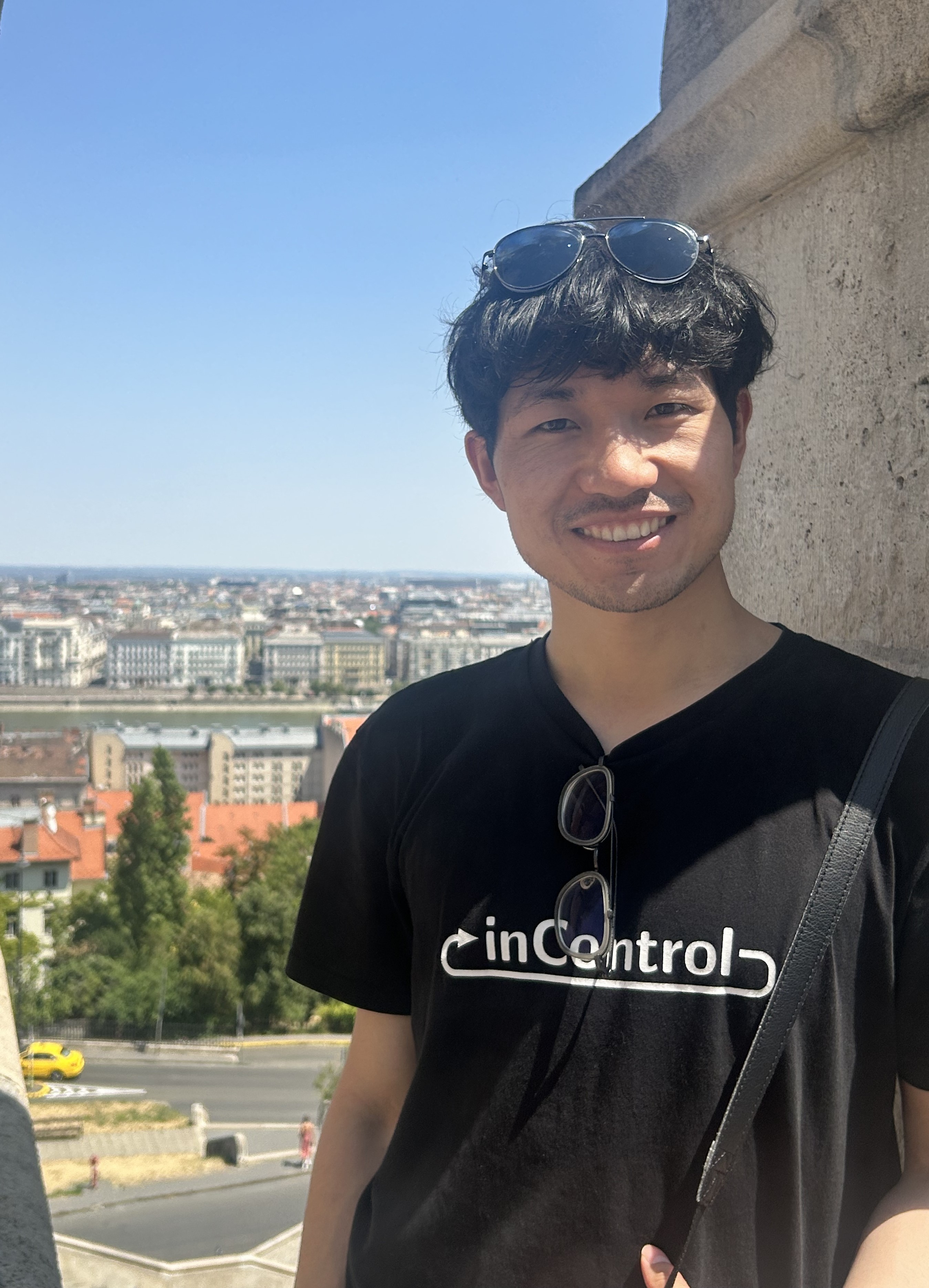
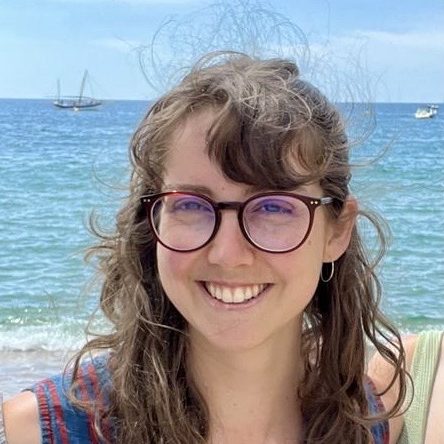
Krister Wolff is an Associate Professor of Adaptive Systems at the Department of Mechanics and Maritime Sciences (M2) at Chalmers University of Technology. He also serves part-time as Vice Head of Department for Education. His research focuses on applying artificial intelligence, machine learning, and bio-inspired methods to robotics, autonomous systems, and self-driving vehicles. He teaches in the international Master's program in Complex Adaptive Systems. His work includes projects such as AI-supported vehicle suspension design, propeller optimization using genetic algorithms, and developing interactive robots for social distancing in healthcare settings. He has contributed to over 39 publications and 9 research projects, collaborating with organizations like VINNOVA and the Swedish Transport Administration. Notable projects include ISOLDE for hospital robots and Tactical Decision-Making in Autonomous Driving funded by the Wallenberg Foundation. Key areas of expertise include reinforcement learning for autonomous vehicles, evolutionary algorithms in design optimization, and driver behavior modeling in critical scenarios. His research bridges theory and practical applications, emphasizing collaboration between academia and industry.
Yonghao Xu is an Assistant Professor at the Department of Electrical Engineering , Linköping University , and affiliated with the Computer Vision Laboratory (CVL) and the Wallenberg Autonomous Systems Program (WASP) . His research bridges remote sensing , machine learning , and AI security . Research Trends Xu's recent publications focus on adversarial attacks and defenses in remote sensing, domain adaptation for semantic segmentation, and benchmark dataset creation (e.g., Sen2Fire). His work addresses challenges in urban sustainability , geospatial data analysis , and deep learning robustness . Labs & Programs He is associated with the Computer Vision Laboratory (CVL) , contributing to autonomous systems through the Wallenberg Autonomous Systems Program (WASP) , a major Swedish initiative in AI and robotics.
Giovanni Volpe is a Professor at the Department of Physics, University of Gothenburg. His research focuses on nanophotonics, optical tweezers, active matter, and machine learning applications in microscopy and neurodegenerative diseases. He leads the Soft Matter Lab (http://softmatterlab.org/) and collaborates internationally in interdisciplinary projects. His work bridges physics, biology, and AI, addressing challenges in nanoparticle manipulation, biomedical imaging, and neurodegenerative disease modeling. Key research areas include optical trapping of nanoparticles, self-assembly of colloidal systems, and leveraging deep learning for microscopy and sensor technologies. Recent publications span neurodegenerative disease pathways, advanced optical microscopy techniques, and plasmonic sensor development. Volpe's team has pioneered methods in computational neuroscience and nanotechnology. His lab's innovations include novel optical tweezers control algorithms and neural network models for analyzing complex biological systems. Collaborations span materials science, biophysics, and cognitive neuroscience, with applications in healthcare and environmental monitoring.
Kalle Åström is a Professor at Lund University's Centre for Mathematical Sciences within the Faculty of Engineering. He coordinates Lund University's Natural and Artificial Cognition profile area and the AI Lund network. His affiliations include ELLIIT (Linköping-Lund IT initiative), eSSENCE (e-Science Collaboration), Stroke Imaging Research group, and Computer Vision and Machine Learning research groups. His research spans computer vision, machine learning, and mathematical modeling with applications in medical imaging, autonomous systems, and cognitive vision. Key interests include geometry of multiple views, structure from motion using heterogeneous sensors, medical image analysis, and handwriting recognition. His work contributes to UN Sustainable Development Goals through AI applications in healthcare and engineering. Recent publications (2025) demonstrate strong trends in medical AI (Alzheimer's diagnostics, breast cancer classification) and autonomous systems (safety testing, sensor fusion). His work bridges theoretical mathematics with practical applications across healthcare and robotics domains. Best Nordic Ph.D. Thesis in Pattern Recognition (1995-1996) Innovation Cup 1991 for Autonomous Guided Vehicles EU IST Grand Prize 2003 (Decuma startup) Åström supervises graduate students and leads multiple active research projects including machine learning for Parkinson's disease analysis, audiovisual drone detection (Vinnova-funded), and Alzheimer's disease modeling. He co-founded startups Decuma (1999), Cognimatics (2003), Spiideo (2012), and Neuromathics (2015), and serves on boards of the Royal Swedish Physiographic Society and Swedish AI Society (SAIS). His research integrates mathematical rigor with real-world AI applications through extensive industry-academia collaborations.
Lennart Svensson is a Professor at Chalmers University of Technology in the Signal Processing research group. His work focuses on nonlinear filtering, multi-object tracking, Bayesian statistics, and deep machine learning with applications in autonomous systems and sensor fusion. Research Interests Nonlinear Filtering and Bayesian Inference Multi-Object Tracking and Sensor Fusion Deep Learning for Autonomous Systems Performance Metrics (GOSPA, T-GOSPA) Lidar-Camera Fusion and Radiance Fields 5G SLAM and mmWave Sensing Publications Trends Recent work emphasizes uncertainty-aware multi-object tracking metrics, trajectory estimation using Poisson Multi-Bernoulli Mixtures, and sensor fusion techniques for autonomous driving. His research integrates Bayesian methods with deep learning for applications in automotive radar, lidar, and 5G positioning systems. Contact Email: lennart.svensson@chalmers.se
Meng Yuan is a Marie Skłodowska-Curie Fellow at Chalmers University of Technology , affiliated with the Control Engineering department. Previously, he was a Research Fellow at the Rehabilitation Research Institute of Singapore, Nanyang Technological University, and earned his PhD in Electrical and Electronic Engineering from the University of Melbourne. Research Focus: Control theory, energy systems, rehabilitation engineering, robotics, and industrial automation. Notable Projects: Integration of reinforcement learning and predictive control for energy management in smart homes (SmartHOME), funded by the European Commission (EU). His recent publications explore machine learning for industrial load forecasting, deep reinforcement learning in manufacturing optimization, and safety-critical control systems for assistive robots. A 2024 Advanced Engineering Informatics paper highlights his work on steel logistics, while a 2023 IEEE Transactions on Cybernetics article details wheelchair speed control using robust MPC. Awards: Marie Skłodowska-Curie Fellowship Collaborative Networks: Active in smart home energy projects and industrial robotics teams at Chalmers. Supervises research in control algorithm development but no specific students are listed in the provided data.
Jonas Sjöberg is a Full Professor of Mechatronics at Chalmers University of Technology, where he leads the Mechatronic research group in the College of Engineering. His research spans multiple aspects of mechatronic systems with a strong focus on automotive applications. Sjöberg holds leadership roles in numerous research projects related to autonomous vehicles, vehicle control systems, and transportation safety. His research interests encompass a broad spectrum of mechatronics applications, with particular emphasis on model-based methods, signal processing, control systems, system identification, and optimization for design and product development of mechatronic systems. Sjöberg's work bridges theoretical control engineering with practical automotive applications, especially in the domains of Automotive Active Safety and Hybrid Electric Vehicles. Analysis of Sjöberg's recent publications reveals a strong research trajectory focused on autonomous vehicle technologies, with particular attention to vehicle dynamics control, intersection safety, road surface condition estimation, and optimization of vehicle maneuvers. His work demonstrates a consistent approach of applying advanced control theory to solve real-world transportation challenges, with increasing emphasis on machine learning techniques integrated with traditional control systems. Sjöberg actively supervises research and education at both undergraduate and graduate levels while leading multiple research projects funded by VINNOVA, the European Commission, and other organizations. His research group collaborates extensively with both academic institutions and industry partners in the automotive sector. His laboratory work focuses on mechatronic systems development, particularly for automotive applications including autonomous bicycles, bus docking systems, and vehicle control algorithms. The research group maintains strong connections with the automotive industry, particularly in Sweden's robust vehicle technology ecosystem.
Mehdi Tarkian is a Senior Associate Professor at Linköping University within the Department of Management and Engineering (IEI) , focusing on the Product Realisation division. His research and teaching emphasize Design Automation, leveraging methods like Knowledge-Based Engineering (KBE), Machine Learning, and Optimization. He co-founded the spin-off company XperDi in 2012, based on his research, and returned to LiU full-time in 2017. Current research projects include AutoPack (ML-driven CAD automation), ADAPT (design automation for production preparation), and DeProtion (construction sector design automation). He teaches courses such as Collaborative Multidisciplinary Design Optimization (TMKT79) and Product Modeling (TMKT57) , both highly rated by students. Publications highlight advancements in optical character recognition (OCR) for engineering drawings, reinforcement learning in unstructured production environments, and automated fixture design. His work bridges academic research with industrial applications, aiming to reduce repetitive tasks and enhance engineering intuition. He is part of the Automation Lab and the Unit of Machine Design and Industrial Production (PRODKOP) , collaborating with industry partners to translate research into practical solutions.
Martin Servin is an Associate Professor at the Department of Physics, Umeå University, and leads the Digital Physics research group within the UMIT Research Lab. His work focuses on computational modeling and simulation of granular materials, robots, and vehicles, with applications in AI-based control and perception. He holds a doctoral degree from Umeå University (2003) and has pioneered research in real-time physics simulation, particularly in the context of autonomous machinery and off-road robotics. Research Interests : Digital physics, granular materials simulation, autonomous systems, reinforcement learning, and simulation-to-reality transfer. His group develops advanced simulation tools for industries like forestry, mining, and construction. Key Projects : Mistra Digital Forest (2019–2026) AILUR (Digital Twin for AI-controlled Lunar Robotics) XSCAVE (Explainable, Safe Control for Heavy Machinery) Publications emphasize simulation methodologies, AI integration, and real-world validation across robotics, vehicle dynamics, and granular mechanics. Notable contributions include work on wheel loader dynamics, deep reinforcement learning for control systems, and terrain modeling. Awards include the Spin-off award for industry-grade physics in Unreal Engine (2018) , recognizing his role in Algoryx Simulations, a spin-off company commercializing his research. Labs/Teams : UMIT Research Lab, Digital Physics Group, and collaborations with Algoryx Simulations.
Jiabao He is a Ph.D. Student in the Division of Decision and Control Systems at KTH Royal Institute of Technology , supervised by Prof. Håkan Hjalmarsson. He holds a Master's degree in Control Engineering (2021) and a Bachelor's degree in Mechanical Engineering (2018) from Tsinghua University. Education M.S. in Control Engineering (Tsinghua University, 2021) B.S. in Mechanical Engineering (Tsinghua University, 2018) His research interests lie in systems, control theory, and information theory , with current focus on subspace identification, finite-sample analysis , and data-driven control . Past work explored fuzzy control and descriptor systems . His publications reflect expertise in subspace methods , statistical learning , and Markov parameter identification . Conference Participation includes Reglermötet 2025 (Lund) , 63rd IEEE CDC 2024 (Milan) , 32nd ERNSI Workshop 2024 (Venice) , and SYSID 2024 (Boston) . He is a reviewer for journals and conferences like IEEE Transactions on Automatic Control and IFAC Symposium on System Identification . Scientific Awards IEEE TC SIAC Student Paper Award (2025) Travel Scholarship from Karl Engvers Foundation (2024) Travel Scholarship from Björns stiftelse (2024) He has served as a Teaching Assistant for courses such as EL1020 Automatic Control and EL2520 Control Theory and Practice , and supervised Bachelor theses on Learning in Dynamical Systems (2023-2024). His work bridges theoretical control methods with practical applications in descriptor systems and space robotics.
Kıvanç Tatar is an Assistant Professor in Interactive AI at Chalmers University of Technology, Sweden. His work bridges Music, Artificial Intelligence, Interactive Arts, and Virtual Reality, creating multimodal AI systems for performances, immersive environments, and generative art. Exhibited globally at events like Ars Electronica (2017, 2020) and Rio Olympics 2016 Founder of the AI in Computational Arts, Music, and Games research group Projects integrate AI with movement computation, VR, and livecoding His research focuses on musical AI , interactive systems , and creative algorithms , with applications in real-time performance, environmental art, and robotics. Recent projects include Koami 2025 (upcoming livecoding), Latent Timbre Synthesis (2021), and Brush of AI (2020 NFT series). Key Collaborations : A.I.D (Istanbul), Gold Saucer (Vancouver) Exhibition Highlights : CHI 2018, Mutek Montreal 2018, Contemporary Istanbul PlugIn 2019
Petter Falkman is an Associate Professor in Systems and Control Engineering at Chalmers University of Technology, where he leads research in the Automation research group. With 68 publications spanning over two decades, his work bridges theoretical control systems with practical industrial applications, particularly in manufacturing and robotics. His research has been supported by major funding bodies including VINNOVA and European Commission projects. Falkman's research primarily focuses on intelligent automation systems, with key contributions in sequence planning, virtual commissioning, and human-robot interaction. His work integrates formal methods with practical industrial applications, developing frameworks like the Sequence Planner for control of intelligent automation systems. His recent publications demonstrate a strong emphasis on data-driven approaches, digital twin technologies, and the application of virtual reality for industrial applications. The research shows a clear trajectory toward increasingly sophisticated integration of human factors with automation systems, particularly through eye tracking and movement prediction technologies. Falkman has led or participated in 10 major research projects from 2011-2025, including CLOUDS (2022-2025) on circular solutions for sustainable production systems, UNICORN (2017-2021) on robotic refuse handling, and several VINNOVA-funded projects on virtual preparation and industrial automation. His collaborative network includes researchers across Chalmers and industry partners like Volvo Group, demonstrating strong industry-academia connections. Falkman has established himself as a key contributor to the development of frameworks for intelligent automation, with particular expertise in translating theoretical control concepts into practical industrial applications. His work on the Sequence Planner framework represents a significant contribution to the field, enabling more efficient preparation and commissioning of automation systems.
Alice Haynes is a Digital Futures Postdoctoral Fellow at KTH Royal Institute of Technology, working on the Felt Connections project under the Division of Media Technology and Interaction Design . She collaborates with Prof. Kristina Höök and Associate Prof. Iolanda Leite to create shape-changing textile interfaces that foster meaningful bodily interactions for children and adults. Education PhD in Engineering Mathematics, University of Bristol (2022) Specialization in Soft Robotics and Haptic Interfaces Her research blends soft robotics, e-textiles, and soma design to develop tactile technologies that prioritize bodily engagement over traditional visual/auditory interfaces. Current work explores: first-person design for scoliosis, symmetry-asymmetry dynamics in bodily interactions, and soma-driven methods that emphasize felt experiences. Key article trends include shape-changing textiles (SMA-actuated smocking, machine embroidery), emotional/therapeutic applications (anxiety relief, social touch), and multisensory integration (audio-tactile mappings, biosignal interaction). Scientific Contributions Recipient of Digital Futures Postdoctoral Fellowship Co-design methodologies for child-centered technology Material-driven evaluation frameworks for e-textiles Embodied interaction paradigms through haptic cushions Alice teaches Human-Computer Interaction Research Seminars (DH2632) and Media Technology and Interaction Design (DM2601) , while actively seeking Master's students for collaborative thesis work.
Yiannis Karayiannidis is a Senior Researcher (equivalent to Associate Professor/Research) with the Division of Systems and Control (SYSCON), Department of Electrical Engineering at Chalmers University of Technology. He maintains a significant affiliation with the Department of Robotics, Perception and Learning at KTH Royal Institute of Technology, demonstrating his cross-institutional impact in the Swedish robotics community. Dr. Karayiannidis earned his Diploma in Engineering in 2004, followed by a Ph.D. in Engineering in 2009, and achieved Docent status in 2017. His academic journey has focused on robotics and control systems, establishing him as a leading researcher in these fields. His primary research interests span robot control, robotic manipulation in human-centered environments, dual arm manipulation, force control, robotic assembly, control of physical human-robot interaction, multi-agent robotic systems, adaptive control and nonlinear control systems. Dr. Karayiannidis has made significant contributions to the understanding of deformable object manipulation, contact-rich robotic tasks, and human-robot collaboration. His work bridges theoretical control systems with practical robotic applications, particularly in scenarios requiring precise physical interaction. Analysis of his recent publications reveals a strong focus on advanced manipulation techniques, particularly for deformable linear objects, and human-robot collaborative tasks. His research increasingly incorporates machine learning approaches, especially reinforcement learning, to address complex manipulation challenges. There is also a clear emphasis on practical applications in industrial settings, with several projects related to robotic assembly and cable routing. Dr. Karayiannidis serves as Associate Editor for the IEEE Robotics and Automation Letters, IEEE/RSJ International Conference on Intelligent Robots and Systems (IROS), and the European Control Conference. He is also the treasurer of the IEEE Robotics Chapter in Sweden and a WASP-affiliated researcher. He has served as Principal Investigator for multiple research projects including DARMA and DARMA_bridge (funded by WASP), CHROMA (funded by VR), and the H2020 SARAFun project. His current projects include "Learning & Understanding Human-Centered Robotic Manipulation Strategies" (2020-2025), "Computer Vision and Machine Learning for Robot Systems" (2019-2021), and "ViMCoR" (2019-2021) in collaboration with Volvo Group. Dr. Karayiannidis is actively involved in the robotics research community through his editorial roles and project leadership. His work connects theoretical control systems with practical robotic applications, particularly in industrial and human-robot collaborative settings.
Sverker Molander is a Full Professor at the Environmental Systems Analysis group at Chalmers University. His research integrates systems approaches to analyze human-induced environmental change and its mitigation, with a focus on chemical risk assessment, material flows, and renewable energy systems. He actively collaborates with social scientists to examine technology-society-ecosystem interfaces and participates in international programs like Sida's collaboration with Universidade Eduardo Mondlane in Mozambique. SETAC Global Science Committee member Baltic Sea Foundation research delegation Kamprad Family Foundation scientific reviewer His work employs environmental risk assessments, life cycle analyses, and substance flow modeling, particularly examining: Toxicological impacts of nanomaterials Renewable energy environmental interactions Chemical exposure limit inconsistencies Multidisciplinary approaches to sustainability Risk communication in chemical supply chains Climate-chemical pollution intersections Recent publications demonstrate expertise in: Ecotoxicity extrapolation methods Machine learning for toxicity prediction Circular tungsten flows Marine energy collision risks Climate-adapted chemical management His research connects technical systems with societal and ecological considerations, emphasizing indicator development and interdisciplinary collaboration.