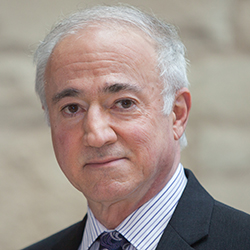
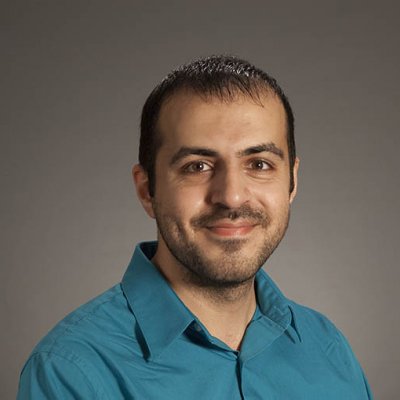
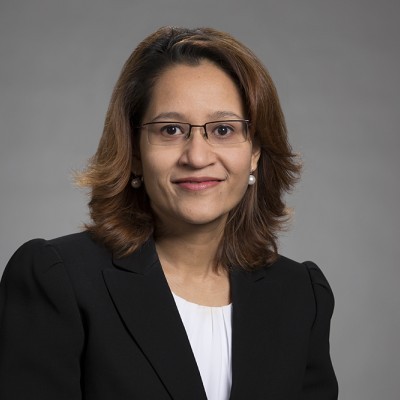
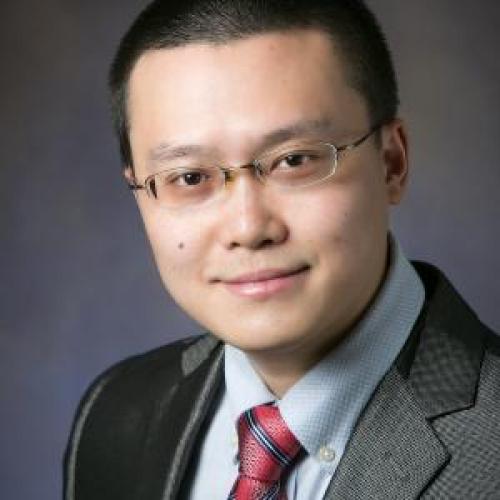
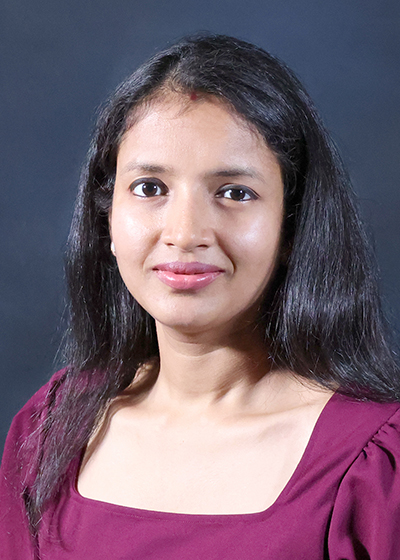
Alan V. Sahakian is a Professor of Electrical and Computer Engineering and Biomedical Engineering (by courtesy) at Northwestern University's McCormick School of Engineering. He serves as Senior Advisor to the Dean and has held leadership roles including Chair of the Electrical Engineering and Computer Science Department (2011–2018). His research focuses on cardiac electrophysiology, biomedical device development, and beyond-CMOS logic systems. Education: Ph.D. in Electrical and Computer Engineering (University of Wisconsin-Madison, 1984), M.S. in Electrical Engineering (1979), and B.S. in Applied Science and Physics (1976). Research Interests: Cardiac arrhythmia monitoring, irreversible electroporation for cancer treatment, non-contact vital signs sensing via millimeter waves, and spintronic logic circuits. Recent Work: His lab develops bioresorbable cardiac pacemakers, transient wireless electrotherapy networks, and machine learning algorithms for atrial flutter classification. Recent publications span Nature Biotechnology , Science , and IEEE journals. Awards: IEEE Fellow, AIMBE Fellow, John A. Dever Professorship (2015–2018). His work bridges engineering and medicine, with over 100 patents and 200+ peer-reviewed articles. Grants & Labs: Funded by NIH, NSF, and industry partners. Directs the Biomedical Instrumentation Lab and collaborates with NorthShore University HealthSystem on clinical translations.
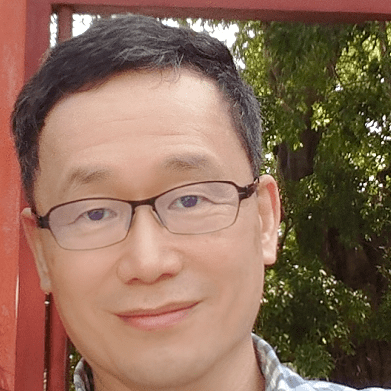
Professor Edwin Chihchuan Kan is a faculty member in the School of Electrical and Computer Engineering at Cornell University. He joined Cornell in 1997 as an Assistant Professor and is now a full Professor. His research focuses on near-field radio frequency sensing and RFID technologies with applications in health monitoring and senior care. Education B.S. in Electrical Engineering, National Taiwan University (1984) M.S. in Electrical and Computer Engineering, University of Illinois at Urbana-Champaign (1988) Ph.D. in Electrical and Computer Engineering, University of Illinois at Urbana-Champaign (1992) Research Interests Professor Kan's research spans multiple areas in electrical engineering and biomedical applications. His primary focus is on near-field radio frequency (RF) sensing technology for monitoring vital signs, muscle activities, and tissue vibration without requiring body contact. This technology enables non-invasive monitoring of internal organs and tissues. He also works extensively with RFID technologies for precision tracking, imaging, and occupant counting. His earlier work focused on CMOS technology and circuits for nonvolatile memories before shifting toward biomedical applications after 2014. His research encompasses several key areas including Sensors and Actuators, Nanobio Applications, Nanotechnology, Semiconductor Physics and Devices, Bioengineering, Biomedical Engineering, Bio-Electrical Engineering, Solid State Electronics, Optoelectronics, MEMs, Integrated Circuits, and Biomedical Imaging and Instrumentation. Research Trends Professor Kan's recent publications demonstrate a clear shift in research focus from traditional semiconductor memory technology toward biomedical applications of RF and sensor technology. His work shows increasing integration of signal processing and machine learning techniques with hardware development. The publications from 2013-2014 reflect this transition period where he was working on both memory technologies (DRAM-Flash hybrid memory, Flash memory security) and emerging biomedical sensor applications (ion-sensitive transistors, CMOS sensing of biological signals, RF biosensors). Scientific Awards Cornell Inventor Award, Cornell University (2006) Robert '55 and Vanne '57 Cowie Excellence in Teaching Award, College of Engineering, Cornell University (2003) Cornell Inventor Award, Cornell University (2003) Best Chapter Chair Award, Institute of Electrical and Electronics Engineers (IEEE) (2002) Presidential Early-Career Award for Scientists and Engineers (PECASE) Award, U.S. Government (2000) Teaching and Service Professor Kan teaches graduate courses on Semiconductor Memories and RFID, and undergraduate courses covering a wide range of topics including Introduction to Microelectronics, Quantum Mechanics, Silicon Devices, Digital Circuit Design, RF Systems, Robust Programming, and Nanofabrication. He served as the ECE Director of Graduate Studies from 2010 to 2013.
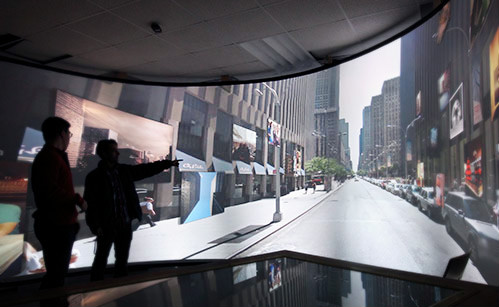
Amitabh Varshney is the Dean of the College of Computer, Mathematical, and Natural Sciences and Professor of Computer Science at the University of Maryland, College Park. He previously directed the UMD Institute for Advanced Computer Studies (2010–2018) and served as interim Vice President for Research (2016–2017 and 2021). His research focuses on virtual/augmented reality (VR/AR), scientific visualization, molecular graphics, and high-performance computing. Collaborations include NVIDIA, Honda, IBM, and the University of Maryland, Baltimore (UMB). Education: B.Tech. (IIT Delhi, 1989), M.S. and Ph.D. (UNC Chapel Hill, 1991 and 1994). Research highlights include molecular surface algorithms, GPU computing, and immersive technologies for healthcare and education. Awards include the NSF CAREER Award (1995), IEEE Visualization Technical Achievement Award (2004), and IEEE Fellow (2010). He leads the NVIDIA CUDA Center of Excellence and co-founded the Maryland Blended Reality Center. Recent work explores nanophotonics for AR/VR displays, VR medical training, and bias detection in AI systems. His interdisciplinary projects address challenges in personalized medicine, pain management, and implicit bias training through extended reality (XR). Key Projects: Augmentarium (immersive infrastructure), CHIB (healthcare bioinformatics), Immersive Media Design Program. Grants: NSF, NIH, industry partnerships. Awards: NSF CAREER, IEEE Technical Achievement Award, IEEE Fellow.
Dr. Vinod Gopaldasani is the Associate Dean (Global Engagement) at the University of Wollongong's Faculty of Arts, Social Sciences and Humanities. He holds a Senior Lecturer position in Occupational Health and Safety within the School of Health and Society and serves as Discipline Lead for the same department. He graduated with an MBBS from the University of Ibadan, Nigeria, and a PhD from the University of Wollongong. His research focuses on occupational health, public health promotion, epidemiology, and AI applications in health and safety. He leads the Centre for Occupational Public and Environmental Research in Safety and Health (COPERSH) and has secured multiple grants for projects addressing silica exposure, diesel emissions, and worker safety. His awards include the 2023 Vice Chancellor’s Research Partnership Award and multiple teaching excellence recognitions. Dr. Gopaldasani actively supervises higher-degree research students and coordinates postgraduate programs in occupational health and safety. Key research interests include AI-driven health solutions, respiratory safety, musculoskeletal disorders in aged care workers, and pandemic response in diverse communities. He has collaborated internationally, notably in Chilean mining safety. His work bridges epidemiology, toxicology, and workplace policy to improve health outcomes and safety practices globally. Education: MBBS (University of Ibadan), PhD (University of Wollongong) Awards: OCTAL Awards (2018, 2019), Research Excellence Awards, Postgraduate Scholarships Leadership Roles: COPERSH Director, Discipline Lead, Academic Program Coordinator Grants: Over 22 projects funded by Safe Work Australia, NSW RFS, and industry partners
Chao Deng is a Professorial Fellow at the University of Wollongong, affiliated with the School of Medical, Indigenous and Health Sciences within the Faculty of Science, Medicine and Health. He holds a PhD from the University of New England. His research focuses on neurosciences, digital health, aged care, health informatics, psychopharmacology, psychiatry, and artificial intelligence. Key research areas include the molecular mechanisms of antipsychotic-induced metabolic disorders, neurodegenerative diseases like Parkinson’s, and leveraging AI for healthcare data analysis. He has secured grants from NHMRC and internal university funding for projects such as studying RF electromagnetic exposure impacts and developing advanced imaging tools. He actively supervises PhD students in topics like AI-driven health analytics in aged care, behavioral impacts of antipsychotics in juveniles, and non-pharmacological dementia treatments. His work spans interdisciplinary collaborations, integrating clinical, technological, and molecular approaches to address complex health challenges.
Dr. Muhammad Awais is an Associate Professor in Computing Sciences at the University of East Anglia (UEA), UK. He is a member of the Data Science and AI group and Health Technologies research cluster. Previously, he held roles including Senior Lecturer at Edge Hill University and Research Fellowships at institutions such as the University of Hull, University of Leeds, and University of Bologna. His academic background includes a PhD in Biomedical, Electrical, and Systems Engineering from the University of Bologna (2019). His research focuses on AI-driven solutions in healthcare, IoT, and Industry 4.0, with expertise in machine learning, deep learning, and wearable computing. Key areas include: AI-enabled medical systems (e.g., blood vessel segmentation in fundus imaging) Fog computing and resource optimization in IoT networks Predictive health analytics using electronic health records Smart healthcare frameworks for chronic disease management He leads projects funded by Innovate UK, including AI-based trust management in Internet of Medical Things (IoMT) systems. His work bridges biomedical engineering and ICT, addressing challenges in digital health, energy-efficient networks, and immersive healthcare technologies. Education Background: PhD in Biomedical, Electrical, and Systems Engineering, University of Bologna (2019) M.S. in Electrical and Electronic Engineering, Universiti Teknologi PETRONAS (Malaysia) B.S. in Electronic Engineering, Mohammad Ali Jinnah University (Pakistan) He actively supervises PhD and MSc students in AI, IoT, and digital health, and has published over 50 peer-reviewed articles in journals like Fuel, IEEE Access, and Computers, Materials & Continua. His research emphasizes practical applications in healthcare monitoring, cybersecurity for IoT, and sustainable energy systems.
Yu Luo serves as Associate Professor in Electrical and Computer Engineering at Mississippi State University's Bagley College of Engineering, focusing on cutting-edge wireless systems and sustainable network architectures. His work bridges theoretical innovation with experimental validation across underwater and terrestrial communication domains. His academic foundation includes: Ph.D. in Computer Science and Engineering, University of Connecticut (2015) M.S. in Electrical and Information Engineering, Northwestern Polytechnical University, China (2012) B.S. in Electrical and Information Engineering, Northwestern Polytechnical University, China (2009) Research centers on Underwater Acoustic Communications with reconfigurable intelligent surfaces, Renewable Energy IoT systems using RF harvesting, and Cybersecurity for wireless networks. Recent work integrates Edge Computing and Machine Learning for real-time applications like structural health monitoring and PPE detection, emphasizing energy optimization in solar-powered edge systems and federated learning frameworks. Publication trends (2022-2025) reveal accelerated output in experimental underwater communications, with 40% of recent work dedicated to reconfigurable surfaces and energy harvesting. Key themes include practical implementation challenges, hardware-software co-design for edge AI, and security mechanisms for resource-constrained IoT devices, demonstrating consistent translation of theoretical concepts to field-deployable solutions.
Dr. Mustafa Aksoy is an Associate Professor in Electrical & Computer Engineering at University at Albany's College of Nanotechnology, Science, and Engineering. His research focuses on microwave remote sensing for cryosphere monitoring and RFI detection. He holds a PhD (2015) and MS (2014) in Electrical Engineering from Ohio State University, and BS from Bilkent University (2010). Prior to joining UAlbany, he conducted postdoctoral research at NASA Goddard Space Flight Center. His publications concentrate on radio frequency interference mitigation, microwave radiometry techniques, and Antarctic ice sheet monitoring. Recent work develops machine learning approaches for RFI detection and CubeSat radiometer calibration systems. Honors include NASA's Robert H. Goddard Exceptional Achievement Award (2016) and multiple travel grants from IEEE GRSS and USNC-URSI. He currently serves on IEEE GRSS's Frequency Allocations Committee and reviews for IEEE TGRS and GRSL.
Dola Saha is an Associate Professor in Electrical and Computer Engineering at University at Albany, SUNY, and co-director of the Mobile Emerging Systems and Applications (MESA) Lab. She holds a Ph.D. in Computer Science from University of Colorado Boulder (2013). Her research intersects machine learning, wireless communications, and security, with focus areas in terahertz communication, signal detection, wireless physical layer security, and radio astronomy coexistence. Research explores machine learning applications for wireless signal processing, including adversarial learning for secure waveforms, transformer-based terahertz communication, and multi-source RF interference cancellation. Funded projects include NSF grants for radio astronomy coexistence and AFRL projects on terahertz communications. Awards include UAlbany CNSE Excellence in Research Award (2025) and IEEE ComSoc Exemplary Editor recognition. She currently advises 6 PhD students in areas including signal detection and terahertz systems. Teaching includes Modern Wireless Networks and Cyber-Physical Systems. Recent publications demonstrate innovation in wireless security (WISE covert communication), terahertz systems (TWIRLD waveform), and radio astronomy protection (SCISRS). Awards include best paper recognitions at DySPAN conferences.
Charles Kim is a Professor of Electrical Engineering and Computer Science at Howard University's College of Engineering and Architecture (CEA). He joined Howard in 1999, advancing from Assistant to Professor (2013). His research focuses on fault detection in electrical systems, machine learning applications, and infrastructure cybersecurity. Notable contributions include the 'Brownout Detector' patent and advancements in power distribution fault localization. Dr. Kim holds a Ph.D. from Texas A&M University (1989) and a B.S. from Seoul National University (1980). Education: Bachelor of Science in Electrical Engineering, Seoul National University (1980) Doctor of Philosophy in Electrical Engineering, Texas A&M University (1989) Research Interests: Machine Learning, Power Systems, Fault Detection, Cybersecurity, and Pedagogical Innovation. His work bridges theoretical research with practical applications, such as the Vertically Integrated Projects (VIP) program fostering student-faculty collaboration. Recent Articles: Focus on fault localization, smart grid technology, and interdisciplinary education. The Brownout Detector innovation exemplifies his commitment to public safety through technological advancement. Scientific Recognition: Recognized for contributions to the VIP consortium (2019). Advising & Grants: Mentor in VIP projects and grants supporting pedagogy and infrastructure research. Collaborates on critical infrastructure protection against cyber threats. Labs/Teams: Leads VIP initiatives and interdisciplinary teams, integrating nuclear energy and computer systems education.
Dr. Chunmei Liu is Professor in the Department of Electrical Engineering and Computer Science at Howard University's College of Engineering and Architecture. Her research spans artificial intelligence, cybersecurity, and networked systems, with recent focus on blockchain-enhanced fraud detection (2024), federated learning privacy (2021-2024), and THz-enabled UAV communications (2022-2023). Her 2020-2024 publications demonstrate strong emphasis on resilient machine learning systems, adversarial defense mechanisms, and optimization techniques for cyber-physical systems. Technical applications include medical imaging, vehicular networks, military communications, and financial security.
Su Yan is an Associate Professor and Director of Graduate Studies in Howard University's Department of Electrical Engineering and Computer Science. He directs the IBM-HBCU Quantum Center and leads research in computational electromagnetics, nonlinear multiphysics modeling, and machine learning-enhanced simulations. His group develops extreme-scale algorithms for electromagnetic systems with applications in RF devices, quantum technologies, and computational imaging. Current projects involve AI-accelerated metasurface design, microwave-assisted hydrogen generation, and randomized multiscale solvers. Honors include DOE/NSF Early Career Awards, ACES Early Career Award, and IEEE prize papers. He currently advises 9 PhD students and has graduated multiple doctoral candidates in computational electromagnetics. Research Grants: DOE Early Career Award for randomized multiscale algorithms NSF CAREER for neural network-enhanced RF device simulation NSF grants for AI-enhanced metasurfaces and hydrogen catalyst design Ansys collaboration on non-conforming solvers
Giancarlo Fortino is a Full Professor of Computer Engineering at the University of Calabria, where he directs the SPEME lab and serves as Rector's delegate to International Relations. He holds a PhD in Computer Engineering from the University of Calabria and has held distinguished positions at Wuhan University of Technology and Huazhong Agricultural University. His research spans wearable computing systems, Internet of Things, e-Health, and distributed systems. He leads development of open-source frameworks including SPINE for body sensor networks and BodyCloud for cloud-assisted healthcare systems. His work consistently addresses real-world challenges in IoT and edge computing. Professor Fortino has received numerous honors including IEEE Fellow (2022), Highly Cited Researcher recognition (2020-2022), and best paper awards at premier conferences. He has authored over 600 publications and leads multiple EU-funded projects on IoT systems. He co-founded SenSysCal and BigTech spin-offs, serves on editorial boards of premier journals, and has graduated 10 PhD students who now hold academic and industry positions worldwide.
Dr. Charles Kim is a Professor of Electrical Engineering and Computer Science at Howard University, where he has served since 1999. He holds a Ph.D. and post-doctoral training in Electrical Engineering from Texas A&M University. His research focuses on fault detection in power systems, machine learning applications, and cybersecurity for critical infrastructure. Notably, he developed Howard's first commercialized patent, the 'Brownout Detector,' which predicts electrical brownouts to enhance grid reliability. His work has led to over 10 U.S. patents and contributions to Vertically Integrated Projects (VIP), fostering student-led interdisciplinary research. Dr. Kim's current research explores cyber-physical security for power substations and autonomous systems. Education: Ph.D. in Electrical Engineering, Texas A&M University (1989) B.S. in Electrical Engineering, Seoul National University (1980) Research emphasizes applying entropy principles, Bayesian inference, and least-squares error methods to electrical systems. He advocates for experimental pedagogy through initiatives like Mobile Studio and interdisciplinary team-teaching. Collaborations include global VIP programs and industry partnerships for technology transfer. His awards include VIP Consortium recognition and multiple patents. Dr. Kim mentors students and promotes innovation through Howard’s IP ecosystem, aiming to address societal challenges through engineering solutions.
Dr. Vini Chaudhary is an Assistant Professor in the Department of Computer Science and Engineering at Mississippi State University's Bagley College of Engineering. His multidisciplinary research spans quantum communication networks, wireless systems design, machine learning applications in 5G/6G networks, and cybersecurity. He develops novel algorithms for signal processing, network optimization, and sustainable IoT systems. His publication portfolio demonstrates expertise in quantum network routing, RF signal detection, energy-efficient sensing, and reconfigurable intelligent surfaces. Recent work focuses on quantum error mitigation and ML-driven spectrum management in CBRS bands.