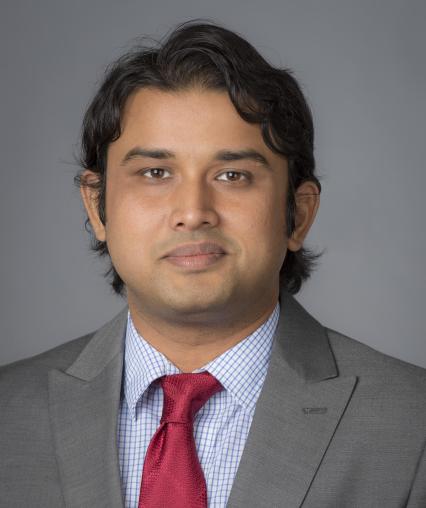
Shaihan Malik is a Professor of Imaging Physics at the Centre for the Developing Brain, Imperial College London. His work focuses on advancing Magnetic Resonance Imaging (MRI) methodologies for neonatal and fetal brain imaging , with a strong emphasis on ultra-high field (7T) MRI , quantitative relaxometry , and motion correction techniques . He collaborates extensively with institutions like King's College London and University College London. Doctor of Science, Imperial College London (2008) Master of Research, Imperial College London (2004) Master in Science, University of Cambridge (2003) His research addresses pediatric epilepsy , neonatal brain development , and in vivo MRI applications . Projects include 7T Sodium MRI for focal lesions and VR-integrated ultra-high field MRI for neurodevelopmental studies. His work contributes to UN Sustainable Development Goal 4 (Quality Education) through advanced imaging education initiatives. Recent publications highlight innovations in RF pulse design , specific absorption rate (SAR) optimization , and fetal placental biomarkers . He is a recipient of the 2012 I.I. Rabi Young Investigator Award for basic science and has secured grants from Wellcome Trust , MRC , and Action Medical Research .
Dr Arian Beqiri is a Research Fellow at King's College London , specialising in MRI physics and AI-driven cardiac imaging. Holding a PhD in MRI Physics from the same institution, he bridges electromagnetic safety in ultra-high-field MRI with modern deep-learning solutions for echocardiographic analysis. Education PhD in MRI Physics, King's College London (2015) MSci in Physics, King's College London (2011) Research Interests His work centres on two synergistic pillars: Ultra-high-field MRI engineering: RF shimming, SAR optimisation, and direct signal control at 7 T. AI in cardiac imaging: automated view detection, 3D reconstruction from 2D echo, and robustness of deep-learning models in clinical CT and ultrasound. Across both domains he emphasises safety, computational efficiency, and translational impact. Publication Trends Since 2015 Beqiri has published steadily, pivoting from technical MRI sequence design toward machine-learning applications in echocardiography. His 2024 preprint on black-box CT robustness and 2023 ultrasound foreshortening paper highlight a growing focus on clinical-grade AI validation. Collaborations & Supervision He has one formally supervised student on record and collaborates extensively with cross-disciplinary teams spanning engineering, cardiology, and radiology departments in the UK and abroad. Labs & Teams Work is conducted within the Biomedical Engineering & Imaging Sciences division at King’s, leveraging 7 T MRI platforms and high-performance GPU clusters for deep-learning experiments.
Hovannes Kulhandjian is an Associate Professor in the Department of Electrical and Computer Engineering at California State University, Fresno (Fresno State), within the Lyles College of Engineering. He teaches undergraduate and graduate courses in electrical and computer engineering and conducts research in wireless communications, applied machine learning, and their applications in transportation and agriculture. His educational background includes: Ph.D. in Electrical Engineering from the State University of New York at Buffalo (2014) M.S. in Electrical Engineering from the State University of New York at Buffalo (2010) B.S. in Electronics Engineering with high honors (magna cum laude) from the American University in Cairo (2008) Dr. Kulhandjian's research spans wireless communications, applied machine learning, and their applications. His work in intelligent transportation systems includes AI-based road inspection and pedestrian detection, while in precision agriculture, he develops drone-based systems for weed detection and tree health monitoring. He also explores underwater acoustic communications, visible light communications, and physical layer security. His recent publications demonstrate a strong trend in applying artificial intelligence to solve real-world problems in transportation and agriculture, often using drones and multi-sensor fusion. In communications, he advances techniques for next-generation wireless systems, including OTFS and NOMA for 6G, and optical wireless for IoT. Scientific awards and honors: IEEE Senior Member Outstanding Reviewer Award from ELSEVIER Ad Hoc Networks Outstanding Reviewer Award from ELSEVIER Computer Networks Claude C. Laval Award for Innovative Technology and Research Dr. Kulhandjian advises Master's students through thesis (ECE 299) and project (ECE 298) courses. His research is supported by multiple grants, including the Department of Defense Research and Education Program, NSF-ADVANCE Research Alliance Seed Grant, CSU-WATER Faculty Research Incentive, and the Fresno State Transportation Institute SB1 Research Grant for six consecutive years. During his doctoral studies, he worked in the Wireless Networks and Embedded Systems (WiNES) Laboratory at SUNY Buffalo. At Fresno State, he leads a research group focused on the development of innovative solutions in wireless communications and AI applications, collaborating with various institutions and industry partners.
Ehsan Khatami is an Assistant Professor at the Department of Physics, Charles W. Davidson College of Engineering, San Jose State University. His research focuses on theoretical and computational studies of strongly correlated electron systems, particularly the effects of disorder on electronic properties in materials, utilizing quantum Monte Carlo simulations and machine learning techniques. Khatami’s research interests include: Disorder-driven phase transitions in solids Quantum many-body systems (Hubbard and Holstein models) Machine learning applications in condensed matter physics Quantum simulations using cold atoms and quantum dots High-temperature expansions and numerical methods His recent work, supported by an NSF RUI grant ($171,000), explores the interplay between disorder and electron organization in materials, with applications in superconductivity and exotic insulating phases. He also contributed to the NSF MRI grant ($900K) for acquiring High-Performance Computing infrastructure. His publications span topics such as kinetic magnetism, Nagaoka polarons, and AI-assisted discovery in quantum systems. Scientific contributions include: NSF RUI Grant for theoretical investigations NSF MRI Grant as Co-PI for computational infrastructure Pioneering work on neural network-based simulations of quantum systems Khatami actively involves students in his research, with NSF grant funding supporting two undergraduate and one graduate student to develop parallel computing codes and analyze quantum simulation results.
Marwan Krunz is a Regents Professor in the Department of Electrical and Computer Engineering and holds a joint appointment in the Department of Computer Science at the University of Arizona, where he also serves as Site Director and Deputy Center Director for the NSF WISPER Center. He was the founding Director of the NSF Broadband Wireless Access and Applications Center (BWAC), which concluded in December 2024, and previously served as UA site director for Connection One, another NSF I/UCRC. He is an affiliated member of the UA Cancer Center and a member of the Graduate Faculty. PhD in Electrical Engineering, Michigan State University (1995) MS in Electrical Engineering, Michigan State University (1992) BS in Electrical Engineering, University of Jordan (1990) Dr. Krunz's research spans wireless networking, communications, and security, with a strong emphasis on AI and machine learning for resource management, dynamic spectrum access, MIMO systems, and physical-layer security in 5G and NextG networks. His work addresses critical challenges in network slicing, ultra-low-latency mobile edge computing, full-duplex transmissions, and IoT energy management. He integrates techniques from stochastic optimization, game theory, and deep learning to design intelligent and resilient wireless systems. The 15 most recent publications reflect a deep engagement with NextG wireless systems, focusing on AI-driven optimization, physical-layer vulnerabilities, spectrum sharing, and low-latency computing. These works span disciplines including computer science, electrical engineering, and cybersecurity, with sub-fields ranging from reinforcement learning for network control to mmWave security and V2X edge computing. The consistent theme is intelligent, adaptive, and secure wireless infrastructures for future applications. IEEE Fellow (2010) NSF CAREER Award (1998) IEEE Communications Society Distinguished Lecturer (2013–2014) Arizona Engineering Faculty Fellow (2011–2014) IEEE TCCC Outstanding Service Award (2012) Chair of Excellence, University of Carlos III de Madrid (2011) Fulbright Senior Specialist (2011) Distinguished Alumni Award, MSU (2020) Dr. Krunz has advised numerous graduate students and mentored research teams in wireless systems. His research has been funded by the National Science Foundation, U.S. Department of Defense, NASA, Qatar Foundation, and industry partners, with total funding exceeding $20 million. He has served as Editor-in-Chief of IEEE Transactions on Mobile Computing (2017–2020) and on editorial boards of multiple top-tier journals. He has chaired major conferences including WiOpt 2023 and WiSec’12, and served as TPC chair for INFOCOM’04 and WCNC’16. He has also acted as chief scientist and technologist for two wireless-focused startups. Dr. Krunz leads research teams within the NSF WISPER Center and previously directed the BWAC center, which included multiple universities and industry affiliates. His labs focus on experimental and theoretical aspects of wireless systems, including testbeds for 5G/NextG, AI-driven spectrum management, and secure communications. His teams collaborate across disciplines, including computer science, engineering, and cancer research through the UA Cancer Center affiliation.
Zequan Yao is a doctoral researcher at KU Leuven within the Manufacturing Processes and Systems (MaPS) unit. His work focuses on advancing micro-EDM and nano-manufacturing processes through digital monitoring and machine learning integration. Research Emphasis: Surface quality prediction, edge computing, and deep learning for precision machining Key Technologies: RF radiation sensing, multiphysical process analysis, and adaptive pulse classification Collaborations: Works with researchers like Ming Wu, Jie Qian, and Dominiek Reynaerts Recent publications highlight trends in machine learning applications for manufacturing diagnostics, CFRP composite machining challenges, and RF-based process signatures . His work bridges traditional machining with intelligent systems for quality control. Labs/Teams: Micro- & Precision Engineering group at KU Leuven Future Directions: Expanding edge computing for in-process optimization and interpretable AI frameworks
Henry Duwe is an Affiliate Assistant Professor at Iowa State University, specializing in energy-efficient computing systems and embedded systems design. His research focuses on batteryless intermittent systems, energy harvesting, and low-power hardware architectures. He has contributed to the development of frameworks for dependable computing in resource-constrained environments and explores intersections between design thinking and engineering education. His work includes pioneering studies on lifecycle management protocols for batteryless networks, RF energy harvesting systems, and neuromorphic accelerators. Notably, he received the NSF CAREER Award (2022) for advancing intelligent computing on batteryless devices. Duwe also investigates pedagogical methods such as design thinking to enhance course design in computer engineering, addressing challenges in interdisciplinary education and student skill development. Key areas of exploration include: batteryless networks, neural architecture search for energy-constrained devices, hardware-software co-design, and debugging methodologies in engineering curricula. His publications span both technical innovations in embedded systems and educational strategies for effective learning. Recent projects include the PAIL protocol for robust coordination in batteryless systems (2025) and the Lure simulator for intermittent networks (2024). His research bridges theoretical advancements with practical applications in low-power computing and sustainable energy solutions. Awards and grants include the NSF CAREER Award (2022), which supports his work on dependable intelligent computing systems. His contributions also extend to educational innovations like persona-based course design and reflective learning activities in engineering education.
Dr. Gregory Mazzaro is a Professor in the Department of Electrical and Computer Engineering at The Citadel, School of Engineering. He joined The Citadel in 2013 after working as an Electronics Engineer at the U.S. Army Research Laboratory (ARL) from 2009–2013. His research focuses on nonlinear radar for detecting RF electronics and characterizing materials, with over 100 publications and 10 patents. Education: Ph.D. (North Carolina State University), M.S. (SUNY Binghamton), B.S. (Boston University) Research interests include radar systems (non-linear, ultra-wideband), RF electronics, and electromagnetic material analysis. He received a 2012 U.S. Army R&D Achievement Award for his ring-resonator technique. Teaching responsibilities include Electromagnetic Fields, Antennas & Propagation, and laboratory courses. His recent work explores harmonic radar for smart electronics detection, educational curriculum design, and device-centric radar imaging. Awards: 2012 U.S. Army Research & Development Achievement Award Grants and patents include innovations in radar transceiver design, nonlinear junction detection, and acoustic-radar integration. He advises undergraduate and graduate engineering projects, emphasizing hands-on experimentation.
Amin Arbabian is an Associate Professor in the Department of Electrical Engineering at Stanford University. His research spans biomedical devices, sensing systems, and Internet of Things (IoT) technologies, with a focus on wireless power transfer and miniaturized sensor design. Education: BSc in Electrical Engineering, Sharif University of Technology (2005) MSc in Electrical Engineering and Computer Sciences, UC Berkeley (2007) PhD in Electrical Engineering and Computer Sciences, UC Berkeley (2011) Arbabian's lab specializes in end-to-end design of RF/microwave systems for medical implants, sensing interfaces, and terascale IoT networks. Key projects include ultrasonically powered implants for neural stimulation and drug delivery, mm-wave radar systems for gesture recognition, and ultrasound wake-up radios for ultra-low-power IoT devices. His recent publications highlight advancements in wireless neural implants, adaptive radar sensing, and photoelastic modulation for time-of-flight imaging. These works span disciplines including Electrical Engineering, Biomedical Engineering, and Applied Physics. Scientific Awards: Best Student Paper Award, ISSCC 2018 Best Student Paper Award, PIERS 2015 1st Place Best Paper Award, 2016 IEEE Biomedical Circuits and Systems Conference Best Student Paper Award, SPIE Security and Defense 2016 Arbabian collaborates with Stanford faculty in Chemistry, Comparative Medicine, and Radiology. His lab's funding sources include NSF, DARPA, NIH, ARPA-E, and ONR. The group also explores industrial applications like semiconductor manufacturing optimization with AI-driven digital twins.
Prof. Dr. Michael Felux is full Professor and team leader of the Aviation Infrastructure group at the ZHAW School of Engineering , Zurich University of Applied Sciences. He also co-founded and co-owns the Estonian consultancy Navaid OÜ , providing GNSS/CNS expertise while ensuring non-conflict with his academic role. Education Dr.-Ing. in Mechanical Engineering, TU München (2012 – 2018) Dipl.-Tech. Math. in Mathematics, TU München (2003 – 2009) CAS Hochschuldidaktik (Higher-Education Didactics), PHZH (2021) Research Focus Michael Felux’s research centres on safe, secure and efficient aviation communication, navigation and surveillance (CNS) . He investigates GNSS-based augmentation systems (GBAS, SBAS) for precision approach and landing, develops real-time interference detection & localization techniques to counteract jamming and spoofing, and explores high-integrity navigation solutions for unmanned aerial vehicles (UAVs). Additional interests include environmental optimisation of flight procedures and multi-constellation, multi-frequency signal processing . Across more than 50 peer-reviewed publications since 2015, his work consistently targets the intersection of technical robustness and operational feasibility . Recent papers map GNSS disruption events across European airspace, quantify fuel-burn reductions enabled by GBAS-guided continuous-descent approaches, and introduce cost-efficient machine-learning frameworks for real-time localisation of malicious radio-frequency interference. Scientific Awards & Recognition (no specific awards listed in supplied material) Research Funding & Projects Spoofer Localization – Swiss project leader, ongoing EGNSS DFMC for GBAS based operations – EU project leader, ongoing Making I-CNS A Reality – integrated CNS technology, project leader, ongoing High Integrity Satellite Navigation for UAV using Galileo HAS – project leader, ongoing LINA – Shared large-scale infrastructure for safe testing of autonomous systems, team member, ongoing Collision avoidance system for manned & unmanned aircraft via SDR – completed Emission Reduction using Satellite Navigation for Approach Guidance – completed Laboratory & Team As head of the Aviation Infrastructure team at ZHAW, Prof. Felux directs a multidisciplinary group developing next-generation CNS technologies. The team operates dedicated GNSS/GBAS testbeds, flight-trial aircraft, and spectrum-monitoring networks to validate concepts from simulation through to real-world deployment.
Ali Sahafi is an Assistant Professor at the Institute of Mechanical and Electrical Engineering , University of Southern Denmark, specializing in Digital and High Frequency Electronics . His research bridges Electrical Engineering , Computer Science , and Biomedical Engineering . Research Interests: Sahafi focuses on neural network accelerators , medical imaging for cardiovascular and gastrointestinal diagnostics, and low-power electronics for embedded systems. His work includes applying YOLO-V8 for polyp detection in colonoscopy and coronary segmentation in angiography, alongside FPGA-based solutions for wireless capsule endoscopy. Project Involvement: He contributed to the EU H2020 TeamPlay project (2018–2020), optimizing time, energy, and security in cyber-physical systems. His lab, Digital and High Frequency Electronics , drives innovations in high-frequency circuits and embedded AI.
Adrien F. Vincent is an Associate Professor at IMS Bordeaux (Laboratory of Integration, Material to System) under Université de Bordeaux, Institut Polytechnique de Bordeaux, and CNRS. He leads research in neuromorphic computing with a focus on spiking neural networks and memristive devices. His team, 2HC Production Engineering, develops energy-efficient hardware for real-time event-based data processing. Key research areas: Neuromorphic systems, Low-power electronics, Memristor technology Recent publications explore spintronic neural networks, STDP plasticity, and energy optimization His work addresses hardware-friendly learning algorithms and co-integration of analog silicon neurons with memristive arrays. Projects include ULPEC (Ultra-Low Power Event-Based Camera) and MIRA2015 (Memristive Architectures).
Olga Błaszkiewicz serves as an Assistant Lecturer at the Department of Radiocommunication Systems and Networks within the Faculty of Electronics Telecommunications and Informatics at Gdańsk University of Technology. Her academic position is based in Building A, room 402, with contact information including email olga.blaszkiewicz@pg.edu.pl and phone 583472928. Her research spans wireless communication technologies with particular focus on NB-IoT, LTE systems, and deep learning applications. Key interests include radio navigation, UWB systems, LOS/NLOS identification, and software-defined radio frameworks. Her experimental work demonstrates practical applications in transportation monitoring through wireless signal analysis and indoor positioning systems. Analysis of her recent publications (2019-2025) reveals a strong trend toward integrating machine learning with traditional telecommunications systems, particularly in solving real-world problems like train detection using existing LTE infrastructure and improving synchronization in narrowband IoT systems. Her work bridges theoretical signal processing with practical deployment scenarios. She actively contributes to multiple research projects including SDIDS (Software-Defined Device for Detecting Interferences), KODEŚ (Power Data Concentrator), DUCH IoT (Software-Defined Radio Interface), and VCS-MLAT (Aircraft Location Systems). These projects are funded by Poland's Operational Program Intelligent Development and LIDER programs. Her teaching portfolio encompasses 21 courses including Radio Communication Measurement, Wireless Technology, Telecommunication Signals Laboratory, and Signal Processing. She collaborates extensively with researchers like Krzysztof Cwalina, Piotr Rajchowski, and Jacek Stefański on both teaching and research initiatives within the Department of Radiocommunication Systems and Networks.
Francesco Restuccia serves as an Assistant Professor in the Department of Electrical and Computer Engineering within Northeastern University's College of Engineering. He leads the Mobile Embedded NeTworked Intelligent Systems (MENTIS) laboratory, where his research focuses on pushing the boundaries of mobile computing, wireless networking, and artificial intelligence integration. His educational background includes: PhD in Computer Science, Missouri S&T, 2016 MS in Computer Engineering, University of Pisa, 2011 BS in Computer Engineering, University of Pisa, 2009 Dr. Restuccia's research program creates unconventional pathways to enhance the performance and resilience of mobile computing and networking systems. His work spans resilient and efficient AI/ML implementations, mobile computing architectures, FPGA acceleration, embedded systems design, and advanced wireless networking protocols. He has pioneered approaches that integrate deep learning directly into the physical layer of wireless communications, enabling self-adaptive systems that can dynamically optimize performance under varying conditions. His publication portfolio demonstrates consistent innovation in wireless AI systems, with recent work focusing on securing next-generation cellular networks, improving AR/VR performance through AI optimization, and addressing critical security vulnerabilities in existing Wi-Fi systems. His research has evolved from foundational work on network slicing and polymorphic wireless receivers toward more resilient AI architectures for tactical systems and spectrum-aware communications. His honors include: 2025 DARPA Young Faculty Award 2025 IEEE INFOCOM Best Paper Award 2025 Søren Buus Outstanding Research Award 2023 AFOSR Young Investigator Award 2023 ONR Young Investigator Award 2022 IEEE INFOCOM Best Paper Award 2019 Mario Gerla Young Investigator Award Dr. Restuccia has secured substantial research funding as Principal Investigator on multiple NSF and Department of Defense grants, including projects like 'Securing xApps in Open RANs with Reliable and Principled AI Red-Teaming' ($900,000 NSF grant) and 'DHARMA.AI Digital Hardware + Analog-RF for Multifunctional Apertures with AI' ($200,000 NSF grant). His research group has produced numerous patents in wireless communications and AI-driven networking. He serves on editorial boards for prestigious journals including IEEE Transactions on Mobile Computing and IEEE Transactions on Cognitive Communications and Networking, and is a Senior Member of both IEEE and ACM. At the MENTIS laboratory, Dr. Restuccia oversees a research team focused on disrupting conventional approaches to mobile computing and wireless networking through AI integration. Current projects include developing resilient AI systems for tactical applications, creating secure Open RAN implementations, and building next-generation wireless testbeds for AI-ready infrastructure.
Rahul Gomes, Ph.D., is an Associate Professor of Computer Science and Ramsey Research Professor (2025-2028) at the University of Wisconsin–Eau Claire within the College of Arts and Sciences. His work bridges artificial intelligence, machine learning, and computational science with applications in healthcare, geospatial analytics, and cybersecurity. He maintains active research collaborations with clinical, scientific, and community partners while mentoring undergraduate and graduate students in cutting-edge projects. His educational background includes: Ph.D. in Computer Science from North Dakota State University, Fargo M.S. in Computer Science from Sikkim Manipal University, India B.Ed. and B.S. from St. Xavier's College Kolkata, India Gomes leads research in multiple high-impact domains with a focus on developing interpretable AI systems that address real-world challenges. His biomedical informatics work spans medical imaging analysis (particularly for IVCF detection and pancreatic cancer diagnosis), single-cell RNA sequencing, and retrieval-augmented generation for clinical workflows. In geospatial analytics, he develops deep learning approaches for remote sensing and land cover classification. His cybersecurity research investigates AI-based threats and defense mechanisms, including analysis of large language model vulnerabilities. The interdisciplinary nature of his work is reflected in publications spanning computer science, medical journals, and domain-specific applications. His publication record demonstrates consistent productivity across multiple domains, with recent work showing particular strength in medical AI applications, geospatial deep learning, and cybersecurity analysis. The research shows a clear trajectory toward increasingly complex multimodal approaches, with recent papers integrating vision transformers, domain adaptation techniques, and specialized architectures for specific medical and geospatial challenges. Many publications involve undergraduate student co-authors, reflecting his commitment to research-based education. His scientific recognition includes: Ramsey Research Professorship (2025-2028) NSF REU grant as PI ($459,810) for advancing HPC undergraduate research (2025-2028) RET Site grant as Co-PI to bridge gaps in high school computing education (2024-2027) Gomes actively mentors students through research projects that often lead to publications and conference presentations. His research group develops advanced methods for medical image analysis, spatial transcriptomics, and AI-driven healthcare decision support. He has successfully secured significant grant funding that supports undergraduate research experiences, demonstrating his commitment to involving students in meaningful research. His TARCC RET Site project specifically aims to enhance computing education at the high school level through teacher training. His research lab focuses on several key projects including IVCF Filter Detection using AI (employing Swin-UNet for CT scan analysis), PDAC Diagnosis using Deep Learning, scRNA-seq Analysis for pancreatic cancer, CABG Outcomes analysis, and RAG applications in healthcare. These projects involve interdisciplinary teams of students working with technologies including PyTorch, MONAI, LangChain, and various high-performance computing resources.