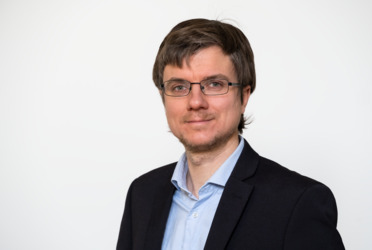
Dr. Florian Kammueller is an Associate Professor in Software Engineering at Middlesex University , specializing in formal methods for cybersecurity and privacy. His research focuses on attack trees , GDPR compliance , insider threat modeling , and quantum cryptography using the Isabelle theorem prover. He has published extensively on formal verification of security protocols, privacy in IoT healthcare systems, and trust in AI. Recent publications emphasize federated learning , differential privacy , and distributed ledger security , often applying formal verification techniques to address regulatory and technical challenges. His work bridges theoretical computer science with practical applications in critical infrastructure security.
Stephan Freitag is a Senior Scientist at the Institute of Bioanalytics and Agro-Metabolomics within the Department of Agricultural Sciences at the University of Natural Resources and Life Sciences, Vienna (BOKU) . He holds a PhD in Biotechnology from TU Wien (2017-2021) and has conducted research at institutions including Wageningen University and University of Ulm. Research Focus : Freitag specializes in infrared spectroscopy applications for mycotoxin screening in agricultural products. His work combines chemometrics , machine learning , and portable spectroscopic devices to develop rapid, green analytical methods for food contaminants. Recent projects include 3D-printed sample modules and quantum cascade laser spectrometers for farm-to-fork food safety monitoring. Publication Trends : His 24+ publications (2021-2025) focus on infrared spectroscopy for mycotoxin detection in wheat and maize, with applications in food safety , agricultural quality control , and environmental monitoring . Collaborative work spans multiple European institutions. Scientific Engagement : Freitag serves as reviewer for journals like Food Chemistry and Food Control , and is a member of the American Chemical Society and Society for Mycotoxin Research . He actively presents at international conferences including the World Mycotoxin Forum and RAFA symposiums.
Professor Alexandre Blais is a leading researcher in quantum information science at the University of Sherbrooke's Faculty of Science, where he leads the Superconducting Quantum Circuit Theory research group (TheSQuaD) within the Quantum Institute. His work focuses on understanding quantum states of mesoscopic devices and applying quantum optics tools to these systems, with particular expertise in circuit QED with superconducting qubits. Blais' research spans multiple areas of quantum computing, including superconducting circuits, quantum error correction, quantum measurement, and quantum control. His group develops theoretical frameworks for quantum information processing using superconducting quantum circuits, with applications to quantum computing and quantum optics. They collaborate extensively with experimental groups worldwide to bridge theory and practice in quantum information science. His recent publications demonstrate continued leadership in advancing quantum computing technologies, with research spanning transmon qubits, quantum error correction, quantum measurement techniques, and quantum control methods. Blais' work shows a consistent focus on solving practical challenges in building scalable quantum computers, particularly through innovative approaches to qubit design, control, and measurement. Fellow of the American Physical Society (2018) Rutherford Memorial Medal of the Royal Society of Canada (2018) Prix Urgel-Archambault, Association francophone pour le savoir (2014) Herzberg Medal from the Canadian Association of Physicists (2011) NSERC E.W.R. Steacie Memorial Fellowship (2010) Professor Blais has mentored numerous students who have gone on to prominent positions in academia and industry, including faculty positions at Yale, MIT, University of Sydney, and research scientist roles at Google Quantum AI, Microsoft Quantum, and Rigetti Computing. His group operates within the state-of-the-art Quantum Institute building at the University of Sherbrooke, fostering a collaborative environment for theoretical and experimental quantum research.
Professor Jason D. Pole serves as the Deputy Director of Research for the Queensland Digital Health Centre (QDHeC) and is a Professor in the Centre for Health Services Research (CHSR) within the Faculty of Health, Medicine and Behavioural Sciences at the University of Queensland. He maintains additional appointments as an Associate Professor in the Dalla Lana School of Public Health at the University of Toronto, an Adjunct Scientist with the Hospital for Sick Children Research Institute, and an Adjunct Senior Scientist with ICES, Toronto. Jason Pole's research program utilizes clinical and surveillance data linked with real-world administrative data to address critical health questions across multiple domains. His expertise spans epidemiology, health services research, and digital health with a strong emphasis on real-world data applications and complex survey instruments. His current research interests include digital health applications to improve system performance and patient safety, healthcare utilization among childhood cancer survivors, the effects of childhood cancer treatment on second cancers and educational achievement, and the financial impact of childhood cancer on families and survivors' long-term financial health. More recently, he has developed a significant focus on adolescent and young adult oncology (AYA) survivors and their unique long-term needs. Analysis of Dr. Pole's recent publications (2023-2025) reveals a strong concentration on digital health infrastructure, cancer survivorship outcomes, and health economics. His work demonstrates interdisciplinary collaboration across oncology, nephrology, epidemiology, and health informatics. A notable trend is the increasing integration of artificial intelligence and machine learning approaches in healthcare systems research, particularly focused on patient-reported outcomes and digital hospital implementations. His research consistently emphasizes practical applications of data science to improve healthcare delivery and patient outcomes. Dr. Pole has maintained extensive collaborative relationships across multiple institutions, particularly with researchers in Canada (University of Toronto, Hospital for Sick Children) and Australia (University of Queensland). His work frequently involves large-scale population-based cohort studies and retrospective matched analyses that leverage administrative healthcare data to address questions of clinical and policy relevance.
Jean-Michel Sallese is a Senior Researcher at École polytechnique fédérale de Lausanne (EPFL), affiliated with multiple units including the Group of Semiconductor Devices (GR-SCI-IEL) , SEL-ENS , and EDMI-GE . His work focuses on semiconductor device modeling, biosensors, radiation effects in electronics, and microfluidic systems. Research Areas: Field Effect Transistor (FET) physics and modeling Radiation-induced soft errors in integrated circuits High-energy particle solid-state sensors Nanowire and junctionless FET biosensors Microfluidic mixer modeling Recent publications highlight advancements in ISFET biosensors , radiation-hard CMOS , and negative capacitance FETs , with applications spanning medical diagnostics, high-energy physics, and industrial monitoring. He supervises PhD students and co-developed the EDLAB initiative for device modeling. Teaching includes core electronics courses and specialized topics like Modeling Micro-/Nano-Field Effect Devices . No scientific awards are explicitly mentioned in the provided texts.
Dr. Travis Shihao Hu is an Associate Professor in the Department of Mechanical Engineering at California State University, Los Angeles, within the College of Engineering, Computer Science, and Technology. His career includes prior roles as a Teaching Assistant Professor at the University of Denver and postdoctoral research at Case Western Reserve University, University of Florida, and University of Delaware. He leads the Bio-Nano Materials and Interfaces Lab, focusing on bio-inspired design of multifunctional materials for energy, biomedical, and environmental applications. Affiliation : California State University, Los Angeles Previous Roles : University of Denver (Teaching Assistant Professor), Case Western Reserve University, University of Florida, University of Delaware (Postdoctoral Researcher) Lab : Bio-Nano Materials and Interfaces Lab Dr. Hu’s research spans Bio-/Nano-Materials and Mechanics , Multifunctional Energy Materials and Devices , and Nanotechnology , emphasizing bio-inspired design, structure-function relationships, interfacial interactions, and multiscale modeling. His work aims to solve engineering problems using biological models, creating stimuli-responsive materials like switchable adhesives and self-healing coatings for renewable energy and defense sectors. Recent publications highlight his expertise in 2D materials , quantum dots , and bimimetic robotics . Despite no explicitly listed scientific awards, his research is supported by major grants including NSF DMR BMAT, DoD DURIP (ARO), La Kretz Environment Endowment, and NSF-CREST/PREM centers. Teaching interests include Statics, Fracture Mechanics, Nanomaterials, and Molecular Dynamics simulations.
Dr. Nicolae Viorel Buchete is an Associate Professor at the University College Dublin (UCD) School of Physics . He serves as Vice Principal for Graduate Studies in the College of Science and leads UCD's Computational Physics postgraduate program . Buchete holds academic degrees from Boston University (PhD) , Al. I. Cuza University , and University of Patras . Current appointments: 2022-Present (Vice Principal), 2014-Present (MSc Program Director) Previous roles: NIH Research Fellow (2003-2008), Visiting Assistant Professor at Boston University (2009-2010) His research focuses on theoretical and computational biological physics with applications in nanoscience , molecular dynamics of biomolecular systems , and multiscale modeling of complex fluids . Recent work includes conformational kinetics of oncogenic proteins , physics-based modeling of nanocarriers , and amyloid peptide dynamics in Alzheimer's disease . Scientific Contributions: Developed advanced Markov State Models and Milestoning frameworks for long-time MD simulations Identified novel salt bridge mechanisms in kinase activation and drug resistance Explored piezoelectric properties of diphenylalanine nanostructures Teaching Innovation: Advocates for research-oriented teaching at both undergraduate and MSc levels. Coordinates modules including Computational Biophysics and Thermodynamics & Statistical Physics at UCD.
Daniel Liang is a Postdoctoral Researcher jointly supervised by Dr. Nai-Hui Chia at Rice University and Dr. Fang Song at Portland State University. His research bridges quantum computing, complexity theory, and learning theory, with a focus on efficient information extraction from quantum systems. PhD in Computer Science from University of Texas at Austin Bachelor of Science in Engineering from Cornell University in Computer Science and Engineering Physics His work explores time-efficient algorithms for quantum systems, aiming to benchmark quantum computers, discover new physics, and understand quantum computation limits. Key areas include stabilizer states, quantum tomography, and connections between learning theory and circuit complexity. Recent publications highlight advances in quantum state learning, stabilizer complexity, and pseudorandomness, with applications in tomography, optimization algorithms, and computational complexity reductions. ITCS 2023 Best Student Paper Award Collaborations span Rice University, Portland State University, and institutions like UT Austin, with interdisciplinary contributions to quantum algorithms and theoretical computer science.
Dr. Yee Wei Law is a Senior Lecturer at the University of South Australia's (UniSA STEM) Mawson Lakes Campus. His research expertise spans cybersecurity, machine learning, and wireless sensor networks, with a focus on secure communication systems and autonomous vehicle localization. He serves as a Research Degree Supervisor and actively contributes to publications in IoT security, space systems, and privacy-preserving technologies. Research Trends : Recent work emphasizes domain adaptation for predictive maintenance, adversarial attack analysis in computer vision, and quantum key distribution for satellite-IoT networks. Key themes include security in smart grids, UAV-based gesture recognition, and collaborative privacy-preserving algorithms. Publications highlight interdisciplinary applications of machine learning in fault diagnostics, cloud detection via satellite, and secure networking protocols. His work bridges theoretical advancements with real-world implementations in hypersonic tracking and RFID security.
Prof. Dr. Axel Kröner is a Professor of Optimization at the Institute of Mathematics, Martin-Luther-Universität Halle-Wittenberg, within the Faculty of Natural Sciences II. His research focuses on optimal control and numerical methods for partial differential equations (PDEs), stochastic control, and feedback mechanisms in complex systems. Academic Background: Ph.D. in Mathematics, Technische Universität München (2011) Diploma in Mathematics, Ruprecht-Karls-Universität Heidelberg (2007) Axel Kröner's research spans PDE-constrained optimization, numerical analysis, and control theory. Key areas include feedback control for hyperbolic and parabolic equations, stochastic optimal control for infinite horizon problems, and adaptive finite element methods for PDE discretization. His work bridges theoretical and computational aspects, with applications in elasticity, fluid dynamics, and quantum mechanics. Recent publications highlight advancements in Hamilton-Jacobi-Bellman equations for feedback control, bilevel optimization for parameter learning, and Runge-Kutta-based neural networks . Methodologies often integrate dynamic programming , Galerkin approximations , and error estimation for efficient solutions. Advising and Projects: He has supervised numerous Master's and Bachelor's theses on topics like wave equation control, inverse problems, and neural network optimization. Funding includes support from the German Academic Exchange Service (DAAD) and the Gaspard Monge Program for Optimization and Operations Research (2015-2018). Professional Activities: Kröner has organized major conferences such as the International Workshop on PDE Constrained Optimization and contributed to teaching at institutions including Humboldt-Universität zu Berlin and University Paris-Saclay.
Rebeca Garcia Fandiño is a Full Professor in the Department of Organic Chemistry at the Faculty of Biology, University of Santiago de Compostela. She leads the SupraNanoBioMol research group focused on supramolecular systems, nanobiomimetics and molecular biophysics. Develops cyclodextrin-based therapeutics for age-related diseases Studies cyclic peptide nanotubes for antimicrobial applications Specializes in molecular dynamics simulations of biomolecular systems Her research explores hierarchical membrane structures, water model effects in nanoconfined environments, and membrane-targeted therapies. She has published extensively on: Toxic oxysterol removal using cyclodextrin dimers Antimicrobial D,L-α-cyclic peptide interactions Quantum-classical simulation hybrid approaches Post-COVID condition molecular characterization Augmented reality applications in education The SupraNanoBioMol group at CIQUS center utilizes experimental and computational techniques including DSC, ATR-FTIR and MD simulations. Recent work addresses antimicrobial resistance through membrane disruption mechanisms and AI-driven drug discovery.
Peter Chen is a Professor in the Department of Chemistry and Biochemistry at Spelman College, where he has served on the faculty since 1992. His research focuses on pioneering coherent multidimensional spectroscopic techniques for analyzing gas phase molecules, with significant contributions to overcoming spectral congestion through innovative pattern recognition methods. He also leads the Spelman Lidar Project, applying laser-based remote sensing for atmospheric studies. Dr. Chen's educational background includes: Ph.D. in Chemistry from the University of Wisconsin A.B. in Chemistry from Cornell University His research centers on high-resolution coherent multidimensional spectroscopy , which generates two-dimensional patterns that automatically sort spectral peaks by quantum number, selection rule, and molecular species. This approach revolutionizes the analysis of complex gas phase systems where traditional methods fail due to spectral overlap. The group's work extends to Lidar technology for atmospheric monitoring, demonstrating practical applications of fundamental spectroscopic principles. Key innovations include the development of combination difference methods for spectral interpretation and nonparametric techniques for rapid determination of molecular constants. Analysis of Professor Chen's recent publications (2015-2024) reveals a consistent trajectory toward increasingly sophisticated multidimensional spectroscopic techniques. His work bridges fundamental quantum mechanics with practical analytical applications, with a clear emphasis on solving spectral congestion through pattern recognition. The research spans from theoretical foundations of coherent spectroscopy to instrument development for undergraduate research settings, reflecting his commitment to advancing both science and education. Professor Chen's scientific contributions have been recognized with prestigious awards: Spelman College Presidential Award for Research (2001) NSF CAREER Award (1996) NASA Faculty Award for Research Charles N. Reilley-Upjohn Award for outstanding research in analytical chemistry Elected to Phi Beta Kappa (1997) As an educator and mentor, he has guided numerous undergraduate researchers through the Chen Research Group, securing significant grant funding including NSF and NASA awards. His leadership extends to national organizations, having served as Chemistry Councilor for the Council for Undergraduate Research (2004-2007) and as a PKAL Faculty for the 21st Century member. The Spelman Lidar Project exemplifies his ability to establish impactful research infrastructure at a predominantly undergraduate institution. Professor Chen directs the Chen Research Group , which maintains specialized instrumentation for coherent multidimensional spectroscopy and collaborates extensively on atmospheric research through the Spelman Lidar Project . These initiatives provide hands-on research experiences that have positioned Spelman College at the forefront of undergraduate spectroscopic research.
Paul De Koninck is a Professor in the Department of Biochemistry, Microbiology and Bioinformatics at Université Laval and Deputy Scientific Director of Fundamental Research at the CERVO Brain Research Center. His work bridges molecular neuroscience with advanced neurophotonics technologies to unravel mechanisms of synaptic plasticity and neuronal signaling. Academic Affiliation: Université Laval (Faculty of Science and Engineering) Leadership Role: Deputy Scientific Director, CERVO Brain Research Center Research focuses on synaptic plasticity , neurophotonics , and optical nanoscopy to study how neurons decode signals and remodel circuits for learning and memory . His lab develops cutting-edge tools like STED microscopy and single molecule imaging to track synaptic molecules in real time. Recent publications highlight his dual focus on neurodegenerative disease mechanisms (e.g., Huntington's disease) and microscopy innovation (machine learning-enhanced STED, fluorescence lifetime imaging). Articles span zebrafish neurobiology , mitochondrial transport regulation , and neurovascular framework development . Scientific Awards: 2018 Université Laval "Professeur étoile" Prize for teaching excellence His lab contributes to major collaborative initiatives, including the Canadian Optogenetics and Vectorology Foundry grant (2021: $4.3M from Brain Canada) and the Greenspine Lab for neurophotonics research. The team combines patch clamp electrophysiology , biochemistry , and quantum dot imaging to study synaptic signaling.
Dr. Eishi Arima is a researcher at the Chair of Computer Architecture and Parallel Systems within the Department of Informatics at the Technical University of Munich (TUM). His work focuses on cutting-edge computer architecture and high-performance computing systems, with particular expertise in power-aware computing, resource management, and heterogeneous systems. He actively contributes to numerous international conferences and collaborative research projects addressing challenges in modern computing infrastructure. Dr. Arima's research spans multiple critical areas in computer architecture including memory and storage systems, performance modeling and optimization, hardware/software codesign, and processor microarchitectures. His work demonstrates particular strength in addressing energy efficiency challenges in high-performance computing environments, with numerous publications on power capping, resource partitioning, and sustainable computing approaches. His research bridges theoretical concepts with practical implementations, often incorporating machine learning techniques to optimize system performance under various constraints. Analysis of Dr. Arima's publication record reveals a strong focus on addressing the energy efficiency challenges in modern computing systems. His work consistently targets the intersection of hardware architecture and system-level resource management, with particular emphasis on heterogeneous computing platforms combining CPUs, GPUs, and emerging memory technologies. Over time, his research has evolved from traditional cache and memory system optimizations toward more holistic approaches incorporating machine learning for resource management in power-constrained environments. Recent publications demonstrate increasing attention to sustainability aspects of computing, reflecting broader industry trends toward greener computing solutions. Dr. Arima has served in various organizational capacities for major international conferences including as Program Committee member for SC, IPDPS, and Cluster conferences, and as Program Co-Chair for ACM CF'20. His journal review activities span multiple prestigious publications including IEEE TPDS and Elsevier FGCS. This extensive service demonstrates his recognition as a respected member of the international computer architecture research community. Dr. Arima has mentored numerous students through bachelor's theses, master's theses, and guided research projects. His students have produced research on topics including reinforcement learning for resource management, job scheduling optimization, memory system improvements, and power-aware computing techniques. Several student projects have resulted in publications at reputable conferences, indicating the high quality of research conducted under his supervision. His mentoring covers both theoretical aspects of computer architecture and practical implementation challenges in real-world systems. Dr. Arima is actively involved in multiple research projects including SEANERGYS (EuroHPC), PlasmaPEPS, OpenCUBE, DaREXA-F, ScalNEXT, PDexa, MUNIQC-ATOMS, BB-KI_Chips, QuaST, and Q-DESSI. These projects address various aspects of high-performance computing, from energy efficiency to quantum computing integration. His work contributes to the development of next-generation computing infrastructure that balances performance requirements with sustainability concerns.
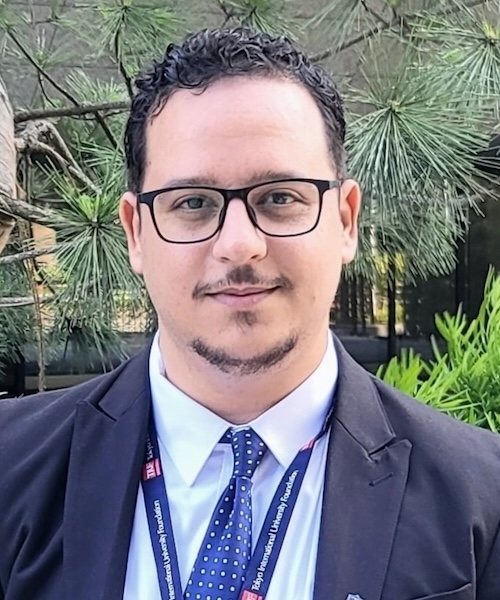
Rafik Hamza is an Associate Professor in Information Management & Cybersecurity at Tokyo International University , with prior roles at National Institute of Information and Communications Technology (NICT, Tokyo), Guangzhou University, and SONATRACH (Algeria). His work spans Cryptography , Privacy-Preserving Machine Learning , and Blockchain-Enabled IoT Security . Ph.D. (2017) in Cryptography and Security from University of Batna M.Sc. (2014) in Cryptography and Security from University of Batna B.Sc. (2011) in Applied Mathematics from University of Batna His research interests focus on securing big data ecosystems through advanced cryptographic methods, including post-quantum algorithms and homomorphic encryption. He actively explores blockchain integration for IoT authentication and privacy-preserving deep learning architectures. Recent publication trends highlight his contributions to hybrid chaotic image encryption, IP protection in distributed systems, and secure ML frameworks. Collaborations with researchers like Alzubair Hassan and Minh-Son Dao demonstrate cross-disciplinary applications. 2021-2022 : Funded by Najran University's Institutional Funding Committee (Project NU/IFC/ENT/01/013) for AI/ML in emerging technologies Associate Editor at Cureus Journal of Computer Sciences (2024–present) Conference Chair for AMLDS 2025