Alessandra Palmigiano is a Full Professor in Logic at the Department of Ethics, Governance and Society at Vrije Universiteit Amsterdam. She holds a PhD from the Universitat de Barcelona (2005) and has been affiliated with TU Delft and the University of Amsterdam. Her research focuses on duality theory, algebraic proof theory, and logics for social behavior. Key contributions include work on correspondence theory, multi-type calculi, and non-distributive logics. She has secured significant grants: NWO Vidi (€800k, 2013), Delft Technology Grant (€850k, 2013), and two NWO Aspasia grants (€200k in 2019 and 2012). Her research spans modal logic, lattice theory, and applications to AI, particularly in outlier detection and categorization using formal concept analysis. Recent publications (2023–2025) explore topics like polynomial-time checking of Sahlqvist formulas, correspondence theory in vector spaces, and algebraic proof systems for non-classical logics. Awards include the NWO Veni Grant (2007).
Nuno Mateus Coelho is an Associate Professor at Lusófona University and an Invited Associate Professor at the Polytechnic Institute of Cávado and Ave, specializing in Cybersecurity. He holds a PhD in Computer Science (Cybersecurity) from the University of Trás-os-Montes e Alto Douro and is a certified European Commission expert in Information Security projects. His professional roles include Cyber Security Adviser at Faurecia Automotive and Nanium Group, CEO of NRMC.PT, and Judicial Expert at the Ministry of Justice. He is also the Editor-in-Chief of the ARIS2 Journal and Director of the LAPI2S Lab. Education: PhD in Computer Science (Cybersecurity) – University of Trás-os-Montes e Alto Douro (2020) MSc in Computer Engineering (Cybersecurity) – Instituto Superior de Engenharia do Porto (2015) BSc in Information Systems Engineering – Instituto Superior de Línguas e Administração (2010) Ongoing Postdoctoral Research in Cybersecurity at Lusófona University Research Interests: Cybersecurity frameworks (e.g., CyberSoc, PCSRA) Blockchain and cryptographic systems (e.g., ChevroCrypto) AI-driven cybersecurity solutions Paranoid Operating Systems for privacy Healthcare cybersecurity and pandemic response (e.g., Vent2Life project) Key Projects & Grants: Lead WP5 of the Horizon 2020-funded CyberSecPro project Recipient of the INNCYBER Innovation Award (2021) for best European research Vent2Life: Repaired 200+ ventilators during the COVID-19 crisis General Chair of the iSCSi International Conference Media & Public Engagement: Regular cybersecurity commentator on CNN Portugal and TVI Keynote speaker at Web Summit, IEEE, and TEDx events Author of opinion columns on cybersecurity trends
An Braeken is a Professor in the Department of Engineering Technology at Vrije Universiteit Brussel (VUB), Belgium. Their research focuses on cryptography, IoT security, blockchain technology, and post-quantum security protocols. They lead projects such as 'Evolution in Security and Privacy for 6G networks' and 'Tech4Health: Venturing into Future Health Technologies', emphasizing secure communication and resource management in next-generation networks. Research interests include authentication protocols, embedded systems security, and decentralized technologies. Key projects address 6G network slicing, secure edge computing, and blockchain applications in healthcare. Braeken has received the 2021 IACR RWC Cryptohackathon 2nd Prize for contributions to functional encryption. Collaborations span academia and industry, including work on Rust programming for embedded systems and acoustic authentication techniques. Over 240 publications and 46 research projects highlight their leadership in cybersecurity and IoT innovation.
Yuzhe Tang is an Associate Professor in the Department of Electrical Engineering and Computer Science at Syracuse University. His research focuses on cybersecurity, systems security, and decentralized systems such as blockchains and smart contracts. He holds a Ph.D. in Computer Science from Georgia Institute of Technology and M.Sc. and B.Sc. degrees from Fudan University. Professor Tang's research mission involves securing digital infrastructures, particularly in emerging domains like decentralized systems. His work addresses challenges in vulnerability discovery, formal security analysis, and performance optimization. He leads projects funded by the National Science Foundation, Ethereum Foundation, and industry partners, with notable grants including Ethereum Foundation Awards (2022–2025) and an Air Force Research Lab grant (2017). Key research contributions include groundbreaking studies on Ethereum mempool security, blockchain DoS mitigation, and cost-effective transaction batching (iBatch). His work has led to patches in the Ethereum Go client (Geth) and collaborations with industry partners like CertiK and Chainlink. Tang advises Ph.D. students in cybersecurity and blockchain research, with notable alumni including Kai Li (San Diego State University) and Yibo Wang (University of Wyoming). Teaching responsibilities include courses on computer security, blockchain foundations, and systems programming. Tang also develops educational labs (BADD Labs) for blockchain security and contributes to conferences as a program committee member for top venues like IEEE S&P, CCS, and NDSS. His honors include Best Paper Awards at Cluster/Cloud and Grid Computing (2015) and Cloud Computing (2012).
Dr. Jiangshan Yu is an Associate Professor at the University of Sydney's School of Computer Science, Director of the Sydney Blockchain Centre, and Australian Representative for IFIP TC 10. He holds a PhD from the University of Birmingham and has held academic roles at Monash University. His research focuses on cybersecurity, dependable computing, and blockchain systems, emphasizing privacy, fault tolerance, and scalable infrastructure. Education: PhD in Computer Science, University of Birmingham (UK) Postdoc at University of Luxembourg under Prof. Paulo Esteves-Verissimo Research Interests: Blockchain systems, fault tolerance, consensus algorithms, applied cryptography, and user privacy. He designs robust infrastructures leveraging blockchain, cryptography, and decentralization to address real-world security challenges. Recent Articles Trends: Focus on privacy-preserving protocols (e.g., Posterior Security), consensus mechanisms (e.g., Achilles BFT), and scalability solutions (e.g., Mosaic sharding framework). His work bridges theoretical advancements with practical implementations. Awards: IEEE Technical Achievement Award (2024) ARC DECRA Fellowship (2021) IBM Academic Award (2020) Chinese Government PhD Award (2016) Advising & Grants: Supervises multiple PhD students and leads projects totaling $10M+ (e.g., Algorand Centre of Excellence). Active in grants like ARC DP220101234 for privacy-preserving blockchain. Labs/Teams: Directs the Sydney Blockchain Centre and collaborates with global initiatives like the IFIP WG 10.4 working group on dependable computing.
Dr. Michael Norrish is an Associate Professor at The Australian National University , affiliated with the School of Computing and the Mathematical Sciences Institute . He specializes in formal methods, interactive theorem proving (particularly with the HOL4 system), and formal semantics for complex systems. His work emphasizes rigorous software verification and foundational computer science research. Dr. Norrish holds a PhD in Computer Science from the University of Cambridge (1999) , along with a BA and BSc(Hons) from Victoria University of Wellington. His research has led to significant contributions in verified compilers (e.g., CakeML), formalized algorithms (e.g., AKS primality test), and reproducibility challenges in scientific software. Research Interests include: - Formal verification of theorem provers - Verified systems programming - Machine learning integration in automated reasoning - Reproducibility in computational research His recent articles focus on advancing theorem proving tools (e.g., HOL4), reproducibility debt in scientific software, and verified compiler frameworks like PureCake and Pancake. He co-organized the 15th International Conference on Interactive Theorem Proving (ITP 2024) and leads projects on AI trustworthiness in Health, Safety & Environment (Tech4HSE). Current projects include: - Tech4HSE: AI Trust & Trustworthiness (ANU, 2024–2029) - Formalization of mathematical algorithms in HOL4
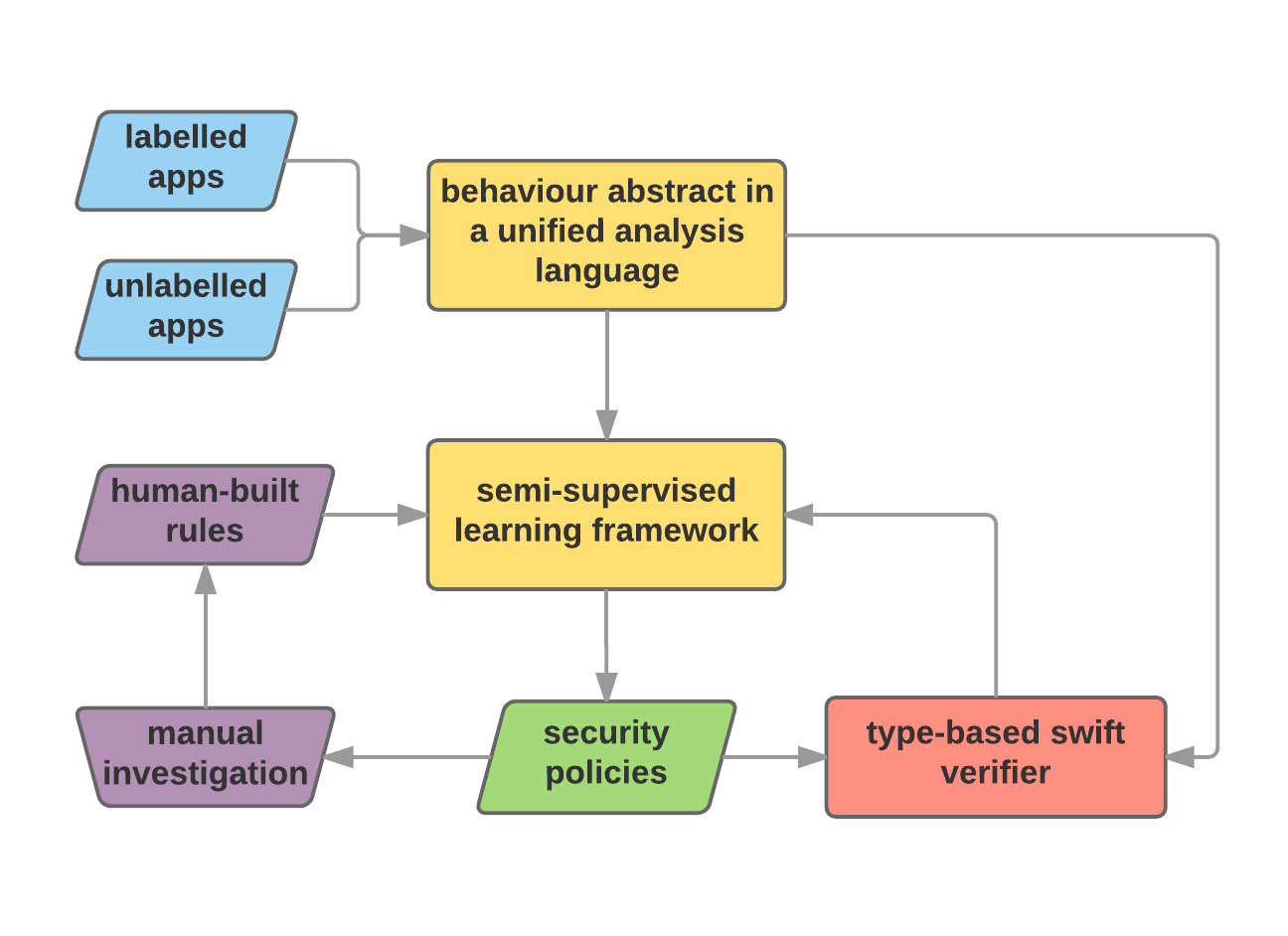
David Aspinall is a Professor at the School of Informatics, University of Edinburgh, Scotland. He is a Fellow of the Alan Turing Institute in London. His research focuses on software security, user authentication, theorem proving, and programming languages. He leads projects like Presbema (predicting mobile app security behaviors) and AppGuarden (improving app store security). **Research Groups & Labs:** Security and Privacy Research Group Cyber Security & Privacy Research Network Laboratory for Foundations of Computer Science (LFCS) Mathematical Reasoning Group **Research Trends:** His work spans formal verification, behavioral security policies, and machine learning for anomaly detection. Recent articles address network intrusion detection robustness, adversarial examples in cybersecurity, and formal analysis of cryptographic protocols. **Students & Advising:** Currently supervises David Butler (crypto protocol verification) and Henry Clausen (statistical anomaly detection). Former students include Joseph Hallett (mobile security policies) and Robert Atkey (type theories). **Commercialization:** Co-founded Contemplate Ltd (2009) to commercialize static analysis tools like ThreadSafe for Java concurrency defects.
Jens-Christian Stoetzer is a Researcher at the University of Bayreuth and a member of the FIM Research Institute for Information Management. He holds a Master's degree in Business Administration from the University of Bayreuth (2016–2022). His research focuses on managing emerging digital technologies such as blockchain and artificial intelligence, with particular emphasis on decentralized finance, tokenization, and the machine economy. He has presented work at leading conferences like ICIS and ECIS. Education: Bachelor's in Business Administration, University of Bayreuth (2016–2020) Master's in Business Administration, University of Bayreuth (2020–2022) Research interests span blockchain applications, AI-driven learning systems, and digital identity frameworks. He explores practical challenges in tokenization for bond markets, the implications of self-sovereign identity systems, and the economic impacts of automation in industries. Publications reflect a focus on technology adoption in finance, healthcare, and crisis management. Collaborations include projects funded by consortium research and industry partnerships. Labs/Teams: Active within the FIM Research Institute, contributing to interdisciplinary projects on digital innovation and strategic IT management.
Danilo Francati is a Lecturer in Information Security at the Department of Information Security, Royal Holloway, University of London. His expertise focuses on cryptography, cybersecurity, and decentralized systems. He holds a PhD in Computer Science from Stevens Institute of Technology (2017–2021) and has held postdoctoral roles at George Mason University (2024) and Aarhus University (2021–2024). His research addresses critical challenges in secure storage systems, credential security, and AI ethics. Recent work includes advancements in blockchain scalability, breach detection mechanisms, and limitations of language model watermarking. He actively participates in major conferences, serving on program committees for Usenix Security and ACM CCS, and editorial roles in Communications in Cryptography . Key contributions span cryptographic protocols, privacy-preserving technologies, and post-quantum security. His activities include invited talks, peer reviews, and public outreach on cybersecurity trends.
Christian Zillober serves as a Lecturer at the Chair of Mathematics VII (Numerical Mathematics and Optimization) within the Faculty of Mathematics and Computer Science at the University of Würzburg. His academic career focuses on optimization methods with particular emphasis on solving complex engineering design problems through mathematical programming approaches. The department is housed in Building 30 (Mathematik West) at Emil-Fischer-Straße 30 in Würzburg. Dr. Zillober's research spans multiple areas of optimization including nonlinear programming, structural and topology optimization, interior point methods, and applications in data mining and machine learning. His work bridges theoretical mathematical methods with practical industrial applications, particularly in engineering design. He has developed specialized software tools like SCPIP for solving structural optimization problems, demonstrating his commitment to creating practical implementations of mathematical theories. Analysis of his publication record reveals a strong focus on sequential convex programming methods and their application to large-scale optimization problems. His research trajectory shows consistent development from theoretical foundations in the 1990s toward increasingly sophisticated implementations for industrial applications in the 2000s. His work frequently addresses the challenge of scaling optimization methods to handle real-world engineering problems with numerous variables and constraints. Dr. Zillober has maintained an active teaching schedule at the University of Würzburg, offering courses in numerical mathematics and optimization. His office is located in Room 02.009, and he can be reached at +49 931 31-85077 or via email at christian.zillober@uni-wuerzburg.de for academic inquiries and appointments.
Austen Rainer is a Professor in the School of Electronics, Electrical Engineering and Computer Science at Queen's University Belfast. His research focuses on Research Software Engineering, Software Engineering Research, Story Thinking and Computational Thinking, and Case Study Methodology. He is actively involved in educational initiatives, including the delivery of online software development modules and promoting ethical practices in technology development. Rainer collaborates on projects such as the 'Mood Movement' initiative exploring mental health technologies and contributes to interdisciplinary discussions on the intersection of storytelling and computational models. His work emphasizes challenges in software engineering for scientific applications, cultural dynamics between software engineers and scientists, and improving research methodologies through rigorous case study reporting. Recent projects include analyzing ethical hazards in assistive robotics and evaluating the reproducibility of systematic literature reviews. Rainer also advocates for responsible innovation through initiatives like the 'Back to the Fortran Future' award and teaching workshops on agile methodologies. Rainer's contributions span over 50 publications, with a focus on software quality, education, and ethical considerations. His awards include the 2024 Agility+ Prize and the 2022 Innovation in Teaching Fund. He mentors doctoral students and participates in global research collaborations, emphasizing the importance of interdisciplinary approaches and evidence-based practices in software engineering.
Lala Senevirathna serves as an Associate Professor in the School of Computing, Mathematics and Engineering at Charles Sturt University, Bathurst, Australia, where he applies 15+ years of field engineering, research, and teaching expertise to solve critical water and environmental challenges. His work bridges engineering principles with public health outcomes through practical applications in water resource management. His academic foundation includes: Undergraduate studies at the University of Peradeniya, Sri Lanka Postgraduate education at the Asian Institute of Technology, Thailand PhD in advanced wastewater treatment from Kyoto University, Japan Research focuses on tracer-level water pollutants, adsorption processes, disinfection technologies, and environmental health monitoring, with particular emphasis on climate resilience in water infrastructure. Current investigations examine extreme weather impacts on purification systems, fish passage engineering, and fluoride contamination pathways. His methodology integrates field data with computational modeling to develop actionable solutions for regional water security. Recent publications (2023-2025) reveal a strategic shift toward interdisciplinary climate adaptation research, combining hydrological engineering with machine learning for predictive modeling of algal blooms and rainfall impacts. Key themes include bushfire-affected water quality, sustainable rainwater harvesting, and international collaborations on Mekong River fisheries. No scientific awards were documented in available sources. As an educator, Senevirathna develops innovative engineering curricula focused on practical water resource training, though specific grant details remain unreported. His teaching philosophy emphasizes real-world problem-solving to prepare students for environmental challenges. He contributes to the Gulbali Institute's mission through the Charles Sturt Engineering team, supporting research in sustainable aquatic systems and biosecurity. Current projects address Mekong River fisheries, climate-proof viticulture, and soil salinity management in South/Southeast Asia.
**Dr. Lihong Zheng** is an Associate Professor in the School of Computing, Maths and Engineering at Charles Sturt University (CSU), specializing in Data Science and Engineering. Her research focuses on applying Artificial Intelligence, Computer Vision, and Machine Learning to solve real-world problems in agriculture, viticulture, and environmental management. She has secured over $7.4 million in industry grants since 2018, leading projects such as IoT-based agricultural solutions, cyber security for farms, and robotic systems for highway monitoring. Dr. Zheng is a recipient of prestigious awards including the Cisco Women in IT Academia Award (2019) and two Charles Sturt Research Awards. She actively contributes to IEEE committees, organizes international conferences, and serves on editorial boards. Her work emphasizes translating research into practical applications, such as the IoT Spartans Challenge 2017 (Runner-up with a global team of 250 universities) and developing the Vitidoc smartphone app for vine health assessment. Key research areas include intrusion detection in robotics, livestock data management, and precision agriculture through AI-driven systems. She collaborates with industry partners to enhance STEM awareness and mentors students in national/international competitions.
José Orlando Pereira is an Associate Professor at the Department of Informatics, University of Minho, and Research Coordinator at INESC TEC (INESC Technology and Science). His primary research interests lie in dependable distributed systems, with a focus on data management, group communication protocols, and tools for distributed system evaluation. He leads the High-Assurance Software Laboratory (HASLab) , part of INESC TEC and the University of Minho. Roles: Academic supervisor, conference committee member (e.g., SRDS 2025 General Co-Chair), and grant recipient (e.g., ADAPQO funding from CMU Portugal 2024). Key Projects: Includes CYBERACTIONING (cybersecurity education), EUMaster4HPC (European HPC master's program), and AIDA (adaptive assurance platform). Research Themes: Database replication, georeplicated systems, consensus protocols, edge computing, and fault injection tools like LAZYFS. His work emphasizes practical applications, such as improving transactional performance in hybrid workloads (TiQuE) and designing scalable NoSQL middleware (CloudMdsQL). He has authored over 200 publications, including seminal contributions to gossip protocols (HyParView) and consensus algorithms. Awards: Honorable Mention at ACM SIGMOD 2025 for CRDV research. Active in organizing conferences such as SRDS, DSN, and EuroSys. Teaching: Offers advanced courses on distributed systems, database administration, and large-scale data replication at both undergraduate and graduate levels.
Anton Dignös is a tenured Associate Professor at the Free University of Bozen-Bolzano, Faculty of Engineering, where he leads the Database Systems Research Group. He holds a PhD from the University of Zurich (2014) and has been a faculty member since 2014. His research focuses on temporal databases, time series data, and data analytics, with contributions to indexing, query optimization, and benchmarking tools like TSM-Bench and SEER. Education : BSc and MSc (Computer Science) - Free University of Bozen-Bolzano (2008, 2010) PhD (Dr. sc. in Computer Science) - University of Zurich (2014) Research Interests : Dignös specializes in temporal database systems, time series management, and efficient query processing. He develops novel indexing techniques (e.g., RD-INDEX) and tools for benchmarking time series systems (SEER, TSM-Bench). His work addresses challenges like anomaly detection, sparse data summarization, and parallel join algorithms. Awards : Best Paper Award at SSDBM 2023 Best Paper Award at ADBIS 2022 ACM Computing Reviews Best of Computing (2017) Teaching & Advising : Teaches Data Management and Applied Informatics courses at both BSc and MSc levels. Advises ~25 students (PhD/MSc/BSc) on topics like temporal databases and machine learning applications. Active in thesis supervision and course development. Labs/Teams : Leads the Database Systems Research Group, collaborating on projects like the Period Index for temporal data and VISOR for data visualization tools.