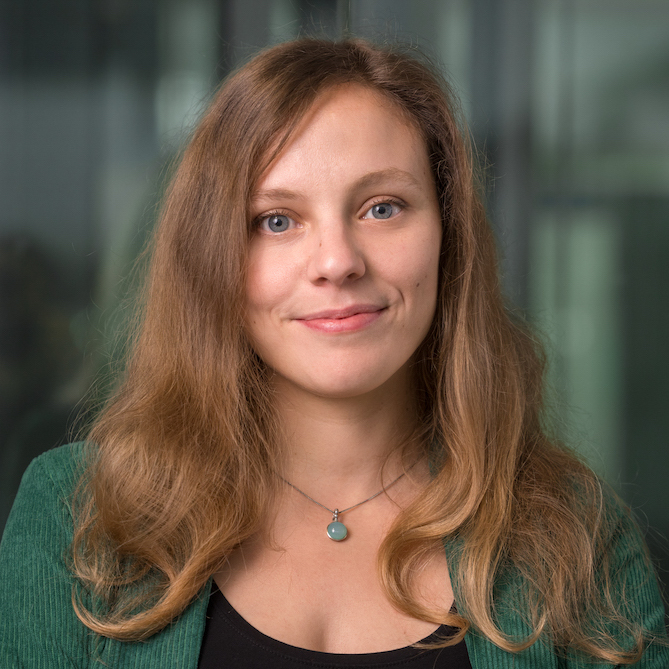
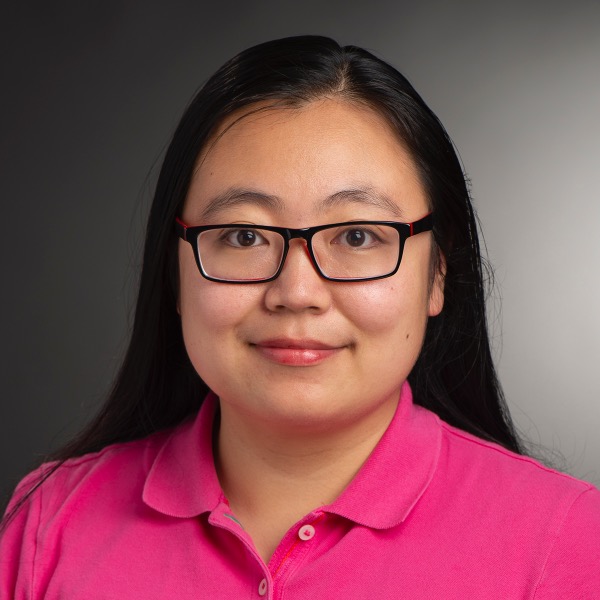
Dr. Xiaopeng Li is the Harvey D. Spangler Professor in the Department of Civil and Environmental Engineering at the University of Wisconsin-Madison, with an affiliation in the Department of Electrical and Computer Engineering. He leads the USDOT Rural Autonomous Vehicle Program and previously directed the National Institute for Congestion Reduction. He earned his B.S. in Civil Engineering from Tsinghua University (2006), M.S. in Civil Engineering (2007), M.S. in Applied Mathematics (2010), and Ph.D. in Civil Engineering (2011) from the University of Illinois at Urbana-Champaign. His research focuses on modeling and field experiments for connected, electric, and automated vehicles (CAVs), infrastructure systems analysis, and interdependent network modeling. He has pioneered physics-enhanced machine learning frameworks for vehicle control and developed simulation tools for CAV deployment. His 2025-2024 publications highlight advancements in Connected vehicle trajectory modeling Energy consumption optimization Edge computing for autonomous operations Residual learning control systems Equity analysis in AV deployment Communication technologies for V2X Awards include: TRB Best Paper Award (2025) NSF CAREER (2015) ASCE Fellow (2024) IEEE Senior Member (2022) Multiple institution-specific fellowships He has advised 15+ graduate students, secured $35M+ in grants from NSF, USDOT, and industry partners, and chairs the IEEE ITSS Emerging Transportation Technology Testing committee. His work addresses real-world AV implementation, safety validation, and sustainable transportation systems.
Vassilios Tzerpos is an Associate Professor at the Lassonde School of Engineering, York University, where he has been since 2001. He holds a Ph.D. in Computer Science from the University of Toronto (2001). His research focuses on audio processing for musical applications, deep learning, digital signal processing, machine listening, and software engineering education. He directs the APTLY lab exploring music-technology intersections and leads the LaSSoftE lab developing socially-oriented software solutions. Education: Ph.D. in Computer Science, University of Toronto, 2001 Research Highlights: Dr. Tzerpos' work spans music information retrieval (e.g., automatic music classification), synthetic speech detection using neural networks, and software engineering pedagogy. His recent projects include Music-STAR for audio re-instrumentation and OER-based learning path creation systems. He has pioneered methods in design pattern detection and software clustering evaluation. Grants & Labs: Leads two research groups: APTLY (music-tech) and LaSSoftE (social impact software). Active in developing adaptive cybersecurity solutions against DoS attacks and refining software architecture recovery techniques. Key Themes in Publications: Recent work emphasizes machine learning applications in music technology and cybersecurity, with foundational contributions to software clustering methodologies and design pattern detection algorithms. His work bridges theoretical computer science with practical applications in education and creative industries.
Omobolanle Ogunseiju is an Assistant Professor in the School of Building Construction at Georgia Institute of Technology . She holds a Ph.D. in Environmental Design and Planning from the Department of Building Construction at Virginia Tech. Education: Ph.D. in Environmental Design and Planning, Virginia Tech Current Role: Assistant Professor, Georgia Tech School of Building Construction Her research focuses on integrating wearable robotics and Artificial Intelligence (via digital twin , cyber-physical systems , and data sensing ) to improve construction workforce safety, health, and well-being . She explores ethical implications of automation in construction, particularly in human-technological dynamics. Key research trends include: Advancing smart communities through robotics and AI Exoskeleton evaluation for ergonomic risk reduction Mixed reality environments for construction education Data analytics for cognitive and physical risk assessment Professional identity development in construction engineering students Industry-academia alignment for sensing technology integration Scientific awards: Outstanding Doctoral Candidate, Myers-Lawson School of Construction Outstanding Doctoral Student, College of Architecture and Urban Studies at Virginia Tech Teaching philosophy emphasizes experiential learning , engagement techniques , and hierarchical assessments . She developed the Construction Cost Management course at Georgia Tech and will lead Construction Technology courses. Previously, she taught Smart Construction , Building Systems Technology , and Wireless Sensing in Construction Management at Virginia Tech.
Nicole Novielli, Ph.D., is Associate Professor at the University of Bari “A. Moro” , Italy, where she conducts research on affective computing applied to software engineering and human-computer interaction. She leads the Collaborative Development Group and coordinates national projects investigating emotions in software teams, AI quality and IoT ecosystems. Education: Ph.D. in Computer Science, University of Bari, 2010 – thesis on “Lexical Semantics of Dialogue Acts” M.Sc. in Computer Science (Knowledge & Software Engineering), University of Bari, 2006 – summa cum laude B.Sc. in Computer Science, University of Bari, 2004 – summa cum laude Visiting researcher at USC-ICT, University of Aberdeen, FBK-irst (Trento) Research interests revolve around recognizing and exploiting affective and cognitive states in computer-mediated cooperative work. She studies sentiment and emotion mining in developers’ textual communication, multimodal emotion recognition via low-cost biometric sensors, and natural-language dialogue simulation for intelligent interfaces. Her work couples software engineering with natural language processing , social media analytics and human-computer interaction . Recent articles (2021-2025) reveal a clear trend: integrating deep learning and large language models into software engineering tasks—automated issue labelling, sentiment classification, technical-debt detection—while validating these techniques through rigorous empirical studies and biometric experiments . A parallel stream explores developer experience , measuring how emotions and cognitive load influence productivity, code quality and collaboration. Scientific awards include the 2020 Apex Award for Publication Excellence , multiple Distinguished Reviewer Awards at flagship venues (ESEC/FSE, ICSME, MSR), the Best Paper Award SANER 2019 and the Best Student Paper Award ACII 2009 . She currently teaches “Sentiment Analysis” in the Data-Science MSc and “Computer Networks” in the ITPS programme. She has advised numerous B.Sc., M.Sc. and PhD projects and is PI or Co-PI of four ongoing grants: EmoQuest (SIR), EMPATHY (PRIN), FAIR-Spoke 6 (PnRR), and QualAI (PRIN 2022). Dr. Novielli serves on the editorial boards of Empirical Software Engineering and Journal of Systems and Software , has guest-edited special issues on affect awareness in SE, and has chaired tracks at ICSE, SANER, MSR, ICSME and SSBSE. She co-leads the Collaborative Development Group and actively releases datasets and open-source tools for the community.
Jun.-Prof. Dr. Christian Krupitzer is a Tenure Track Professor in Food Informatics at the University of Hohenheim's Institute of Food Science and Biotechnology, part of the Faculty of Natural Sciences. He leads the Department of Food Informatics and is a member of the Computational Science Hub (CSH). His research focuses on self-adaptive software systems, machine learning (especially edge computing), IoT technologies, and software engineering applied to food processing and agricultural systems. Education: PhD in Business Information Systems (Dr. rer. pol.), University of Mannheim (2018) M.Sc. and B.Sc. in Business Information Systems, University of Mannheim (2010–2012) High School Diploma (Abitur) from Wilhelmi-Gymnasium Sinsheim (2007) Research Interests: Krupitzer’s work integrates computational methods with food science, emphasizing adaptive systems for food quality monitoring, IoT in agriculture, and machine learning for predictive analytics. He explores edge computing’s role in real-time decision-making and secure group communication schemes for IoT networks. Publications: His recent work spans predictive maintenance in Industry 4.0, digital twins in food systems, and blockchain applications in supply chain authentication. The articles highlight trends in interdisciplinary approaches combining AI, IoT, and domain-specific challenges in food production and logistics. Awards: No scientific awards explicitly listed in the provided materials. Grants & Advising: While specific grants are unmentioned, his roles as department head and tenure-track professor suggest involvement in research funding. No formal advisee list provided, though his team includes postgraduate researchers like Dana Jox, Daniel Einsiedel, and others. Labs & Teams: Leads the Food Informatics department and collaborates with the Computational Science Hub. His team focuses on developing innovative solutions for food systems through computational methods.
Dr. Eva Cetinic is a DSI Bridge Postdoc Fellow at the University of Zurich, conducting research at the intersection of deep learning, explainable AI, and digital art and humanities. Previously, she held postdoctoral positions at Durham University and the Center for Digital Visual Studies at the University of Zurich, and worked as a Professional Associate and Postdoc at the Rudjer Boskovic Institute in Croatia from 2015 to 2021. Her educational background includes: PhD in Computer Science, University of Zagreb (2019) Dr. Cetinic's research focuses on computational image understanding and multimodal learning for visual art and culture, investigating how text-image models encode socio-cultural patterns and impact artistic creation. Her work critically examines ethical and societal implications of AI while bridging computer science, digital humanities, and art history through interdisciplinary methodologies. Her publication trends (2019-2025) reveal concentrated analysis of generative AI's cultural impact, particularly text-to-image systems. She systematically investigates bias propagation (gender, cultural), user interaction dynamics, and creative processes while developing technical frameworks for art analysis - moving beyond technical capabilities to address real-world implications in artistic and cultural contexts. She currently leads the UZH-funded project 'From Hype to Reality: Artificial Intelligence in the Study of Art and Culture' in collaboration with the University of Cambridge, establishing cross-institutional frameworks for responsible AI adoption. Her research methodology emphasizes practical implementation within humanities workflows through international networks like DARIAH. As a DSI Bridge Postdoc Fellow, Dr. Cetinic operates within the University of Zurich's Digital Society Initiative ecosystem, connecting computational research with the Center for Digital Visual Studies and global digital humanities infrastructures to examine AI's transformative role in cultural production and interpretation.
Dr. Yu Huang is an Assistant Professor in the Department of Computer Science at Vanderbilt University's School of Engineering, with a secondary appointment in the Department of Teaching and Learning at the Peabody School of Education. She is affiliated with the Institute for Software Integrated Systems, the Frist Center for Autism and Innovation, the Vanderbilt Lab for Immersive AI Translation (VALIANT), and the Vanderbilt LIVE Learning Innovation Incubator. Her academic journey began with a BS in Aerospace Engineering from Harbin Institute of Technology in China (2011), followed by an MS in Computer Engineering from the University of Virginia (2015), and culminated with a PhD in Computer Science and Engineering from the University of Michigan in 2021 under Professor Westley Weimer. Dr. Huang's research bridges human cognition and machine intelligence to enhance software development. Her work spans software, hardware, AI, medical imaging (fMRI/fNIRS), eye tracking, and mobile sensing through collaborations with Security, Education, Psychology, and Neuroscience researchers. She leads the MIND Lab (Mixed INtelligence Development for programming lab), investigating programming expertise formation, code comprehension processes, cognitive error patterns, and diversity in programming communities. Her innovative approach combines empirical human studies with AI model development to create more effective programming tools. Her recent publications reveal a growing emphasis on leveraging human attention data to improve code language models, analyzing cognitive biases in security contexts, and examining social factors in technical communication. The research shows strong interdisciplinary connections between neuroscience, psychology, and software engineering, with increasing applications of LLMs in developer tooling. Dr. Huang's work consistently demonstrates how understanding human cognition can inform better AI systems for programming tasks. Dr. Huang has received numerous prestigious recognitions including the 2025 ICPC Vaclav Rajlich Early Career Achievement Award and three ACM SIGSOFT Distinguished Paper Awards (ICSE 2019, FSE 2023, ICSE 2024). Her lab has earned the Best Presentation Award at GI2024, while her students have received the Richard Bennett/Dorothy Danforth Compton Prize scholarship and the C. F. Chen Best Paper award. She actively mentors a diverse team of graduate students (Yifan Zhang, Zach Karas, Zihan Fang, Yueke Zhang, Jiahao Zhang) and undergraduate researchers, with many former students advancing to top institutions (Stanford, Harvard, Duke, UC Berkeley) and organizations (NASA JPL). Her research is supported by a 4-year NSF grant, GitHub Tech for Social Good funding, and the Provost's Faculty Immersion Vanderbilt Grant, enabling comprehensive studies of human-AI collaboration in software engineering. The MIND Lab maintains a strong collaborative culture, frequently working with Professor Kevin Leach's research group and organizing retreats to locations like Radnor State Park and the Great Smoky Mountains. This environment fosters innovation at the intersection of human cognition and software engineering while supporting the professional development of emerging researchers in the field.
A/Pr Steven Goh is an Associate Professor in Mechanical and Mechatronic Engineering at the University of Southern Queensland (USQ), affiliated with the School of Engineering. He holds advanced degrees including a DEng from USQ and is a Fellow of Engineers Australia. His research focuses on engineering education, practice, management, and biomedical engineering. He has received notable awards such as the 2015 Australian Government OLT Citation for Outstanding Contribution to Student Learning and multiple USQ accolades. Education: BEng(Hons) in Manufacturing & Materials (UQ), MBA (Deakin), MProfAcc (USQ), DEng (USQ), and a Diploma in Company Directorship (AICD). Research Interests: Engineering education innovation, sustainable energy systems, and biomedical applications. He actively contributes to professional bodies like the Australasian Association of Engineering Education and serves as Editor (Strategic) for the Australian Journal of Mechanical Engineering. Awards: Multiple teaching excellence awards from USQ (2008-2010) and the 2015 national OLT Citation. Advising/Grants: Not explicitly detailed in text; his roles include supervising students and leading research projects on engineering education and asset management. Labs/Teams: Associated with the Centre for Future Materials and Centre for Health Research at USQ.
Bing Yan is an Assistant Professor in the Department of Electrical and Microelectronic Engineering at Rochester Institute of Technology (RIT), affiliated with the Kate Gleason College of Engineering. She holds a B.S. in Information Management from Renmin University of China (2010), and M.S. and Ph.D. degrees in Electrical Engineering and Statistics from the University of Connecticut (2012–2017). Prior to RIT, she was an Assistant Research Professor at the University of Connecticut. Dr. Yan’s research focuses on power system optimization , including grid integration of renewables (wind/solar), microgrid operations, distributed energy systems, and manufacturing scheduling. She has published over 30 peer-reviewed articles and secured grants from the National Science Foundation (including a CAREER Award), Department of Energy, and industry partners like Brookhaven National Laboratory and ABB. Her work emphasizes mixed-integer linear programming and machine learning applications in energy systems. Notable contributions include stochastic unit commitment models for wind farms, voltage control via deep reinforcement learning, and multi-layer weather models for PV prediction. She advises on projects involving grid resilience, smart manufacturing, and data-driven optimization. Awards: National Science Foundation Faculty Early Career Development (CAREER) Award Multiple NSF grants, DOE grants, and industry contracts Teaching: Courses include Circuits I , Electric Power Transmission & Distribution , and Advanced Power Systems . She also mentors students through co-op programs and independent studies. Labs/Teams: Leads the Intelligent Lab of Power and Manufacturing (ILPM), focusing on multidisciplinary solutions for energy and manufacturing systems. The lab emphasizes hands-on training and innovation in smart grid technologies and sustainable energy systems.
Ditte Hededam Welner is a Senior Researcher & Group Leader at the Novo Nordisk Foundation Center for Biosustainability, Technical University of Denmark. Her research focuses on Enzyme Engineering and Structural Biology, particularly the development of enzyme biocatalysts for sustainable industrial production of natural products like aromas, dyes, and pharmaceuticals. She leads efforts to replace petroleum-based chemical synthesis with eco-friendly bio-based processes, emphasizing glycosyltransferase (GT) engineering to enhance substrate specificity, efficiency, and stability. Education: Biochemistry, University of Copenhagen (2000–2011). Research Interests: Glycosylation mechanisms, high-throughput enzyme discovery/evolution, structural biology techniques (X-ray crystallography, NMR), and biocatalysis applications in sustainable chemistry. Her work contributes to UN SDG 9 (Industry, Innovation, and Infrastructure) and SDG 12 (Responsible Consumption and Production). Recent publications highlight advancements in alginate degradation mechanisms, sucrose synthase engineering, and glycosyltransferase applications in biocatalytic routes for indigo/indican production. She supervises multiple PhD projects on enzyme optimization, machine learning for enzyme engineering, and sustainable bioprocessing. Professional Activities: Peer review for journals like Nature Catalysis and Metabolic Engineering , conference organization, and editorial contributions. Active in promoting open-access science and sustainable biotechnology. Labs/Teams: Leads the Enzyme Engineering and Structural Biology group at DTU, collaborating with industry and academic partners globally to advance biocatalytic solutions for environmental challenges.
Yuqing Wang is a Postdoctoral Researcher in the Department of Computer Science at the University of Helsinki, Finland, actively contributing to software engineering research with expertise in anomaly detection for microservices and test automation maturity. Contactable via yuqing.wang@helsinki.fi and phone +358505934630/+358294151310, Wang participates in major EU and Academy of Finland projects including LUMI AI Factory (2025-2028) and MuFAno (2023-2026). Research focuses on two interconnected domains: anomaly detection in cloud-native systems using meta-learning for cross-system log analysis and trace categorization, and test automation maturity assessment frameworks. Recent work pioneers datasets like LO2 for microservice API anomalies and tools like LogLead for integrated log processing, while earlier studies establish quantitative links between test automation maturity and product quality in open-source ecosystems. Publications reveal an evolving trajectory from foundational test automation maturity models (2018-2020) toward advanced AI-driven anomaly detection (2024-2025), with 2022-2023 bridging both domains through empirical studies on agile practices and maturity impacts. Current work emphasizes cross-system generalization and multimodal fusion for microservice reliability. No scientific awards are documented in available sources. Wang contributes to two significant grants: the EU Horizon Europe LUMI AI Factory developing AI service infrastructure (2025-2028), and the Academy of Finland MuFAno project advancing multimodal anomaly detection for microservices (2023-2026). These projects drive collaboration with industry partners on real-world system reliability challenges.
Dr. Ali Kashani is a Senior Lecturer at the University of New South Wales (UNSW) within the School of Civil and Environmental Engineering. His research focuses on sustainable and low-carbon concrete materials, robot-aided construction (particularly 3D printing), and Circular Economy-aligned applications. Leadership in cementitious materials innovation Expertise in 3D printing for construction Advocate for waste valorisation and carbon capture Dr. Kashani has secured approximately $7 million in research funding and holds a patent in lightweight concrete foam. His work spans 70+ publications with 9,000+ citations, including media coverage in the Sydney Morning Herald and The Fifth Estate. He actively contributes to professional organizations such as MECLA, RILEM, and ASTM. Recent research trends include AI and optimization algorithms for sustainable concrete mix design, chloride diffusion modeling, and 3D printing performance analysis. His publications often address waste material integration, durability assessment, and eco-friendly construction practices. Scientific Awards: National and NSW Awards for 'Excellence in Concrete' (Technology and Innovation) from the Concrete Institute of Australia Churchill Fellowship for Digital Construction and 3D Printing sponsored by AVJennings Dr. Kashani serves as Co-Chair of the cement and concrete working group at MECLA and contributes to RILEM and ASTM committees. His email is ali.kashani@unsw.edu.au , and his office is located in the Civil Engineering Building (H20), Level 2, Room CE204, UNSW.
Thorsten Schmidt is Professor of Mathematical Stochastics at the University of Freiburg, succeeding Prof. Ernst Eberlein in the summer semester of 2015. He also serves as Senior Financial Engineer at MathFinance. Previously, he held professorships at Chemnitz University of Technology (2008-2015), Technical University Munich (2008), and University of Leipzig (2004 onwards). From 2017-2019, he was a Research Fellow at the Freiburg Institute for Advanced Studies (FRIAS) in a joint research group with the University of Strasbourg and USIAS on the topic of Linking Finance and Insurance. His research focuses primarily on financial and actuarial mathematics, stochastic processes, and statistics, with recent work on machine learning methods and their applications in financial mathematics and AI regulation. In Freiburg, his goal with his young team is to tackle complex challenges with improved mathematical models and apply these methodologies to various fields. Key Research Areas: Financial mathematics and credit risks Pricing and hedging of derivative financial products Statistics of stochastic processes Energy markets and nonlinear filter theory Machine learning applications in finance and insurance His recent publications show a strong trend toward integrating machine learning with traditional mathematical finance, particularly in risk management, insurance-finance arbitrage, and robust financial modeling. His work increasingly addresses ethical considerations in AI applications within finance, reflecting his broader interest in responsible AI development. Notable Awards: IDA Award Finance (2015) FRIAS-USIAS Research Fellow (2017/2018) IDA Award Machine Learning and AI (2020) MAPFRE Research Grant (2020) Luis Bachelier Fellow (2021) As Editor-in-Chief of Statistics and Risk Modeling and Associate Editor for Mathematical Finance and International Journal of Theoretical and Applied Finance, Schmidt plays a significant role in academic publishing. He leads the CRC 'Small Data' research center with Harald Binder, focusing on medical problems where disease progression must be estimated with few data points per patient. His LeanAI project, funded by the Vector Foundation, explores the connection between machine learning and theorem-proving software LEAN, aiming to develop AI that can translate between mathematics and formal proof systems. His laboratory work centers around the application of stochastic methods combined with machine learning to solve problems in finance and insurance where data is limited ('Small Data' initiative), with significant funding from DFG (€12 million for CRC Small Data) and the Carl Zeiss Foundation.
Richard Futrell is an Associate Professor at the University of California, Irvine (UCI), affiliated with the Department of Language Science. He leads the Language Processing Group, focusing on computational models of human and machine language processing. His work bridges information theory, Bayesian cognitive modeling, and natural language processing (NLP) interpretability. University of California, Irvine Department of Language Science Language Processing Group leader His research examines how linguistic structures emerge from cognitive and communicative pressures. Key areas include dependency locality, surprisal theory in sentence processing, and efficiency-driven language evolution. He investigates how memory constraints, predictability, and information density shape syntactic and morphological patterns across languages. Recent publications analyze code-switching efficiency, syntactic priming, ERP component modeling, and agent-based language contact simulations. His work frequently employs Bayesian modeling, neural network analysis, and cross-linguistic corpora to uncover universal principles in language processing. ACL Best Paper Award (2024) Best Paper Award for Computational Modeling of Language (2023) Marr Prize for Best Student Paper (2017) He has developed datasets like SPACER for error repair analysis and contributed to phonotactic learning frameworks. His collaborations span cognitive scientists, computational linguists, and neuroscientists, advancing understanding of language production, comprehension, and structural optimization.
Alexander Hollberg is an Associate Professor in the Division of Building Technology at Chalmers University of Technology, within the School of Architecture and Civil Engineering. His academic role focuses on Computational Sustainable Design, emphasizing the development of digital tools for sustainable building and urban design. He holds a PhD in Parametric Life Cycle Assessment (2016) from Bauhaus University Weimar, an MSc in Architectural Engineering (2011), and a BSc in Civil Engineering (2008) from Technical University of Munich (TUM). His research interests include Sustainable Design Optimization, Stakeholder Interaction, Artificial Intelligence, and Life Cycle Assessment (LCA). He co-founded CAALA, a software and consulting startup in Munich, Germany, advancing tools for real-time environmental performance evaluation in early design stages. Recent work includes studies on digital twins for urban planning, robust renovation strategies, and AI-driven facade optimization. Hollberg was promoted to Docent (Associate Professor) in Computational Sustainable Design in 2022, focusing on bridging computational methods with sustainable environmental transitions. His collaborative projects address tool development for stakeholder engagement, BIM integration, and circular economy frameworks in construction. Key Projects: Development of Bombyx and Twinable tools for real-time LCA and urban simulation Leading the Nordic Build-LCA PhD forum and BIM-based LCSA applications Contributions to IEA EBC Annex 72 guidelines on life cycle environmental impacts Education Background: PhD in Parametric Life Cycle Assessment, Bauhaus University Weimar, 2016 MSc in Architectural Engineering, Bauhaus University Weimar, 2011 BSc in Civil Engineering, Technical University of Munich, 2008 His research outputs prioritize early design-stage decision support through parametric modeling and AI, with a focus on carbon neutrality and material circularity in construction.