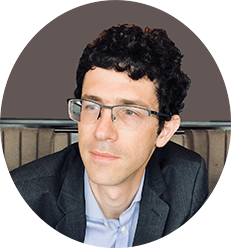
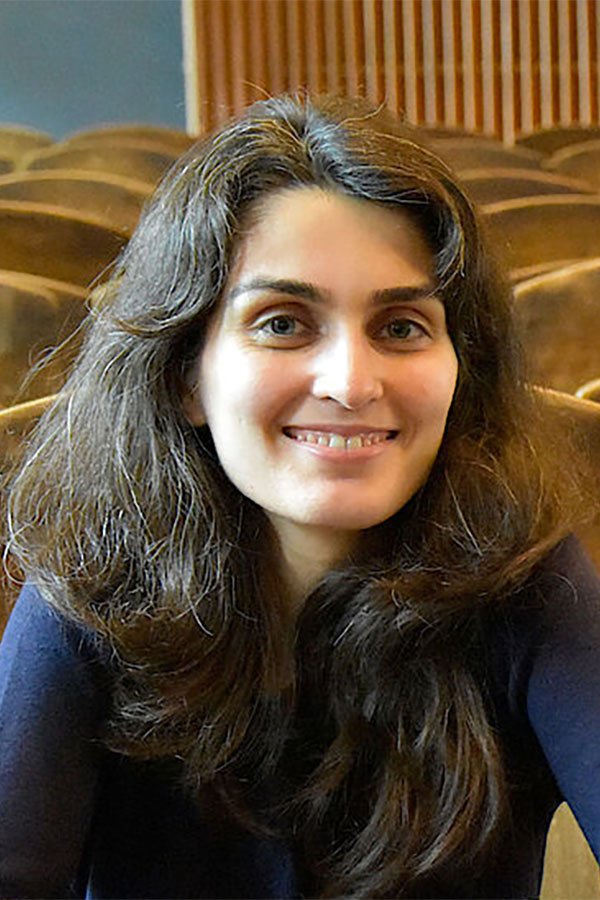
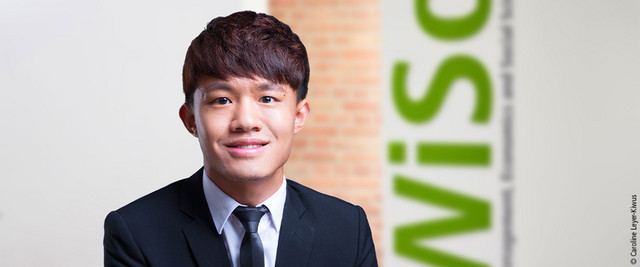
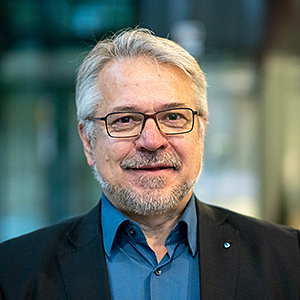
Tien Ping Tan is an experienced researcher specializing in speech recognition , natural language processing , and machine learning applications. With a PhD in Automatic Speech Recognition for Non-Native Speakers from Joseph Fourier University (2008), his career spans two decades of impactful contributions across multiple domains.
Sio Kei Im is an active researcher with a focus on computer science, machine learning, and human-computer interaction. His recent work spans multiple domains including image processing, quantum computing, and virtual reality. Publications address advanced data augmentation (LogicMix), multi-modal quantum watermarking (MMQW), and efficient neural decoding algorithms (TRHyper). Research interests include time series optimization, dialogue summarization, and haptics in VR environments. Collaborations with experts in linguistics, electrical engineering, and software development indicate interdisciplinary expertise. Key contributions involve adaptive algorithms for AI model protection, speaker recognition systems, and real-time 3D rendering techniques.
Mohammed Lamine Kherfi is a researcher affiliated with Université de Ouargla, Algeria. His work focuses on machine learning, image retrieval, and data clustering with applications in computer vision and optimization. He has collaborated extensively with researchers like Oussama Aiadi, Mebarka Allaoui, and Djemel Ziou. His research bridges theoretical advancements in machine learning with practical applications in areas such as fruit classification, semantic image retrieval, and deep learning models. Key research areas include optimization algorithms (e.g., PSO integration with t-SNE), multi-view learning, and Bayesian methods for image representation. He has contributed to improving clustering techniques, feature extraction, and the development of lightweight neural network architectures. His work often emphasizes efficient and energy-aware solutions for real-world problems. Over 30 publications span prestigious venues like Expert Systems with Applications, IEEE Access, and Multimed Tools Appl. His collaborative network includes institutions in Algeria and international partners, reflecting a global impact in computational intelligence and computer vision.
Peter Palensky is a leading researcher in smart grids, power system cybersecurity, and cyber-physical systems. His recent work focuses on digital twins for power systems, quantum computing applications in energy analysis, and secure blockchain frameworks for distributed energy resources. He collaborates extensively with institutions across Europe, particularly in Dutch and Mongolian grid stability projects. Research areas include Smart grid resilience against cyber attacks Quantum-enhanced power flow analysis Electric vehicle grid integration (V2G) Machine learning for energy systems optimization High-voltage direct current (HVDC) security His publications emphasize practical implementations, such as hardware-in-the-loop testing for photovoltaic systems and real-time simulation models for energy storage. Recent articles explore large-scale synthetic data generation for grid analysis, dynamic tariff impacts on EV charging, and advanced control strategies for offshore MMC grids.
Dr. Philip Wotschack is Head of the Research Group 'Working with Artificial Intelligence' at the Weizenbaum-Institut for the Networked Society. He has held various academic roles including Researcher at WZB Berlin Social Science Center and the University of Groningen. His research focuses on social inequality, labor markets, digitalization, and algorithmic management. He earned his Ph.D. in Sociology from the University of Groningen (2009). Key research areas include: Impact of AI-driven algorithmic management in workplaces Continuing training practices for low-skilled workers Workplace digitalization and automation Gender and social inequality in training access Recent projects include the EU-funded INCODING project analyzing collective bargaining's role in algorithmic management governance, and experimental studies on human-technology interaction in automated systems. His work integrates institutional theory perspectives with empirical analyses of organizational practices. He has led projects funded by the German Research Foundation and European Commission. Publications span topics like labor market segmentation, workplace automation ethics, and skill development policies. He has authored/co-authored books on work-life balance and labor market institutions.
Nori Jacoby is an Assistant Professor in the Department of Psychology at Cornell University and a Research Group Leader at the Max Planck Institute for Empirical Aesthetics in Frankfurt. Her research bridges cognitive science, neuroscience, and machine learning to explore how internal representations shape sensory and cognitive abilities, with a focus on universality/diversity in perception and collective behavior. Education: PhD from Hebrew University of Jerusalem (ELSC), postdocs at MIT, UC Berkeley, and Columbia University Lab: Directs the CoCoCo Lab (Cornell Computational Cognition Lab) Funding: NSF-funded postdoctoral program collaborating with UC Davis, CUNY, and Princeton Research interests include: High-dimensional perceptual spaces using adaptive sampling (e.g., Gibbs sampling with people) Cross-cultural studies of music and perception via global experiments Human-AI hybrid systems for collective creativity and decision-making Recent work explores mechanisms of cultural diversity in urban populations, neural correlates of rhythm in stroke patients, and LLM alignment with human sensory judgments. Current projects include large-scale music evolution experiments and NSF-funded studies on collective intelligence. Recruitment: Actively hiring postdocs and PhD students for interdisciplinary work.
Zaiwen Feng is a researcher actively contributing to data governance, semantic modeling, and causal inference. His work focuses on knowledge graphs, graph-based methods, and service-oriented architectures through collaborations with institutions like the University of Queensland and universities in China. Research Focus : Graph Differential Dependencies, Entity Resolution, Causal Effect Estimation, and Ontology Alignment Methodologies : Machine Learning, Variational Autoencoders, Prompt Engineering, and Semantic Retrieval Application Areas : Biomedical Data, Property Graph Recommendation, and Process Model Repositories Key trends in his publications include automated semantic modeling , neural approaches for entity resolution , and causal inference with graph structures . He frequently collaborates with researchers like Keqing He, Wolfgang Mayer, and Selasi Kwashie across conferences such as HPCC, BIBM, and WISE.
John Quarles is a Professor at the University of Texas at San Antonio, specializing in Virtual Reality (VR) and Human-Computer Interaction. His research focuses on accessibility in immersive technologies, cybersickness mitigation, and inclusive design. He has contributed over 100 publications across top venues like IEEE VR, ISMAR, and IEEE Transactions on Visualization and Computer Graphics. His work addresses challenges faced by users with disabilities, such as balance impairments and mobility limitations, through innovative feedback systems and adaptive algorithms. Quarles has co-authored influential papers on cybersickness prediction, VR accessibility for persons with Multiple Sclerosis, and disability simulations to reduce societal bias. He has held leadership roles including Program Chair for IEEE VR 2023, demonstrating his influence in academic and industrial VR communities. His research spans interdisciplinary applications in healthcare, education, and rehabilitation, with notable collaborations on datasets like 'Mazed and Confused' and frameworks like SmoothRide. Key themes include multimodal feedback methods, user-centric design principles, and leveraging AI for personalized VR experiences.
Dr. Niklas Schandry is a Researcher at the Institute of Genetics, Ludwig Maximilian University of Munich (LMU), within the Faculty of Biology. He leads the Becker research group, focusing on plant-microbe interactions, plant secondary metabolites, and microbial ecology. His work integrates genetics, biochemistry, and computational methods to understand how plants and microbes communicate and adapt chemically. Dr. Schandry's research explores the genetic basis of allelopathic interactions, leveraging tools like the 1001G+ project for Arabidopsis genome analysis and automated phenotyping workflows (e.g., ARADEEPOPSIS). His team investigates bacterial responses to plant-derived compounds such as benzoxazinoids and diterpenes, with implications for agriculture and synthetic biology. Key Projects: Allelochemical networks, bacterial community dynamics, and plant-pathogen effector systems. Lab Members: Includes doctoral candidate Liza Rouyer and postdoc Duncan B. Crosbie. Technical Expertise: Genomics, transcriptomics, and CRISPR-based knockout systems. Recent studies highlight his focus on TNL receptors in microbiome feedback mechanisms, flagellin epitope evolution, and the antibiotic role of plant metabolites. His work bridges fundamental biology with applied challenges in sustainable agriculture and disease resistance.
Prof. Michael Beer is the Executive Director of the Institute for Risk and Reliability at Leibniz University Hannover. He holds a professorship in the Faculty of Civil Engineering and Geodetic Science and serves on the Faculty Council. His research focuses on structural reliability, uncertainty quantification, and risk analysis with applications in civil engineering systems. He leads the Collaborative Research Centres (CRC) 871 and 1463, addressing regeneration of complex capital goods and offshore megastructure design, respectively. His work integrates machine learning, Bayesian methods, and stochastic modeling to address challenges in seismic vulnerability, geotechnical systems, and reliability-based design optimization. Beer is also a member of the Leibniz Research Centre Energy 2050, emphasizing interdisciplinary energy systems research. Beer's research interests span probabilistic modeling of dynamic systems, uncertainty propagation in engineering systems, and data-driven methods for reliability assessment. His recent publications emphasize computational methods for reliability, machine learning applications, and seismic risk analysis. He actively contributes to academic leadership roles, including editorial boards and research center management.
Dr. Setareh Maghsudi is a Professor in the Learning Technical Systems group at the Faculty of Electrical Engineering and Information Technology at Ruhr-University Bochum. She joined Ruhr-University Bochum in August 2023 after serving as an Assistant Professor at the University of Tübingen (2020-2023) and at the Technical University of Berlin (2017-2020). Her academic journey began with an M.Sc. from Kiel University (2008-2010), followed by her Ph.D. and postdoctoral work at Technical University of Berlin (2011-2015), Yale University (2016-2017), University of Manitoba (2015-2016), and Kyushu University (2019). Dr. Maghsudi's research focuses on the application of machine learning to communication networks and distributed systems, with particular emphasis on bandit algorithms, federated learning, and resource allocation in dynamic environments. Her work bridges theoretical machine learning with practical networking challenges, developing algorithms that can adapt to non-stationary environments with partial information. She has made significant contributions to multi-armed bandit frameworks for wireless communications, edge computing, and network optimization. Her recent publications (2023-2025) demonstrate a strong trend toward addressing challenges in integrated sensing and communication (ISAC), federated learning for edge networks, and non-stationary decision-making problems. The publications show expertise spanning theoretical machine learning foundations, wireless communications engineering, and practical implementation for real-world networked systems. Her work increasingly incorporates causal reasoning and robustness considerations into learning frameworks for communication systems. Dr. Maghsudi leads the Learning Technical Systems research group at Ruhr-University Bochum, where she supervises PhD students and postdoctoral researchers working at the intersection of machine learning and communication systems. Her research is supported by various grants focusing on AI for future communication networks. Current projects include developing AI-driven solutions for next-generation communication systems with emphasis on robustness, efficiency, and adaptability in dynamic environments.
Jun. Prof. Dr. Ziyue Li is a Junior Professor in Machine Learning in Smart Markets at the Information Systems Department of WiSo Faculty, University of Cologne, Germany (2022–present). They also serve as Chief Machine Learning Scientist at EWI, Germany. Their academic career includes researcher positions at Hong Kong Science and Technology Park Corporation/SenseTime (2021–2022), Nokia Bell Labs (2019), and doctoral studies at The Hong Kong University of Science and Technology (2017–2021). Dr. Li's research focuses on high-dimensional data mining , machine learning , and smart mobility . Their work combines tensor analysis, graph modeling, and spatiotemporal prediction to solve complex problems in transportation systems and data analytics. They have developed innovative approaches for passenger flow prediction and travel pattern analysis. Their publications demonstrate a strong focus on tensor-based machine learning methods applied to mobility data. Key trends include Integration of graph theory with tensor decomposition Development of spatiotemporal prediction models Applications in urban transportation analytics Hybrid transfer learning approaches Multi-clustering methods for travel pattern analysis Data completion techniques for complex networks Scientific recognition includes Multiple INFORMS Data Mining Section awards IEEE CASE Best Conference Paper Award Hong Kong Ph.D. Fellowship Scholarship HKUST Excellent Research Award Three Minute Thesis Competition recognition
Prof. Dr. Peter Dietrich is a University Professor of Environmental and Engineering Geophysics at the Eberhard Karls University of Tübingen and Head of the Department of Monitoring and Exploration Technologies at the Helmholtz Centre for Environmental Research (UFZ) in Leipzig, Germany. He holds a joint appointment between the university and UFZ, reflecting his dual role in academic teaching and applied environmental research. Institution: Helmholtz Centre for Environmental Research - UFZ Department: Monitoring and Exploration Technologies Academic Affiliation: University of Tübingen Email: peter.dietrich@ufz.de His research spans environmental and engineering geophysics , with a focus on hydrogeophysics, geophysical monitoring, and exploration technologies for soil and groundwater systems. He applies methods such as electrical resistivity tomography, seismic techniques, and direct push sensing to study subsurface processes in ecological, archaeological, and environmental contexts. His work supports sustainable water management, pollution monitoring, and landscape preservation. The 15 most recent publications highlight a consistent trend in applied geophysics , particularly in non-invasive subsurface characterization , groundwater dynamics , and interdisciplinary environmental monitoring . These studies integrate field experiments, sensor networks, and modeling to address challenges in hydrology, geoarchaeology, and contaminant transport. Keywords across these works include geophysics, hydrogeology, remote sensing, and environmental monitoring, with subfields such as GPR imaging, nitrate plume analysis, peatland carbon storage, and 3D subsurface modeling. No specific scientific awards are listed in the provided text. Prof. Dietrich leads a research team and collaborates extensively with scientists across disciplines, including environmental engineers, hydrologists, and archaeologists. His leadership in the UFZ’s Department of Monitoring and Exploration Technologies underscores his role in advancing smart models and monitoring systems within the broader Helmholtz Research Program 'Changing Earth – Sustaining our Future'.
Prof. Dr. Martin Erdmann is a University Professor of Experimental Physics (High Energy Physics) at RWTH Aachen University, affiliated with the Department of Physics within the Faculty of Mathematics, Computer Science and Natural Sciences. He leads research in high-energy particle physics through the CMS experiment at CERN and the Pierre Auger Observatory in Argentina. His work integrates cutting-edge digital methods, including deep learning and cloud-based data analysis via the VISPA platform. PhD, University of Freiburg (1990) Habilitation, University of Heidelberg (1996) Heisenberg Fellow at DESY and University of Karlsruhe (1997–2002) Professor at RWTH Aachen since 2004 His research interests span Higgs and top-quark physics, cosmic ray detection, radio-based shower measurement, and AI-driven data analysis. He actively contributes to physics education through textbooks and open-access video lectures. His recent publications reflect strong trends in applying deep learning to particle and astroparticle physics, particularly in event reconstruction and simulation. He leads major initiatives like the ErUM-Data-Hub and DIG-UM, advancing digital transformation in fundamental research. Heisenberg Fellowship (DESY and Karlsruhe) Chair, DPG Working Group on Physics, Modern IT, and AI (2019–2021) Project Leader, ErUM-Data-Hub (since 2021) Chair, DIG-UM Community Organization (2021–2024) Prof. Erdmann advises students at all levels and fosters innovation in data science for physics. He has secured leadership roles in international collaborations and promotes sustainable, resource-aware computing in research. His lab develops advanced detector technologies and simulation tools like CRPropa for cosmic ray propagation. Future work includes probing Higgs self-coupling, identifying cosmic ray sources, and refining AI models for physics discovery.
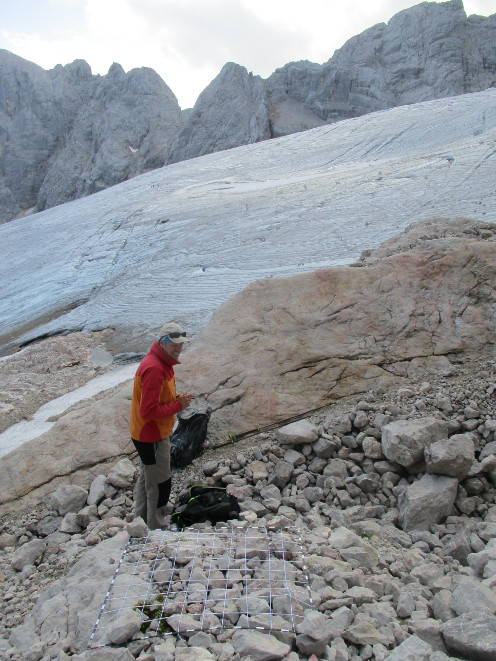
Ingolf Kühn is a Professor of Macroecology at Martin-Luther University Halle-Wittenberg and Head of the Department of Community Ecology at the Helmholtz Centre for Environmental Research (UFZ) in Halle, Germany. He is also a member of the German Centre for Integrative Biodiversity Research (iDiv) and holds a fellowship at the Swiss Federal Institute for Forest, Snow and Landscape Research (WSL). His research is centered on plant invasions, functional traits, and biodiversity responses to global change, with a strong methodological focus on spatial and phylogenetic modeling. His research interests span macroecology , plant invasion dynamics , urban and alpine flora , and data-driven ecological modeling . He has led major projects such as Biodiversity Meets Data (BMD) , eLTER PLUS , and AlienScenarios , and contributed to EU frameworks like EuropaBON and DAISIE . He is deeply involved in developing and managing large databases, including BiolFlor and the TRY Plant Trait Database . His recent publications focus on functional traits of invasive plants, biodiversity digital twins, and climate-driven shifts in species distributions. They reflect a strong trend toward integrating big data, machine learning, and macroecological theory to predict ecological change. Scientific Awards: Highly Cited Researcher (2014–2022) Fellow of the Swiss Federal Institute for Forest, Snow and Landscape Research (WSL) He serves as Editor-in-Chief of NeoBiota and Associate Editor of Journal of Vegetation Science . His advising spans PhD students and postdocs in the GLIMPSE cohort and iDiv projects. He leads multiple long-term monitoring initiatives, including alpine glacier forefield studies in the Dachstein and Berchtesgaden regions. He is affiliated with key research teams and platforms such as: Macroecology & Vegetation Science Working Group iDiv Science Strategy Board Task Forces: sTWIST, sUMMITDiv, sCoMuCra, sREGPOOL eLTER Research Infrastructure Biodiversity Digital Twin initiative