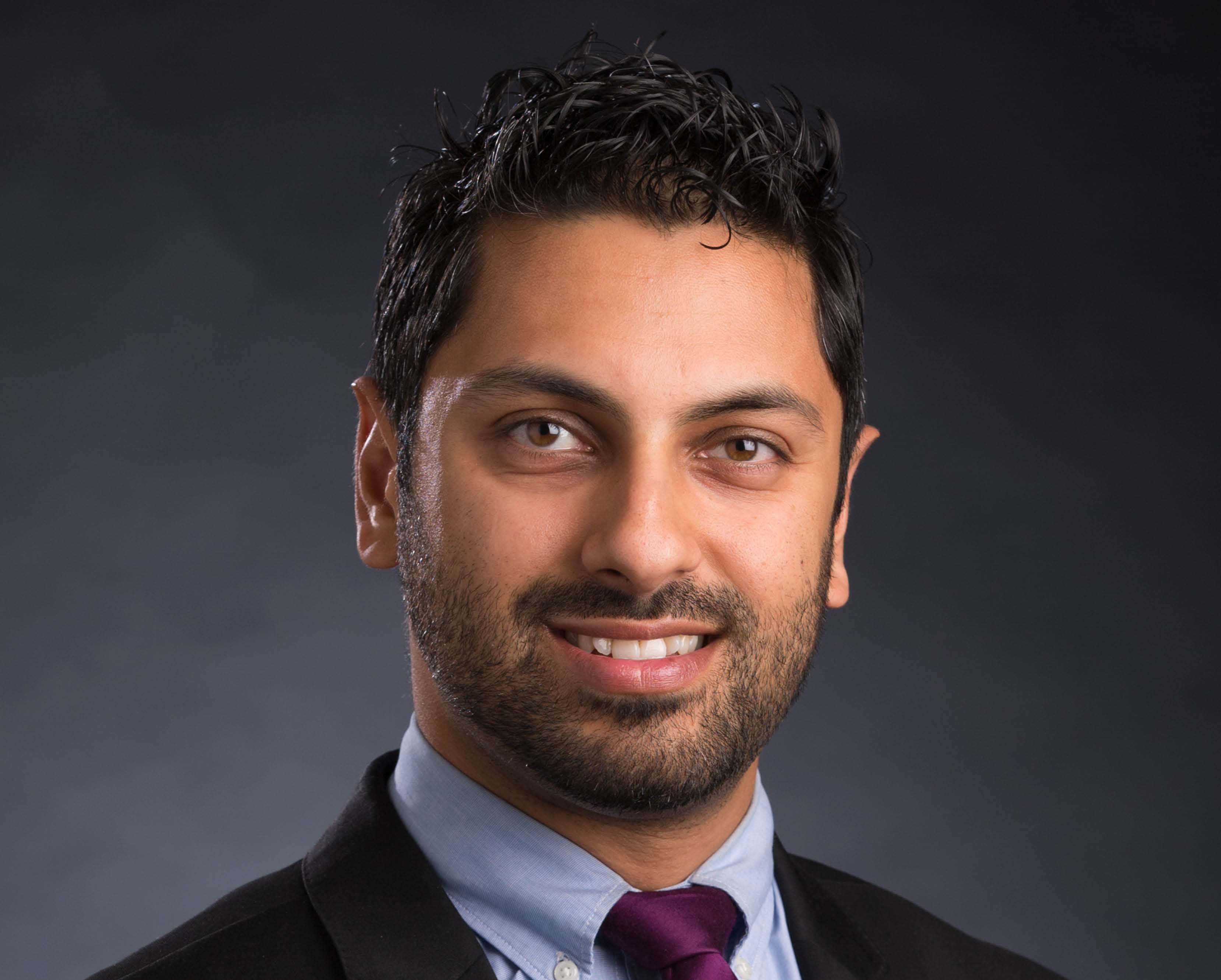
Imraan Faruque is an Associate Professor in the Department of Mechanical and Aerospace Engineering at Oklahoma State University (OSU), part of the College of Engineering, Architecture and Technology (CEAT). His research focuses on biologically-inspired flight control systems, engineered autonomy for unmanned aerial vehicles (UAVs), and the integration of sensory feedback mechanisms in autonomous systems. Education: Faruque holds a Ph.D. and M.S. in Aerospace Engineering from the University of Maryland (2011 and 2010) and a B.S. in Aerospace Engineering from Virginia Tech (2006). Research Interests: His work emphasizes bio-inspired solutions for aerial autonomy, including swarm coordination, gust-aware flight control, and human-autonomy interaction. Key areas include unmanned systems design, visual feedback algorithms, and adaptive control strategies derived from insect flight dynamics. Awards: He has received notable accolades such as the ONR Young Investigator Award (2019), AIAA Hal Andrews Young Engineer/Scientist Award (2017), and multiple 'Best in Session' recognitions at major conferences. His team also secured 1st Place in the International Aerial Robotics Championship (2005). Publications: Faruque’s research spans topics like orbital debris management, swarm intelligence, and tornado sensing with UAVs. His work bridges biological principles and engineering, with applications in aerospace, robotics, and environmental monitoring.
Alejandro Strachan is an Assistant Professor of Materials Engineering at Purdue University's College of Engineering. His research focuses on molecular modeling of advanced materials, with specific emphasis on atomistic and mesoscale simulations of condensed-phase chemistry, active materials, nanotechnology, and mechanical properties of structural materials. Ph.D. in Physics, University of Buenos Aires (1998) Postdoctoral Research, Caltech's Materials Process Simulation Center (1999-2002) Strachan's work integrates computational methods with machine learning to study material behavior under extreme conditions, including shock waves and high-pressure environments. His research spans energetic materials, phase transitions, and multiscale modeling frameworks. Recent publications highlight trends in combining quantum-accurate simulations with deep learning for non-equilibrium systems, FAIR data infrastructure for materials discovery, and multiscale reactive models for energetic composites. He also explores mechanochemistry, defect dynamics, and microstructure-property relationships. His computational simulations often address practical challenges in material stabilization, polymer interactions, and hotspot formation mechanisms. Strachan actively contributes to open science initiatives through platforms like nanoHUB and HUBzero.
Marco Panesi is a Professor in the Department of Aerospace Engineering at the University of Illinois at Urbana-Champaign and Director of the Center for Hypersonics and Entry Systems Studies (CHESS). His research focuses on non-equilibrium phenomena in high-enthalpy flows, plasma dynamics, and uncertainty quantification. He holds a Ph.D. from the von Kármán Institute for Fluid Dynamics (2009) and M.S. degrees from Università di Pisa (2003) and VKI (2005). Roles: Faculty Member, Research Director, Principal Investigator Key Affiliations: CHESS, University of Illinois, VKI Research Interests: Hypersonic flow modeling, non-equilibrium plasmas, radiation effects, machine learning applications in aerothermodynamics, ablation processes, and state-to-state chemistry. His work bridges computational fluid dynamics with experimental validation in facilities like the Plasmatron X wind tunnel. Publications: Over 100 peer-reviewed articles on topics ranging from plasma kinetics to thermal protection systems. Recent work emphasizes adaptive neural operator models and Bayesian uncertainty quantification. Awards: Includes the Vannevar Bush Faculty Fellowship (2021), NASA Groundbreaker Award (2021), and multiple early-career recognitions from AFOSR, NASA, and ESA. Grants & Leadership: Secured funding from NSF, NASA, and DOD. Leads multidisciplinary teams on projects like the CHyPS material response solver and hypersonic entry modeling. Labs & Facilities: Principal investigator for the UIUC Plasmatron X facility, a key resource for studying high-enthalpy plasma flows.
Per-Gunnar Martinsson serves as Professor of Mathematics and Deputy Director of the Oden Institute at The University of Texas at Austin, holding the W. A. "Tex" Moncrief, Jr. Endowment in Simulation-Based Engineering and Sciences. He concurrently acts as Affiliated Professor of Mathematics at the Royal Institute of Technology (KTH) in Stockholm, where he chairs the MathDataLab scientific advisory board. Educational background: Ph.D. in Computational and Applied Mathematics, UT-Austin (2002) His research spans numerical analysis, scientific computing, and data science with emphasis on randomized linear algebra methods, accelerated direct solvers for elliptic PDEs, structured matrix computations, and applications in computational fluid dynamics and acoustics. Recent work extends to boundary integral equations, heterogeneous materials modeling, and lattice equations. Scientific awards: Germund Dahlquist Prize by SIAM (2017) Dr. Martinsson leads research initiatives through the Oden Institute's Center for Numerical Analysis and Center for Scientific Machine Learning, while providing strategic oversight to KTH's MathDataLab as chair of its scientific advisory board.
Magnus A. Rueping is a highly distinguished Professor of Chemistry at King Abdullah University of Science and Technology (KAUST) in Thuwal, Saudi Arabia. With an impressive h-index of 107 and over 35,502 citations from 430 documents, he stands as a leading figure in modern synthetic chemistry. His research group maintains active collaborations with 651 co-authors worldwide, reflecting his significant impact on the chemical sciences community. Professor Rueping's research spans multiple cutting-edge areas in organic chemistry and catalysis. His work primarily focuses on developing novel sustainable methodologies including photoredox catalysis, electrochemical synthesis, and mechanochemistry. He has made significant contributions to the fields of $$\text{C-H}$$ functionalization, late-stage modification of complex molecules, and sustainable chemical transformations. His research group explores the intersection of traditional organic synthesis with emerging technologies to create more efficient and environmentally friendly chemical processes, with particular emphasis on nickel catalysis and metal-organic frameworks. Analysis of Professor Rueping's recent publications (2023-2025) reveals a strong trend toward integrating multiple activation modes in single catalytic systems. His work increasingly combines photochemistry, electrochemistry, and mechanochemistry (particularly resonant acoustic mixing) to develop novel catalytic platforms that minimize waste and energy consumption. A notable research direction involves the application of copper nanoclusters and cerium-based metal-organic frameworks as heterogeneous photocatalysts for challenging organic transformations. His group has also pioneered methods for $$\text{C-Ge}$$ and $$\text{C-S}$$ bond formation with exceptional selectivity. Professor Rueping's research has attracted substantial funding and recognition, as evidenced by his high citation metrics and publication record in top-tier journals including Nature Communications, Journal of the American Chemical Society, and Angewandte Chemie. His work bridges fundamental chemical research with practical applications in pharmaceutical development and sustainable manufacturing. As a dedicated mentor, Professor Rueping has supervised numerous graduate students and postdoctoral researchers who contribute to his diverse research portfolio. His laboratory operates state-of-the-art facilities for advanced organic synthesis, photochemistry, electrochemistry, and materials characterization. Current research directions include developing new methodologies for late-stage functionalization of pharmaceutical compounds, creating sustainable approaches to chemical manufacturing, and engineering novel catalytic materials for energy applications. His group's recent expansion into diagnostic technologies (nanobody-based lateral flow assays) demonstrates the versatility and interdisciplinary nature of his research program.
Vincent Sitzmann is an Assistant Professor at the Massachusetts Institute of Technology (MIT), affiliated with the Computer Science and Artificial Intelligence Laboratory (CSAIL). He leads the Scene Representation Group and is part of the Visual Computing research community at CSAIL. His work focuses on advancing artificial intelligence's ability to perceive and interact with the physical world, particularly through neural fields, 3D scene representations, and robotics. His research bridges computer vision, machine learning, and robotics, aiming to create systems that emulate human perception and decision-making. He holds a dual role in the PI Core/Dual program at MIT and contributes to interdisciplinary efforts in AI & ML, Graphics & Vision, and Robotics. His recent projects include developing generative models for 3D avatars, robust camera pose estimation, and learning-based control for soft robots. He collaborates widely within MIT’s engineering ecosystem and has led initiatives such as the Collaborative Research grant on compositional implicit representations for 3D scene understanding (2022). His lab, the Scene Representation Group, emphasizes scalable 3D reconstruction, material estimation, and embodied AI. Notable technologies include Flowmap for camera calibration and Dittogym for soft robotics control. While no awards are explicitly listed, his work has been featured in top conferences like SIGGRAPH and IEEE Robotics.
Florent Krzakala is a Full Professor at École polytechnique fédérale de Lausanne (EPFL) in Switzerland, holding positions across multiple departments including the School of Basic Sciences (SB), School of Engineering (STI), and specifically within the Department of Physics (IPHYS) and Department of Electrical Engineering (IEM). He leads the Information, Learning and Physics Laboratory (IdePHICS) and maintains an office at ELD 239, Station 11, 1015 Lausanne. His research bridges statistical physics and computational disciplines, with significant contributions to understanding the theoretical foundations of machine learning and optimization problems. Dr. Krzakala received his MSc in Physics from Orsay, France in 1999, followed by a PhD in Statistical Physics from Orsay, Paris XI, France in 2002, and completed a postdoctoral position at Roma La Sapienza in 2004. This strong foundation in physics has informed his interdisciplinary approach to computational problems. His research interests span Statistical Physics, Machine Learning, Probability and Statistics, Computer Science, Information Theory, Inference on Graphs, Random Constraint Optimization, and Computational Optics. Krzakala's work focuses on applying methods from statistical physics to problems in theoretical computer science, probability, and machine learning. He investigates how concepts from disordered systems and phase transitions can illuminate computational barriers in optimization and inference tasks. His research has particular relevance for understanding the behavior of neural networks, compressed sensing, and high-dimensional statistical models. Analysis of his recent publications reveals a strong trend toward understanding the fundamental limits of learning in high-dimensional settings, with particular emphasis on phase transitions, statistical-to-computational gaps, and the theoretical properties of deep learning architectures. His work frequently bridges rigorous mathematical analysis with practical machine learning applications, demonstrating how insights from statistical physics can inform algorithm design and theoretical understanding in AI. Krzakala actively mentors the next generation of researchers, supervising numerous PhD students whose work continues to advance these interdisciplinary fields. His laboratory serves as a hub for researchers exploring the intersection of physics and computation, fostering collaborations across traditional disciplinary boundaries. He teaches advanced courses including Fundamentals of Inference and Learning, Statistical Physics, and Statistical Physics for Optimization & Learning, which examine the connections between physical principles and computational methods. His educational materials, including lecture notes on statistical physics methods in optimization and machine learning, have become valuable resources for students and researchers worldwide. As founder and scientific advisor of the startup Lighton, Krzakala has also demonstrated a commitment to translating theoretical insights into practical applications, particularly in the realm of optical computing for machine learning tasks.
Summary Associate Professor Mehrdad Arashpour is an internationally recognized researcher and educator in construction and civil infrastructure, focusing on automation and information technologies. He leads the ASCII Lab at Monash University's Department of Civil and Environmental Engineering. His academic roles include Head of Construction Engineering and membership in the CIB's Working Commission on Off-site Construction (W121) and Infrastructure Task Group (TG91). Education: Ph.D., RMIT University, Australia M.Sc., Grenoble University, France B.Sc., IU University, Iran Research Interests: Digital twins, computer vision, robotics, BIM integration, sustainable construction, and automation in construction processes. His work contributes to UN Sustainable Development Goals, particularly in sustainable cities and communities. Grants & Awards: Over $6M in grants from ARC, Austroads, and industry partnerships. Recognitions include Editor's Choice Paper (ASCE, 2019) and Outstanding Reviewer (Elsevier, 2016). Teaching: Courses like Risk Management in Engineering Projects and Infrastructure Research Project. Advises on PhD topics in computer vision, robotics, and BIM. Labs & Collaborations: ASCII Lab focuses on smart, sustainable solutions for construction. Collaborates with global researchers and organizations like SPARC Hub and Building 4.0 CRC.
Bruce A. Maxwell is a Teaching Professor and Assistant Director of Computing Programs at Northeastern University’s Seattle Campus, following roles as Chair of the Computer Science (CS) Department at Colby College (2013–2020) and leadership in establishing the Khoury College MS CS Align Program at the Roux Institute (2020–2022). His academic journey includes affiliations with Northeastern’s Seattle Campus and ongoing collaboration with Colby CS as a research scientist. He specializes in Computer Vision, Robotics, Computer Graphics, Game Design, and Data Analysis, with notable contributions to concussion management research through the Maine Concussion Management Initiative (MCMI), focusing on sports-related injury analysis and symptom monitoring. His research spans over two decades, with significant work in human-robot interaction, autonomous systems, and educational technology. Notable projects include developing tools for real-time shadow removal in autonomous driving contexts and analyzing cognitive outcomes in student-athletes post-concussion. Maxwell has authored over 50 peer-reviewed publications, emphasizing interdisciplinary approaches bridging computer science, sports medicine, and educational policy. Teaching innovations include integrating thematic elements (e.g., Lord of the Rings) into CS1 coursework and advocating for writing in computer science curricula. He maintains active roles in academic service, including SIGCSE conference contributions and panel discussions on gender equity in tech education. Education: Ph.D. in Robotics from Carnegie Mellon University (1996), M.Phil. in Engineering from Cambridge University (1993). Awards: Recognized for pedagogical contributions but no named awards listed in provided materials. Labs/Teams: Collaborates with the Maine Concussion Management Initiative and Khoury College’s Align Program team.
Dr. Sohrab Zendehboudi is an Equinor Chair Professor and research lead in the Department of Chemical and Process Engineering at Memorial University's Faculty of Engineering and Applied Science. His work focuses on energy and environmental challenges through experimental and modeling approaches. He has over 15 years of experience across academia and industry in Iran, Kuwait, the U.S., and Canada. He holds a PhD in Chemical Engineering (specializing in transport phenomena) from the University of Waterloo. Research interests include carbon capture, utilization, and sequestration (CCUS), renewable energy systems, process systems engineering, and advanced wastewater treatment. He leads a large research team addressing theoretical and practical challenges in energy sustainability and environmental protection. Key achievements include the 2023 Lectureship Award. His publications span topics like hydrogen production, CO2 storage, solar energy systems, and novel adsorbent materials. He actively seeks graduate students and researchers skilled in experimental work, numerical modeling, and machine learning for energy applications. Education: PhD in Chemical Engineering (University of Waterloo) Key Areas: CO2 Management, Bioenergy, Adsorption Technologies Labs/Teams: Large interdisciplinary research group Grants: Focus on renewable energy and sustainability projects
Bryan Webler is a Professor in the Department of Materials Science and Engineering at Carnegie Mellon University (CMU) since 2013, with a courtesy appointment in the Department of Mechanical Engineering. He serves as Co-Director of the Center for Iron and Steelmaking Research (CISR), an industry-supported consortium, and is affiliated with the NextManufacturing Center and Mill 19 digital backbone initiative. His expertise spans process metallurgy, additive manufacturing, and steelmaking technologies. Education: B.S. in Engineering Physics (2005) from the University of Pittsburgh; M.S. (2007) and Ph.D. (2008) in Materials Science and Engineering from CMU. Prior to academia, he worked as a Senior Engineer at the Bettis Atomic Laboratory's Materials Technology department. Research focuses on four core areas: chemical reactions during liquid steel refining, non-metallic inclusion control, continuous casting of steel, and additive manufacturing (laser powder bed fusion, directed energy deposition). His group integrates high-temperature experiments, computational thermodynamics, and kinetic modeling. Notable contributions include developing oxide dispersion strengthening methods and advancing digital twin applications in manufacturing. Key awards include the Kent D. Peaslee Junior Faculty Award (AIST Foundation) and the AIST Foundation Steel Professor title. He serves on editorial boards for Metallurgical and Materials Transactions B and Metallurgical Research and Technology , and actively contributes to industry partnerships. Beyond technical work, Webler explores the history of metallurgy, particularly Pittsburgh's steel industry legacy. His lab's innovations address carbon management, energy production, and advanced materials processing for extreme environments.
Usman Ali is an Assistant Professor and Adjunct Lecturer at the School of Mechanical and Materials Engineering, University College Dublin. He holds a Ph.D. in 'A data-driven GIS-based approach for multi-scale residential building energy modeling' (2020) from UCD and an M.Sc. in Computer Science from Lahore University of Management Science (2013). His research focuses on machine learning, GIS modeling, urban building energy systems, and energy performance certification. He has contributed to projects like the U.S.-Ireland R&D initiative on building stock classification and energy prediction, and collaborated with the Sustainable Energy Authority of Ireland (SEAI) on energy policy research. His work emphasizes data-driven solutions for energy efficiency, urban sustainability, and policy decision-making. Education: Ph.D., University College Dublin (2020) M.Sc., Lahore University of Management Science (2013) B.Sc., International Islamic University Islamabad (2008) Research emphasizes machine learning applications in energy modeling, GIS integration for urban planning, and energy policy frameworks. His recent work includes synthetic building datasets, occupancy-based energy analysis, and uncertainty quantification in energy systems.
Haifa AlSalmi is a Research Fellow at the Digital Environment Research Institute (DERI), Queen Mary University of London, specializing in AI-driven environmental and sustainability research. She holds a PhD in Geophysics from Imperial College London, where her thesis focused on computational methods for seismic data analysis and subsurface characterization. Her current role involves leveraging computer vision, deep learning, and computational geophysics to enhance subsurface seismic image processing, with applications in sustainable energy exploration (geothermal, hydrothermal, and hydrogen technologies) and climate change research. Her work addresses critical challenges in decarbonization and environmental sustainability, including improving resolution of subsurface data for energy resource exploration and deepening understanding of historical climate patterns and sea-level variations. She collaborates within Professor John’s research group at DERI, which integrates digital technologies to tackle environmental issues. No specific grants or advising roles are detailed in the provided materials, though her contributions emphasize interdisciplinary innovation in geophysics and AI applications. Labs/Teams: Part of the DERI and Professor John’s research group at Queen Mary University of London.
Dr. Keng-Te Lin is a Research Fellow at RMIT University's School of Science, specializing in advanced materials for energy, photonics, and biomedical applications. His work focuses on metamaterials, radiative cooling, graphene-based technologies, and nanophotonic devices. He supervises research projects on topics like spectral selective radiative cooling, electro-optically tunable waveguides, and machine learning for thermal-photovoltaic systems. Key research interests include developing high-performance materials for thermal management, energy conversion, and biomedical therapies. His recent publications highlight innovations in flexible radiative cooling films, ultrafast heat transfer mechanisms, and scalable manufacturing methods for sustainable cooling solutions. Dr. Lin collaborates on projects involving structured metamaterials for solar thermal energy, plasmonic nanostructures for photodetection, and nanocomposite materials for enhanced catalytic activity. He actively supervises students exploring topics such as photonic topological insulators, perovskite solar cells, and AI-driven material optimization. His research bridges fundamental materials science with applied engineering solutions, targeting applications in renewable energy, environmental sustainability, and healthcare technologies.
Emmanuel Ho is a Professor at the University of Waterloo and serves as the Associate Director of Graduate Studies & Research. His research focuses on nanomedicine and vaccine delivery, with expertise in drug delivery systems, polymer chemistry, and biomaterials. He leads the Ho Research Group, dedicated to developing innovative biomedical technologies for healthcare challenges. His work integrates materials science, pharmacology, and engineering to address issues in infectious diseases, ocular health, and drug delivery mechanisms. Key research areas include the design of smart polymers for targeted drug delivery, development of biosensors for rapid pathogen detection, and the application of nanotechnology in combating antimicrobial resistance. His projects often involve interdisciplinary collaborations, such as combining machine learning with nanoparticle formulation design to optimize therapeutic efficacy. Recent advancements from his lab include microwave biosensors for E. coli detection, bacteria-responsive drug release platforms, and pH-sensitive nanomicrobicides for HIV prevention. These innovations highlight his commitment to translating cutting-edge science into practical medical solutions. The Ho Research Group’s work has been widely published in top-tier journals, reflecting its impact on both academic and clinical fields.