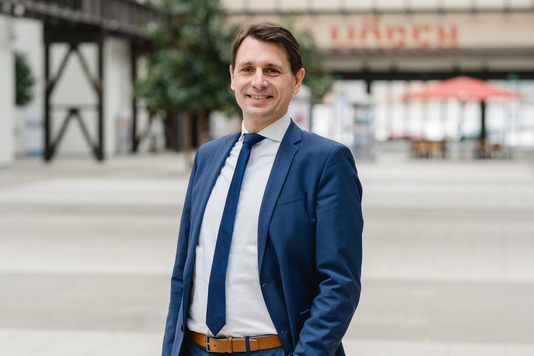
Prof. Dr. Ingmar Ickerott is a faculty member at Osnabrück University of Applied Sciences, affiliated with the School of Management, Kultur und Technik (MKT, Campus Lingen) under the University management department. His academic career spans over two decades, focusing on logistics management, digitalization in supply chains, and smart technology applications like Smart Glasses and Augmented Reality . Academic Background : Diplom-Kaufmann in Business Administration (2001), Ph.D. in Economics (2006). Professional Roles : Senior Project Manager at arvato (2008–2010), Professor since 2010, Dean of MKT since 2019, Vice President for Digitalization since 2019. His research emphasizes logistics innovation , Lean Management , and digital solutions in rural healthcare . Key projects include Land.Digital (2019–2022) and LEAN 4.0 (Erasmus+, 2019–2021). Publications since 2004 cover agent-based simulation , Smart Device economics , and AR in logistics . He actively lectures on topics like Logistics 4.0 and Digital Onboarding . Projects & Grants : Land.Digital : €165,000+ (Erasmus+), 2019–2021. Dorfgemeinschaft 2.0 : €1.46M (BMBF), 2015–2021. Glasshouse : €208,557 (BMBF), 2015–2019.
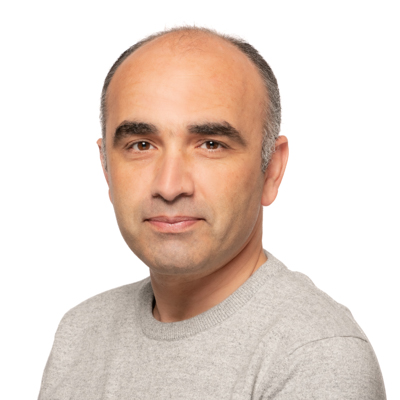
Dr. Enayat Rajabi is an Associate Professor of Business Analytics at the Shannon School of Business, Cape Breton University. Holding a PhD in Information and Knowledge Engineering from the University of Alcala (Spain) and a postdoctoral fellowship from Dalhousie University, his research focuses on the intersection of Machine Learning, Knowledge Graphs, and Data Analytics. He actively applies these technologies in healthcare, smart cities, and social media crisis response contexts. Education PhD in Information and Knowledge Engineering, University of Alcala (Spain) Postdoctoral Fellowship, Dalhousie University Research Interests His work bridges Knowledge Graphs with Machine Learning, emphasizing explainability and practical applications. Key areas include: Explainable AI for clinical decision-making Knowledge Graph applications in healthcare systems Social media analytics for emergency response Smart city data integration Generative modeling for tabular data Recent Publications Trends Recent articles highlight: Explainable AI in healthcare settings Industrial breakdown prediction systems Social media influencer detection Smart city infrastructure modeling Advanced data synthesis techniques Continued focus on Knowledge Graph applications
Professor Francesca Toni is a Professor in Computational Logic at the Department of Computing, Faculty of Engineering at Imperial College London. She leads research in Artificial Intelligence, focusing on explainable AI (XAI), argumentation theory, and neuro-symbolic systems. Her affiliations include the Centre for eXplainable AI (XAI), Argumentation-based Deep Interactive eXplanations (ADIX), and the Human-Like Computing initiative. Her work integrates computational logic with machine learning to develop interpretable models for healthcare, robotics, and decision support systems. Recent research emphasizes conflict analysis in neural networks, argumentative ensembling, and object-centric learning frameworks. Her research interests span AI ethics, formal argumentation, and the integration of symbolic reasoning with deep learning. Key contributions include neuro-argumentative learning architectures, benchmarking explainability methods (XAI-Units), and frameworks for robust recourse in model multiplicity scenarios. She actively explores applications in biomedical fraud detection (Pub-Guard-LLM) and personalized decision support via gradual bipolar argumentation. Her publications highlight trends in explainable AI, with a focus on visual debates, counterfactual explanations, and causal structure learning. She has pioneered systems like ProtoArgNet for interpretable image classification and DR-HAI for dialectical reconciliation in human-AI interactions. Her work bridges theoretical foundations (e.g., ABA semantics) with real-world applications in healthcare and legal reasoning. Notable projects include ROAD2H—an open-source XAI approach for managing comorbidities—and Cafe for conflict-aware feature explanations. She has contributed to legal AI systems (LawGIBA) and causal discovery methods. Current efforts focus on neuro-argumentative machine learning and object-centric representation learning.
Georg Groh is an Adjunct Professor at the Technical University of Munich (TUM), affiliated with the TUM School of Computation, Information and Technology . His research focuses on modeling social context, social interaction mediated by IT systems, and ML-based natural language processing. He holds a doctorate (2005) and habilitation (2012) from TUM, with prior studies in physics and computer science. Key research areas include social signal processing, network analysis, and bias detection in AI systems. Notable awards include the 2019 Supervisory Award and 2016 Honorary Teaching Certificate. His work bridges computational methods with societal impacts, particularly in health informatics and ethical AI. Recent projects explore LLM hallucination detection, bias profiling, and cross-lingual text classification. Education: PhD in Computer Science (2005), TUM Habilitation in Computer Science (2012), TUM Studies in Physics (University of Kaiserslautern) and Computer Science (Universities of Hamburg, Kaiserslautern, TUM) Research Interests: Groh’s work spans social computing, NLP, and ethical AI . Current projects address bias in language models, hate speech detection, and data-driven health interventions. His methodologies emphasize contextual analysis of social interactions, leveraging ML and graph-based techniques. Awards: 2nd place Supervisory Award (2019) Best Paper Awards (2016, 2008) Advising & Grants: Advised on projects like Nutrilize (nutrition recommender system) and contributed to EU-funded initiatives on mHealth systems. Active in designing AI systems for dietary logging and stress management.
Miloš Mravik is an academic affiliated with Singidunum University's Faculty of Informatics and Computing, specializing in research involving artificial intelligence, cybersecurity, and data science. He holds a doctoral degree in 'Advanced Protection Systems' from Singidunum University (2020–2023), preceded by a Master’s in 'Contemporary Information Technologies' (2018–2019) and a Bachelor’s in 'Informatics and Computing' (2014–2018). His work emphasizes applying machine learning techniques to real-world challenges like healthcare diagnostics, cybersecurity frameworks, and pandemic-era education systems. Research Interests: AI-driven cybersecurity solutions for IoT and blockchain Machine learning applications in health informatics Optimization of predictive algorithms using metaheuristics E-learning strategies during crises Recent articles focus on explainable AI for metaverse security, sentiment analysis using BERT models, and blockchain node detection via XGBoost. His work bridges theoretical computer science with practical applications in emergency education and pandemic response. No scientific awards listed. Advised no formally registered students. Active in conference organizing and software prototyping, as seen in projects like a scheduling web application and network management systems.
Prof. David Antons is a Professor at the University of Bonn and holds an affiliated position at RWTH Aachen University's Institute for Technology and Innovation Management (TIM). He previously served as a former co-director of TIM and held visiting roles at the University of Cambridge and Melbourne University. His research focuses on innovation management, decision-making biases, and digital transformation, with notable work on hybrid intelligence and human-AI collaboration. Education: PhD in Technology and Innovation Management (RWTH Aachen, 2013), Habilitation in text mining for management research (RWTH Aachen). Research Interests include organizational climate, psychological factors in decision-making, and applications of natural language processing. His work bridges academia and industry, collaborating with sectors like healthcare, finance, and civil engineering. Awards include the RWTH Lecturer Award for distinguished teaching and research, multiple DAAD scholarships, and recognition for interdisciplinary work. His research has been shortlisted for prestigious awards like the 'Innovating Innovation' Award by HBR/McKinsey. Key contributions address organizational identity threats, agile vs. stage-gate development, and leveraging machine learning for service innovation. His studies on infection control in hospitals highlight impacts of organizational practices on MRSA rates.
Alexa T. McCray, PhD , is Professor of Medicine at Harvard Medical School and Beth Israel Deaconess Medical Center, and a co-founder of the Department of Biomedical Informatics (DBMI). She has played a transformative role in national biomedical informatics infrastructure through leadership at the National Library of Medicine and NIH. Institution: Harvard Medical School, Beth Israel Deaconess Medical Center Leadership: Co-Founder, Department of Biomedical Informatics Research Focus: Knowledge representation, data interoperability, undiagnosed diseases, research culture Major Projects: Undiagnosed Diseases Network (UDN), UMLS, ClinicalTrials.gov Dr. McCray's research centers on overcoming persistent challenges in the curation, dissemination, and exchange of scientific and clinical information. Her work spans knowledge representation, biomedical discovery infrastructure, and patient engagement in rare disease research. She has pioneered efforts in health data standardization, interoperability, and the ethical and practical dimensions of open science. The recent publications highlight a strong trend in patient-centered research, particularly in rare and undiagnosed diseases, genomic medicine, and health literacy. Her work increasingly integrates informatics with patient experience, data sharing ethics, and collaborative science. Themes include natural language processing, cohort resource mapping, and research culture reform, reflecting a broad impact across biomedical informatics and translational science. Scientific Awards and Honors: Elected to the National Academy of Medicine (2001) Fellow, American Association for the Advancement of Science Fellow, American College of Medical Informatics Fellow, International Academy of Health Sciences Informatics Chair, NASEM 2018 consensus study on Open Science by Design Immediate past chair, NASEM Board on Research Data and Information Dr. McCray has served as Co-Principal Investigator on major NIH-funded projects including the Undiagnosed Diseases Network Coordinating Center. She has advised numerous researchers and contributed to national policy discussions on data sharing and research integrity. Her leadership in academic publishing and scientific debate has shaped the field of medical informatics. She has led and contributed to major labs and teams, including the development of national resources such as ClinicalTrials.gov and the UMLS at the National Library of Medicine. At Harvard, she is affiliated with the Department of Biomedical Informatics and has collaborated extensively across institutions through the Undiagnosed Diseases Network and other consortia.
Soon Lay Ki is an Associate Professor at the School of Information Technology, Monash University Malaysia, where she also serves as Associate Head (Graduate Research) since November 2018. Her academic journey began with roles at Multimedia University (MMU), where she was a Senior Lecturer and Deputy Dean (Research and Innovation) from 2016 to 2018. PhD in Web Engineering, Soongsil University, Korea Master of Science in Database, Universiti Putra Malaysia Bachelor of Computer Science, Universiti Putra Malaysia Her research centers on applied natural language processing and data management , with a focus on analyzing domain-specific and social media content. Her work spans aspect-based sentiment analysis , cyberbullying detection , misinformation detection , and relation extraction from conversational texts. Recently, her research has expanded into digital health , particularly emotion-aware mental health chatbots and emotion detection via video data. The most recent articles highlight a strong trend in AI for social good , including legal reasoning, mental health, accessibility, and public health. Her publications appear in high-impact journals and conferences such as Artificial Intelligence and Law , IEEE Transactions on Dependable and Secure Computing , and ACL-affiliated workshops. She has received notable scientific awards, including: ITEX'24 Silver Award for 'MOBOT' mental health chatbot (2024) Silver Medal at Malaysia Technology Expo 2023 for the same innovation The Incubator Grant: Bolster Category (2023) Dr. Soon has graduated seven PhD and three Master’s students, one of whom received the MMU Best Master Thesis Award in 2015. She leads multiple research grants, including FRGS-funded projects and industry collaborations with Telekom Malaysia and Intel . She is currently a Chief Investigator or Primary Chief Investigator on six active projects, including WHinc, WAge, and Epsilon, often in collaboration with Monash Australia and SEACO. She is part of key research teams such as the Action Lab at Monash University Australia and the South East Asia Community Observatory (SEACO) , contributing to inclusive research infrastructure and public health data access initiatives.
Markus Stocker is a researcher leading the Knowledge Infrastructures Lab at TIB - Leibniz Information Centre for Science and Technology. He holds a PhD in Environmental Informatics from the University of Eastern Finland, an MSc in Environmental Sciences from the same university, and an MSc in Computer Science from the University of Zurich. His work focuses on research infrastructures, knowledge synthesis, and FAIR data principles, with a strong emphasis on environmental and earth sciences. He collaborates with major European infrastructures like ACTRIS, ICOS, and NEON. His research interests include neurosymbolic systems, digital scholarship, and the integration of research data across disciplines. Prior roles include a postdoc at PANGAEA (University of Bremen) and positions at Hewlett Packard Labs and Clark & Parsia. He actively contributes to the Research Data Alliance, co-chairing the WG Persistent Identification of Instruments. Markus has pioneered projects like the Open Research Knowledge Graph (ORKG) and the sciqa benchmark for scientific question answering. His work emphasizes interoperability, automation, and community-driven knowledge curation, addressing challenges in data management and scholarly communication.
Jing Jiang is a prominent researcher at Singapore Management University, specializing in Natural Language Processing (NLP), Computational Linguistics, and Artificial Intelligence. His work spans diverse areas including Vision-Language Models, Machine Translation, Knowledge Graph Reasoning, Sentiment Analysis, and Social Media Discourse Modeling. Key contributions include frameworks for consistent client simulation in mental health counseling and counterfactual contrastive prefix-tuning for many-class classification. He has pioneered methods in zero-shot VQA with interpretable reasoning graphs , cross-lingual understanding with universal syntax , and modularized zero-shot architectures . His research often combines theoretical insights with practical implementations, as seen in works on stereotypical bias in vision-language models (VLStereoSet), tensorized self-attention for dependency modeling, and collaborative relation-augmented attention for knowledge graph completion. Jing Jiang's collaborations span global experts in NLP and AI, with co-authors from institutions like SMU, Waseda University, and Microsoft Research.
Tim Finin is a Professor in the Computer Science and Electrical Engineering department at the University of Maryland, Baltimore County (UMBC), where he serves as Director of the UMBC Center for Artificial Intelligence and holds the Willard and Lillian Hackerman Chair in Engineering. With over 50 years of experience, his research focuses on knowledge graphs, natural language processing, machine learning, and applications to information systems security and social media. Education: Ph.D. in Computer Science from the University of Illinois (1980), M.S. in Computer Science (1977), and S.B. in Electrical Engineering (1971) from MIT Current Roles: Director, UMBC Center for AI; Hackerman Chair; Professor, UMBC Previous Roles: Adjunct Associate Professor at University of Pennsylvania; positions at Unisys, JHU HLT CoE, and MIT AI Lab Research Interests: Dr. Finin's work spans Knowledge graphs and semantic web technologies Natural language processing for cybersecurity Machine learning for data assimilation Privacy and security in distributed systems Social media analysis Quantum computing applications Recent Grant Trends: His funded research includes projects on knowledge graph optimization, AI cybersecurity, semantic manufacturing standards, and quantum machine learning. Grants from DoD, NSF, NIST, and industry partners like IBM and Google demonstrate his interdisciplinary impact. Scientific Honors: ACM Fellow (2018) AAAI Fellow (2013) IEEE Technical Achievement Award (2009) UMBC Presidential Research Professor (2012) Fellow, Foundation for Intelligent Physical Agents (1997) Academic Leadership: Dr. Finin has chaired UMBC's Computer Science department, served on the Computing Research Association board, and held editorial roles including Editor-in-Chief of the Journal of Web Semantics (2005-2016).
Dr. Cor Steging is a Postdoctoral Researcher at the University of Groningen's Faculty of Science and Engineering, specializing in Artificial Intelligence through the Bernoulli Institute. His work focuses on bridging machine learning with structured reasoning, particularly in legal contexts, with strong emphasis on ethical and transparent AI development. Research interests center on Hybrid Intelligence systems that combine learning and reasoning, with specialization in Responsible AI and Explainable AI methodologies. Key focus areas include: Alignment of machine learning outputs with human-understandable reasoning Application of AI in legal domains and justice systems Development of transparent AI systems for high-stakes decision environments Handling incomplete/inconsistent data in critical applications Ethical implications of prediction systems in law Recent publications reveal a clear trajectory toward practical implementation of Responsible Hybrid Intelligence , with growing emphasis on legal applications and ethical frameworks. The 2024 doctoral thesis establishes foundational methodology for aligning learning and reasoning, while 2023 publications deepen exploration of legal domain applications and workshop organization for responsible AI development. Collaborative research demonstrates strong network connections with prominent AI researchers including Bart Verheij, Silja Renooij, and Trevor Bench-Capon. Current work addresses critical gaps in AI transparency for legal decision-making, with particular attention to small/inconsistent datasets and ethical design choices in machine learning systems.
Mark Stevenson is a Senior Lecturer in the School of Computer Science at the University of Sheffield, UK. He leads undergraduate programs and serves as a key member of the Natural Language Processing research group , focusing on knowledge extraction from text and user information access solutions. Research Interests : Natural Language Processing Information Retrieval Machine Learning Biomedical Text Disambiguation Lexical Semantics Exploratory Search Systems Scientific Awards : EPSRC Advanced Research Fellowship (2006-2011) Best Paper Award at CLEF 2004 Grants & Projects : He has secured significant funding including the EU FP7 PATHS project (£709,407), EPSRC grants for biomedical disambiguation (£239,920) and Lexical Adaptation (£30,000), and NIHR funding for public health research access systems.
Aron Henriksson is a Senior Lecturer and Associate Professor at the Department of Computer and Systems Sciences, Stockholm University. He co-leads the Natural Language Processing Research Group and contributes to the Learning Analytics and AI for Education Group , focusing on large language models, privacy, explainability, and domain adaptation across healthcare and education. His research integrates AI and NLP into critical domains, including Developing SweClinEval - the first Swedish clinical NLP benchmark Privacy-preserving techniques for LLMs using pseudonymization Multimodal prediction models for healthcare outcomes (e.g., COVID-19 mortality) Educational applications of retrieval-augmented generation Henriksson teaches courses in Big Data, AI management, NLP, and information retrieval. His work bridges technical innovation with practical implementation across EU-funded projects like Extreme Food Risk Analytics (EFRA) and clinical AI initiatives, emphasizing ethical AI deployment and data utility preservation.
Daniel Yue is an Assistant Professor in the Information Technology Management area at the Scheller College of Business, Georgia Institute of Technology. His research investigates the strategic dynamics of open innovation, particularly in artificial intelligence and open-source software ecosystems. He holds a Ph.D. in Business Administration from Harvard Business School (2024) and an A.B. in Physics from Harvard College (2016). Ph.D., Business Administration – Harvard Business School, 2024 A.B., Physics – Harvard College, 2016 Dr. Yue's research centers on open disclosure —why firms share innovative knowledge without direct profit. His work uses AI research, scientific publications, and open-source software as empirical settings to develop and test theories on innovation, governance, and corporate involvement in science. He explores how corporate participation affects research quality, how tool access influences model development, and how open-source software shapes the trajectory of AI. His recent publications examine high-impact topics such as the governance shift of PyTorch from Meta to a non-profit foundation, the citation benefits of corporate-affiliated AI research, and the economic value generated by machine learning open-source software. These studies reveal trends in technology control , researcher incentives , and software-driven innovation , positioning his work at the intersection of management, technology, and policy. Although no formal scientific awards are listed, his papers are under review or revised at top-tier journals like Management Science , indicating strong scholarly recognition. Daniel Yue advises students in IT management and innovation-related topics, though specific advisees are not listed. His research is supported by empirical data from GitHub, field experiments, and large-scale analysis of AI publications. He previously worked as a product manager of analytics software at Mastercard, bringing industry experience into his academic work. He is actively involved in research teams studying open collaboration and AI governance, with collaborations including Frank Nagle, Paul Hamilton, Iavor Bojinov, and Max Langenkamp. His work contributes to both academic theory and practical implications for technology firms and policymakers.