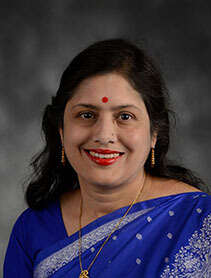
Dr. Nonso Nnamoko is a Senior Lecturer at Edge Hill University, specializing in Multimodal Artificial Intelligence. He leads the Student Research Club and is an EDI champion, contributing to Athena Swan Bronze Awards at both institutional and departmental levels. He co-leads SustainNet, advancing sustainability initiatives. His research focuses on AI applications in healthcare, education, and environmental science. He holds roles as External Examiner at Lancaster University and Newcastle College, and is involved in editorial and peer-review activities for journals like the Journal of Imaging. Education: BEng in Electrical and Electronic Engineering MSc in Computing and Information Systems PhD in Artificial Intelligence Research Interests: Big Data Analytics Natural Language Processing Image Processing Healthcare Informatics Software Engineering Ethical AI External Engagement: Member of UKRI Talent Review College EPSRC Review College Member Panel Member for REF 2029 His recent articles emphasize AI-driven solutions in waste management, healthcare monitoring, and education. He leads projects like ALFIE (€3.5M) and HydrateME (machine learning for hydration tools). His work contributes to UN SDGs related to health, education, and sustainability.
Dr. Matthew Ng is a Research Fellow and research data scientist at the City Futures Research Centre, University of New South Wales (UNSW), within the School of Arts, Design & Architecture. His work focuses on applying spatial analytics, machine learning, and AI to address urban challenges in housing, planning, transport, and property markets. As UNSW’s first Industry Scientia Fellow (since 2022), he collaborates with PEXA to improve valuation systems through scalable modeling. He also leads the Asia-Pacific arm of the Colouring Cities Research Programme, aiming to enhance urban data accessibility and reliability. Education : PhD in Spatial Data Science, University College London (UCL) MSc in International Planning, UCL BSc (Hons) in Biology, University of Manchester Research Interests : Dr. Ng’s research bridges data science and urban policy, with a focus on spatial modeling, housing systems, and applied machine learning. His work emphasizes practical solutions for governments and communities, such as advising NSW on housing strategies and addressing rental vulnerability through data-driven methods. Grants & Partnerships : His collaborations include projects with the NSW Government, non-profits, and global initiatives like the Alan Turing Institute. He currently supervises five research students and welcomes inquiries on urban data infrastructure and machine learning applications. Labs & Teams : He is part of the City Futures Research Centre and contributes to the Colouring Cities Programme, fostering international partnerships to improve urban data systems.
Bernhard Klar is a Research Fellow at the Institute of Stochastics within the Department of Mathematics at Karlsruhe Institute of Technology (KIT). He maintains an office in Kollegiengebäude Mathematik (20.30) 2.052 and serves as the student advisor for the master's course in Mathematics in Economics. His primary research interests include: Nonparametric Statistics Asymptotic Statistics Stochastic Orders Statistical Forecasting Resampling procedures Applied Statistics Computational Statistics Dr. Klar's recent publications demonstrate significant contributions to statistical methodology, particularly in robust performance metrics for imbalanced classification problems, tail estimation for heavy-tailed distributions, and correlation analysis. His work bridges theoretical statistics with practical applications in data science and machine learning. Among his notable professional activities: Associate Editor of the Journal of Multivariate Analysis (2007-present) Associate Editor of the journal Metrika (2017-present) Member of the council of Division V – Physics and Mathematics at KIT Member of Konvent der wissenschaftlichen Mitarbeiterinnen und Mitarbeiter am KIT Member of the Senate Commission for Examination Regulations, Selection, and Admission of KIT Dr. Klar provides statistical consulting services through the Statistical Consulting Service of the Institute of Stochastics and teaches courses including Statistical Learning, Probability and Statistics, and Generalized Regression Models.
Dr. Sikha Bagui is a Distinguished University Professor in the Department of Computer Science at the University of West Florida , within the Hal Marcus College of Science and Engineering . She previously served as Chair of the department and Founding Director of the Center for Cybersecurity. Her research spans Big Data Analytics, Machine Learning, Data Mining, and Database Design, with extensive publications and funded projects from NSF and NSA. Ed.D. in Curriculum & Instruction: Math & Stat / Science / Computer Science, University of West Florida M.B.A., University of Toledo B.S., Cuttington University (Liberia) Dr. Bagui's research centers on data-intensive computing , focusing on scalable algorithms for Big Data analytics, optimization in distributed environments (Hadoop, Spark, Hive), and applications in cybersecurity such as intrusion detection and phishing classification. She is particularly known for her work in data preprocessing, association rule mining, and improving classifier performance on imbalanced datasets. Her recent publications reveal a strong trend toward cybersecurity applications of machine learning , leveraging frameworks like MapReduce and Spark for scalable solutions. Topics include network traffic classification, load balancing in FP-Growth, and resampling techniques for intrusion detection. Her work bridges theoretical algorithm development with practical implementation in real-world Big Data systems. Distinguished University Professor Askew Fellow NSF CSForALL Grant ($300,000) NSA NCAE Grant ($375,511) Dr. Bagui has successfully led multiple federally funded research projects and mentored numerous students through research and academic programs. While specific advisees are not listed, her leadership in research groups and outreach initiatives like Women in Computing demonstrates strong mentorship. She has also authored influential textbooks used internationally. Her lab and research efforts are aligned with the UWF Smart Home Research , AI Research Group , and High Performance Computing Research , contributing to interdisciplinary innovation.
Dr. Cyril Rakovski is a Professor and Program Director for Mathematics at Schmid College of Science and Technology, Chapman University. His academic leadership spans interdisciplinary research in statistical and machine learning models applied to medicine, causal inference, and biomedical data analysis. He holds a Ph.D. from Harvard University, a Master of Science from the University of Massachusetts, Amherst, and a Bachelor of Arts from Sofia University. Education: B.A., Sofia University M.S., University of Massachusetts, Amherst Ph.D., Harvard University Dr. Rakovski’s research integrates machine learning , statistical genetics , and health services research . His work addresses challenges in cardiovascular diagnostics , neurodegenerative disease therapies , and environmental impact modeling . Recent projects include AI-driven ECG interpretation (CardioGPT) and predicting self-harm events in correctional healthcare. The 2024–2025 publications highlight trends in climate change impact analysis, Alzheimer’s treatment outcomes, and deep learning for medical data. His methodological focus includes time series decomposition , reinforcement learning for drug design, and reidentification risk assessment in biometric data. Contact: rakovski@chapman.edu | Office: Keck Center for Science and Engineering 361
Eirini Ntoutsi is an Associate Professor at the Faculty of Electrical Engineering and Computer Science at Leibniz University Hannover and a member of the L3S Research Center. Her academic journey includes a post-doctoral position at LMU Munich with an Alexander von Humboldt Foundation fellowship, and she earned her PhD from the University of Piraeus, Athens under the supervision of Y. Theodoridis. She holds a diploma and M.Sc. in Computer Engineering & Informatics from the University of Patras, Greece. Her research lies at the intersection of Artificial Intelligence and Machine Learning, focusing on two main pillars: learning over complex data and data streams (covering adaptive learning, change detection, and model stability), and responsible Artificial Intelligence (covering fairness-aware learning, data quality, and proper evaluation of AI/ML methods). Her work addresses critical societal challenges related to bias in algorithmic decision-making systems. Dr. Ntoutsi's recent publications demonstrate a strong focus on drift-aware learning for imbalanced data streams and fairness in AI systems. Her research shows a clear progression from foundational work in pattern management during her PhD to cutting-edge applications addressing real-world challenges in social streams, sensor data, and recommendation systems. Alexander von Humboldt fellowship for postdocs Best-student paper award at ICBK 2018 1st place in the 2006 innovation competition in Greece Dr. Ntoutsi actively mentors PhD and master's students while leading major research initiatives including NoBIAS (EU-funded, as Network coordinator), BIAS (Volkswagen Stiftung-funded), and OSCAR (DFG-funded). Her interdisciplinary approach combines technical AI solutions with philosophical and legal considerations to develop more equitable algorithmic systems.
Dr. Binod Bhattarai is a Lecturer (equivalent to Assistant Professor in the US) in the School of Natural and Computing Sciences at the University of Aberdeen, UK. He is also an Honorary Lecturer at University College London and a Co-founder and Adjunct Research Scientist at NAAMII, Nepal. Dr. Bhattarai heads the Multimodal Learning Lab, a cross-border initiative between the University of Aberdeen and NAAMII, Nepal. His educational background includes a PhD in Computer Science from Universite de Caen, France, and previous work experience as a Senior Research Fellow at University College London, a Postdoctoral Research Associate at Imperial College London, and a Data Scientist at Telenor Group, Norway. Dr. Bhattarai's research focuses on developing robust and interpretable machine learning algorithms that can reason across complex, heterogeneous data. His work spans multiple domains including surgical videos, medical imaging, and low-resource languages, with applications in healthcare, energy, and global agriculture. He follows a core philosophy of building AI that is not only powerful but also trustworthy and explainable, with a belief that true intelligence lies in the ability to seamlessly integrate diverse data sources. His publications demonstrate strong trends in multimodal learning, particularly in medical applications. A significant portion of his recent work focuses on gastrointestinal image analysis, out-of-distribution detection in medical contexts, and federated learning approaches for healthcare data. His research often bridges computer vision, natural language processing, and medical imaging to create practical AI solutions for healthcare challenges. Best Paper Award Finalist, MIUA 2025 Runner-up, ARCADE Challenge, MICCAI 2023 Google Cloud Research Innovator, 2022 Outstanding Reviewer Award, BMVC, 2021 Winner FetReg Endoscopic Vision Challenge at MICCAI 2021 Outstanding Reviewer Award, BMVC, 2019 Best Student Paper Award of Image, Video and Multidimensional Signal Processing, ICASSP, 2016 Best Paper Award Runner up, ACM ICVGIP, 2016 DAAD Postdoc Net-AI-Fellow, 2020 (top 22 out of 192) Dr. Bhattarai actively mentors PhD students and research assistants through the Multimodal Learning Lab. Current PhD students include Jardin Ruari (Assessing AI algorithms for Capsule Endoscopy) and Krit Duangprom (Surgical Tool and Hand Pose Estimation). His lab has successfully guided numerous researchers who have gone on to PhD programs at prestigious institutions including MILA, Dartmouth College, University of Utah, and RIT. He has secured multiple research grants including a Co-PI role for "Non-constrast CT Head Image Analysis" funded by The Ronald Sutton Academic Trust (30.8K GBP, 2024-27), and a PI role for "Frontiers Seed Funding" by the Royal Academy of Engineering (20K GBP, 2023-2024). The Multimodal Learning Lab, which Dr. Bhattarai heads, is a cross-border initiative between the University of Aberdeen and NAAMII, Nepal. The lab focuses on developing robust and interpretable machine learning algorithms that can reason across complex, heterogeneous data. Current research projects include explainable anomaly detection in GI endoscopy, surgical vision world models, multimodal federated learning, surgical data science, and synthetic data generation. The lab operates with a global research pipeline that fosters talent and innovation across borders.
Dr. Yining Hua is a Lecturer (Assistant Professor) in the School of Natural and Computing Sciences at the University of Aberdeen, where he is actively involved in research and teaching in computing science. He also holds an honorary researcher position at the University of Glasgow. His academic journey includes a B.Eng. in Information Security from Northeastern University, China, and a PhD in Computer Science from Loughborough University, UK. Prior to joining Aberdeen, he served as a postdoctoral researcher at the University of Glasgow and as a lecturer at the University of Roehampton and the University of Lincoln. His research focuses on cutting-edge areas in computing, including: Applied Artificial Intelligence and Machine Learning Robotics and Autonomous Systems Computer Vision Information Security and Blockchain Future Computer Networks and Internet of Things Dr. Hua's recent publications reveal a strong trend in applying AI to medical imaging, autonomous driving, and IoT systems. His work spans biomedical informatics, energy-efficient EV systems, and domain adaptation techniques for real-world deployment. He frequently publishes in high-impact IEEE journals and conferences, demonstrating consistent contributions to both theoretical and applied AI. His scientific contributions are reflected in numerous peer-reviewed articles, though no specific awards or fellowships are mentioned in the provided text. Dr. Hua is actively mentoring and accepting new PhD students in computing science, indicating a vibrant research group. He has not received any named grants in the text, but his publication output suggests active research funding. He is affiliated with research teams working on AI for healthcare, autonomous systems, and secure distributed networks, particularly within the University of Aberdeen’s computing science environment.
Michał Woźniak is a Professor at the Department of Systems and Computer Networks, Wrocław University of Science and Technology. He serves as Head of the Department and leads the Machine Learning Research Team. His research spans machine learning, pattern recognition, data stream mining, and imbalanced data classification. He actively supervises MSc theses and leads multiple research projects including those on continual learning, classifier ensembles, and fake news detection. Research Interests: Machine learning, particularly inductive and continual learning Pattern recognition and classifier ensembles Data stream mining under concept drift Imbalanced data classification Fake news and disinformation detection Cybersecurity and medical decision support His recent publications (2024–2025) focus on continual learning under concept drift, deep learning for image fusion and forgery detection, ensemble methods for imbalanced data, and AI applications in network optimization. These works reflect strong trends in adaptive machine learning, robust classification, and real-world AI deployment. Scientific Awards: BEST PAPER AWARD FOR CLVISION CVPR WORKSHOP 2024 He supervises numerous students and collaborates extensively on interdisciplinary projects. He has been involved in projects such as LM LDS (2021–2024), MOO (2020–2025), IDStream (2018–2022), and others. He is also a project manager and active in academic service, including membership in the Committee on Informatics of the Polish Academy of Sciences. His research group maintains a strong presence in AI and machine learning applications. Laboratory and Teams: He leads the Machine Learning Team and is involved in multiple research groups including the Advanced Data Analysis Methods Team and Metaheuristics Team . His lab focuses on developing robust, adaptive AI models for real-world challenges.
Dr. Paweł Zyblewski is an Assistant Professor in the Department of Computer Systems and Networks at the Faculty of Electronics, Wrocław University of Science and Technology. He is actively involved in research and teaching, contributing to teams such as the Machine Learning Team and Advanced Data Analysis Methods Team. His research is supported by projects including IDSTREAM and GEOM, focusing on advanced machine learning techniques for complex data analysis. Research Interests: His primary research areas include machine learning, deep learning, pattern recognition, classifier ensembles, dynamic classifier selection, data stream mining, handling imbalanced data, and multimodal data analysis. His work emphasizes robust and adaptive models for real-world decision-making tasks, especially under data drift and scarcity conditions. Publication Trends: His recent publications focus on dynamic ensemble methods for imbalanced data streams, geometric fusion of classifiers, and open-source tools for stream learning. These works reflect a strong trend toward practical, deployable machine learning systems that handle challenging data conditions with high accuracy and adaptability. Scientific Awards: Winner of the Secundus program (2020, 2021, 2022, 2024) Appointment to Academia Iuvenum (2024–2026) Minister of Education and Science Scholarship for Outstanding Young Scientists (2022) Polish Society for Artificial Intelligence Best Doctoral Thesis Award (2021) Best Paper Award at ICAISC 2021 Primus program award (2020–2021) Rector's Award for scientific achievements (2019/2020, 2020/2021, 2021/2022) Advising and Grants: He supervises diploma theses and is involved in significant research projects such as IDSTREAM and GEOM, which support his work in data stream classification and ensemble methods. These projects provide the foundation for his publications and student supervision. Labs and Teams: He is a key member of the Machine Learning Team and the Advanced Data Analysis Methods Team at Wrocław University of Science and Technology, where he collaborates on developing innovative optimization and classification techniques.
Hendrik Hamann is a Professor at Stony Brook University's School of Marine and Atmospheric Sciences and Chief AI Scientist at EBNN, Brookhaven National Laboratory. He holds adjunct roles at the University of Illinois Urbana-Champaign and Yamagata University. His research bridges physical and computational sciences, focusing on AI, machine learning, high-performance computing, and geoinformatics for climate, sustainability, and energy applications. Education: Ph.D. in Physics from the University of Göttingen (1995). Prior Roles: IBM Research (1995–2024), leading initiatives in data center efficiency, geospatial analytics (PAIRS), and climate modeling. Spearheaded AI foundation models for energy grids and climate. Research interests include AI-driven climate forecasting, geospatial data fusion, and sustainable energy systems. His work has led to 180+ patents and transformative technologies like IBM PAIRS and the thermally assisted magnetic recording (HAMR). He has been recognized with the AIP Prize and IBM's Master Inventor title. Awards: 2016 AIP Prize, APS Fellowship, IEEE Senior Member, and IBM Academy of Technology membership. Grants: $20M DOE grant (2024) for methane quantification and multi-million DOE projects in energy systems. Labs/Teams: Led global IBM Research Climate & Sustainability teams (2021–2024) and co-developed geospatial foundation models for weather and earth observation.
Prof. Helder Nakaya is Deputy Director at the School of Pharmaceutical Sciences, University of São Paulo, Brazil, and Adjunct Professor at Emory University School of Medicine, USA. His expertise lies in Systems Vaccinology, integrating systems-wide measurements, network analysis, and predictive modeling to study vaccine-induced immunity and infectious diseases. Education: PhD in Molecular Biology with training in Bioinformatics. His research focuses include Systems Biology , Vaccinology , and Computational Immunology , with contributions to understanding immune responses to Yellow Fever, Influenza, and SARS-CoV-2 vaccines. His lab develops data-driven approaches for infectious disease mechanisms. Recent publications highlight his work in machine learning for health data , network analysis in immunology , and mechanistic studies of sepsis and COVID-19 . He serves as an academic editor and reviewer for journals like PeerJ.
Dr.-Ing. Anna Krause is a researcher at the Chair of Data Science (Informatik X) within the Faculty of Mathematics and Computer Science at the University of Würzburg. She leads the Deep Learning for Dynamical Systems Group and has been actively involved in teaching at the university since 2019, including courses on Machine Learning for Time Series Analysis and Data Mining. Doctoral degree in Electrical Engineering (2019), University of Hannover Diploma in Electrical Engineering (2009), Technical University Dresden Her research focuses on Environmental Sensing and Time Series Analysis , particularly on enhancing physics-based models using machine learning techniques for meteorological applications and sparse sensor networks. She has made significant contributions to explainable AI, climate modeling, and fraud detection systems. Anna's recent publications demonstrate expertise in climate modeling (ConvMOS, ICLR 2024-2025), physics-informed neural networks (TaylorPDENet, ECMLPKDD 2023), and fraud detection (MIDAS workshops, ECMLPKDD 2020-2023). She actively contributes to conferences as organizer and PC member, including ECMLPKDD and ICLR workshops. Scientific Awards Best ML Innovation Award (2020) for Deep Learning in Climate Modeling Best Student Paper Award (2020) for Multi-Task Land Use Regression Best Paper Award (2020) for Financial Fraud Detection with INALU The DynaBench dataset introduced in 2023 provides benchmark tools for learning dynamical systems from low-resolution data. Her work combines theoretical advancements with practical implementations, including edge computing applications for beekeeping monitoring systems.
Georgios Stavrinides serves as a Post-Doctoral Fellow at the KIOS Research and Innovation Center of Excellence, University of Cyprus, a leading research hub for intelligent systems and networks. Since joining in September 2022, he has driven cutting-edge research in cyber-physical infrastructure while mentoring doctoral candidates and advancing the Center's strategic vision through committee leadership. His academic credentials include a PhD in Informatics from Aristotle University of Thessaloniki (2014), an MSc in Advanced Computing from Imperial College London (2007), and a BSc in Informatics from Aristotle University of Thessaloniki (2006). Prior to his current role, he held postdoctoral and research collaborator positions within Aristotle University's Department of Informatics from 2014 to 2022. Dr. Stavrinides' research program pioneers performance optimization in edge-cloud continuum systems, specializing in real-time task scheduling for distributed multi-tier environments and ensemble-based classification techniques for imbalanced datasets. These dual thrusts address critical challenges in smart infrastructure resilience and data-driven decision systems, with applications spanning power grids, transportation networks, and industrial IoT. His scholarly impact is underscored by three best paper awards at premier international conferences, reflecting exceptional contributions to distributed systems and machine learning. Best Paper Award Best Paper Award Best Paper Award Beyond research, he actively shapes KIOS's future as a supervisor of PhD candidates and through strategic committee roles in the KIOS Open Science Committee and KIOS Open Science Strategic Committee, directly contributing to the Center's 10-Year Strategic Plan implementation and open science initiatives.
Zahed Siddique, Ph.D., is the Associate Dean for Research and Dick and Shirley O'Shields Professor in the School of Aerospace and Mechanical Engineering at the University of Oklahoma. He has previously served as the Director of AME at OU and is actively engaged in engineering design education, virtual prototyping, and additive manufacturing research. Ph.D., Mechanical Engineering, Georgia Institute of Technology (2000) M.S., Mechanical Engineering, Georgia Institute of Technology (1996) B.S., Mechanical Engineering, Georgia Institute of Technology (1994) Dr. Siddique's research focuses on developing tools to enhance engineering design education , Internet-based product design for collaborative environments, and design for product variety using graph grammars and combinatorics. His work extends to virtual prototyping , next-generation CAD systems, and design for sustainability , with recent emphasis on AI integration in additive manufacturing and defect detection. His recent publications highlight trends in additive manufacturing , machine learning applications for imbalanced data, and human factors in engineering education . Articles analyze digital twins, diffusion models, hydrogen fuel challenges, and neurocognitive impacts of environmental conditions on student performance. Scientific Awards Regents' Award for Superior Teaching (2008) Ralph R. Teetor Educational Award (2007) Brandon H. Griffith Award (2007) Junior Faculty Research Award (2001) Dr. Siddique has taught courses such as Design Practicum , Design for X , and Product Family Design . He leads the Product and Process Design Lab , fostering innovation in engineering education through 3D printing and advanced materials.