Rodrigo Ventura is an Associate Professor at the Department of Electrical and Computer Engineering, Instituto Superior Técnico (IST), University of Lisbon. He is also a senior researcher at the Institute for Systems and Robotics (ISR-Lisbon), leading the Space and Aeronautics thematic line. His research focuses on the intersection of Robotics and Artificial Intelligence, emphasizing human-robot interaction, space robotics, and cognitive architectures. He coordinates the Minor in Space Sciences and Technologies at IST and the MBE on Space Systems for Tecnico+. As Adjoint Faculty at the International Space University (ISU), he contributes to global academic initiatives. His work includes experiments on the International Space Station and participation in analog space missions. Research interests span biologically inspired systems, machine learning, and teleoperation interfaces. Recent publications address reinforcement learning for UAVs, microgravity experiments, and pseudo-haptic feedback for robotic control. He teaches subjects like Artificial Intelligence and Decision Systems, Satellite Engineering, and Autonomous Systems.
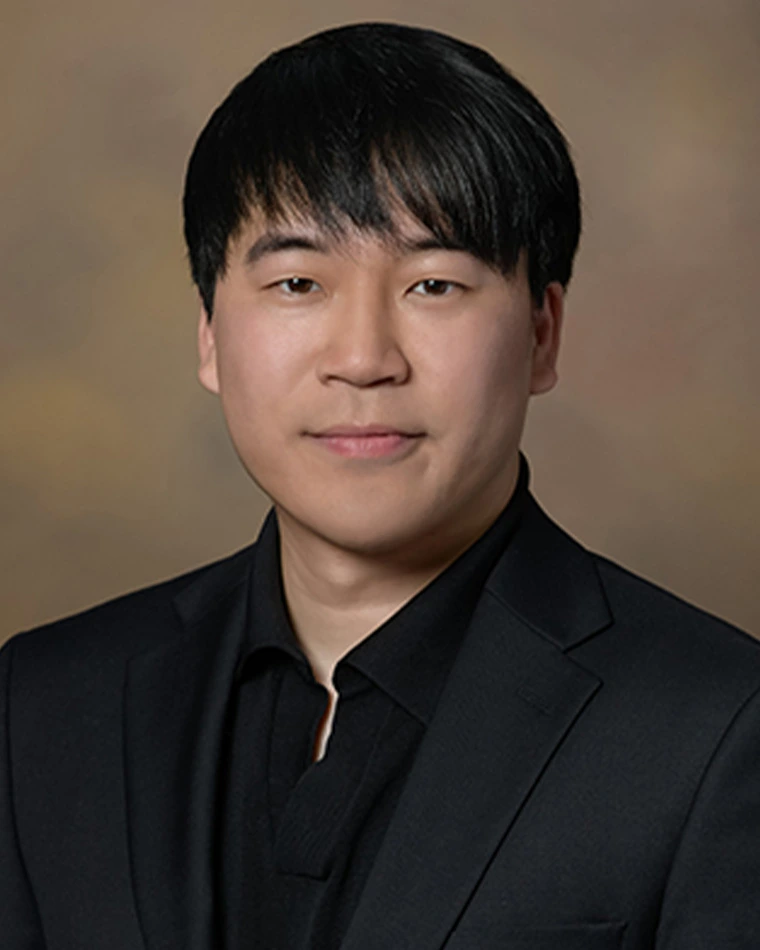
Eung-Joo Lee is an Assistant Professor in the Department of Electrical and Computer Engineering at the University of Arizona, where he also holds affiliations with the Department of Ophthalmology and Vision Science, the BIO5 Institute, and the UA Cancer Center. He serves as an adjunct professor at the University of Nebraska–Lincoln and is a member of the Graduate Faculty. Dr. Lee leads the Vision Systems and Intelligence (VSI) Laboratory and contributes to interdisciplinary research bridging engineering and medicine. Education: PhD in Electrical and Computer Engineering, University of Maryland, College Park, 2021 MS in Electrical Engineering, Korea Advanced Institute of Science and Technology (KAIST), Daejeon, South Korea, 2015 BS in Electrical Engineering, University of Texas at Dallas, 2013 Dr. Lee's research centers on developing computationally efficient and interpretable deep learning models for real-time, low-resource environments, particularly in computer vision and medical imaging. His work addresses perception and decision-making challenges in autonomous and medical systems. He applies cross-disciplinary expertise in engineering and medicine to create lightweight AI solutions. Although no specific publications are listed in the provided text, his research direction suggests strong engagement in areas such as embedded AI, medical image analysis, and real-time computer vision systems, likely published in top-tier venues in machine learning and biomedical engineering. Scientific Service and Recognition: Associate Editor, Journal of Signal Processing Systems (Springer) Editorial Board Member, Scientific Reports (Nature Portfolio) Reviewer for IEEE Transactions on Pattern Analysis and Machine Intelligence, Medical Image Analysis, Nature Machine Intelligence, and others Active participant in major conferences including NeurIPS, CVPR, MICCAI, AAAI, and SPIE Dr. Lee advises research through the VSI Laboratory and contributes to academic leadership via service on the Scientific Advisory Committee for the Body and Imaging Center at the University of Arizona. He has served on numerous program committees, organized workshops, and chaired sessions at international conferences, demonstrating growing leadership in the academic community. He is actively involved in interdisciplinary research collaborations, including past work with Children’s National Hospital and the U.S. Army Research Laboratory, and continues to bridge gaps between engineering and clinical applications.
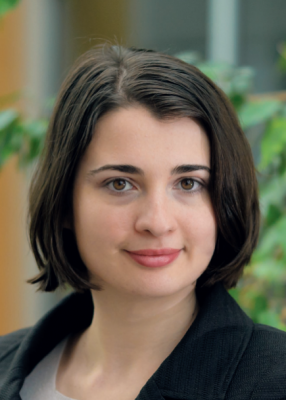
Roxana Geambasu is an Associate Professor at Columbia University's Department of Computer Science, with affiliations to the Software Systems Lab and the Cybersecurity Committee . She specializes in systems security, differential privacy, and resource management for modern computing environments. PhD: University of Washington (2011) Undergraduate: Polytechnic University of Bucharest, Romania Her research focuses on integrating differential privacy as a first-class computing resource in infrastructure systems, with key contributions in: Privacy Budget Management (PrivateKube, DPack, Turbo) Web & Mobile Privacy (Cookie Monster, Big Bird) Security Abstractions (POSIX, Vanish, XRay) Article trends show a strong emphasis on differential privacy (8/15), resource scheduling (5/15), and privacy-preserving advertising (3/15). Key subfields include budget optimization, browser APIs, and ML pipeline privacy. Scientific awards include: Alfred P. Sloan Fellowship NSF CAREER Award Google Ph.D. Fellowship in Cloud Computing Best Paper Awards at SOSP, EuroSys She advises M.S. and undergraduate students, teaching courses in Distributed Systems and Privacy Curriculum . Her lab develops tools like PixelDP and Sunlight for operationalizing privacy in real-world systems.
Marco Pedersoli serves as an Assistant Professor at École de technologie supérieure (ETS) in Montreal since February 2017, where he leads research in computer vision and machine learning. His work focuses on reducing computational costs and annotation requirements for deploying vision algorithms on embedded devices, positioning ETS at the forefront of Montreal's AI ecosystem. His academic journey includes: Ph.D. from Autonomous University of Barcelona (UAB) under Jordi Gonzàlez and Juan José Villanueva Post-doctoral research at INRIA Grenoble with Cordelia Schmid and Jakob Verbeek (2015-2016) Research at KU Leuven with Tinne Tuytelaars (2012-2015) Dr. Pedersoli's research tackles deep learning bottlenecks through weakly-supervised methodologies and computational efficiency innovations . His three core projects address: Reduced Supervision : Developing weakly/semi-supervised learning for images, video, audio and text Exploration Learning : Optimizing data selection in unstructured environments Efficient Computation : Accelerating deep learning training and inference These efforts enable vision algorithms to run on resource-constrained portable devices. Publication trends (2014-2022) reveal consistent focus on weak supervision (60% of works) and computational efficiency (30%), with recent expansion into medical imaging and multimodal emotion recognition. Key venues include CVPR, ICCV, NeurIPS and ECCV. His accolades include: Best Paper Award at ICIAR 2019 NVIDIA Titan X Pascal hardware donation Dr. Pedersoli actively mentors 18 graduate students across PhD and MSc programs, with notable placements at Huawei and Radio Canada. His lab secures competitive tax-free funding for projects with international collaborations, including Element AI and European institutions. Current openings emphasize Python/C++ proficiency and deep learning expertise. He leads a dynamic research group at ETS developing open-source tools for Roi-Pooling, weakly-supervised detection, and 3D object recognition, maintaining active GitHub repositories with community contributions. Recent WACV 2023 acceptances demonstrate ongoing productivity following medical leave.
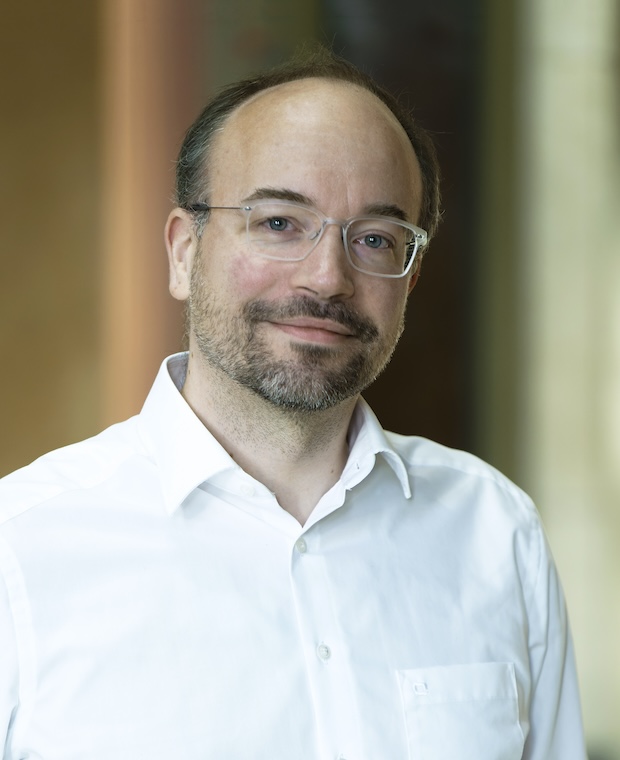
Prof. Dr. Markus Bachmayr is a full professor at the Institute for Geometry and Practical Mathematics, RWTH Aachen University, holding the chair for Applied Mathematics. His research focuses on nonlinear approximation, high-dimensional partial differential equations (PDEs), uncertainty quantification, and numerical methods in quantum chemistry. He leads the ERC Consolidator Grant project Computational Complexity of Highly Nonlinear Approximations (COCOA) and contributes to CRC 1481 Sparsity and Singular Structures, and RTG 2326 Energy, Entropy, and Dissipative Dynamics. His recent work emphasizes adaptive low-rank and sparse approximation techniques for parametric and stochastic PDEs, including applications in radiative transfer and poroviscoelastic flow modeling. He serves as Editor-in-Chief of Foundations of Computational Mathematics and Associate Editor for multiple journals. Scientific Awards: John Todd Award 2013 Borchers Plakette 2014 Erwin Wenzl Preis 2007 He has taught courses such as Numerische Analysis I/II, Numerische Mathematik für Elektrotechniker, and seminars on numerical methods and approximation theory.
Anand Bhattad is an Assistant Professor in the Department of Computer Science at Johns Hopkins University, starting Fall 2025. Previously, he held positions as a Research Assistant Professor at the Toyota Technological Institute at Chicago (TTIC) and a visiting scholar at UC Berkeley. His research focuses on the intersection of computer vision, generative modeling, and physical reasoning, aiming to develop perception-driven and physics-aware visual models. His academic journey includes a PhD in Computer Science from the University of Illinois Urbana-Champaign under David Forsyth, with mentorship from Derek Hoiem, Svetlana Lazebnik, Greg Shakhnarovich, and Shenlong Wang. Prior to his PhD, he earned dual master’s degrees in Computer Science and Civil and Environmental Engineering at UIUC and a bachelor’s in Civil Engineering from NITK Surathkal, India. Research interests center on how generative models encode physical and perceptual knowledge, with key contributions in intrinsic image emergence, projective geometry limitations, and physics-aware relighting techniques. His work bridges classical computer vision concepts with modern deep learning, producing state-of-the-art methods for 3D scene synthesis and image editing. Articles span topics like 3P Vision , diffusion models, and 360° video datasets, reflecting interdisciplinary approaches in computer graphics and computational photography. Scientific awards include Outstanding Reviewer at ICCV 2023, CVPR 2022 Best Paper Finalist, and multiple conference service roles as workshop organizer and area chair. He designed the TTIC course Past Meets Present: A Tale of Two Visions , teaching connections between historical and modern computer vision research.
Serkut Ayvasik is a Researcher at the Chair of Communication Networks at Technical University Munich (TUM). He joined TUM in March 2019 as a research and teaching associate, following his M.Sc. in Communications Engineering (2019) and B.Sc. in Electrical and Electronics Engineering (2016) from Middle East Technical University. His research focuses on: Wireless Network Resource Management for heterogeneous latency-critical 5G applications Channel State Information Prediction using depth images Network Slicing and Quality of Service optimization Machine Learning for proactive network configuration Telemedicine Applications in cross-border communication Key article trends include 5G/6G technology , IoT sustainability , digital twins , and haptic feedback systems . He contributes to IEEE and ACM journals, with recent work on Digiot (2025) and OCTOPUS (2024). Collaborations include researchers like Wolfgang Kellerer (Chair), Edwin Babaians , Alba Jano , and Fidan Mehmeti . His work spans projects such as 6G Future Lab Bavaria , DFG GGI QCDE , and ERC FlexNets .
Anthony Man-Cho So is a Professor in the Department of Systems Engineering and Engineering Management at The Chinese University of Hong Kong (CUHK). He currently serves as Dean of the Graduate School and Deputy Master of Morningside College . With a BSE from Princeton University and a PhD in Computer Science from Stanford University, his career at CUHK began in 2007. Academic Leadership: Dean, Graduate School (2023–present); Deputy Master, Morningside College (2019–present) Education: BSE (Princeton), MSc/PhD (Stanford) His research focuses on optimization theory and its interdisciplinary applications in computational geometry, machine learning, signal processing, and statistics. Key projects include non-convex optimization for wireless networks, robust graph learning, and decentralized learning algorithms. His publications span high-impact journals like Mathematical Programming , SIAM Journal on Optimization , and conferences such as NeurIPS and ICML . Recent work emphasizes dynamic regret analysis , low-rank matrix recovery , and stochastic beamforming . He has authored over 50 refereed papers and a monograph on semidefinite programming. Awards include IEEE Fellow (2023), CUHK Research Excellence Award (2016–17), and multiple IEEE/INFORMS best paper and teaching accolades. He has served on editorial boards of journals like Mathematical Programming and SIAM Journal on Optimization , and as Lead Guest Editor for IEEE Signal Processing Magazine . Teaching roles include courses on optimization, discrete mathematics, and machine learning. Scientific Awards IEEE Fellow (2023) CUHK Outstanding Fellow (2019) Multiple IEEE/INFORMS Best Paper Awards (2010–2022) IEEE/UGC Teaching Awards (2008–2022) His methodology integrates theoretical rigor with practical applications, particularly in wireless communication systems, sensor networks, and financial engineering. Collaborations span institutions in Hong Kong, mainland China, and the U.S., reflecting a global academic influence.
Ralph Jimenez is an Adjunct Professor of Chemistry and Institute Fellow at JILA, University of Colorado Boulder. He holds a Ph.D. from the University of Chicago (1996) and completed postdoctoral work at the University of California, San Diego (1997-1998), followed by research at The Scripps Research Institute (1998-2003). His research focuses on quantum spectroscopy and photophysics of fluorescent proteins, leveraging quantum optics to enhance spectroscopic sensitivity and developing genetically encoded biomarkers with improved photophysical properties. Key achievements include fluorescence-lifetime-based methods to engineer brighter fluorescent proteins and machine-learning approaches to improve photostability. His awards include the Arthur S. Flemming Award (2017) and U.S. Department of Commerce Gold Medal (2017). His group's work integrates quantum engineering with biophysical studies, targeting real-world applications in molecular imaging and materials science. The Jimenez Group operates labs at JILA (B117, B119, B121) and collaborates on projects involving entangled photons, two-photon absorption, and ultrafast spectroscopy. Research themes include quantum-enhanced spectroscopy for complex systems and overcoming limitations in fluorescent protein imaging through physical chemistry strategies. His lab develops novel instrumentation, including microfluidic sorting systems and tabletop X-ray spectroscopy platforms, to advance biomarker engineering and environmental monitoring.
Radu Iovita is an Associate Professor in the Department of Anthropology at New York University. Previously, he held positions at the University of Tübingen (until 2023) and the Leibniz Research Institute for Archaeology in Germany. His research focuses on Paleolithic archaeology, human-environmental interactions, and stone tool technology, with a specific emphasis on the Eurasian loess steppe. He leads the EU-funded PALAEOSILKROAD project in Kazakhstan, investigating human dispersals during the Late Pleistocene. His Anthrotopography lab combines microscopic analysis of tool use and remote sensing to reconstruct past landscapes. Education: PhD in Anthropology (University of Pennsylvania, 2008), MPhil in Archaeology (University of Cambridge, 2002), AB in Anthropology (Harvard University, 2001). Key grants include an ERC Starting Grant (2017–2022). Research interests span lithic technology, experimental archaeology, and geoarchaeological methods. Recent work includes discoveries of Paleolithic sites in Kazakhstan, studies on Neanderthal adhesive use, and AI-driven analysis of use-wear patterns. Collaborations involve institutions like ETH Zurich and the University of Tübingen. He is actively involved in field projects in Central Asia and lab-based experimental studies.
Mihaela van der Schaar is the John Humphrey Plummer Professor of Machine Learning, Artificial Intelligence, and Medicine at the University of Cambridge, leading the van der Schaar Lab. She holds dual affiliations with the Department of Applied Mathematics and Theoretical Physics (DAMTP) and the Centre for Mathematical Imaging in Healthcare. Her research focuses on healthcare AI, machine learning, and operations research. She has authored over 250 journal articles and 275 conference papers, with notable contributions to synthetic data for privacy, causal inference, and clinical decision-making. Her work has led to 35 U.S. patents, including foundational innovations in streaming video compression (MPEG-4 standards). Awards include the Oon Prize (2018), IEEE Fellow (2009), and recognition as the UK's most-cited female AI researcher (2019). Leadership roles include Director of the Cambridge Centre for AI in Medicine and Co-Director of the European Laboratory for Learning and Intelligent Systems. She has mentored global academic leaders and pioneered initiatives like the Inspiration Exchange for early-career researchers. Key projects include predictive models for hospital resource allocation during pandemics and AI tools for personalized medicine. Publications span machine learning theory, healthcare applications, and interdisciplinary fields like network science. Her lab's impact includes tools like AutoPrognosis (automated ML for clinical prediction) and SynthCity (synthetic healthcare data generation).
Duminda Wijesekera serves as Professor in the Department of Cyber Security Engineering and Department of Computer Science at George Mason University, where he was inaugural chairman of the Cyber Security Engineering Department until December 2022. He concurrently held the position of visiting research scientist at the National Institute of Standards and Technology (NIST) from 2007-2022 and maintains status as a fellow at the Potomac Institute of Policy Studies. He leads the Mason Innovation Laboratory at Mason Square, driving translational research in cyber-physical security. His educational foundation includes: PhD in Computer Science, University of Minnesota (1997) PhD in Mathematical Logic, Cornell University (1990) BSc in Mathematics, University of Colombo Professor Wijesekera's research centers on cyber-physical system security , with pioneering work in Intelligent Transportation Systems spanning trains, aircraft, and connected vehicles. His digital forensics innovations establish frameworks for evidence-based scenario reconstruction and error management, while his formal methods research provides mathematical guarantees for safety-critical systems. Current projects address Next G-based edge services, digital twin vulnerability detection, and healthcare security architectures, consistently bridging theoretical rigor with real-world infrastructure protection. Analysis of his 2022-2025 publications reveals intense focus on autonomous vehicle security (38% of recent output), including traffic signal control optimization, ramming attack countermeasures, and CARLA-based scenario validation. Digital forensics using AI (20%) and secure manufacturing/edge computing (27%) constitute other major thrusts, demonstrating how formal verification and machine learning converge to solve complex cyber-physical security challenges across transportation, energy, and healthcare domains. His scientific recognition includes: CCI Impact Award (2022) for groundbreaking cyber-physical security contributions Fellowship at the Potomac Institute of Policy Studies for cybersecurity policy leadership Professor Wijesekera has secured substantial research funding through: NIST grants for health record security frameworks (2014-2015) US Department of Transportation projects on wireless frequency mapping for high-speed rail (2013-2014) Cyber Security Research Alliance funding for trust architectures in cyber-physical systems (2014) Commonwealth Cyber Initiative awards for autonomous vehicle security and energy-efficient manufacturing His industry partnerships with Honeywell and NIST ensure practical impact of theoretical research. The Mason Innovation Laboratory under his direction serves as an interdisciplinary hub for cyber-physical security, integrating researchers from computer science, electrical engineering, and policy studies to develop deployable solutions for transportation networks, power grids, and critical infrastructure protection.
Petteri Nurmi is a Professor of Computer Science at the University of Helsinki, affiliated with the Department of Computer Science and the Helsinki Institute of Sustainability Science (HELSUS). His research focuses on IoT systems, environmental monitoring, AI-driven solutions, and sustainable computing. He leads projects such as the NordForsk-funded initiative (2024-2028) and the Team Finland Knowledge programme (2024-2026), emphasizing large-scale IoT deployments and quantum computing integration. Key research interests include drone-based air quality monitoring, low-cost sensor networks, and AI applications in environmental science. Nurmi has published extensively in top venues like IEEE IoT Journal and ACM workshops. His work bridges technical innovation with societal challenges, such as urban pollution reduction and sustainable resource management. He supervises doctoral students in the Computer Science program and collaborates internationally on projects like underwater plastic detection (SEAGULL) and smart city infrastructure. Nurmi’s contributions to edge computing and pervasive sensing have been recognized through grants totaling over €2M. His lab develops tools for data-intensive systems, including thermal imaging for energy efficiency analysis and AI-driven sensor fusion frameworks.
Justin Wan is a Professor in the Department of Computer Science at the University of Waterloo. His research focuses on scientific computing, medical image processing, computational finance, and machine learning. He holds a Ph.D. from UCLA (1998), an M.A. from UCLA (1995), and a B.Sc. from the Chinese University of Hong Kong (1992). Wan’s work bridges numerical methods, optimization, and deep learning, with applications in financial modeling, medical imaging, and fluid dynamics. His research interests include advanced techniques in scientific computing (e.g., multigrid methods), computer graphics simulation, and medical image enhancement (e.g., CT scan artifact reduction). He has pioneered applications of machine learning to computational finance, including option pricing and hedging using deep neural networks and GANs. His recent work explores denoising diffusion models and multi-agent systems for optimal execution in finance. Publications span topics like volatility surface computation, optimal mass transport for image registration, and parallel solvers for fluid dynamics. His methods address challenges in high-dimensional problems, robust numerical valuation, and scalable algorithms for large datasets. Wan collaborates across disciplines, integrating mathematical rigor with practical engineering solutions.
Dr. Samuel Cheng is an Associate Professor at the Gallogly College of Engineering , University of Oklahoma , specializing in Electrical and Computer Engineering . He holds a Ph.D. in Electrical Engineering from Texas A&M University (2004), preceded by M.S. and M.Phil. degrees from the University of Hawaii and Hong Kong University of Science and Technology. Education: B.S. (University of Hong Kong, 1995), M.Phil. (HKUST, 1997), M.S. (University of Hawaii, 2000), Ph.D. (Texas A&M, 2004) Professional Experience: Senior Research Engineer at Advanced Digital Imaging Research (2004-2005), prior internships at Microsoft Asia and Panasonic Technologies His research focuses on Information Theory , Signal and Image Processing , and Pattern Recognition , with applications in remote sensing, urbanization analysis, and disaster monitoring. His publications span topics including urban impervious surface mapping , nighttime light analysis , and machine learning for environmental data . His work often integrates multi-source datasets (e.g., Landsat, LiDAR, social media) for spatiotemporal modeling. Technical Expertise: Spectral unmixing, machine learning, thermal remote sensing, GIS integration Key Applications: Power outage detection, vegetation-crime correlation, PM2.5 estimation, smart meter data fusion Dr. Cheng holds three US patents in digital watermarking and is affiliated with IEEE, Sigma Xi, and AAAS. His recent articles demonstrate a trend toward leveraging AI for remote sensing challenges and analyzing urbanization impacts on ecosystems.