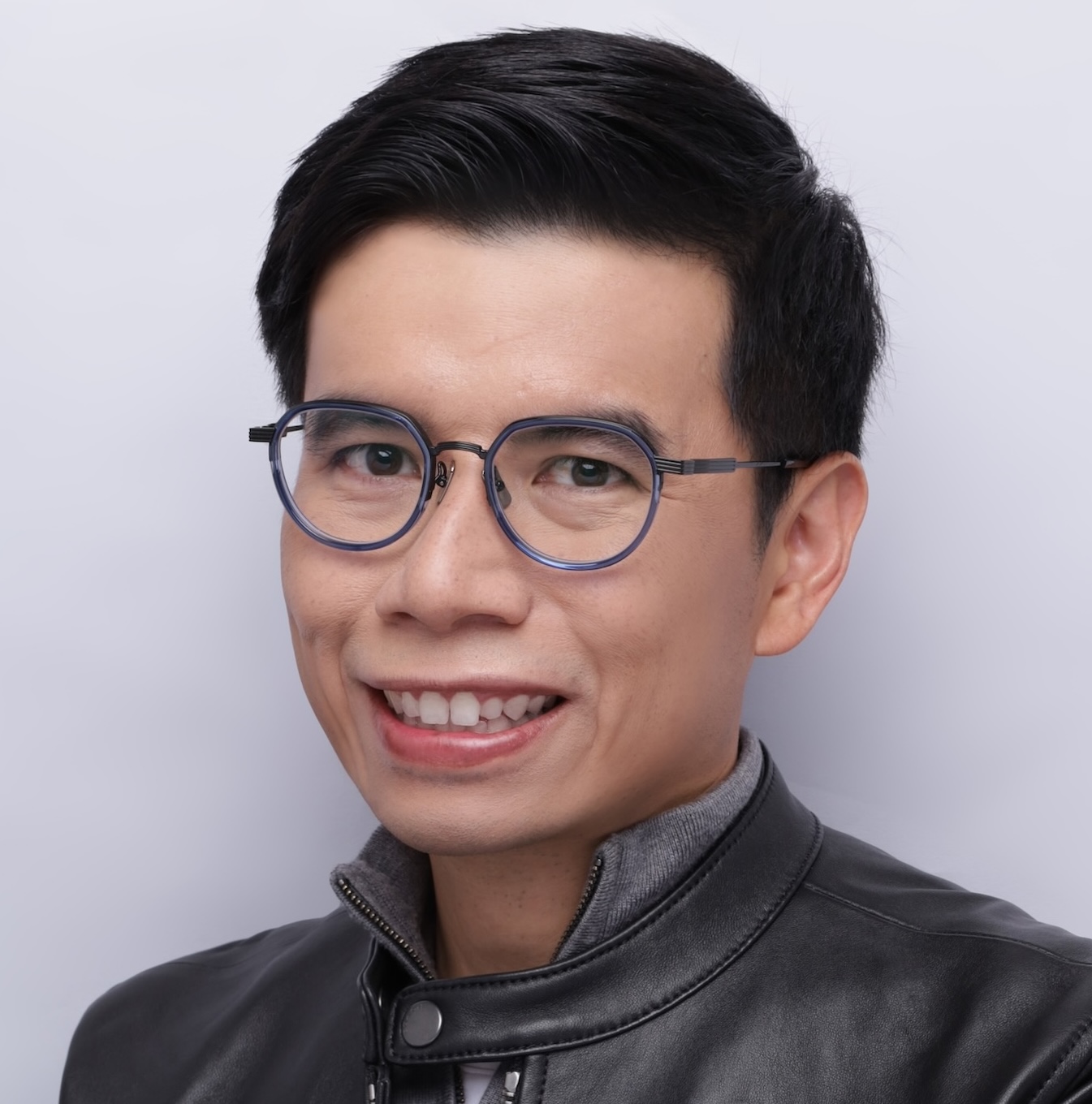
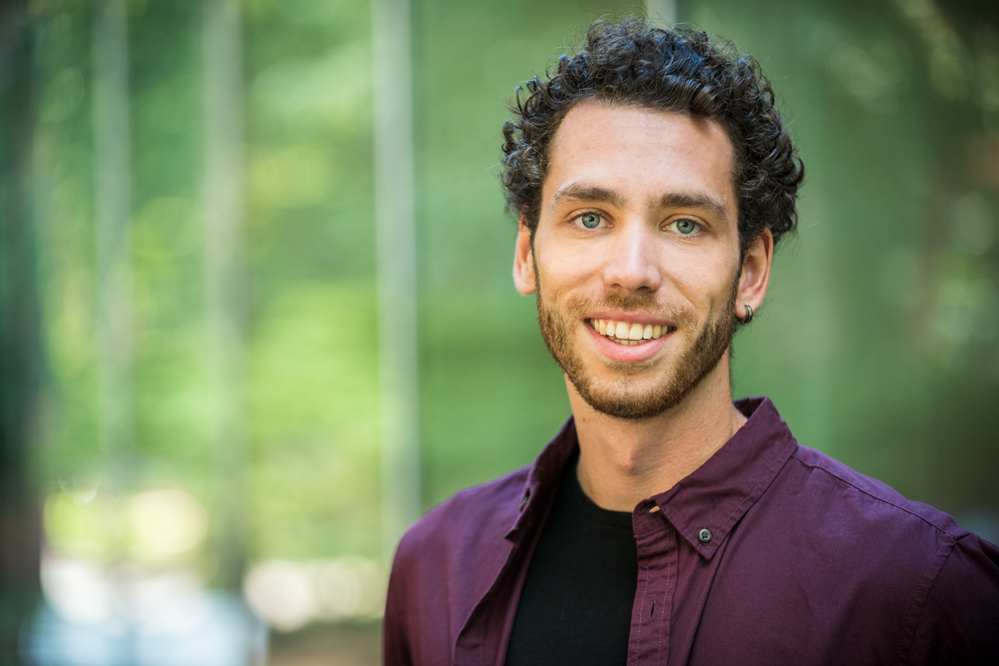
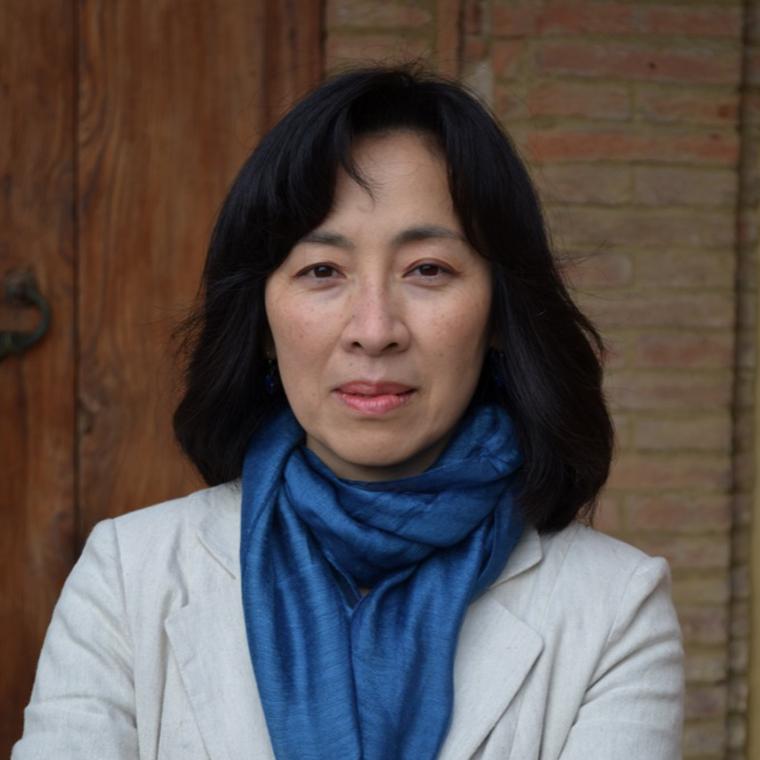
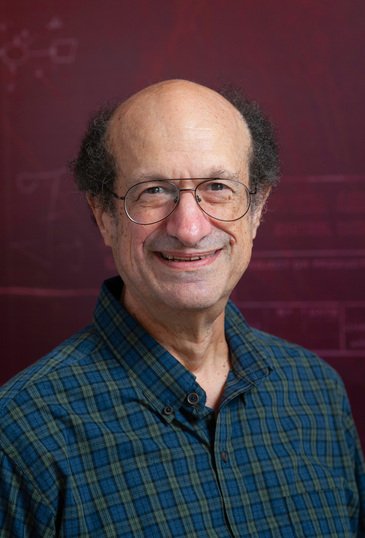
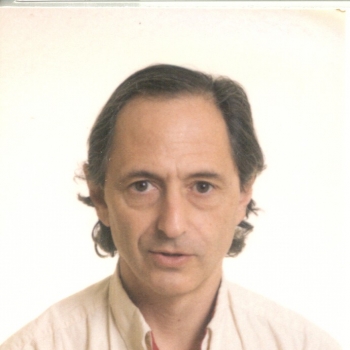
Stefan Rass is a Professor at the Institute of Networks and Security within the Faculty of Engineering & Natural Sciences at Johannes Kepler University Linz (JKU), where he leads the LIT Secure and Correct Systems Lab. As Principal Investigator for FFG-funded projects including reSilienz (digital supply chain resilience, 2023–2025) and ITPUK (AI signature verification, 2022–2024), he bridges theoretical game theory with practical cybersecurity solutions for critical infrastructures and robotics systems. His research spans game-theoretic security models (patrolling games, defense-in-depth strategies), quantum cryptography (QKD network architectures), and cyber deception frameworks like Honeyquest for measuring honeypot effectiveness. Recent work addresses robotics security benchmarking (RobotPerf), cryptographic instruction chaining for control flow protection, and risk assessment methodologies for interdependent infrastructures. His mathematical decision-making approach integrates bounded rationality and stochastic modeling to solve real-world security challenges. Professor Rass actively shapes the field through program committee roles (ARES 2023), peer reviews, and invited talks on security transparency. His current projects focus on cost-benefit-aware monitoring for cyber-physical systems and quantum key distribution standardization, reflecting Austria’s strategic priorities in digital resilience. The LIT Secure and Correct Systems Lab under his direction develops foundational theories while deploying tools for industrial applications, particularly in critical infrastructure protection and secure robotics workflows.
Dr. Tim Chen is a Senior Lecturer at the School of Computer Science, University of Adelaide, with research focused on augmenting human capabilities through human-centered AI systems. He leads interdisciplinary teams in projects like the Augmenting Ability CRC and the IMAGENDO Project , which received the Eureka Prize and NHMRC Idea Grant. Affiliation: University of Adelaide Collaborators: Prof. Patrick Baudisch (HPI), Prof. Takeo Igarashi (U of Tokyo), Prof CT Lin (UTS), Dr. Li-Yi Wei (Adobe Research) Research Interests: Human-AI interaction paradigms ( AI as Assistant, Collaborator, Oracle ), virtual reality training, contrastive learning, and data visualization. His work bridges AI/ML, computer graphics, and human-computer interaction to empower knowledge workers. Recent Achievements: Two CHI 2025 papers on VR learning, SIGGRAPH 2025 jury committee role, and ARC DP analysis website development. Funding includes NHMRC (~$2M) and AEA Ignite grants. Scientific Awards: Eureka Prize-winning leadership NHMRC Idea Project Grant AEA Ignite Grant (~$500k)
Mark Edward Borsuk is the James L. and Elizabeth M. Vincent Professor in the Department of Civil and Environmental Engineering at Duke University’s Pratt School of Engineering. He leads the Borsuk Lab, which specializes in interdisciplinary modeling of coupled social, environmental, and technical systems. His research spans climate change, ecosystem services, water resources, land use, and environmental health, using advanced methods such as Bayesian networks, agent-based modeling, game theory, and risk analysis. He co-directs the Center on Risk within Duke’s Science & Society Initiative and is an Associate of the Duke Initiative for Science & Society. B.S.E. in Civil Engineering and Operations Research, Princeton University, 1995 M.S. in Statistics and Decision Sciences, Duke University, 2001 Ph.D. in Environmental Science and Policy, Duke University, 2001 Postdoctoral Training, EAWAG (Swiss Federal Institute for Aquatic Science and Technology), Systems Analysis, Integrated Assessment, and Modelling (SIAM) Dr. Borsuk’s research focuses on integrating scientific data across disciplines to support decision-making under uncertainty. He is a leading expert in Bayesian network modeling applied to environmental and human health regulation. His work combines risk analysis, game theory, and agent-based modeling to assess climate change and environmental policy. He has developed novel frameworks for valuing ecosystem services, modeling landowner behavior, and assessing geoengineering risks. His lab emphasizes interdisciplinary collaboration, stakeholder engagement, and quantitative decision support. His recent publications reflect a strong trend toward integrating machine learning, causal inference, and spatial modeling into environmental assessment. Topics include solar radiation modification governance, land-use policy forecasting, invasive species impacts, and urban green space valuation. His work increasingly leverages big data (e.g., Zillow, remote sensing) and probabilistic programming to enhance model transparency and predictive accuracy. Chauncey Starr Distinguished Young Risk Analyst Award, Society for Risk Analysis, 2013 Early Career Research Excellence Award, International Environmental Modelling and Software Society, 2008 Earl I. Brown Outstanding Civil Engineering Faculty Award, Duke University, 2018 Best Paper, Integrated Environmental Assessment and Management Journal, 2012 Excellence in Mentoring Award, Dartmouth College Postdoctoral Association, 2010 Best Paper in Integrated Modelling, Environmental Modelling & Software Journal, 2008 Dr. Borsuk has been a principal investigator on grants from NSF, EPA, NIH, NIEHS, and USFS. He mentors a diverse group of graduate students and postdoctoral fellows, including Kim Bourne, Jon Holt, Chris Krapu, and Ryan Calder. He teaches courses such as Risk and Resilience Engineering, Engineering Economics, and Independent Study in Civil and Environmental Engineering. He is actively involved in advising and curriculum development through the Bass Connections Energy & Environment Research Team. He leads the Borsuk Lab, a dynamic research group focused on systems, risk, and decision analysis. The lab is a key contributor to the Bridge Collaborative—a partnership between Duke, The Nature Conservancy, IFPRI, and PATH—where it develops quantitative models to support cross-sectoral decision-making. The lab also investigates landowner decision-making in New England forests and the governance of solar geoengineering, using agent-based and deliberative modeling approaches.
Sammie Katt serves as a Postdoctoral Researcher in the Department of Computer Science at Aalto University's School of Science, specializing in Bayesian Reinforcement Learning for robotics and decision-making under uncertainty. Their work addresses critical challenges in partially observable environments through algorithmic innovation and practical implementations. Dr. Katt's research centers on Bayesian approaches to reinforcement learning, with deep expertise in Partially Observable Markov Decision Processes (POMDPs). They develop scalable algorithms for uncertainty quantification, robot navigation, and real-time decision-making, bridging theoretical advances with robotic applications. Key contributions include BADDr for adaptive POMDP solutions and gym-gridverse for simulation benchmarking. Analysis of Katt's 14 publications (2012-2023) reveals three dominant trends: (1) Bayesian methods for efficient POMDP solving using Monte Carlo tree search and deep learning, (2) Robotics applications in motion prediction, target search, and scene reconstruction, and (3) Framework development for reproducible RL research. Their work consistently emphasizes computational efficiency and real-world applicability in uncertain environments.
Dr. Bogumiła Hnatkowska serves as Assistant Professor at the Institute of Informatics within the Faculty of Computer Science and Management at Wrocław University of Science and Technology. Her academic career spans software engineering research and education with emphasis on model-driven approaches and quality assurance methodologies. Her research interests include: Software Engineering Analysis and Design of Information Systems Software Development Methodologies Model-Based Software Development Domain-Specific Languages Software Quality Recent publications (2021-2025) reveal concentrated research in model-driven engineering, business rules processing, and ontology integration. Key trends involve textual specification languages for use-cases, automated test generation mechanisms, and formal transformations for ontologies – demonstrating consistent application of theoretical rigor to practical software development challenges across agile and model-based contexts. Scientific Awards: No scientific awards were mentioned in the provided text Dr. Hnatkowska has served as principal investigator for multiple State Committee for Scientific Research grants including UML extensions for multimedia systems (2000), real-time systems analysis (2005), and model-driven database design (2008). Her teaching portfolio includes Software Engineering, Software System Development, and Advanced Programming Techniques courses where she supervises team projects providing students with hands-on development experience. She actively participates in partner programs including Visual Paradigm's Academic Training Partner Program (providing UML/BPMN/agile tools) and IBM Academic Initiative, supporting her research in software engineering methodologies and educational tool development.
Markus Enzweiler serves as Professor of Computer Science and Autonomous Systems at Esslingen University of Applied Sciences within the Department of Computer Science and Engineering. He concurrently holds the leadership position of Director at the Institute for Intelligent Systems, where he oversees research initiatives focused on intelligent systems development for real-world autonomous applications. His research program centers on computer vision for autonomous systems , with specialized expertise in visual-inertial SLAM, collective perception, and neural rendering techniques. Key investigation areas include environmental robustness across agricultural and urban settings, real-time processing constraints for embedded systems, sensor fusion methodologies (particularly camera-radar integration), and the application of generative models for perception enhancement. His work consistently addresses practical implementation challenges such as computational efficiency and sensor calibration in unstructured environments. Analysis of his 2023-2025 publications reveals three dominant research trajectories: (1) Advancement of lightweight perception systems through stixel-based representations and neural rendering; (2) Development of infrastructure-supported collective perception frameworks with datasets like CoopScenes and OPNV; and (3) Rigorous benchmarking of SLAM components in domain-specific contexts including agricultural robotics and multi-season navigation. His recent systematic review on LLM-based vulnerability detection also demonstrates expanding interest in software security for autonomous systems. As Director of the Institute for Intelligent Systems, Prof. Enzweiler leads a research ecosystem focused on translating theoretical advances into practical autonomous vehicle technologies. His team develops specialized datasets (Rover, OPNV) and software stacks for smart city environments, emphasizing the integration of novel perception approaches with vehicle dynamics modeling and real-time operational constraints.
Tomoko Tamari is Reader in Sociology at Goldsmiths, University of London, affiliated with the Institute for Creative and Cultural Entrepreneurship (ICCE). She joined Goldsmiths in 2013 after serving as a research fellow at Nottingham Trent University. Her academic background spans sociology, mass communication studies, and women's studies, with current interests intersecting sociology, cultural studies, and body studies. She serves as Managing Editor of Body & Society (Sage Publications) and coordinates the Theory Culture & Society 'New Encyclopaedia Project'. Tamari's research interests encompass Japanese culture and society, consumer culture, visual culture, and technology's relationship with the body. Her current working areas include animation and human perception (particularly affect in digital aesthetics and hand-drawing moving images), technology and modern architectural design (exploring Japanese Metabolism movement), food culture and lifestyles in 20th century Japan, the body and medicine (focusing on probiotics industry), body image and prosthetic aesthetics in Paralympic culture, techno-animism, and human-machine integration. Her work consistently examines how technology reshapes bodily experience and cultural practices. Her recent publications demonstrate a clear trajectory toward examining the intersections of digital technologies, human perception, and embodiment. The majority of her work from 2023-2025 focuses on AI, digital aesthetics, animation, and the materiality of the body in technological contexts. This represents an evolution from her earlier work on Japanese consumer culture and department stores toward contemporary digital and technological questions while maintaining her core interest in embodiment and cultural practices. Tamari has been actively involved in academic leadership through her editorial roles, including co-editing special journal issues on the Tokyo Olympics and post-university scholarly apparatus. Her conference presentations reflect engagement with cutting-edge discussions about AI, embodiment, and the future of knowledge production in digital society. While specific grant information isn't detailed in the provided texts, her extensive publication record and editorial positions indicate significant research activity and scholarly recognition.
Dr. Sven Klaaßen serves as a Research Fellow at the University of Hamburg's Hamburg Business School within the Professorship for Statistics with Application in Business Administration, collaborating closely with Prof. Dr. Martin Spindler since 2021. His research focuses on developing advanced statistical methodologies for complex data environments. His academic credentials include: Ph.D. in Statistics from Hamburg Business School (2020) Visiting Scholar at MIT Department of Economics (2022) M.Sc. in Business Mathematics from University of Hamburg (2016) BSc in Business Mathematics from University of Hamburg (2014) Dr. Klaaßen's research program centers on Machine Learning, Causal Inference, Deep Learning, and High-Dimensional Statistics, with particular emphasis on developing robust inference techniques for modern data challenges. His work bridges theoretical statistics with practical applications in business analytics and econometrics, often addressing the complexities of high-dimensional datasets where traditional methods fail. Analysis of his recent publications reveals a clear trajectory toward integrating machine learning with causal inference frameworks, exemplified by his leadership in the DoubleML software ecosystem. His research increasingly tackles multimodal data challenges while maintaining rigorous statistical foundations, with applications spanning economics, operations research, and business decision systems. As an active member of Prof. Spindler's research group, Dr. Klaaßen contributes to collaborative projects developing open-source statistical tools and advancing methodological frontiers in causal machine learning. The team maintains strong industry and academic partnerships focused on translating theoretical innovations into practical analytical solutions.
Arnab Kumar-Mondal is a Machine Learning Researcher at Apple Inc., with a Ph.D. in Deep Learning from McGill University and Mila – Quebec Artificial Intelligence Institute. His work bridges theoretical and applied research in computer vision, language modeling, robotics, and AI for science. Ph.D. from McGill University (2025 completion) Internships at Microsoft Research and Apple Visiting Researcher at ServiceNow Research and Huawei Noah’s Ark Lab B.Tech in Electronics and Electrical Engineering from IIT Kharagpur His research focuses on equivariant learning , state space modeling , and generative adversarial networks (GANs) , with applications in medical imaging, human motion analysis, and vector graphics generation. Key contributions include canonicalization frameworks for symmetry-aware modeling and spectral analysis of representation quality in self-supervised learning. Collaborations span institutions like ServiceNow, Huawei, and Mila. Recent publications (2023–2025) explore symmetry-aware generative modeling , efficient dynamics modeling in interactive environments, and rotation-invariant visual representation learning. His work on ternary language models at ICLR 2025 demonstrates scalable pretraining techniques. Arnab maintains active contributions to open-source software, including PyTorch implementations for semi-supervised segmentation via CycleGAN. His technical depth extends to VLSI engineering, embedded systems, and free-form lens design from undergraduate research. Professional activities include patents on video-language foundation models, internships at leading tech firms, and cross-institutional research roles.
Professor Phillip Morgan is a leading academic in Human Factors and Cognitive Science at Cardiff University's School of Psychology, holding a Personal Chair since 2020. He directs the Human Factors Excellence (HuFEx) Research Group and serves as Director of Research for the Centre for Artificial Intelligence, Robotics & Human-Machine Systems (IROHMS) . Since March 2019, he has been seconded part-time to Airbus as Director of their Centre of Excellence in Human-Centric Cyber Security . BSc (Hons) Psychology, Cardiff University (2001) PGDip Research Methods, Cardiff University (2002, Distinction) PhD in Cognitive Psychology, Cardiff University (2005) PGCHE, University of Wales (2012, Distinction) His research merges Human Factors with Cognitive Science to address real-world challenges in: Human-machine interaction in autonomous systems Cyberpsychology and security behavior Transport human factors (connected/autonomous vehicles) Interruption/distraction effects on cognition Trust and blame dynamics in AI systems Industry 5.0 human-centric manufacturing Recent publications show AI and cybersecurity as dominant themes, with specific focus on autonomous vehicle interfaces, human fatigue analysis, and trust calibration in human-machine systems. His work integrates behavioral experiments, driving simulators, and human-state monitoring. Scientific Recognition: Associate Fellow of the British Psychological Society Best Paper Award at AHFE 2021 Member of Experimental Psychology Society Keynote speaker at multiple international conferences As supervisor, he leads projects on cybersecurity frameworks, fatigue detection, and human-AI interaction. His grants portfolio exceeds £37m from sources including EPSRC, ESRC, Airbus, and Wellcome Trust. Current supervisees include Victoria Marcinkiewicz, George Raywood-Burke, and Nicola Turner.
Romain Raveaux is an Associate Professor at the LIFAT Computer Science Laboratory, University of Tours, affiliated with Polytech Tours. His research focuses on Image Analysis, Machine Learning, Structural Pattern Recognition, Graph Matching, Graph Neural Networks, Discrete Optimization, Reinforcement Learning, and Transfer Learning . Email: romain.raveaux@gmail.com , romain.raveaux@laposte.net Address: 64 av. Jean Portalis, Tours, France, 37200 Phone: +33 (0)2 47 36 14 27 Research Interests Graph Matching and Neural Networks Discrete Optimization for Pattern Recognition Transfer Learning in Graph-Based Models Historical Document Analysis Scientific Trends His recent work bridges Graph Neural Networks with Mixed-Integer Programming , focusing on Image Semantic Segmentation and Graph Cycle Detection . Earlier studies emphasize Genetic Algorithms for graph classification and Graph Edit Distance optimization in pattern recognition.
Maarten Bassier is an Assistant Professor (tenure track) at KU Leuven, affiliated with the Department of Civil Engineering within the Faculty of Engineering Technology. He is based at the Geomatics unit operating at the Ghent and Aalst Campuses. His academic profile combines research, teaching, and institutional service, with significant contributions to the field of digital construction technologies. As senior academic staff, he serves on both the Council of the Faculty of Engineering Technology and the Civil Engineering Department Council, actively participating in institutional governance while maintaining a robust research program focused on Scan-to-BIM methodologies and geospatial applications in construction. Dr. Bassier's research centers on Scan-to-BIM methodologies, which involve converting 3D scans of existing buildings into Building Information Models. His work bridges geomatics, computer vision, and civil engineering, with applications in construction progress monitoring, infrastructure inspection, and heritage documentation. He applies machine learning techniques to automate aspects of the modeling process, particularly semantic segmentation of point clouds and integration of UAV (drone) data. His research increasingly incorporates deep learning approaches for object detection, segmentation, and completion in complex built environments, with practical applications spanning road construction, bridge inspections, and electrical substation modeling. His interdisciplinary approach connects civil engineering with computer science to solve practical construction challenges through digital innovation. Bassier's recent publication record demonstrates a strong focus on automating the Scan-to-BIM process through advanced computational techniques. His work spans multiple application domains while maintaining a consistent methodological thread of integrating sensing technologies with semantic understanding of construction environments. The trajectory of his research shows increasing sophistication in machine learning applications, moving from basic point cloud processing to complex semantic understanding and automated model generation. His publications appear in high-impact journals across civil engineering, remote sensing, and computer vision domains, reflecting the interdisciplinary nature of his work. SESAME - Semantic Segmentation of Electrical Substations and Derived Models for Engineering (2024-2026) - Promotor UAV-assisted bridge inspections (2022-2027) - Co-promotor XR-empowered dynamic reality modeling for AECO applications (2021-2026) - Co-promotor Digitization in road construction: automating as-built models (2020-2026) - Co-promotor SCAN-to-BIM Automation of as-built BIM production through digitization and machine learning (2020-2025) - Co-promotor As a member of the Division Digital and Sustainable Civil Engineering and the Subdivision Geomatics Ghent, Dr. Bassier contributes to KU Leuven's research ecosystem focused on digital transformation in civil engineering. His teaching portfolio includes courses on BIM, industrial measurements, Scan-to-BIM, 3D modeling, and geomatics, preparing the next generation of civil engineers for the digital construction landscape. His work represents the cutting edge of digital construction technologies, with practical applications that address real-world challenges in infrastructure development and maintenance.
Daniel Boley is a Professor and Distinguished University Teaching Professor at the University of Minnesota, within the College of Science and Engineering, Department of Computer Science and Engineering. He serves as the Director of Graduate Studies for the Graduate Program in Data Science, which offers a Master's of Science and a Post-Baccalaureate Certificate. His office is located in Kenneth H. Keller Hall at 4-225C. Professor Boley's research spans computational methods in linear algebra, scalable data mining algorithms, and applications in systems biology and bioinformatics. His work focuses on scalable algorithms for convex optimization in machine learning, analysis of networks and graphs from metabolic biochemical networks, and wireless device networks. He has made significant contributions to numerical linear algebra methods for control problems, parallel algorithms, and iterative methods for matrix eigenproblems. His research interests also include algebraic models in systems and evolutionary biology, and biochemical metabolic networks. His recent publications demonstrate a strong focus on applying graph theory and network analysis to diverse domains including robot swarms, medical imaging (particularly for glioblastoma and COVID-19 diagnosis), and metabolic network analysis. His work bridges theoretical computer science with practical applications in biology and medicine, with a consistent emphasis on developing scalable computational methods. The trend shows increasing interdisciplinary collaboration, particularly with medical researchers. Distinguished Member by the ACM Top university award for post baccalaureate, graduate and professional education Distinguished University Teaching Professor title Professor Boley has advised numerous PhD students including Tatiana Lenskaia (2021), Shaozhe Tao (2018), Ham Ching Lam (2014), and others dating back to 1994. His research has been supported by various grants enabling work on scalable computation of elementary pathways through metabolic networks, Markov models of viral evolution, and scalable data mining algorithms for text analysis. He has developed software tools for clustering, dot plot visualization, and educational graphics. Professor Boley directs the Graduate Program in Data Science and has been involved in projects such as the Principal Direction Divisive Partitioning (PDDP) Project. His research group develops practical implementations of theoretical advances, including the PDDP clustering algorithm, Dot.py genome viewer, and various educational graphics tools for introductory programming courses. He maintains active collaborations across disciplines, particularly in bioinformatics and medical imaging applications.
Scott A. King is a Professor of Computer Science at Texas A&M University-Corpus Christi, affiliated with the Computing Sciences Department. He directs the iCORE and Pixel Island labs, focusing on research areas such as Visualization, Computer Graphics, Machine Learning, AI Robotics, Ambient Intelligence, and Human-Computer Interaction (HCI). Additionally, he serves as a co-lead for the CAHSI Southwest Region and is a member of the AI2ES initiative. PhD, MS in Computer Science from The Ohio State University BS in Computer Science from Utah State University His research spans interdisciplinary applications in computer graphics, data analytics, and autonomous systems, with a strong emphasis on mentoring students at all academic levels. Scott previously held positions at the University of Otago before joining TAMUCC. He actively engages undergraduates through iCORE meetings and guides graduate students through thesis research and publication processes. Scott's educational background includes: Bachelor's Degree from Utah State University Master's and Doctoral Degrees from The Ohio State University He currently teaches courses in Computer Graphics (COSC 4328) and Data Analytics (COSC 6380), while maintaining regular office hours for student engagement.
Michael Levitt is the Robert W. and Vivian K. Cahill Professor of Cancer Research and Professor of Structural Biology at Stanford University School of Medicine. He is also a member of Bio-X and the Wu Tsai Neurosciences Institute. Dr. Levitt served as Chair of the Department of Structural Biology from 1993 to 2004 and as Associate Chair from 2005 to 2010. A Nobel Laureate in Chemistry (2013), he is a member of the US National Academy of Sciences, the American Academy of Arts & Sciences, and a Fellow of the Royal Society. Dr. Levitt pioneered computational biology, establishing the conceptual and theoretical framework for the field. His research focuses on three interconnected areas: 1) predicting protein folding with emphasis on hydrophobic forces; 2) predicting protein structure from sequence through homology modeling and refinement of near-native structures; and 3) mesoscale modeling of large macromolecular complexes like RNA polymerase. His work employs diverse energy functions ranging from statistical potentials to quantum-mechanical force-fields. His technical expertise includes developing simulation packages, molecular graphics interfaces, and advanced scripting capabilities. Dr. Levitt's recent publications demonstrate his continued leadership across computational chemistry, molecular biology, and public health. His work spans fundamental research on molecular force fields and protein dynamics to epidemiological analyses of pandemic impacts. He has made significant contributions to understanding water ionization, neural network applications in molecular modeling, and global patterns of excess mortality during the COVID-19 pandemic. Nobel Prize in Chemistry (2013) Member, US National Academy of Sciences (2002) Fellow, The Royal Society (2001) Member, American Academy of Arts & Sciences (2010) Anniversary Prize, Federation of European Biochemical Societies (1986) Member, European Molecular Biology Organization (1981) Dr. Levitt actively mentors students through numerous independent study and research courses across computer science, biomedical informatics, biophysics, and structural biology programs. His teaching includes Advanced Reading and Research, Biomedical Informatics Teaching Methods, and various directed research opportunities. He has supervised work in computational biology, protein structure prediction, and molecular dynamics. His lab collaborates extensively with experimentalists to overcome challenges in modeling large, complex biological systems. Dr. Levitt leads a research group focused on developing advanced computational methods for molecular simulation. His team works on integrating machine learning with traditional force-field approaches to improve accuracy while maintaining computational efficiency. Current projects include neural network corrections for molecular force fields, mesoscale modeling of macromolecular complexes, and analysis of global health data related to pandemic impacts.