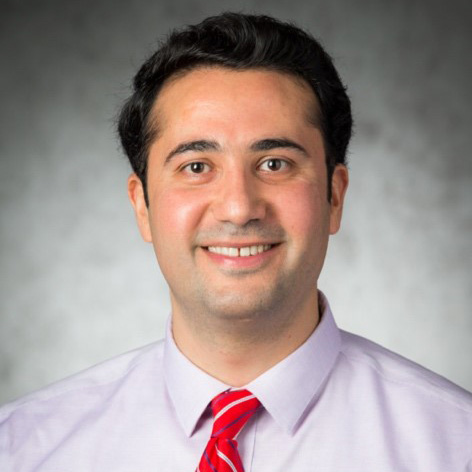
Ada Gavrilovska is a Professor at Georgia Tech's School of Computer Science under the College of Computing. Her work focuses on systems software for emerging technologies, including hybrid memory systems, edge computing, and cloud infrastructure. She leads projects in the PRISM Center and ADA Center , with funding from NSF, DoE, SRC, and industry leaders like Cisco and VMware. Education: PhD in Computer Science, Georgia Tech (2004) Research Interests: Designing systems for new hardware and applications, including edge computing, heterogeneous memory management, and LEO satellite platforms. Her work bridges low-level OS mechanisms with high-level distributed systems challenges. Recent Publications highlight trends in LEO satellite resource scheduling Edge-based ML preprocessing Hybrid memory OS abstractions Disaggregated graph analytics Compiler-assisted performance optimization Scientific Awards: Best paper, NFV World Congress (2016) Spotlight paper, IEEE Transactions on Cloud Computing (2014) ISCA-50 25-year retrospective (2023) Advising & Grants: Ada has mentored over 15 PhD students and 10 MS students, with research supported by NSF, DoE, SRC, and industry grants. She serves as PI in the SRC/DARPA PRISM Center.
Christian Igel is a Professor at the Department of Computer Science, University of Copenhagen, and serves as director of the SCIENCE AI Centre . He is also a co-lead of the Pioneer Centre for Artificial Intelligence in Denmark. His academic journey includes a Doctoral degree from Bielefeld University (2002) and a Habilitation degree from Ruhr-University Bochum (2010). Igel is a Juniorprofessor (2002–2010) and has held editorial roles at journals like KI - Künstliche Intelligenz and Artificial Intelligence Journal . Doctoral degree: Faculty of Technology, Bielefeld University, Germany (2002) Habilitation degree: Department of Electrical Engineering and Information Sciences, Ruhr-University Bochum, Germany (2010) His research spans Machine Learning , focusing on Support Vector Machines , Evolution Strategies , Reinforcement Learning , Deep Neural Networks , and PAC-Bayesian Analysis . He applies these methods to Environmental Monitoring , Medical Diagnostics , and Climate Research . Recent publications highlight work on adversarial machine learning , environmentally sustainable AI , and tree resource mapping using deep learning. His scientific awards include being a ELLIS Fellow . Igel’s software tools like Shark , woody , and Multi-Planar UNet are widely used in research and industry. Notable grants and collaborations involve projects with European Lab for Learning and Intelligent Systems (ELLIS) , SCIENCE AI Centre , and international teams in Denmark , Germany , and France . His lab leadership emphasizes open-source frameworks and reproducible research. Editorial Roles: German Journal on Artificial Intelligence , Evolutionary Computation Journal , Artificial Intelligence Journal Software Projects: Shark , woody , Multi-Planar UNet , U-Time Collaborations: SCIENCE AI Centre , Pioneer Centre for Artificial Intelligence , European Lab for Learning and Intelligent Systems
Jeffrey L. Krichmar is a Professor in the Department of Cognitive Sciences and Department of Computer Science at the University of California, Irvine. His academic journey includes a B.S. in Computer Science from the University of Massachusetts Amherst (1983), an M.S. in Computer Science from The George Washington University (1991), and a Ph.D. in Computational Sciences and Informatics from George Mason University (1997). Prior to UCI, he served as Assistant Professor at George Mason University (1997-1999) and Senior Fellow at The Neurosciences Institute (1999-2007). University of California, Irvine (2007-present) George Mason University (1997-1999) The Neurosciences Institute (1999-2007) His research focuses on neurorobotics , exploring how embodied cognition and biologically plausible neural models can enhance robotic systems. Key areas include spiking neural networks , neuromodulation , path planning , and interactive tactile robots for therapeutic applications. His work bridges neuroscience , robotics , and cognitive science , with applications in autonomous vehicles , neuroprosthetics , and AI explainability . Recent publications emphasize spiking neural networks for navigation , neuromodulated attention , and neuromorphic hardware integration. The development of CARLsim, a GPU-accelerated spiking neural network simulator now in version 6.0, represents a major technical contribution. His team's work on socially assistive robots like CARL-SJR targets therapeutic applications for autism and ADHD. Scientific Awards IJCNN 2020 Best Paper Award Finalist for Best Student Paper at IJCNN 2018 Best Paper Award at IEEE IJCNN 2009 Grants include National Science Foundation funding for neural models of decision-making (2009). His lab (Cognitive Anteater Robotics Laboratory) develops systems that use large-scale brain simulations for autonomous behavior , with applications in adaptive robotics , sensorimotor learning , and neuroethology . Current projects explore neuromodulatory influences on attention systems and cognitive flexibility .
Plamen Atanassov is a Chancellor’s Professor in the Department of Chemical and Biomolecular Engineering with a joint appointment in Materials Science and Engineering at the Samueli School of Engineering, University of California, Irvine . His work focuses on developing advanced electrocatalysts for energy conversion and storage systems. Department: Chemical and Biomolecular Engineering, Materials Science and Engineering Academic Rank: Professor (Chancellor’s Professor honorific) Research Themes: Electrocatalysis, Bio-electrocatalysis, Fuel Cells, Energy Harvesting Research Interests: Prof. Atanassov specializes in non-platinum and platinum-based electrocatalysts for fuel cells, bio-inspired energy systems , and carbon dioxide valorization technologies . His group has pioneered: Atomically dispersed metal-nitrogen-carbon catalysts Novel synthesis methods for durable electrocatalysts Machine learning-guided fuel cell optimization Electrochemical ammonia and urea production Hydrogen evolution reaction with non-precious metals Scientific Contributions: With over 380 peer-reviewed papers (101 h-index), 50 issued US patents , and 35+ PhD students advised , his work bridges fundamental electrochemistry and industrial-scale energy solutions. Recent publications emphasize catalyst durability under realistic conditions, CO2 reduction, and sustainable manufacturing practices.
Byron Boots is the Amazon Professor of Machine Learning in the Paul G. Allen School of Computer Science and Engineering at the University of Washington, where he directs the UW Robot Learning Laboratory. He also serves as a Principal Research Scientist in the Seattle Robotics Lab at NVIDIA Research and co-chairs the IEEE Robotics and Automation Society Technical Committee on Robot Learning. Dr. Boots received his Ph.D. from the Machine Learning Department in the School of Computer Science at Carnegie Mellon University, where he was a member of the Sense, Learn, Act (SELECT) Lab co-directed by Carlos Guestrin and his advisor Geoff Gordon. Prior to joining the University of Washington faculty, he was an Assistant Professor in the School of Interactive Computing within the College of Computing at Georgia Tech, and before that, he completed a post-doc in the Robotics and State Estimation Lab directed by Dieter Fox at the University of Washington. Professor Boots' research focuses on the intersection of machine learning, artificial intelligence, and robotics, with particular emphasis on developing theory and systems that tightly integrate perception, learning, and control. His work spans computer vision, state estimation, localization and mapping, high-speed navigation, motion planning, and robotic manipulation. His group develops algorithms drawing from deep learning and neural networks, nonparametric statistics, graphical models, nonconvex optimization, quantum physics, online learning, reinforcement learning, and optimal control. The research demonstrates a strong theoretical foundation while maintaining practical relevance to real-world robotic systems. His recent publications reveal a clear trend toward integrating advanced machine learning techniques with robotics, particularly in model predictive control, motion planning, and learning-based approaches to robot control. His work shows increasing focus on developing theoretically grounded methods that can handle the complex, nonlinear dynamics of real-world robotic systems while maintaining computational efficiency. The publications span top venues including ICRA, CoRL, IROS, and NeurIPS, demonstrating broad impact across multiple subfields of robotics and AI. Finalist for Best Systems Paper at Conference on Robot Learning (CoRL-2021) Multiple papers selected for oral presentations at top robotics conferences Work recognized for theoretical contributions and practical applications in robot learning As director of the UW Robot Learning Laboratory, Boots leads a vibrant research group focused on fundamental and applied research in robot learning. The lab maintains strong collaborations with NVIDIA Research and has produced numerous high-impact publications that bridge theory and practice. Professor Boots teaches courses in autonomous robotics, machine learning, and reinforcement learning, contributing to both undergraduate and graduate education at the University of Washington.
Professor Line Roald is a faculty member in the Department of Electrical and Computer Engineering at the University of Wisconsin-Madison. Her research focuses on power system optimization, renewable energy integration, grid resilience, and wildfire risk mitigation using stochastic optimization and data-driven methods. Education : PhD (2016), MS (2012), BS (2009) from ETH Zurich Key Research Areas : Power Systems Optimization, Renewable Energy Integration, Wildfire Risk Mitigation, Stochastic Programming, Grid Decarbonization Her work addresses critical challenges in sustainable energy systems, including balancing grid efficiency and risk, optimizing electrolyzer scheduling for flexibility, and predicting cascading blackout severity using graph neural networks. She has developed frameworks for carbon intensity comparison and wildfire risk assessment in power systems. Scientific Awards : 2024 Inclusion, Equity and Diversity in Engineering Award 2024 Vilas Faculty Early Career Investigator Award 2023 IEEE Power Tech Best Student Paper Award 2021 NSF CAREER Award 2019 MTLE Fellow Professor Roald mentors graduate students and teaches courses including Introduction to Optimization and On-Line Control of Power Systems . Her publications highlight innovative approaches to grid security, carbon-efficient energy markets, and climate resilience in infrastructure systems.
Travis Desell is a Professor in the Department of Software Engineering at Rochester Institute of Technology (RIT), part of the B. Thomas Golisano College of Computing and Information Sciences. His research focuses on data science and machine learning applied to large-scale datasets using high-performance and distributed computing. He specializes in neuro-evolution, combining evolutionary algorithms with neural networks, particularly through his EXACT and EXAMM algorithms. He leads the D2S2 Lab and has developed the SALSA programming language based on the actor model. Currently funded projects include the National General Aviation Flight Information Database (NGAFID) and an NSF award exploring contextual bandits for decision-making in cyber-physical systems. His work emphasizes practical scientific applications, including stock forecasting, power plant data prediction, and explainable time series models. Education details are not explicitly provided, but his roles and publications indicate advanced academic credentials. Research interests span neuro-evolutionary techniques, recurrent neural networks, and distributed computing frameworks. Key projects include EXAMM for time series forecasting and NGAFID for flight safety analysis. Collaborations involve students and teams at RIT and beyond, with a focus on advancing AI-driven solutions in dynamic environments. Lab affiliations include the D2S2 Lab, where he mentors students and conducts cutting-edge research. Current opportunities exist for PhD students with backgrounds in software engineering and expertise in areas like NLP, web development, and distributed systems.
Dr. Zhibao Mian is a Lecturer in the School of Computer Science at the University of Hull, UK, and previously held an Associate Professor position at Northwest Normal University. He specializes in trustworthy AI, machine learning, and intelligent maintenance systems. His research integrates AI with IoT, blockchain, and digital twins in Industry 4.0/5.0 contexts. He leads projects on predictive maintenance for offshore wind turbines and AI-driven sustainable energy solutions. Dr. Mian holds a PhD from the University of Hull and an MSc from the University of Nottingham. Research interests include AI ethics, model-based safety analysis, and RCM. He has secured grants such as the CPHC-funded study on AI in software education and oversees multiple PhD scholarships. Notable roles include Editorial Board member of the American Journal of Artificial Intelligence and Reviewer for high-impact journals/conferences like JSS and IEEE. He is a Senior Fellow of the Higher Education Academy and received the Royal Academy of Engineering's 2024 Exceptional Talent designation. Recent publications (2023-2025) focus on ordinal networks, outlier detection, Belt and Road trade analysis, and carbon emissions modeling. He actively advises PhD students on topics like UAV-based anomaly detection and predictive maintenance frameworks.
Dr. Liang Yu is an Adjunct Professor at Washington State University (WSU) within the College of Agricultural, Human, and Natural Resource Sciences (CAHNRS), Department of Biological Systems Engineering. He holds roles as a Guest Editor for the Journal of Fermentation (Energy Converter-Anaerobic Digestion), Faculty Senator for Non-Tenure Track Faculty, Anti-Hazing Advisory Committee member, and Review Committee member for undergraduate research scholarships at WSU. His research focuses on biorefinery-based industrial symbiosis and the circular economy, employing multi-scale mathematical modeling (molecular simulation, CFD, bioprocess control, machine learning) to optimize anaerobic digestion systems. His work aims to convert organic waste (animal manure, food waste) into renewable natural gas, fertilizers, and bioproducts. He has secured funding from the DOE and USDA, with over 60 peer-reviewed publications and five patents. Key research themes include hydrothermal pretreatment, ammonia recovery, microbial community dynamics, and techno-economic analysis. Recent articles emphasize anaerobic digestion innovation, biodesulfurization, and biohydrogen production. His contributions bridge environmental engineering, biotechnology, and sustainable systems design. Dr. Yu’s grants and patents reflect a commitment to applied sustainability solutions, with projects addressing agricultural waste valorization and energy recovery. Collaborative efforts drive his work, integrating computational modeling with experimental validation for scalable bioenergy systems.
David Wentzlaff is a Professor of Electrical and Computer Engineering at Princeton University, with associated faculty roles in Computer Science and the High Meadows Environmental Institute (HMEI). He leads research in computing architecture, green computing, and sustainable system design. As Director of Undergraduate Studies, he shapes educational programs in his field. Education: Ph.D., Electrical Engineering, MIT (2012) M.S., Electrical Engineering and Computer Science, MIT (2002) B.S., Electrical Engineering, University of Illinois at Urbana-Champaign (2000) Research Focus: Future Computing Systems: Designing manycore architectures, cloud computing infrastructure, and chiplet-based systems for exascale computing. Sustainability: Developing energy-efficient hardware, recyclable computing systems, and eco-friendly decommissioning strategies. Hardware-Software Co-Design: Exploring FPGA integration, in-memory computing, and parallel processing frameworks. Advising & Grants: Advises 8 current graduate students, focusing on topics like chiplet design, neural acceleration, and sustainable computing. Recipient of NSF grants for projects like OpenPiton (open-source manycore research platform) and CAREER awards for energy-efficient architectures. Labs & Collaborations: Leads the Wentzlaff Research Group at Princeton. Develops open-source frameworks like PRGA (FPGA prototyping) and OpenPiton (manycore processor).
Dr. Ava Hedayatipour is an Assistant Professor of Electrical Engineering at California State University at Long Beach (CSULB), where she joined in Fall 2020. She holds a Ph.D. from the University of Tennessee, Knoxville (2020), and degrees from Iran University of Science and Technology (B.S., 2012) and Shahid Rajaee Teacher Training University (M.S., 2015). Her research focuses on analog/mixed-signal circuit design, bio-implantable devices, low-power systems, and hardware security. Notable contributions include a first-of-its-kind integrated secure multimodal sensor and a flexible paper electrode for remote electrochemical experiments. Education: Ph.D., Electrical Engineering, University of Tennessee, Knoxville, 2020 M.S., Electrical Engineering, Shahid Rajaee Teacher Training University, Iran, 2015 B.S., Electrical Engineering, Iran University of Science and Technology, 2012 Research Interests: Analog and mixed-signal circuit design Biomedical devices and lab-on-chip applications Low-power, low-noise microelectronics Hardware security for IoT and biomedical sensors Flexible electrodes for wearable systems Awards: University of Tennessee Fellowship Award (2019) Outstanding Teaching Assistant Award (2018) BEST PAPER AWARD at IEEE DCAS 2025 2nd Place Winner at IEEE BIOCAS 2023 Innovation Challenge Advising & Grants: Lead CSULB LEAP program project on medical imaging braces Funded NSF project on chaotic analog security (2018–present) Collaborated with industry partners like Applied Medical and Synaptics Labs & Teams: Next Generation Wearable Lab at CSULB Focus on sensor design, hardware security, and biomedical applications
Dr. Mortaza Saeidi-Javash is an Assistant Professor in the Department of Mechanical and Aerospace Engineering at California State University, Long Beach (CSULB). He joined in Fall 2022 following his Ph.D. in Mechanical Engineering from the University of Notre Dame, where he received the Prince Engineering Fellowship and Dehner Graduate Fellowship. His research focuses on developing next-generation flexible electronics using advanced materials and 3D printing technologies, particularly thermoelectric devices for wearable applications and multifunctional sensors for structural health monitoring. Dr. Saeidi-Javash's academic background includes interdisciplinary work combining materials science, additive manufacturing, and machine learning. His Ph.D. research emphasized aerosol jet printing and ultrafast flash sintering to create high-performance, low-cost thermoelectric devices. He has published extensively in journals like Advanced Materials and Nano Energy , with a focus on flexible electronics, energy harvesting, and sensor integration. His recent publications highlight innovations in machine learning-aided materials discovery, plasma sintering processes, and hybrid printing methods. These contributions address challenges in scalable manufacturing, energy efficiency, and wearable technology applications. Dr. Saeidi-Javash’s work bridges gaps between fundamental materials research and practical engineering solutions for sustainable energy systems and smart devices. Awards: Prince Engineering Fellowship (University of Notre Dame) Dehner Graduate Fellowship in Engineering (University of Notre Dame) Advising & Office Hours: Office: ECS-647 Office Hours: Wednesday 12:00-2:00 PM Advising Hours: Thursday 12:30-1:30 PM His research lab focuses on additive manufacturing of functional materials, with ongoing projects in thermoelectric energy conversion, wearable sensors, and biomaterials for cardiac tissue engineering.
Marco Di Renzo is a CNRS Professor (Directeur de Recherche Titulaire) at University of Paris-Saclay, affiliated with CentraleSupelec and the Signals and Systems Laboratory (L2S). He serves as Coordinator of the Communications Networks Area at the DigiCosme Laboratory of Excellence and Editor-in-Chief of IEEE Communications Letters. His academic leadership includes membership in the Ph.D. School on ICT Admission Committee at Paris-Saclay University. His educational background includes a Laurea (cum laude) and Ph.D. in Electrical Engineering from University of L'Aquila, Italy (2003, 2007), and a Habilitation à Diriger des Recherches from University Paris-Sud (2013). Laurea (cum laude), Electrical Engineering, University of L'Aquila (2003) Ph.D., Electrical Engineering, University of L'Aquila (2007) Habilitation à Diriger des Recherches, University Paris-Sud (2013) Di Renzo's research focuses on next-generation wireless communications, particularly reconfigurable intelligent surfaces (RIS), 6G technologies, and stochastic geometry modeling. His work bridges theoretical communication theory with practical implementations in cellular networks, millimeter-wave communications, and ultra-wide band systems. Recent publications demonstrate leadership in holographic metasurfaces, integrated sensing and communication (ISAC), and AI-empowered network design, establishing him as a pioneer in electromagnetic wave manipulation for future networks. His award-winning publications span RIS-aided communications, channel modeling, and security frameworks. Analysis of his recent work reveals consistent focus on three pillars: (1) fundamental electromagnetic theory for wave manipulation, (2) practical RIS implementations across frequency bands, and (3) integration with AI for network optimization. His articles frequently address industrial applications including factory automation and space-air-ground networks. Di Renzo's scientific recognition includes: IEEE Fellow (2020) and IET Fellow (2020) Highly Cited Researcher (Web of Science, 2019) SEE-IEEE Alain Glavieux Award (2017) Multiple Best Paper Awards (IEEE ICC, EURASIP) Nokia Foundation Visiting Professorship (2020) As Principal Investigator for CNRS, he coordinates multiple Horizon 2020 projects including SURFER, PathFinder, and MetaWireless. His leadership extends to serving as Project Coordinator for H2020 5Gwireless, 5Gaura, MAPNET, and REDESIGN. With over 350 publications, 17,000+ citations, and h-index of 66+, his research group maintains strong industry partnerships with Nokia and other telecommunications leaders. Di Renzo directs the Signals and Systems Laboratory (L2S) at Paris-Saclay and coordinates the DigiCosme Excellence Lab's Communications Networks Area. His team specializes in electromagnetic modeling for wireless networks and has pioneered the European Telecommunications Standards Institute (ETSI) Industry Specification Group on RIS. The group maintains active collaborations with Aalto University (Finland), University of Technology Sydney (Australia), and University of L'Aquila (Italy).
Dr. Nilanjan Banerjee is a Professor in the Department of Computer Science and Electrical Engineering at the University of Maryland, Baltimore County (UMBC). He leads the Mobile, Pervasive, and Sensor System Lab, focusing on embedded and distributed systems for mobile, pervasive, and sustainability-based computing. His research spans renewable energy-driven systems, health diagnostics, mobile usability, and experimental testbed design. He holds a Ph.D. in Computer Science from the University of Massachusetts (2009), an M.S. from the same institution (2007), and a B.Tech. (Hons) from the Indian Institute of Technology (2004). Dr. Banerjee's work emphasizes interdisciplinary innovation, including low-power wearable devices for health monitoring (e.g., RestEaZe), cybersecurity frameworks for embedded systems (e.g., CARE), and sensor-based solutions for environmental sustainability. His contributions address challenges in mobility, energy efficiency, and accessibility, such as the Presight sidewalk localization system for visually impaired riders and the Inviz gesture-recognition textile sensors. His recent publications (2018–2021) reflect a focus on health technology, cybersecurity, and sustainable systems. Notable trends include: Integration of machine learning with sensor data for medical applications (e.g., sleep analysis, infection detection) Development of lightweight security protocols for embedded devices Exploration of renewable energy solutions for mobile and sensor networks No scientific awards are explicitly listed in the provided text. His academic advising and grant activities are not detailed here, but his lab's active research suggests significant collaborative projects. The lab also pioneers educational strategies in mobile app development and inclusive faculty recruitment through peer education programs like STRIDE.
Jianhua Zhang is a Professor of Computer Science and founding deputy head of the AI Lab at the Department of Computer Science, OsloMet - Oslo Metropolitan University, Norway. He holds affiliations with the Faculty of Technology, Art and Design. His career includes roles as Scientific Director at Vekia (France), Head of Machine Learning Lab, and Professorships at East China University of Science and Technology and Beijing University of Technology. He has held visiting positions at TU Berlin, TU Dresden, and the University of Catania. Educations: PhD in Electrical Engineering and Information Sciences (Ruhr University Bochum, 2005), Postdoctoral Research at the University of Sheffield (2005-2006). Research focuses on artificial intelligence, computational intelligence, cognitive human-machine systems, neuroergonomics, affective computing, and AI-driven neuroergonomics. Applications span engineering, biomedicine, finance, and business. He has led over 20 large-scale projects and published extensively (4 books, 13 chapters, ~200 papers). Leadership roles include Chair of IFAC Technical Committee on Human-Machine Systems (2017-2023), Vice Chair of IEEE Norway Section, and editorial roles at journals like Frontiers in Neuroscience and Cognitive Neurodynamics . He organized major conferences like IFAC HMS2025 (Beijing) and ICMLT 2024 (Oslo). Awards: Stanford/Elsevier Top 2% Scientists (2023/2024), Senior Research Fellowship (CSC, 2012), Max Planck Fellowship (2011), Shanghai Pujiang Talent (2007), DAAD Scholarship (2002-2004). Grants and advising: PI for 20+ projects, advising PhD students in AI, machine learning, and control systems. Teaching includes courses on computational intelligence, IoT, and fuzzy systems at both undergraduate and graduate levels. Labs/Teams: AI Lab at OsloMet, Machine Learning Lab (Vekia), and collaborations with institutions globally. Current work emphasizes AI ethics, neuroergonomics in smart cities, and adaptive human-machine systems.