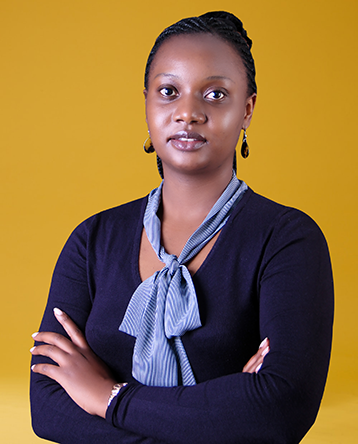
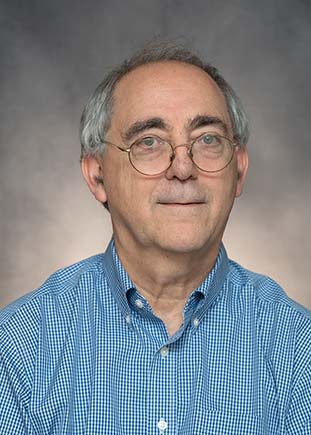
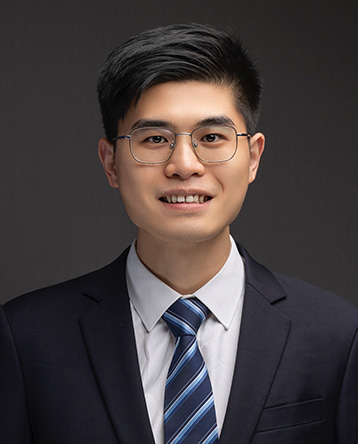
Dr. Carine Pierrette Mukamakuza is a Lecturer at Carnegie Mellon University Africa's College of Engineering, specializing in Digital Healthcare Solutions , Machine Learning , and Data Science . Her work bridges Computer Science , Public Health , and Social Network Analysis , with a focus on malaria detection systems and cardiac diagnostics. Ph.D. in Informatics, Technical University of Vienna MS & BS in Computer Science, Central South University, China Research Themes : AI applications in malaria diagnostics (U-Net, YOLOv5, SVM) Deep Learning for ECG/PCG signal analysis Social network impacts on recommender systems Digital health infrastructure for Africa Article Trends : Combines Machine Learning and Public Health to develop digital diagnostic tools for malaria and heart disease, with recent emphasis on system reliability and scalability across Africa. Projects : Developing automated malaria screening tools for Rwanda, integrating AI into UN SDG-aligned health systems.
Apurva Gandhi is a Researcher at Carnegie Mellon University , affiliated with the School of Computer Science and the Computer Science Department. Their research focuses on Artificial Intelligence with applications in program synthesis , agentic tasks , and handwritten content analysis . Research Interests : Artificial Intelligence Machine Learning Natural Language Processing Program Synthesis Publications highlight expertise in web agents , AI-driven database systems , deepfake detection , and sequence modeling for cybersecurity . Contact : apurvag@andrew.cmu.edu
Todd Mowry is a Professor in the Computer Science Department at Carnegie Mellon University, affiliated with the School of Computer Science. His research focuses on enhancing microprocessor-based system performance through parallelism exploitation, including single-chip multiprocessing and latency mitigation strategies. He leads initiatives like the STAMPede project, addressing challenges in compiler-driven parallelization and hardware-software co-design. His work spans computer architecture, systems, and databases, with a strong emphasis on compiler optimization, memory management, and scalable computing. Mowry has advised students including Sam Arch, Patrick Coppock, Hongyi Jin, Ruihang Lai, and Eliot Solomon. He teaches advanced courses such as 15745 (Fall 2025) and 15418 (Spring 2025), contributing to graduate-level education in computer systems. Recent research highlights include innovations in machine learning optimization (e.g., Relax framework), efficient LLM microservices, and architectural solutions for thread-safe metadata management. His publications address topics like UDF optimization, auto-batching in neural networks, and energy-minimal dataflow systems. Mowry's projects often involve collaboration across academic and industrial partners, driving advancements in both theoretical and applied computer systems. He has contributed to frameworks like CORA for tensor compilation and NVOverlay for non-volatile memory systems, emphasizing practical scalability and efficiency.
Michael Widom is a Professor of Physics at Carnegie Mellon University's Mellon College of Science, with a courtesy appointment as Professor of Materials Science & Engineering. His research spans condensed matter theory, focusing on novel materials in both condensed matter and biological physics settings. Education: PhD in Physics, University of Chicago (1983) B.A. with honors in Physics, Cornell University (1980) Professor Widom's research focuses on theoretical modeling of novel materials using methods of statistical mechanics, quantum mechanics, and computer simulation. His work addresses structure, stability, and properties of materials including liquid metals, metallic glasses, quasicrystals, and biomolecular structures. His research group employs first-principles total energy calculations coupled with statistical mechanics to model entire ensembles of probable structures. Analysis of Professor Widom's recent publications (2023-2025) reveals a strong focus on high-entropy alloys, quasicrystals, and computational materials science. His work spans multiple disciplines including condensed matter physics, materials science, and biophysics, with particular emphasis on structure-property relationships in complex metallic systems. The research employs advanced computational techniques including first-principles calculations, molecular dynamics simulations, and machine learning approaches to understand thermodynamic properties and phase behavior. Scientific Awards: Fellow, American Physical Society (1997) Fellow, American Association for the Advancement of Science (2008) Alfred P. Sloan Fellowship (1991) APDIC Best Paper Award (2005) W.R. Harper Fellowship (1983) Professor Widom advises graduate students including Hassan Albuhairan and Abir Mahmud, and collaborates with visiting scientists such as Marek Mihalkovic from Slovakia. His research has been supported by various grants that enable computational studies of complex materials systems. The Widom Research Group maintains several software tools for materials simulation including Wavetrans (for extracting electronic wavefunctions), MCMD (a hybrid Monte Carlo/molecular dynamics method), and an enthalpy database with formation enthalpies of many compounds. The group's research spans metal alloys (quasicrystals, metallic glasses) and biological physics (viral capsids, RNA structure).
Phil Gibbons is a Professor in the Electrical & Computer Engineering and Computer Science Departments at Carnegie Mellon University. He holds a Ph.D. from UC Berkeley (1989) and has extensive industry experience at AT&T Bell Labs, Lucent Bell Labs, and Intel Research. His research focuses on parallel computing, distributed systems, databases, and machine learning, with a emphasis on algorithmic and systems-level innovations. He has led major initiatives like the Intel Science and Technology Center for Cloud Computing and contributed to projects such as IrisNet (a planetary-scale sensor network). Education : Ph.D. in Computer Science, University of California at Berkeley (1989) Research Interests : Gibbons' work spans big data analytics , high-performance computing , and cloud systems . He develops scalable algorithms and systems for emerging memory technologies, distributed ML, and robotics. Notable contributions include processing-in-memory (PIM) optimizations, pipeline parallelism for DNN training, and system architectures for robotic processors. Awards : IEEE Fellow (2014) ACM Fellow (2006) ACM Paris Kanellakis Theory and Practice Award (2019) Best Paper Award at NSDI 2006 Grants & Leadership : Co-PI of the $15M Intel STC for Cloud Computing (2011-2015) Editor-in-Chief of ACM Transactions on Parallel Computing (2012-2018) Leadership roles in conferences like SPAA, EuroSys, and MLSys Teams & Labs : Active in robotics computing (RobotPerf benchmark), distributed ML systems, and hardware-software co-design initiatives.
Geoffrey J. Gordon is a Professor in the Machine Learning Department at Carnegie Mellon University and affiliated with the Robotics Institute. His research spans multi-agent planning, reinforcement learning, decision-theoretic planning, statistical models of complex data, computational learning theory, and game theory. He leads the SELECT lab (SEnse, LEarn, and aCT), focusing on predictive state representations, spectral learning, and applications in robotics. His recent work integrates deep learning with controlled dynamical systems and optimization, as seen in publications at AAAI and AISTATS. Research Interests: Multi-agent systems and game theory Reinforcement learning and dynamical systems Statistical models for high-dimensional data Spectral learning and quantum Markov models Scientific Awards: Best paper award at ICML 2010 Teaching: 10-405/605: Machine Learning with Large Datasets (2023) 10-606/607: Mathematical/Computational Background for ML (2022, 2017) 10-701: Intro to Machine Learning (2021, 2014) Labs & Teams: SELECT Lab (SEnse, LEarn, and aCT) Collaborations with Stanford Robotics Lab, AUTON Lab, and others
Robert Frederking is an Associate Dean for PhD Programs and Chair of the Master of Language Technologies program at Carnegie Mellon University's Language Technologies Institute (LTI), part of the School of Computer Science (SCS). With over three decades at CMU, he holds a PhD in Computer Science , specializing in machine translation and computational linguistics . Education : PhD in Computer Science, Carnegie Mellon University Research Interests : Advancing machine translation for low-resource languages Developing speech-to-speech translation systems (Tongues, NineOneOne projects) Building named entity recognition tools for defense applications Creating translingual information retrieval frameworks Designing multilingual processing architectures Scientific Awards : Allen Newell Award for Research Excellence Leadership & Grants : Principal Investigator for NSF KDI Universal Access project Co-PI for NSF/EU Muchmore project Organizer of JGC60 Celebration Representative to NSF-funded LEAP Alliance Labs & Teams : Founding member of CMU's Language Technologies Institute Contributor to evolution of Center for Machine Translation into LTI Key member of Dolphin Communication Project Participant in AMTA leadership (2004-2008)
Todd C. Mowry is a Professor in the Computer Science Department at Carnegie Mellon University. His work focuses on computer systems design across multiple domains, including hardware architecture, compiler optimization, operating systems, and database performance. He explores techniques for parallel processing, memory management, and efficient execution of machine learning workloads.
Fabio Cozman is a Full Professor at the School of Engineering, University of São Paulo (USP), and Director of the Center for Artificial Intelligence at USP. He holds a PhD from Carnegie Mellon University (1996) and completed his engineering degree at Poli-USP. His research spans artificial intelligence, machine learning, and probabilistic reasoning, with significant contributions to knowledge representation under uncertainty, credal networks, and physics-informed AI. Current research focuses on AI interpretability , AI and societal impact , and ocean hazard prediction . Key publications cover probabilistic logic programming , credal networks , and Bayesian network extensions . He is a founding member and former president of the Society for Imprecise Probability Theory and Applications (SIPTA) and has served as Associate Editor for multiple AI journals. His work integrates theoretical advancements in probabilistic modeling with practical applications in robotics, computer vision, and environmental systems, particularly focused on the Brazilian maritime territory through projects like the Blue Amazon Brain (BLAB) architecture.
Anupam Datta is an Adjunct Professor at Carnegie Mellon University's Electrical and Computer Engineering Department within the College of Engineering. His research focuses on creating accountable systems for privacy, fairness, and security, with notable contributions to audit mechanisms and bias detection in AI. He holds a PhD and MS from Stanford University and a BTech from IIT Kharagpur. Education: PhD in Computer Science (Stanford University, 2005) MS in Computer Science (Stanford University, 2002) BTech in Computer Science & Engineering (IIT Kharagpur, 2000) Research emphasizes scientific foundations of security/privacy, including formalizing policies, developing audit tools, and analyzing machine learning fairness. Notable projects include NSF-funded work on accountable decision systems and the AdFisher tool that revealed gender bias in Google ads. He serves as Editor-in-Chief of Foundations and Trends in Privacy and Security, leads the NSF project on trustworthy AI systems, and contributes to conferences like FAT* (Fairness, Accountability, and Transparency). His work bridges technical security, ethical AI, and policy enforcement. Grants include a $3M NSF grant for accountable decision systems (2017) and a $7.5M Office of Naval Research grant (2018). Collaborations involve Cornell Tech, International Computer Science Institute, and industry partners. Labs/teams: Part of CyLab Security and Privacy Institute at CMU, leading initiatives on AI transparency and cyber-physical systems security.
Benjamin Moseley is the Carnegie Bosch Associate Professor of Operations Research at the Tepper School of Business, Carnegie Mellon University (CMU), with a courtesy appointment in the School of Computer Science's Machine Learning Department. He is also a consulting professor at the start-up Relational AI. Education: PhD in Computer Science from the University of Illinois, advised by Chandra Chekuri. Prior roles include Assistant Professor at Washington University in St. Louis (2014–2017), Research Assistant Professor at Toyota Technological Institute at Chicago (2012–2014), and visiting positions at Sandia National Laboratories and Yahoo Labs. Notable affiliations include the NSF-funded Algorithms, Combinatorics, and Optimization (ACO) PhD program. Research focuses on algorithm design, analysis, and evaluation, with emphasis on operations research, theoretical computer science, and machine learning. Current projects include algorithmic foundations of machine learning, distributed algorithm design, and scheduling/logistics optimization. His work bridges theoretical rigor and practical applications, addressing challenges in big data analysis, streaming algorithms, and approximation techniques. Recognition includes multiple best paper awards (IPDPS 2015, SPAA 2013, SODA 2010), top-tier NeurIPS presentations, and prestigious grants from NSF, ONR, Google, Bosch, and others. His research has been supported by a NSF CAREER Award, Google Faculty Research Awards, and the Carnegie-Bosch Chair. Teaching contributions include developing the Business Analytics and Optimization undergraduate minor at Tepper, courses for UBA/MBA/MSBA programs, and被评为“Top 50 Undergraduate Business School Professor” by Poets and Quants. He emphasizes pedagogy integrating advanced algorithms with business applications. Labs/Teams: Active in Relational AI collaborations and affiliated with CMU's machine learning and operations research research groups. His work frequently intersects with industrial partners like Google, Yahoo, and Bosch.
Liwei Wang is an Assistant Professor in the Department of Mechanical Engineering at Carnegie Mellon University's College of Engineering, where he leads the Computational and Physical Intelligence Laboratory (CPhI Lab). His research integrates computational modeling, machine learning, and mechanics to design advanced materials and smart systems. Education: Ph.D., Mechanical Engineering, Shanghai Jiao Tong University (2022, Honors) B.S., Mechanical Engineering, Shanghai Jiao Tong University (2017, Honors) Liwei Wang's research interests lie at the intersection of machine learning, computational engineering, and advanced materials . He develops data-driven and physics-informed frameworks for topology optimization, metamaterials, 3D/4D printing, soft robotics, and programmable materials systems . His work emphasizes physical intelligence —designing materials that can sense, adapt, and respond to their environments. Applications span mechanical protective cloaks, flexible electronics, minimally invasive surgery, and mechanical computing . His recent publications reveal a strong trend toward multi-scale, data-efficient design of metamaterials using advanced machine learning techniques such as Gaussian processes, latent variable models, and neural networks. He focuses on scalable, differentiable, and task-aware optimization methods that enable rapid discovery and deployment of functional material systems. Scientific Awards: ASME Design Automation Dissertation Award ASME Design Automation Conference Best Paper Award Institution-level Outstanding Ph.D. Dissertation Award Dr. Wang advises a growing research group at CMU and leads the CPhI Lab, where his team develops next-generation computational tools for materials innovation. While specific grants are not listed, his research is likely supported by federal and private funding given the scope and impact of his work. His lab emphasizes interdisciplinary collaboration and translation of computational designs into physical prototypes via additive manufacturing. Laboratory & Team: The Computational and Physical Intelligence Laboratory (CPhI Lab) focuses on co-designing materials and structures with embedded intelligence, combining simulation, data science, and experimental validation to push the boundaries of what engineered materials can achieve.
Dave Andersen is an Associate Professor at the School of Computer Science, Carnegie Mellon University , with research focusing on memory and power-efficient computing, robust distributed systems, and networked environments. He also serves as CTO of Enriched Ag . Education: Ph.D. and M.S. in Computer Science from MIT (2001, 2004), B.S. in Computer Science and Biology from the University of Utah (1995). Research Trends: Explores systems design in the post-Moore's Law era, emphasizing concurrency, low-latency geo-replicated storage, and RDMA in datacenters. Key projects include MemC3, Eiger, Cuckoo Filter, and FAWN. Teaching: Courses in Advanced OS, Distributed Systems, Low-Power Computing, and Network Security. Professional Service: Program committee roles at SOSP, NSDI, SIGCOMM, and DARPA ISAT advisory group. Personal: Active in running, climbing, and outdoor activities with detailed route guides for Pittsburgh and Boston.