Daniele Caviglia serves as Full Professor in the Department of Naval, Electrical, Electronic and Telecommunications Engineering at the University of Genoa, Italy. He holds the position of Coordinator for the Master's Degree in Electronic Engineering and teaches advanced courses including Radio Frequency Electronics, Electronic Devices, and Electronic Systems for Telecommunication across both Bachelor's and Master's programs. His research program focuses on ultra-low-power electronics for biomedical and environmental applications, with three primary thrusts: (1) nW-scale circuit design for bio-signal processing and neural interfaces, (2) advanced beamforming techniques in medical ultrasound imaging, and (3) energy harvesting systems for autonomous environmental monitoring. His group has pioneered inverter-based OTAs achieving sub-10nW operation and developed novel genetic algorithm-optimized apodization methods for plane-wave ultrasound imaging. Recent publications (2024-2025) reveal strong thematic continuity with increasing emphasis on practical implementations - particularly sea wave energy harvesters for environmental buoys and satellite microwave link systems for rainfall monitoring in urban settings. The work consistently bridges fundamental circuit innovation with real-world medical and environmental applications, maintaining high impact in IEEE and Elsevier journals.
Chaopeng Shen is a Professor in the Department of Civil and Environmental Engineering at Pennsylvania State University. His research bridges hydrology with state-of-the-art deep learning and differentiable modeling techniques, focusing on advancing our understanding of hydrologic cycles and their interactions with ecosystems, energy, and carbon cycles. He leads the Multi-scale Hydrology, Processes and Intelligence group (MHPI) and has developed the Process-based Adaptive Watershed Simulator (PAWS) for large-scale hydrologic modeling. Shen's work emphasizes physics-informed machine learning , where deep learning components are integrated with process-based equations through differentiable modeling. This approach enables training neural networks using big data while respecting physical laws, leading to improved generalizability and robustness. His group has demonstrated advantages of differentiable models in rainfall-runoff prediction, routing, ecosystem modeling, and water quality studies. Notably, his team's deepLDB project addresses landslide prediction using AI and big datasets. Recent publications highlight his contributions to global water modeling (grid-LSTM, differentiable Muskingum-Cunge routing), extreme flood forecasting (probabilistic diffusion models), and hydrologic uncertainty quantification . Shen actively engages in interdisciplinary collaborations through the PRISM Cooperative Institute, which aims to integrate multi-domain data for systemic risk assessment. His group has advised students including Dapeng Feng, Wen-Ping Tsai, Kuai Fang, Xinye Ji, and Tasnuva Mahjabin. Shen's research is supported by the National Science Foundation (NSF), Department of Energy (DoE), USGS, Google.org, and the Gates Foundation. He serves as Editor for the Journal of Geophysical Research - Machine Learning & Computation and Chief Editor for Frontiers in Water: Water & AI. His open-source software tools like PAWS and deepLDB are available through dedicated project websites.
Prof. Dr.-Ing. Maria Francesca Spadea serves as Director of the Institute of Biomedical Engineering (IBT) at Karlsruhe Institute of Technology (KIT), part of the Helmholtz Association. Her leadership role includes overseeing research initiatives, teaching activities, and administrative responsibilities within the institute. Located in space 512, she maintains regular consultation hours on Wednesdays from 10:30-11:30 am by appointment. Professor Spadea's research spans several cutting-edge areas in biomedical engineering, with particular focus on medical image processing, artificial intelligence applications in healthcare, and radiomics. Her work bridges computational techniques with clinical applications, emphasizing practical solutions for medical imaging challenges. She has pioneered approaches in federated learning for medical image translation, particularly in CT/MRI synthesis for radiation therapy applications. Her research also extends to cancer cell analysis, vascular biomechanics, and medical robotics, demonstrating a broad yet cohesive research portfolio that addresses critical challenges in modern healthcare. Analysis of Professor Spadea's recent publications reveals a strong emphasis on AI-driven medical imaging solutions, particularly in the translation between different imaging modalities (like MRI-to-CT) using federated learning approaches that preserve patient privacy. Her work demonstrates growing specialization in radiation therapy applications, with multiple publications addressing synthetic CT generation for treatment planning. There's also a clear trajectory toward multi-institutional collaboration, as evidenced by her involvement in projects spanning multiple research centers across Europe. Professor Spadea actively mentors numerous students, including M. Krohmer Zabaleta, N. Skupien, and M. Destito, who have completed bachelor's and master's theses under her supervision. Her research group appears well-integrated within the broader Institute of Biomedical Engineering, collaborating extensively with colleagues like P. Zaffino and C.B. Raggio on multiple projects. The group maintains strong connections with clinical partners, as evidenced by publications addressing real-world medical challenges in radiation therapy, cardiology, and neurosurgery. The research activities of Professor Spadea's team are centered within the Institute of Biomedical Engineering at KIT, with particular focus on medical imaging processing and AI applications. Her laboratory appears to specialize in developing computational tools for medical image analysis, with recent work emphasizing privacy-preserving federated learning frameworks that enable multi-institutional collaboration without sharing sensitive patient data. The team maintains active collaborations with clinical departments, particularly in radiation oncology, as evidenced by numerous publications addressing CT synthesis for radiation therapy planning.
Amy C. Edmondson is the Novartis Professor of Leadership and Management at Harvard Business School, holding a chaired position dedicated to human interactions in successful enterprises. She has been consistently ranked among Thinkers50's top management thinkers since 2011, achieving #1 status in 2021 and 2023. Her research focuses on psychological safety, teaming, and organizational learning, with significant contributions to understanding how organizations learn from failure. Key publications include The Fearless Organization (2019) and Right Kind of Wrong (2023), the latter winning the Financial Times and Schroders Best Business Book of the Year award. Her work spans organizational behavior, healthcare management, and innovation science, with articles in top journals like Administrative Science Quarterly and Harvard Business Review . Recent research trends show increasing focus on psychological safety dynamics in constrained environments, cross-boundary teaming, and the science of intelligent failure. Her 15 most recent articles (2021-2025) demonstrate expanding applications from healthcare to general management contexts, with growing emphasis on temporal dimensions of team learning and data-driven decision pitfalls. Major awards include: Thinkers50 #1 Management Thinker (2021, 2023) Thinkers50 Breakthrough Idea Award (2019) Financial Times Best Business Book Award (2023) Accenture Award for California Management Review (2003) Edmondson advises on organizational transformation through numerous Harvard Business School cases, including culture change initiatives at Microsoft, LEGO, and Cleveland Clinic. Her research has secured funding for studies on teaming in pharmaceutical development, smart city projects, and healthcare innovation. Current work examines psychological safety erosion in new hires and cross-boundary team dynamics in complex innovation projects.
Dr. Gianluca Demartini is a leading researcher in Human-in-the-loop AI Systems with significant contributions to Crowdsourcing , Information Retrieval , and Generative AI applications. His work bridges Machine Learning and Human-Computer Interaction , focusing on Bias Management , Fact-Checking , and Ethical AI . Major Affiliations : L3S Research Center, ScienceWISE platform, and collaborations with institutions like University of Queensland and University of Padua Over 15 years, his research has explored Crowdsourcing Quality Control (Mechanical Cheat 2012), Entity Ranking (2008-2013), and Semantic Search . Recent work (2024-2026) focuses on Generative AI Impacts in domains like Media Literacy , Data Curation , and Visual Analytics . Scientific Recognition : Best Paper Award (Top 1.4%) at ICTIR 2023 Best Short Paper Award (Top 0.6%) at ECIR 2020 Honorable Mention (Top 2%) at CSCW 2020 Best Demo Award at ISWC 2011 3rd Best Paper at LA-WEB 2008 His 15 most recent publications (2024-2026) demonstrate expertise in LLM-based Content Moderation , Immersive Data Visualization , and Trustworthy AI Systems . He has pioneered methods for Bias Detection in Wikipedia (2013), Entity Ranking (2008-2013), and Human-AI Collaboration frameworks. His work consistently addresses ethical challenges in AI for Social Good and Responsible Data Science .
David Lo is the OUB Chair Professor of Computer Science at Singapore Management University's School of Computing and Information Systems, where he directs the Information Systems and Technology Cluster and the Center for Research on Intelligent Software Engineering. An ACM Fellow, IEEE Fellow, and ASE Fellow, his research focuses on AI for Software Engineering (AI4SE), leveraging machine learning, data mining, and NLP to enhance software analytics and automation. Research Highlights: AI4SE, code LLMs, human-AI synergy in software engineering, software reliability, and empirical studies of practitioner pain points Awards: IEEE TCSE Distinguished Service Award, university-wide Teaching Excellence Award, Outstanding Graduate Supervisor Award, 2 Test-of-Time Awards, and 11 ACM SIGSOFT/IEEE TCSE Distinguished Paper Awards Leadership: General Chair of ASE'16 and MSR'22, PC Co-Chair for ASE'20, FSE'24, and ICSE'25, ACM SIGSOFT Executive Committee member His work has received over 20 awards, 37,000 citations, and an H-index of 100. As an educator, he has mentored trainees who became faculty and R&D experts globally.
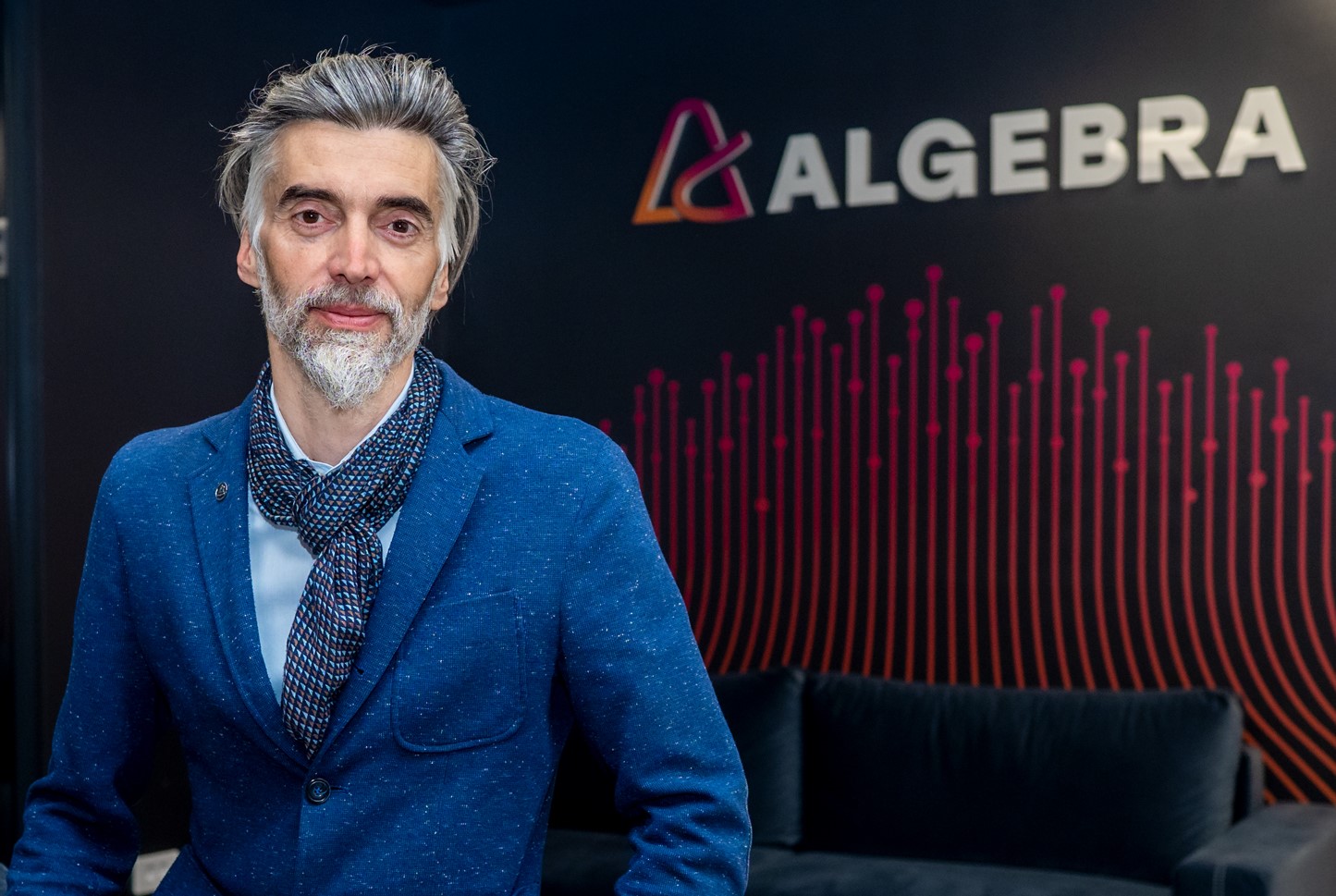
Mislav Balković is an Associate Professor at Algebra University of Applied Sciences, where he has served as Director and Dean since 2000 and 2009, respectively. He drives strategic development for the Algebra Group and contributes to national education policy through roles in expert bodies like the National Council for Science, Higher Education and Technology, and the Accreditation Council of the Agency for Science and Higher Education. Education: PhD (2016) from Faculty of Electrical Engineering and Computing, University of Zagreb Bachelor’s and Master’s degrees from Faculty of Electrical Engineering and Computing, University of Zagreb Research Interests: Mislav’s work bridges Data Science with applications in labor market dynamics , education policy , qualification frameworks , and energy systems . His projects focus on smart grid optimization, digital identity protection, and AI-driven educational reforms. Publications Trends: His recent articles emphasize cross-disciplinary applications , including brain-computer interfaces for image generation, EU labor market analysis , and smart grid resilience . Earlier works explore blockchain-based academic credentials and data analytics in auditing . Grants and Projects: He has led ~50 EU and domestic projects , spanning smart tourist management , lean methodologies for screen creators , and ICT services for alternative communication . His policy work includes drafting laws on adult education and higher education reform. Leadership: Vice President of the Croatian Employers' Association in Education (HUP-UPO) and past President of the Sectoral Council for Electrical Engineering and Computing.
Ben Domingue is an Associate Professor at Stanford University's Graduate School of Education and, by courtesy, in the Department of Sociology. His research bridges psychometrics, quantitative methods, and interdisciplinary applications in education, psychology, and social sciences. He leads the development of the Item Response Warehouse, a data resource for psychometrics research, and explores how statistical tools can better measure complex educational and psychological outcomes like reading ability and treatment effects. PhD in Education from the University of Colorado at Boulder (2012). MA and BS in Mathematics from the University of Texas at Austin (2006, 2001). His work focuses on advancing psychometric methodologies, including response time analysis, item-level treatment effects, and predictive accuracy metrics (e.g., InterModel Vigorish). He investigates how genetic and environmental factors interact with educational outcomes and social mobility, using large-scale datasets like the Health and Retirement Study and Add Health. Recent articles emphasize AI-driven psychometric tools, cross-cultural validation of medical assessments, and equity in educational testing. 2024–2025: Associate Professor, Stanford GSE. 2015–2022: Assistant Professor, Stanford GSE. Affiliated: Stanford Center for Longevity, Bio-X, Population Health Sciences. Scientific awards include the Jacobs Foundation Research Fellowship (2022–2024) and AERA Open Outstanding Reviewer (2018, 2019). His advising roles span doctoral and master’s students, with a focus on psychometrics and social-genomic research.
Lyndia Wu is an Assistant Professor in the Department of Mechanical Engineering at the University of British Columbia's Faculty of Applied Science, where she holds the prestigious Canada Research Chair in Wearable Brain Injury Sensing. She leads the SimPL (Sensing in Biomechanical Processes Lab) and maintains an active research program focused on biomechanics and medical device development. Her educational background includes: B.A.Sc. from the University of Toronto M.S. from Stanford University Ph.D. from Stanford University Postdoctoral Fellowship from Stanford University Dr. Wu's research program centers on developing novel sensing and data analytics technologies to study human biomechanics in health and disease states. Her primary research areas encompass brain injury or concussion biomechanics using advanced sensing, modeling, and machine learning approaches, as well as the development of innovative sensors and algorithms for studying sleep disorders like obstructive sleep apnea. She specializes in wearable sensors for brain health monitoring, traumatic brain injury mechanisms, and AI applications in healthcare settings. Analysis of her recent publications reveals a strong focus on sports-related head impacts (particularly in soccer), EEG monitoring following impacts, and sleep monitoring after concussions. Her work demonstrates interdisciplinary collaboration across biomechanical engineering, neuroscience, and clinical medicine, with publications spanning biomechanics, neurotrauma, biomedical instrumentation, and signal processing domains. Dr. Wu has received significant recognition for her work, including: Scholar Award from the Michael Smith Foundation for Health Research (2019) Junior Faculty Teaching Award from UBC Mechanical Engineering (2022) She actively supervises graduate students in Mechanical Engineering programs (MASc and PhD) and collaborates extensively across disciplines. Dr. Wu is affiliated with multiple research centers including the Institute for Computing, Information and Cognitive Systems (ICICS), Origins of Balance Deficits and Falls, and SmarT Innovations for Technology Connected Health (STITCH), reflecting her interdisciplinary approach to solving complex biomedical challenges. As director of the SimPL lab, she leads a research team developing cutting-edge sensing solutions for biomechanical processes with particular emphasis on brain injury prevention, monitoring, and recovery assessment through innovative engineering approaches.
Dr. George Waddell is Performance Research and Innovation Fellow at the Royal College of Music (RCM), where he also serves as Area Leader in Performance Science for the BMus programme. Additionally, he holds an honorary Research Associate position in the Faculty of Medicine at Imperial College London. His work focuses on understanding and optimizing how performers learn, prepare, perform, and are evaluated, with particular emphasis on the role of technology in enhancing these processes. Dr. Waddell's research spans multiple domains within performance science, with significant contributions to understanding musicians' health and wellbeing, performance evaluation methodologies, and technology-enhanced learning. His work often bridges disciplines, connecting music performance with psychology, health sciences, and technology. As Area Leader in Performance Science, he oversees modules that integrate the latest scientific knowledge into musical training, and he designs and leads courses on research methods, performance psychology, and professional skills development. His research output demonstrates a consistent trajectory of innovation, with recent publications focusing on musicians' health, pandemic impacts on arts professionals, technology-enhanced performance training, and interdisciplinary applications of performance science. Dr. Waddell's work has expanded from traditional music performance contexts to broader applications in mental health (particularly postnatal depression interventions through songwriting) and cross-cultural studies of arts professionals' wellbeing. Dr. Waddell has secured significant research funding, including multiple Arts and Humanities Research Council grants totaling over £2 million, and has led the development of the RCM's Performance Laboratory featured in BBC News. He serves as Associate Editor for Frontiers in Psychology: Performance Science and on the editorial board for the Journal of Piano Research. As a doctoral supervisor, Dr. Waddell mentors several research students working on diverse projects within performance science. His collaborative approach is evident in his extensive co-authorship with colleagues across multiple institutions, particularly with Professor Aaron Williamon and other members of the Centre for Performance Science.
Michael Skinnider serves as Assistant Professor at Princeton University's Lewis-Sigler Institute for Integrative Genomics and Assistant Member of the Ludwig Princeton Branch. His research develops AI-driven computational methods to identify unknown small molecules in mass spectrometry data, with applications in cancer biology and forensic drug detection. His educational background includes: BArtsSc from McMaster University (2015) PhD from University of British Columbia (2021) MD from University of British Columbia (2023) Skinnider's work centers on illuminating the "metabolomic dark matter" —unidentified chemical entities in mass spectrometry data. His lab pioneers machine learning approaches for metabolite identification, focusing on connections between unknown metabolites, cancer risk, and the microbiome. Recent innovations include chemical language models that transform mass spectrometry outputs into chemical structures, with applications spanning cancer diagnostics to forensic analysis of designer drugs. His research bridges computational biology, chemistry, and clinical medicine through low-data learning techniques. Publication trends reveal three dominant themes: (1) AI-driven metabolite identification (25% of recent work), (2) single-cell/spatial data analysis (40%), and (3) molecular interaction networks (35%). His 2024 Nature Machine Intelligence paper demonstrated that invalid SMILES strings enhance chemical language models , overturning previous assumptions. Articles consistently apply computational methods to biological discovery, with growing emphasis on cancer metabolism and translational applications. Major recognitions include: Forbes 30 Under 30 (2022) International Birnstiel Award (2022) Dan David Prize Borealis AI Fellowship NIH Award C&EN's Talented Twelve (2023) Young Explorer Award Grand Prize Skinnider leads the Skinnider Research Lab at Princeton's Carl Icahn Laboratory, which collaborates with forensic laboratories and Ludwig cancer researchers. The lab specializes in transforming mass spectrometry data into biological insights through innovative algorithms. During his undergraduate studies, he co-founded Adapsyn Bioscience to translate natural product discovery research into commercial applications. Current projects include developing metabolome-wide identification tools and exploring diet-derived metabolites that modulate cancer progression.
Nikos Aletras is a Professor of Natural Language Processing at the University of Sheffield's School of Computer Science, where he serves as Head of the Natural Language Processing research group and is co-affiliated with the Machine Learning group. His academic journey began with a Bachelor's degree in Computer Science from the University of Crete, followed by a PhD in Natural Language Processing at the University of Sheffield. Prior to his current position, he worked as a research scientist at Amazon (Core ML and Alexa) and as a research associate at UCL's Department of Computer Science. Aletras' research spans multiple domains within AI, with particular emphasis on Natural Language Processing applications across social science, legal contexts, and data science. His work demonstrates a consistent focus on practical implementations of NLP techniques to solve real-world problems, especially in computational social science and legal technology. He has developed innovative text analysis methods that bridge traditional disciplinary boundaries, creating tools applicable across multiple scientific domains. His recent publications reveal a strong trend toward efficient and responsible AI, with significant work on model compression, hallucination mitigation in language models, and ethical considerations in computational social science research. The publications also show deep engagement with multilingual NLP challenges, explainable AI, and applications of NLP to social media analysis and legal contexts. Area Chair Award: Society and NLP (2023) Aletras has secured substantial research funding as both Principal Investigator and Co-Principal Investigator, including grants from EPSRC, ESRC, Leverhulme, EC Horizon 2020, and industrial partners like Amazon. His current projects focus on efficient deployment of large language models, addressing socio-technical limitations of LLMs for medical and social computing, and developing speech and language technologies. He actively supervises PhD students and collaborates with researchers across multiple disciplines. He leads the Natural Language Processing research group at Sheffield, which focuses on advancing NLP methodologies while applying them to diverse domains including computational social science, legal informatics, and healthcare technologies. The group maintains strong industry connections, particularly with technology companies working on language technologies, and collaborates with legal scholars and social scientists on interdisciplinary projects.
Suzanne Mason is a Professor of Emergency Medicine at the School of Medicine and Population Health , University of Sheffield, and a Consultant in Emergency Medicine at Sheffield Teaching Hospitals Trust. Her career spans over three decades, with a focus on evaluating complex interventions in urgent and emergency care, particularly for older adults and frail populations. Education: MBBS (1990), FRCS, FFAEM, MD (Emergency Medicine) Key Research Areas: Emergency care systems, clinical decision-making, geriatric emergency care, health informatics, and multi-centre mixed-methods studies Her research has directly influenced emergency care delivery, including studies on exit block in EDs , trauma networks , and digital ambulance records . She has led major projects such as Connected Health Cities (2016–2018) and RADOSS (risk prediction for seizures). Grants include £1.4 million from NIHR and £692,206 from the Department of Health . Scientific awards include an MD from Royal College of Surgeons Research Fellowship and leadership roles in NIHR-funded initiatives . She has pioneered collaborative models for ambulance services , care home integration , and frailty screening in EDs. Her work bridges clinical practice, policy evaluation, and digital innovation, with over 150 publications and mentorship in BMJ Open and Emergency Medicine Journal editorials.
Miroslaw Staron is a Professor of Interaction Design and Software Engineering at Chalmers University of Technology. He maintains a unique 50/50 work arrangement, spending half his time on field research at Ericsson while holding his academic position. His research bridges academic theory with industrial practice through collaborations with major companies including Volvo Car Corporation and Volvo Information Technology. His research spans several key areas in software engineering: Software metrics and measurement systems in industry Model driven software development and empirical studies Defect prediction in software projects Requirements engineering in model-based development Applications of AI and machine learning in software engineering Automotive software development and security Staron's recent work demonstrates a strategic shift toward integrating AI technologies into software engineering processes, with particular focus on automotive applications. His publications from 2024-2025 reveal expertise in generative AI applications for code review automation, testing methodologies, and requirements engineering, showing how these technologies can transform traditional software development practices while addressing domain-specific challenges in automotive systems. Current research projects include: Kvantdatorer för framtidens mobilitetslösningar (2025-2027) Automatiserad och designoptimerad programvarukonstruktion/kodgenerering (2025-2029) Förvandla fordonsarkitektur med hjälp från AI (2021-2023) Arkitektonisk design och verifiering/validering av system med maskininlärning komponenter (2020-2024) With 78 publications documented in Chalmers' research database, Staron has established himself as a significant contributor to evidence-based software engineering research with strong industrial relevance.
Ebru Turanoglu Bekar is a Senior Lecturer at the Department of Industrial and Materials Science, Chalmers University of Technology, specializing in Smart Maintenance and Production Systems. She contributes to the Production Service Systems & Maintenance research group. Research Interests: Total Productive Maintenance (TPM), Artificial Intelligence applications in manufacturing, Multi-Criteria Decision Making, Performance Measurement systems Recent Focus: Development of data-driven algorithms for predictive maintenance, integration of digital twins in industrial contexts Key Projects: Factory SensAI (2025–2028) - Data integration for AI in manufacturing Trustworthy Predictive Maintenance TPdM (2022–2025)