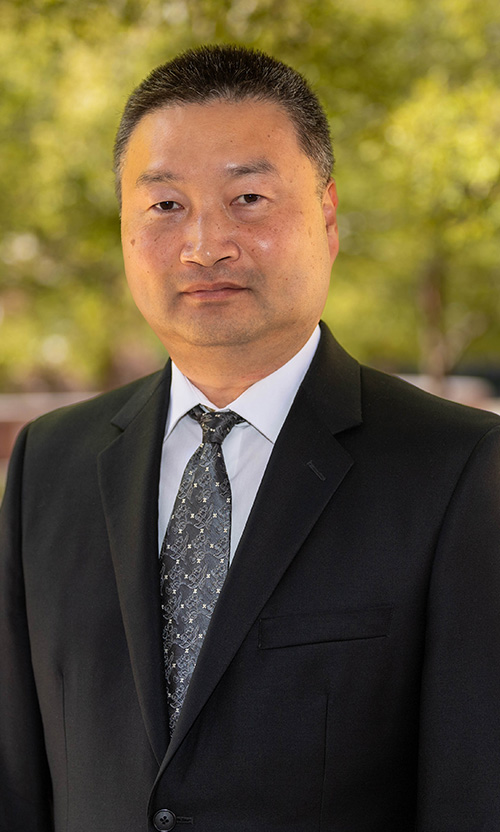
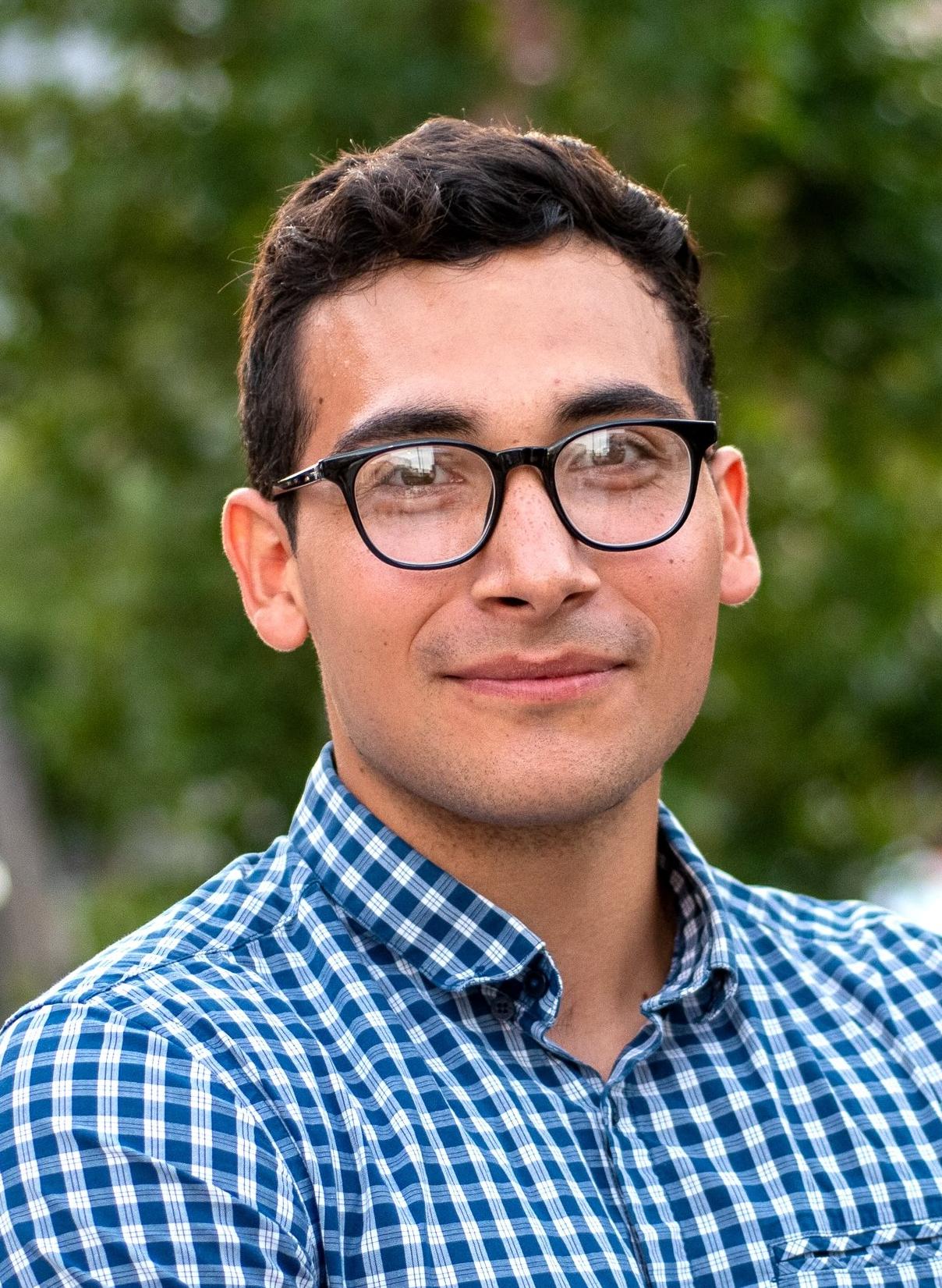
Dr. Tao Shu is an Associate Professor in the Department of Computer Science and Software Engineering at Auburn University. His research focuses on cybersecurity, wireless communication systems, federated learning, and IoT applications. He holds a Ph.D. in Electrical and Computer Engineering from the University of Arizona, and M.S. and B.S. degrees in Electronic Engineering from South China University of Technology. Dr. Shu's work emphasizes secure communication and distributed learning systems, including projects funded by the NSF such as a novel method to prevent cyberattacks on Low Earth Orbit (LEO) satellites. He has been recognized for academic excellence, including being named to Auburn University’s 2020 promotion and tenure list. His research interests span cybersecurity mechanisms for autonomous vehicles, privacy-preserving federated learning, and resource allocation in metaverse environments. He explores innovative solutions for sensor spoofing detection, adversarial machine learning, and energy-efficient IoT systems. Dr. Shu is affiliated with Auburn’s Center for Artificial Intelligence and Cybersecurity Engineering and actively contributes to interdisciplinary projects. His publications reflect a strong focus on practical applications of theoretical advancements in wireless systems and secure data transmission.
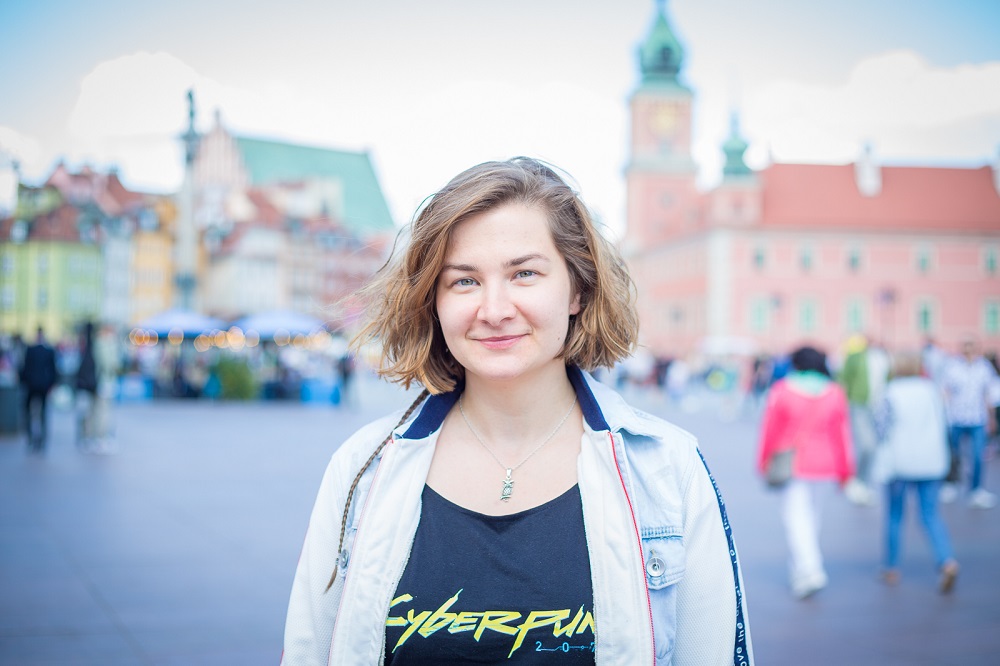
Anna Dawid-Lekowska is an Assistant Professor at the Leiden Institute of Advanced Computer Science (LIACS) and affiliated with the Leiden Institute of Physics (LION) at Leiden University, Netherlands. She leads a research group within the aQa group, focusing on the intersection of machine learning and quantum physics. Previously, she was a Research Fellow at the Center for Computational Quantum Physics, Flatiron Institute, New York. PhD in Physics and Photonics (joint, cotutelle), University of Warsaw & ICFO, Spain MSc in Quantum Chemistry, University of Warsaw BSc in Biotechnology, University of Warsaw Anna's research centers on interpretable machine learning for scientific discovery, particularly in quantum systems. She investigates how overparametrized models generalize, the role of loss landscape flatness, and double descent phenomena. Her work bridges deep learning with quantum simulations, aiming to detect quantum phase transitions and extract physical insights from trained models. She also explores ultracold molecules and novel quantum phases using simulation platforms. Her recent publications demonstrate a strong trend in applying machine learning to automate and interpret quantum experiments, such as detecting laser cooling schemes and understanding neural network initialization. The work emphasizes interpretability, aiming to make AI a transparent scientific tool rather than a black box. Anna has received significant recognition, including: 2022 FNP START laureate Participant in the 2024 Lindau Nobel Laureate Meeting She is actively mentoring and expanding her group, currently recruiting PhD students and postdoctoral researchers. Her work is supported by institutional affiliations with leading research centers and collaborations across Europe and the US. Anna also engages in science communication and education, having lectured at the Nordita Winter School on Machine Learning and Physics. She is involved in the aQa research group, which focuses on quantum algorithms and AI, fostering interdisciplinary collaboration between computer science and physics. Her lab integrates theoretical modeling, algorithm development, and applications to quantum experiments.
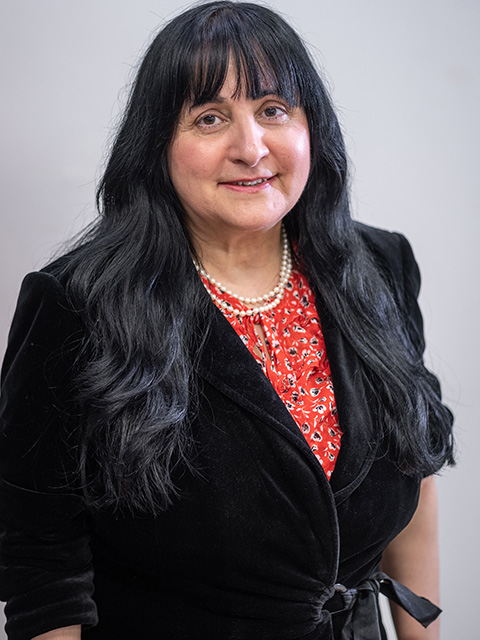
Guido Perboli is a Full Professor in the Department of Management and Production Engineering (DIGEP) at the Polytechnic University of Turin, where he also serves as Logistics Coordinator and Project Coordinator for activities supporting relationships with government bodies. He is a member of the Interdepartmental Center CARS@PoliTO (Center for Automotive Research and Sustainable Mobility) and serves as Director of the ICT for City Logistics and Enterprises (ICElab@Polito) research center, which he founded in 2016. His research interests span a broad range of topics including Operations Research, Logistics, Last-mile Delivery, Sustainable Logistics, Combinatorial Optimization, Stochastic Programming, Business Development, and Lean Business methodologies. His work particularly focuses on City Logistics, Green Logistics, and the application of emerging technologies like Blockchain and AI in supply chain management. He has developed GUEST, a Lean Business methodology for innovation processes from early idea definition to implementation. Professor Perboli's recent publications demonstrate a strong focus on urban logistics, last-mile delivery optimization, blockchain applications in supply chains, and the integration of AI techniques in transportation systems. His work shows an increasing trend toward interdisciplinary research that combines optimization methods with emerging technologies to address sustainable urban mobility challenges. Professional Recognition: CASE Best Paper award from IEEE Conference on Automation Science and Engineering (2011) Effective member of INFORMS (2019-present) Effective member of EURO (1995-present) Effective member of AIRO (1995-present) Associate Editor for Journal of Applied Research and Technology (2020-present) Associate Editor for Sustainability (2018-present) Professor Perboli actively advises PhD students and has supervised numerous research projects, including EU-funded initiatives like SINFONICA, HESTER, and 5G-LOGINNOV. He serves as Scientific Director for multiple commercial research projects focused on blockchain, IoT, and AI applications in logistics. Beyond academia, he is Chief Scientific Officer of Arisk S.p.A., a fintech company specializing in business crisis prediction using AI and machine learning. His research group, ICElab@Polito, focuses on two main areas supporting urban growth: logistics and enterprises. The center collaborates with numerous companies including Amazon, DHL, and FCA, addressing real-world challenges in urban logistics and supply chain management through innovative research approaches.
Prof. Dr.-Ing. Jürgen Teich is a full Professor and Chair for Hardware-Software Co-Design at the Department of Computer Science, Friedrich Alexander University Erlangen-Nuremberg (FAU). He serves as Head of Department Computer Science and Vice Dean of the Technical Faculty since August 2024, and has been Speaker of the FAU Research Center Embedded System Initiative (FAU ESI) since 2023. His educational background includes: Diploma degree in Electrical Engineering, University of Kaiserslautern (1989) Dr.-Ing. degree in Electrical Engineering, University of Saarland (1993) Habilitation (PD Dr.-Ing.) entitled "Synthesis and Optimization of Digital Hardware/Software Systems" (1996) Prof. Teich's research focuses on Embedded Systems , Invasive Computing , Hardware-Software Co-Design , and Reconfigurable Computing . His work spans from theoretical foundations to practical implementations, with particular emphasis on resource-constrained systems, many-core architectures, and energy-efficient computing. He has pioneered research in invasive computing paradigms that enable more efficient use of many-core processors by allowing applications to dynamically claim resources. His recent publications reveal a strong trend toward energy-efficient AI deployment on embedded devices , security of embedded systems , and novel memory technologies . There's a clear focus on practical implementations of machine learning on microcontrollers (TinyML), hardware acceleration for data processing, and innovative approaches to power management in self-powered systems. Among his notable scientific awards are: IEEE Fellow (since 2018) Member of Academia Europaea, Section Informatics (since 2011) Member of the National Academy of Science and Engineering (acatech) (since 2018) Member of the German Society of Humboldtians (since 2021) Prof. Teich has been Principal Investigator for numerous DFG-funded projects including SFB/Transregio 89 "Invasive Computing" (2010-2022), SFB 694, and multiple priority programs. He has coordinated large collaborative research efforts across Germany and internationally, with significant funding from DFG and other sources. His research group has produced influential work in embedded systems design and co-design methodologies. He leads the Hardware-Software Co-Design research group at FAU, which focuses on innovative approaches to embedded system design, invasive computing architectures, and efficient implementation of machine learning on resource-constrained devices. The group maintains strong collaborations with industry partners including Intel, Xilinx, and automotive companies.
Mikael Johansson is a Professor at Kungliga Tekniska Högskolan (KTH), specializing in Control Technology . He teaches and coordinates courses such as Distributed Optimization (FEL3311) and various advanced-level degree projects in computer science, electrical engineering, and systems engineering. His research spans Control Systems , Machine Learning , and Optimization , with a focus on asynchronous algorithms, federated learning, and applications in energy systems and construction. His work includes 15 recent publications on topics like neural networks, distributed optimization, and battery technology. Notable areas of contribution are in asynchronous learning, federated learning with privacy constraints, and quasi-Newton methods for optimization. His research bridges theoretical advancements with practical applications in urban design, healthcare, and autonomous systems.
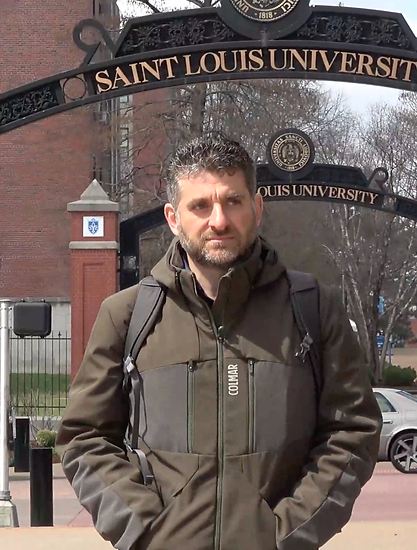
Flavio Esposito is an Associate Professor in the Computer Science Department at Saint Louis University's School of Engineering. He also serves as a Research Institute Fellow and CS Graduate Coordinator. His office is located in ISE 234D at 3450 Lindell Blvd, St. Louis, MO. Dr. Esposito's research focuses on cyber-physical systems and networked systems, including network virtualization, network management, Software-Defined Networks (SDN), network architectures, and wireless networks. He has a strong interest in interdisciplinary applications of these technologies to medicine and agriculture. His work bridges theoretical networking concepts with practical implementations. His publications span key areas in networking research, with recent work focusing on congestion control algorithms, virtual network embedding, recursive network architectures, and edge computing applications. The research trends show a progression from foundational networking protocols toward more sophisticated applications integrating machine learning, edge computing, and cyber-physical systems, with increasing emphasis on real-world applications in diverse domains. Outstanding Graduate Mentoring Faculty Award from the School of Engineering (2021) Finalist for the Undergraduate Mentoring Award in the College of Arts and Sciences Multiple NSF research awards including US Ignite, ICE-T, CNS Core, CC* Integration, CPS:TTP, and ModernCARE projects COMCAST Innovation Fund Award (January 2020) International Center for Responsible Gaming (ICRG) Award ($150K) Dr. Esposito actively mentors PhD and MS students, with numerous current and past students who have gone on to positions at major tech companies, universities, and research institutions. He has been a Principal Investigator on multiple significant research grants totaling millions of dollars. He co-founded Spaghetti Code Labs with former PhD student Alessandro Sangiorgi, whose cybersecurity educational app WeeNet has achieved 5.7M+ downloads. He leads several research labs and teams focused on cyber-physical systems, with current openings for PhD students, visiting researchers, and postdocs working on networks, learning, edge computing, and applications to medicine and agriculture. His teams have developed numerous software systems including Software Mutant, Neighborhood Method Prototype, VINEA, ProtoRINA, and BUtorrent.
Moïse Blanchard is an Assistant Professor and Tennenbaum Early Career Professor at the H. Milton Stewart School of Industrial and Systems Engineering at Georgia Institute of Technology, having joined in August 2025. Previously, he was a Postdoctoral Fellow at Columbia University Data Science Institute. His academic journey includes a Ph.D. in Operations Research from MIT (2024), and M.Sc. and B.Sc. degrees in Applied Mathematics from École Polytechnique. Blanchard's research focuses on the intersection of machine learning theory, statistics, and optimization. His work addresses fundamental questions in universal learning, online algorithms, and convex optimization under memory constraints. His research program explores learnability under minimal assumptions, query complexity/memory tradeoffs, and decision-making in adversarial environments. This work has significant implications for theoretical computer science, operations research, and statistical learning theory. His publications reveal a strong emphasis on foundational aspects of learning theory and optimization. Recent work demonstrates expertise in universal learning frameworks, memory-constrained optimization, and probabilistic analysis of combinatorial problems. His research often bridges theoretical computer science with practical optimization challenges, particularly in contexts where traditional i.i.d. assumptions don't hold. Columbia DSI postdoctoral fellowship, 2024 INFORMS Transportation Science & Logistics (TSL) best student paper award, 2023 Air Force Office of Scientific Research Grant (AFOSR), with Prof. Patrick Jaillet, 2023 COLT 2022 Best student paper runner-up Bronze medal, Alibaba Global Mathematics Competition, 2022 Blanchard has received significant research funding including an Air Force Office of Scientific Research Grant. His work has been recognized with multiple prestigious awards, including the INFORMS TSL best student paper award for his research on the k-Traveling Salesman Problem. His extensive publication record in top venues demonstrates a strong research trajectory with impactful contributions to theoretical machine learning and optimization.
Professor Lyudmila Mihaylova is a distinguished academic at the University of Sheffield's School of Electrical and Electronic Engineering, where she holds the position of Professor of Signal Processing and Control. She has established herself as a leading researcher in the fields of signal processing, Bayesian methods, and autonomous systems, with significant contributions to particle filtering techniques for intelligent transportation systems. Her work bridges theoretical developments with practical applications across multiple domains including transportation, healthcare, and industrial automation. Prof. Mihaylova's research interests center on nonlinear filtering, sequential Monte Carlo methods, statistical signal processing, and sensor data fusion. Her work spans both theoretical advancements and practical implementations, with particular focus on high-dimensional problems including vehicular traffic flow estimation, image processing, and localization in sensor networks. She has extensive experience with various image modalities such as optical, thermal, LIDAR, SAR, and hyperspectral imaging. Her group actively develops novel methods for autonomous intelligent systems focusing on sensing, tracking, decision making, and machine learning applications. Analysis of Prof. Mihaylova's recent publications reveals a strong trend toward uncertainty quantification in machine learning models, particularly for safety-critical applications. Her work increasingly integrates traditional signal processing techniques with modern deep learning approaches, with applications spanning sewer inspection robotics, medical diagnostics (particularly sleep apnea detection), UAV swarm tracking, industrial manufacturing, and autonomous vehicle systems. A significant portion of her recent research focuses on developing robust methods that can handle incomplete or outlier-corrupted data while providing reliable uncertainty estimates. Among her notable professional achievements: President of the International Society of Information Fusion (ISIF) Senior member of the IEEE Signal Processing Society Associate Editor for IEEE Transactions on Aerospace and Electronic Systems Associate Editor for Elsevier Signal Processing Journal Prof. Mihaylova has successfully mentored numerous PhD students and postdoctoral researchers, many of whom have gone on to prominent academic and industry positions. Her research has been supported by major funding bodies including EPSRC, EU, MOD/DSTL, and industry partners, with recent projects including 'Protecting Environments with UAV Swarms' (InnovateUK, 2022-2024), 'ShiRAS: Towards Safe and Reliable Autonomy in Sensor Driven Systems' (NSF-EPSRC, 2019-2023), and 'Confident safety integration for Cobots' (Lloyd's Register Foundation, 2019-2020). Her research group follows a collaborative approach with the philosophy 'We share knowledge, we grow.' Prof. Mihaylova maintains active research collaborations with institutions worldwide and has held previous academic positions at Lancaster University (2006-2013) and University of Bristol (2004-2006), along with research visiting positions at the University of Ghent, Katholic University of Leuven, and the Bulgarian Academy of Sciences.
Neda Haj Hosseini is a Senior Lecturer and Associate Professor in Biomedical Engineering at Linköping University's Department of Biomedical Engineering (IMT) . She contributes to teaching courses like TBMT56 - Medical Technology and TBME08 - Biomedical Modeling and Simulation , while leading research initiatives in AI-driven cancer diagnostics and biomedical optics. Research Focus: Development of AI methods for cancer diagnostics, optical coherence tomography (OCT) applications, and fluorescence spectroscopy in surgical guidance Affiliations: Center for Medical Image Science and Visualization (CMIV) , Analytic Imaging Diagnostic Arena (AIDA) , Swedish Medical Technology Association Recent Research Trends demonstrate expertise in applying deep learning to: Pediatric brain tumor classification using multimodal imaging Optical biopsy techniques for intraoperative decision support Automated biomarker quantification in histopathology Medical imaging data integrity and algorithm validation Scientific Awards include grants from: Joanna Cocozza Foundation (2022) Swedish Childhood Cancer Foundation (2024) Academic Leadership involves mentoring students in projects such as: "Multiple Instance Attention-based Learning for Brain Tumor Classification" "Vision Transformers for Multiclass Brain Tumor Tissue Classification" "Reaction-diffusion Models for Image-driven Tumor Simulation"
Serge Belongie is a Professor at the Department of Computer Science (DIKU) at the University of Copenhagen, where he holds dual affiliations with the Pioneer AI research section and the Image Analysis, Computational Modelling, and Geometry section. His academic position places him at the forefront of interdisciplinary research connecting computer vision with language models, geospatial analysis, and cultural understanding. Professor Belongie's research program encompasses several critical domains in modern artificial intelligence: Advanced computer vision and image analysis techniques Vision-language model integration and multimodal systems 3D point cloud processing and semantic segmentation Geospatial representation learning for environmental applications Fine-grained object recognition and detection Cultural context understanding in AI systems His recent publication record reveals a sophisticated trajectory toward developing precise control mechanisms for vision-language models, with applications spanning forensic analysis, cultural heritage preservation, and social media understanding. The research demonstrates increasing sophistication in handling cultural context and enabling fine-grained manipulation of visual content through natural language interfaces. Professor Belongie maintains an active research group producing significant scholarly output, with over 280 research publications documented in his academic profile. His work is supported by research funding that enables cutting-edge exploration in multimodal AI systems with practical societal impact. He plays a key role in the Pioneer AI center at the University of Copenhagen, which focuses on advancing artificial intelligence through interdisciplinary collaboration and innovative research approaches that bridge theoretical computer science with real-world applications.
Professor Mahroo Eftekhari is a Professor in Building Services Engineering at Loughborough University, leading the Low Energy Building Services Engineering MSc programme. Her research focuses on energy-efficient building systems, thermal comfort, HVAC optimization, and renewable integration. She has pioneered control systems for airports and buildings, including MPC-based strategies to reduce energy use while enhancing occupant well-being. Notable contributions include the development of BISPA (Building & Industrial Services Pipework Academy), a national center for BIM and pipework training. Education: Holds qualifications including CEng (Chartered Engineer), DPhil (Doctor of Philosophy), FCIBSE (Fellow of Chartered Institution of Building Services Engineers), and SFHEA (Senior Fellow of the Higher Education Academy). Her academic career is marked by collaborations with Tata Steel, Mitsubishi R&D, and Vexo, yielding applied research in sustainable building technologies. Research Interests: Indoor Air Quality, Thermal Comfort Modeling, Zero Energy Buildings, Digital Twins, and Advanced Control Systems. She has developed innovative solutions like AI-driven thermal management for Building Energy Management Systems (BEMS) and interfaces to synchronize airport operations with energy systems. Awards & Grants: Secured funding from diverse bodies for projects such as adaptive thermal comfort models, BISPA infrastructure, and energy-efficient HVAC strategies. Her work emphasizes practical applications, including reducing CO₂ emissions via airport terminal optimization and improving renewable energy use in buildings. Lab & Teams: Leads the Building Energy Research Group, managing projects in closed-loop heating systems, IEQ monitoring, and hydronic system efficiency. The Civil Engineering labs house interactive BIM rigs launched with institutional and industry support.
René Vidal is the Rachleff & Penn Integrates Knowledge (PIK) University Professor at the University of Pennsylvania and Full Professor at Johns Hopkins University, with appointments spanning multiple departments including Electrical and Systems Engineering, Radiology, Computer and Information Science, and Statistics and Data Science. He serves as Director of the Center for Innovation in Data Engineering and Science (IDEAS) at UPenn and directs the NSF-Simons Collaboration on the Mathematical Foundations of Deep Learning. Education: PhD in Electrical Engineering and Computer Sciences from UC Berkeley (2003) Former Positions: Assistant and Associate Professor at Johns Hopkins University (2004–2015) Current Affiliations: Amazon Scholar, Affiliated Chief Scientist at NORCE Dr. Vidal’s research spans the mathematics of deep learning , sparse/low-rank representations , and trustworthy AI , with applications in computer vision and biomedical data science. His work has been recognized with prestigious honors including the IEEE Edward J. McCluskey Technical Achievement Award and Sloan Fellowship. Scientific awards include: 2021: IEEE Edward J. McCluskey Technical Achievement Award 2017: Jean D’Alembert Fellowship 2012: J.K. Aggarwal Prize 2009: ONR Young Investigator and Sloan Fellowship His lab has advised numerous PhD and MSc students, including Kyle Poe, Steven Kan, and alumni like Chong You (now at UC Berkeley) and Colin Lea (Oculus Research). He leads teams in optimization theory, adversarial robustness, and biomedical image analysis.
Marco Serafini is an Assistant Professor in the Department of Computer Science at the University of Massachusetts Amherst, affiliated with the College of Information and Computer Sciences (CICS). He leads the DREAM Lab (Data systems Research for Exploration, Analytics, and Modeling) and is part of the Center for Data Science. Prior to UMass, Serafini worked as a Senior Scientist at the Qatar Computing Research Institute (QCRI) and held a postdoctoral fellowship at Yahoo! Research in Barcelona. He earned his PhD in Computer Science from TU Darmstadt (Germany), where his thesis was recognized through nominations for best thesis awards across German, Swiss, and Austrian computer science societies. His research focuses on the intersection of database systems, distributed systems, and data science, emphasizing scalable architectures for big data analytics and machine learning. Key areas include computation pushdown in cloud DBMSs, graph neural network training systems, and efficient graph pattern matching. His work addresses challenges in tail latency mitigation, resource optimization, and transparent scaling of ML models. Serafini has contributed to influential systems like Arabesque (for distributed graph mining), E-Store (elastic partitioning), and Aion (event-time stream processing). He has been awarded an NSF CNS Core grant to advance scalable GNN training. His publications span top venues such as ACM SIGOPS, VLDB, and ICDE, reflecting his expertise in both theoretical foundations and practical system implementations. Professional recognition includes thesis nominations from major computer science societies and sustained contributions to open-source projects in distributed computing. Serafini advises students through the DREAM Lab, focusing on preparing the next generation of data systems researchers.
Miaoyan Wang is an Associate Professor in the Department of Statistics at the University of Wisconsin-Madison, part of the School of Computer, Data & Information Sciences. She holds early tenure and is a faculty affiliate in the Mathematical Foundations of Machine Learning, Institute for Foundations of Data Science (IFDS), and Center for Demography of Health and Aging (CDHA). She is currently on sabbatical as a visiting associate professor at Stanford University and Lawrence Livermore National Laboratory. Education: PhD in Statistics from the University of Chicago (2015), BS in Mathematics from Fudan University (2010). Postdoctoral training included positions at UC Berkeley (Computer Science) and the University of Pennsylvania (Math+X). Research focuses on statistical machine learning, with emphasis on matrix/tensor data analysis, high-dimensional statistics, nonparametric learning, and applications in genetics. Her work bridges theory and practice, addressing challenges in computational efficiency and statistical optimality for complex data structures. Awards include the prestigious NSF CAREER Award (2022), multiple best paper awards (ASA, IMS, NEURIPS), and recognition from ASHJ and IGES. Her group has secured grants totaling $3.4 million, including NSF funding for foundational machine learning research and collaborative projects in population genomics. Advising includes PhD students Chanwoo Lee and Jiaxin Hu, with former students Yuchen Zeng and Zhuoyan Xu. She teaches advanced statistical methods and computational courses, emphasizing rigorous theoretical foundations and practical applications. Key collaborations include work on tensor decomposition algorithms, statistical genetics, and interdisciplinary projects with biology and computer science departments. Her lab contributes open-source software tools for data analysis, including packages for tensor block models and multiway clustering.
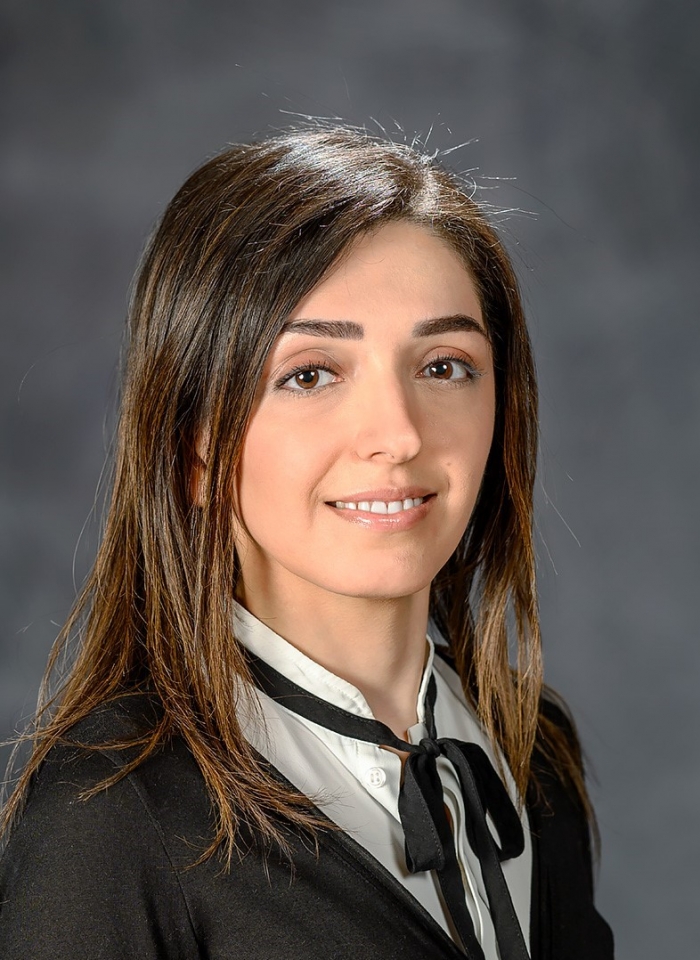
Dr. Misa Faezipour is an Associate Professor in the Department of Engineering Technology at Middle Tennessee State University (MTSU) and director of the Systems Engineering Lab (SEL). She holds a Ph.D. and M.Sc. in Industrial Engineering and Engineering Management from the University of Texas at Arlington and a B.Sc. in Software Engineering from Islamic Azad University North Tehran Branch. Her research focuses on system dynamics modeling, healthcare systems engineering, complex systems, and sustainability optimization. Dr. Faezipour has advised numerous graduate students in M.S. and Ph.D. programs, focusing on topics such as healthcare disparities, AI robustness, and policy impact analysis. She teaches courses including Engineering Economy, Operations Management, and Engineering Management Systems. Her work spans collaborations with institutions like NASA, the Systems Engineering Research Center, and healthcare organizations. Her recent publications emphasize AI-driven healthcare solutions, system dynamics applications in policy analysis, and optimizing healthcare delivery through data-driven models. She actively contributes to professional organizations such as INCOSE, IEEE, and the System Dynamics Society. Dr. Faezipour’s lab, SEL, develops innovative tools for healthcare informatics, including diagnostic recommenders and policy simulation frameworks. Her research bridges systems engineering with healthcare challenges, addressing issues like racial health inequities and pandemic response strategies.