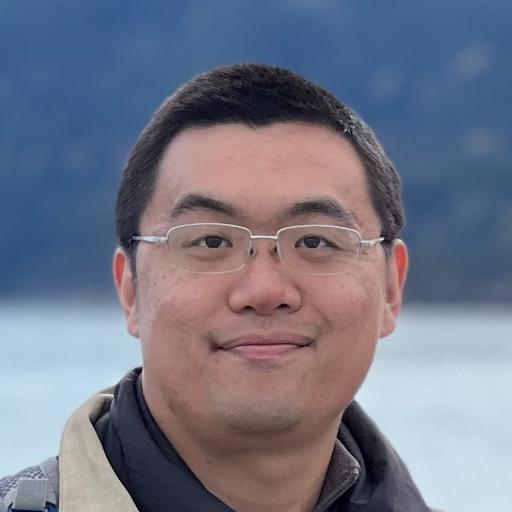
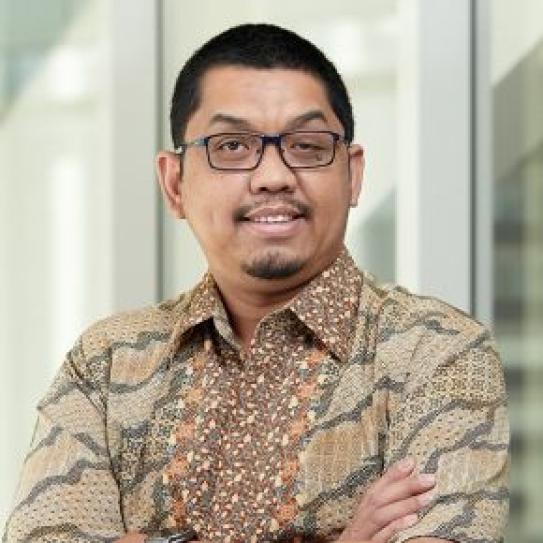
Ferdous Sohel is a Professor of Information Technology at Murdoch University and inaugural lead of the Agricultural Technologies program. His research spans AI, computer vision, and digital agriculture, with applications in medical imaging and environmental monitoring. He received the Mollie Holman Doctoral Medal and Vice Chancellor's Early Career Research Award. Research Impact: Developed innovative AI models for aquaculture oxygen prediction, 3D object tracking, quantum neural networks, and prohibited item detection. His work advances precision agriculture through hyperspectral classification frameworks and irrigation decision systems. Professional Service: Associate Editor for IEEE Transactions on Multimedia and senior IEEE member. Current projects include adversarial robustness for LiDAR systems and lightweight dormitory security networks.
Jun Yan is an Associate Professor and Concordia University Research Chair in Artificial Intelligence in Cyber Security and Resilience at the Concordia Institute for Information Systems Engineering (Concordia University). His research focuses on cybersecurity, smart grid systems, and AI-driven solutions for energy and communication networks. He supervises graduate students in programs such as Information Systems Security (MASc), Computer Science (MCompSc), and Information and Systems Engineering (PhD). Research Highlights : Cybersecurity of distributed energy systems, AI penetration testing frameworks, and resilient transactive energy markets. Awards : Holds a prestigious university research chair in AI-driven cybersecurity. His work integrates machine learning with domain-specific challenges in smart grids, IoT security, and multi-agent systems. Notable contributions include frameworks for detecting adversarial attacks on power systems, optimizing renewable energy integration, and developing AI tools for penetration testing. His articles reflect a strong emphasis on interdisciplinary solutions blending cybersecurity, energy systems, and advanced computing. Yan’s research also addresses policy and infrastructure challenges in sustainable energy systems, including waste management policy analysis and optimal configuration of hybrid renewable systems. He has pioneered open-source co-simulation platforms like PEMT-CoSim and Quantum-Sim for secure energy trading and quantum communication in grids. He actively engages in grant-funded projects and advises on both academic and applied aspects of cybersecurity and intelligent systems.
Dr. Md Arifuzzaman is an Assistant Professor in the Department of Computer Science at Missouri University of Science and Technology (Missouri S&T). He specializes in High-Performance Systems, Quantum Networking, and Distributed Systems, focusing on optimizing large-scale system performance and scalability. His work addresses challenges in next-generation networks and storage systems, with publications in top venues like IEEE TPDS and ACM Supercomputing. Education: Ph.D. in Computer Science and Engineering, University of Nevada, Reno (2023) B.S. in Computer Science and Engineering, Bangladesh University of Engineering and Technology (2016) Research Interests: Dr. Arifuzzaman's work spans cutting-edge topics including quantum entanglement routing, reinforcement learning for network optimization, and high-speed file transfer protocols. His research emphasizes practical solutions for emerging technologies like terabit networks and quantum communication systems. Publications: Recent work focuses on quantum network protocols, machine learning-driven network probing, and storage reliability. His articles highlight advancements in both theoretical frameworks and real-world system implementations. Awards: No specific awards mentioned in the provided information. Advising/Grants: Details regarding student advising and grant activities are not explicitly stated in the text.
Geir Olav Dyrkolbotn is an Associate Professor at NTNU's Center for Cyber and Information Security (CCIS) and a Major in the Norwegian Armed Forces, serving at the Norwegian Defence Cyber Academy (NDCA). He leads the NTNU Malware Lab and the cyber defence research group at CCIS. He holds a PhD in Information Security from Gjøvik University College and a MSc in Computer Science from NTNU. With over 25 years in the military, his work focuses on tactical communication systems, defensive cyber operations, and operational security. His research emphasizes cyber defence, reverse engineering, malware analysis, side-channel attacks, and machine learning applications. Education: PhD in Information Security, Gjøvik University College (HiG) MSc in Computer Science, NTNU Research Interests: Geir Olav's work bridges theoretical cybersecurity research and practical military applications. He explores innovative methods for hardware reverse engineering, malware detection/classification using low-level features, and forensic acquisition techniques. His contributions include analyzing USB power delivery vulnerabilities, NTFS cluster allocation behavior, and secure chip exploitation for digital forensics. Teaching: Courses include IIKG6500/IMT4213 Cyber-taktikk, IMT4214 Cyber-etterretning, IIKG6501 Cyber Intelligence, and IMT4116 Malware Analysis & Reversing. Labs & Teams: Heads the NTNU Malware Lab and leads the cyber defence research group at CCIS, collaborating on projects like the Digital Forensic Acquisition Kill Chain and hardware security vulnerability assessments.
Lesia Mitridati is an Assistant Professor at the Department of Wind and Energy Systems, Technical University of Denmark (DTU). Her research focuses on optimizing energy systems, particularly in renewable energy integration, energy market design, and prosumer behavior modeling. She leads and collaborates on projects involving smart grids, distributed energy resources, and privacy-preserving market mechanisms. Her work contributes to UN Sustainable Development Goals related to affordable and clean energy. Key projects include AI-driven electricity market optimization, hydrogen-wind trading strategies, and risk-aware energy communities. She supervises multiple PhD students in areas like VPP bidding strategies and market-based heat-electricity coordination. Dr. Mitridati has published widely on energy communities, grid services, and reinforcement learning applications. Notable contributions include dynamic pricing frameworks for grid services and privacy-preserving market mechanisms. She co-organizes annual DTU summer schools on future energy systems and AI-driven optimization. Her research integrates machine learning with operational research techniques to address challenges in renewable energy integration, market design, and system resilience. Current initiatives focus on electrolyzer plant bidding strategies and feature-driven trading of renewable resources.
Dr. Rahat Masood is a Lecturer at the School of Computer Science & Engineering (CSE), UNSW Sydney. Her research focuses on cybersecurity, including privacy-preserving technologies, authentication mechanisms, critical infrastructure protection, and network security analysis. She holds a PhD in Information Security and Privacy from UNSW (Data61-CSIRO, Australia), an MS in Computer and Communication Security from NUST, Pakistan, and a B.Sc. in Software Engineering from the University of Engineering & Technology, Pakistan. Her academic contributions span theoretical and applied cybersecurity domains. Dr. Masood’s educational background includes: PhD: Information Security and Privacy (UNSW, Data61-CSIRO, Australia) MS: Computer and Communication Security (NUST, Pakistan) B.Sc.: Software Engineering (University of Engineering & Technology, Pakistan) Her research interests emphasize privacy technologies, authentication systems, and securing distributed energy resources. Recent work includes developing frameworks for quantifying privacy risks and analyzing social media manipulations. She employs data-driven methodologies and machine learning to address challenges such as WiFi device tracking and federated learning security. In her publications, she highlights trends in privacy controls usability, satirical news detection using multilingual models, and threat modeling for critical infrastructure. These studies underscore her commitment to bridging cybersecurity theory with real-world applications. No scientific awards are mentioned in the provided texts. Her teaching and supervision roles at UNSW are active, though specific student advisees or grant details are not listed. She is affiliated with Data61-CSIRO through her PhD and contributes to interdisciplinary cybersecurity efforts within CSE.
Dr Scott A. Hale is an Associate Professor and Senior Research Fellow at the Oxford Internet Institute (OII), University of Oxford, and a Fellow of the Alan Turing Institute. His work bridges computer science and social sciences, focusing on equitable information access, multilingual online dynamics, and misinformation mitigation. He holds degrees in Computer Science, Mathematics, and Spanish from Eckerd College, followed by a DPhil (PhD) in Social Data Science from the OII. Hale’s research has been supported by grants from UK Research and Innovation, the US National Science Foundation, and organizations like the Omidyar Network and the Alan Turing Institute. Key Roles: Programme on AI, Government & Policy; Director of Research at Meedan; Co-Director of the Social Data Science MSc Research Focus: Misinformation, multilingual systems, social media impact, and AI ethics Education: Eckerd College (BS), OII (MSc, DPhil). His DPhil explored social media design’s role in cross-language information sharing. Recent projects include the Digital Good Network and AI alignment studies. Articles highlight trends in multilingual misinformation detection, LLM cultural biases, and hate speech dynamics. Hale’s work bridges technical innovation with social science rigor to address global digital challenges. Awards: Alan Turing Institute Fellowship, recognition in Oxford’s Teaching Excellence Awards. Grants: Over 20 funding sources including DSO National Laboratories and Meta.
Tianhao Wang is an Assistant Professor in the Department of Computer Science at the University of Virginia School of Engineering and Applied Science. His work focuses on advancing differential privacy and machine learning privacy, with particular expertise in privacy-preserving technologies for data synthesis, adversarial machine learning, and secure AI systems. His research interests span differential privacy mechanisms, secure data sharing, and mitigating privacy risks in modern AI systems. He explores how to protect sensitive information in machine learning models, synthetic data generation, and network analysis while maintaining utility. Recent work highlights include developing benchmarks for private image synthesis (DPImageBench), safeguarding text data from misuse (ExpShield), and analyzing privacy threats in pre-trained language models. His publications reflect a strong emphasis on both theoretical foundations and practical applications of privacy-preserving techniques. Dr. Wang's contributions address cutting-edge challenges in AI ethics, secure machine learning, and privacy engineering, with implications for healthcare, cybersecurity, and data-driven decision-making systems.
Thomas Tran is a Full Professor at the School of Electrical Engineering and Computer Science (EECS) at the University of Ottawa. He holds a Ph.D. in Computer Science from the University of Waterloo (2004) and a B.Sc. (Double Major in Mathematics and Computer Science) from Brandon University (1999). His research focuses on Artificial Intelligence, Electronic Commerce, Multi-Agent Systems, Trust and Reputation Modeling, and Recommender Systems. He has published over 80 refereed papers and supervised 27 graduate students (4 PhDs and 23 Masters). Education: Ph.D. in Computer Science, University of Waterloo (2004) B.Sc. (Double Major in Mathematics and Computer Science), Brandon University (1999) Research Interests: AI Applications in E-Commerce and Mobile Business Trust Establishment Models in Multi-Agent Systems Recommender Systems and Deep Learning Clinical Data Analysis for Hidradenitis Suppurativa Awards: Governor General's Gold Medal (2004) NSERC Postgraduate Scholarships (PGS A/B) AAAI Doctoral Consortium Participant (2002) Advising and Grants: Supervised 27 graduate students Recipient of multiple research grants (details unspecified) Labs/Teams: Active in AI and E-Commerce research groups within EECS.
Dilian Gurov is a Professor in Computer Science at KTH Royal Institute of Technology, associated with the Digital Futures Faculty and the Division of Theoretical Computer Science. He also coordinates the Doctoral Programme in Computer Science at the CSC school. Before joining KTH in 2002, he earned a Ph.D. from the University of Victoria, Canada (1998), and worked at the Swedish Institute of Computer Science (1997-2002). His research focuses on software specification and verification, including contracts, program models, logics, and tools, as well as multi-agent strategic planning involving knowledge-based strategies in imperfect information settings. Key contributions include the CAV Distinguished Paper Award 2023 for 'Automatic Program Instrumentation for Automatic Verification' and an EASST award for 'Checking Absence of Illicit Applet Interactions: A Case Study' (2004). He leads projects funded by VR (SEFROS, ContraST) and Vinnova (AVerT2) and collaborates with industries like Scania on formal verification of C programs. His service roles span over 30 conference committees and organization roles, including PC memberships for iFM, TAP, and ISoLA. Teaching responsibilities include courses such as 'Formal Methods,' 'Program Semantics and Analysis,' and 'Knowledge in Games with Imperfect Information.' His work emphasizes practical applications of formal methods, bridging academic research with industry needs through collaborations and tool development (e.g., CVPP, ProMoVer, TriCo).
Dr. Ziquan Liu is a Lecturer (Teaching & Research) at Queen Mary University of London's School of Electronic Engineering and Computer Science, affiliated with the Centre for Multimodal AI. He holds a PhD from City University of Hong Kong (2023) and dual B.Sc./B.Eng. degrees from Beihang University (2017). His research focuses on trustworthy machine learning, adversarial robustness, and uncertainty quantification in foundation models. He has served as a reviewer for top conferences like NeurIPS, ICLR, and CVPR, earning an Outstanding Reviewer Award in 2021. His teaching includes modules on machine learning for visual data analysis and principles of machine learning. He supervises PhD students in AI safety and reliability, with notable work on conformal prediction, adversarial attacks, and multimodal learning. His research outputs span top venues such as ICML, CVPR, and NeurIPS, addressing challenges in algorithmic fairness, model certification, and cross-modal alignment.
Azhar Zam is an Associate Professor of Bioengineering at NYU Abu Dhabi (NYUAD) and associated faculty at NYU Tandon School of Engineering's Biomedical and Electrical Engineering departments. He holds a B.Sc. from University of Indonesia, M.Sc. from University of Luebeck (Germany), and Ph.D. from Friedrich-Alexander-University Erlangen-Nuremberg (Germany). His research focuses on developing smart optical devices for medical imaging/diagnostics, including laser surgery, OCT, photoacoustics, and AI-driven imaging systems. He leads the Laboratory for Advanced Bio-Photonics and Imaging (LAB-π) at NYUAD and has authored 85+ publications/patents. Education: Bachelor of Science, University of Indonesia M.Sc. Biomedical Engineering, University of Luebeck Ph.D. Engineering, Friedrich-Alexander-University Erlangen-Nuremberg Research Interests: Innovations in biomedical optics, optical-based smart sensors, AI-enhanced diagnostics, and miniaturized medical imaging systems. His work integrates advanced optical technologies with surgical robotics and clinical applications. Professional Contributions: Associate Editor for Frontiers in Photonics Biophotonics section; Reviews Editor for Frontiers in Ophthalmology Retina section. Previously held positions at University of Basel (Assistant Professor), University of Waterloo, and other institutions globally. Labs & Teams: Directs NYUAD's LAB-π lab focusing on bio-photonics innovations. Collaborates across NYU's global network and international partners.
Stephen Lee is an Assistant Professor in the Department of Computer Science at the University of Pittsburgh, affiliated with Pitt Cyber. His research focuses on distributed systems, cyber-physical systems, and sustainability, emphasizing energy efficiency and cost optimization. Dr. Lee holds a PhD from the University of Massachusetts Amherst, a Master’s from Chennai Mathematical Institute, and a Bachelor’s from St. Stephen’s College, Delhi. He actively seeks students for his research group. Education: PhD, Computer Science, University of Massachusetts Amherst Master’s, Chennai Mathematical Institute Bachelor’s, St. Stephen’s College, Delhi Research Interests: Dr. Lee’s work integrates distributed systems, machine learning, and optimization to enhance sustainability. Key areas include IoT-enabled energy systems, emission-aware computing, and privacy-preserving frameworks. He leads projects like GreenWhisk (serverless emission reduction) and Sat2map (3D building modeling from satellite imagery). Recent Achievements: Best Paper Award in IEEE TPS 2024 DOE-funded Cyber Energy Center (2024) MCSI Seed Grant for Pitt building sustainability (2024) NSF Grant on sustainable distributed infrastructures (2023) Grants & Advising: Secured over $2M in grants, including NSF and DOE funding. Advises on energy-efficient systems and IoT security. Teaches CS 2510 (Operating Systems) and CS 1699 (Systems & Sustainability). Labs & Teams: Directs the Sustainable Systems Research Group, focusing on decarbonizing IT and optimizing renewable energy systems. Collaborates with industry partners on smart grid solutions and edge-cloud systems.
Horacio Saggion is the Chair in Computer Science and Artificial Intelligence at the Department of Information and Communication Technologies, Universitat Pompeu Fabra. He leads the TALN Group and the Large Scale Text Understanding Systems Lab. His research focuses on Computational Linguistics, with specialties in Text Summarization, Information Extraction, and Semantic Analysis. He coordinates the Horizon Europe iDEM project on inclusive democratic spaces and previously led the SignON project for Sign Language Translation. Key technologies include the SUMMA Summarization system and the Dr Inventor Text Mining Library. Education: PhD, MSc, and Licenciatura in Computer Science. Research Interests: Text simplification for accessibility, sign language translation, misinformation detection, and ethical AI applications. His work bridges natural language processing with societal needs such as clear communication in public administration. Grants & Projects: Coordinator of iDEM (Horizon Europe), PI of SignON, Simplext, and Able to Include. Involved in BEA shared tasks and CLEF labs. Active in organizing workshops like TSAR at EMNLP. Labs & Teams: Head of TALN Group and Text Understanding Lab. Collaborations include Universitat Pompeu Fabra's interdisciplinary initiatives and industry partnerships for technology commercialization.
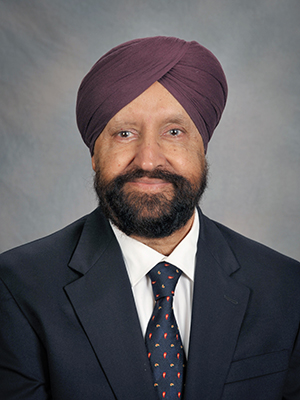
Chanan Singh is a distinguished academic serving as a Professor in the Department of Electrical and Computer Engineering at Texas A&M University. He holds the Irma Runyon Chair and is a Regents Professor. His affiliations include the College of Engineering and a Guest Professorship at Tsinghua University's Department of Electrical Engineering (2010–2015). Dr. Singh earned his Ph.D. in Electrical Engineering from the University of Saskatchewan, alongside M.S. and B.S. degrees from the same institution and Punjab Engineering College, respectively. His research focuses on reliability and security of electric power systems , including renewable energy integration and cyber-physical systems resilience. He pioneered methodologies for hurricane impact analysis, cyber-malfunction modeling, and wind farm optimization. Key achievements include the IEEE-PES Roy Billinton Award (2010), PMAPS Merit Award (2008), and Fellow of IEEE (1991). His work has been recognized globally, including through over 20 major awards and fellowships. Dr. Singh advises students like Hangtian Lei and leads funded projects on power system resilience. He is affiliated with the Electric Power System Group , advancing interdisciplinary research in energy systems and reliability engineering.