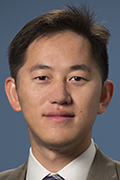
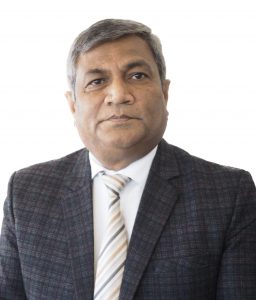
Mohsen Ghafouri is an Associate Professor at the Concordia Institute for Information Systems Engineering (Concordia University). His research focuses on cybersecurity, smart grids, and cyber-physical systems with emphasis on securing energy infrastructure against cyber-attacks. Key areas include detection and mitigation of false data injection attacks, grid resilience against load-altering threats, and secure transactive energy markets. Research interests include wide-area monitoring systems (WAMS), microgrid control, and integration of renewable energy sources. He has developed frameworks for real-time anomaly detection in power systems, blockchain-based security solutions, and machine learning approaches for cyber threat identification. His work addresses vulnerabilities in smart grid components like IEC 61850 substations and EV ecosystems. Recent publications (2024-2025) highlight advancements in securing FACTS controllers, EV charging systems, and distributed energy resources. He has proposed novel mitigation strategies using reinforcement learning, graph neural networks, and federated learning. No scientific awards or grant details are provided in the source text. No advising relationships or lab affiliations are explicitly stated.
Amr Youssef is a Professor at the Concordia Institute for Information Systems Engineering, Concordia University. His research focuses on applied cryptography, network security, cyber-physical systems security, blockchain, and privacy. He has contributed extensively to securing smart grids, IoT devices, and web applications through cryptographic protocols and machine learning-driven solutions. His work addresses critical challenges in cybersecurity, including e-voting systems, fault-tolerant differential protection, and privacy-preserving communication protocols. He explores vulnerabilities in modern systems such as SSO permissions, JavaScript exploits, and stalkerware tools, while developing frameworks like MEGR-APT for APT detection and TEE-Receipt for non-repudiation. Youssef’s research integrates interdisciplinary approaches, combining cryptography with AI (e.g., vision transformers for power quality analysis) and leveraging trusted execution environments (TEE) for secure computing. His projects often involve collaboration with industrial standards (e.g., IEC 61850), emphasizing practical implementations in real-world systems.
Qi Alfred Chen is an Assistant Professor in the Department of Computer Science at the University of California, Irvine (UCI), within the Donald Bren School of Information and Computer Sciences. He also holds affiliations with the Department of Electrical Engineering and Computer Science (EECS), the Institute of Transportation Studies at UC Irvine (ITS-Irvine), the Center for Embedded and Cyber-physical Systems (CECS), the Institute for Software Research (ISR), and the UC Irvine Cybersecurity Policy & Research Institute (CPRI). His research focuses on network and systems security, with particular emphasis on autonomous vehicle and IoT security. Dr. Chen received his Ph.D. from the University of Michigan in 2018. His educational background has prepared him for his current research in security of critical computer systems. His work bridges theoretical security principles with practical implementations in real-world systems. Chen's research interests center on network and systems security , with a major focus on smart systems and IoT security , particularly in transportation and autonomous vehicle systems . His work addresses security challenges through systematic problem analysis and mitigation, discovering and mitigating security problems in next-generation transportation systems, smartphone OSes, network protocols, DNS, GUI systems, and access control systems. His research has high impact in both academic and industry contexts, with over 10 top-tier conference papers, a DHS US-CERT alert, multiple CVEs, and coverage in major news media like Fortune and BBC News. His publication record shows a clear evolution from foundational work on network protocols and smartphone security toward increasingly sophisticated security analyses of autonomous vehicle systems and AI-powered transportation technologies. The research trajectory demonstrates growing technical sophistication and real-world impact, with recent work focusing on physical-world adversarial attacks against autonomous driving perception systems, LiDAR spoofing, and security of multi-sensor fusion in autonomous vehicles. NSF CAREER Award (2022) on securing the AI stack in emerging autonomous and connected CPSs Chancellor's Award for Excellence in Undergraduate Research Mentorship, UC Irvine (2021) 5th place nation-wide at National CCDC competition (2021, as faculty advisor) 1st place (Gold Medal) at CCDC Western Regional competition (2021) ProQuest Distinguished Dissertation Award, University of Michigan (2019) Dr. Chen has mentored numerous successful students, including PhD candidates and undergraduates who have gone on to positions at major tech companies like Meta, Uber, Amazon, and Intel. His research group has secured significant funding, including an NSF CAREER award, and has made substantial contributions to the field through high-impact publications and vulnerability disclosures. He is also the co-founder of the ISOC VehicleSec Symposium and has organized the AutoDriving CTF contest at DEF CON. Chen leads the AV & IoAT Security Research Group at UCI, focusing on security challenges in autonomous vehicles and the broader Internet of Autonomous Things. His team has developed numerous attack demonstrations and security analyses that have received significant media attention and influenced industry practices. The group maintains an active YouTube channel showcasing their security research.
Grant Ho is an Assistant Professor in the Computer Science Department at the University of Chicago. His research focuses on computer security, particularly at the intersection of data and security. Prior roles include a CSE Postdoctoral Fellowship at UC San Diego, a Visiting Researcher position at Corelight Labs, and a PhD in Computer Science from UC Berkeley (advised by Vern Paxson and David Wagner). He holds a B.S. in Computer Science from Stanford University. **Research Interests**: Enterprise security, AI/ML applications in security, large-scale threat analysis, and data-driven cybersecurity practices. His work spans detecting attacks (e.g., phishing, ransomware), improving security measures, and evaluating the efficacy of security policies. **Awards**: 2023 IEEE Euro S&P Best Paper Award, 2019 and 2017 USENIX Security Distinguished Papers, 2017 Internet Defense Prize, NSF and Facebook Fellowships, and the 2015 IEEE S&P Distinguished Practical Paper Award. **Advising & Teaching**: Current advisees include Aniket Anand (PhD), Christiana Marchese (PhD), and Robert Liu (B.S.). Taught courses include Introduction to Computer Security (CMSC 23200) and seminars on AI/ML and NLP in cybersecurity. Collaborates with industry partners like Barracuda Networks and Dropbox. **Labs & Teams**: Leads a research group focused on enterprise security challenges, emphasizing practical impact and interdisciplinary approaches.
Florian Kerschbaum is a Professor and NSERC/RBC Industrial Research Chair in Data Security at the Cheriton School of Computer Science, University of Waterloo. His research focuses on data security and privacy, applied cryptography, and confidentiality in data science. Research interests span data collection/preparation management, secure multi-party computation, homomorphic encryption, differential privacy, and machine learning robustness/privacy. His work develops cryptographic solutions for practical data management challenges in distributed systems.
Bernhard J. Berger is a Lecturer in the Department of Computer Engineering at the Institute of Embedded Systems, Hamburg University of Technology (TUHH). His research focuses on software security, static code analysis, machine learning, optimization, and research data management. He has held significant roles such as Program Committee member for ICPC 2025 and MSR 2025, and has received awards including the Best Reviewer Award (ICPC 2023) and Best Engineering Paper Award (SCAM 2019). His work spans interdisciplinary applications including maritime systems security, GPU-accelerated AI, and evolutionary algorithms. Recent studies emphasize AI-driven security tools (e.g., ML-SAST) and domain-specific language approaches to optimization (EvoAl). He has contributed to over 30 peer-reviewed publications, with notable work in IEEE Transactions on Software Engineering and Science of Computer Programming. Berger collaborates closely with industry through DAAD review committees and serves on artifact evaluation boards for ISSTA and ARES conferences. Education: Doctoral Thesis (2022), Diploma in Computer Science (2007) Key Projects: ArchSec tool suite, Threat Modeling Frameworks, Bauhaus static analysis methodology Lab Affiliation: Embedded Systems Design Group His advisory roles include Deputy of TUHH's Election Verification Committee and Session Chair at IEEE Congress on Evolutionary Computation 2023. Current research trends integrate machine learning with static analysis for automated vulnerability detection, while also exploring explainable AI techniques for neural network optimization.
Mariano Scazzariello is a Lecturer at KTH Royal Institute of Technology, Sweden, affiliated with the School of Electrical Engineering and Computer Science and the Department of Network and Systems Engineering. He teaches the course 'Network Systems with Edge or Cloud Datacenters (IK2227)'. His research focuses on advanced networking topics including machine learning in networks, high-speed packet processing, network emulation, and software-defined networking innovations. His work spans contributions to network emulation tools like Kathará and Megalos, stateful packet processing at terabit scales, and leveraging large language models (LLMs) for network configuration and vulnerability detection. Recent research emphasizes low-latency protocols (e.g., SRv6/DetNet integration) and GPU-centric networking on commodity hardware. Mariano’s publications (2020–2025) highlight expertise in network function virtualization, ASIC-based switching, and optimizing network configurations through AI-driven approaches. He has pioneered frameworks for evaluating routing protocols and virtualizing large network scenarios at scale.
Professor Nagi Gebraeel serves as the Georgia Power Early Career Professor in the H. Milton Stewart School of Industrial and Systems Engineering at Georgia Institute of Technology, where his research integrates predictive analytics, machine learning, and optimization for industrial IoT applications. His work focuses on real-time equipment diagnostics, prognostics, and operational decision-making in critical infrastructure systems. Education: Ph.D. in Industrial Engineering (2003), Purdue University M.S. in Industrial Engineering (1998), Purdue University Research Focus: Dr. Gebraeel develops statistical learning algorithms for IoT-enabled maintenance, repair, and operations (MRO), with emphasis on federated learning frameworks for distributed fault diagnosis and cybersecurity protection against Industrial Control System (ICS) attacks. His research spans manufacturing, power generation, and deep space habitats through NASA's HOME Space Technology Research Institute, where he pioneers self-aware habitat systems. Recent work addresses data heterogeneity in high-consequence industrial environments using causal-informed analytics. Publication Trends: His 2024-2025 publications demonstrate a strong trajectory toward distributionally robust optimization for maintenance logistics, federated learning architectures for distributed fault diagnosis, and prognostics for complex systems like offshore wind farms and industrial robots. Key themes include handling imbalanced data in fault diagnosis, state-space representations for interdependent systems, and cybersecurity integration in manufacturing networks. Awards and Recognition: NSF CAREER Award (2007) SAE Aircraft Electrical Power System Recognition Award (2008) SAE Materials Modeling and Testing Recognition Award (2006) IEEE-AUTOTESTCON Certificate (2006) Fellow of the Institute of Industrial and Systems Engineers Advising and Funding: Dr. Gebraeel mentors doctoral students including Michael Ibrahim (2025 IISE Best Student Paper winner), Heraldo Rozas (now Assistant Professor at University of Chile), Ayush Mohanty, and Nazal Mohamed. He secured a $500,000 NSF grant in August 2025 for AI-driven cybersecurity in distributed manufacturing networks and leads NASA-funded research on deep space habitat systems. His work bridges academic research with industry applications through Georgia Tech's Strategic Energy Institute collaborations. Research Infrastructure: He directs the Analytics and Prognostics Systems laboratory at Georgia Tech's Manufacturing Institute and leads the Predictive Analytics and Intelligent Systems (PAIS) research group. Previously, he served as associate director of Georgia Tech's Strategic Energy Institute (2014-2019), fostering data science applications in energy systems.
Massimo Piccardi is a Professor of Natural Language Processing (NLP), Computer Vision, and Machine Learning at the University of Technology Sydney (UTS) , where he has been since 2002. He currently serves as the Head of the School of Electrical and Data Engineering and leads the Big Data Analytics program at the Global Big Data Technologies Centre. His research focuses on advancing NLP, machine learning applications in healthcare, and cybersecurity in IoT systems. He has authored over 200 journal papers and conference proceedings, secured significant ARC and CRC grants, and holds the IEEE Computer Society Distinguished Contributor Award (2022). Education & Professional Roles: Joined UTS in 2002, progressing from Associate Professor (2002–2007) to Professor (2008–present). Serves as Associate Editor for IEEE Transactions on Big Data and Editor for Artificial Intelligence in Medicine. Active in professional societies including IEEE, ACL, and ALTA (President, 2023–2024). Research Interests: Core areas include NLP (translation, summarization, adversarial attacks), healthcare informatics (clinical NLP, health service analysis), and cybersecurity (IoT security, privacy-preserving systems). Cross-cutting themes include generative models, cross-lingual systems, and ethical AI. Grants & Projects: Principal Investigator on ARC Discovery/Linkage projects and CRC grants. Recent projects include controllable machine translation (Amazon), privacy-preserving digital agriculture, and STEM innovation (ASTRID project with NBN Co). Labs & Collaborations: Leads the UTS Global Big Data Technologies Centre, collaborating on projects like adversarial NLP attacks, medical machine translation, and secure IoT frameworks.
Jakob Merane is a postdoctoral researcher at ETH Zurich's Professorship of Law, Economics and Business, and a visiting researcher at the Max Planck Institute and Harvard Law School. He holds a Ph.D. from ETH Zurich and law degrees from the University of Basel, with additional studies in applied statistics. His research focuses on AI-driven legal enforcement, legal technology, and compliance-by-design approaches, leveraging computational and empirical methods. Merane's work includes developing tools like SwiLTra-Bench for multilingual legal translation and LEXam for benchmarking AI legal reasoning. He has contributed to GDPR compliance studies, automation of legal enforcement processes, and quantitative analyses of Swiss legal datasets. Awards include the 2024 Young Scholar Prize from the German Law and Economics Association. Teaching responsibilities include ETH's Law & Tech course since 2020, emphasizing AI regulation and interdisciplinary collaboration between law and computer science. Merane's research also addresses AI liability in medical contexts, digital advertising regulations, and ethical AI integration in legal systems. His work bridges legal theory with practical applications, aiming to enhance justice accessibility through technology.
Olga Saukh is an Associate Professor at the Institute of Technical Informatics, Graz University of Technology (TU Graz), and a Faculty member at the Complexity Science Hub Vienna (CSH). She leads the Embedded Learning and Sensing Systems research group, which operates across both institutions, focusing on the design and deployment of efficient AI-based systems on edge and mobile platforms. Her work bridges deep learning and embedded systems, with applications in environmental monitoring, precision agriculture, and digital health. Ph.D. in Computer Science, University of Bonn (2009) Habilitation in Embedded Systems, TU Graz (2020) Postdoctoral Training, ETH Zurich (2010–2016) B.Sc. in Applied Mathematics, Taras Shevchenko National University of Kyiv (2002) M.Sc. in Applied Computer Science, University of Freiburg (2004) Her research centers on efficient machine learning, particularly model optimization, neural network pruning, and contrastive learning for resource-constrained devices. She is deeply engaged in solving real-world challenges in IoT, sensor networks, and cyber-physical systems. Her work emphasizes data privacy, sustainability, and practical deployment of AI at the edge. The 15 most recent publications highlight a strong trend in efficient deep learning, including model compression, pruning, and transfer learning, applied to diverse domains such as environmental sensing (air quality, pollution tracking), digital agriculture (cattle farming), and embedded AI (sensor calibration, on-demand sensing). Her work frequently appears in top-tier venues like NeurIPS, ICLR, and IEEE/ACM IPSN, reflecting her leadership at the intersection of machine learning and embedded systems. Scientific awards include: CONET Ph.D. Academic Award (2010) Multiple Best Paper Awards at IEEE PerCom, ACM/IEEE IPSN, IEEE ICPADS, IEEE SECON, and UrbCom Spotlight and Oral presentations at ICML and CoLLAs workshops Ph.D. scholarship from IPVS, University of Stuttgart (2004–2005) Prizes in Ukrainian national mathematics competitions (1996–1998) Olga Saukh actively serves on program committees of leading international conferences in machine learning and embedded systems. She has advised multiple students and leads a collaborative research group spanning TU Graz and CSH Vienna. Her group develops practical AI systems for real-world deployment, with a focus on sustainability and privacy. She co-organizes the public EfficientML reading group and has secured recognition through numerous grants and awards. Her future work continues to explore the theoretical and practical challenges of deploying efficient, trustworthy AI in mobile and embedded environments. Her research group, Embedded Learning and Sensing Systems, operates jointly between TU Graz and CSH Vienna, fostering interdisciplinary collaboration across institutions. The team develops AI solutions for edge computing, sensor networks, and cyber-physical systems, with a strong emphasis on environmental sustainability and data privacy. Members work on joint challenges using advanced collaboration tools, reflecting the distributed nature of modern academic research.
Dr. Mohamed Ibrahem is an Assistant Professor at the School of Computer and Cyber Sciences, Augusta University, USA. His research focuses on Cyber-Security, IoT Privacy, and Machine Learning applications in Smart Grids and Cyber-Physical Systems. He received a Ph.D. in Electrical and Computer Engineering from Tennessee Tech University in 2021 and has been recognized with prestigious awards including the IEEE Senior Member (2024) and the Eminence Award for Best Ph.D. Paper (2021). Education: Ph.D., Electrical and Computer Engineering, Tennessee Tech University (2021) Research Interests: Security and Privacy in IoT, Applied Cryptography, Privacy-preserving Machine Learning, Secure Federated Learning, Smart Grid Cyber-Security, and Traffic Analysis Attacks. Publications: His work emphasizes privacy-preserving techniques in smart grids, federated learning for anomaly detection, and robust countermeasures against cyber-attacks. Recent trends include leveraging deep learning for real-time fraud detection in AMI systems and developing efficient decentralized learning frameworks. Awards: IEEE Senior Member (2024) Top 2% Scientists List (Stanford/Elsevier, 2024) Eminence Award for Best Ph.D. Paper (Tennessee Tech University, 2021) Advising & Grants: Supervises graduate research in Dissertation and Master's Thesis projects. Active in securing grants for IoT and Cyber-Security initiatives. Collaborates with industry partners on edge computing and secure AMI networks.
Dr. Nanpeng Yu is a Full Professor at the University of California, Riverside , serving as Vice Chair and Graduate Advisor in the Department of Electrical and Computer Engineering . He maintains cooperative faculty affiliations with the Department of Computer Science and Department of Statistics , and directs the Energy, Economics, and Environment Research Center at UCR. Education : B.S. in Electrical Engineering from Tsinghua University (2006), M.S. in Electrical Engineering and Economics, and Ph.D. from Iowa State University (2010) Prior Industry Experience : Senior Power System Planner and Project Manager at Southern California Edison (2011-2014) Dr. Yu’s research bridges smart grid technologies , data-driven optimization , and machine learning for energy systems. Key areas include voltage control , renewable energy integration , transportation electrification , and grid resilience . His recent work focuses on physics-informed graph learning for unit commitment problems and adversarial purification in power system classifiers. The AI-Energy Nexus Laboratory under Dr. Yu has produced impactful publications in Applied Energy , IEEE Transactions on Power Systems , and Transportation Research series, covering topics like heavy-duty EV charging infrastructure and dynamic distribution network reconfiguration . Lab members have won the American-Made Digitizing Utilities Grand Prize ($300,000) from the U.S. DOE. Leadership Roles : Chair, IEEE Power and Energy Society Distribution System Operation and Planning Subcommittee Chair, IEEE Power and Energy Society Working Group on Data-Driven Modeling for Power Distribution Networks Associate Editor, IEEE Transactions on Smart Grid and IEEE Power Engineering Letters Scientific Awards : Regents Faculty Fellowship Regents Faculty Development Award Multiple IEEE Best Paper Awards
Dr. Jeewanie Jayasinghe Arachchige is a Lecturer in the Department of Computer Science at Vrije Universiteit Amsterdam, Faculty of Science. She teaches undergraduate courses including Bachelor Project Computer Science, Professional Development, and Software Engineering Processes for the academic year 2024–2025. Her research focuses on process mining , healthcare informatics , and data security . She applies process mining to analyze healthcare pathways and subpopulation treatment variations, develops explainable AI frameworks for predictive analytics, and examines data governance in emerging architectures like Data Lakehouses. Her work intersects legal informatics, particularly formalizing Sri Lankan civil court processes using ontology engineering. Recent publications highlight trends in balancing simplicity and complexity in process modeling, Industry 4.0 healthcare applications, and cybersecurity in model-driven web development. She has contributed to over 20 peer-reviewed articles since 2006, spanning topics from service-oriented architectures to value network analysis. Her teaching and research emphasize practical applications of IT in healthcare, legal systems, and enterprise environments. No ancillary activities are currently recorded.
Dr. Mohammad Zulkernine is a Full Professor and Canada Research Chair in Cyber-Physical System Security at Queen’s University’s School of Computing (Faculty of Arts and Science). He leads the Queen’s Reliable Software Technology (QRST) research group and directs the Queen’s Centre for Security & Privacy. His research focuses on secure software systems for cyber-physical systems, including autonomous vehicles, IoT, and cloud computing. Dr. Zulkernine holds a cross-appointment in Electrical and Computer Engineering and is a licensed Professional Engineer in Ontario. Education: BSc (Bangladesh BUET), MEng (Japan), PhD (University of Waterloo). He joined Queen’s in 2003 and has held sabbaticals at University of Trento, Italy and Irdeto Canada. He has published over 250 papers, led 35+ research projects, and supervised 120+ students. Awards include Canada Research Chairs (Tier I and II), Queen’s Excellence in Graduate Supervision Award, and Distinguished Supervision Award from the School of Computing. Research Interests: Cyber-Physical System Security, Software Reliability, IoT Security, Vehicle Networks, Secure Software Engineering, and Cybersecurity Risk Assessment. Active industry collaborations include EU-funded projects and Canada-Africa initiatives.