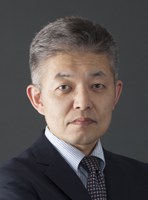
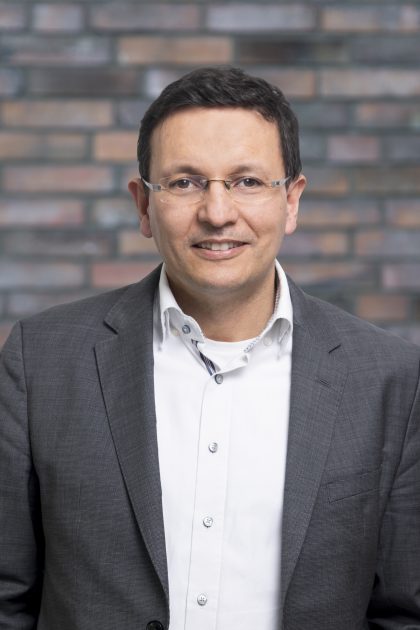
Angela Pohl serves as a Professor in the Department of Computer Science and Media at Brandenburg University of Technology. Her academic office is located in Building C, Room C.2.18 at Magdeburger Straße 50, 14770 Brandenburg an der Havel, Germany, with contact available via telephone (+49 3381 355 - 459) and email (angela.pohl@th-brandenburg.de). Her research program centers on high-performance computing and compiler optimization , with critical contributions in: Vector length agnostic programming models for modern SIMD architectures Cost modeling and performance prediction for auto-vectorizers Architecture-specific optimizations for ARM NEON, Intel AVX, and SVE Application of vectorization to multimedia (VVC decoder) and scientific computing (RICH particle detector) Analysis of her 2015-2020 publications reveals a progression from foundational SIMD model evaluation to advanced portable cost modeling. Her work demonstrates consistent focus on bridging compiler technology with hardware capabilities, particularly emphasizing real-world applications in video coding and high-energy physics where vectorization delivers substantial performance gains.
Arianne Meijer is a Postdoctoral Researcher in the Department of Computer Science at the University of Helsinki and serves as a Quantum Software Engineer at IQM Germany GmbH since September 2024. Her research focuses on quantum computing, particularly quantum software engineering, compilation, and algorithm optimization for NISQ devices. She has contributed to advancements in stabilizer circuits, Pauli string decompositions, and hybrid quantum-classical systems. Institution: University of Helsinki Department: Computer Science Industry Role: Quantum Software Engineer (IQM Germany GmbH) Collaborations: Finnish Quantum Flagship, QuantumWare Her research output spans quantum compilation, algorithm design, and hardware-software integration. Projects like EM4QS and Finnish Quantum Flagship highlight her work in quantum middleware and device benchmarking. She has published extensively on topics such as barren plateaus, variational quantum regression, and architecture-aware synthesis. Notably, her 2024 work critiqued the practicality of quantum circuit models and explored quantum string matching for graphs. Meijer's recent activities include external teaching on quantum software, and her collaborations extend across Finland and Germany. Her work emphasizes practical solutions for quantum software stack limitations and optimizing compilation processes for current hardware constraints.
Matthijs Vákár is an Assistant Professor at the Department of Information and Computing Sciences , Utrecht University , focusing on the software foundations of machine learning . He actively develops the Stan language , a state-of-the-art probabilistic programming language. Areas of Expertise: Bayesian Statistics, Category Theory, Compiler Construction, Machine Learning, Programming Languages. Research Themes: Probabilistic programming languages, differential programming languages, separation of modeling from algorithmic tasks, automatic differentiation in ML-family languages. His research bridges theoretical computer science and practical machine learning, emphasizing logical relations, monoidal structures, and efficient compiler designs for differentiable programming. His recent publications explore correctness proofs, category-theoretic models, and optimization techniques in automatic differentiation. Scientific Awards: ERC Starting Grant NWO Veni Fellowship Marie Sklodowska-Curie Fellowship Academic Journey: PhD from the University of Oxford (dependent types and computational effects), MSc in Pure Mathematics (University of Cambridge), and BScs in Mathematics and Physics (Utrecht University). Prior roles include postdoctoral research at Columbia University and the University of Oxford. Industrial Experience: Build systems at Microsoft Research, NLP at Linguamatics, and compiler design for Stan.
John van de Wetering is an active Assistant Professor at the Theoretical Computer Science group of the Informatics Institute of the University of Amsterdam (UvA), working in collaboration with the QuSoft research center. He joined the university in December 2022 after completing his PhD at Radboud University in 2020 and a postdoc position at Oxford University. His research spans two primary domains: diagrammatic techniques in quantum computation (particularly ZX-calculus applications for quantum circuit optimization, classical simulation and verification) and quantum foundations where he explores the nature of quantum mechanics through algebraic and compositional methods. He is the co-creator of PyZX, an open-source optimizing quantum compiler, and has co-authored the book "Picturing Quantum Software" with Aleks Kissinger. His work bridges theoretical computer science with practical quantum computing applications. His publication record shows consistent high-impact output with multiple papers in Physical Review A, Quantum, and proceedings of major conferences like QPL. His recent work focuses on quantum circuit optimization, ZX-calculus completeness, and applications to quantum error correction. His research demonstrates a strong trajectory with publications extending into 2025. VENI grant recipient for quantum computing research He currently supervises three PhD students (Lia Yeh, Sarah Li, and Marc Farreras) and has previously mentored numerous Master's and Bachelor's students whose work has led to publications. He serves as program director for the new Master in Quantum Computer Science at UvA and is an editor for the diamond open-access journal Quantum. His professional activities include developing educational resources like the ZX-calculus website and contributing to the ZX-calculus Wikipedia page.
Yufei Ding is an Associate Professor in the Computer Science & Engineering Department at the University of California, San Diego (UCSD), and founder of the PICASSO Lab. She earned a Ph.D. in Computer Science from North Carolina State University and a B.S. in Physics from the University of Science and Technology of China. Research Interests: Quantum Computing Machine Learning Domain-Specific Languages Compiler Optimization Hardware Acceleration High-Performance Computing Her recent publications focus on quantum compilation, error correction, and machine learning systems, with a particular emphasis on hardware-aware optimizations. She has received multiple prestigious awards, including the NSF CAREER Award (2020) and the IEEE TCHPC Early Career Researchers Award (2019). Scientific Awards: NSF CAREER Award (2020) IEEE Computer Society TCHPC Early Career Researchers Award (2019) Yufei actively advises Ph.D. students and postdoctoral researchers in quantum computing and machine learning systems. Her lab offers openings for both quantum computing and machine learning research.
Linas Petkevičius serves as an Associate Professor at Vilnius University's Faculty of Mathematics and Informatics, actively teaching courses including Introduction to Quantum Computing across 10 consecutive academic years from 2016/2017 through 2025/2026 as evidenced by institutional schedules. His research demonstrates remarkable interdisciplinary breadth spanning quantum computing algorithm optimization, medical diagnostics through digital pathology analysis, and satellite-based environmental monitoring. He develops machine learning solutions for breast cancer prognosis using Ki67 heterogeneity metrics, creates quantum circuit schemes adapted to hardware constraints, and implements deep learning models for algal bloom detection in Baltic waters using Sentinel-2 data. His work consistently bridges theoretical computer science with practical healthcare and environmental applications. Analysis of his 15 most recent publications (2023-2025) reveals three dominant research thrusts: 1) Quantum computing optimization for NISQ devices, 2) Medical image analysis focusing on spatial tumor microenvironment characterization in breast cancer, and 3) Remote sensing applications using transformer models and few-shot learning for satellite change detection. His publications show increasing specialization in combining deep learning architectures with domain-specific constraints across these fields. Scientific Awards: No scientific awards were mentioned in the provided materials. Advising and Grants: The provided texts contain no information regarding student advisement, research grants, or funded projects.
Dr. Daniel Kang is an Assistant Professor at the University of Illinois at Urbana-Champaign (UIUC) in the Department of Computer Science and Department of Electrical and Computer Engineering (by courtesy). His research focuses on integrating machine learning with data systems and zero-knowledge proofs to enhance privacy and trust in AI deployments. He previously worked as a postdoctoral researcher at UC Berkeley's Sky Lab and earned his PhD at Stanford University under Peter Bailis and Matei Zaharia. Developed frameworks like ZKML and ZK-IMG Co-creator of DawnBench and MLPerf benchmarks Research funded by Google, Open Philanthropy Project, and Emergent Ventures His research spans machine learning systems , privacy-preserving AI , and security risks in LLMs . Recent work includes optimizing zero-knowledge proofs for ML inference and studying adversarial attacks on AI agents. Articles reveal expertise in benchmark design , video analytics , and ML deployment systems . Dr. Kang actively recruits students at all levels and focuses on trustless AI verification and efficient query processing . His work addresses critical challenges in ML reproducibility , code generation , and web security .
Rajesh Kedia is an Assistant Professor in the Department of Computer Science & Engineering at Indian Institute of Technology Hyderabad . He received his Ph.D. from IIT Delhi under the supervision of Prof. M. Balakrishnan and Prof. Kolin Paul, and holds a B.Tech. in Electronics and Communication Engineering from MNIT Jaipur (2006). His research focuses on computer architecture , embedded systems , and VLSI design automation , with specific emphasis on thermal management of processors and memories , shared resource management , and FPGA-based accelerator design . His recent publications address CNN execution time prediction, thermal modeling for 3D systems, and efficient resource allocation in multi-accelerator environments. Rajesh has received multiple scientific awards including the Visvesvaraya Ph.D. fellowship , IEEE Senior Member designation, and a BEST PAPER NOMINATION at DATE 2022 . He has mentored several Ph.D. and M.Tech students, including Lakshay Arora , Venugopal Ramamurthy , and M A Muneeb , with research topics spanning compilers, thermal management, and RISC-V architecture. He actively contributes to the academic community as a reviewer for leading conferences/journals (ASPDAC, DAC, IEEE ESL, CODES+ISSS) and previously served as Design Contest co-chair for ISLPED 2024 . His work has been supported by a SERB startup research grant (INR 20.26L) for shared resource management research.
Owolabi Legunsen is an Assistant Professor of Computer Science at Cornell University, specializing in software engineering with a focus on software testing and runtime verification. He is part of Cornell's Software Engineering Group and has made significant contributions to automated testing frameworks and tools. Ph.D. in Computer Science, University of Illinois at Urbana-Champaign Master's in Computer Science, University of Texas at Dallas B.Sc. in Computer Engineering, Obafemi Awolowo University His research explores software testing for cloud systems, probabilistic programming, and regression test selection. He develops tools like TraceMOP and pytest-inline to enhance testing precision and automation. NSF CAREER Award recipient Intel Rising Star Faculty Award Three ACM SIGSOFT Distinguished Paper Awards Legunsen actively mentors graduate students and collaborates on projects addressing runtime verification overheads, cloud configuration testing, and test flakiness detection. He leads grants focused on improving software reliability through evolution-aware techniques.
Professor Sanjiang Li is affiliated with the University of Technology, Sydney (UTS) as a Professor in the Faculty of Engineering and Information Technology , specifically within the Centre for Quantum Software and Information . With a PhD in Mathematics from Sichuan University and a BSc from Shaanxi Normal University, his research spans quantum computation , knowledge representation and reasoning , and formal verification of quantum systems . His recent work focuses on quantum circuit transformation , including novel methods like adaptive divide-and-conquer and Monte Carlo Tree Search frameworks. He has advanced symbolic verification techniques using tensor decision diagrams and explored classical-quantum hybrid algorithms for resource-efficient training. Dr. Li has received prestigious awards such as the ARC Future Fellowship and Alexander von Humboldt Research Fellowship . He supervises PhD students including Calum Holker and Guangxi Li , and contributes to quantum software development through funded projects like the Sydney Quantum Academy and ARC Discovery Projects .
Dr. Yuval Rishu Sanders is a Senior Lecturer at the School of Computer Science within the Faculty of Engineering and Information Technology at the University of Technology Sydney (UTS). He is affiliated with the Centre for Quantum Software and Information (QSI), where he conducts cutting-edge research in quantum computing and quantum information theory. Dr. Sanders holds a PhD from the University of Waterloo, Canada, and has established himself as a prominent researcher in the quantum computing field with numerous high-impact publications. Dr. Sanders' academic journey began with a Bachelor of Science (First Class Honours) from the University of Calgary in 2008, followed by a Master of Science from the same institution in 2011. He completed his Doctor of Philosophy at the University of Waterloo in 2016. His career progression includes positions as a Research Associate at Macquarie University (2016-2021) and at UTS (2021-2022), before becoming a Permanent Faculty member at UTS in September 2022. Dr. Sanders' research focuses on the theoretical foundations of quantum computing, with particular expertise in quantum algorithms, quantum simulation, and quantum error correction. His work addresses fundamental questions about the computational advantages of quantum computers over classical systems, with a special emphasis on developing practical quantum algorithms for real-world applications. He is particularly interested in improving the efficiency and accuracy of quantum simulations, developing better methods for quantum state preparation, and establishing rigorous computational cost models for quantum algorithms. Dr. Sanders has made significant contributions to the field of quantum linear systems solvers, quantum measurement theory, and quantum resource theories. His research statement emphasizes the need for reliable computational cost analysis to determine when quantum computers will outperform classical computers for useful tasks. Analysis of Dr. Sanders' publication record reveals a consistent focus on advancing the theoretical underpinnings of quantum computing. His most recent work (2024-2025) centers on improving quantum simulation techniques through better product formulae, while his earlier work (2018-2022) demonstrates expertise across multiple quantum computing subfields including quantum algorithms for fermionic systems, quantum error characterization, and quantum measurement theory. A notable trend in his research is the development of more efficient quantum algorithms that reduce resource requirements while maintaining accuracy, which is crucial for near-term quantum applications. Dr. Sanders serves as an Associate Editor for the IEEE Transactions on Quantum Engineering since February 2023, demonstrating his standing in the quantum computing research community. His publication record includes articles in prestigious journals such as PRX Quantum, Physical Review Letters, and New Journal of Physics, with significant citation counts indicating the impact of his research. Dr. Sanders is actively involved in funded research projects that advance quantum computing theory and applications. His current projects include 'Building the Theoretical Foundation of Refinement Techniques for Quantum Programming' (2025-2027), 'The QB-suite: a framework for quantum algorithm design and benchmarking' (2024-2027), and 'Quarkov Decision Processes' (2023-2027). He has also contributed to significant projects such as 'Tools for fault-tolerant resource estimation' (2022-2025) and 'Defence acquisition optimisation using quantum algorithms' (2021-2024). His research vision includes developing software tools that can automate the analysis of quantum computations, potentially enabling a 100,000-fold speedup in the design iteration process for quantum applications. As a member of the Centre for Quantum Software and Information at UTS, Dr. Sanders collaborates with a multidisciplinary team of researchers working on various aspects of quantum computing. His research group focuses on developing theoretical frameworks and practical tools for quantum algorithm design, with particular emphasis on making quantum computing more accessible and efficient. Dr. Sanders' work bridges theoretical quantum computing with practical applications, contributing to the broader goal of realizing useful quantum advantage.
Professor Mingsheng Ying (University of Technology Sydney) is a Distinguished Professor specializing in quantum programming , quantum verification , and the foundations of artificial intelligence . He leads the Centre for Quantum Software and Information and co-founded the Quantum Lab . His work bridges quantum computation with formal methods and reasoning under uncertainty. Education : Mathematics, Fuzhou Teachers College (1981) Research Interests His research spans: Quantum programming languages and verification techniques Model checking quantum systems and cryptographic protocols Quantum machine learning robustness Entanglement theory and distributed quantum computation Recent Publications Key contributions include: Quantum error correction verification frameworks Quantum register machine architecture Hamiltonian simulation parallelization Symbolic execution for quantum debugging Robustness tools like VeriQR Awards & Editorial Roles NSF China Distinguished Young Scholar Award (1997) China National Science Award (2008) Co-Editor-in-Chief, ACM Transactions on Quantum Computing Vice President, International Fuzzy Systems Association (2005) Leadership & Grants He oversees 14 active grants (2010–2029) from: Australian Research Council (ARC Discovery Projects) National Natural Science Foundation of China Sydney Quantum Academy Baidu Contract Research His grants fund research in quantum program verification, entanglement classification, and distributed quantum protocols.
Synge Todo is a Professor in the Department of Physics, Graduate School of Science at the University of Tokyo , with joint appointments at the Mathematics and Informatics Center , Institute for Solid State Physics , Institute for Physics of Intelligence , Quantum Software Project , and Next-Generation AI Research Center . Born in 1968, he earned his B.Sc. and Ph.D. from the University of Tokyo and subsequently held post-doctoral positions at ETH Zürich. Education Ph.D. (Science), University of Tokyo, 1996 B.Sc. (Physics), University of Tokyo, 1991 Research Interests Todo’s research integrates quantum many-body physics , computational physics , and quantum computing . He develops advanced Monte-Carlo algorithms , tensor-network techniques , and renormalization group methods to study strongly correlated electron systems , lattice QCD , quantum phase transitions , and machine-learning applications in physics . His recent work explores fault-tolerant quantum computing architectures , non-variational quantum ground-state preparation , and universal scaling laws in deep neural networks . Scientific Awards Prizes for Science and Technology, The Commendation for Science and Technology by MEXT Japan (April 2019) Grants & Collaborations He currently leads several JSPS KAKENHI projects, including “ Quantum-circuit design for computational materials science ” (2023-26) and “ Enhancement of detailed-balance-violating MCMC methods ” (2020-24). He also co-leads interdisciplinary teams focusing on data assimilation for materials discovery and scalable high-performance computing . Laboratories & Software Todo heads research activities in the HΦ quantum lattice model solver and the MateriApps portal, providing open-source tools for large-scale simulations in condensed-matter and materials science.
Prof. Dr. Vincent Heuveline is a distinguished academic and researcher currently serving as a Professor at Heidelberg University. He leads the "Engineering Mathematics and Computing Lab" (EMCL) at the Interdisciplinary Center for Scientific Computing and is also the Group Leader of the "Data Mining and Uncertainty Quantification" (DMQ) research group at HITS gGmbH. Additionally, he serves as the Director of the Computing Center at Heidelberg University, demonstrating his leadership in both academic research and institutional IT infrastructure. Vincent Heuveline was born in 1968 and pursued his education in Mathematics, Physics, and Computer Science at the Universities of Caen (France) and Würzburg (Germany). He earned his PhD in Computer Science in 1997 from the Université de Rennes and completed his habilitation in Mathematics at the University of Heidelberg in 2002. His academic career includes a professorship at Karlsruhe University (KIT) from 2004 until he moved to Heidelberg University in May 2013. Prof. Heuveline's research spans several cutting-edge areas in computational science and data analysis. His primary research interests include Uncertainty Quantification, Data Mining, High-Performance Computing, Hardware-aware Computing, Software Design for Scientific Computing, Optimization and Optimal Control for Large Systems, Cloud Computing, and IT Infrastructure. His work bridges theoretical computer science with practical applications in medical diagnostics, fluid dynamics, and metabolic modeling. An analysis of his recent publications reveals a strong interdisciplinary focus, particularly at the intersection of artificial intelligence, medical diagnostics, and computational science. He has made significant contributions to newborn screening technologies using machine learning, cardiac MRI analysis with AI enhancement, metabolic modeling for infants, and high-performance computing frameworks. His research demonstrates a consistent pattern of applying advanced computational methods to solve complex problems in healthcare and scientific domains. Prof. Heuveline leads two major research initiatives: the Engineering Mathematics and Computing Lab (EMCL) at the Interdisciplinary Center for Scientific Computing and the Data Mining and Uncertainty Quantification (DMQ) group at HITS gGmbH. These labs bring together multidisciplinary teams to tackle challenges in scientific computing, uncertainty quantification, and data-driven research. His leadership extends to the institutional level as Director of Heidelberg University's Computing Center, where he oversees critical IT infrastructure supporting academic research.
Marijn J.H. Heule is an Associate Professor at the School of Computer Science , Carnegie Mellon University . He received his PhD from Delft University of Technology in the Netherlands. His research focuses on solving hard combinatorial problems through Satisfiability (SAT) solving , with applications in formal verification, number theory, and extremal combinatorics. Education: PhD in Computer Science, Delft University of Technology, Netherlands Heule's work addresses fundamental challenges in SAT solving, including: Exploiting high-performance computing via the cube-and-conquer paradigm Validating results from SAT solvers using novel proof formats His research has produced 15+ recent publications (2025-2021) on topics like automated reasoning, formal verification, and combinatorial proofs. Notable achievements include: Best Paper Award at HVC 2011 (Cube-and-Conquer) 200 TB proof for the Boolean Pythagorean Triples Problem Co-editor of the Handbook of Satisfiability He has advised multiple PhD students including Emre Yolcu , Joseph Reeves , and Bernardo Subercaseaux . His tools like DRAT-trim and QRAT-trim have become standard in proof validation.