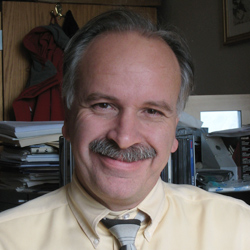
Jean-François GaillardView profile
Professor
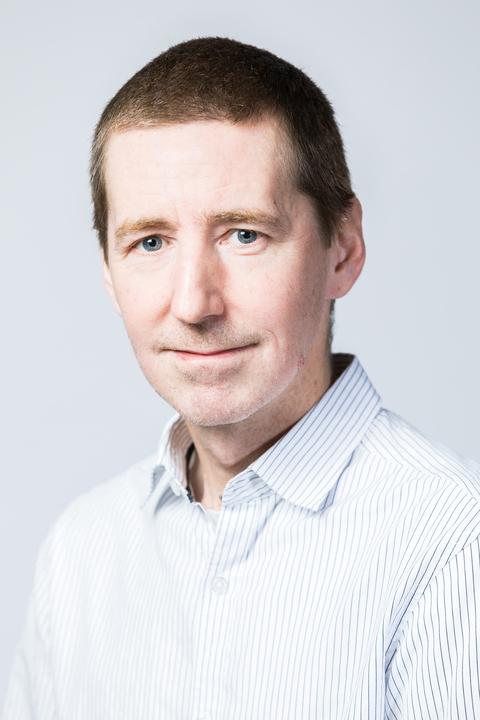
Jean-François Gaillard is a Professor of Civil and Environmental Engineering and (by courtesy) Earth and Planetary Sciences at Northwestern University's McCormick School of Engineering. His research group focuses on understanding the molecular and biogeochemical processes that affect the fate of metals in aquatic systems, with special emphasis on how chemical speciation controls metal biouptake and bioavailability. His educational background includes a D.Sc. in Physical Sciences - Geochemistry from University Denis Diderot (Paris 7) and Paris Institute of Earth Physics, a Dr. in Water Sciences from University Pierre et Marie Curie, an M.S. in Advanced Water Studies from the same institution, and a B.S. in Air and Water Science and Technology from the University of Savoie. Professor Gaillard's research employs field studies, laboratory experiments, and modeling approaches using advanced analytical, microscopic, and spectroscopic methods. His work particularly focuses on the chemical fate of arsenic, nickel, and mercury in aquatic environments as well as the environmental impacts of nano-structured materials. His group has developed various methods for spectral decomposition and reference spectrum selection for X-ray Absorption Spectroscopy (XAS) data analysis. His recent publications show a strong trend toward environmental applications of nanomaterials, metal speciation studies using advanced spectroscopic techniques, and the development of remediation strategies using drinking water treatment residuals. His work bridges fundamental environmental chemistry with practical engineering solutions for water quality challenges. Professor Gaillard currently advises multiple graduate students working on projects related to mercury biouptake, bacterial responses to nanomaterials, and metal mobility in sediments. His research has been supported by various grants focusing on environmental chemistry, nanomaterial impacts, and water treatment technologies. His laboratory utilizes advanced techniques including X-ray Absorption Spectroscopy, synchrotron X-ray microtomography, and various analytical electron microscopy methods. The research group collaborates with other Northwestern faculty, particularly in chemistry and earth sciences, to address complex environmental challenges through interdisciplinary approaches.