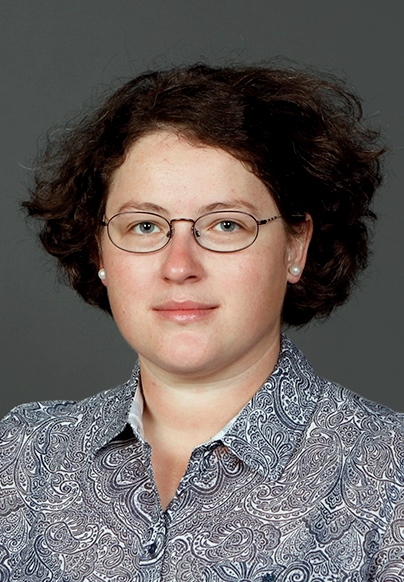
Yun Chen is an Associate Professor in the Department of Mechanical Engineering at Johns Hopkins University's Whiting School of Engineering. Her research focuses on mechanobiology, developing biophysical tools to study disease mechanisms and clinical applications. Key areas include cancer imaging, quantum biotechnology, and biomaterials. She leads a lab with patents and industrial collaborations, and her work has been published in top journals like Nature Physics . Awards include NSF and NIH Trailblazer Awards and a DARPA Young Faculty Award. Education: PhD in Biomedical Engineering from UNC Chapel Hill, specializing in multi-scale imaging of biophysical and biochemical behaviors. Her lab integrates engineering principles with biology, aiming to expand into quantum mechanics for cell studies. Research emphasizes understanding how altered biophysics contributes to diseases, with projects on cancer cell migration, fluid viscosity sensing, and tissue engineering. Collaborations include developing treatments and diagnostic tools. Students advised include Junjie Chen, whose work on magnetosensitive proteins was highlighted at the Biophysical Society Annual Meeting.
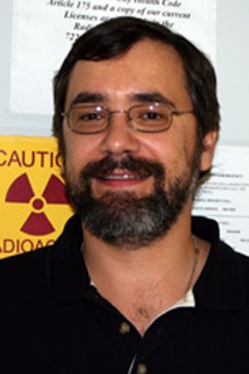
Katsuo Kurabayashi is a Professor and Department Chair of Mechanical and Aerospace Engineering at NYU Tandon School of Engineering, with a secondary appointment in Biomedical Engineering. He holds a B.S. from the University of Tokyo and M.S./Ph.D. from Stanford University. His research focuses on micro/nanoscale biosensors, microfluidic devices, and translational biomedical engineering, with applications in critical care medicine, infectious disease diagnostics, and space exploration instrumentation. Key research areas include nanoplasmonic biosensors, lab-on-a-chip systems, and point-of-care diagnostics for inflammatory disorders. His lab pioneered a microfluidic biosensor platform for real-time monitoring in pediatric intensive care units. His work integrates nanofabrication, semiconductor processing, and systems biology to address healthcare challenges. Research funding comes from NSF, NIH, NASA, DoD, and industry partners like Agilent Technologies. He has authored 200+ peer-reviewed papers, 11 U.S. patents (three commercialized), and delivered over 60 invited/keynote talks at leading institutions. Awards include the NSF CAREER Award, Wise-Najafi Engineering Excellence Prize, and Ted Kennedy Award. Current projects include developing miniaturized gas chromatography systems for planetary missions and immune biosensors for cytokine storm monitoring in critical illnesses. His interdisciplinary approach spans mechanical engineering, materials science, and clinical medicine, with emphasis on bridging lab innovations to clinical applications.
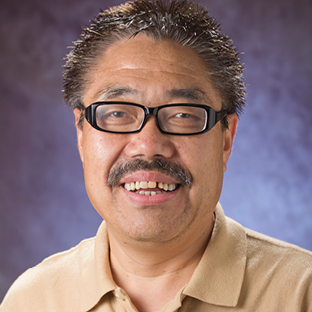
Roger Narayan is a Distinguished Professor in the Department of Materials Science and Engineering at North Carolina State University’s College of Engineering. His expertise spans biomedical materials, microneedle-based sensors, and additive manufacturing. He holds editorial roles at Biomaterials Forum and Applied Physics Reviews, and has edited influential texts like Biomedical Materials and Encyclopedia of Biomedical Engineering . His research focuses on advanced materials for medical devices, including 3D-printed microneedles for drug delivery and biosensing, electrochemical sensors for transdermal monitoring, and diamond-like carbon coatings to enhance biocompatibility. Recent work includes innovations like ChocOmega-3, a 3D-printed omega-3-enriched chocolate, and machine learning-integrated biosensors for real-time health monitoring. Dr. Narayan has secured grants for projects such as antimicrobial microneedle technologies, laser-annealed battery materials, and 3D-printed ceramics evaluation. His research bridges nanotechnology, materials science, and clinical applications, aiming to advance wearable diagnostics and precision medicine. Editorial Roles: Biomaterials Forum (Executive Editor), Applied Physics Reviews (Associate Editor) Grants: Over 10 funded projects including NSF/FDA collaborations and FDA grants Labs/Teams: Active in NC State’s Materials Science and Engineering Department labs, focusing on biomedical materials innovation Future Work: Expanding AI-driven sensor platforms and scalable biomedical manufacturing
Dr. Johannes Fiedler is a Research Fellow in the Department of Physics and Technology at the University of Bergen. His interdisciplinary research bridges quantum physics, nanophotonics, and machine learning for advanced sensing and fabrication applications. Fiedler's research focuses on matter-wave interferometry, quantum measurement devices, and nanoscale biosensing. He develops hybrid quantum-classical models for molecular detection and machine learning approaches for quantum lithography. Recent work includes innovations in atom interferometer design and computational methods for nanofabrication.
Jeong-Yeol Yoon is a Professor at The University of Arizona, holding primary appointments in the Department of Biomedical Engineering and split appointments in the Department of Biosystems Engineering. He also has joint appointments in Chemistry & Biochemistry and the BIO5 Institute. His research focuses on innovative biosensor technologies, organ-on-a-chip systems for medical and environmental diagnostics, and applications of machine learning in sensing. He earned his Ph.D. in Biomedical Engineering from UCLA and another Ph.D. in Chemical Engineering from Yonsei University. Education: Ph.D. 2004, Biomedical Engineering, University of California, Los Angeles Ph.D. 1999, M.S. 1994, B.S. 1992, Chemical Engineering, Yonsei University, South Korea Research Interests: Yoon's work emphasizes smartphone-based biosensors, organ-on-a-chip platforms for toxicity testing, and environmental monitoring. He pioneers the use of machine learning to enhance diagnostic accuracy and reduce costs. His lab develops field-deployable tools for rapid detection of pathogens, pollutants, and biomarkers. Recent innovations include paper microfluidics for viral detection and low-cost systems for microplastic analysis. Grants & Awards: Researcher of the Year, UA College of Engineering (2025) President of the Institute of Biological Engineering (IBE) (2013–2016) Over $10M in grants from NSF, USDA, and industry partners Labs & Collaborations: Directs the Biosensors Lab, collaborating with BIO5 Institute and industry partners. Active in global initiatives like the One Health Initiative for nanoplastics detection and environmental health.
Shuang Fang Lim is an Associate Professor in the Department of Physics at North Carolina State University (NC State), part of the College of Sciences. She holds a Ph.D. from the University of Cambridge (2004) and has held postdoctoral positions at Princeton University (2004–2008) and NC State (2008–2011). Her research focuses on upconverting nanoparticles (UCNPs), exploring their synthesis, photophysics, bioconjugation, and applications in biosensing, photodynamic therapy, and photothermal therapy. UCNPs offer unique advantages for 3D biological imaging due to their near-infrared excitation and visible emission properties, minimizing tissue autofluorescence. Her expertise includes nanomaterials engineering, optical thermometry, and bio-nano interfaces. Recent work emphasizes applications in point-of-care diagnostics, such as lateral flow assays and microarrays, alongside advancements in superfluorescence and unidirectional mechano-sensing. Lim’s interdisciplinary approach bridges physics, chemistry, and biomedical engineering, with a focus on translating nanotechnology into clinical and industrial solutions. Key contributions include developing core-shell UCNPs for single-particle studies, optimizing anti-Stokes shifted emissions for bioimaging, and creating automatic vehicular heatstroke detection systems using optical sensors. Her research is supported by grants and collaborations across academia and industry, though specific funding details are not provided here. Labs and teams involved include the Department of Physics at NC State, with ongoing projects in nanoparticle synthesis, nanoscale thermometry, and bio-applications. No specific awards are listed in the provided materials, reflecting a focus on impactful research over award recognition.
Qiang Wu is an Associate Professor in the Department of Mathematics, Physics and Electrical Engineering at Northumbria University. His research focuses on advanced optical fiber technologies, biosensors, and material science applications. He holds a PhD in Technologies awarded in 2004. His work integrates photonic crystal fibers, microstructured optical devices, and sensor systems for biomedical, environmental, and industrial applications. Education: PhD in Technologies (Awarded: 30 Jun 2004) Research Interests: Development of high-sensitivity optical fiber sensors for biomedical and environmental monitoring Design of photonic crystal fibers and microstructured optical devices Integration of machine learning with sensor systems for enhanced performance Acoustofluidics and surface acoustic wave technologies Fiber optic biosensors for rapid protein and biomarker detection Publications Trends: Recent work emphasizes ultrahigh-sensitivity biosensors (e.g., Ni2+ ion detection, C-reactive protein), advanced optical configurations (cascaded interferometers, Vernier effect-based designs), and applications in wearable health monitoring (e.g., blood pressure sensors) and energy systems (lithium-ion battery thermal management). Grants & Advising: Supervised 2 research projects (specific details not provided). Active in collaborative research with institutions globally, focusing on sensor integration and material innovation.
Lela Vukovic is an Associate Professor in the Department of Chemistry and Biochemistry at the University of Texas at El Paso (UTEP), where she leads a research group focused on computational chemistry and nanomaterials. She earned her B.Sc. and Ph.D. in Chemistry from the University of Illinois at Chicago and completed postdoctoral training at the University of Illinois at Urbana-Champaign and the Max Planck Institute for Biophysical Chemistry. Her research centers on developing and applying computational methods to study nucleic acids, carbon nanotube sensors, and molecular interactions in biological and nanotechnological systems. Key areas include DNA-carbon nanotube interactions, PFAS-protein binding, and the design of high-affinity molecular binders. The most recent publications highlight an interdisciplinary approach combining molecular dynamics simulations, machine learning, and experimental collaborations. Her work spans sensor design for neurotransmitters like serotonin, environmental toxicology of PFAS and nanoplastics, and the photophysics of molecular probes for disease biomarkers. Many of her papers appear in top journals such as JACS , ACS Nano , and Nature Communications , with several selected as cover articles. Scientific Awards: Humboldt Research Fellowship She actively mentors graduate students and postdoctoral researchers, with alumni placed in institutions such as the University of Illinois, MIT, and Pacific Northwest National Laboratory. Her group collaborates widely and develops open computational tools like BinderSpace for sequence analysis. She also maintains active research collaborations with experimental groups, including the Kruss Lab at Ruhr Universität Bochum.
Milan Stojanovic serves as Associate Professor in Columbia University's Department of Biomedical Engineering within the Fu Foundation School of Engineering and Applied Science, with dual affiliation in the Department of Systems Biology. He concurrently holds the position of Associate Director in the Division of Clinical Pharmacology & Experimental Therapeutics. His pioneering research focuses on engineering self-operating molecular automata capable of information processing and therapeutic response, high-resolution sensor arrays for bodily fluid analysis, and molecular systems exhibiting programmed walking and self-organization through local interactions. This work bridges nanotechnology, synthetic biology, and clinical therapeutics. His publication record demonstrates consistent innovation in DNA-based molecular computation and biosensing, with key contributions spanning molecular robotics (2010), evolutionary sensor optimization (2012), and breakthrough Debye-length overcoming detection methods (2018). Recent work advances intradermal health monitoring through hydrogel microfilaments (2019). National Institute of Diabetes and Digestive and Kidney Diseases grant recipient His research program integrates biochemical engineering with computational principles to develop autonomous molecular systems for diagnostic and therapeutic applications, maintaining strong connections between fundamental nanotechnology and clinical translation through Columbia's medical and engineering infrastructure.
Bingqian Xu is a Professor in the School of Electrical & Computer Engineering at the University of Georgia. His research focuses on molecular electronics, single-molecule biosensing, and nanotechnology with applications in biomedical engineering and renewable energy. He leads studies on charge transport mechanisms in molecular junctions, prion protein aggregation, and plant cell wall hydrolysis. Research interests include developing novel nanostructured materials, AFM-based biosensing techniques, and optoelectronic devices. Recent work explores genipin's role in neuroregeneration and high-value utilization of agricultural waste. Xu's lab investigates photo-induced molecular devices and self-assembled supramolecular architectures. Publications span over 15 years, covering topics like single-molecule force spectroscopy, aptamer-based toxin detection, and graphene functionalization. His work bridges chemistry, physics, and engineering with interdisciplinary applications in biomedicine and environmental sustainability. Key contributions include creating a modular platform for neuron-innervated heart assembloids and developing air-stable molecular junctions with extreme longevity. His team's AFM techniques enable real-time analysis of protein aggregation and enzyme-substrate interactions at nanoscale resolution.
Francesco Ferranti is a Professor at Vrije Universiteit Brussel (VUB), Belgium, specializing in photonics, microwave systems, and advanced modeling techniques. His research focuses on nanophotonics, optical engineering, and the application of machine learning in optical and electronic systems. Key projects include the Brussels Photonics 2025 initiative (GEAR), exploring photonics innovation, and developing high-precision optical components like metalenses using 3D nanoprinting. Ferranti’s work also addresses electromagnetic system modeling, fault diagnosis in phased arrays, and uncertainty quantification in complex circuits. He has supervised numerous students in topics ranging from metamaterials to biomedical applications of Raman spectroscopy. Collaborations span international institutions, with active projects in nanotechnology and medical device development. His contributions bridge theoretical advancements and practical applications, emphasizing interdisciplinary innovation. Education & Background: Ferranti holds a doctoral degree in Engineering (Prof. Dr. Eng.) and has led multiple fundamental and applied research projects. His academic career includes roles in both teaching and high-impact research. Research Interests: The core of Ferranti’s work lies in photonics, metamaterials, and advanced modeling techniques for electromagnetic systems. He pioneers methods like latent space modeling for spectral prediction and adaptive sampling for efficient simulations. His group develops optical components (e.g., metalenses) and systems for biomedical diagnostics, leveraging machine learning for enhanced accuracy and scalability. Recent trends in his publications emphasize interdisciplinary applications, such as eye-tracking contact lenses and fault diagnosis in antenna arrays. Awards & Recognition: While no specific awards are listed, his prolific publication record (145+ outputs) and high h-index (1297 citations) reflect significant academic impact. Advising & Grants: Ferranti has supervised 7 documented theses, with students contributing to fields like metamaterial design and nanophotonics. His grants include EU-funded initiatives (e.g., HERC67) and bilateral PhD collaborations. Labs & Teams: He is affiliated with VUB’s photonics and microwave engineering groups, contributing to facilities like the Brussels Photonics Lab and collaborating on advanced fabrication techniques (e.g., two-photon polymerization).
Dr. Haimei Helen Zhao is a Research Fellow and ICT Director at the School of Biomedical Engineering, University of Sydney. She holds a PhD from the Sydney AI Centre (2024) and an M.Eng. from Tsinghua University (2020). Her research focuses on AI-driven biomedical technologies, including generative AI, digital health diagnostics, and translational research. Current projects include SmartClot-AI, a blood coagulation testing platform, and generative AI models for stroke prediction. Education: PhD in Computer Science (University of Sydney, 2024), M.Eng. in Computer Science (Tsinghua University, 2020). Research interests span multimodal machine learning, biosensing, and low-cost diagnostic systems. Awards include the 2024 PERIscope Commercialisation Award and 2024 Faculty of Engineering Career Advancement Award. Leadership roles: ICT Director of School of Biomedical Engineering, interim Snow Manager of Ju-Snow Lab, and former DEI Committee Chair. Active in grant development and industry partnerships.
Pedro Filipe Zeferino Tomás is an Associate Professor at the University of Lisbon's College of Engineering, Department of Electrical and Computer Engineering. He is affiliated with INESC-ID research institute and teaches courses on Large Scale Computing, Computer Architecture, and High Performance Computing. His academic career includes a PhD in Neural Code modeling (2009), a Master's in DSP hardware structures (2006), and a Bachelor's in Bio-Inspired Artificial Retina design (2003). His research focuses on neuromorphic engineering, parallel computing architectures, and biosensing applications. Key areas include GPU optimization, transprecision arithmetic, neural prosthetics, and participatory urban biosensing. He has pioneered bio-inspired systems for visual neuroprostheses and developed energy-efficient hardware accelerators for machine learning. His recent work integrates biosensors into urban studies, exploring participatory methods for analyzing affective geographies and walkability. Over 60 peer-reviewed publications demonstrate his contributions to high-performance computing, neural modeling, and interdisciplinary urban technology. Grants: Multiple EU-funded projects in neuromorphic systems and urban biosensing Labs: Leads the Heterogeneous Computing Lab at INESC-ID and collaborates with neural engineering teams
Roles and Affiliations: Douglas Densmore is a Professor of Electrical and Computer Engineering at Boston University, holding the Tegan Family Distinguished Faculty Fellowship. He leads the CIDAR Group and directs the Biological Design Center. His primary appointment is in the College of Engineering, with affiliations in Biomedical Engineering, Bioinformatics, and Materials Science & Engineering. He also serves as an affiliated PI in the Engineering Biology Research Center and NSF CELL-MET ERC. Education: He earned a PhD in Electrical Engineering from UC Berkeley (2007), following MS (2004) and BS (2001) degrees from UC Berkeley and the University of Michigan, respectively. His postdoctoral research included work at UC Berkeley and the Synthetic Biology Engineering Research Center (SynBERC). Research Interests: Densmore focuses on synthetic biology tools, microfluidics, and design automation. His work integrates electronic design automation (EDA) principles with biological systems to create high-level abstraction frameworks. Key areas include: Development of domain-specific languages for genetic circuit design Standardization of biological parts and data exchange Hardware-software-wetware co-design for synthetic systems Microfluidic platforms for high-throughput experimentation Awards and Recognition: He has received prestigious honors such as the AIMBE Fellowship (2021), Inaugural DAC Under-40 Innovators Award (2017), and NSF CAREER Award (2013). His contributions span academic, entrepreneurial, and editorial roles in synthetic biology. Grants and Labs: His research is supported by grants from NSF, NIH, DARPA, and industry partnerships. He leads the CIDAR lab, which combines computational and experimental approaches. He co-founded companies like Lattice Automation and Asimov, advancing bio-design automation commercially.
Colas Schretter is a postdoctoral researcher and paid visiting professor at the Vrije Universiteit Brussel , affiliated with the Department of Electronics and Informatics. His research spans digital holography, biomedical imaging, and advanced signal processing techniques. Current projects include GEAR: Venturing into future health technologies (2021–2025) focusing on photoplethysmography and holographic image quality improvement. Previously led FWOAL784 (2015–2018) on hologram classification and compression. Research Interests : Digital holography for biomedical applications, lossless image compression algorithms, motion compensation in dynamic holography, and health technology innovation. His work bridges optical engineering, computer science, and real-time data processing. Recent Publications highlight advancements in hologram compression, spectrometer calibration, and 4D light field coding, reflecting his interdisciplinary focus. Collaborations include co-chairing conferences like ITF2018 Belgium and contributing to IEEE Access and SPIE proceedings.