Casey DiekmanView profile
Professor
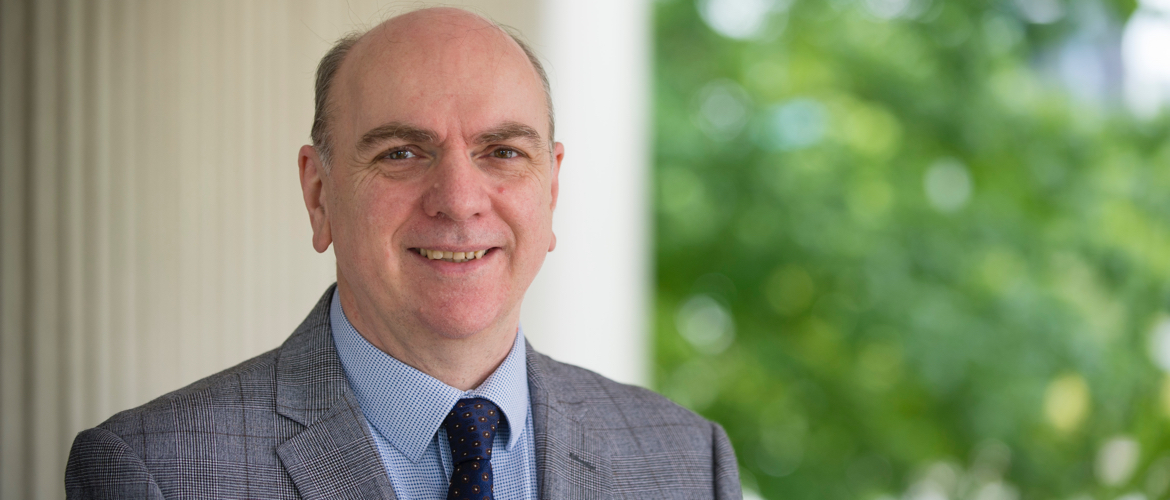
Casey Diekman is a Professor in the Department of Mathematical Sciences at New Jersey Institute of Technology (NJIT). His research focuses on mathematical and computational modeling of circadian rhythms, neural dynamics, and physiological systems. He has led NSF-funded projects, including studies on circadian clock mechanisms, neuronal data assimilation, and hybrid modeling of Alzheimer’s disease. His work integrates biophysical models with machine learning to study systems like cardiac electrophysiology and respiratory control. Roles: Professor, PI of multiple NSF grants Key Collaborations: Projects with researchers in neuroscience, cardiology, and computational biology Education & Background: While specific educational details are not provided, his academic position implies advanced training in applied mathematics or systems biology. Research Interests: Circadian rhythms, entrainment dynamics, computational modeling of biological systems, and applications in health (e.g., arrhythmias, neurodegenerative diseases). His work bridges mathematical theory and experimental data to address clinical problems like drug timing and respiratory failure. Grant Highlights: NSF GOALI (2022–2026): Integrates deep learning and mechanistic models for circadian clock neurons and Alzheimer’s disease NSF Career (2016–2021): Developed data assimilation tools for circadian rhythm studies NSF (2014–2017): Modeled circadian clock mechanisms from synapse to gene Recent Research Trends: Publications since 2022 focus on circadian impacts on drug safety, respiratory control during SARS-CoV-2 infection, and Alzheimer’s disease modeling using deep learning. His work often emphasizes interdisciplinary approaches to understand biological timing and its disruptions. Awards & Recognition: While specific prizes are not listed, his extensive grant portfolio and citation count (792) reflect scholarly impact. Advising & Grants: Oversees research teams in circadian biology and computational neuroscience. Media coverage highlights breakthroughs like explaining ‘happy hypoxia’ in COVID-19 patients and antiarrhythmic drug timing risks. Labs/Teams: Engaged in collaborative projects with institutions like NIH and other universities, focusing on systems-level biological modeling.