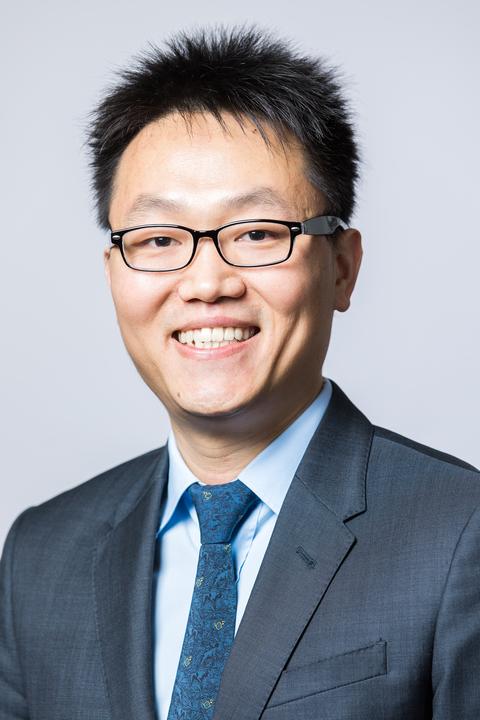
Dr. Wei Sun is a Chancellor's Fellow (equivalent to Assistant Professor) in Energy Systems Integration at the University of Edinburgh's School of Engineering. His research specializes in low-carbon energy systems with high renewable penetration, utilizing data science and optimization techniques. He contributes to major initiatives like the National Centre for Energy Systems Integration (CESI) and Hydrogen’s Value in Energy Systems (HYVE). Research encompasses network integration of distributed energy resources, climate impacts on renewables, and multi-vector energy systems. Recent publications focus on hybrid energy storage, hydrogen integration, and machine learning applications for system optimization. He holds professional credentials as a Chartered Engineer (CEng) with memberships in IET and IEEE. Teaching includes Hydropower Design Projects and Renewable Energy Fundamentals. Visiting research affiliations include University College London, enhancing collaborative networks in energy systems research.
Mehmet Mercangoz is an Associate Professor in Autonomous Industrial Systems at the Department of Chemical Engineering, Faculty of Engineering, Imperial College London. His research focuses on developing intelligent systems for industrial processes and energy systems, emphasizing safety, reliability, and sustainability through process modeling, model predictive control, optimization, and machine learning. His recent publications highlight applications of large language models , reinforcement learning , and hybrid mechanistic-machine learning models to address challenges in industrial automation, fault handling, energy storage, and gas compression systems. Key themes include decarbonization, electrification of process industries, and adversarially robust control frameworks. Current affiliations include Imperial College London and ABB, with prior roles at ABB Corporate Research Switzerland and ABB Future Labs. His work bridges chemical engineering , control theory , and artificial intelligence , targeting zero-emission industrial operations.
Associate Professor Xiu Wang is affiliated with the School of Computer Science at The University of Sydney, where she serves as Associate Director of the Multimedia Lab and a member of the Biomedical & Multimedia Information Technology (BMIT) Research Group. Her research focuses on panoramic data analysis, biomedical computing, image processing, and medical data fusion. Key projects include tumor treatment outcome prediction using deep learning, collaborative learning of multimodal medical imaging, and deformable image registration techniques. She teaches courses such as COMP5214 (Software Development in Java) and supervises graduate students in AI-driven medical diagnostics and imaging. Notable collaborations involve Dr. Hui Cui and Mr. Chaojie Zheng. Her work bridges computer science and healthcare, emphasizing AI applications in oncology, radiology, and neuroimaging. Recent articles highlight advancements in MRI segmentation, PET/CT radiomics, and graph neural networks for disease diagnosis. She actively contributes to interdisciplinary research, integrating computational methods with clinical data for precision medicine.
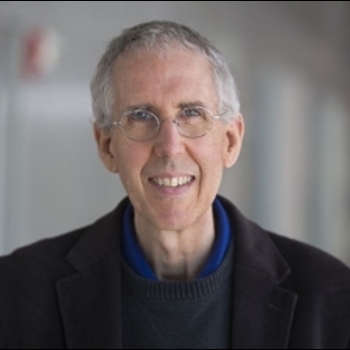
Alfred Hero is the John H. Holland Distinguished University Professor of Electrical Engineering and Computer Science and the R. Jamison and Betty Williams Professor of Engineering at the University of Michigan. He is currently on leave from the University of Michigan as a Program Director in the CISE Directorate at the National Science Foundation. His primary appointment is in the Department of Electrical Engineering and Computer Science (EECS) with secondary appointments in the Department of Biomedical Engineering and the Department of Statistics. He is affiliated with multiple research centers including the UM Center for Computational Medicine and Bioinformatics (CCMB), the UM Graduate Program in Applied and Interdisciplinary Mathematics (AIM), the UM Applied Physics Program, and the Michigan Institute for Data Science (MIDAS). Hero's research focuses on data science, developing theory and algorithms for multimodality data collection, fusion, analysis and visualization using statistical machine learning and distributed optimization. His work has applications in wearable technologies for personalized health and predictive medicine, spatio-temporal networks in biology, climate, and social discourse, anomaly detection, and data analysis for international security. His research group has produced numerous PhD students who have gone on to prominent academic and industry positions. His recent publications show a strong focus on high-dimensional statistical methods, machine learning theory, network analysis, and applications in biomedical domains. The research trends indicate increasing emphasis on multimodal data fusion, robust learning algorithms, and applications to complex systems in biology and security domains. His work bridges theoretical foundations with practical implementations across diverse application areas. Fellow of the Institute of Electrical and Electronics Engineers (IEEE) Fellow of the Society for Industrial and Applied Mathematics (SIAM) Fourier Award in Signal Processing from the IEEE Hero has advised numerous PhD, MS, and undergraduate students who have gone on to successful careers in academia and industry. His research has been supported by various grants, though specific grant details are not provided in the source material. His lab collaborates extensively across disciplines with researchers in statistics, biomedical engineering, and computational medicine. The Hero Research Group maintains active collaborations with institutions worldwide and participates in major conferences in machine learning, signal processing, and data science.
Kimberlee Kearfott, Sc.D., is a Professor in the Department of Nuclear Engineering and Radiological Sciences at the University of Michigan. Her primary affiliation is with the College of Engineering, and she holds an additional role as Affiliate Faculty in Biomedical Engineering (BME). Her research focuses on radiation protection, nuclear medicine, medical physics, and biomedical imaging. Key areas include radon gas dynamics, dosimetry techniques, environmental radiation monitoring, and the development of radiation-aware technologies like drones and weather stations. Her work spans theoretical and applied domains, including algorithm development for anomaly detection in radon time series data, advanced imaging systems, and radiation source mapping. She has contributed to the design of cost-effective radiation measurement instruments and systems for real-time environmental monitoring. Notable projects include the creation of an Intelligent Radiation Awareness Drone and a Low-cost Radiation Weather Station. Dr. Kearfott’s expertise also extends to radiation safety protocols, quality control in dosimetry calibration, and the application of machine learning to thermoluminescent dosimeter analysis. Her research has addressed critical issues such as earthquake prediction through radon gas analysis and sterilization techniques for SARS-CoV-2-contaminated equipment. Her laboratory focuses on interdisciplinary projects at the intersection of nuclear engineering, biomedical sciences, and environmental science. Collaborations involve both academic and industrial partners, emphasizing practical solutions for radiation-related challenges in healthcare, environmental safety, and homeland security.
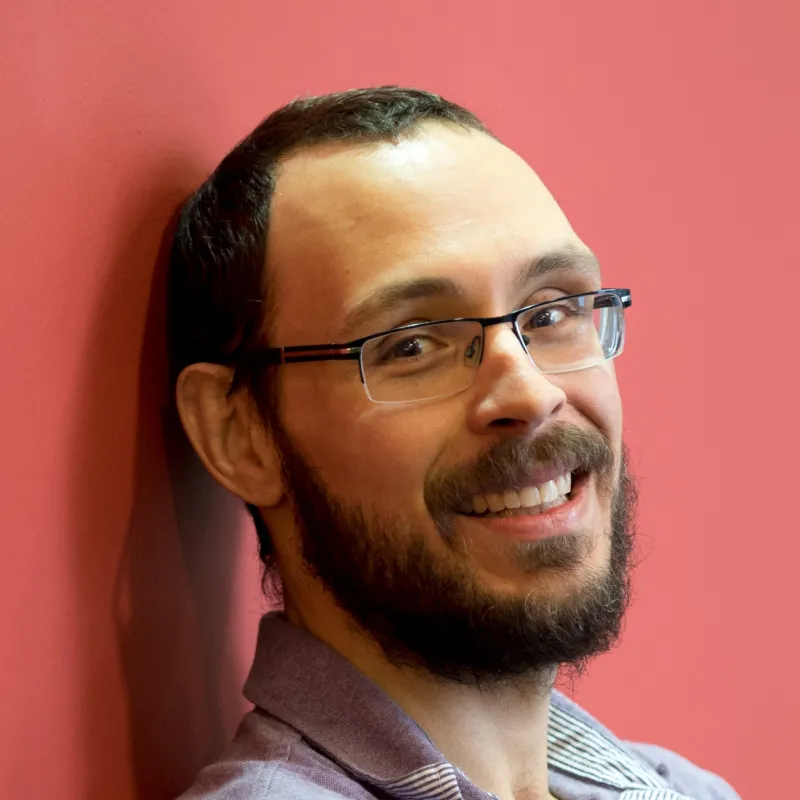
Lorenz Linhardt is a Researcher and PhD candidate at the Machine Learning Group of Technical University of Berlin, affiliated with the Berlin Institute for the Foundations of Learning and Data (BIFOLD). His research focuses on robustness of deep neural networks, spurious correlations, and representation learning, with applications in explainable AI and medical domains. Educational Background: M.Sc. in Computer Science, 2019 – ETH Zürich B.Sc. in Computer Science, 2016 – University of Vienna Research Interests: Robust Machine Learning : Addressing vulnerabilities in neural networks caused by spurious correlations and adversarial examples. Human Alignment : Bridging gaps between AI outputs and human judgments via representation learning and similarity metrics. Medical Applications : Leveraging machine learning for counterfactual inference in healthcare and dose-response modeling. Article Trends: Recent work emphasizes alignment between human judgments and AI systems, with studies on latent diffusion models, adversarial robustness, and forensic analysis of malware classifiers. Earlier contributions span astronomy surveys and decision tree optimization. Labs/Teams: Active in BIFOLD and the TU Berlin Machine Learning Group, focusing on foundational AI research.
Mirco Marchetti is an Associate Professor at the University of Modena and Reggio Emilia, affiliated with the Department of Engineering 'Enzo Ferrari'. He specializes in cybersecurity, network security, and automotive systems. His teaching responsibilities include courses on cybersecurity fundamentals, computer networks, operating systems, and automotive cyber defense. Research interests focus on intrusion detection systems (IDS), vehicular networks (VANETs), machine learning applications in cybersecurity, and automotive cybersecurity. He has contributed to projects like HackCar (automotive attack/defense testbed) and RealCAN (real-time CAN bus analysis tools). His work also explores adversarial attacks on ML-based systems and secure communication protocols for industrial and vehicular systems. Recent publications emphasize automotive cybersecurity (e.g., Mercedes-Benz infotainment system analysis, CAN bus anomaly detection), ML robustness against adversarial attacks, and zero-trust architectures. He collaborates with the SECloud research group (secloud.ing.unimore.it) and uses experimental platforms like Software-Defined Radios for security evaluations. Teaching responsibilities span multiple academic programs including Master's degrees in Computer Engineering and Artificial Intelligence Engineering. Courses emphasize practical skills in Linux/Unix administration, network configuration, and embedded system security.
Dr. Lydia Bouzar-Benlabiod is an Assistant Professor at the Jodrey School of Computer Science, Acadia University, Nova Scotia, Canada. Her research focuses on hardware-based machine learning, privacy-preserving techniques, and explainable AI. She holds a Ph.D. in Computer Science from Université d’Artois, France, and an M.Eng from Ecole nationale Supérieure d’Information (ESI), Algiers, Algeria. Her work bridges theoretical advancements with practical applications in cybersecurity, medical imaging, and intelligent systems. Research interests include adversarial machine learning, neural architecture search, and AI-driven healthcare solutions. Her lab explores cost-effective hardware implementations for medical diagnostics and anomaly detection systems. Key projects involve NeuroMem® chip integration for breast cancer detection and RNN-VED models to reduce false positives in cybersecurity. Dr. Bouzar-Benlabiod’s publications span 2013–2024, emphasizing data-driven modeling, case-based reasoning, and AI ethics. She contributes to special issues on heuristic data science and reuse in intelligent systems. Her work is accessible via CILS Lab and personal page .
Pedro Nardelli is a Full Professor (tenured) of IoT in Energy Systems at the LUT School of Energy Systems, Lappeenranta University of Technology (Finland). He holds a double doctoral degree in electrical engineering from the University of Campinas (Brazil) and communications engineering from the University of Oulu (Finland). As a Docent in Information Processing and Communications Strategies for Energy Systems, he leads research in cyber-physical systems, smart grids, and 6G-enabled energy networks. Research Interests : His work focuses on integrating IoT, AI, and communication technologies into energy systems. Key areas include cyber-physical systems, UAV-enabled networks, sustainable energy management, and cybersecurity in critical infrastructure. He emphasizes interdisciplinary approaches to address challenges in the green-digital transition. Projects & Leadership : He is Principal Investigator for projects such as 'Energy-Conscious Operation: Network Efficiency for Wireless Sustainability' (2024–2026) and coordinates the Finnish-Brazilian AI and 5G training program. Past roles include leadership in the 'Hydrogen and Carbon Value Chains in Green Electrification' initiative (2021–2024). Publications : Recent work explores topics like hybrid optimal power flow models, UAV-IRS NOMA systems, and energy-centric analysis. His research bridges theoretical frameworks with practical applications, emphasizing sustainability and resilience in energy networks. Labs & Teams : Leads the IoT Solutions group within LUT's MORE SIM research platform, focusing on simulation-driven innovation for energy systems.
Liang Hu is a Professor at De Montfort University's School of Computer Science and Informatics, with extensive research in machine learning, feature selection, and Internet of Things applications. His work bridges theoretical advancements in multi-label learning with practical implementations in IoT security and edge computing. PhD from Jilin University (1999) Active researcher with 178 publications (2005-2025) Key collaborator with Hongtu Li, Feng Wang, and Wanfu Gao His research focuses on multi-label feature selection , graph neural networks , and IoT security , developing novel frameworks for heterogeneous information networks, privacy-preserving federated learning, and threat detection in smart environments. His recent work integrates large language models with trigger-action programming systems. Analysis of his 15 most recent publications reveals strong emphasis on multi-view learning (40% of papers), IoT security applications (33%), and graph-based representation learning (27%), demonstrating consistent innovation in handling complex label correlations and heterogeneous data structures. His scientific contributions include novel feature selection methodologies that balance personalized and shared features while minimizing redundancy across multiple views and labels. Liang Hu leads research in edge intelligence and secure IoT programming, with recent projects developing conflict detection frameworks (CCDF-TAP) and privacy-preserving federated graph learning for smart home ecosystems. His work bridges theoretical machine learning with practical cybersecurity implementations.
Karim Boutiba is a Research Fellow at EURECOM's Communication Systems department, specializing in 5G/6G networks and advanced wireless technologies. His work focuses on optimizing network performance through machine learning, resource management, and network slicing. He contributes to both theoretical advancements and practical implementations, such as the 5G INSTRUCT forge pipeline and the GoSimRIS framework for 6G networks. His research interests span dynamic radio resource allocation, energy-efficient communication, and the integration of artificial intelligence in next-generation networks. Notable projects include leveraging deep reinforcement learning (DRL) for optimizing TDD patterns, O-RAN architectures, and edge computing solutions to enhance video streaming and latency-critical applications. Boutiba's publications emphasize the practical deployment of theoretical models, such as network slicing in Radio Access Networks (RAN) and anomaly detection using machine learning. His work bridges gaps between academic research and industry-ready solutions, with active participation in initiatives like the 6G-BRICKS architecture project.
Jorge Bernal Bernabe is an Associate Professor at the University of Murcia , affiliated with the Faculty of Informatics and the Department of Information and Communication Engineering . He holds a PhD in Computer Science from the University of Murcia (2015), focusing on 'Authorization and Trust Management in Distributed Systems Based on the Semantic Web.' His research group, Intelligent Systems and Telematics , explores cutting-edge cybersecurity solutions for IoT, 5G/6G networks, and privacy-preserving technologies. He is a key contributor to frameworks like OLYMPUS (privacy-aware identity management) and ARIES (European identity ecosystem). Education : PhD in Computer Science, University of Murcia (2015) Research Interests : His work centers on securing next-generation networks (e.g., 5G/6G), IoT privacy, federated learning applications for intrusion detection, blockchain-based identity systems, and policy-driven security enforcement. He emphasizes privacy-by-design principles and explores challenges in digital sovereignty and decentralized governance. Notable Projects : OLYMPUS: Oblivious identity management system ARIES: Pan-European identity framework ANASTACIA: Security agents for CPS/IoT INSPIRE-5Gplus: Cognitive security for 5G networks Labs/Teams : Active in the Intelligent Systems and Telematics Group , collaborating with industry partners on secure IoT deployments and 5G cybersecurity solutions.
Dragi Kimovski is a Habilitated Assistant Professor in Distributed Systems at Klagenfurt University, Austria, focusing on Edge Computing and AI. He previously held roles at the University of Innsbruck and the University of Information Science and Technology in Macedonia. His research spans Edge/Fog/Cloud computing, multi-objective optimization, and high-performance computing. He has coordinated major projects like 6GContinuum and KärtnerFog, and led initiatives such as DataCloud and ASPIDE. His teaching includes courses on Distributed Computing, Cloud Computing, and IoT. He is the co-creator of the Carinthian Computing Continuum and maintains a blog on Edge AI World. His work emphasizes sustainable and efficient computing solutions for emerging technologies. Education: Not explicitly listed in the provided text. Research Interests: Edge Computing, Fog Computing, Cloud Computing, Multi-objective Optimization, High-Performance Computing, AI in Distributed Systems. His work addresses challenges in resource management, latency reduction, and scalability across heterogeneous environments, with applications in healthcare, IoT, and 6G networks. Projects: 6GContinuum (Coordinator): Focuses on AI services over 6G networks. KärtnerFog (Scientific Coordinator): Develops adaptive Fog infrastructures over 5G. DataCloud (WP5 Leader): Manages Big Data pipelines on the Computing Continuum. ASPIDE (Scientific Coordinator): Advances exascale programming models for data processing. Teaching: Klagenfurt University: Courses include Distributed Computing, IoT, Cloud Computing, and Advanced Programming. University of Innsbruck: Taught Advanced Parallel and Distributed Systems. University of Information Science and Technology: Courses in High-Performance Computing and Network Architectures. Labs/Teams: Co-created the Carinthian Computing Continuum, an automated SDN testbed for Edge computing research. Active in interdisciplinary teams addressing extreme data processing and sustainable computing.
Jimmy McGibney is a Lecturer in the Department of Computing and Mathematics at Waterford Institute of Technology (WIT), now part of South Eastern Technological University (SETU). He holds a Master of Engineering from Dublin City University (1995) and a Bachelor of Engineering (Electronic) from University College Dublin (1992). His research focuses on network security, AI-driven cybersecurity solutions, trustworthiness in service compositions, and resource-constrained environments. External roles include serving as a Researcher at the Telecommunications Software and Systems Group (2000), a Research Assistant at Dublin City University (1996–1997), and a Systems Engineer at Aldiscon (1994–1996). His work emphasizes applied research in intrusion detection systems, network forensics, and trust management frameworks. Key research interests include AI applications in cybersecurity, trust metrics for service compositions, and securing edge computing environments. He has organized workshops on digital forensics and incident response, and his recent work explores AI methodologies for resource-limited systems. McGibney’s publications span over 38 works, including peer-reviewed chapters and conference contributions. Notable areas include network forensic readiness frameworks, deep learning-based intrusion detection, and trust overlays for spam protection. He has contributed to projects funded by industry and academic collaborations, focusing on practical cybersecurity solutions.
Shahid Hussain is an Associate Professor at King Abdullah University of Science and Technology (KAUST) in the Computer, Electrical and Mathematical Sciences and Engineering Division. His research spans multiple domains including electric vehicle infrastructure, blockchain technology, and intelligent systems for IoT applications, with a focus on practical implementations of computational intelligence techniques. Dr. Hussain's research interests include: Electric Vehicles and Smart Grid Integration Fuzzy Logic and Intelligent Decision Systems Blockchain Applications for Security and Privacy Machine Learning for IoT and Healthcare Applications Energy Management Systems Smart City Infrastructure Development His recent publications demonstrate a strong focus on applying hybrid computational approaches to solve complex engineering problems, particularly in transportation systems and healthcare applications. Dr. Hussain has published extensively in IEEE journals, with particular emphasis on innovative approaches to electric vehicle charging infrastructure, secure IoT systems, and blockchain-enabled solutions for real-world challenges. Dr. Hussain maintains active collaborations with researchers globally, particularly with Reyazur Rashid Irshad, Young-Chon Kim, and Subhasis Thakur. His work bridges theoretical advancements with practical implementations, as evidenced by his research on fuzzy integer linear programming for EV charging stations and blockchain-enabled security frameworks for medical IoT systems.