Andre Marquand is an active researcher in neuroscience, psychiatric disorders, and neuroimaging, with a strong focus on machine learning applications for clinical data analysis. His work spans autism, major depressive disorder, schizophrenia, and neurodegenerative diseases like Alzheimer’s. Research Interests: Neuroscience, neuroimaging, normative modeling, autism, psychosis, computational psychiatry, and brain network analysis. Projects: Co-Investigator in 11 finished projects, including biomarker development for ADHD, psychosis recovery, and Alzheimer’s disease. Recent Publications highlight trends in leveraging multimodal neuroimaging, extreme value statistics, and digital phenotyping to dissect heterogeneity in psychiatric and neurological conditions. His studies often employ normative modeling to personalize brain disorder trajectories. Collaborations: Long-term partnerships with institutions like King’s College London and MRC units, alongside experts in psychiatry and neuroimaging. Supervised Work: Mentored 3 projects, though student names are not explicitly listed.
Johannes Kruisselbrink is a Researcher at Biometris , a department within Wageningen University & Research , specializing in food safety and cumulative risk assessment. His work focuses on pesticide residues, dietary exposure, and computational modeling for regulatory compliance. Key Collaborations: European Food Safety Authority, EFSA Projects: Active in pesticide exposure analysis (2024-2028), cumulative risk assessment tools (2019-2023), and regulatory frameworks (2018-2019). His research integrates data modeling and statistical software to enhance risk assessment methodologies. Recent projects emphasize interoperability and accessibility of platforms like MCRA and PARC. Scientific Contributions: Developed AMIGA Power Analysis tool for equivalence testing Authored reports on pesticide risk surveillance in fruits and vegetables Advancing EFSA standards for acute reference dose calculations
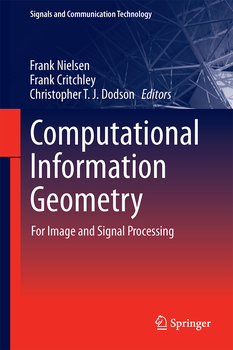
Frank NIELSEN is a Professor at École Polytechnique with expertise in information geometry, data science, and machine learning. He holds a PhD (1996) and HDR (2006) in computer science and has established himself as a leading researcher in geometric approaches to information science. His educational background includes a PhD in computer science (1996) followed by a Habilitation à Diriger des Recherches (HDR) in 2006, the highest academic qualification in France that qualifies one to supervise doctoral candidates. Dr. NIELSEN's research focuses on the Geometric Science of Information , where he develops theoretical frameworks for understanding data through geometric and information-theoretic lenses. His work bridges Computational information geometry Statistical manifold theory Bregman divergences and their applications Machine learning with geometric foundations High-dimensional data analysis He aims to address the challenge of inappropriate data representation in current Data Science by building a theory of Computational Information Geometry to enable Intrinsic Data Science with principled distances. His extensive publication record shows a clear trend toward developing geometric frameworks for understanding statistical divergences, with recent work focusing on Bregman geometry, Fisher-Rao metrics, and their applications in machine learning. His research spans theoretical developments in information geometry to practical implementations like the pyBregMan Python library, demonstrating both theoretical depth and practical relevance. Dr. NIELSEN has made significant contributions through his teaching and publications. He has taught courses at École Polytechnique including INF442, INF517, and INF591. His authored textbooks include Introduction to HPC with MPI for Data Science (2016), A Concise and Practical Introduction to Programming Algorithms in Java (2009), and Visual Computing: Geometry, Graphics, and Vision (2005). He has also edited influential volumes such as Computational Information Geometry for Image and Signal Processing (2016) and Geometric Theory of Information (2014). He actively organizes and participates in academic events, serving on program committees for major conferences including GSI (Geometric Science of Information), CVPR, and ICCV. His work has established him as a key figure in the growing field of geometric approaches to information science.
Seongjin Choi is an Assistant Professor in the Department of Civil, Environmental, and Geo-Engineering at the University of Minnesota, Twin Cities , where he began his role in January 2024. His research bridges Urban Mobility Data Analytics , Spatiotemporal Modeling , and Deep Learning to advance transportation systems. Affiliated with the Center for Transportation Studies , Minnesota Robotics Institute , and Data Science Initiative , he leads the Choi Research Group . Education: Ph.D., Civil and Environmental Engineering, Korea Advanced Institute of Science and Technology (KAIST), 2021 M.S., Civil and Environmental Engineering, KAIST, 2017 B.S., Civil and Environmental Engineering, KAIST, 2015 His research focuses on Urban Mobility Data Analytics and Deep Learning to optimize transportation systems. Key areas include: Spatiotemporal Data Modeling for forecasting and imputation Generative AI applications in transportation data Reinforcement Learning for Connected Automated Vehicles (CAV) Cooperative Intelligent Transport Systems (C-ITS) Recent publications in Transportation Science and Transportation Research Part C highlight his work on probabilistic traffic forecasting , deep generative models , and vision-language-action frameworks for autonomous systems. His methodologies often combine AI-driven analytics with real-time mobility optimization . Dr. Choi serves as: Associate Editor of The Journal of the Korean Society of Transportation (JKST) , 2023–Present Guest Editor for Journal of Advanced Transportation special issue on "Advanced Data Intelligence Theory and Practice in Transport 2023", 2023–2024 He actively seeks PhD students/postdocs for 2025 cohorts focused on machine learning for transportation challenges. Current projects include AI-enhanced traffic forecasting, CAV control, and urban air mobility (UAM) integration studies.
Arnab Nandi is a Professor of Computer Science and Engineering at The Ohio State University, with a courtesy appointment in Biomedical Informatics. He holds leadership roles including Steering Committee Member for the Human-in-the-Loop Data Analytics (HILDA) Workshop and has served as Workshops co-chair for SIGMOD 2025-26 and Demonstrations co-chair for SIGMOD 2024. His research focuses on bridging human interaction and data infrastructure, spanning database systems, human-in-the-loop data analytics, and next-generation query interfaces. Nandi's work emphasizes interactive data exploration through projects like DICE (Distributed Interactive Cube Exploration), GestureDB (Querying Beyond Keyboards), and Omni (Multimodal Data Exploration). His recent research explores integrating LLMs into database education, augmented reality interfaces for data analytics, and multimodal approaches to video querying. Nandi has received numerous honors including the NSF CAREER Award, Google Faculty Research Award, IEEE TCDE Early Career Award, and the University's Alumni Award for Distinguished Teaching. He was also named to Columbus Business First's '40 under 40' and became an ACM Distinguished Member in 2024. As an educator, he teaches courses including CSE 3241 (Introduction to Database Systems), CSE 5242 (Advanced Database Systems), and CSE 5251 (Introduction to Software Startups). His educational innovations include DBTutor, which integrates LLMs into database systems education. At Ohio State, Nandi co-founded the OHI/O Program, which fosters tech culture through hackathons, and The STEAM Factory, an interdisciplinary research collaboration network. Prior to academia, he was founder and CEO of Mobikit, a connected vehicles data analytics startup acquired by Azuga Inc. (a Bridgestone company). His research has been supported by the NSF and industry partnerships, with applications spanning precision agriculture (CropFusion), clinical data pipelines (ICARUS), and interactive visualization systems (Perceptvis).
Steven Laureys, MD, PhD, is a Professor at the University of Liège where he leads the Coma Science Group within GIGA Consciousness. He holds dual prestigious appointments as Canada Excellence Research Chair in Integrative Neuroscience for Sustainable Mental Health and Canada Excellence Research Chair in Neuroplasticity. His clinical roles include neurologist and clinical professor at the Centre du Cerveau of the CHU of Liège, and Director of Research at the FNRS. Laureys' research focuses on alterations in consciousness across multiple states including coma, vegetative state, minimally conscious state, locked-in syndrome, anesthesia, sleep, meditation, and hypnosis. His work integrates multimodal neuroimaging (fMRI, PET, EEG), electrophysiology, and behavioral assessments to develop diagnostic and prognostic tools for disorders of consciousness (DOC). Key methodological approaches include brain connectivity mapping, metabolic analysis, and AI-driven modeling of neural dynamics. His publication portfolio reveals a strong emphasis on brain connectivity dynamics (42% of recent articles), AI applications in consciousness assessment (23%), and translational neurorehabilitation (18%). The work consistently bridges fundamental neuroscience with clinical applications, particularly in developing individualized diagnostic frameworks and neuromodulation therapies for DOC patients. Major scientific recognition includes: Francqui Prize (2017), Belgium's highest scientific honor Generet Prize (2019) Appointment as Editor-in-Chief of Brain Connectivity journal (2024) Two Canada Excellence Research Chairs (2023-2024) Laureys directs the internationally recognized Coma Science Group, which operates within the GIGA Consciousness research center. The group maintains extensive international collaborations across Europe, North America, and Asia, with particular focus on developing standardized assessment protocols and innovative neuromodulation approaches for disorders of consciousness. Current research directions emphasize neuroplasticity mechanisms, meditation's impact on brain health, and sustainable mental health frameworks through integrative neuroscience approaches.
Guimu Guo is an Assistant Professor in the Department of Computer Science at Rowan University's College of Science & Mathematics. His research focuses on parallel and distributed computing techniques for large-scale graph mining problems, with applications in bioinformatics and transportation engineering. Ph.D. in Computer Science from University of Alabama at Birmingham M.Sc. in Computer Science from Tongji University Dr. Guo has published extensively in top-tier venues like VLDB, ICDE, and IEEE BigData. His work spans graph mining algorithms, parallel computing, and interdisciplinary applications in transportation and genomics. He actively mentors PhD and Master's students, offering fully funded positions. Key research trends include: Advancing GPU-accelerated graph decomposition techniques Developing distributed frameworks for subgraph querying and task concurrency Exploring parallel algorithms for frequent pattern mining and clique-like subgraphs Scientific Recognition: NSF CRII Award UAB Outstanding PhD Student Award Alabama GRSP Awards (Rounds 15 & 16) Teaching spans from foundational object-oriented programming to advanced graduate courses in parallel programming. His lab group has produced significant contributions to subgraph mining, transportation simulation, and genome assembly systems.
Paolo Prandoni is a Lecturer at École Polytechnique Fédérale de Lausanne (EPFL) in the School of Computer and Communication Sciences (IC). He serves as a Scientist in the Audiovisual Communications Laboratory (LCAV) and teaches in the SSC-ENS and SIN-ENS units, focusing on signal processing theory and practical applications in audiovisual communications. He earned his PhD from EPFL after completing all prior education there, driven by childhood fascination with long-distance telephony. His doctoral work established foundations in communication systems that continue to inform his research. Prandoni's research spans audio/image processing, machine learning for media analysis, and DSP education. Key areas include computational photography (e.g., spectral imaging, stained glass rendering), speech quality assessment via transfer learning, music information retrieval (e.g., fingering prediction), and audience analytics through his company Quividi. His work consistently bridges theoretical signal processing with real-world implementation. Recent publications reveal a strategic shift toward machine learning integration in signal processing tasks, particularly non-intrusive speech assessment and lensless imaging reconstruction. Simultaneously, he advances DSP pedagogy through MOOC development and hands-on teaching tools using off-the-shelf hardware, emphasizing accessibility and practical skill development. No scientific awards are documented in the provided materials. He has advised PhD student Thanikachalam Niranjan (thesis: Image Based Relighting of Cultural Artifacts , 2016) and teaches Communication Systems and Computer Science courses. His educational impact extends through the open-access textbook Signal Processing for Communications (2008) and tools like MultiPub for maintainable online classes. Industry engagement includes Quividi co-founding (2006) and ongoing CSO role in attention analytics. As a core LCAV laboratory member, he collaborates on interdisciplinary projects including cultural heritage digitization, embedded signal processing systems, and real-time audience measurement, leveraging EPFL's infrastructure for both academic and commercial applications.
Associate Professor Michael Jack is a faculty member in the Department of Physics at the University of Otago, specializing in sustainable energy research that bridges theoretical physics with practical applications. His work focuses on transforming energy systems through innovative approaches to renewable integration and nanoscale energy conversion. His academic foundation includes undergraduate studies at the University of Canterbury and postgraduate work at the University of Auckland, followed by postdoctoral positions at Hiroshima University, Tokyo Institute of Technology, NTT Basic Research Laboratories, and Rice University. After serving as Science Leader of Clean Technologies at Scion until 2014, he joined the University of Otago as a Senior Lecturer before advancing to Associate Professor. Professor Jack's research spans two critical domains: smart energy systems for grid flexibility and nanoscale energy conversion using molecular motors. His team develops mathematical frameworks to optimize renewable integration through technologies like EVs and energy storage, while exploring thermal fluctuations in biological nanomachines to inspire next-generation energy-efficient technologies. This work contributes significantly to Active Matter research and sustainable energy transitions. His 2024-2025 publications reveal a concentrated effort on New Zealand's energy challenges, employing interdisciplinary methods from statistical physics to machine learning. Key themes include electric vehicle integration, residential energy demand modeling, and hydrogen transportation systems - all addressing the urgent need for low-carbon energy solutions through rigorous quantitative analysis. Professor Jack leads a collaborative research group working with the Centre for Sustainability (CSAFE), University of Canterbury, and Scion's Dr. Katharine Challis. His teaching portfolio includes EMAN 308 Thermoprocesses 2, EMAN 403 Linear Systems and Control Theory, and EMAN 405 Energy Practice (which he coordinates), preparing students for energy system challenges through hands-on practice.
Lisa Grant Ludwig is a Professor in the Department of Population Health and Disease Prevention at the University of California, Irvine (UCI). She is a nationally recognized expert in earthquake science, focusing on translating geophysical research into policy for disaster risk reduction. Her work bridges seismology, public health, and policy implementation. PhD in Geology with Geophysics minor (Caltech) MS in Environmental Engineering Science (Caltech) BS in Applied Environmental Earth Science (Stanford) Dr. Ludwig's research centers on earthquake dynamics, particularly along the San Andreas Fault, advancing disaster resilience through innovative nowcasting techniques using AI and machine learning. Her publications demonstrate expertise in seismic hazard modeling, geodetic imaging, and community preparedness studies. Recent publications highlight AI-enhanced earthquake prediction (QuakeGPT), temporal-spatial nowcasting models, and applications of geodetic data for crustal deformation analysis. These works integrate machine learning with traditional seismological methods to improve hazard forecasting. President of Seismological Society of America NASA 2012 Software of the Year Medal Featured on Science magazine cover Congressional Testimony provider Active Federal Advisory Committee member Her interdisciplinary approach combines geophysics, public health policy, and computational science. Current projects focus on earthquake nowcasting, fault zone analysis, and developing accessible geospatial tools like GeoGateway for disaster response.
Ulisses M. Braga-Neto is a Professor in the Department of Electrical and Computer Engineering at Texas A&M University. His work focuses on statistical signal processing, pattern recognition, and machine learning. Research Interests : Statistical Signal Processing Machine Learning (including physics-informed ML and deep neural networks) Pattern Recognition Nonparametric Classification Regression Analysis Additional Information : Affiliated with the TAMIDS Scientific Machine Learning Lab Author of a widely recognized book on machine learning with Python integration Active in graduate education and curriculum development
Dr. Alexander Artikis is an Associate Professor of Artificial Intelligence at the University of Piraeus and a Research Associate at the National Centre for Scientific Research (NCSR) "Demokritos". He leads the Complex Event Recognition (CER) group , focusing on symbolic and probabilistic approaches to event recognition and forecasting. University of Piraeus (2025–present) NCSR Demokritos (2017–present) Complex Event Recognition Group (2017–present) His research spans Artificial Intelligence and Distributed Systems , with a focus on: Complex Event Recognition (CER) : Developing logic-based systems for detecting events in real-time data streams Event Calculus : Creating probabilistic and incremental versions for runtime reasoning Multi-Agent Systems : Modeling norm-governed interactions Maritime Informatics : Applying CER to vessel trajectory analysis and fleet management Key publications reveal trends in: Neuro-symbolic forecasting models combining deep learning and logic-based reasoning Symbolic automata with memory for pattern detection Online learning techniques for dynamic event rule generation Tensor-based formalizations for efficient temporal reasoning Handling uncertainty in real-time maritime data streams Optimizing memory usage for scalable stream processing He contributes to open-source tools like RTEC (Run-Time Event Calculus) and holds a European patent on complex event forecasting. His work addresses challenges in: Proactive decision-making systems Knowledge Graph consistency Hybrid human-machine discovery of movement patterns Big Data analytics for time-critical applications
Fabrizio Falchi is a researcher at the Artificial Intelligence for Media and Humanities (AIMH) Lab of the Institute of Information Science and Technologies (ISTI) within Italy's National Research Council (CNR). He also maintains an associate position at the Biorobotics Institute of Scuola Superiore Sant'Anna. His work focuses on developing advanced multimedia retrieval systems, with the VISIONE platform being his most notable contribution, which has won international competitions including the Video Browser Showdown in 2024 and placed second in 2023. Falchi's educational background includes: Ph.D. in Information Engineering from University of Pisa (Italy) Ph.D. in Informatics from Faculty of Informatics of Masaryk University of Brno (Czech Republic) M.B.A. from Scuola Superiore Sant'Anna in Pisa His research spans deep learning, convolutional neural networks, deep features extraction, similarity search algorithms, distributed indexing systems, multimedia information retrieval, computer vision applications, and peer-to-peer systems. Falchi has made significant contributions to fine-grained visual understanding, cross-modal retrieval (particularly image-text matching), and robustness of deep learning systems against adversarial attacks. His work demonstrates a strong focus on practical applications of these technologies, particularly in video retrieval systems and safety monitoring solutions. Analysis of Falchi's recent publications reveals a strong focus on video and image retrieval systems, with the VISIONE platform being central to his work. His research shows increasing emphasis on fine-grained understanding in computer vision, cross-modal retrieval, and addressing practical challenges like cross-resolution face recognition. Recent work demonstrates innovation in making these systems more efficient through techniques like knowledge distillation (ALADIN) and leveraging virtual worlds for training data. His publications consistently bridge theoretical advances with practical applications in surveillance, safety monitoring, and multimedia search. Falchi's work has received significant recognition: Best paper award at CBMI 2024 for 'Is ClLIP the main roadblock for fine-grained open-world perception?' VISIONE 2024 won the Video Browser Showdown competition in Amsterdam VISIONE obtained second place at Video Browser Showdown 2023 in Bergen Best Paper Award for 'Learning Safety Equipment Detection using Virtual Worlds' at CBMI 2019 Falchi collaborates extensively with researchers at ISTI-CNR, particularly within the AIMH Lab. His work on VISIONE involves collaboration with Giuseppe Amato, Paolo Bolettieri, Fabio Carrara, Claudio Gennaro, Nicola Messina, Lucia Vadicamo, and Claudio Vairo. As co-chair of Ital-IA 2023, the 3rd National Conference on Artificial Intelligence, he plays an active role in the academic community. He is a member of ACM (since 2012), the Computer Vision Foundation, the Italian Association for Computer Vision Pattern Recognition and Machine Learning (CVPL), and the CINI Lab on Artificial Intelligence and Intelligent Systems. Falchi is a key member of the Artificial Intelligence for Media and Humanities (AIMH) Lab at ISTI-CNR, where he leads research on video retrieval systems. The lab has developed the award-winning VISIONE platform, which combines multiple scientific results in content-based video retrieval. His team focuses on developing systems that enable users to search for target videos using textual prompts, drawing objects and colors, or images as query examples. The lab's work demonstrates strong interdisciplinary collaboration, bridging computer science with practical applications in media, safety monitoring, and urban environments.
Kavita Bala is the 17th Provost of Cornell University and a Professor of Computer Science. She previously served as the inaugural Dean of the Cornell Ann S. Bowers College of Computing and Information Science, leading its transition to a degree-granting college by 2025, and as Chair of Cornell’s Department of Computer Science. Her academic leadership includes expanding faculty, establishing research programs like the Bowers CIS Undergraduate Research Experience (BURE), and securing a new research facility for computing and information science. Education: B.Tech (IIT Bombay), M.S. and Ph.D. (MIT, Computer Science) Bala’s research focuses on computer vision, artificial intelligence, and computer graphics , with groundbreaking work in material and style recognition using deep learning. Her innovations in crowdsourced training data and differentiable rendering have advanced visual search technologies and translucent material modeling, powering her startup GrokStyle. She pioneered AI techniques applied to environmental monitoring through projects like MONITRS and AllClear , addressing Earth observation challenges. Her scientific awards include: American Academy of Arts and Sciences (2025) SIGGRAPH Computer Graphics Achievement Award (2020) IIT Bombay Distinguished Alumnus Award (2021) ACM Fellow (2019) SIGGRAPH Academy Fellow (2020) As Provost, Bala drives strategic initiatives like the Cornell AI Initiative , creating interdisciplinary minors in AI and AI in Society, and establishing the Schmidt AI in Science postdoctoral program. She co-chaired a task force for generative AI guidelines in education.
Núria Agell Jané is a Full Professor at ESADE Business School , Universitat Ramon Llull, specializing in Artificial Intelligence and Decision-Making Systems. She leads the JUICE (Judgements and Decisions in the Market Place) research group and the ESADE D3 - Institute for Data-Driven Decisions . Doctorate in Applied Mathematics (Qualitative Reasoning Modelling), UPC-BarcelonaTech Bachelor's in Mathematics, University of Barcelona Her research focuses on Artificial Intelligence , Decision-Making Systems , and Fuzzy Logic , with applications in Business, Marketing, and Sustainability. Recent publications emphasize Hesitant Fuzzy Linguistic Term Sets , Consensus Modeling , and AI in Sustainable Development . She coordinates multiple publicly and privately funded projects applying AI to Business and Marketing challenges. As PhD Programme Director (2005-2013) and current Department Director of Operations, Innovation and Data Sciences , she has shaped academic and research strategies at ESADE. Her work spans collaborations with institutions like LAAS-CNRS (France) and University of Edinburgh Business School , with over 40 journal publications and 50 conference contributions. She has directly supervised 11 PhD students in AI and Decision Sciences.