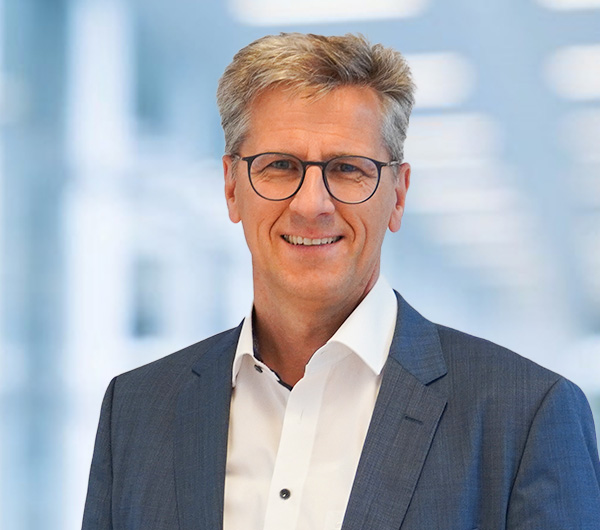
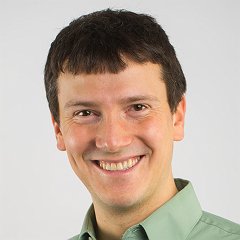
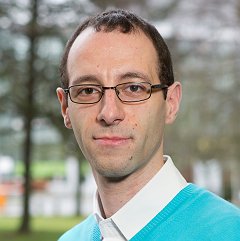
Prof. Ulrich Büker is a faculty member at TH OWL since 2022, leading the Intelligent Systems research group at inIT (Institute for Industrial Information Technology). He became deputy head of inIT in 2024 and Vice Dean of Department 5 in 2025. His work bridges academic research and industrial applications in intelligent systems. Education : Diploma in Computer Science (University of Paderborn), Doctorate and Habilitation in Electrical Engineering and Information Technology (University of Paderborn). Research Interests include: Application-oriented artificial intelligence for automation and mobility systems. Autonomous driving with focus on scenario generation and vision-based control. Computer vision for robotics and industrial applications. Embedded systems in battery electric vehicles. Article Trends demonstrate expertise in autonomous systems, computer vision, and industrial applications, spanning from foundational 2000s work on hybrid object models to recent LLM-driven autonomous driving scenario generation . Key sub-fields include neural networks, image processing, and vehicle energy management. Professional Contributions include: Industrial leadership roles at Aptiv , Delphi , and Hella . Membership in German Informatics Society (GI) and German Society for Pattern Recognition (DAGM) . Patents in image segmentation (DE000010250781, EP000001416441).
Dr. Hans Peter Maurer is a Researcher at the Plant Breeding Department of Hochschule Osnabrück , focusing on triticale genetics and hybrid breeding. He leads scientific initiatives in triticale (×Triticosecale Wittmack) improvement, emphasizing resistance traits, genomic selection, and phenomic prediction. Current projects include phenomic prediction optimization, Fusarium resistance verification, and genome-wide association studies for digestibility. Research Interests span plant breeding, genetic architecture of yield traits, hybrid breeding systems, and stress resistance in cereals. His work integrates genomic data with agronomic performance to enhance breeding programs. Recent Publications (2025-2016) highlight triticale's genetic basis for Fusarium resistance, biomass yield optimization, and hybrid breeding methodologies. Key subfields include NIRS preprocessing, QTL mapping, and epistatic interactions. Additional Contributions involve developing the Plabsoft software suite for genomic data analysis and simulation in plant breeding, as well as pioneering multi-sensor platforms for high-throughput phenotyping (e.g., thermography, RTK-GPS systems).
John van de Wetering is an Assistant Professor at the Theoretical Computer Science group of the Informatics Institute at the University of Amsterdam . He works with the QuSoft research center and co-develops the PyZX open-source quantum compiler. His research spans quantum computation, diagrammatic reasoning, and quantum foundations. Education: PhD in Computer Science (2022, Radboud University) Research: Focuses on ZX-calculus for quantum circuit optimization, verification, and simulation. Explores quantum foundations through algebraic and compositional methods. Recent work includes quantum circuit optimization with AlphaTensor, completeness proofs for ZH-calculus, and scalable spider nets for transversal non-Clifford gates. He directs the new Master's program in Quantum Computer Science at UvA and co-authored the book Picturing Quantum Software . Notable collaborations include PyZX development and EU Gender Equality Working Group participation. Supervision includes current PhD students Lia Yeh (Oxford), Sarah Li (UvA), and Marc Farreras (Leiden). Former students include Boldizsár Poór (Quantinuum), Julien Codsi (Princeton), and Yanbin Chen (TUM). Tools & Outreach: Maintains the ZX-calculus Wikipedia page, co-lectured courses like Quantum Processes and Computation , and develops the ZX-calculus educational website. Organized QPL2026 conference and contributed to open-access journal Quantum .
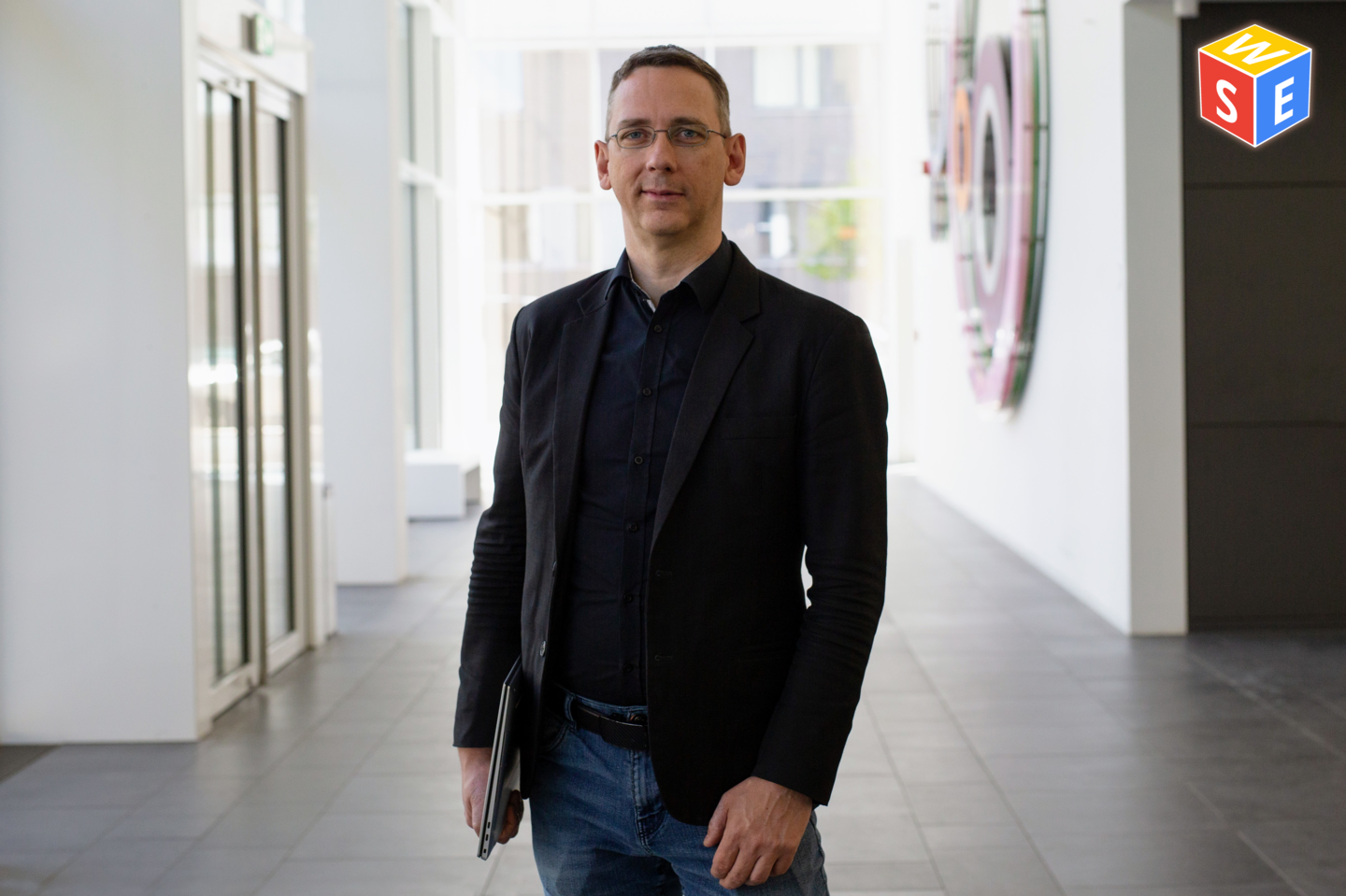
Andreas Both is a Professor at the Faculty of Computer Science and Media at Leipzig University of Applied Sciences (HTWK Leipzig), where he leads the Web & Software Engineering (WSE) research group. His work spans multiple domains of computer science with a strong focus on bridging theoretical foundations with practical applications in software engineering, web technologies, and artificial intelligence. His research interests primarily revolve around Software Engineering (particularly test automation with AI and source code analysis), Web Engineering , Applied Artificial Intelligence (including Machine Learning, Deep Learning, and Large Language Models), Question Answering & Chatbots , and Data-driven Applications . He has developed innovative approaches in knowledge graph question answering systems, multilingual NLP applications, and privacy-preserving data sharing technologies using the Solid protocol framework. The analysis of his recent publications reveals a strong trajectory toward leveraging Large Language Models for knowledge graph applications, with particular emphasis on multilingual capabilities, explainability, and quality improvement in question answering systems. His work increasingly integrates privacy considerations with advanced AI techniques, particularly through Solid protocol implementations for data sovereignty. Best Paper Award at ICWE 2024 for AuthApp - a GDPR-compliant access granting system Outstanding Paper Award at ICWI 2024 for LLM-generated explanations in question answering systems Multiple first-place awards at the TEXT2SPARQL Challenge 2025 Best Paper Awards at ICWE 2025 and IEEE ISI 2025 CHI 2015 Honorable Mentions for search interface research Professor Both actively mentors students through the Google Summer of Code program and serves on the leadership board of the Architecture (ARC) working group of the German Computer Science Society (Gesellschaft für Informatik). His teaching portfolio includes Software Engineering, Question Answering & Chatbots, Software Projects, Project Management Practicum, Web Engineering, and Software Engineering & AI courses. His office hours are Thursdays from 11:15-12:15, requiring advance email appointment with topic specification.
Rolf Drechsler is a Full Professor and Head of the Group of Computer Architecture at the University of Bremen's Institute of Computer Science since 2001, and Director of the Cyber-Physical Systems Group at DFKI Bremen since 2011. He holds an adjunct professorship at the Indian Statistical Institute and has been affiliated with Duke University. Education: Diploma (1992) and Dr. phil. nat. (1995) in Computer Science from Goethe University Frankfurt Academic Leadership: Dean of Mathematics and Computer Science Faculty (2018-2025), Vice Rector for Research (2008-2013) His research focuses on formal verification , RISC-V architectures , and quantum/in-memory computing . Recent work explores LLM integration in hardware testing and polynomial-based verification techniques. Publications from 2024-2025 span IEEE Transactions , DATE , and DAC , emphasizing automated verification , quantum circuit mapping , and LLM-driven testbench generation . Scientific Awards IEEE/ACM Best Paper Awards (2013, 2018) Berninghausen-Preis for Innovative Teaching (2018) IEEE Fellow (2015) Founder Award for Solvertec (2013) He has served on program committees for DAC, ICCAD, DATE, and founded graduate schools in Embedded Systems and System Design under Germany's Excellence Initiative.
Prof. Dr. Kristian Hildebrand is a Professor of Computer Graphics and Interactive Systems at Berlin University of Applied Sciences and Technology since 2015, leading the Intelligent Interactive Systems research group. His work bridges computer graphics, VR/AR, computer vision, and machine learning. PhD in Computer Graphics (Technical University of Berlin, 2013) Diploma in Computer Science and Media (Bauhaus University Weimar) Academic experience: University of British Columbia, Max Planck Institute Saarbrücken Industry experience: ART+COM Studios Berlin, Disney Research Zurich, co-founder of kunstmatrix Research Interests span computer graphics , AR/VR systems , computer vision , and digital fabrication , with applications in: Medical therapy (AnorexiaVR, PAN-Assistant, VITALAB.mobile) Human-robot interaction (Digit gestures, Non-verbal communication) Machine learning (Domain adaptation, GAN-based medical image synthesis) Digital fabrication (Optimized 3D printing, crdbrd fabrication) Publications show trends in: Medical VR applications for mental health and geriatrics GAN-based medical image generation and segmentation Redirected walking and spatial navigation techniques Domain adaptation for industrial object classification Scientific Contributions : Principal investigator in multiple DFG-funded projects (tele.interaction, Manipulation of virtual self-perception) Recipient of Best Student Paper Award (ECML-PKDD 2023) Key role in BMBF projects: Vitalab.mobile, BewARe, SynthNet Academic Leadership includes: Supervision of PhD students (Christopher Kümmel, Tabea Kossen) Teaching: Computer Vision, Game Programming, Scientific Computing Founding director of Human.VR.Lab (interdisciplinary computer science/life science collaboration)
Sriram Sankaranarayanan is a Professor in the Department of Computer Science at the University of Colorado Boulder and also serves as Associate Dean for Digital Education in the College of Engineering and Applied Science. Since joining the faculty in 2009, he has built an internationally recognized research program that blends programming languages, formal methods, and control theory to reason about cyber-physical systems. Education: Ph.D. in Computer Science, Stanford University, 2005 (advisers Zohar Manna & Henny Sipma) B.Tech., Indian Institute of Technology Kharagpur (President’s Gold Medal, 2000) Research Interests: Prof. Sankaranarayanan’s work centers on hybrid dynamical systems —models that capture discrete software interacting with continuous physical environments—and on developing formal-methods techniques for their verification, control, and synthesis. Specific themes include control-barrier & Lyapunov function synthesis, neural-network verification, stochastic-game models for human-autonomy interaction, and physics-informed machine learning. Application domains range from autonomous robotics and surgical-task planning to safety-critical medical devices such as the artificial pancreas. Recent Publication Trends (2024-2025): His latest papers advance safe control synthesis (successive control barrier functions, piecewise-affine Lyapunov functions) and trustworthy AI (Taylor-model enhanced physics-informed neural networks), while also exploring game-theoretic anticipation for robotic systems interacting with uncertain human operators. Honors & Awards: NSF CAREER Award (2009) Siebel Scholar (2005) President’s Gold Medal, IIT Kharagpur (2000) CU Boulder Dean’s Award for Outstanding Junior Faculty (2012) CU Boulder Outstanding Teaching Award (2014) CU Boulder Provost’s Faculty Achievement Award (2014) Coursera Outstanding Innovation Award (2022) Student Advising & Grants: He has mentored numerous PhD students; recent graduates include Dr. Emily Jensen, Dr. Monal Narasimhamurthy, and Dr. Kandai Watanabe (2024). His group regularly publishes at top venues such as HSCC, POPL, PLDI, CAV, and WAFR, supported by NSF, NIH, and industry grants. Group & Teaching: Prof. Sankaranarayanan leads activities within the Programming Languages & Verification group and teaches graduate and undergraduate courses on programming languages, algorithms, optimization, and formal methods. He is active in conference organization (e.g., PC Chair VMCAI 2025) and maintains open-source courseware and research notebooks on GitHub.
Alexandra Silva is a Professor of Computer Science at Cornell University with prior affiliations as a Royal Society Wolfson Fellow and Professor of Algebra, Semantics, and Computation at University College London . She leads a research group focusing on the modular development of specification languages and algorithms for models of computation, emphasizing coalgebra as a unifying mathematical framework. Research Interests Her work spans foundational and applied areas in theoretical computer science, including: Coalgebraic methods for formal verification Automata theory and learning algorithms Probabilistic programming and semantics Programming language design (e.g., NetKAT, Kleene Algebra with Tests) Concurrency theory and distributed systems Algebraic structures in computation Recent publications address network verification (StacKAT), symbolic automata learning, probabilistic regular expressions, and outcome logic for correctness/incorrectness reasoning. She is actively involved in organizing academic events like OPLSS 2025 and co-authoring foundational works in Formal Aspects of Computing and Theoretical Computer Science . Scientific Awards Distinguished Paper Award (ACM SIGPLAN POPL, 2020) Best Paper Award (RTA, 2015) She teaches courses on Kleene Algebra with Tests (KAT) and verification at summer schools like Marktoberdorf 2025 , and her research includes collaborations on probabilistic network verification (ProbNV) and stochastic system modeling.
Dr. Kim Völlinger is a Researcher at the Technical University of Berlin in the Models and Theory of Distributed Systems group. Her academic career spans formal methods, trustworthy machine learning, and distributed systems, with a focus on integrating interactive proof assistants like Coq for neural network verification. Education: Computer Science with a minor in Cognitive Psychology at Humboldt University of Berlin and ENSEEIHT in Toulouse, France PhD Supervisors: Wolfgang Reisig (HU Berlin), Kurt Mehlhorn (MPI-INF Saarbrücken), Holger Schlingloff (Fraunhofer FOKUS) Her research bridges theoretical computer science and practical verification, exploring witness-based runtime verification for asynchronous systems, hybrid system formalization, and LLM-supported proof synthesis. She also contributes to interdisciplinary collaborations, particularly evident in her microbiology-related publications. Recent publications on Google Scholar highlight her work in environmental microbiology, including microbial community dynamics in petroleum reservoirs, DNA extraction from crude oil, and bacterial stress responses in extreme saline environments. These studies reflect cross-disciplinary applications of computational modeling to environmental systems. Teaching activities include formal languages, automata theory, and interactive theorem provers. She actively mentors doctoral students, leads research-oriented master's projects, and supervises student theses. The Models and Theory of Distributed Systems group at TU Berlin serves as her primary research environment, where she continues to develop tools for computational verification and machine-reviewed proofs.
Christoph Reich is a Professor at Furtwangen University (HFU), Germany, actively engaged in research and teaching within network technologies, IT security, and cloud computing systems. His academic profile reflects strong industry-relevant expertise in cyber-physical systems and industrial digitalization. Research interests include: Middleware Network Technologies IT Security Cloud Computing Quality of Service Ambient Assisted Living Distributed Software Architectures IT Management Recent publications (2020-2023) demonstrate concentrated focus on machine learning and blockchain applications in Industry 4.0 contexts. Key thematic clusters include distributed decision trees with corruption resistance, verifiable ML models via blockchain, real-time anomaly detection in industrial networks, and secure ML pipelines for manufacturing. Work consistently addresses security vulnerabilities, robustness requirements, and quality-of-service metrics in cyber-physical production systems. Scientific awards: None listed in available documentation. No information provided regarding student advising, research grants, laboratory affiliations, or collaborative teams. Office hours are conducted by appointment at Campus Furtwangen, Room C 2.08.
Thorsten Berger is a Professor and Head of the Chair of Software Engineering at Ruhr University Bochum, Germany. His office is located at MC 4.101 on the RUB campus, with contact details including phone (+49 (0) 234 32 25975) and email (thorsten.berger@rub.de). He's an active researcher with extensive service in the software engineering community, serving on program committees for major conferences including ICSE, FSE, ASE, and SPLC. Professor Berger's research primarily focuses on software engineering with specialization in variability management, software product lines, and robotics software engineering. His work bridges theoretical foundations with practical applications, particularly in behavior trees for robotic systems, configuration management, and domain-specific language engineering. His interdisciplinary approach connects software engineering with control theory and machine learning applications. Analysis of his recent publications reveals a strong trend toward robotics software engineering, with increasing focus on behavior trees, test-case specification, and runtime verification for robotic systems. His work also shows growing interest in machine learning integration with traditional software engineering practices, particularly in model integration and asset management for ML-enabled systems. The research demonstrates consistent evolution from foundational work in variability management toward more applied domains. His scientific achievements have been recognized with numerous awards: Multiple Most Influential Paper Awards (SLE 2024, VaMoS 2023, VaMoS 2020) Wallenberg Academy Fellowship VR Starting Grant from Swedish Research Council (2016) Best Paper Awards at Modularity (2015) and CSMR (2013) Distinguished Reviewer Awards from ASE, ICSE, and SPLC conferences ERC Starting Grant finalist (2019, 2020) Professor Berger has secured substantial research funding as Principal Investigator for multiple projects including Novel Techniques for Data-Driven Root-Cause Analysis and Variability Management (Volkswagen Infotainment), Properties and Verification Techniques for Behavior Trees (Phoenix Contact Foundation), and PrivacyE2E framework for AI-enabled systems (Federal Ministry of Education and Research). His Wallenberg Academy Fellowship and VR Starting Grant demonstrate his capacity to attract competitive early-career funding. He leads the Virtual Platform project funded by the Swedish Research Council and participates in EU-funded initiatives like CO4ROBOTS. As Head of the Chair of Software Engineering at Ruhr University Bochum, he leads a research group focused on advanced software engineering techniques with particular emphasis on variability-intensive systems. His team actively participates in international research collaborations including the Wallenberg Autonomous Systems Program (WASP) and has organized significant events like the Dagstuhl seminar 19191 on 'Software Evolution in Time and Space: Unifying Version and Variability Management.'
Yuriy Brun is a Professor at the Manning College of Information & Computer Sciences at the University of Massachusetts Amherst. He leads research in software engineering with a focus on improving the construction of intelligent, self-adapting systems while ensuring fairness and correctness. His research spans several key areas: software fairness, self-adaptive systems, automated program repair, and formal verification. Brun's work has pioneered the field of software fairness, establishing it as a fundamental software engineering concern. His lab, LASER, conducts high-risk, high-impact research aimed at fundamentally improving how engineers build systems. Brun's publications demonstrate a strong focus on automating formal verification and ensuring fairness in machine learning systems. His recent work leverages large language models for proof synthesis and develops techniques for guaranteeing fairness constraints in software systems. His research has shown significant evolution from distributed systems and collaborative development toward formal verification and AI safety. NSF CAREER Award recipient IEEE Fellow Multiple ACM SIGSOFT Distinguished Paper Awards Google Inclusion Research Award recipient Amazon Research Award recipient Microsoft Research Software Engineering Innovation Foundation Award Brun actively mentors students, with current PhD advisees including Zhanna Kaufman, Hadeel Eladawy, and Abhishek Varghese. His former students have gone on to positions at institutions including Oregon State University, University of California San Diego, and Microsoft. He teaches courses including Introduction to Software Engineering and Software Engineering Project Management.
Matteo Camilli is an Associate Professor in the Department of Electronics, Information and Bioengineering (DEIB) at Politecnico di Milano, Italy, where he leads research in software engineering and verification. His academic journey includes positions as Assistant Professor at Free University of Bozen-Bolzano and postdoctoral research at the University of Milan and University of Bergamo. His educational background includes a PhD in Computer Science (2015), MSc in Computer Science (2012), and BSc in Computer Science (2009), all from the University of Milan. His doctoral research focused on combining advanced abstraction techniques and big data approaches to address state explosion problems in formal verification. Camilli's research primarily centers on software verification, testing, and methods to improve dependability of autonomous, cyber-physical, service-based, and ML-enabled critical systems. His work spans formal methods, model-based testing, uncertainty quantification, and design-time/runtime verification with applications to complex distributed systems. His recent publications reflect a growing focus on explainable self-adaptation, quality assurance for LLM-based systems, and managing uncertainty in adaptive systems. His publication record includes papers in top journals (TOSEM, TAAS, JSS, EMSE) and conferences (ICSE, ISSRE, ICST, ICSA). He serves on program committees for prestigious conferences including ICSE, ICSA, ICST, and ECSA, and is on the steering committee for the International Workshop on Formal Approaches for Advanced Computing Systems (FAACS). Camilli actively contributes to the academic community through conference organization, including serving as Program Committee Member for numerous conferences and as Program Co-Chair for the Software Architecture track at ACM SAC. He also serves as guest editor for special issues on automated testing and dependable AI systems. His teaching portfolio at Politecnico di Milano includes Software Engineering 2, Software Engineering for Automation, and Distributed Software Development. Previously at Free University of Bozen-Bolzano, he taught Systems Engineering and Verification and Reliability for Dependable Systems.
Osbert Bastani serves as an Associate Professor in the Department of Computer and Information Science at the University of Pennsylvania. He leads the trustml@Penn research group and holds affiliations with the ASSET, PRECISE, and PRiML research centers, as well as PLClub. His academic work centers on developing reliable and interpretable artificial intelligence systems through interdisciplinary approaches combining programming languages, formal methods, and machine learning. He earned his Ph.D. in Computer Science from Stanford University under the guidance of Alex Aiken, followed by a postdoctoral position at MIT working with Armando Solar-Lezama. This foundation in both theoretical computer science and practical systems has shaped his research trajectory. Bastani's primary research areas include Trustworthy Machine Learning (focusing on robustness against adversarial attacks, fairness in algorithmic decision-making, and explainable AI), program synthesis, and formal verification. His recent publications address critical challenges in large language models, such as defending against jailbreaking attacks and ensuring trustworthy retrieval-augmented generation. He also develops methods for conformal prediction under distribution shifts and neurosymbolic program synthesis for complex tasks like web question answering. His teaching portfolio features advanced courses including CIS 7000: Trustworthy Machine Learning and CIS 4190/5190: Applied Machine Learning, where he integrates cutting-edge research into the curriculum. Through his research group, he mentors graduate students on projects spanning neurosymbolic programming, uncertainty quantification, and fairness in sequential decision-making. As an active member of Penn's research ecosystem, Bastani contributes to the ASSET center's mission of building secure systems, PRECISE's work on cyber-physical systems, and PRiML's machine learning initiatives, while collaborating with PLClub on programming language innovations.
Domenico Bianculli is an Associate Professor and Chief Scientist 2 at the Interdisciplinary Centre for Security, Reliability and Trust (SnT) at the University of Luxembourg. He leads the Software Verification and Validation (SVV) research group and is affiliated with the Department of Computer Science in the Faculty of Science, Technology and Medicine (FSTM). Additionally, he serves as the deputy study program director for the Master in Space Technologies and Business. Dr. Bianculli earned his PhD from the University of Lugano (Switzerland) under Carlo Ghezzi, with a dissertation titled "Open-world software: Specification, Verification, and Beyond." He also holds a MSc in Computing Systems Engineering and a BSc in Computer Engineering from Politecnico di Milano (Italy). His research focuses on the specification, verification and validation of software systems, particularly evolvable software systems. His work spans trace checking and run-time verification of temporal properties, modeling access control policies, program analysis for security, incremental verification techniques, and verification of service-oriented systems. Dr. Bianculli bridges theoretical foundations with practical applications in cyber-physical systems, financial technology, and regulatory compliance. His recent publications reveal a strong trend toward applying machine learning to software engineering challenges, particularly in log analysis, anomaly detection, and automated compliance checking. He has made significant contributions to verifying cyber-physical systems through techniques for stress testing control loops and trace diagnostics for signal-based temporal properties. His work increasingly addresses financial technology challenges, with papers focusing on automated regulatory compliance related to GDPR and financial regulations. ACM SIGSOFT Distinguished Paper Award for "Efficient large-scale trace checking using MapReduce" (ICSE 2016) Nomination for the best paper award for "SMT-based checking of SOLOIST over sparse traces" (FASE 2014) Dr. Bianculli leads multiple significant research projects including KITS24/19067232 "SnT-R2S" funded by FNR Luxembourg, LOGODOR "Automated Log Smell Detection and Removal" funded by FNR's CORE scheme, and several financial regulation projects including AFRICA, ICCOFIDO, and RUMOFA. His research has been supported by national funding agencies and industry partnerships with CSSF Luxembourg, HITEC Luxembourg, BGL BNP Paribas, and LuxSpace. As head of the SVV research group at SnT, Dr. Bianculli oversees a team developing advanced techniques for software specification, verification, and validation. His group works on theoretical foundations and practical applications, with current projects addressing challenges in cyber-physical systems, financial technology, and regulatory compliance. The group maintains strong collaborations with industry partners in the financial sector and space technology domains.