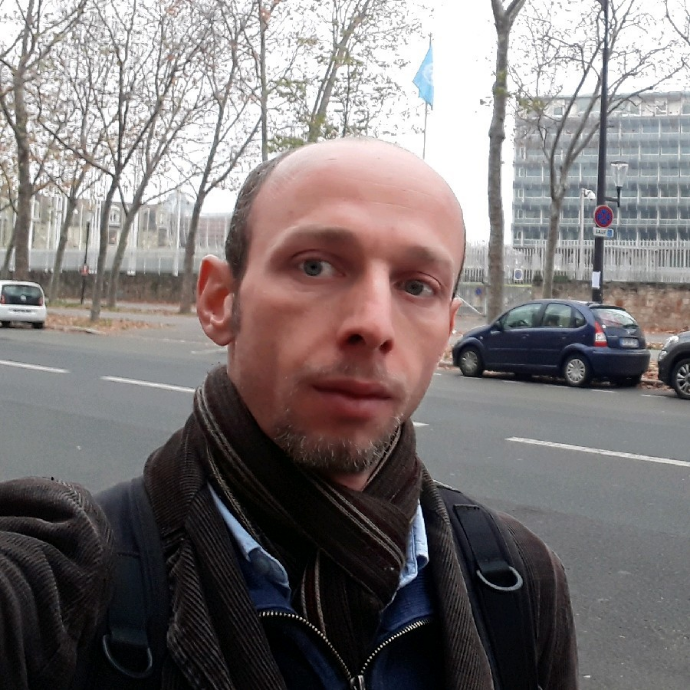
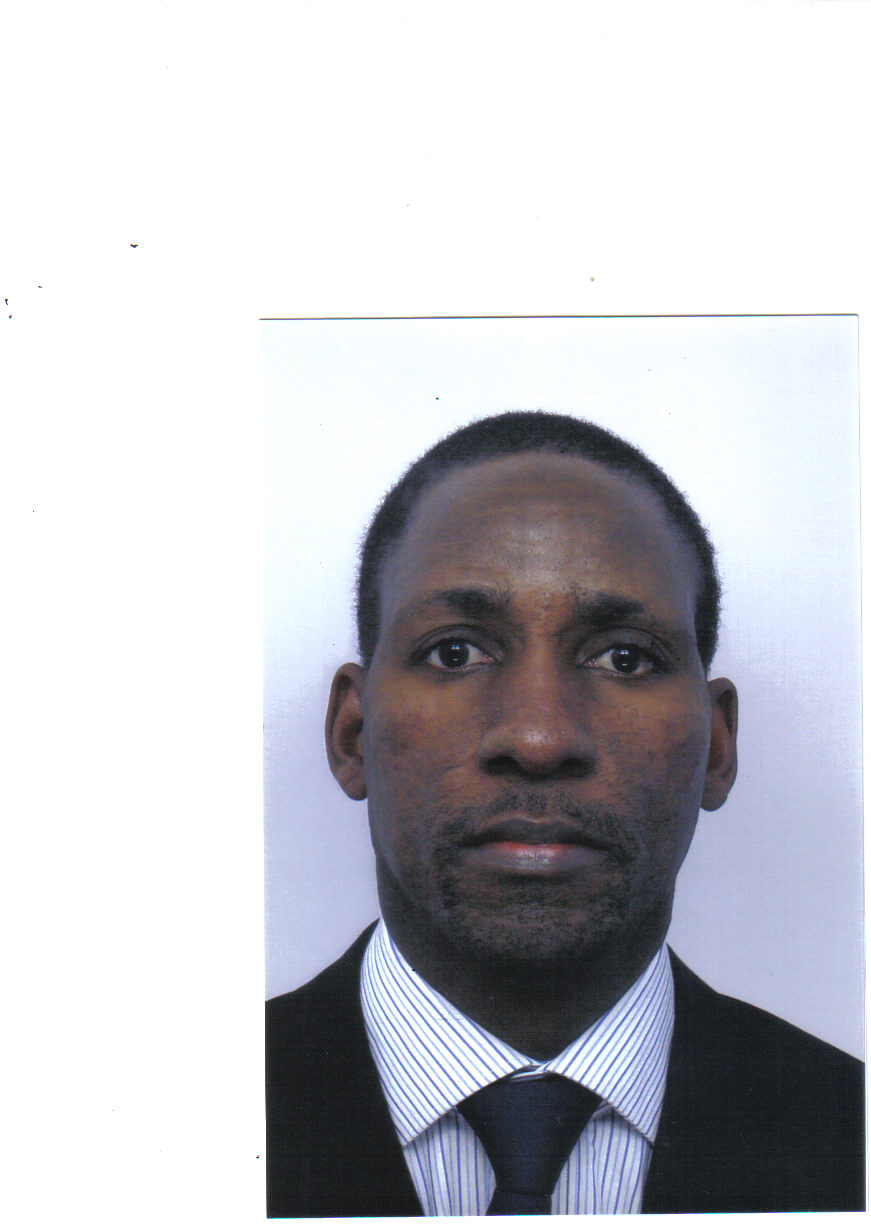
Valentin Nyzam is a Researcher at the University of Tours , affiliated with the Polytechnic School and Department of Networks and Telecommunications (RT) . He works at the Fundamental and Applied Computer Science Laboratory of Tours (LIFAT, UR 6300) and is associated with the University Institute of Technology of Blois (IUT Blois) . Research Focus: Specializes in Natural Language Processing with emphasis on automatic summarization and comparative summarization Develops modular open-source tools (MOTS) for multi-document summarization Active in deep learning applications for text analysis and word embeddings Conducts cross-lingual research and short text language identification Focus on French language processing and implementation of NLP tools Contact: valentin.nyzam@univ-tours.fr
Gilles Venturini is a Professor in Computer Science at the University of Tours, France, affiliated with PolytechTours and the Computer Science Lab. He has held this position since 1998 following his appointment as Assistant Professor from 1994-1998. His academic credentials include a Research Supervisor Degree (HdR) from the University of Tours (1997), a PhD in Computer Science from the University of the South of Paris (1994) supervised by Yves Kodratoff, and dual qualifications in Computer Science (MSc, 1990) and Electrical Engineering (ESIEE, 1990). Professor Venturini's research concentrates on information visualization, machine learning, and data mining with emphasis on genetic algorithms, neural networks, and computer vision. His work develops practical tools for visual data exploration, automatic dashboard generation, and analysis of large datasets, particularly addressing usability challenges for novice users in open data contexts. His 2023-2025 publications reveal sustained innovation in ternarization of vision-language models for edge devices, few-shot object detection, and backpropagation alternatives for binary neural networks. These contributions bridge theoretical machine learning advancements with applications in cultural heritage visualization and human resources analytics. No scientific awards were documented in the source materials. While specific grant details and student supervision records are absent from the provided text, his professorial role implies active involvement in research funding acquisition and academic mentoring. His work frequently intersects with interdisciplinary teams, particularly in digital humanities projects. He remains operationally active within the University of Tours' Computer Science Lab, driving research in visualization techniques and machine learning applications through this primary institutional affiliation.
Stéphane Girardon is an Associate Professor at Arts et Métiers Institute of Technology, affiliated with the College of Engineering. His research focuses on advanced wood characterization techniques, mechanical behavior of lignocellulosic materials, and sustainable structural applications. Develops non-destructive testing methods using terahertz imaging and X-ray analysis Applies deep learning for automated defect detection in wood veneers Investigates fiber orientation influence on mechanical properties Optimizes laminated wood structures for civil and automotive engineering His recent work bridges computational modeling with industrial applications, particularly in the BOOST and WOOPS projects. Publications highlight expertise in: Terahertz spectroscopy for wood density measurement Machine learning-based defect recognition Anisotropic material behavior in timber Optical characterization using tracheid effect Mechanical performance of glued wood-concrete connections Microstructure-scale modeling with Discrete Element Method As part of the LaBoMaP research team, he contributes to eco-materials development for sustainable mobility and construction sectors.
Damien Nouvel is an Associate Professor at INALCO (Institut National des Langues et Civilisations Orientales) in Paris, France, where he has been working since September 2014. He serves as the director of the ERTIM research team and holds the position of Deputy Director of the TIM Department (TAL Bachelor's and Master's programs). His academic focus lies within the Department of Natural Language Processing, where he teaches courses from L2 to M2 levels and supervises doctoral candidates and Master's dissertations. PhD from François Rabelais Tours University (defended November 2012) Postdoctoral fellow at LIMSI-CNRS (Université Paris-Sud 11), 2013/2014 Research engineer at Alpage (INRIA), 2012/2013 Doctoral student at François Rabelais Tours University, 2009-2012 Damien Nouvel's research centers on Natural Language Processing with particular emphasis on mathematical models and multilingualism, especially for under-resourced languages taught at INALCO including Quechua, Arabic, Bambara, and Chinese. His work spans multiple areas including named entity recognition, transliteration, lexical disambiguation, opinion analysis, and textometric analysis. He has developed specialized systems like mXS for automatic annotation using data mining techniques. His recent research has expanded to social media analysis, conspiracy discourse, and low-resource language processing, demonstrating both theoretical depth and practical application. Analyzing his publication trends from 2022-2025 reveals a strong focus on multilingual NLP systems, particularly for low-resource languages. His work consistently bridges theoretical computational linguistics with practical applications, with increasing emphasis on transformer models, social media analysis, and cross-lingual resource development. The publications show progression from foundational NER work to more complex multilingual systems capable of handling diverse languages including Farsi, Chinese, Armenian, and Urdu. Damien Nouvel actively supervises doctoral students and Master's dissertations while managing significant research projects. His team ERTIM participates in major evaluation campaigns like SemEval, demonstrating practical application of their research. His work spans multiple domains from speech processing to social media analysis, showing adaptability and relevance to contemporary language processing challenges. As director of the ERTIM research team since 2020, Nouvel leads a group focused on natural language processing with special attention to under-resourced languages. The team works on diverse projects including language modeling, named entity recognition across multiple languages, social media analysis, and resource creation for languages with limited digital presence. Their work combines symbolic approaches with modern machine learning techniques to address the challenges of processing diverse linguistic systems.
Hachimi ABBA is Professor of Information and Communication Sciences at Université Polytechnique Hauts-de-France (UPHF), based at INSA Hauts-de-France. Since January 2022 he also serves as the University’s Chargé de mission Enseignement – Formation durable , steering sustainable-development and social-responsibility initiatives across all programmes. Within the DeVisu research laboratory he acts as communication officer. Education 2007 – Doctorate in Information & Communication Sciences, specialty 71 (official French decree) 2002 – Diplôme d’Études Approfondies (DEA) in Information & Communication Sciences, UVHC 2001 – DESS Management de l’Innovation et Veille, IAE UVHC 2000 – DESS Administration des Entreprises, IAE UVHC 1999 – DESS Informatisation et Communication Homme-Machine, UVHC Research Focus Professor ABBA’s work places the human being at the centre of organisational systems. He investigates how trust , project-management practices and communication processes interact within service-sector information and quality systems. A complementary stream explores the social transformations triggered by the introduction of ICTs—especially mobile telephony and the Internet —in sub-Saharan African countries, ranging from tele-medicine adoption to digital education and media literacy. Methodologically, he draws on qualitative approaches such as the PAT-Miroir method developed by UTC, emphasising cooperation, communication and trust in complex “thorny” projects. His field interventions include a two-year embedding within a personal-services company during his doctoral work to implement ISO 9001 certification and migrate its information system. Publication Trends Between 2006 and 2021 he authored or co-authored more than fifteen peer-reviewed articles, book chapters and conference papers. The corpus clusters around three domains: (i) trust and organisational change in service information systems; (ii) ICT adoption and policy in Francophone Africa (Niger, Togo, Burkina Faso, Côte d’Ivoire); and (iii) educational technology and digital pedagogy in African contexts. Venues include high-rank journals such as Journal of the European Union for Systemics and Les Cahiers du numérique , as well as international conferences like H2PTM, ACFAS, EUTIC and RES@TICE. Scientific Awards & Distinctions No specific prizes or fellowships are listed in the supplied documents. Teaching & Advising Professor ABBA currently teaches: Management & Communication Techniques – Master 2 MQDF (STAPS) Professional Expression & Communication – Professional Licences Techniques d’Expression et Communication (TECA-B-C) – 1st-year Industrial Engineering & Maintenance (continuing education) Earlier offerings include the qualitative-methodology seminar PAT-Miroir for Master 2 and PhD students in co-accreditation with Université de Lille 3. Laboratory & Teams He is a member of the DeVisu research laboratory (Arenberg site) and serves as its responsable de la communication , orchestrating outreach, dissemination and stakeholder engagement activities for the unit.
BAUDRY David is a Researcher at CESI Campus and leads the Engineering & Digital Tools research team. His work focuses on Digital Twins , Augmented/Virtual Reality , and Human-Computer Interactions , particularly in industrial contexts. PhD in Electromagnetic Compatibility (University of Rouen, 2010) Engineering Diploma from University of Rouen, 2005 DEA in Materials Science from University of Caen, 1999 His research includes modeling product lifecycle data, developing immersive digital twins, and optimizing industrial processes. He supervises multiple PhD students working on topics like human-robot collaboration , dynamic scheduling , and smart maintenance systems . He has contributed to 13 ACL, 27 C-ACTI, and 2 C-ACTN publications since 2010. BAUDRY participates in scientific councils for LINEACT and NEXTMOVE, and has reviewed for conferences like CONFERE and I2MTC. His projects include managing the PIA JENII 2021–2025 initiative and contributing to the European BATTWin project.
Amine Brahmia is an Associate Professor in the Department of Computer Engineering at CESI's School of Engineering, specializing in Internet of Things, Cybersecurity, and Network Optimization with significant contributions to Smart Cities infrastructure. His research bridges theoretical algorithms with practical IoT applications in urban and healthcare environments. His academic credentials include a Doctorate in Computer Science (2012) from France Telecom & University of Haute Alsace, a Master's degree in Computer Science (2008) from University of Versailles Saint-Quentin-en-Yvelines, and a Computer Engineering Diploma (2006) from University of Guelma. Dr. Brahmia's research focuses on solving complex optimization problems in distributed systems through metaheuristic algorithms and AI techniques. He has pioneered work in federated learning for edge computing, blockchain consensus protocols, and wireless sensor network deployment, with publications demonstrating consistent innovation in security mechanisms and resource optimization for constrained environments. His 15 most recent publications (2013-2023) reveal three dominant research trajectories: 45% on IoT and sensor networks (focusing on deployment optimization and security), 35% on blockchain and distributed ledger technologies (particularly consensus protocols), and 20% on federated learning applications for edge computing. This interdisciplinary approach integrates operational research with cybersecurity to address real-world challenges in smart infrastructure. Dr. Brahmia currently supervises six doctoral students: Aimen KHIAR: Hybrid metaheuristics and federated learning for electric vehicle battery recharging (2024-2027) Ahmed BAAHMED: Computational efficiency of federated learning on edge-cloud infrastructure (2023-2026) Meriem ARBAOUI: Federated learning for IoMT networks with resource optimization (2023-2026) Mortada TERMOS: Security anomaly detection in IoT using complex networks (2022-2025) Kenza RIAHI: Optimal consensus protocols for private blockchains (2021-2024) Khoula ZAIMEN: Sensor deployment optimization in smart buildings (2021-2024) He leads the Engineering and Digital Tools research team at CESI LINEACT and previously directed the CESI Strasbourg Fablab (2016-2018), where he advanced IoT prototyping capabilities. As a certified CISCO Instructor since 2015, he teaches Systems and Protocols, Routing, Switching, and Cybersecurity across multiple engineering programs using project-based learning methodologies.
CHAIEB Ramzi is a Teacher-Researcher affiliated with CESI and LINEACT research laboratory. His work focuses on Artificial Intelligence, Data Science, Image Processing, and Digital Twins, with applications in medical imaging, historical document analysis, and industrial predictive maintenance. Education: Post-Doctoral Researcher at INSERM + IMT Atlantique (2019–2021), INSA Rouen (2018–2019), Doctorate from National School of Engineers of Tunis (2017). Research interests span AI-driven solutions for medical imaging (e.g., mammography classification), computer vision techniques in document analysis (e.g., fuzzy graph matching), and predictive maintenance using deep learning. Publications emphasize interdisciplinary applications of Machine Learning in healthcare, digital humanities, and industrial engineering. Collaborations include INSERM, IMT Atlantique, INSA Rouen, and INSERM/CHUs. Scientific achievements include qualification for French lecturer roles (Sections 27 and 61) and supervision of Amal Ayadi's thesis on industrial maintenance diagnostics.
GHALMANE Zakariya is a Teacher-Researcher at CESI's Strasbourg Campus, affiliated with the LINEACT research team. His work focuses on the 'Engineering and Digital Tools' research group, where he investigates complex networks, machine learning, and data analysis. He teaches computer science disciplines—including AI, algorithms, web development, and software engineering—to 2nd–5th year engineering students. His research explores: Backbone extraction in modular networks Centrality measures for overlapping communities Immunization strategies for resilient networks Applications in IoT security and ecological diversity modeling Publications emphasize network topology, machine learning integration, and real-world applications in cybersecurity and marine biology. He supervises PhD candidate M. TERMOS on IoT security using AI and complex networks. As an active reviewer for journals (e.g., Applied Network Science ) and conferences, he contributes to the academic community. No awards or grants are documented.
Hakim GUEDJOU is a Teacher-Researcher affiliated with CESI School of Engineering and part of the Engineering and Digital Tools research team. His work bridges human-robot interaction and autonomous learning systems with applications in social behavior analysis.
Mohammed Hindawi is a Teacher-Researcher at CESI in Villeurbanne, France, affiliated with the Engineering and Digital Tools research team. His academic foundation includes a Doctorate (2013) and Master of Research (2008) in Computer Science from INSA Lyon, with specializations in knowledge systems, alongside Master's (2006) and Engineering (2005) degrees in Software Engineering from the University of Aleppo, Syria. Research Focus: His work spans machine learning methodologies like dimension reduction and variable selection, applied to digital health and battery technology. Primary domains include: Semi-supervised feature selection algorithms Multimodal sensor data analysis for healthcare AI-driven battery state estimation Frugal AI solutions for resource-constrained environments Educational Activities: Hindawi teaches computer science across CESI's engineering cycle, covering embedded systems, object-oriented programming, databases, AI, and advanced algorithms. He designs curriculum modules and tutors preparatory/engineering students. Research Leadership: As a member of the 'Frugal and Embedded AI' working group, he explores efficient machine learning implementations. He currently supervises PhD candidate Trésor YAO KOFFI's thesis on multimodal machine learning for patient monitoring systems. Publication Trends: Hindawi's recent publications (2023-2024) demonstrate a shift toward applied AI in healthcare and energy systems, building on his foundational work in semi-supervised feature selection (2011-2016). His research consistently addresses real-world constraints through innovative ML architectures.
Horchani Leïla is a researcher at CESI , affiliated with the National School of Computer Sciences at the University of Manouba, Tunisia. Her expertise spans Operational Research, Data Science, Urban Mobility, and Advanced Algorithms . PhD in Computer Science, University of Manouba, Tunisia (2013) DEA in Modeling and Management Information Systems, University of Tunis (2002) Master's in Applied Mathematics & Optimization, Tunis El Manar University (1998) Research Interests focus on probabilistic optimization models, sensor network applications, and intelligent urban mobility systems. She has contributed to combinatorial optimization, geolocation technologies, and smart city solutions. Her publications analyze probabilistic algorithms, UAV trajectory planning, and mobility balancing in taxi networks, often integrating Operations Research with Computer Science disciplines. Co-supervised Theses : A. Ghabri (Geolocation in sensor networks, 2017) and S. Sassi Mahfoudh (Probabilistic packing, 2018).
LOUIS Anne is a Research Director at CESI, leading the Industry of the Future application axis. She holds a HDR in electronics (University of Rouen, 2006), a doctorate in High Frequency Electronics and Optoelectronics (University of Limoges, 1998), and a DEA in Electronics (University of Limoges, 1995). Research focuses on decision support tools for industrial systems, AI in predictive maintenance, multimodal transport optimization, and open innovation in SMEs. Supervises 4 PhD students (defenses 2024-2026) and has guided 4 past theses in robotics, bio-waste systems, and network optimization. Active in scientific animation as a member of LINEACT council, Normandie Digital Sciences pole, and doctoral college. Recent publications (2018-2023) span AI-driven maintenance, transport simulations, open innovation, robotic UV treatments, and counterfeit detection. Contact: alouis@cesi.fr
SAHNOUN M'hammed is a Research Director at CESI LINEACT, affiliated with Normandy University. His work spans automation, robotics, and optimization in industrial systems, with a focus on Human-Robot Collaboration , Industry 4.0/5.0 , and Sustainable Logistics . He has advised numerous PhD students across international institutions including Neoma-bs, Université de Batna, and Université Le Havre Normandie. Education: HDR (Normandy University, 2019), Doctorate in Automation (Paul Verlaine University, 2007), DEA Robotics (Pierre and Marie Curie University, 2002) Research Themes: Simulation and optimization of industrial flows, renewable energies, collaborative robotics, and human-centric production systems His research explores multi-agent systems for scheduling optimization, fog computing in smart factories, and predictive maintenance strategies. Recent projects include AntihPert (human behavior modeling in production) and OPTIMAN (human-centered machining workshop optimization). Publications since 2019 demonstrate expertise in cyber-physical systems , transportation task allocation , and bio-waste management . Key journals include IEEE Transactions on Industrial Informatics , Journal of Manufacturing Systems , and Computers & Industrial Engineering . He actively participates in scientific organization, serving as reviewer and chair for conferences like MIM, Codit, and CyMaEn.
Nicolas Minesi is a researcher specializing in plasma physics, combustion, and laser spectroscopy, with recent publications focused on nanosecond discharges and plasma-assisted combustion. His work involves advanced diagnostics for aerospace applications, including planetary entry simulations and rocket engine combustion monitoring. Key research areas: Plasma dynamics, Combustion diagnostics, Laser absorption spectroscopy Recent collaborations: Raymond Spearrin, Gabi Daniel Stancu, Christophe O Laux Scientific contributions include: 2024 Student Excellence Award Finalist 15+ publications (2024-2025) on combustion diagnostics, nanosecond discharges, and planetary entry simulations Development of MHz-rate laser absorption techniques for dynamic combustion environments Investigations into ambient air ionization mechanisms via nanosecond discharges Studies of vorticity generation and hydrodynamic effects in pulsed plasma systems